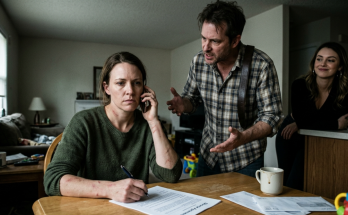
The house was quiet, save for the rhythmic, staccato clatter of Gavin’s
mechanical keyboard. It was a cold, sharp sound that echoed off the high,
vaulted ceilings of the suburban living room he had converted into a home
office. Ever since the Phoenix branch of his data architecture firm had closed
its physical doors eighteen months ago, Gavin’s entire universe had aggressively
shrunk to the confines of these four walls. He lived in a world of complex
algorithms, nested code, and database migrations. It was a clean, predictable
world where inputs always yielded logical outputs.
His marriage, however, had become a system of corrupted data.
It hadn’t happened overnight. The deterioration of his relationship with
Samantha was a slow, creeping rot, manifesting in a series of functional grunts
over morning coffee, passing glances in the hallway, and an impenetrable,
suffocating silence that filled their king-sized bed every night. Gavin,
exhausted by the sheer weight of being the sole provider for the family, had
retreated into his work. He told himself it was a phase, a rough patch brought
on by the general malaise of modern suburban existence. He was a passive
observer in his own life, willfully blind to the growing chasm between him and
the woman he had vowed to love until death.
But the fragile equilibrium of their domestic life was shattered on a mundane
Tuesday morning by the innocent, unfiltered observation of their eight-year-old
son, Toby.
They were sitting at the kitchen island. Gavin was mechanically chewing a piece
of toast, his eyes scanning a localized server report on his tablet. Samantha
had already left for what she claimed was her “demanding new role” managing
logistics for a boutique real estate firm—a job that required erratic hours and
constant, unexplained absences.
Toby, pushing a plastic spoon through a bowl of brightly colored cereal, looked
up, his brow furrowed in the way children do when they are trying to solve a
puzzle that doesn’t quite fit.
“Dad?” Toby asked, his voice cutting through the hum of the refrigerator.
“Yeah, buddy?” Gavin replied, not looking up from the screen.
“Why does Mom cry in the car?”
Gavin’s finger froze over the glass surface of the tablet. He slowly turned his
head, the ambient noise of the house suddenly dropping away into a vacuum. “What
do you mean, Toby?”
Toby shrugged, his focus returning to a floating marshmallow. “I can see the
driveway from my window. When Mom gets home from work, she doesn’t come inside
right away. She sits there for a really long time. She cries. Then she takes out
a plastic bag, takes off her shirt, puts a different one on, and then she comes
inside. She did it yesterday. And the day before.”
A cold, primal dread uncoiled in the pit of Gavin’s stomach. It was the
specific, terrifying sensation of stepping onto a stair that isn’t there in the
dark. She changes her clothes?
“Are you sure, bud?” Gavin asked, his voice carefully controlled, though his
pulse had begun to hammer against his ribs.
“Yeah,” Toby said simply, possessing the absolute, unassailable certainty of a
child. “She takes off a blue one and puts on a white one. Why does she do that,
Dad?”
“I don’t know,” Gavin murmured, staring at the empty space where his wife
usually sat. “Maybe she just spilled coffee on herself.”
But he knew it was a lie. The seed of paranoia had been planted, and its roots
grew with terrifying speed.
The next afternoon, at 5:15 PM, Gavin did not log off his workstation. Instead,
he stood perfectly still, hidden in the shadows behind the heavy wooden blinds
of the living room window overlooking the driveway. His breath was shallow, his
hands shoved deep into his pockets to stop them from trembling. He felt a
profound sense of shame for spying on his own wife, a feeling that battled
violently with a desperate, clawing need to understand the ghost she had become.
At 5:20 PM, Samantha’s silver sedan pulled into the driveway.
Gavin watched through the narrow slats of the blinds. The engine died. The
headlights switched off. And then, for three agonizing, interminable minutes,
Samantha just sat there, bathed in the fading amber light of the Arizona dusk.
She gripped the steering wheel so tightly her knuckles were stark white against
the grey interior. Then, as if a string had been cut, she collapsed forward. She
rested her forehead against the steering wheel, her shoulders heaving in
violent, silent sobs. It was a raw, ugly display of absolute despair, a kind of
weeping that came from a place of deep, unmanageable terror. Gavin felt an
instinctual urge to rush outside, to open the door and pull her into his arms,
but his feet remained glued to the hardwood floor.
He watched as she finally sat up, roughly wiping her face with the back of her
hand. Her movements became sudden and mechanical, devoid of humanity. She
reached into the back seat and retrieved a crumpled plastic grocery bag. Looking
around the empty suburban street with the skittish paranoia of a hunted animal,
she unbuttoned her teal silk blouse, slipping it off her shoulders. She shoved
it violently into the plastic bag, tied it shut, and pulled a crisp, white linen
shirt from the passenger seat, buttoning it up to her collarbone. She checked
the rearview mirror, forced a terrifyingly perfect, plastic smile onto her face,
and stepped out of the car.
When she walked through the front door a minute later, Gavin was sitting on the
sofa, pretending to read a book. The air in the room shifted as she entered,
carrying a heavy, unspoken energy.
“Hey,” she said cheerfully, tossing her keys into the ceramic bowl by the door.
The smile was plastered to her face, a flawless mask hiding the absolute
wreckage Gavin had just witnessed.
“Hey,” Gavin replied, his heart pounding so hard he thought she might hear it.
He searched her eyes. They were completely dead. “Everything okay? You look
exhausted.”
“Yes,” she replied smoothly, not missing a beat. “Just a lot of work. The new
logistics software is a nightmare. I’m going to jump in the shower.”
The lie hung in the air, thick, suffocating, and radioactive.
The following morning, after Samantha had stepped into the shower, the sound of
the running water echoing through the drywall, Gavin moved with the silent,
desperate urgency of a man running out of oxygen. He slipped out the side door,
padding across the dewy grass to her car. The doors were unlocked.
He opened the passenger side and knelt on the concrete, reaching underneath the
seat. His fingers brushed against crinkled plastic. He pulled out the grocery
bag Toby had described.
His hands shook as he untied the knot. He opened the bag and lifted the
discarded teal blouse. The sensory assault hit him like a physical blow to the
jaw. It wasn’t the smell of another man. It wasn’t cheap cologne or sweat.
It was the smell of sickness.
The fabric reeked of stale, unwashed urine, harsh industrial bleach, and a
sickly-sweet, incredibly cheap floral spray labeled Sweet Rose. It was the
unmistakable, depressing olfactory signature of a neglected nursing home. The
scent was so repulsive, so entirely divorced from Samantha’s meticulously
curated, high-end lifestyle, that Gavin physically recoiled, gagging into the
morning air.
He dug deeper into the plastic bag, his mind racing through a thousand
terrifying scenarios. At the bottom, wrapped in a soiled paper towel, his
fingers found a small, cylindrical object. He pulled it out into the daylight.
It was a translucent orange prescription pill bottle.
The label was partially torn, but the bold black letters remained legible.
Donepezil. 10mg.
Gavin recognized the name from a medical article he had read years ago. It was
an acetylcholinesterase inhibitor. It was a medication prescribed exclusively
for severe, late-stage cognitive decline. It was a drug for Alzheimer’s and
dementia.
Why was his wife, a thirty-four-year-old woman in perfect health, hiding
dementia medication in a bag filled with urine-soaked clothes? Who was she
seeing? Who was she taking care of?
As Gavin knelt there, the world spinning on its axis, a soft ding broke the
silence.
He looked up. Samantha had left her smartphone sitting in the center console.
The screen illuminated, displaying a new text message on the lock screen.
The sender was saved in her contacts as ‘Patricia C.’
Gavin leaned in, his eyes locking onto the preview text.
“She’s violent today. She threw her breakfast at the wall. The extra money you
wired last night isn’t enough to keep her quiet. I need another three grand by
Friday or I walk, and you can deal with the authorities yourself.”
Gavin stopped breathing. The air in his lungs turned to ice. The authorities.
Wired money. He stared at the name. Patricia C.
Patricia was the name of Samantha’s mother.
But that was impossible. Patricia had died in a catastrophic house fire ten
years ago. Gavin had stood by Samantha in a bleak cemetery, holding a black
umbrella over her head while they buried a closed casket filled with ash and
dental records.
Gavin carefully placed the pill bottle back into the bag, tied the knot exactly
as he had found it, and shoved it back under the seat. He walked back into the
house, the sound of the shower still running upstairs. He was no longer a
passive, exhausted provider. He was a man who had just discovered a hidden door
in the foundation of his reality, and he was going to kick it down, no matter
what horrors lay on the other side.
Part 2: The Unveiling of the Monster
Three days later, the trap was set. Samantha had announced, with her usual
hollow smile, that she had to “drive out to Scottsdale to view a commercial
property” and would be gone until the evening.
Gavin had smiled back, kissed her cheek, and told her to drive safe. Fifteen
minutes after she pulled out of the driveway, Gavin was in his own car, staying
three blocks behind her, tracking the GPS beacon he had discreetly magnetically
attached to the rear axle of her sedan the night before.
She didn’t go to the affluent, manicured streets of Scottsdale. The GPS dot on
Gavin’s dashboard led him forty-five minutes east, deep into the sun-baked,
decaying sprawl of Mesa.
He parked two streets over from where her car finally stopped. The Arizona heat
was oppressive, radiating off the cracked asphalt in shimmering waves that
distorted the horizon. He walked toward a dilapidated, low-income apartment
complex constructed of peeling beige stucco. The chain-link fence surrounding
the property was rusted and sagging, and the drained swimming pool in the
courtyard was filled with discarded furniture and blown trash.
This was where his six-figure bonuses were going.
He found her car parked outside Unit 114. The blinds were drawn tight, blocking
out the sun.
Gavin stood before the chipped, hollow-core door, his heart hammering a frantic,
violent rhythm against his sternum. He didn’t knock. He reached into his pocket
and pulled out a small lock-picking set he had overnighted from an online
security store. His hands, usually steady as they typed lines of flawless code,
trembled violently as he inserted the tension wrench. It took him two agonizing
minutes, the sweat stinging his eyes, before the cheap tumbler finally yielded
with a soft click.
He turned the knob and pushed the door open.
The stench hit him instantly, an invisible, physical wall. It was a suffocating
concentration of the smell from the car—ammonia, rotting food, unwashed flesh,
and the sickeningly sweet, desperate cover-up of Sweet Rose perfume. The air
conditioning was broken, and the air inside the apartment was stagnant, heavy,
and sweltering.
Gavin stepped into the gloom. The living room was a disaster of hoarding and
neglect. Stacks of old newspapers, soiled adult diapers in plastic bags, and
dirty dishes covered every available surface.
And then, he heard it. The low, murmuring static of a television left on a dead
channel, and a raspy, wet cough.
Gavin moved slowly past the small kitchen counter, stepping into the living
space.
Sitting in a deeply stained, floral armchair, illuminated only by the gray,
flickering light of the television static, was an elderly woman. Her hair was
thin, wild, and stark white. Her skin was the color of old parchment, hanging
loosely off her skeletal frame. She wore a stained nightgown, her bare feet
resting on a heavily soiled rug.
Gavin felt the floor drop out from beneath the world. Gravity ceased to exist.
He recognized the severe slope of the jaw. He recognized the shape of the eyes,
though they were now clouded with milky cataracts of age and the devastating rot
of dementia.
It was a woman who was supposed to be a pile of ashes in a cemetery across town.
It was Patricia. Samantha’s mother.
The woman who, fifteen years ago, had been the prime suspect in a hit-and-run
that had mangled Gavin’s seventeen-year-old brother, Liam, leaving him to bleed
to death alone in a drainage ditch on a rainy Tuesday night.
Fifteen years ago, the police were closing in on Patricia. Her car matched the
paint transfer. Her alibi was crumbling. And then, the night before she was to
be formally indicted, her house had burned to the ground. Dental records
confirmed it. She was dead. The case was closed. Another man, a local mechanic
with a prior record, had been railroaded by circumstantial evidence and a lazy
prosecutor, serving eight years before dying in prison.
And yet, here she sat. Alive. Breathing. Hiding.
Samantha emerged from the back hallway, carrying a plastic basin of soapy water.
When she saw Gavin standing in the center of the squalid room, the basin slipped
from her hands. It hit the linoleum floor with a sharp crack, the water
splashing over her expensive leather shoes.
She let out a sound that wasn’t human. It was a high, keening wail of absolute,
unadulterated terror.
“Gavin,” she gasped, her face draining of all color, becoming a pale, terrifying
mask. “Gavin, please… let me explain. Please, God, let me explain.”
The noise disturbed the old woman in the chair. Patricia slowly turned her head,
her milky eyes trying to focus on the figures in the room. The dementia had
hollowed out her mind, leaving only fragmented echoes of her past.
“Samantha?” Patricia croaked, her voice sounding like dry leaves scraping across
pavement. “Did you bring the boy’s money? Did you bring the cash?”
Samantha lunged toward her mother, trying to shush her, but Patricia weakly
swatted her away.
“We have to pay the lawyer,” Patricia mumbled, picking at a loose thread on the
armrest. Her eyes drifted to Gavin, looking right through him. “If they find
out… if they look at the bumper. It was an accident. The stupid boy stepped
right into the road. If they find out it was my car that hit the little brat,
they’ll lock me up. I had to light the match, Sammy. I had to burn the house.
Did you bring the money?”
The words hung in the suffocating heat of the apartment. They were heavy,
dripping with the blood of a fifteen-year-old boy who had never gotten to go to
prom, who had never gone to college, whom Gavin had to bury in a closed casket
because the trauma to his body was too severe.
Samantha fell to her knees. She crawled across the wet linoleum, grabbing
Gavin’s pant legs, weeping hysterically, her tears mixing with the soapy water.
“I had to, Gavin!” she sobbed, burying her face against his knees. “She’s my
mother! She came to me after the fire. She faked it to escape the guilt, to
escape prison. I thought I could fix her. And then she got sick… her mind
started going. I couldn’t abandon her. She’s my blood! I’ve been using your
bonuses to pay Patricia C.—a private nurse—to keep her off the grid. To keep her
quiet. Please, Gavin, she doesn’t even know what she’s saying anymore! I was
protecting our family!”
Gavin looked down at his wife. He looked at the woman he had loved. He looked at
the woman who had held him, who had let him cry on her shoulder at his brother’s
empty grave, whispering that time would heal the pain, knowing all the while
that the killer was living off his paycheck just miles away.
In that exact fraction of a second, something inside Gavin fundamentally,
irreversibly broke.
But it did not break into pieces. It crystallized.
The agonizing heat in his chest, the suffocating grief that had defined his life
for a decade and a half, suddenly vanished. It evaporated into the ether,
replaced by an absolute, terrifying zero-degree freeze. His pulse slowed. The
trembling in his hands stopped entirely. His vision tunneled, the world snapping
into hyper-focus.
He didn’t scream. He didn’t raise his hand to strike her. He didn’t curse her
existence. The man who had entered the apartment a confused, heartbroken husband
died on that linoleum floor. The entity that stood in his place was a creature
of pure, unadulterated, Machiavellian logic.
He was a data architect. He identified systemic flaws. He neutralized threats.
And the weeping woman at his feet was the most malicious virus he had ever
encountered.
Gavin gently, methodically, peeled her frantic, clawing fingers off his
trousers. He knelt down so he was eye-level with her, his face a perfectly
placid, emotionless mask.
“I understand, Samantha,” Gavin whispered, his voice impossibly calm, a soothing
melody that contradicted the absolute butchery occurring in his soul. “Family is
family. I understand why you did it.”
Samantha’s breath hitched. She looked up at him, her eyes wide with desperate,
pathetic hope. “You… you do?”
“Yes,” Gavin said softly, reaching out to gently brush a strand of hair from her
tear-streaked face. The physical contact made his skin crawl with a revulsion so
deep it felt cellular, but his hand was steady. “We are going to fix this.
Together.”
As Gavin stood up and turned to leave the apartment, projecting the flawless
image of a broken but compliant, supportive husband, his eyes locked onto a
stack of loose papers sitting on the small kitchen counter next to the sink. His
hyper-focused mind captured the image like a high-resolution photograph.
They were heavily redacted banking transfers and loan approval documents.
In a fraction of a second, Gavin processed the numbers. Samantha hadn’t just
used his annual bonuses to pay off the black-market nurses. She had secretly
forged his signature, leveraged his immaculate credit, and taken out a massive,
predatory second mortgage on their family home to keep his brother’s killer
comfortable.
She hadn’t just betrayed his soul; she had mortgaged his son’s future.
“I’ll be home tonight, Sam,” Gavin said quietly, not looking back. “Stay here.
Take care of your mother. I’ll start working on a solution.”
He walked out into the blinding Arizona sun, the door clicking shut behind him.
The war had begun.
Part 3: The Invisible Architecture of Ruin
The transition from a passive victim to an apex predator requires absolute
discipline. Over the next four weeks, Gavin executed a masterclass in
psychological warfare. The dining room of their suburban home, once a silent
void, transformed into the war room of a counterfeit alliance.
Gavin played the role of the tragic, forgiving savior with terrifying
perfection. He intentionally took on the burden of managing Patricia’s “care.”
He fired the extortionist nurse, ‘Patricia C.’, paying her off with a lump sum
to ensure her silence, and hired a cheaper, legally blind caregiver who asked no
questions. He visited the squalid Mesa apartment twice a week, bringing
groceries, holding his breath against the stench, and offering Samantha
reassuring smiles while she cleaned up her mother’s messes.
He weaponized Samantha’s exhaustion and her blinding guilt against her. She was
so desperate for absolution, so utterly terrified of prison, that she eagerly,
pathetically leaned into the false reality Gavin constructed. She believed that
his silence was proof of a transcendent love, that keeping the horrific secret
was a new, twisted bond that would save their marriage.
Driven by fatigue and a desperate need to surrender the crushing weight of her
lies, she willingly handed over absolute financial control to Gavin.
“You’re better with the numbers,” she had whispered one night, collapsing onto
the sofa, handing him a stack of encrypted bank tokens. “Just… make it so they
can’t trace it back to us if she dies.”
“I will, Sam. I promise,” Gavin had replied, kissing her forehead.
Behind the locked door of his home office, bathed in the blue light of his
triple monitors, Gavin went to work. He did not hire a divorce attorney. He
hired a boutique corporate law firm out of New York, a group of ruthless,
hyper-aggressive fixers specializing in hostile asset extraction and offshore
financial shielding. He paid their exorbitant retainers using cryptocurrency he
had quietly mined and saved for years.
He became the architect of her absolute, inescapable ruin.
Using his elite skills in data manipulation and his newly acquired, unquestioned
access to all of Samantha’s accounts, Gavin systematically, invisibly drained
their joint assets. He liquidated their mutual funds, taking the early
withdrawal penalties without blinking. He emptied their savings. He sold off
every stock and bond.
Through a labyrinthine network of shell companies structured by his New York
lawyers, the money flowed out of the United States. It bypassed standard
regulatory scrutiny and vanished into heavily encrypted, ironclad blind trusts
in the Cayman Islands and Zurich.
The sole, irrevocable beneficiary of every single cent was Toby.
Gavin’s name wasn’t on the trusts. Samantha’s name wasn’t on the trusts. The
money legally belonged to an eight-year-old boy, completely insulated from any
future civil litigation, marital asset division, or federal seizure.
To the casual observer, and to the banking apps on Samantha’s phone, their
accounts still showed healthy balances. But Gavin had written a custom script
that intercepted the bank’s API data, feeding dummy numbers to her local
devices. She was looking at a mirage. In reality, they were entirely,
breathtakingly bankrupt.
But financial ruin wasn’t enough. Gavin required legal annihilation.
The climax of his preparation occurred on a rainy Thursday evening. The dining
room table was covered in forged medical invoices, tax documents, and banking
statements. Samantha sat across from him, rubbing her temples, looking at Gavin
with a mixture of awe and pathetic gratitude.
“I can’t believe you’re doing this,” she whispered, her voice thick with
emotion. She reached out, placing her hand over his. “When you found out… I
thought you would kill me. I thought you would leave me. But you stayed. You’re
fixing it.”
Gavin offered a gentle, reassuring smile that did not reach his dead, obsidian
eyes. He didn’t pull his hand away.
“We’re a team, Sam,” he said softly, his voice a hypnotic cadence. “Family
protects family. But the risk is too high right now. The debt you took out for
the nurses, the second mortgage… if the IRS flags the erratic payments, or if
the police somehow find out Patricia is alive, they will seize everything we own
as proceeds of a crime. We have to protect you.”
“How?” she asked, her eyes wide, compliant, and foolish.
“I’ve drafted a localized power of attorney and a series of asset-shielding
proxies,” Gavin explained, sliding a thick, aggressively dense stack of legal
documents across the mahogany table. The papers smelled faintly of the expensive
parchment used by his New York firm. “It allows me to restructure the debt you
took out against our house and place it in a blind trust. It legally separates
you from the liability if the authorities ever find your mother. It’s a
firewall.”
He handed her a heavy Montblanc pen. “It’s dense legalese. The lawyers said it
has to be watertight. Just sign where I’ve placed the yellow tabs. I have a
mobile notary coming in ten minutes to witness it.”
Samantha, blinded by her own salvation and too exhausted to read the hundreds of
pages of labyrinthine corporate jargon, didn’t hesitate. She took the pen and
began to scrawl her signature on every highlighted line.
Internally, a dark, predatory thrill coursed through Gavin’s veins. It was the
thrill of the executioner pulling the lever.
She wasn’t signing a protective proxy. Hidden beneath the esoteric legal jargon,
masked by the sheer volume of paper, Samantha was executing her own destruction.
With the stroke of her pen, she was signing an irrevocable quitclaim deed to
their home, transferring full ownership to an LLC controlled entirely by Gavin.
She was signing documents that transferred the entirety of the massive second
mortgage—the debt she had secretly accrued—directly and solely into her own
name. She was signing a legally binding, sworn affidavit—disguised as a medical
history report—that detailed exactly how long she had known her mother was a
fugitive, acknowledging her active role in the financial embezzlement required
to harbor a known felon.
And, buried on page eighty-four, she was signing a preemptive, uncontested
surrender of her parental rights, yielding sole physical and legal custody of
Toby to Gavin in the event of her arrest or incarceration.
The doorbell rang. The mobile notary had arrived.
Fifteen minutes later, the documents were stamped, sealed, and legally binding.
The notary left, disappearing into the rainy night.
Gavin carefully aligned the papers, tapping them against the mahogany table, and
placed them into his leather briefcase. He locked the brass clasps.
“It’s done,” Gavin said, looking at Samantha. “You’re safe now.”
“Thank you,” she wept, moving around the table to hug him.
Gavin endured the embrace, staring blankly over her shoulder at the wall. As she
cried into his chest, his phone vibrated silently in his pocket. It was an
automated alert from a secure Tor browser.
He had successfully uploaded the anonymous tip.
The encrypted file contained high-resolution photos of Patricia, her exact
geolocation, the forged death certificate, the financial records of the hush
money, and the audio recording Gavin had secretly made of Patricia confessing to
the hit-and-run that killed his brother. The package had bypassed local servers
and was delivered directly into the primary intake database of the FBI’s violent
crimes cold-case division, flagged with a high-priority federal tax evasion
marker to guarantee an immediate, overwhelming tactical response.
The fuse was lit. It was time to burn the house down.
Part 4: The Turning Point
The following Tuesday afternoon, the air in Mesa was stagnant and heavy, thick
with the promise of a dust storm. Inside the squalid apartment, Samantha felt an
alien sensation spreading through her chest: peace.
She sat on a cheap plastic stool, spooning lukewarm oatmeal into her mother’s
mouth. Patricia was quiet today, staring blankly at the television. For the
first time in ten years, Samantha didn’t feel the crushing weight of the
guillotine suspended above her neck. Gavin had handled it. Gavin, the quiet,
boring, dependable man she had so deeply underestimated and manipulated, had
built a fortress around her. He was at home right now, finalizing the “trusts”
that would keep her safe forever. She had won. She had kept her mother alive,
and she had kept her husband.
The illusion of her victory shattered at exactly 2:14 PM.
It didn’t begin with a knock. It began with the deafening, catastrophic sound of
the heavy wooden door splintering inward off its hinges, hitting the linoleum
with a concussive boom.
“FEDERAL AGENTS! DO NOT MOVE! SHOW ME YOUR HANDS!”
The apartment was instantly flooded with a chaotic storm of tactical gear,
Kevlar, and drawn weapons. Six armed federal marshals and two state bureau
investigators poured into the tiny living room, their boots crunching on the
broken wood of the door. The piercing wail of multiple sirens suddenly erupted
outside the window, drowning out the television static.
Patricia shrieked in dementia-fueled terror, dropping the bowl of oatmeal. It
shattered on the floor, splattering across Samantha’s legs.
Samantha threw herself in front of the armchair, acting on pure, desperate
instinct, screaming hysterically. “What are you doing?! Stop! She’s a sick old
woman! She has dementia! You have the wrong apartment! Gavin! GAVIN!”
“Samantha Miller, step away from the fugitive!” a towering marshal barked,
leveling his weapon at her chest. “Get on the ground! Now!”
Two agents grabbed Samantha by the shoulders, hauling her away from the chair
and forcing her face-down onto the sticky, filthy linoleum. The cold steel of
handcuffs ratcheted tightly around her wrists, biting into her skin.
“Mom! Mom!” Samantha screamed, her face pressed against the floor, watching
through a blur of tears as an agent pulled her frail mother out of the chair,
securing her wrists with zip-ties.
“Patricia Caldwell,” a state investigator said, reading from a laminated card,
his voice devoid of any sympathy. “You are under arrest for vehicular
manslaughter, fleeing the scene of a fatal accident, faking your own death, and
federal tax evasion. You have the right to remain silent…”
“No! No, she doesn’t understand!” Samantha wailed, thrashing against the agents
holding her down. “Call my husband! Call Gavin Miller! He has the proxy! He has
the trust documents! We are protected!”
“I’m right here, Samantha.”
The voice cut through the shouting, the sirens, and the chaos like a scalpel. It
was quiet, perfectly modulated, and chillingly calm.
Samantha wrenched her neck upward.
Standing in the doorway, stepping carefully over the splintered wood, was Gavin.
He was not wearing his usual casual work-from-home attire. He was dressed
immaculately in a tailored charcoal suit, a crisp white shirt, and polished
black Oxford shoes. He held a pristine, thick manila folder in his left hand.
The contrast between the squalor of the apartment, the panicked violence of the
raid, and Gavin’s untouchable, immaculate composure was striking. He looked like
an executive visiting a slaughterhouse.
The federal marshals didn’t point their weapons at him. The lead investigator
gave Gavin a short, respectful nod.
“Gavin!” Samantha sobbed, a wave of profound relief washing over her. “Gavin,
show them the papers! Tell them about the trust! Fix this!”
Gavin walked slowly across the room, stopping just inches from where Samantha
lay pinned to the floor. He looked down at her. The mask of the supportive
husband was gone. In its place was the terrifying, emotionless visage of the
data architect viewing a successfully deleted file.
“There is no trust, Samantha,” Gavin said, his voice carrying clearly over the
din.
Samantha froze. The struggling stopped. “What?”
Gavin crouched down, balancing perfectly on the balls of his feet, ensuring his
suit didn’t touch the filthy floor. He leaned in close, his face inches from
hers. The smell of Sweet Rose perfume was overpowering, but Gavin didn’t flinch.
“The documents you signed last Thursday did not protect you,” Gavin whispered,
his tone conversational, dissecting her hubris with surgical precision. “You
didn’t read them. You were too arrogant, too relieved that I was willing to
absorb your absolute betrayal. You signed an irrevocable quitclaim deed. You
surrendered all equity in our home. You signed a legally binding assumption of
all the debt you secretly accrued—$400,000 against a second mortgage, which is
now solely in your name.”
Samantha’s eyes dilated in sheer, uncomprehending horror. The breath left her
lungs in a ragged gasp. “Gavin… what did you do?”
“I executed an algorithm,” Gavin replied coldly. “Our bank accounts are empty. I
liquidated everything. Through the offshore network my lawyers established,
every dollar of marital assets has been legally transferred into blind trusts
under Toby’s exclusive name. You are entirely, breathtakingly bankrupt. You
don’t have the money to hire a lawyer for a traffic ticket, let alone a federal
defense.”
He opened the manila folder and pulled out a single sheet of paper, holding it
up so she could see the heavy, embossed seal of a family court judge.
“Furthermore,” Gavin continued, “buried on page eighty-four of your ‘medical
proxy,’ you signed a sworn affidavit detailing your financial embezzlement to
harbor a known fugitive, and you preemptively surrendered your parental rights.
A judge reviewed it this morning.”
He dropped the paper onto the floor in front of her face. “I have immediate,
absolute, sole legal and physical custody of Toby. You will never come within
five hundred yards of my son again.”
The reality of the trap closed around Samantha’s throat like an iron vice. The
fortress he had built wasn’t designed to protect her; it was a mausoleum, and
she had eagerly walked inside and handed him the key.
“You set me up,” she choked out, spit flying from her lips, her sorrow instantly
transmuting into a venomous, impotent rage. “You monster! You set me up!”
“You kept my brother’s killer alive,” Gavin said, the temperature in his voice
dropping to absolute zero. The composure cracked just enough to let the
terrifying, righteous fury beneath show through. “You used the money I bled for
to keep her fed, while I held you and cried over an empty grave. You are a
parasite, Samantha. And I have simply excised you from the host.”
Gavin stood up, smoothing the lapels of his jacket. He looked over at the state
investigator. “Officer, I have a flight to catch. Am I free to go?”
“Yes, Mr. Miller,” the investigator replied. “Thank you for your cooperation.”
“Gavin!” Samantha shrieked, a primal, animalistic sound of total destruction as
the agents hauled her to her feet. “You can’t do this! I’m your wife! I’m Toby’s
mother!”
Gavin paused at the doorway. He didn’t look back. “Toby and I are leaving for a
flight to Zurich in three hours. Our new home is lovely. Enjoy your mother,
Samantha. You finally have her all to yourself.”
He stepped out into the blinding Arizona sun, leaving her screaming in the ruins
of the life she had destroyed.
Part 5: Resolution and Growth
Karma is rarely a swift execution; true justice is a chronic condition.
Six months later, rain lashed violently against the reinforced, wire-meshed
glass of the Maricopa County correctional facility visitor center. The room
smelled of institutional bleach and despair.
Samantha sat on a bolted metal stool. In half a year, she had aged two decades.
Her once meticulously styled blonde hair was thinning, showing stark gray roots.
Her skin was pallid, and her eyes were hollow, rimmed with deep, bruised
shadows. She wore a standard-issue green jumpsuit, the fabric rough against her
skin. She picked up the heavy, greasy telephone receiver.
On the other side of the thick glass sat Patricia. The dementia had rapidly
accelerated in the high-stress environment of the state-run medical prison.
Patricia wore an orange jumpsuit, her head slumped forward, drooling slightly
onto her chest. She was entirely non-responsive, completely unaware of her
surroundings, lost in the dark labyrinth of her decaying brain.
“They foreclosed on the house, Mom,” Samantha whispered into the receiver, her
voice a fragile, cracked thing. “The bank took it. I have nothing. I owe the IRS
three hundred thousand dollars in penalties.”
Patricia didn’t move. She didn’t blink.
“I have my final sentencing hearing tomorrow,” Samantha continued, a single tear
cutting a track through the grime on her face. “The public defender says I’ll
get five to eight years for aiding and abetting, and bankruptcy fraud. Toby…
Toby hasn’t answered a single letter. He won’t even look at me when the
court-ordered psychologist tries to set up video calls.”
She pressed her hand against the cold glass, desperate for a sliver of maternal
warmth. “Please, Mom. Just look at me. Say something. I did all of this for
you.”
Patricia merely stared at the wall behind Samantha, offering nothing but a
vacant, terrifying silence. Samantha was drowning in an ocean of consequences,
and she was utterly, completely alone.
Six thousand miles away, the sun was rising over the pristine, mirror-like
surface of Lake Geneva.
The air was crisp, smelling of pine needles and cold, fresh water. In a
sun-drenched, minimalist villa built into the hillside, the floor-to-ceiling
windows were thrown wide open, letting the Swiss breeze fill the room.
Gavin sat at a sleek oak dining table. He was wearing a soft cashmere sweater
and well-worn jeans. The rigid, terrifying armor he had forged to survive the
destruction of his marriage was gone. The cold, sociopathic data architect who
had orchestrated Samantha’s ruin had retreated, leaving behind a man who was
profoundly tired, but ultimately, undeniably free.
He was leaning over the shoulder of his son. Toby, now nine, was staring
intensely at a laptop screen, his fingers hovering over the keyboard.
“Okay,” Gavin said, his voice warm and infinitely patient. “You’ve defined the
variable. Now, you need to tell the loop when to stop, otherwise it’s going to
run forever and crash the browser.”
Toby frowned in concentration, the tip of his tongue sticking out of the corner
of his mouth. He tapped a few keys, adding a line of code. He hit enter. A
small, pixelated rocket ship on the screen successfully launched and landed on a
digital moon.
“I did it!” Toby cheered, throwing his arms up.
Gavin laughed, a deep, genuine sound that he hadn’t heard from his own chest in
over a decade. He ruffled his son’s hair. “You did it, buddy. Brilliant
architecture.”
The victory, initially, had felt heavy. Arriving in Switzerland, Gavin had spent
the first few months grappling with the profound challenge of explaining their
new reality to Toby without poisoning the child’s heart. He had chosen honesty,
tempered with age-appropriate boundaries. He told Toby that his mother had
broken the law, that she was unwell, and that she couldn’t take care of them
anymore. He didn’t demonize her to the child, but he didn’t lie to protect her
image either. He let the silence of her absence speak for itself.
Healing was a deliberate, active process. Gavin engaged in intense, twice-weekly
therapy with a specialist in trauma and betrayal. He learned to slowly strip
away the emotional armor he had worn during his prolonged psychological war. He
recognized that the ruthless tactics he had employed were necessary for
survival, a surgical strike to remove a cancer, but they were not his core
identity.
He had returned to his essence. He was a fiercely protective, present father. He
had used the seed capital from his cryptocurrency to launch a new, highly
successful boutique cybersecurity firm based in Zurich. But this time, the rules
were different. He worked from 9 AM to 3 PM while Toby was in an international
school. The moment Toby walked through the door, the screens went dark. The
cycle of neglect, the very thing that had allowed Samantha’s shadows to grow in
the first place, was broken forever.
“Enough screens for today, buddy,” Gavin said, closing the laptop gently. “The
weather is perfect. Let’s go take the boat out on the lake before lunch.”
Toby beamed, scrambling out of his chair and bolting toward the hallway to grab
his life jacket.
Gavin stood up, stretching his back. The phantom weights that had crushed his
chest—the grief for Liam, the suffocating presence of a deceitful wife—were
finally gone. He had walked through the fire, and the man who emerged from the
ashes was forged of impenetrable steel, yet capable of immense gentleness.
As they walked down the stone path toward the private wooden dock, laughing as
the Swiss breeze caught Toby’s hair, Gavin’s phone vibrated in his pocket.
He pulled it out. It was a brief, encrypted email from his lead attorney in New
York.
Samantha Miller officially pled guilty to all felony charges this morning. She
accepted a plea deal to avoid maximum sentencing. She has been remanded to state
custody to begin a seven-year sentence.
Gavin read the words. He felt a fleeting moment of pity for the pathetic
creature she had become, but it vanished as quickly as a snowflake on warm
pavement. He deleted the email, slid the phone back into his pocket, and stepped
onto the boat, turning his face toward the sun.
Part 6: Conclusion
Time is the ultimate separator of truth and illusion.
Seven years passed. The villa in Geneva had become a true home, filled with the
artifacts of a life well-lived—photographs of ski trips in the Alps, framed
academic awards, and the comfortable clutter of a thriving household.
Toby was sixteen now. He had grown tall, inheriting his father’s broad shoulders
and quiet, observant eyes. He was a brilliant, grounded teenager, fluent in
French and German, who spent his weekends coding open-source software and rowing
on the lake. The trauma of his sudden departure from America was a distant
memory, a scar that had faded to a thin white line.
Gavin, at forty-eight, was in the prime of his life. His cybersecurity firm was
a dominant force in the European market. He was respected, wealthy, and deeply
at peace. He had dated occasionally, but he guarded his inner sanctum with
uncompromising vigilance. He had learned the hardest lesson a man can learn
about human nature, and he had integrated it perfectly into his worldview.
It was a rainy Tuesday afternoon when the sleek, black envelope arrived.
Gavin sat at his expansive oak desk in his Geneva headquarters, the city skyline
gray and muted through the rain-streaked glass. His assistant had placed the
day’s mail on his desk. Among the glossy industry magazines and embossed
invitations, the black envelope stood out like a drop of blood on snow.
He picked it up, turning it over in his hands. It bore the harsh, printed return
address of the Perryville State Prison Complex in Goodyear, Arizona.
Gavin stared at the letters. He waited for the old, familiar ghost of betrayal
to attempt to claw its way up his spine. He waited for the spike in adrenaline,
the cold sweat, the anger.
Nothing came.
The man he was now simply observed the object, acknowledged its origin, and felt
absolutely, magnificently nothing.
It was from Samantha. Her sentence was ending soon. It was undoubtedly a plea. A
desperate attempt to bridge a seven-year silence. A request for a letter, a
photograph, a sliver of connection to the son who had long since forgotten the
smell of Sweet Rose perfume and the sound of her voice.
Gavin didn’t even slide his finger under the flap. He didn’t care what
justifications, apologies, or manipulations lay written on the cheap prison
paper inside.
He stood up, walked over to the heavy-duty, industrial shredder humming quietly
in the corner of his office, and fed the unopened envelope into the steel teeth.
He listened to the satisfying, mechanical whir as the blades grabbed the paper,
violently pulling it downward, reducing the last remnant of his past into a
thousand illegible strips of confetti.
It was done. The exorcism was final.
He walked out onto the covered balcony of his office, the cool, damp air washing
over him. Down below, on the street, he saw Toby. His son was standing under a
large black umbrella, laughing brightly with a group of friends, his backpack
slung over one shoulder. They were heading to a café, unburdened, safe, and full
of infinite potential.
Gavin watched him, a profound sense of pride swelling in his chest. He had done
his job. He had protected the boy. The bloodline of deceit had been severed
permanently.
He thought, for a fleeting moment, of Patricia. He had received a clinical
notification two years prior that she had died in the prison infirmary from
pneumonia, unmourned, confused, and utterly alone.
He thought of Samantha, a ghost trapped in a concrete box of her own design,
about to be released into a world that had completely forgotten her, bankrupt
and branded a felon.
They were smoke. Irrelevant. Their malice had been the anvil upon which Gavin
had forged a masterpiece of a life.
He turned back to the warmth of his office. It was a sanctuary built not on
blind trust, but on a foundation of absolute, uncompromising truth. He had
survived the ultimate betrayal by weaponizing his intellect, refusing to let the
trauma turn him into a monster, but ensuring it made him invincible.
“Loyalty,” Gavin whispered to the quiet, luxurious room, watching the rain trace
patterns on the glass. “Loyalty is not owed by blood, or promises, or gold
rings. It is earned in the light, through action and integrity. And it is the
absolute only currency I will ever accept.”
He walked back to his desk and locked his computer for the night, ready to go
down and meet his son for dinner. Before he turned off the desk lamp, he paused.
He reached out and gently straightened a small, silver-framed photograph sitting
next to his keyboard.
It was an old, digitally restored picture of a much younger Gavin standing next
to his teenage brother, Liam. They were both smiling brightly, squinting into
the sun.
Gavin looked at his brother’s face. The grief was still there, a permanent
resident in his heart, but it was no longer a jagged, bleeding wound. It was a
quiet memorial.
“We got them, little brother,” Gavin murmured softly. “The debt is paid in
full.”
He turned off the light, leaving the ghosts in the dark where they belonged, and
walked out into the world he had built, a king of his own making, moving forever
forward into the light.