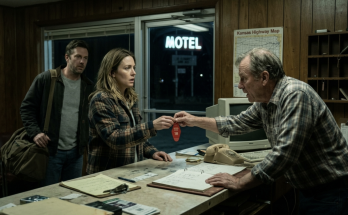
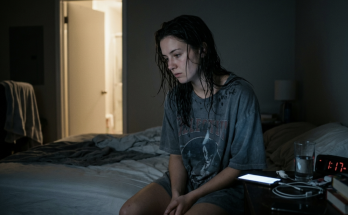
PART 1: The Boys Who Had My Eyes
I discovered that I might be the father of five-year-old twin boys while standing inside Terminal 2 at Minneapolis–Saint Paul International Airport, thirty-five minutes after an unexpected flight delay threatened the biggest business deal of my career.
At forty-four, I owned luxury resorts in Miami, Key West, Nashville, and Salt Lake City. That morning, I was supposed to fly to Baltimore to finalize the purchase of a historic waterfront estate.
When the departure screen flashed MECHANICAL DELAY, I immediately called my chief financial officer.
“Begin the meeting without me if necessary,” I said. “I’ll be there as soon as they clear the plane.”
Searching for somewhere quieter, I walked toward the windows and opened my laptop. Before I could finish reading the first page of the acquisition report, I noticed a woman sleeping upright against the wall beside a battered blue suitcase.
Two little boys were curled against her. One rested his head on her leg, while the other clutched the suitcase handle as if it were the only thing keeping them safe.
I nearly walked past them.
Then the woman brushed a strand of brown hair behind her ear.
My entire body went still.
“Rosalind?”
She was thinner than I remembered, and exhaustion had settled deeply into her face. But I would have recognized that familiar gesture anywhere.
Rosalind had disappeared six years earlier without saying goodbye.
We had met when she organized charity events for my family’s foundation. She was warm, intelligent, and completely unimpressed by my wealth. My mother, Genevieve, disliked her immediately.
“Enjoying her company is one thing,” Mother once told me. “Building a family legacy with her is another.”
I ignored the warning because Rosalind was the only woman with whom I had ever imagined having a family.
Then I left the country for three weeks to supervise a hotel opening. When I returned, her apartment was empty, her phone had been disconnected, and every letter I sent came back unopened.
Mother claimed Rosalind had asked us never to contact her again.
Eventually, wounded pride persuaded me to stop searching.
Now she was only a few yards away.
One of the boys stirred and raised his head. He had my dark, wavy hair and the same square jaw as my late father. But it was the tiny notch through his left eyebrow that made my breath catch.
I had the identical mark.
Rosalind opened her eyes. The instant she saw me, all the color drained from her face. She pulled both children closer.
“It can’t be,” she whispered.
“I’ve been saying that to myself for six years.”
Her eyes filled with tears, but fear kept her guarded.
“What are their names?” I asked.
“Mason and Lucas.”
“How old are they?”
Rosalind hesitated. “Five.”
My gaze moved between the boys and returned to her.
“Are they mine?”
Before she could answer, my phone rang. The name on the screen was Mother.
Rosalind stared at it and gave a bitter, trembling laugh.
“She knows you found us.”
“What are you talking about?”
She opened the battered suitcase and removed a bundle of returned letters, printed emails, and a cashier’s check for sixty thousand dollars bearing my mother’s signature.
Then she handed me a document printed on my company letterhead.
At the bottom was my signature.
Only I had never signed it.
The letter stated that I knew Rosalind was pregnant, wanted nothing to do with her children, and would take legal action if she contacted me again.
I looked up, struggling to breathe.
Rosalind held my gaze.
“Your mother never told you, did she?”
Behind us, a familiar voice cut through the crowded terminal.
“She was never supposed to come back.”
PART 2: The Signature That Wasn’t Mine
I turned and saw my mother standing fifty yards away, dressed in a cream suit and holding her leather handbag against her side.
Beside her was Oliver Vance, our senior corporate attorney. He carried a gray legal folder so tightly that the edges had begun to bend beneath his fingers.
My mother walked toward us without any sign of remorse.
“Christopher, you’re already late,” she said. “Give Rosalind whatever she wants and get on your flight.”
Rosalind pulled the twins closer. Mason buried his face against her coat while Lucas watched me with frightened eyes.
“What did you do?” I asked.
Mother glanced at the forged letter in my hand. “I protected you from a woman who would have ruined everything you built.”
I looked at Oliver.
“Give me that folder.”
He tightened his grip. “This contains privileged material.”
“I own the company that pays you. Hand it over, or your employment ends now.”
Mother stepped between us. “Christopher, don’t make a public spectacle.”
“A spectacle?” I held up the forged document. “Someone copied my signature and used my company letterhead to abandon my unborn children.”
People nearby had begun watching, but I no longer cared. Oliver finally surrendered the folder.
Inside were surveillance photographs taken over several years. Rosalind leaving a grocery store. Rosalind walking the twins to preschool. Mason climbing into a secondhand car while Lucas carried a red lunch box.
There were records of their addresses, medical appointments, and daycare arrangements. My family had always known where they were.
At the bottom was a settlement offering Rosalind two hundred thousand dollars in exchange for permanent silence.
“You followed my children?” I asked.
Mother’s voice remained cold. “I made sure they were provided for.”
“You tried to erase them.”
Rosalind opened her bag and removed the original cashier’s check for sixty thousand dollars.
“I never cashed it,” she said. “Your mother told me you wanted me gone. When I refused the money, my landlord suddenly canceled my lease. Then Oliver’s firm warned that I could be charged with harassment if I contacted you again.”
Oliver lowered his eyes.
“Did my mother authorize that?” I demanded.
He said nothing.
“Answer me.”
“Yes,” he finally admitted. “Mrs. Holloway told us you had approved the separation.”
“And you never confirmed it with me?”
“We were instructed not to involve you directly.”
I took out my phone and called my chief financial officer.
“Cancel the Baltimore acquisition.”
His silence lasted several seconds. “Christopher, the board is already assembled.”
“Cancel it. Then freeze Genevieve Holloway’s administrative access. Preserve every company email, server backup, phone record, and legal invoice connected to her or Oliver during the past seven years.”
Mother’s composure finally cracked.
“You would sacrifice that estate for this?”
I looked at Mason and Lucas. Five birthdays, five Christmas mornings, and five years of bedtime stories had been stolen from us.
“No,” I said. “I’m sacrificing the deal to uncover what you did.”
Airport security approached after someone reported the confrontation. I asked them to keep my mother away from Rosalind and the boys while I arranged a hotel and contacted an independent attorney.
Before leaving, Mother leaned close to me.
“You don’t know whether those children are yours.”
Rosalind flinched, but I didn’t.
“Then we’ll take a legal DNA test.”
I turned toward the twins. Lucas was studying my face with a seriousness no five-year-old should have carried.
“Do you know us?” he asked quietly.
The question nearly broke me.
“Not yet,” I said, kneeling several feet away so I wouldn’t frighten him. “But if your mother allows it, I would very much like to.”
Three days later, the laboratory called.
The probability that I was Mason and Lucas’s biological father was 99.99 percent.
But the DNA report was not the only evidence waiting for me.
My forensic auditor had recovered an email from six years earlier with the subject line:
CHRISTOPHER MUST NEVER SEE THIS.

PART 3: The Evidence My Mother Couldn’t Erase
The email had been sent by my mother to Margaret Ellis, a retired executive secretary who had worked for our family for twenty-three years.
Attached was a scanned copy of my signature.
Use this on the letter to Miss Carter. Christopher must believe she left willingly. She must believe he rejected the pregnancy. Neither of them can ever learn otherwise.
I read those lines until the words blurred.
The forensic audit uncovered seventeen calls Rosalind had made to my private office during the weeks after she learned she was pregnant. Every call had been redirected or deleted by someone using my mother’s administrative credentials.
There were also copies of Rosalind’s emails, intercepted letters, legal invoices, and payments to the investigator who had followed her and the twins.
My mother had not made one cruel decision in a moment of panic. She had maintained the lie for six years.
Rosalind sat across from me in my attorney’s office while the evidence was arranged across the conference table. She looked at the photographs of Mason and Lucas and wrapped her arms around herself.
“All those years, I kept wondering whether I should try one more time,” she said. “But every attempt ended with another warning.”
“I should have searched harder.”
“You believed your mother. I believed that letter.”
“That doesn’t excuse me.”
“No,” she said quietly. “But guilt doesn’t give our sons those years back.”
Her honesty hurt, but she was right. I could not repair the past by demanding immediate forgiveness.
Rosalind filed criminal complaints related to forgery, harassment, and unlawful surveillance. Oliver agreed to cooperate after investigators confronted him with the company records. He admitted that he had approved threatening letters without ever confirming my authorization.
Within weeks, he resigned from our company and surrendered his law license while the disciplinary investigation proceeded.
My mother requested one private meeting with me.
She arrived at my office expecting to negotiate. Instead, she discovered that her key card, corporate accounts, foundation authority, and access to the family trust records had all been revoked.
“You cannot remove me from a company I helped build,” she said.
“I already have.”
“Because of Rosalind?”
“Because you forged my name and stole five years from my children.”
Mother’s expression hardened. “I preserved your future. You were preparing to expand internationally. A scandal involving an unmarried event coordinator and two babies would have weakened everything.”
“They are not a scandal. They are my sons.”
“She was never suitable for this family.”
I rose from behind my desk.
“You will have no contact with Mason or Lucas. If Rosalind ever agrees to reconsider, it will happen only after extensive counseling and approval from an independent child psychologist.”
Her face went pale. “You would keep my grandsons from me?”
“You kept them from me first.”
For the first time in my life, my mother had no answer.
Rebuilding trust with Rosalind was far more difficult than removing Genevieve from the company. Rosalind did not want a mansion, a luxury car, or an apology wrapped in money. She wanted consistency.
So I started slowly.
I met the boys at a park with Rosalind present. I learned that Mason loved memorizing state capitals and that Lucas enjoyed taking plastic toys apart to understand how they worked. I attended their Little League practices, read bedtime stories over video calls, and never arrived late.
Three months after the airport, Mason allowed me to hold his hand while we crossed a busy street.
That tiny gesture meant more to me than every resort I owned.
But that evening, Rosalind called after the boys had fallen asleep.
“There’s something else you need to know,” she said.
“About my mother?”
“No. About why we were at the airport.”
Her voice began to tremble.
“We weren’t waiting for a flight, Christopher. We had nowhere left to go.”
PART 4: Where We Finally Belonged
Rosalind explained that the property owner had sold the apartment building with almost no warning. She had found another place, but the deposit consumed most of her savings, and the unit failed inspection two days before they were supposed to move in.
Her sister, Charlotte, had offered them a room in Wisconsin. Rosalind took Mason and Lucas to the airport, hoping to buy three last-minute bus tickets if the flights were too expensive.
“But the boys were exhausted,” she said. “I sat down for a few minutes and fell asleep.”
If my flight had departed on time, I would have walked onto that plane without ever seeing them.
For years, I had treated delays as failures to be conquered. Now thirty-five inconvenient minutes felt like the only mercy fate had ever offered me.
I wanted to move Rosalind and the boys into my house immediately, but she refused.
“They barely know you,” she said. “I won’t turn their lives upside down just because you can afford to.”
So I helped without taking control.
My attorney arranged temporary housing while Rosalind searched for a permanent home. Once the court established paternity, I began paying formal child support, including the amount I should have contributed during the years I had missed.
Six months later, Rosalind leased a bright condo ten minutes from my house. She insisted on paying her own rent, but she allowed me to furnish the boys’ bedrooms.
Mason chose a map of the United States for his wall. Lucas requested shelves where he could display the toys he had dismantled and—occasionally—managed to rebuild.
Our relationship did not become romantic again overnight. Rosalind had loved me once, but love could not erase six years of abandonment, even if that abandonment had been built on a lie.
I learned not to pressure her.
Instead, I showed up.
I attended school meetings, baseball games, dentist appointments, and ordinary Tuesday dinners. I learned that Mason hated peas, Lucas was afraid of thunderstorms, and both boys wanted the hallway light left on until they fell asleep.
One Saturday afternoon, we were unpacking the last boxes in the condo when Mason found the battered blue suitcase.
“What’s inside?” he asked.
Rosalind and I exchanged a glance before she opened it.
The returned letters were still tied together with a faded ribbon. Mason picked up one envelope and recognized my name.
“Were these for Dad?”
Rosalind nodded. “I wrote them before you were born.”
“Didn’t he want to read them?”
My throat tightened.
“I never received them,” I said. “Someone made sure they came back.”
Lucas looked up from the floor. “But you found us anyway.”
I knelt beside them.
“No,” I said softly. “You found me.”
Mason thought about that before placing the letter in my hand.
“Then you should keep this one.”
I later framed the unopened envelope and placed it on my office desk. Not as a reminder of my mother’s betrayal, but as proof that silence does not always mean someone stopped trying.
The criminal case against Genevieve continued, and Rosalind maintained firm boundaries. My mother entered counseling, but neither of us promised that she would ever be allowed into the boys’ lives. Forgiveness, we decided, would never be purchased with apologies or demanded in the name of family.
It would have to be earned.
A year after the airport, I took Mason and Lucas to Baltimore. We stood outside the waterfront estate I had once planned to purchase.
“Is this the big deal you canceled?” Mason asked.
“Yes.”
“Do you regret it?”
I looked at Rosalind standing behind them, smiling beneath the afternoon sun.
Then Lucas slipped his small hand into mine.
“Not for a second.”
That evening, the four of us walked along the harbor together. We still carried scars from the years that had been stolen, and none of us pretended healing was simple.
But for the first time, we were no longer living inside someone else’s lie.
After six years of returned letters, forged signatures, and stolen choices, I was finally exactly where I belonged.