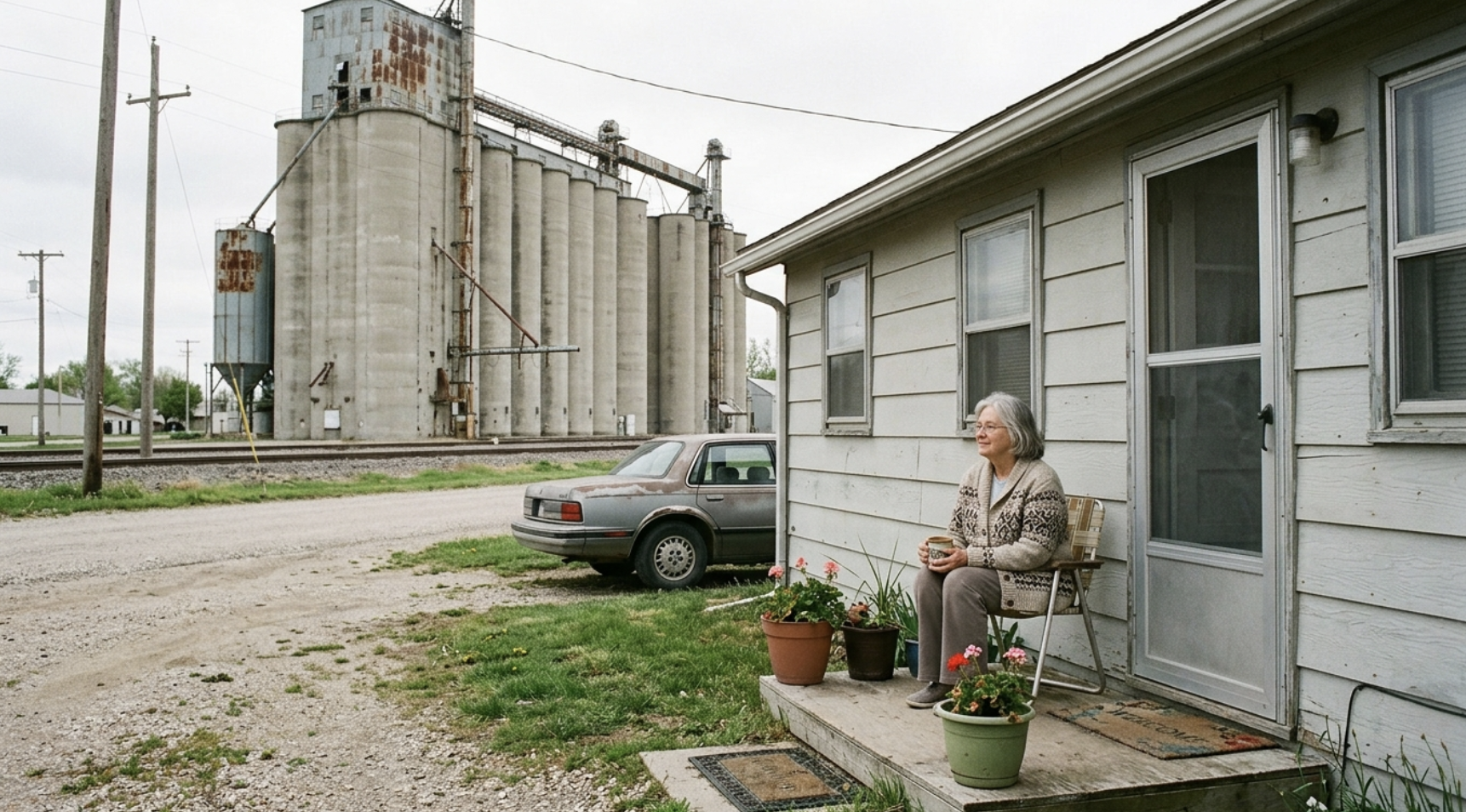
PART 3: The Truth Behind the $800
I turned the legal pad toward me.
At the top of the first page, Todd had written three words in capital letters.
WHAT WE EXPECTED.
Below them was a list.
Basement rent: $500.
Utilities: $100.
Groceries: $200.
Total: $800.
Underneath that, he’d written another heading.
WHAT WE NEVER COUNTED.
The list beneath it was much longer.
Childcare: four days a week.
School pickups.
Meals for the children.
Laundry.
Emergency babysitting.
Holiday coverage.
And, at the very bottom, one sentence that made my fingers go still.
We expected Judy to pay us for the privilege of being part of our family.
I read it twice.
Then I looked at Todd.
“Did you write this?”
“Yes.”
“Why?”
He rubbed both hands over his face.
“Because I’ve spent the last two weeks looking at that number, and I finally realized how ugly it was.”
I closed the legal pad.
“I’m not sure I understand.”
He nodded toward Michelle.
“After you moved out, the children kept asking when Grandma was coming over. Michelle got upset every time they mentioned you. She told them you were busy settling into your new house.”
Michelle covered her mouth.
“I wasn’t angry with you for choosing the little house, Mom,” she whispered. “Not at first.”
“Then what were you angry about?”
She took a shaky breath.
“I was embarrassed.”
That answer hurt more than I expected.
“Embarrassed by me?”
“No!” She stepped forward. “Not by you. By our situation.”
She sat across from me and wiped her cheeks.
“Things haven’t been going well, Mom. Todd’s hours were cut at the plant. The mortgage payment went up when our insurance changed. The car needed repairs, and Sadie’s preschool costs more than we expected. We were falling behind, and I didn’t know how to tell you.”
I listened without interrupting.
She continued.
“When you said you needed somewhere to live, I thought it was the perfect solution. You could stay with us, we’d get some help with the bills, and I’d have someone to watch the children. I convinced myself it would work for everybody.”
“And the $800?”
Todd answered that one.
“I calculated what we needed, not what was fair. I saw your Social Security payment and treated it like money available to solve our problems.”
He looked directly at me.
“I didn’t stop to think about what it would mean for you to hand over almost half your income and still be expected to work four days a week.”
I folded my hands on the table.
“Did you ever consider asking me what I could afford?”
He lowered his head.
“No.”
“Did you consider asking whether I wanted to spend four days a week looking after children at sixty-seven years old?”
“No.”
“Did you consider that I might want to spend some of my retirement resting, visiting friends, or simply sitting on my own porch without anyone expecting something from me?”
His eyes grew wet.
“No, Judy. I didn’t.”
The room became quiet.
Outside, a grain truck rumbled past the house, its engine vibrating through the kitchen windows.
I had spent the last two years learning how to live without Dale. I’d learned to carry my own groceries, fix a dripping faucet, and sleep in a bed that no longer held the warmth of another person.
I had learned how to make one cup of coffee instead of two.
What I hadn’t learned was how to stop hoping that the people I loved would understand me without being told.
I looked at Michelle.
“You know what hurt the most?”
She shook her head.
“It wasn’t the $800. It wasn’t the basement. It wasn’t even the babysitting.”
I paused.
“It was the way you presented it to me. Like I was a problem you had to solve. Like I needed to earn my place in your home.”
Michelle began to cry harder.
“Mom, I’m sorry.”
“I believe you’re sorry. But I need you to understand why I chose that little house.”
She looked up.
“I chose it because I wanted to wake up in the morning without feeling like a burden. I wanted to make breakfast when I was hungry, go to bed when I was tired, and know that the roof over my head didn’t depend on how useful I was to somebody else.”
I glanced toward the living room, where my small collection of photographs sat on a shelf.
“Your father worked his whole life. He spent years getting up before sunrise, coming home covered in dust, and putting every extra dollar toward our family. When he died, I lost my husband, my best friend, and the person who had shared every ordinary day with me.”
My voice softened.
“I wasn’t asking you to replace him. I wasn’t asking you to rescue me. I was asking for a little time to find my footing.”
Michelle reached across the table, but she stopped before touching my hand.
“I should have known that.”
“Yes,” I said gently. “You should have.”
Todd turned another page on the legal pad.
“There is something else.”
I looked at him.
“What is it?”
He hesitated.
“There’s a reason I came up with the $800 figure so quickly.”
Michelle’s face changed.
“Todd, don’t.”
He looked at her, then back at me.
“No. She deserves to know.”
He took a deep breath.
“Three weeks before you came to us, Michelle and I sat down with our finances. We were trying to figure out how to stop falling behind. We went through our expenses, and then Michelle mentioned that you might need a place to stay when the farm family took back the house.”
I nodded slowly.
“I told her that if you moved in, we could use your monthly payment to cover most of our shortfall.”
He paused.
“Then I added up the babysitting. If we didn’t have to pay for after-school care and occasional weekend coverage, we’d save even more.”
Michelle began shaking her head.
“I didn’t realize how awful it sounded until he wrote it down like that,” she whispered.
Todd continued.
“I turned your situation into a financial plan. I treated you like another line on a spreadsheet.”
He tapped the legal pad.
“And when you politely thanked us and said you’d think about it, I assumed you’d eventually agree because you didn’t have anywhere else to go.”
That was the moment I understood something important.
They hadn’t thought I was incapable of supporting myself.
They had simply assumed I would choose their offer because I loved them.
And perhaps, somewhere in their minds, they had mistaken my love for an obligation.
I leaned back in my chair.
“Thank you for telling me the truth.”
Todd looked surprised.
“That’s all you’re going to say?”
“For now.”
He stared at me, waiting for something else.
I didn’t give him an angry speech. I didn’t tell him what a terrible son-in-law he was. I didn’t demand that Michelle apologize again.
I had spent enough of my life believing that if I explained my pain carefully enough, the people who caused it would automatically understand.
Sometimes they did.
Sometimes they didn’t.
And sometimes, the only thing you could do was tell the truth and let the other person decide what to do with it.
Michelle finally reached for my hand.
“Mom, can we start over?”
I looked at her fingers resting beside mine.
“I’d like that.”
Relief crossed her face so quickly that it almost broke my heart.
“But starting over doesn’t mean pretending this never happened.”
Her smile faded slightly.
“I know.”
“I love you. I love those children more than I can explain. But I’m not moving into your basement, and I’m not paying to earn my place in your life.”
She nodded.
“Okay.”
“And if you need help, you can ask me. You can tell me the truth about your finances. You can tell me you’re frightened or overwhelmed. But you cannot decide what my money is for without asking me.”
“I understand.”
I held her gaze.
“Do you?”
She looked down at our hands.
“I think I do now.”
We sat quietly for a few minutes.
Then Sadie’s name came up.
“She’s been asking for you every day,” Michelle said. “She wants to know when she can come see your house.”
My throat tightened.
“She can come whenever you bring her.”
“Really?”
“Of course. I have a porch swing that needs testing, and I think she might be qualified for the job.”
For the first time that evening, Michelle smiled.
It was a small smile, but it was real.
Todd stood and carried the legal pad toward the kitchen counter.
“I should probably take this with me.”
“No,” I said.
He stopped.
“Leave it.”
He looked confused.
“Why?”
“Because I want you both to remember what we talked about tonight. Not as a punishment. As a reminder.”
He nodded and placed the pad back on the table.
Before they left, Michelle hugged me.
She held on longer than she usually did.
“I really am sorry, Mom.”
I wrapped my arms around her.
“I know, sweetheart.”
And for the first time in ten days, my daughter kissed my cheek before walking out the door.
After their pickup disappeared down the road, I returned to my porch swing.
The evening air smelled of corn dust and woodsmoke. Across the street, the grain elevator lights shone against the darkening sky.
I pulled a blanket over my knees and watched the trucks move slowly through the yard.
My house was quiet.
But it no longer felt quite so lonely.
Because I finally understood that loving my family didn’t require me to surrender the little life I’d worked so hard to build.
And I had a feeling that the most important part of this story was still ahead of me.
PART 4: The Home That Was Finally Mine
Three days after Michelle and Todd visited, I received a phone call that changed everything.
It was Saturday morning. I was standing in my kitchen, spreading butter on a piece of toast, when my phone rang.
“Grandma!”
Sadie’s little voice filled my ear.
“Hello, my sweetheart.”
“Mommy says I can come to your house today! Can I see your swing? And can I have hot chocolate?”
I laughed.
“You can certainly have hot chocolate. But you’ll have to ask your mommy about the swing. It’s a very serious piece of equipment.”
Sadie giggled.
“Okay! I’ll tell her!”
Then her voice became quieter.
“Grandma?”
“Yes, sweetheart?”
“Are you mad at Mommy?”
I stopped spreading the butter.
Children have a way of asking the questions adults spend years avoiding.
“No, honey. I’m not mad at Mommy.”
“Then why don’t you live with us?”
I looked out my kitchen window at the little white house I’d chosen for myself.
“Because Grandma needed a home of her own.”
“Oh.”
There was a brief silence.
“Can I still come over?”
I closed my eyes for a moment.
“Oh, Sadie. You can always come over.”
She squealed with excitement, and I heard Michelle calling in the background that it was time to get dressed.
When the call ended, I sat at the kitchen table for a long time.
I had worried that choosing independence would cost me my family. I’d imagined Christmas dinners without invitations, birthdays celebrated through photographs, and grandchildren who slowly forgot the sound of my voice.
But perhaps I had been afraid of something that hadn’t happened yet.
Perhaps the real challenge wasn’t choosing between independence and family.
Perhaps it was learning how to have both.
At ten-thirty, Michelle pulled into my driveway.
Sadie jumped out before the car had fully settled into park.
“Grandma!”
She ran across the yard and threw her arms around my waist.
I held her tightly.
Behind her, my grandson, Ben, climbed out of the car carrying a small backpack.
“Mom said we can stay until lunch,” he announced.
“Until lunch?” I said. “Well, I suppose we’ll have to make the most of our time.”
Michelle smiled from beside the car.
“Actually, Mom, if it’s okay with you, I’d like to stay too.”
I stepped aside.
“Come in, sweetheart.”
That morning, my little house filled with the kind of noise I hadn’t realized I missed so much.
Sadie explored every corner. Ben inspected the porch swing and announced that it needed a better chain. Michelle helped me prepare pancakes, and for a little while, everything felt almost like it used to.
Almost.
Because this time, nobody assumed I would cook, clean, or take care of everything.
Michelle washed the dishes without being asked.
Ben carried the empty plates to the sink.
Sadie sat beside me on the porch and drank hot chocolate with a little marshmallow mustache.
When they left, Michelle hugged me again.
“Can we do this every Saturday?” she asked.
“Every Saturday might be a little ambitious,” I teased. “I have a very demanding relationship with my porch swing.”
She laughed.
“Every other Saturday, then?”
“We can talk about it.”
She nodded, and I saw that she understood something she hadn’t understood before.
My time was mine to offer.
It wasn’t something she could automatically claim.
Over the following weeks, our relationship slowly began to change.
Michelle started calling more often, not just when she needed something.
Sometimes she told me about her day. Sometimes she asked how I was sleeping. Sometimes she simply wanted to talk while she folded laundry.
Todd began stopping by occasionally to help with little repairs around the house.
One afternoon, he arrived with a toolbox and a new porch light.
“The old one flickers,” he explained.
“I know. I’ve been meaning to replace it.”
He glanced at me.
“I figured I could take care of it.”
I smiled.
“Thank you, Todd.”
He installed the light, checked the wiring, and made sure the front step was secure.
When he finished, he stood on the porch looking slightly uncomfortable.
“Judy, can I ask you something?”
“Of course.”
“Do you think you’ll ever forgive me for what happened?”
I studied his face.
He looked older than he had a month earlier. Perhaps guilt had done that to him. Perhaps it was simply the exhaustion of trying to keep a family afloat while pretending everything was fine.
“I forgave you the night you came here and told me the truth,” I said.
His shoulders relaxed.
“But forgiveness doesn’t mean I want to go back to how things were.”
He nodded slowly.
“I understand.”
“I hope you do. Because I want us to be family. I just don’t want either of us to confuse family with owing each other something.”
He looked toward the porch swing.
“My father used to say that people show their character by how they treat someone who can’t do anything for them.”
I smiled faintly.
“Your father sounds like a wise man.”
“He was.”
Todd packed his tools.
Then he turned back toward me.
“For what it’s worth, I think Dale would be proud of you.”
My throat tightened.
I hadn’t expected him to mention my husband.
“Thank you,” I whispered.
After he left, I sat on the porch and watched the new light come on as the sky darkened.
For the first time in a long while, I felt that Dale was still part of my life—not because I imagined what he would have said, but because the values we’d built our marriage around were still guiding me.
Respect.
Honesty.
And the belief that love should never require someone to disappear inside another person’s needs.
👉ENDING: The Unexpected Letter…
My Daughter Wanted $800 a Month and Four Days of Babysitting—So I Found a Home of My Own and Learned My Worth
Part 1 of 2