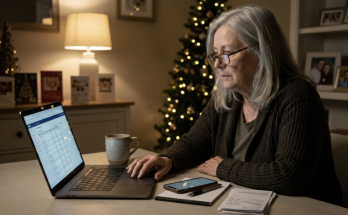
There was a time when a telephone call from Travis could change my entire day.
If he sounded upset, I became upset.
If he needed money, I worried until I found a way to help.
If he had disappointed someone, I tried to explain why he hadn't meant to.
I had done that for years.
And I rarely questioned it.
Being his mother meant being there.
At least, that was how I understood it.
But after the lake house dispute, I began to recognize the difference between being available and being responsible for someone else's decisions.
It was a painful lesson.
I hadn't wanted to learn it this way.
I would have preferred an ordinary conversation.
A small disagreement.
Something we could resolve over coffee.
Instead, I had been forced to defend a property worth $425,000.
I had needed an attorney to challenge a deed.
I had discovered financial arrangements connected to my name.
And I had learned that my own son had planned to keep me uninformed.
There was no way to pretend that was a small misunderstanding.
I sat at the lake house kitchen table one morning.
My walker was beside me.
The room still held traces of Patricia and Robert's stay.
There were unfamiliar household items.
There were changes I hadn't chosen.
But I no longer felt the need to examine every object.
The house was mine.
That was the fact I returned to whenever I felt unsettled.
The court had determined that the deed was invalid.
The public records had been corrected.
I could make decisions about the property again.
And I didn't need to ask Travis whether those decisions would inconvenience anyone.
I looked toward the window.
The trees were familiar.
Gerald and I had looked at them together countless times.
Sometimes I found myself expecting him to walk into the kitchen.
I knew he wouldn't.
But the feeling still came.
Grief didn't follow a convenient schedule.
Neither did healing.
I had learned that through my hip surgery.
At first, I wanted to recover quickly.
I grew frustrated when simple tasks exhausted me.
I disliked needing the walker.
I disliked asking Diane for help.
And I disliked how vulnerable I felt.
Travis had taken that vulnerability and used it as an argument.
He said I wasn't using the lake house.
He said I couldn't walk properly.
He acted as though those facts made the property available for someone else.
I remembered the anger I felt during that call.
I had looked at my walker while he spoke.
For a moment, I felt ashamed of needing it.
Then I realized how unreasonable that was.
I had undergone surgery.
I was recovering.
I hadn't surrendered my independence.
And I certainly hadn't surrendered ownership of my home.
Now I was sitting in that very house.
The walker was still beside me.
It hadn't prevented me from returning.
It had helped me get there.
I looked at it with a different feeling.
Not pride exactly.
Gratitude.
It was a tool.
It allowed me to move safely while my body healed.
I wished I had stopped treating it as evidence of failure sooner.
Diane came into the kitchen.
She asked whether I wanted help preparing something to eat.
I accepted.
A few months earlier, I might have felt embarrassed.
Now I understood that accepting help wasn't the same as giving away control.
Diane always asked.
She never made decisions about my affairs without discussing them.
She didn't treat me as incapable because I moved slowly.
She didn't assume I wanted her to choose everything for me.
That respect had become especially meaningful.
We ate together.
For a while, we talked about her grandson's baseball game.
I remembered the first time she brought it up during the legal dispute.
She had been trying to give me a few ordinary minutes.
At the time, I could barely concentrate.
Now I could listen.
I asked questions.
I smiled.
I enjoyed the conversation.
That felt like progress.
After breakfast, I thought about the blue folder.
It had been left secure with the other important documents.
I didn't need to carry it around the lake house.
But I could picture its contents clearly.
The deed.
The estate provisions.
The records concerning the power of attorney.
The questioned signature.
The notary information.
The document from Michael Reynolds.
The screenshots Kelsey had posted.
The credit statements.
Every piece had helped establish what happened.
I remembered how frightened I was when Caroline first opened the folder.
She had asked whether I approved the transfer.
I said no.
She asked whether I gave Travis permission to dispose of the property.
Again, I said no.
Those answers had seemed almost too simple to matter.
But they mattered enormously.
They were the difference between a voluntary transfer and one I disputed.
They were the foundation of my decision to challenge the deed.
I hadn't needed to invent an explanation.
I hadn't needed to exaggerate.
I had simply told the truth.
The truth was enough to begin.
I thought about the notary.
I had recognized the name as someone connected to the bank where Travis held his business account.
I had never met her.
I had never appeared before her to approve the transfer.
That detail had frightened me.
It suggested the paperwork might contain serious irregularities.
Caroline had investigated it.
She had also examined the signature attributed to me.
The records didn't match what I knew I had signed.
I had watched the legal process unfold without understanding every technical detail.
But I understood the central issue.
My son had no right to use my name and property as though they belonged to him.
The court eventually agreed that the deed was invalid.
That result meant more to me than money.
It meant my consent still mattered.
It meant the law hadn't treated my age or medical condition as reasons to ignore my wishes.
And it meant I could return to the house Gerald and I had loved.
I looked toward the porch.
The sunlight was moving across the floor.
I wanted to sit outside.
Diane helped me get there.
I moved carefully.
The distance was manageable.
I was becoming more confident, though I still needed to rest.
We reached the porch.
I sat facing the lake.
The wooden bench stood near the shore.
Gerald had built it years before.
I remembered how proud he was when he finished it.
He had wanted a place where we could sit together.
Nothing complicated.
Just a sturdy bench facing the water.
I had never imagined that object would become such an important reminder of him.
But after his death, I found myself thinking about it often.
During my recovery, when I feared losing the property, I thought about the bench more than almost anything else.
I wondered whether Patricia and Robert would remove it.
I wondered whether contractors would change the area around the dock.
I wondered whether I would ever see it again.
When Diane drove me back, it was one of the first things I noticed.
It was still there.
That sight had almost brought me to my knees.
I was grateful my walker was beside me.
I smiled faintly at the memory.
Gerald would have liked knowing his bench remained.
I wished I could tell him.
Diane sat nearby.
After a while, she asked whether I was thinking about Travis.
I nodded.
“Sometimes I wonder what he'll do now.”
She looked toward the water.
“About the investigation?”
“About everything.”
I thought about the financial questions.
There were still disputed expenses.
Contractor invoices.
Money borrowed or sought through arrangements I hadn't approved.
Caroline had made it clear that those issues required separate attention.
I wasn't automatically responsible for them.
The evidence would determine liability.
That was important.
But it also meant Travis would have to face whatever consequences followed from his decisions.
I couldn't protect him from that.
Not without risking my own security again.
I looked toward Diane.
“Part of me still wants to call and ask whether he needs help.”
She listened.
“Then I remember why all this happened.”
I paused.
“I don't want to turn every problem into something I have to solve.”
She nodded.
It felt strange to say that aloud.
For years, I had taken pride in being useful.
I liked helping people.
I liked knowing I could make a difficult day easier.
Gerald had been generous too.
He was often the first person to help a neighbor.
But he had never believed generosity meant allowing someone else to take what they wanted.
He understood the importance of asking.
Of respecting boundaries.
Of accepting a refusal.
I had forgotten some of those lessons when it came to Travis.
I wanted him to be happy.
I wanted him to feel respected by Kelsey's parents.
I wanted his marriage to succeed.
But I couldn't provide those things by giving away my home.
That wasn't a sustainable solution.
It wasn't even a solution.
It simply moved his problems onto me.
I thought about Kelsey.
She had apologized after her parents decided to leave.
Her voice had sounded exhausted.
She acknowledged that she should have contacted me before the move.
I appreciated her admission.
But I also remembered her earlier attitude.
When she came to my house with Travis, she wanted to know why her parents were being inconvenienced.
She talked about their stress.
She seemed to expect me to accept the situation because they had already spent money.
I had looked at her and realized she didn't understand what it meant to be the person whose home was being taken.
Later, she seemed to understand more.
Perhaps the investigation had changed her perspective.
Perhaps the fear of becoming involved in the dispute had forced her to reconsider.
I couldn't know.
I could only acknowledge what she had said.
Her apology was a beginning.
It wasn't a reason to ignore everything that happened.
The same was true of Patricia and Robert.
They had moved to an apartment in Gainesville.
I hoped they would find somewhere comfortable.
I hoped their finances would improve.
I didn't enjoy imagining them disappointed or worried.
But I didn't regret insisting that my property was unavailable.
I had never promised them the house.
Travis had.
That distinction was important.
I wasn't responsible for making his promises possible.
I wasn't responsible for protecting his reputation after he made them.
And I wasn't responsible for paying expenses I hadn't approved.
I looked toward the lake.
The water was calm.
I felt a quiet sense of relief.
For once, I wasn't trying to arrange everyone else's future.
I was simply thinking about my own.
My recovery.
My home.
My memories of Gerald.
The years I still hoped to spend at Lake Hartwell.
Those things deserved attention too.
I had spent so much of my life focusing on what my son needed that I sometimes forgot to ask what I wanted.
Now the answer seemed simple.
I wanted peace.
I wanted the freedom to decide how my property would be used.
I wanted relationships built on honesty.
And I wanted enough trust that I didn't have to check every document for signs of betrayal.
I didn't know whether Travis and I could rebuild that kind of relationship.
I still hoped we could.
But hope wasn't the same as permission.
He couldn't return to the old arrangement simply because he was sorry.
We needed something different.
I needed him to understand that I was not a source of unlimited solutions.
I was his mother.
A person.
Someone with a life, a history, and a right to make decisions.
I looked at Gerald's bench again.
I thought about the promise we had made to keep coming here.
I had nearly lost the chance to honor it.
But the house was still mine.
I had returned.
And I was learning to protect the life Gerald and I built without apologizing for wanting to keep it.
That evening, I sat in the living room.
The fireplace was quiet.
The unfamiliar decorations didn't bother me as much as they once had.
I knew I could change them when I was ready.
There was no urgency.
No one was trying to make me leave.
No one was demanding that I surrender the property.
The house was mine to enjoy.
I looked toward Gerald's chair.
I missed him.
I always would.
But I no longer felt as though I needed someone else to tell me whether I was doing the right thing.
I had made difficult decisions.
I had followed the facts.
I had protected my ownership.
And I had allowed my son to face his own responsibilities.
For the first time, those choices felt less like acts of resistance and more like ordinary parts of taking care of myself.
Click here to continue reading: PART 15: I Kept the Lake House My Son Tried to Give Away, but the Real Victory Was Learning That Love Could Never Replace Trust
My Son Gave My $425,000 Lake House to His In-Laws While I Was Recovering From Hip Surgery—But One Quiet Decision Left Him With 53 Missed Calls and a Fight He Never Expected
Part 14 of 15