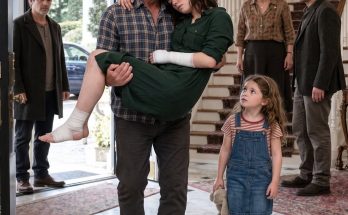
The call came while Victoria Hawthorne was stitching a border collie’s shoulder.
The clinic smelled like antiseptic, wet fur, and the sharp metallic trace of blood.
Her assistant held the dog steady under the buzzing fluorescent lights while Victoria pulled the suture thread through skin with the kind of calm that made farmers trust her with animals they loved like family.

She was three stitches from finished when her phone lit up on the stainless counter.
County General.
Victoria stared at the screen for half a second too long.
Emergency calls came through her veterinary clinic all the time.
A horse had gone through a fence.
A dog had swallowed a sock.
A barn cat had lost a fight with something bigger and meaner.
But hospitals did not call her clinic unless something human had broken.
“This is Victoria Hawthorne,” she said.
The woman on the line spoke gently, and that was what frightened her first.
“Mrs. Hawthorne, you need to come to the emergency room immediately. It’s your daughter.”
For a moment, the clinic went silent around her.
The dog was still breathing on the table.
Her assistant was still looking at her.
The suture was still in Victoria’s gloved hand.
None of it seemed real anymore.
“My daughter?” Victoria asked, though there was only one daughter in her world.
Meadow.
Seven years old.
One missing front tooth.
Purple rain boots no matter the weather.
A stuffed triceratops named Captain Pickles tucked under her arm every night.
“She’s here,” the woman said. “The doctor will speak with you when you arrive.”
Victoria did not remember taking off her gloves.
She remembered the snap of latex.
She remembered handing the needle to her assistant.
She remembered saying, “Cancel everything,” in a voice so flat that no one questioned her.
Then she was out the door.
The drive to County General should have taken twelve minutes.
Victoria made it in eight and remembered none of the traffic lights.
At the hospital, the ER intake desk had her name ready before she gave it.
A receptionist looked up, saw her face, and lost the practiced smile hospital workers use when they are trying not to scare people.
That was the first bad sign.
The second was the nurse who came through the double doors with a clipboard pressed to her chest.
The third was the doctor waiting behind her, his expression set in the careful shape of bad news.
“Mrs. Hawthorne,” he said, “your daughter has multiple injuries consistent with a fall. She is stable right now, but we are monitoring her closely.”
Stable.
Victoria had learned in the Army that stable was one of those words people used when they wanted you to stand still while the world was burning.
She had served twenty years.
Three tours.
A Bronze Star sat in a box in her closet because she had never known what to do with it after she came home.
People in town called her Doc Tori.
They brought her calves, dogs, horses, barn cats, and half-wild creatures that bit before they trusted.
They knew she did not panic.
They knew blood did not make her flinch.
They did not know she still chose corner tables at restaurants.
They did not know she still woke in the dark with her hand reaching for danger.
They did not know Meadow was the reason she had learned to stay soft in a world that had taught her hardness.
The doctor led her down the ER hallway.
Every step felt too slow.
He kept talking about imaging, observation, police notification, and an intake form with a statement that did not make sense.
Victoria heard only pieces.
Fall.
Stairs.
Child said she was playing dress-up.
Possible inconsistencies.
Then she saw the bed.
Meadow looked impossibly small in it.
One arm was wrapped.
Her shoulder was braced.
A hospital wristband circled her little wrist.
Dark bruising marked her skin in places that made Victoria’s throat close.
The monitor beside her beeped steadily, as if it had no idea it was measuring the distance between life and disaster.
“Meadow,” Victoria whispered.
Her daughter’s eyelids moved.
Victoria bent closer, afraid to touch her too hard.
For one breath, Meadow seemed far away.
Then her eyes opened.
“Mom,” she whispered. “I’m sorry.”
Victoria felt something in her chest split cleanly down the middle.
“No, baby,” she said. “You do not apologize. Not to me. Not ever.”
Meadow looked toward the door.
That small movement told Victoria more than the doctor’s careful words had.
Her child was not just injured.
She was afraid of being overheard.
Victoria lowered her voice.
“What happened?”
Meadow’s eyes filled, but she did not cry the way children cry when they want comfort.
She cried like a child who had already been warned that comfort could be used against her.
“I saw Dad,” she whispered.
Victoria went still.
“With Aunt Serena.”
The room seemed to narrow around the bed.
“In your bed,” Meadow added.
Dennis Hawthorne had been Victoria’s husband for nine years.
In their small Nebraska town, Dennis was the kind of man people trusted before he asked for anything.
He managed the bank.
He coached Little League.
He volunteered at church breakfasts and shook hands with the calm warmth of a man who knew his reputation entered every room before he did.
He remembered loan histories, children’s names, and which families were too proud to admit they were behind.
Everyone called him a good father.
Victoria had wanted to believe them.
Lately, Dennis had been distant.
Late nights.
A guarded phone.
Cold answers wrapped in reasonable explanations.
Victoria had blamed herself because trauma does that.
It teaches you to distrust your own reactions before you distrust the people hurting you.
Maybe she was too watchful.
Maybe she had brought too much war home in her bones.

Maybe Dennis needed a softer wife than the woman who checked exits and slept lightly.
Serena made that lie easier to swallow.
Serena was Victoria’s younger sister.
Warm, pretty, social, and effortless in rooms where Victoria always felt like she was calculating how to survive.
She sold real estate and could make a stranger feel like a friend before the first handshake was over.
She brought wine on bad nights.
She watched Meadow when surgeries ran late.
She knew the garage code, had a spare key, and could pick Meadow up from school without anyone questioning it.
That was the worst part.
Victoria had not merely trusted Serena.
She had given Serena access.
A key.
A code.
A place at the kitchen table.
A child who called her favorite aunt.
Trust is not always a speech.
Sometimes trust is a key you forget you handed over until it unlocks the wrong door.
“What happened after you saw them?” Victoria asked.
Meadow swallowed hard.
“He got mad,” she whispered. “He said I ruined everything.”
Victoria’s hand tightened on the bed rail.
“He said nobody would believe me. Then he threw me down the stairs.”
The monitor kept beeping.
A cart rolled somewhere down the hall.
Someone laughed quietly at the nurses’ station, unaware that a family had just ended in one sentence.
Victoria did not scream.
She almost wished she had.
Screaming would have made her seem human.
Instead, an old stillness moved through her body.
The kind she had learned under pressure.
The kind that pushed grief, humiliation, and rage to the side so purpose could step forward.
“They told me to say I fell,” Meadow whispered. “Playing dress-up.”
Victoria bent close enough for Meadow to see every word land.
“I believe you.”
Meadow’s face changed.
Not relief exactly.
Something smaller.
Something starving.
“I believe every word,” Victoria said.
“They’re still home,” Meadow whispered.
Victoria’s breath stopped.
“In the kitchen,” Meadow said. “Drinking whiskey.”
Dennis and Serena were still in her house.
Drinking.
After Meadow had been carried away injured.
After they had told a seven-year-old girl to lie.
After Dennis Hawthorne, perfect husband and perfect father, had decided reputation mattered more than his child’s body.
For one ugly second, Victoria saw the kitchen in her mind.
The lower cabinet by the sink.
The bottle Dennis kept behind the cast-iron skillet.
The two stools at the island.
Serena’s laugh bouncing off the tile as if the house belonged to her.
A ceramic water pitcher sat on the hospital tray beside Meadow’s bed.
Victoria looked at it.
She imagined her hand closing around it.
She imagined Dennis seeing her walk through the kitchen door.
She imagined the sound it would make.
Then Meadow made a small hurt sound in the bed.
Victoria looked back at her daughter and let the image die.
Anger is loud when it is helpless.
Purpose is quiet.
A nurse entered softly.
“Mrs. Hawthorne,” she said. “The officers are waiting outside.”
Victoria kissed Meadow’s forehead.
Her daughter’s skin was warm.
“Mommy is going to handle this.”
Meadow’s fingers twitched against the blanket.
“Don’t let them be mad at me.”
That sentence did what Dennis had not managed to do.
It broke through the last thin layer of Victoria’s restraint.
“They do not get to be mad at you,” Victoria said. “They get to answer.”
In the hallway, two officers stood near the nurses’ station.
One had a notebook open.
The other watched Victoria with the measured attention of a man who understood grief could become dangerous if ignored.
“What can you tell us?” he asked.
“My husband hurt my daughter after she found him with my sister,” Victoria said. “He told her to lie. They are both still in my home, and they have been drinking.”
The younger officer stopped writing for half a breath.
Victoria continued.
“The bedroom is upstairs. The kitchen faces the back porch. Dennis keeps the whiskey in the lower cabinet by the sink. There are cameras facing the stairwell and the driveway. The back door sticks when it opens.”
The nurse behind them went still.
“If they try to leave that way,” Victoria said, “you’ll hear it.”
For the first time all day, Victoria heard herself from the outside.
Not Doc Tori.
Not Mrs. Hawthorne.
Not the wife of the town’s most trusted bank manager.
Captain Hawthorne.
Not because she wanted a war.
Because they had brought one to her daughter.
“If you want the truth before they clean it up,” she said, “we need to go now.”
The older officer lifted his radio.
“Unit two, roll with us.”
The hallway changed after that.
The younger officer wrote faster.
The nurse checked Meadow’s chart again, then stepped into the room to stay with her.
Victoria unlocked her phone and opened the house camera app.
Four small squares appeared.
Driveway.
Porch.
Stairwell.
Kitchen.

The driveway camera showed the family SUV under the porch light.
The porch camera spun, trying to connect.
The stairwell and kitchen were black.
The activity log loaded slowly.
Victoria stared at the timestamps.
1:43 p.m. Motion detected. Stairwell.
1:46 p.m. Camera offline.
1:49 p.m. Back door opened.
The younger officer’s face hardened.
“That system stores clips?” he asked.
“Cloud backup,” Victoria said.
It was one of the few things Dennis had never bothered to learn because he assumed cameras were a husband’s tool for watching doors, not a wife’s tool for proving what happened inside them.
The porch camera came alive.
The image stuttered at first.
Then Serena appeared in the doorway, carrying something wrapped in a bath towel.
Dennis stood behind her in his white dress shirt, sleeves rolled up, one hand gripping the doorframe as if the house itself might steady him.
The older officer did not wait.
He spoke into the radio, gave the address, and told the responding unit there was a possible assault on a child with suspects on scene.
Victoria listened to every word.
She did not feel triumphant.
She felt cold.
When they reached her house, the front porch light was on.
A small American flag hung near the mailbox, stirring in the evening air.
It looked painfully ordinary.
The kind of ordinary that makes neighbors slow down later and say they never imagined anything like that could happen there.
Dennis opened the door before the officers knocked a second time.
He had changed shirts.
That was the first thing Victoria noticed.
He wore a clean blue button-down, tucked neatly into jeans, his hair combed, his face arranged in concern.
“Tori,” he said, reaching for the version of her name he used in public. “Thank God. I’ve been trying to reach you.”
Victoria looked past him.
Serena stood in the kitchen entrance, holding a glass with both hands.
Her makeup was smudged under one eye.
The whiskey bottle sat on the island.
Two glasses.
One towel on the floor near the sink.
The house smelled like alcohol, lemon cleaner, and fear.
“Sir,” the older officer said, “step onto the porch.”
Dennis blinked.
“I’m her husband.”
“Yes,” the officer said. “Step onto the porch.”
That was when Dennis looked at Victoria properly.
Not at the wife.
Not at the veteran he privately called too intense when he wanted to win an argument.
At the woman who had told police exactly where to look.
His expression shifted.
Just a little.
But Victoria saw it.
The smile disappeared first.
Then the softness around his eyes.
Then the calculation began.
“Meadow fell,” Dennis said.
“No,” Victoria said.
Serena flinched.
The younger officer entered with Victoria’s permission.
He photographed the stairs.
He photographed the lower cabinet by the sink.
He photographed the whiskey bottle, the glasses, the towel, and the bedroom.
He documented every room Dennis and Serena had believed they would have time to clean.
The stairwell wall still held a small smear where Meadow’s shoulder had hit.
A purple rain boot lay sideways near the bottom step.
Victoria stared at it until the room blurred.
That boot nearly undid her.
Not the bed.
Not the bottle.
Not Serena’s shaking hands.
The boot.
Small.
Ridiculous.
Purple.
The kind of thing a child wears because the world is supposed to let children be silly.
The officer asked if she needed to sit.
Victoria said no.
Dennis kept talking.
He explained stress.
He explained misunderstanding.
He explained how Meadow had always been imaginative.
He explained how children sometimes exaggerate what they do not understand.
Men like Dennis always think a sentence can become a staircase if they build it carefully enough.
But a sentence is not evidence.
The camera log was evidence.
The ER intake form was evidence.
Meadow’s statement was evidence.
The photographs were evidence.
The officer’s notebook was evidence.
And Dennis had forgotten the one thing every person in town knew about Doc Tori.
She documented everything.
The cloud backup showed Meadow appearing at the upstairs hallway at 1:43 p.m.
It did not show the bedroom.
Victoria was grateful for that.
It did show Dennis rushing into the hall.
It showed Serena behind him, pulling a robe closed.
It showed Meadow stepping backward.
Then the camera shook, cut to motion blur, and went black.
The kitchen camera went offline three minutes later.
Dennis watched the officer view the clip and finally stopped talking.
Serena made a sound like a sob trying to hide inside a breath.
“I told him not to,” she whispered.
Dennis turned on her so fast the officer stepped between them.
“You told me to fix it,” he snapped.

Serena’s face collapsed.
That was the first honest thing Victoria had heard from either of them all day.
Not an apology.
Not remorse.
A fracture.
The officers separated them.
Dennis was taken into custody from the front porch of the house where neighbors had eaten barbecue with him two months earlier.
Serena was escorted out through the side door, still crying, still saying she never meant for Meadow to get hurt, as if intention could soften the bottom of a staircase.
Victoria did not follow them.
She went back inside for Meadow’s triceratops.
Captain Pickles was under the blanket at the foot of the bed.
Victoria picked it up and sat on the edge of Meadow’s little mattress.
The room smelled like bubblegum shampoo and crayons.
A dinosaur poster leaned crooked on the wall.
A school worksheet sat unfinished on the desk, the top line filled in with Meadow’s careful letters.
My family is important because…
The rest was blank.
Victoria folded it once and put it in her pocket.
At the hospital, Meadow was awake when Victoria returned.
Her eyes went straight to the stuffed dinosaur.
“You found him,” she whispered.
“I found him.”
“Is Dad mad?”
Victoria sat beside the bed and took Meadow’s fingers gently.
“Your dad does not get to decide what happens next.”
That answer seemed to settle somewhere in Meadow’s body.
She closed her eyes.
For the first time since the call, Victoria let herself cry.
Quietly.
Not because she was broken.
Because she had held herself together long enough to bring something soft back to her daughter.
The weeks that followed were not clean.
People in town did what people in towns do.
Some brought casseroles and said nothing.
Some whispered in grocery aisles.
Some could not understand how the bank manager they liked could be the same man named in a police report.
A few tried to ask Victoria whether there might be another side.
She learned to answer that with silence.
Not every question deserves the dignity of a response.
At the preliminary hearing, Dennis wore a suit and looked smaller than he had ever looked at church breakfasts.
Serena sat on the opposite side of the hallway, pale and shaking, no longer glowing, no longer effortless, no longer safe.
Meadow did not testify that day.
Her statement, the medical records, the photographs, and the camera logs spoke where a seven-year-old should not have had to.
Victoria sat beside the advocate assigned to Meadow and kept both feet on the floor.
She had learned that trick overseas.
When the room wants to pull you out of yourself, press your feet into something solid and breathe.
Dennis’s attorney tried to suggest confusion.
The prosecutor asked about the camera log.
The officer described the timestamps.
The hospital records were entered.
The police report was referenced.
The ER intake form mattered.
The tiny purple boot mattered.
The truth did not arrive as one grand speech.
It arrived in paperwork, timestamps, bruises, and a child’s whispered apology that never should have existed.
Months later, Meadow started wearing the purple boots again.
Not every day.
At first, only inside the house.
Then to the mailbox.
Then to the clinic, where she sat behind the front desk with coloring books while Victoria finished late appointments.
The first time she wore them to school, she made Victoria walk with her to the entrance.
Halfway there, Meadow stopped.
“What if people know?” she asked.
Victoria crouched carefully in front of her.
“Then they know you told the truth.”
Meadow looked down at her boots.
“They might be mad.”
Victoria brushed a strand of hair behind her daughter’s ear.
“They do not get to be mad at you,” she said again. “They get to answer.”
Meadow nodded once.
Then she walked through the school doors.
Victoria stood outside until she disappeared down the hall.
The small American flag near the school entrance moved in the morning breeze.
A yellow bus pulled away from the curb.
Someone’s coffee cup sat forgotten on the bench.
The world looked ordinary again, but Victoria understood ordinary differently now.
Ordinary was not safety.
Ordinary was something you rebuilt with locks changed, records copied, appointments kept, and a child learning that home could be quiet without being dangerous.
Dennis lost the version of himself the town had protected.
Serena lost the access Victoria had once mistaken for closeness.
And Victoria lost the illusion that betrayal announces itself before it sits at your kitchen island with a glass of whiskey.
But Meadow lived.
Meadow healed.
Meadow laughed again at cartoons and insisted Captain Pickles needed a checkup at the clinic.
The first time she apologized for spilling cereal after everything happened, Victoria knelt in the kitchen and took both of her little hands.
“No,” she said. “We do not apologize for accidents like we are begging to stay loved.”
Meadow stared at her.
Then she nodded.
That became the new rule in their house.
No begging to be believed.
No shrinking to keep someone else comfortable.
No confusing fear with respect.
Years in the military had taught Victoria how to survive danger.
Motherhood taught her what survival was for.
The town had known her as Doc Tori, steady hands and quiet voice.
Dennis had known her as the wife he thought would shatter.
Serena had known her as the sister who opened the door and handed over the key.
But Meadow knew the truth first.
She knew that when she whispered, “Mom, I’m sorry,” her mother did not break.
Her mother listened.
Her mother believed her.
And then Captain Hawthorne came home.