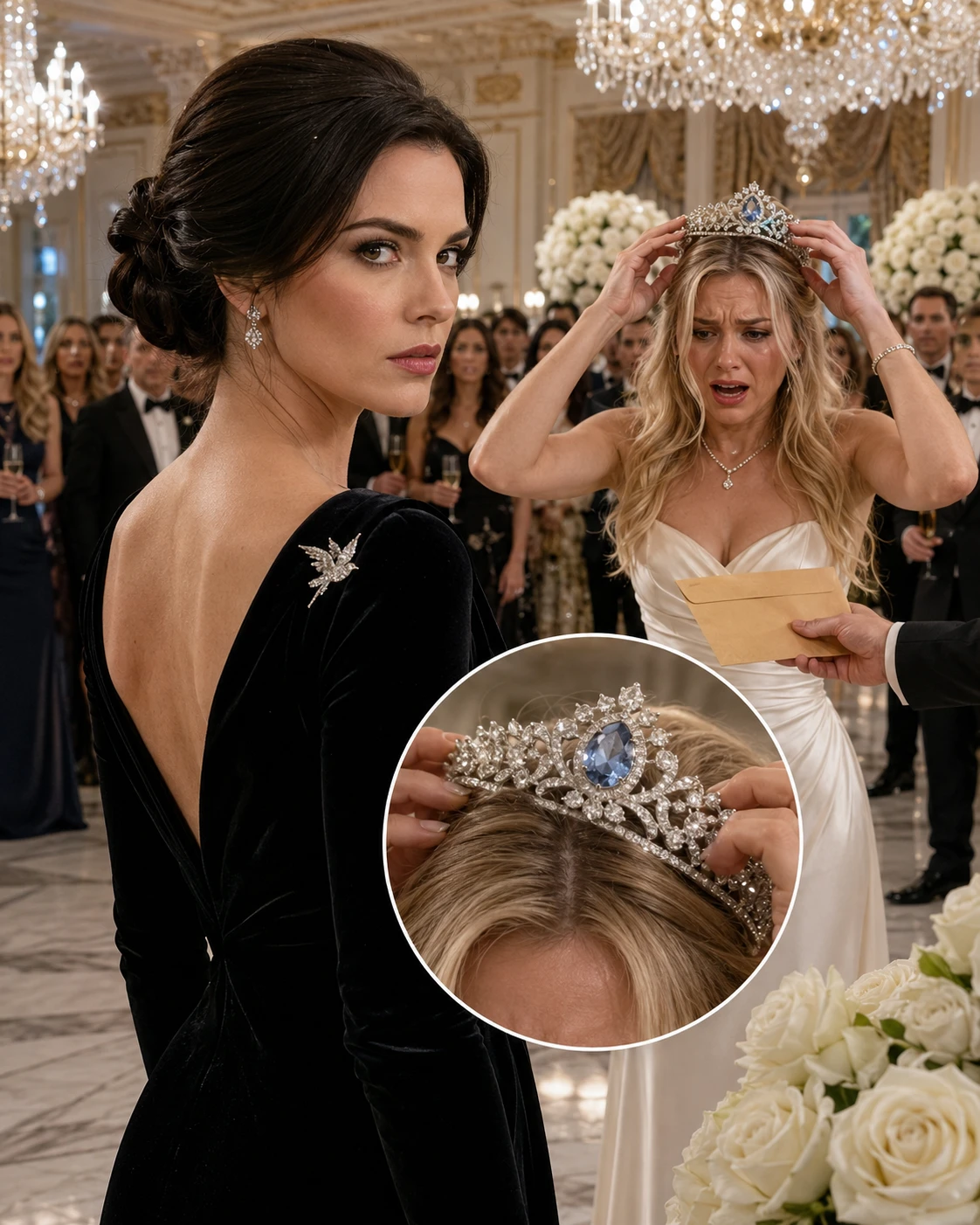
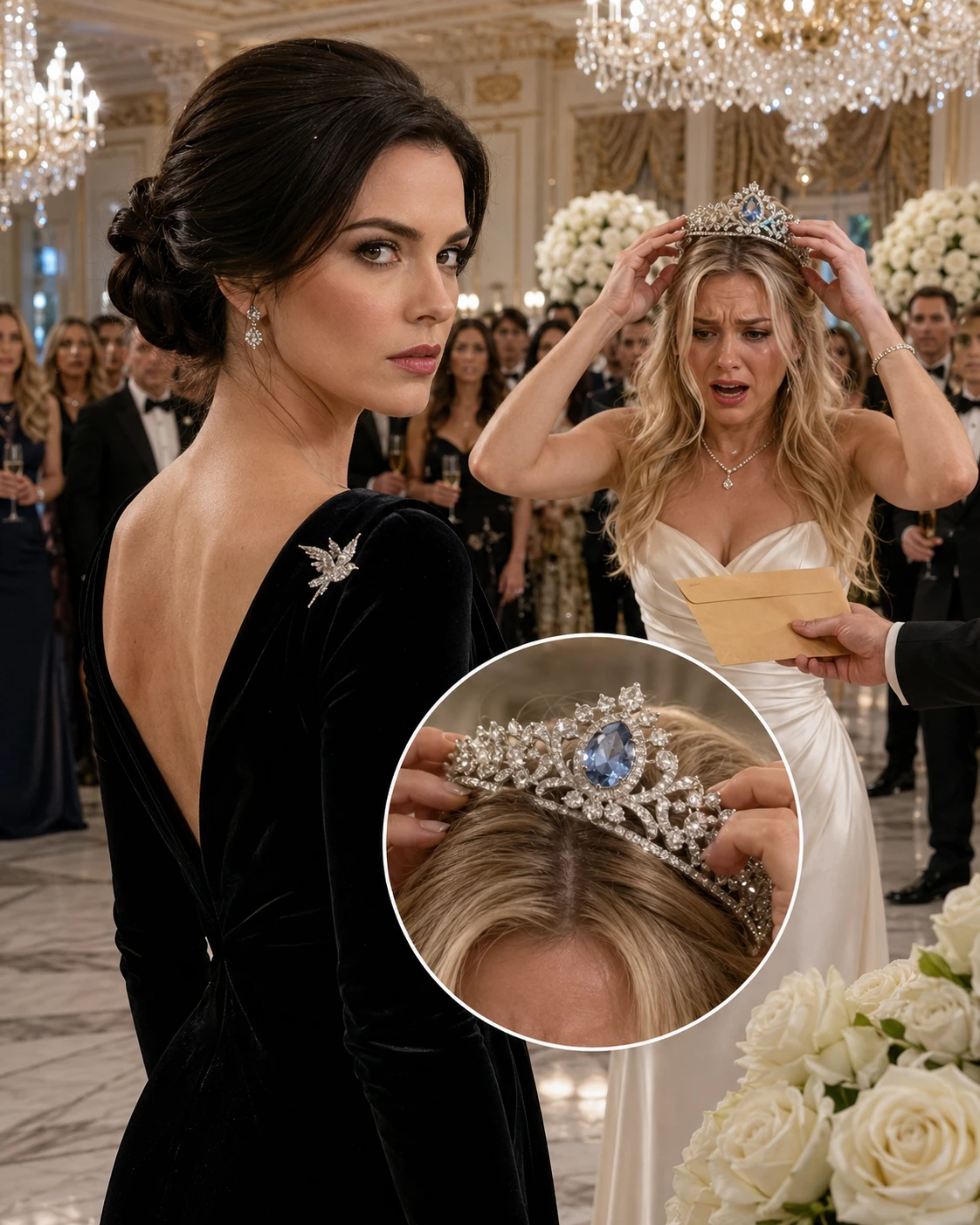
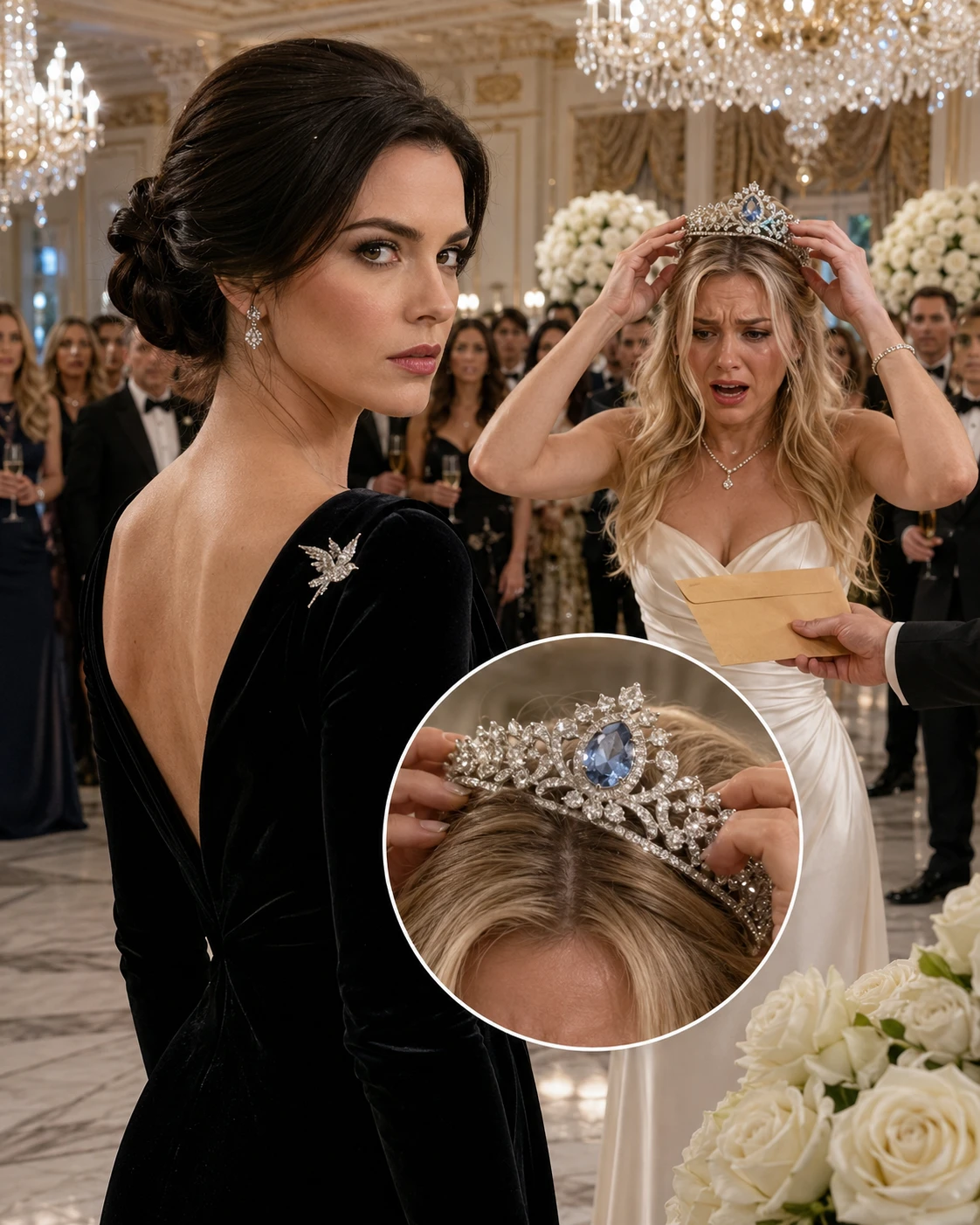
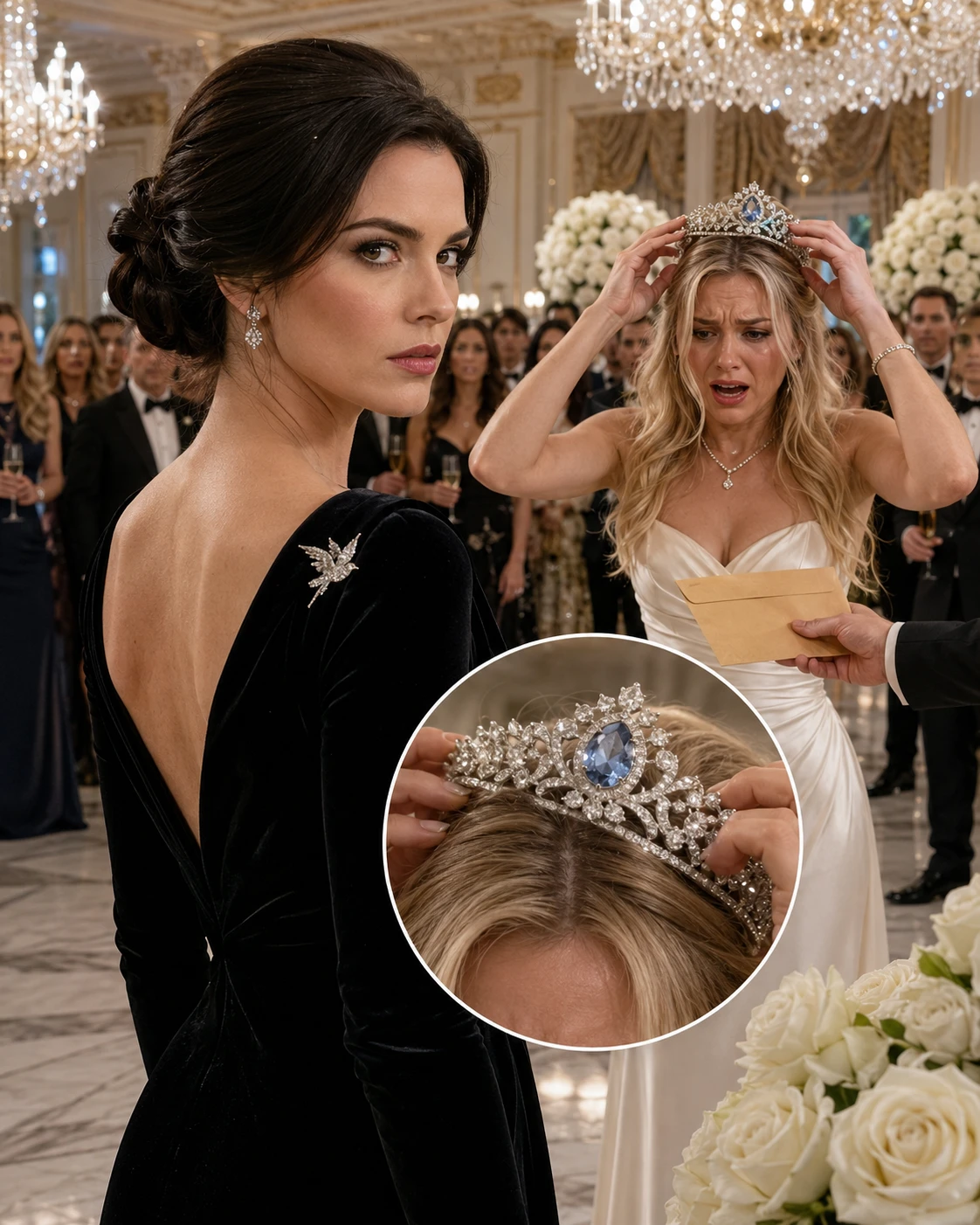
My husband’s mistress wore my grandmother’s tiara to their engagement party.
The tiara had survived three generations of women who never bowed to men. It had been hidden through a Depression, smuggled out of a burning summer house in Maine, locked in a bank vault during my grandfather’s gambling years, and finally placed in my hands by a woman who smelled like violet soap and old money.
Sloane wore it tilted slightly wrong.
That was the first thing I noticed when I stepped into the ballroom of the Leland Hotel in Newport, Rhode Island.
Not my husband’s hand on her waist.
Not the champagne tower sparkling under the chandelier.
Not the thirty-foot floral arch of white roses, flown in from California, beneath which Graham Prescott planned to announce his engagement to a woman who had spent the last year sleeping in my bed whenever I was out of town.
No.
I noticed the tiara.
The Whitaker Star.
My grandmother’s crown.
My inheritance.
My blood.
Sloane Bellamy smiled beneath the chandelier as if the light itself belonged to her. Her dress was ivory satin, almost bridal, cut low enough to make wealthy women whisper and foolish men forget their wives. Around us, Newport’s finest pretended not to stare at me.
They had all been invited to watch me break.
My husband had designed it that way.
He wanted me humiliated in public. He wanted me to see his mistress wearing my jewels, standing in my family’s hotel, surrounded by my family’s friends, while he raised a glass and told everyone he had “finally found happiness.”
So I let him.
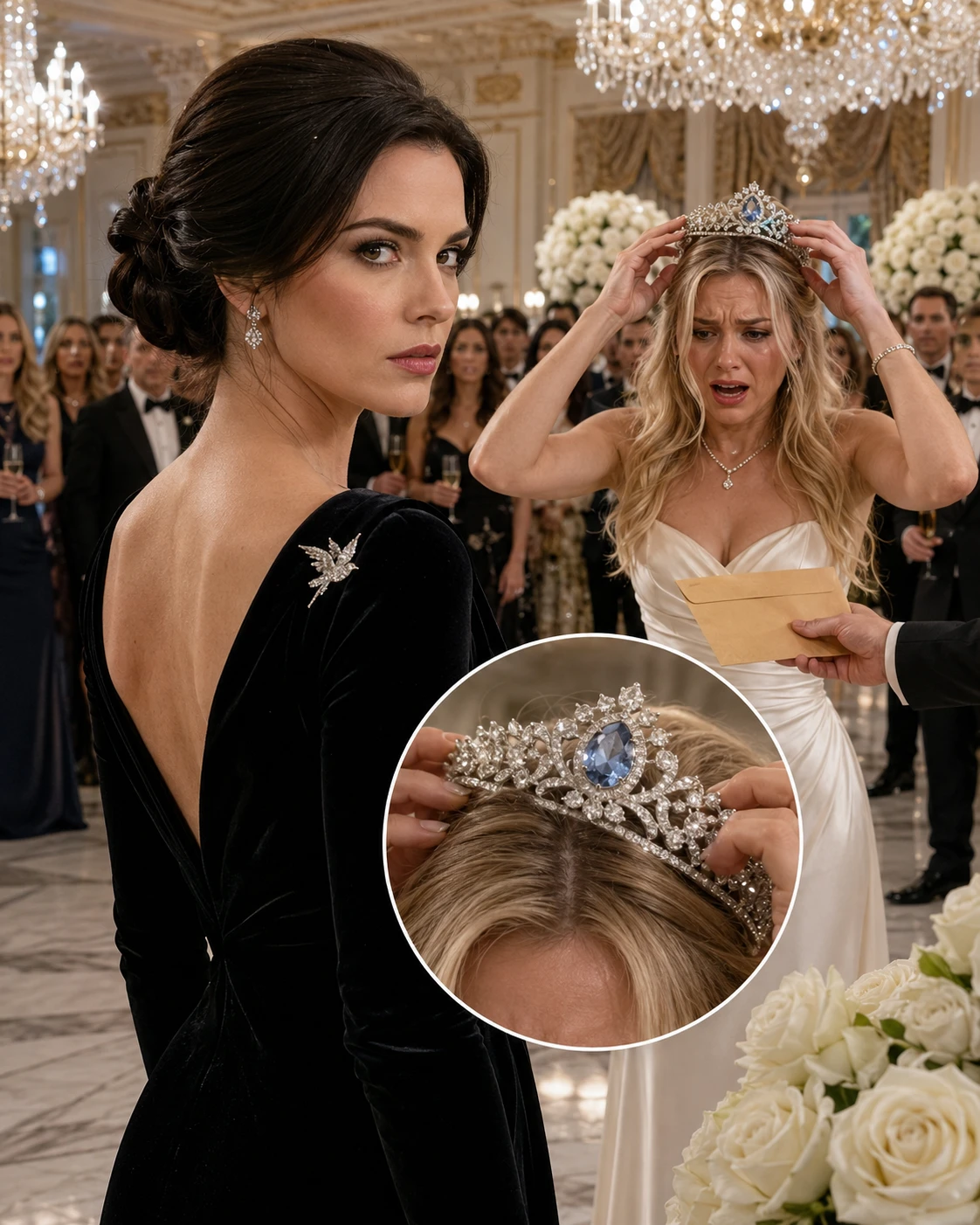
I stood near the marble staircase in a black velvet gown with no necklace, no diamonds, no trembling hands. I watched the photographer lift his camera.
And I waited until he captured the theft beautifully.
The flash went off.
Sloane laughed.
Graham looked straight at me with the lazy cruelty of a man who thought money had made him untouchable.
Then the estate attorney walked through the ballroom doors.
And before the champagne toast, she served both of them.
CHAPTER 1 — THE CROWN UNDER THE CHANDELIER
There are rooms built to make people feel small.
The grand ballroom of the Leland Hotel was one of them.
Gold-leaf ceilings. Venetian mirrors. Marble floors polished so perfectly that every woman’s gown looked like it was floating over water. Two crystal chandeliers hung from the ceiling like frozen storms. The place had been built in 1899 by railroad money, restored in 1996 by hedge-fund money, and quietly saved in 2018 by money nobody in that room knew belonged to me.
My grandmother used to say Newport had two kinds of wealth: the kind that needed applause, and the kind that owned the chairs.
Graham had always been the first kind.
He entered every room like he expected the walls to lean closer.
He was beautiful in the way dangerous men often are—clean jaw, cold eyes, expensive watch, soft voice sharpened at the edges. When we first met in Manhattan, he was leaning against the bar at Bemelmans, ordering a martini for a woman he had not yet decided to betray. He wore a navy suit and a smile that made me feel, briefly and stupidly, like I had been chosen by fate instead of targeted by a man with excellent research skills.
I was Vivienne Whitaker then.
Not Vivienne Prescott.
Not Mrs. Graham Prescott.
Not the woman strangers would soon discuss in country club bathrooms with hushed pity and delighted malice.
Just Vivienne, twenty-nine years old, running the Whitaker Foundation, trying to make myself into something kinder than the women who raised me.
Graham told me he loved that I didn’t act rich.
I should have known that meant he loved the money best.
He proposed eleven months later at our house in East Hampton, beneath a sky the color of pearls. My grandmother, Eloise Whitaker, was still alive then. She watched him slide the ring onto my finger and said nothing. That night, while Graham drank bourbon with my father on the terrace, she brought me upstairs to her dressing room.
She opened a narrow blue velvet case.
Inside lay the Whitaker Star.
It was not the largest tiara in Newport, nor the oldest, but it had the sort of beauty that did not beg. Platinum branches curved into a delicate crown of diamonds, each stone set like frost on winter vines. At the center was a pale blue sapphire, almost silver in certain light.
“This does not make you important,” my grandmother said, placing it in my hands. “It reminds you that you already are.”
“I don’t know when I’d ever wear it.”
“You wear it when someone needs reminding.”
I laughed then.
I was young enough to think love could protect me from humiliation.
My grandmother did not laugh.
“The men who want your shine,” she said, “will always tell you they are rescuing you from loneliness. Be careful, darling. Some rescues are just cages with velvet cushions.”
Three years later, she was dead.
Four years later, my husband was engaged to his mistress.
And she was wearing the tiara.
The ballroom hummed around me.
“Vivienne?”
A woman in a champagne-colored dress touched my elbow. Abigail Pierce, whose husband had once tried to buy a Senate seat and failed gracefully enough to become an ambassador instead.
“My God,” she whispered. “I didn’t think you would come.”
“That makes two of us.”
Her eyes flicked toward Sloane. “Is that—”
“Yes.”
“How did she get it?”
I looked at the tiara shining beneath the chandelier.
“That is the question, isn’t it?”
Abigail’s mouth tightened with the horror of a woman watching a social murder in progress.
Across the room, Sloane saw me.
She touched the tiara with two fingers, pretending to adjust it, though everyone knew what she was doing. She wanted me to look. She wanted me to flinch. She wanted a photograph of my face cracking so she could send it to whatever group chat women like her kept for trophies.
I smiled at her.
That unsettled her.
Good.
Graham noticed next. He murmured something into Sloane’s ear, kissed her temple, and began walking toward me.
The crowd parted for him.
He still moved like my husband. Like he had the right to cross any room and claim me, wound me, silence me. He had been doing it for months by then, always softly. Always privately.
Vivienne is fragile.
Vivienne has been under a lot of stress.
Vivienne is obsessed with family objects.
Vivienne drinks too much when she is emotional.
Vivienne doesn’t understand that our marriage has been over for a long time.
He had planted the story carefully. A sad wife. A modern love. A gracious transition. By the time he sent out invitations for his engagement party, half of Newport believed I was refusing to accept reality.
The other half came for entertainment.
“Viv,” Graham said, stopping in front of me.
He smelled like sandalwood and victory.
“Graham.”
His smile was polite enough for witnesses. “I wasn’t sure you’d have the courage to come.”
“I wasn’t sure you’d have the taste to steal from the dead.”
A flicker.
Small, but there.
Then he recovered.
“Don’t make a scene.”
“That’s funny,” I said. “I thought that was why you invited me.”
His eyes cooled. “Sloane found it in the house. You left it behind.”
I took a sip of champagne from a passing tray. I had not planned to drink it, but the glass looked elegant in my hand.
“The tiara was in a locked vault at Whitaker House.”
“Your memory has been unreliable lately.”
There it was.
The blade wrapped in silk.
I leaned closer, just enough that he could hear me under the music.
“My memory is excellent.”
He held my gaze.
For a second, I saw what I had refused to see for years: Graham was not brave. Cruel, yes. Ambitious, yes. But brave? No. His power depended on rooms agreeing with him.
That night, the room still did.
For a few more minutes.
At the far end of the ballroom, the photographer raised his camera again. Graham turned instinctively toward Sloane, giving him the angle he wanted—the shining mistress, the stolen crown, the faithless husband glowing with borrowed grandeur.
Flash.
Perfect.
I looked toward the entrance.
Margot Ellis had arrived.
She was sixty-one, silver-haired, and dressed in a black suit that cost more than most weddings. She had been my grandmother’s estate attorney for thirty-two years, which meant she knew where every body was buried and which family member had paid for the shovel.
She walked into the ballroom carrying a slim leather folder.
Two men followed her. One was a process server. The other was a retired FBI forensic accountant named Daniel Cho, though no one in the room knew that yet.
Graham saw her and went pale.
I set down my champagne.
Sloane, still smiling, lifted her glass as the band softened.
A waiter rang a small silver bell.
Graham returned to her side and tapped his spoon against a flute.
“Everyone,” he said, his voice carrying beautifully. “Thank you for being here tonight.”
The room quieted.
Phones lifted.
Of course they did.
That was the mistake arrogant people always made now. They staged cruelty for an audience and forgot the audience records everything.
Graham smiled at Sloane. “After a difficult chapter, I am grateful to stand here with someone who has brought light back into my life.”
A murmur of approval.
Sloane lowered her lashes.
I almost admired the performance.
Almost.
“We wanted tonight to be about new beginnings,” Graham continued. “About honesty. About finally stepping into the future without fear.”
Margot stopped beside them.
“Graham Prescott?” she said.
The room went still.
Graham’s jaw tightened. “This is not the time.”
“It rarely is.”
The process server handed him a thick envelope.
Then he handed one to Sloane.
Sloane blinked. “What is this?”
Margot looked at the tiara on her head.
“Proof that some women mistake jewelry for immunity.”
CHAPTER 2 — THE WIFE WHO STOPPED BLEEDING IN SILK
Six months before the engagement party, I found a lipstick stain on my husband’s shirt.
Not red. Not pink.
Nude peach.
The kind of shade women buy when they want men to believe their mouths are naturally that soft.
I stood in our laundry room in Manhattan, holding the shirt by the collar, and felt something quiet inside me step backward.
Not break.
Step backward.
That is the thing nobody tells you about betrayal. The first wound is often not rage. It is distance. Your soul moves one inch away from the person who hurt you. Then another. Then another. Until one morning you wake up and realize they would need a passport to reach you.
At first, I did what women are taught to do when their lives begin to rot behind expensive doors.
I asked gently.
Graham lied smoothly.
I cried privately.
He apologized for making me “feel insecure.”
I stopped asking.
He became kinder for twelve days, then crueler than before.
Sloane entered my life like perfume sprayed in a room after a crime.
She was twenty-six, from Dallas, though she had trained herself to sound vaguely Connecticut. She ran a luxury event studio that specialized in “intimate legacy experiences,” which meant she convinced bored rich men to spend obscene amounts of money on flowers no one would remember. Graham hired her to plan the Whitaker Foundation winter gala.
At the first meeting, she called me “Mrs. Prescott” with a smile too slow to be innocent.
She wore winter white, gold hoops, and no shame.
I knew by the end of lunch.
Not because she touched him. She was too clever for that.
Because he didn’t interrupt her.
Graham interrupted everyone.
But when Sloane spoke, he listened like she was telling him secrets about himself.
By spring, he stopped coming home before midnight. By summer, he moved into the guest suite and told me he needed space. By September, he had convinced our mutual friends that my grief over my grandmother had made me unstable.
“My concern,” he told my father over dinner one night, “is that Vivienne is attaching emotional significance to objects. Houses. Jewelry. Old papers. She thinks everyone is trying to take something from her.”
I sat at the other end of the table, cutting into salmon I could not taste.
My father looked uncomfortable but not surprised. He had always preferred the easiest version of events, especially when they required nothing from him.
“I’m sure she’ll settle,” he said.
Settle.
Like dust.
Like a lawsuit.
Like a woman lowered carefully into silence.
That night, I stood barefoot in my closet and took off my wedding ring.
Not because I was ready to leave.
Because I wanted to see if my hand remembered itself without him.
It did.
The next morning, I called Margot.
She did not ask if I was sure.
That was one of the reasons my grandmother trusted her.
“Bring me everything,” Margot said.
“Everything?”
“Marriage documents. Trust agreements. Foundation accounts. Property transfers. Emails. Texts. Anything that made you feel foolish for noticing it.”
I brought boxes.
Then I brought more.
For three weeks, Margot’s office became a war room scented with espresso and printer ink. Daniel Cho flew in from Washington. A digital forensic analyst named Priya Nair built timelines from devices Graham thought had been wiped clean. My grandmother’s private banker in Boston unlocked records I had never known existed.
That was when I learned the truth.
Not one truth.
A cathedral of them.
Graham had been moving money from the Whitaker Foundation through vendor invoices connected to Sloane’s company. Floral installations that cost $280,000 but were billed at $740,000. Catering deposits sent to shell accounts in Delaware. “Consulting fees” paid to an LLC registered to Sloane’s cousin in Fort Worth.
He had forged my initials on two approvals.
He had pressured my assistant to backdate a reimbursement.
He had opened a credit line against a Hamptons property he did not own.
He had told Sloane I was too medicated to notice.
Worst of all, he had begun preparing a petition claiming I was mentally incompetent to manage Whitaker assets.
That one did not make me cry.
It made me laugh.
A small, ugly laugh in Margot’s conference room while rain slid down the windows and Daniel Cho looked at me like he was watching a match strike.
“He wants guardianship leverage,” Margot said carefully. “Not full control yet. But enough to frighten you into settlement.”
“Settlement,” I repeated.
“That appears to be the plan.”
I looked down at the copies spread across the table.
Graham did not want a divorce.
He wanted surrender.
He wanted me to sign away my claim to the houses, the foundation, the voting shares, the art, the private holdings, the things my grandmother had spent a lifetime protecting from charming men with empty pockets.
Sloane was not his escape from me.
She was his reward for defeating me.
That afternoon, I went home to Whitaker House.
It stood on a private road outside Greenwich, Connecticut, gray stone and ivy, with a long lawn rolling toward the Sound. My great-grandmother had bought it in 1941 after her husband died and his brothers tried to force her out of the family company. She hosted them for lunch, served cold cucumber soup, and informed them she had already purchased their debts.
That was the first Whitaker lesson.
Never raise your voice when paperwork will do.
I walked through the silent house and climbed the stairs to my grandmother’s dressing room. The blue velvet case was gone from the safe.
For a moment, my vision narrowed.
I checked again.
The tiara was gone.
Only then did I sit on the floor.
Not because of the diamonds.
Because I could still feel my grandmother’s hands closing mine around that crown.
This does not make you important. It reminds you that you already are.
Graham had stolen many things from me by then: sleep, trust, appetite, reputation, the stupid little future I once imagined with him in it.
But this was different.
This was bone-deep.
He had reached backward through my life and put his hands on a dead woman’s blessing.
I called Margot from the closet floor.
“He took it.”
There was a pause.
“The tiara?”
“Yes.”
“Vivienne,” she said, and for the first time since I had known her, Margot sounded almost pleased. “Then we may have him.”
I closed my eyes.
Outside, the tide moved darkly beyond the lawn.
“Tell me what to do.”
“Nothing visible.”
“That’s all?”
“That is everything. Let him believe you are bleeding.”
So I did.
I stopped defending myself.
When Graham told friends I was fragile, I let my silence look like proof.
When Sloane posted photographs from restaurants I used to love, I did not block her.
When gossip columns hinted that Graham Prescott had “found comfort with a younger companion during his wife’s prolonged emotional withdrawal,” I did not call anyone.
I wore black.
I became thin.
I canceled lunches.
I let Newport think I was disappearing.
Meanwhile, Margot filed sealed motions.
Daniel traced money.
Priya recovered deleted texts.
My banker moved assets into structures my grandmother had prepared decades earlier for precisely this kind of male weather.
And I began buying debt.
Quietly.
Elegantly.
Through Larkspur Holdings, an entity named after my grandmother’s favorite flower, I purchased the senior note on Prescott Development, Graham’s family company. Then I purchased a second lien. Then a distressed hospitality loan attached to the Leland Hotel, the very place Graham planned to host his engagement party because he believed his family still controlled it.
They did not.
By the first week of November, I owned the room in which he intended to humiliate me.
By Thanksgiving, I owned the debt beneath his family name.
By Christmas, I owned enough truth to destroy him.
But truth, my grandmother used to say, is like a diamond.
It matters where you set it.
So I waited for the right setting.
Graham gave it to me with a cream envelope.
Heavy paper.
Black script.
Mr. Graham Prescott and Miss Sloane Bellamy request the pleasure of your company as they celebrate their engagement.
At the bottom, in Graham’s handwriting, there was a note.
Vivienne—
It would mean a great deal if you attended. I hope we can show everyone that we have all moved forward with grace.
Grace.
I held the invitation over the fireplace and almost burned it.
Then I smiled.
I called Margot.
“He wants grace,” I said.
“Then give him the formal kind.”
CHAPTER 3 — THE SILENCE THAT BOUGHT THE HOTEL
Luxury is not always loud.
Sometimes it is a woman in a gray cashmere coat signing documents in a private office while snow falls over Park Avenue.
Sometimes it is an unmarked envelope sliding across a table.
Sometimes it is a bank president saying, “Mrs. Prescott, are you certain?” and the woman answering, “Whitaker,” without looking up.
By January, the engagement party had become the event of the season.
That was how I knew Graham was desperate.
Happy people do not need lighting designers.
He wanted scale. He wanted photographs. He wanted the story to be so glittering that nobody would inspect the foundation underneath it. He wanted Sloane crowned under a chandelier in front of every person who had ever envied me.
Sloane wanted something simpler.
She wanted to become me.
Not exactly. She was too young to understand the cost of being any woman completely.
But she wanted the outline. The house. The name. The old portraits. The charity board seats. The way saleswomen lowered their voices when I walked into Bergdorf’s. The private entrance at restaurants. The invisible net of money under every step.
She thought marrying Graham would give her that.
She did not understand Graham had been borrowing my net for years.
Two weeks before the party, Sloane sent me a message from an unknown number.
I still have it.
Vivienne, I know this is awkward, but I hope someday you can understand that love happens in ways we don’t plan. Graham deserves joy. I hope you find peace.
Below it was a photo.
A close-up of her hand touching the blue velvet case.
My grandmother’s case.
I stared at it for a long time.
Then I forwarded it to Margot.
Her response came three minutes later.
Excellent.
That was Margot.
A lesser attorney might have said sorry.
Margot said excellent.
The photo gave us possession. The invitation gave us intent. The party would give us witnesses.
But the final piece came from Sloane herself.
Four days before the event, she posted a story from the Leland’s bridal suite. She wore a silk robe and filmed herself in the mirror while two assistants unpacked garment bags behind her.
A caption floated over the video:
When your future husband trusts you with family heirlooms >>>>
Family heirlooms.
I watched the clip once.
Then again.
Behind her, on the vanity, was the tiara.
My tiara.
The Whitaker Star.
Priya saved the video before Sloane deleted it twelve minutes later.
“She knows it isn’t hers,” Daniel said during our final meeting.
We sat in Margot’s office overlooking Madison Avenue. The city below looked hard and silver, all winter edges.
“She might claim Graham told her it belonged to him,” I said.
“She might,” Daniel replied. “But the recovered texts say otherwise.”
He passed me a printed page.
Sloane: Are you sure she won’t freak about the crown thing?
Graham: Let her. That’s the point.
Sloane: It’s Whitaker, not Prescott. People will know.
Graham: People believe what I tell them.
Sloane: I want to wear it when we announce.
Graham: Then wear it. She won’t do anything.
She won’t do anything.
I read that line until it stopped hurting.
Then I folded the paper and placed it in my handbag.
Margot watched me over her glasses.
“You understand what happens if we do this publicly.”
“Yes.”
“He will be humiliated.”
“Yes.”
“His attorneys will claim emotional provocation. They’ll say you staged a spectacle.”
“He staged one first.”
“That is not a legal argument.”
“No,” I said. “It’s a family tradition.”
For the first time in weeks, Margot smiled.
The night before the party, I drove to Whitaker House alone.
Snow had melted from the lawn, leaving the grass dark and slick beneath the moon. The house was quiet except for the old pipes knocking in the walls. I walked room to room, touching the backs of chairs, the banister, the frame of my grandmother’s portrait.
She had been painted at forty-six, seated in a green silk dress, one hand resting on a stack of legal documents. Men hated that portrait. They always called it severe.
I had loved it since childhood.
“You were right,” I told her.
Her painted eyes gave nothing away.
I slept in her bedroom that night.
Not mine.
Not the room I had shared with Graham.
At dawn, I woke to a pale sky and a strange calm. It filled me slowly, like water rising in a glass.
I bathed.
I pinned my hair low.
I chose black velvet because grief is a color people understand and power is a texture they feel before they see.
In the safe, beneath a false drawer Graham had never found, there was another jewel case.
Inside lay a diamond brooch shaped like a small bird in flight.
My great-grandmother had worn it to the lunch where she bought her brothers-in-law’s debts.
I pinned it to my left shoulder.
Then I opened the bottom drawer and removed the last document my grandmother had ever signed.
The Briar Trust.
Most families hide money from tax collectors, creditors, or foolish sons.
My grandmother hid money from husbands.
The Briar Trust was not large compared to the Whitaker fortune. That was the point. It was not meant to impress. It was meant to survive. It held liquid assets, private equity stakes, voting rights, and emergency acquisition authority. The trustee was Margot. The beneficiary was the eldest living Whitaker woman.
Me.
Graham had spent years trying to map my wealth.
He never found the Briar Trust because it did not appear anywhere a husband would think to look.
It had purchased the Leland note.
It had purchased Prescott debt.
It had funded the investigation.
It had paid for every quiet move that led to that ballroom.
At four o’clock, I received a call from Julian Cross.
Julian was not my attorney. He was not my lover. Not then.
He was the CEO of Larkspur Holdings, though on paper he looked like a consultant from Boston with no connection to me. We had known each other since we were children, the way old families know one another—summer docks, charity auctions, whispered scandals overheard from staircases.
He had once kissed me behind the boathouse when we were seventeen.
Then I married Graham, and Julian became a man I saw across rooms but never stood beside too long.
During the investigation, he never touched my hand unless passing me documents.
That restraint did more to reveal his character than any declaration could have.
“Everything is in place,” he said.
His voice was calm, low, slightly rough from too much coffee.
“Good.”
“Vivienne.”
I closed my eyes.
He rarely used my name like that. Like it mattered.
“Yes?”
“You don’t have to watch it happen.”
I looked out at the gray ocean beyond the lawn.
“That’s where you’re wrong.”
A pause.
Then softly, “No. I suppose it is.”
At seven-thirty, the car arrived.
Black.
Quiet.
No driver small talk.
As we approached the Leland, I watched light spill from its windows onto the wet street. Cameras flashed near the entrance. Women stepped out of cars wrapped in fur and diamonds. Men laughed too loudly. The whole building glowed like a jewel box.
My phone buzzed.
A text from Sloane.
Hope you’re okay tonight. Truly.
Attached was a photo of her smiling in the mirror.
Wearing the tiara.
I saved it.
Then I stepped out of the car.
CHAPTER 4 — CHAMPAGNE SERVED WITH SUBPOENAS
The first insult was the seating chart.
My name was placed at Table Nineteen.
Near the kitchen doors.
Between a junior publicist and Graham’s second cousin, who had once asked me if Whitaker was “Whitaker like the canned soup.”
I almost laughed.
A woman planning to take my life had assigned me a bad table.
It was adorable.
I did not sit.
I walked the perimeter of the ballroom, accepting the startled glances, the pity, the hunger. Every room has an appetite. That one wanted tears.
I gave it posture instead.
The Leland staff knew who owned the hotel now. Not all of them, but enough. The general manager, Mr. Alvarez, met my eyes from across the room and gave the smallest nod.
No one else noticed.
Graham had filled the ballroom with white roses, crystal candelabras, and a string quartet playing arrangements of pop songs for people who thought taste could be purchased in bulk. At the center of it all stood Sloane, glowing like a woman who had mistaken the edge of a cliff for a balcony.
The tiara glittered in her hair.
Tilted wrong.
Again.
It made me angrier than the affair.
That surprised me, but only for a moment.
Infidelity is common. Theft is common. Vanity is common.
But carelessness with a sacred thing—that is its own category of sin.
Graham approached me after the first wave of photographs.
“Your dress is dramatic,” he said.
“Your party is expensive.”
His smile thinned. “Try not to embarrass yourself tonight.”
“You keep saying that.”
“Because I know you.”
“No,” I said. “You studied me. There’s a difference.”
His eyes flicked to the brooch on my shoulder. He did not recognize it. Of course he didn’t. Men like Graham notice diamonds only when they can appraise them.
“You should leave after the toast,” he said quietly. “I’ve arranged for a car.”
“Still arranging where women go?”
His face hardened.
For one second, the mask slipped. I saw the man from the guest suite. The one who stood in doorways and explained my own mind to me. The one who used concern like a leash.
Then Sloane called his name.
He turned away.
I watched him go, and felt the last thread between us snap without ceremony.
It did not hurt.
That was the strangest mercy.
At eight-forty, the photographer moved into position.
At eight-forty-two, Margot texted me.
Ready.
At eight-forty-three, Graham tapped his champagne flute.
The room softened to silence.
Phones rose like a field of small black mirrors.
Sloane stood beside him with one hand resting on his arm and the other touching my grandmother’s tiara.
Graham began.
“Everyone, thank you for coming. Tonight is deeply meaningful to us. Many of you know this past year has involved painful transitions.”
I admired his phrasing.
Painful transitions.
Not adultery.
Not fraud.
Not theft.
Just transitions.
He continued. “But life has a way of leading us toward truth.”
Margot entered then.
No rush.
No drama.
Just a woman in black with a leather folder and the serene expression of a surgeon entering an operating room.
The room noticed her slowly.
First the guests nearest the door.
Then the waiters.
Then Graham.
His voice faltered.
Margot reached him before he could recover.
“Graham Prescott?”
“This is a private event,” he said.
“No,” Margot replied. “It is a public accommodation and a documented gathering of relevant witnesses.”
Sloane frowned. “Excuse me?”
The process server handed Graham the envelope.
Then Sloane.
The sound of paper against skin was shockingly loud.
“What the hell is this?” Graham hissed.
“A civil complaint,” Margot said. “A notice of preservation. An emergency injunction. And, for Miss Bellamy, a demand for immediate return of stolen property.”
Every phone in the room tilted closer.
Sloane’s face drained beneath her makeup.
“Stolen?” she said. “Graham gave it to me.”
Margot looked up at the tiara.
“The Whitaker Star is registered trust property under the Eloise Whitaker Estate, Schedule D, Item Seven. It may not be sold, transferred, gifted, pledged, borrowed, worn, or removed from secured storage except by written authorization of the beneficiary.”
Graham laughed once.
Too loud.
“This is absurd. Vivienne is doing exactly what I warned everyone she would do.”
Ah.
There it was.
The old song.
Fragile Vivienne.
Unstable Vivienne.
Poor Graham, burdened by a wife who could not let go.
I stepped forward.
The room seemed to breathe in.
“Actually,” I said, “I’m doing exactly what you said I wouldn’t.”
Graham turned toward me. “Vivienne, stop.”
I kept walking until I stood beneath the chandelier, close enough to see one of Sloane’s false lashes lifting at the corner.
“The tiara belonged to my grandmother,” I said. “It was removed from a private vault at Whitaker House on October third. Mr. Prescott did not have access authorization.”
Sloane swallowed. “He told me it was Prescott family property.”
“No,” I said gently. “He told you people believe what he tells them.”
Her eyes widened.
Graham’s face changed.
Not much. Not enough for everyone.
Enough for me.
Margot opened her folder and handed him a printed page.
“Recovered messages between you and Miss Bellamy establish knowledge of ownership and intent to provoke Mrs. Whitaker.”
Someone whispered, “Mrs. Whitaker?”
I let the name settle.
Graham’s mouth tightened. “Prescott.”
“Whitaker,” I corrected. “Legally restored this afternoon.”
A low murmur moved through the room.
Sloane looked at Graham.
“You said the divorce wasn’t final because she was delaying it.”
“It wasn’t final,” I said. “Because he kept refusing financial disclosure.”
Margot turned another page.
“We are also filing claims related to misappropriation of foundation funds, forged approvals, fraudulent invoices, defamation, attempted coercive control through fabricated competency concerns, and unauthorized encumbrance of property.”
The room went silent in a way no music could soften.
Graham’s father stood near the bar, white-faced.
His mother sat down.
Sloane whispered, “Graham?”
He ignored her.
His eyes were on me now.
“You think you can ruin me?” he asked.
“No,” I said. “I think you ruined yourself and expected me to be too polite to bring receipts.”
At that moment, the ballroom screens changed.
Not dramatically. Not with thunder or music.
They simply shifted from a slideshow of Sloane and Graham’s engagement photos to a clean legal timeline.
October 3 — Vault Access Logged.
October 4 — Graham Prescott Text to Sloane Bellamy: “Let her. That’s the point.”
October 12 — Invoice Submitted by Bellamy Events: $740,000.
October 14 — Wire Transfer to Juniper Lane LLC.
October 21 — Draft Petition Referencing “Mental Instability.”
November 2 — Larkspur Holdings Acquires Leland Senior Note.
The guests read.
Then reread.
Sloane stared at the screen as if it had slapped her.
Graham turned toward the hotel manager. “Turn that off.”
Mr. Alvarez did not move.
“Now,” Graham snapped.
I looked at him.
“You don’t own this hotel.”
A beat.
He laughed again, but this time there was no sound in it.
“My family—”
“Defaulted.”
His father closed his eyes.
The word landed with more force than shouting.
I continued, “The senior note was acquired in November. Control transferred this morning after your company failed to cure the breach.”
Graham stared at me.
For the first time since I had met him, he had no performance ready.
“No,” he said.
“Yes.”
“You couldn’t have—”
“I didn’t,” I said. “The Briar Trust did.”
His expression went blank.
He had never heard of it.
Of course he hadn’t.
My grandmother built it for that exact expression.
Margot stepped closer. “Mr. Prescott, you are also being removed from all Whitaker Foundation advisory roles effective immediately. Your access credentials have been revoked. Your personal accounts are subject to pending discovery. Miss Bellamy’s company has been suspended as a vendor pending investigation.”
Sloane made a small sound.
Not a sob.
A calculation failing.
“You can’t do this here,” she said.
I looked at her.
“You wore it here.”
Her hand flew to the tiara.
“Take it off,” I said.
The softness of my voice frightened her more than anger would have.
She looked at Graham for help.
He was still staring at me, breathing hard.
“Graham,” she whispered.
He said nothing.
That was the moment she understood the difference between being desired and being protected.
Sloane lifted both hands to the tiara. Her fingers trembled. For a second, it tangled in her styled blonde hair, and the room watched her struggle under the weight of a crown she had not earned.
A bridesmaid rushed forward to help.
“No,” Margot said.
The girl froze.
Sloane freed it at last and held it out.
I did not take it from her.
Margot did.
She inspected it with the care of a woman who understood evidence, then placed it inside a velvet-lined evidence case.
Without the tiara, Sloane looked suddenly young.
Not innocent.
Just young.
There is a difference.
Graham stepped toward me.
Daniel Cho moved before I did.
So did Julian.
I had not seen him enter, but there he was near the staircase in a dark suit, one hand loosely at his side, his expression quiet and lethal.
Graham noticed him too.
“Oh,” he said bitterly. “Of course.”
I almost smiled.
Even at the end, he needed my dignity to be about another man.
“No, Graham,” I said. “This is not about Julian. It was never about who I might run to after you. That’s the part you never understood.”
His face twisted. “You think you’re better than me.”
“No. I think I was better to you than you deserved.”
Something in the room shifted then.
Pity moved.
Not toward me anymore.
Toward him.
That, more than the lawsuits, broke his posture.
The great Graham Prescott, adored and envied and photographed, stood beneath a chandelier at his own engagement party with an envelope in his hand and no room left to lie.
Then the final screen appeared.
Prescott Development — Debt Position Summary.
Controlling Creditor: Larkspur Holdings, Trustee-Directed Under Briar Trust Authority.
Effective Immediately: Demand for Repayment.
Collateral Includes: Prescott Harbor Residences, Leland Hotel Management Interests, Prescott Family Office Leasehold, and Restricted Personal Guarantees Executed by Graham R. Prescott.
Graham whispered, “What did you do?”
I stepped close enough that only he could hear my first words.
“I learned from my grandmother.”
Then I turned so the room could hear the rest.
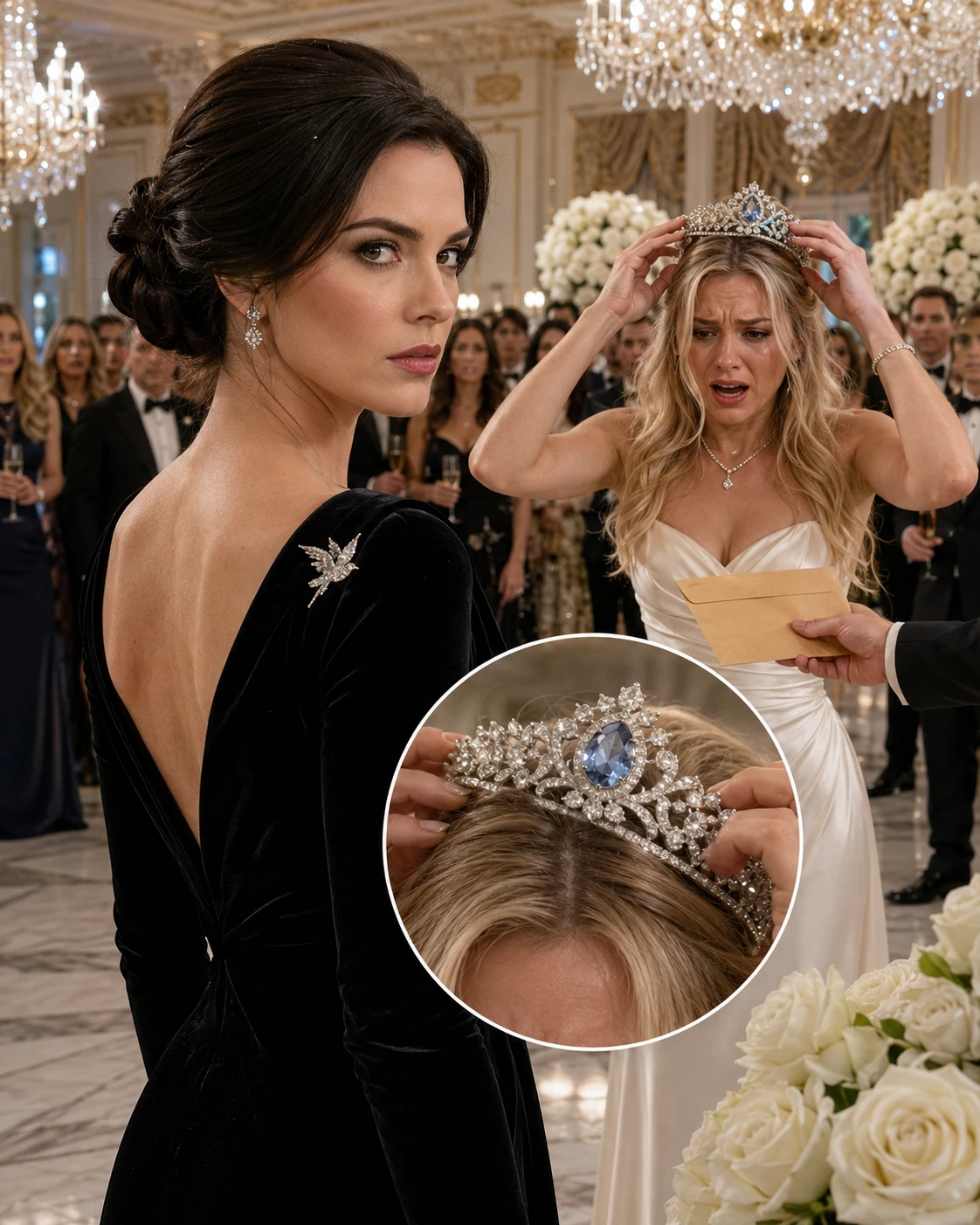
“I bought the debt you thought made you powerful.”
His father sat down harder.
A woman gasped.
Somewhere near the bar, a glass broke.
Graham looked at his father, then back at me.
“You’ll destroy my family.”
“No,” I said. “I am collecting what your family borrowed.”
His eyes burned.
Sloane took one step away from him.
It was small.
It was enough.
He noticed.
And for one exquisite second, the betrayal he had fed me for a year returned to him through her eyes.
He reached for Sloane’s hand.
She did not give it.
The engagement party ended without a toast.
CHAPTER 5 — THE FINAL TWIST IN THE VAULT
The internet had the story before midnight.
By morning, I was a villain, a hero, a psycho, a queen, a bitter ex-wife, a legal genius, an ice princess, and “the reason prenups should be required reading in high school.”
Someone posted a shaky video of Sloane removing the tiara.
Someone else slowed down Graham’s face when the hotel ownership slide appeared.
By noon, the phrase she wore the crown was trending in circles that pretended not to enjoy gossip.
I did not watch most of it.
Revenge is satisfying in public, but healing happens in quieter rooms.
I spent the next morning at Whitaker House, seated at my grandmother’s desk, while Margot reviewed emergency filings and Daniel coordinated with investigators. The tiara sat in its blue velvet case beside me, back where it belonged.
I thought I would feel triumphant.
I felt tired.
That is another thing stories often get wrong.
Destroying the person who hurt you does not unhurt you.
It only stops them from continuing.
At two in the afternoon, Julian arrived with documents requiring my signature. He stood in the doorway of the library, snow in his dark hair, holding a folder but saying nothing.
“You can come in,” I said.
“I wasn’t sure if this was a business room today.”
“Every room in this house is a business room if Margot is awake.”
He smiled.
It changed his face completely.
Julian Cross had the kind of calm that made noise seem immature. He was not as beautiful as Graham. Not in that shining, obvious way. His beauty was slower. Earned. Gray eyes. Strong hands. A mouth that looked like it had learned restraint the hard way.
He placed the folder on the desk.
“The court granted the temporary restraining order. Graham is barred from contacting you directly. Sloane’s counsel reached out.”
“Already?”
“She would like to cooperate.”
I looked at him.
He shrugged. “Crowns get heavy.”
I laughed for the first time in days.
It startled both of us.
Then the laughter faded into something softer.
Julian’s eyes moved to the tiara case.
“May I ask you something?”
“Yes.”
“Was it worth letting them think you were weak?”
I looked toward the window.
Beyond the glass, the Sound was gray and restless.
“No,” I said honestly. “But it was useful.”
He nodded.
Not approval.
Understanding.
That was better.
I opened the folder and signed where he indicated.
After the third signature, he said, “There is one more thing.”
I glanced up.
His expression had changed.
Margot entered behind him with a smaller folder in her hand.
That was never a good sign.
“What?” I asked.
Margot sat across from me.
“Your grandmother left a sealed letter to be opened only upon the recovery of the Whitaker Star after unauthorized removal.”
I stared at her.
“That’s very specific.”
“Eloise was a very specific woman.”
She handed me the envelope.
My name was written across the front in my grandmother’s slanted script.
Vivienne.
For a moment, I was thirty-five years old and eight years old at once.
I broke the seal carefully.
Inside was a single sheet of cream paper.
My darling girl,
If you are reading this, a man has likely underestimated you near something shiny.
I hope you made him regret it elegantly.
I covered my mouth.
Margot looked away.
Julian looked down.
I kept reading.
The Whitaker Star was never merely jewelry. Your great-grandmother had it remade in 1942 after discovering that her husband’s brothers were attempting to seize the company through forged debt instruments. The central sapphire is a replacement. The original stone is in the Briar vault.
This tiara is a test.
Men who respect you will ask before touching it.
Men who want to own you will steal it.
If Graham is the man who stole it, I am sorry. I suspected he loved the door you opened more than the woman walking through it. But I also knew you would not believe that until life taught you in its own cruel handwriting.
Do not confuse humiliation with defeat.
Do not confuse loneliness with failure.
And do not confuse mercy with returning a knife to the hand that cut you.
There is a final clause in the Briar Trust. If the Whitaker Star is unlawfully removed by a spouse or intimate partner of the beneficiary, and recovered with proof of intent to coerce, defraud, or diminish her legal standing, the trustee is authorized to release the protected shares.
You will know what to do with them.
With all my love,
Eloise
I read the line again.
Protected shares.
Margot placed another document in front of me.
“What shares?” I asked.
Julian was silent.
Margot’s face gave nothing away, but her eyes were bright.
“Your grandmother held a quiet position in Prescott Development for nearly twenty years.”
I blinked.
“No.”
“Yes.”
“How?”
“In 2001, Graham’s grandfather needed capital. Eloise provided it through a convertible instrument. He failed to repay. She converted part of the debt into equity and placed the shares inside the Briar Trust under a protective clause.”
I looked at the document.
The numbers did not make sense at first.
Then they did.
My grandmother had not only prepared a shield.
She had hidden a sword inside it.
“How much?” I asked.
Margot folded her hands.
“Combined with the debt position acquired last year, enough to force a restructuring. Enough to remove Graham from management. Enough to determine whether Prescott Development survives under new leadership or is liquidated.”
The room went very quiet.
Graham had married me thinking he could one day control Whitaker wealth.
All along, Whitaker blood had been sleeping inside his own family empire.
I sat back in my grandmother’s chair.
For the first time, the revenge felt bigger than me.
Not crueler.
Cleaner.
A circle closing.
“What happens now?” Julian asked.
Margot looked at me.
My decision.
A year earlier, that would have frightened me.
Now it steadied me.
“Prescott Development has employees,” I said. “Not all of them are Graham. We restructure. Remove him. Protect the projects that are solvent. Sell the vanity assets. Repay what was stolen from the foundation. And his family can keep whatever dignity they can afford after restitution.”
Margot’s mouth softened.
“Your grandmother would approve.”
“No,” I said, looking at her portrait above the fireplace. “She would say I took too long.”
Julian laughed quietly.
Later that week, Graham called from a blocked number.
I did not answer.
He left a voicemail anyway.
His voice was hoarse.
“Vivienne. Please. This has gone far enough. My mother is sick over this. My father can’t sleep. The board is panicking. Sloane is saying things that aren’t true. You know me. You know I made mistakes, but I loved you. I did love you. Don’t let Margot poison you. Don’t let them turn you into this.”
Into this.
A woman he could not reach.
A woman he could not frighten.
A woman he could not define.
I saved the voicemail and forwarded it to Margot.
Then I deleted it from my phone.
Sloane cooperated within forty-eight hours.
Of course she did.
She gave up emails, invoices, screenshots, recordings. She admitted Graham told her the tiara belonged to me. She admitted he wanted photographs. She admitted they had discussed using my “reaction” to support a mental instability narrative.
Her attorney delivered the tiara’s missing velvet storage wrap in a shopping bag from Saks.
That offended Margot more than the theft.
Graham fought for three months.
He filed motions.
He leaked stories.
He claimed I had orchestrated everything because I was jealous. Then because I was unstable. Then because I was manipulated by Julian. Each version contradicted the last, and each made him look smaller.
The court froze certain accounts.
The foundation recovered funds.
Prescott Development announced a restructuring.
Graham resigned for “personal reasons,” which is the phrase wealthy men use when truth gets expensive.
Sloane moved back to Dallas.
For a while, she posted quotes about healing.
Then she stopped posting.
I did not hate her by then.
Hate requires carrying someone.
I was done carrying both of them.
Spring came slowly that year.
The first warm day arrived in April, soft and gold, with the dogwoods blooming along the drive at Whitaker House. I opened the windows in my grandmother’s dressing room and let the air move through.
The tiara sat in its case on the vanity.
I had not worn it since recovering it.
Not because I was afraid.
Because I was waiting until it meant something other than war.
That evening, the Whitaker Foundation hosted its first gala without Graham, without Sloane, without false invoices buried beneath roses. We held it not at the Leland, not in Newport, not under a chandelier designed for spectacle.
We held it in the garden at Whitaker House.
Long tables beneath lanterns.
Peonies in low bowls.
Jazz drifting across the lawn.
Children from the foundation’s scholarship program ran laughing near the hedges while donors pretended not to cry during speeches. The night smelled like grass, salt air, and something opening.
I wore a midnight-blue gown and my great-grandmother’s bird brooch.
Not the tiara.
Not yet.
Julian found me near the terrace after dinner.
“You disappeared,” he said.
“I’m practicing.”
“For what?”
“A life without performing.”
He leaned against the stone balustrade beside me.
Below us, the lanterns glowed like captured stars.
For a while, neither of us spoke.
That was what I liked about him. He did not rush to fill silence, as if a woman’s quiet were an emergency.
Finally, he said, “I’m leaving Larkspur.”
I looked at him.
“Are you?”
“The restructuring is done. Margot has everything she needs. You don’t need me in the machinery anymore.”
“And where will you go?”
“Boston, mostly. Some New York.” He paused. “Wherever I’m invited.”
The old me might have pretended not to understand.
The new me had buried too many performances.
“Julian.”
He turned.
The lantern light softened the angles of his face.
“I am not ready to be rescued,” I said.
His answer came immediately.
“Good. I’m not applying for the position.”
Something in my chest loosened.
“I don’t know what I’m ready for.”
“That’s allowed.”
I looked at him for a long moment.
Then I reached for his hand.
Not because I needed to.
Because I wanted to.
His fingers closed around mine carefully, as if trust were something alive that might startle.
Behind us, the party continued. Laughter rose. Glasses chimed. Somewhere inside the house, my grandmother’s portrait watched over the rooms she had defended in advance.
A month later, the divorce became final.
Graham’s settlement was smaller than his ego and larger than his character. He left Manhattan. Rumor placed him in Palm Beach, then Aspen, then nowhere in particular. Men like him rarely disappear. They simply move to rooms where fewer people know the story.
But enough people knew.
Enough women knew.
That mattered more.
Because after the videos went viral, letters began arriving.
At first dozens.
Then hundreds.
Women from Atlanta, Chicago, Phoenix, Seattle. Women with diamond rings in drawers and screenshots in hidden folders. Women who had been called unstable for noticing lies. Women who had been told they were dramatic when they were simply correct. Women who had watched men steal from them in broad daylight and smile for photographs.
I answered as many as I could.
Not with advice I was not qualified to give.
With one sentence.
Keep records. Keep yourself.
By summer, the Whitaker Foundation launched a legal defense fund for women facing financial coercion in divorce and domestic partnership disputes. We named it The Eloise Fund.
At the opening luncheon, Margot wore navy. Julian sat in the back. My father came, looking older and ashamed. He apologized without making excuses, which was new for him.
I accepted without pretending the apology fixed everything.
Some repairs are not restorations.
Some repairs are memorials.
When it was time to speak, I stood at the podium and looked out at a room full of women in silk blouses, linen dresses, work suits, borrowed pearls, no jewelry at all. Different ages. Different lives. Same fire.
“My grandmother believed women should never have to beg for what already belongs to them,” I said. “She also believed silence could be a strategy, but never a home. I spent too long mistaking endurance for grace. I know better now.”
I saw Margot lower her eyes.
I saw Julian smile.
I continued.
“If someone humiliates you in public, you do not have to break in public. If someone steals your name, your money, your peace, your story—you are allowed to gather proof before you gather applause. And when the moment comes, you are allowed to stand beneath every chandelier they lit for your destruction and tell the truth beautifully.”
The room rose before I finished.
For the first time in years, applause did not feel like noise.
It felt like doors opening.
That night, I returned to Whitaker House alone.
Not lonely.
Alone.
There is a difference, and it is everything.
I climbed the stairs to my grandmother’s dressing room and opened the blue velvet case. The Whitaker Star rested inside, cool and bright, no longer a wound.
I lifted it carefully.
In the mirror, I saw myself as I had been and as I was becoming. Wife. Widow of a living marriage. Granddaughter. Beneficiary. Woman with receipts. Woman with scars. Woman with rooms to fill and doors to close and a future that did not need permission.
I placed the tiara on my head.
Straight.
Perfectly straight.
Then I laughed.
Not loudly.
Not cruelly.
Just enough to hear my own happiness returning.
CONCLUSION — THE HOUSE THAT REMEMBERED HER NAME
Years later, people still tell the story wrong.
They say I ruined my husband because his mistress wore my grandmother’s tiara.
They say I planned the whole thing like a trap.
They say I was cold.
Maybe I was.
But cold is not always empty.
Sometimes cold is clarity.
Sometimes cold is the marble floor beneath your feet when the room expects you to collapse and you do not.
Sometimes cold is the hand that signs the document, the voice that does not shake, the evidence preserved before the tears fall.
I did not ruin Graham because Sloane wore the tiara.
I ruined him because he thought my humiliation was a venue.
Because he mistook my silence for weakness.
Because he believed love had made me stupid and grief had made me manageable.
Because he forgot that the women in my family had survived wars, debt, scandal, betrayal, and men with prettier smiles than his.
The tiara was never the power.
The money was never the power.
Even the proof was only a tool.
The power was remembering who I was before he taught me to doubt it.
Now, on quiet mornings, Whitaker House fills with sun.
The foundation offices occupy the east wing. The garden hosts scholarships, legal clinics, summer concerts, and once, a wedding for a young woman who told me The Eloise Fund helped her leave a man who had hidden every bank statement in their marriage.
Julian and I are still careful with each other.
Careful in the way gardeners are careful.
Not afraid.
Attentive.
He never calls me fragile. He never calls me dramatic. When I am quiet, he lets me be quiet. When I speak, he listens. It turns out love does not have to feel like being chosen by a storm.
Sometimes love feels like a hand at your back that never pushes.
As for the Whitaker Star, I do not keep it in a bank vault anymore.
I keep it in my grandmother’s dressing room, behind glass, beneath a small engraved plaque.
It reads:
For the women who did not bow.
People think the final twist was that I owned the hotel.
It wasn’t.
They think it was the hidden trust.
It wasn’t.
They think it was the shares my grandmother buried inside the Prescott empire like a blade wrapped in silk.
It wasn’t.
The final twist was this:
Graham gave me the one thing he never meant to return.
Myself.
He invited me to watch another woman wear my crown.
Instead, he watched me take back my name.
“She wore the crown. I owned the bloodline.”
Caption: The mistress wanted royalty. The wife brought the estate.