Chapter One: The Architecture of a Wager
This is the chronicle of a bloodless coup d’état, executed not with artillery or political subterfuge, but with the quiet, devastating precision of a sixteen-year-old girl holding an empty paper envelope.
My name is Francine. I am an architect of the unseen; I produce and direct paranormal documentary films. To clarify, I do not sprint through dilapidated sanatoriums shrieking because a sudden draft ruffled my collar. My production company meticulously investigates sites of alleged supernatural activity—historic manors breathing with forgotten grief, abandoned nautical vessels, and, on one deeply regrettable occasion mandated by a shameless television network, a supposedly cursed miniature golf course in the desolate heart of Ohio. The animatronic clown on the seventh hole did, in fact, rotate independently of its power source. I maintain, with stubborn rationality, that it was a freak anomaly of barometric pressure.
My older brother, Martin, operates in a world of aggressive, tangible reality. He is the undisputed sovereign of the Sparkle King Auto Spa empire—a trinity of mechanized soap-tunnels, a dozen roaring vacuum stations, and a man possessing such vast reservoirs of unearned confidence that he once reversed his luxury SUV into his own brick mailbox while lecturing me on the physics of spatial awareness.
Martin and I have been locked in a cold war of familial competition since our primary teeth fell out. This was not a casual, occasional rivalry. It was a suffocating, atmospheric condition. Every milestone was a battlefield. Who could master a two-wheeled bicycle faster? Who could consume a larger mountain of morning pastries? Whose academic accolades shone brighter? At our own father’s funeral reception, Martin somehow transformed the somber duty of carrying folding chairs into a breathless, sweating sprint to prove his superior grief-fueled stamina.
Our mother, a woman who viewed affection through the lens of achievement, actively cultivated this gladiator arena. “Iron sharpens iron,” she would declare, sipping her evening tea. What she actually forged were two middle-aged adults who could not assemble a bookshelf without establishing a complicated system of scoring and penalties.
When I married my husband, Martin’s inaugural question wasn’t about my happiness, but a subtle probing into the total cost of the catering. When he purchased his first suburban fortress, he texted me the property’s square footage a full day before he provided the street address. When my independent documentary secured a coveted regional broadcasting award, his congratulatory phone call consisted of a heavy sigh followed by, “Not bad. My platinum ceramic-coat package just took home ‘Best Wash in the Tri-County Area.’”
There were exactly four car washes in said tri-county area. One had recently suffered a catastrophic electrical fire. Nevertheless, Martin had the certificate framed in museum-grade glass.
I must confess, with a heavy heart, that I was not a passive victim in this dynamic. I was an active, willing combatant. When Martin purchased a recreational fishing vessel, I spitefully enrolled in competitive sailing courses—a decision that suggests the competitive rot had reached my very marrow. When he installed an artisanal pizza oven in his backyard, I retaliated by acquiring a commercial-grade smoker large enough to slow-roast an entire prehistoric beast.
Therefore, when Martin proposed what he grandiosely dubbed the “Great Summer Skill Exchange,” my survival instincts should have screamed at me to relocate to another continent.
It began at our mother’s annual birthday dinner, a tense affair held over roasted lamb and unspoken resentments. Our daughters were precisely the same age. My Elena was a quiet, ferociously observant sixteen-year-old. Martin’s daughter, Chloe, had celebrated her sixteenth birthday just two months prior.
Martin cleared his throat, tapping his crystal wine glass with a silver fork. “The youth of today,” he began, launching into a familiar, tired monologue, “are entirely untethered from the concept of actual labor.”
Chloe paused, a forkful of cake hovering near her mouth. “I have a job, Dad.”
“You supervise toddlers,” Martin dismissed with a flick of his wrist. “That is a hobby.”
Elena, sitting rigidly beside me, spoke up, her voice a soft, dangerous murmur. “My mother makes me haul forty-pound Pelican cases full of camera gear through damp, abandoned penitentiaries at three in the morning.”
Martin scoffed, the sound sharp and ugly. “Precisely my point. Phantom labor. Fake work.”
I carefully placed my cutlery onto my porcelain plate, the ceramic clink sounding like a drawn sword. “I beg your pardon? You diminish the meticulous documentation of historical architecture and psychological phenomena, yet you believe spraying neon-pink, artificial blueberry-scented foam onto leased sedans is the pinnacle of human industry?”
Our mother leaned forward, her eyes gleaming with the familiar, terrifying thrill of our conflict. “Now, children,” she crooned, a word that had never once de-escalated a single situation in our shared history.
Martin pointed a thick, manicured finger at me. “My enterprise provides a tangible service. People require clean vehicles. Your enterprise provides atmospheric parlor tricks.”
Chloe slumped in her chair, pressing the heels of her hands into her eyes. Elena merely adjusted her posture, her dark eyes locking onto her uncle. “Here we go,” she whispered, a chilling prophecy.
“Let us definitively settle this,” Martin challenged, leaning his bulk over the mahogany table. Those words should have required a hazardous materials permit. “A seasonal exchange. For the duration of the summer recess, Elena will report to Sparkle King. Chloe will embed with your little ghost-hunting brigade. Nine grueling weeks. Identical scheduled hours. Come autumn, we evaluate which young woman has acquired actual, practical survival skills.”
Martin’s smile was a razor blade disguised as a smirk. “My Chloe will easily weather your spooky little arts-and-crafts club. I highly doubt your delicate artist of a daughter will survive the unforgiving reality of my wash tunnel.”
I met his gaze, the old, venomous adrenaline flooding my veins. We shook hands across the table. The two girls exchanged a look of profound, weary solidarity—two innocent civilians conscripted into a war they neither understood nor desired.
“I have one non-negotiable stipulation,” I said, my voice dropping an octave. “If Chloe labors on my set, she is compensated. With actual currency.”
Martin barked a dismissive laugh. “Naturally. And I shall compensate Elena. That goes without saying.”
We shook hands a second time. That single, fleeting physical contact would soon become the legal linchpin of his undoing.
But the night was not over. As I helped Elena into the passenger seat of our car, she looked back at Martin’s sprawling house, her expression unreadable in the amber glow of the streetlamps.
“He’s going to cheat, Mom,” Elena said quietly.
“I know, sweetheart,” I replied, starting the engine. “But we are going to play by the rules. We always do.”
What I did not know, what I could not have possibly foreseen as I drove us into the suffocating humidity of that July night, was that Elena had already begun drafting the architecture of a trap so exquisite, so flawlessly legal, that it would bring an arrogant king to his knees. The first puzzle piece had been placed. The countdown had begun.
Chapter Two: A Tale of Two Purgatories
Chloe, to my profound and immediate annoyance, proved to be an exceptional asset to my documentary crew.
On her inaugural night shift, we were conducting a localized sweep of the Bellweather Inn, a decaying Victorian structure where night-shift staff routinely reported the phantom sounds of a pacing woman in the third-floor corridor. I systematically instructed Chloe on the tedious realities of the job: the meticulous logging of lossless audio files, the rigid categorization of lithium batteries, the calibration of full-spectrum thermal imaging cameras, and the most critical rule of all—never, under any circumstances, position yourself downwind of our boom operator, Gary, after he has consumed heavily processed convenience-store chili.
At exactly 1:17 in the morning, the oppressive silence of the third floor was shattered by a violent, concussive bang emanating from Room 314.
Gary whimpered and froze, his knuckles turning white around the boom pole. Chloe went rigid, her breath catching in her throat.
I raised a singular, calming hand. We waited in the suffocating dark. A full minute passed. Then, another hollow bang.
Chloe’s voice was a microscopic tremble. “Aunt Francine… what is the protocol?”
“The protocol, Chloe, is that we investigate.”
She swallowed hard, the sound audible over the hum of our equipment. Then, setting her jaw, she marched directly toward the heavy oak door of Room 314. I felt a surge of genuine, reluctant pride. She pushed the door open, her flashlight beam cutting through the stagnant dust.
A heavy, decorative wooden shutter had slipped from its rusted hinge. Whenever the central air conditioning unit violently cycled on, the sudden draft slammed the wood against the interior drywall.
Chloe lowered her flashlight, staring at the mundane culprit. “That is it? You mobilized a six-person crew, drove three hours in the dead of night, for faulty carpentry?”
“Welcome to the unglamorous reality of investigative filmmaking,” I murmured.
By the third week, Chloe had ascended from a timid observer to our most indispensable production assistant. She color-coded our labyrinth of XLR cables with terrifying efficiency. She caught a glaring continuity error regarding the placement of a supposed ‘cursed’ artifact that spared us an entire grueling day of re-shoots. Most impressively, she managed to secure a twenty-minute on-camera interview with the inn’s reclusive eighty-three-year-old proprietor—a man who had flatly refused to speak with me because, in his words, I possessed “the untrustworthy eyebrows of an IRS auditor.”
Every Friday afternoon, I handed Chloe a physical check. This was not a symbolic gesture. It was not a patronizing allowance. It was legal, taxable compensation for hours meticulously rendered.
When I handed her that first envelope, her eyes widened to the size of saucers. “Aunt Francine… this is a lot. This is too much.”
“It is the precise mathematical sum of your hourly rate multiplied by the time you sacrificed for this production,” I stated, not looking up from my clipboards.
“But Dad said this was supposed to be a learning experience.”
“It is,” I replied, finally meeting her gaze. “Lesson one: When an individual surrenders their finite time on this earth to advance your enterprise, you compensate them. Fairly and promptly.”
Chloe stared at the crisp paper, a slow, radiant smile breaking across her face. “Can lesson two involve upgrading the craft services table? Gary’s chili habit is becoming an atmospheric hazard.”
While Chloe thrived in the shadows, my Elena was enduring a sun-baked purgatory at Sparkle King.
Her shifts began at the brutal hour of 7:00 AM. She spent her days crouched on blistering asphalt, aggressively scrubbing oxidized brake dust from the alloy wheels of luxury SUVs. She pre-treated the pulverized remains of insects on boiling front grilles. She excavated years of neglect from the industrial vacuum filters, dragged heavy, wet hoses across the concrete, and absorbed the screaming ire of impatient customers when the automated payment kiosks inevitably malfunctioned in the afternoon heat.
Every evening, she crossed our threshold smelling violently of vulcanized rubber, industrial-grade degreasers, and a synthetic citrus perfume that seemed designed to mask the scent of human despair.
“How are you holding up?” I asked gently after her first grueling week, watching her flex her blistered fingers. “Is your uncle behaving reasonably?”
“Uncle Martin is Uncle Martin,” Elena replied, her voice devoid of inflection.
It was not an answer. It was a bleak, terminal diagnosis.
Week two brought severe ultraviolet burns across her forearms, despite layers of sunscreen. Week three yielded a nasty, jagged laceration across her knuckles from a malfunctioning conveyor track. By week four, her sensory acuity had sharpened to the point where she could diagnose a failing roller bearing in the wash tunnel by sound alone—a full day before Martin noticed the grinding noise.
Martin, unable to contain himself, called me specifically to boast. “I’ll admit it, Francine. The kid isn’t entirely useless. She’s got grit. Obviously inherits it from my side of the gene pool.”
To Martin, this was the equivalent of a Nobel Peace Prize nomination. “I’m glad she’s adapting,” I replied evenly, crushing a pencil in my fist.
And then, the inevitable occurred. Martin began to weaponize the data.
He erected a massive, obnoxious dry-erase whiteboard in the stifling, chemical-scented breakroom of Sparkle King. At the top, written in aggressive, red block letters, it read: FRANCINE VS. MARTIN: THE REAL WORLD EDITION.
Beneath my name, he wrote Chloe. Beneath his, Elena.
He began awarding arbitrary, humiliating points. Replacing a toxic vacuum canister: 3 points. Unclogging a sludge-filled floor drain: 5 points. Carrying a camera tripod indoors: 1 point. He even went so far as to write: Distinguishing between a raccoon in the attic and a demon: 0 points (Because demons are a fictitious construct for the weak-minded).
When Chloe, deeply apologetic, showed me a covert photograph of this board, my competitive restraint shattered. I immediately installed a corresponding scoreboard in our sleek, air-conditioned production office: THE CINEMATIC ARTS VS. WET CONCRETE.
I awarded Chloe ten points for successfully interviewing a hostile witness. Twenty points for flawlessly synchronizing a multi-camera setup. Fifty points for willingly descending into a subterranean basement after our boom operator, Gary, claimed a disembodied voice whispered his social security number, prompting him to suddenly remember he had a “trick knee” that required him to wait in the van.
Martin sent me a furious text message at 2:00 AM: You cannot award 50 points for simply walking down a flight of stairs. It invalidates the metric.
I typed back, my thumbs flying: The structural integrity of the stairs was compromised by spectral entities. The danger was exponential.
He replied: Produce empirical evidence.
I sent him a raw, unedited photograph of a terrified, six-foot-two Gary actively cowering behind the diminutive frame of his sixteen-year-old niece.
Martin conceded the fifty points.
By the seventh week of this agonizing summer, both Elena and Chloe had completely disengaged from the psychological warfare. They were exhausted, bonded by their shared trauma, and entirely apathetic to the scoring system. Martin and I, however, were locked in a death spiral of petty escalation.
Our mother demanded detailed weekly debriefings. “I find this entire exercise so stimulating,” she purred over the phone. “Healthy, rigorous competition builds fortitude.”
Elena, overhearing the conversation from the kitchen island, looked at me with hollow, exhausted eyes. “Grandma genuinely believes the Cold War was just an aggressive team-building retreat, doesn’t she?”
I had to put the phone on mute to hide my hysterical laughter.
But the subtle, creeping dread began during week eight. Chloe and I were auditing a complex expense sheet when she casually mentioned, “Dad told me Elena is getting a massive surprise on her last day.”
I paused, my pen hovering over a column of numbers. “A surprise? Did he specify the nature of it?”
Chloe shrugged, her focus on the spreadsheets. “A bonus, maybe? He wouldn’t say. He just kept grinning and saying Elena was about to receive a lesson she would carry to her grave.”
A cold dread coiled tightly in my gut. My brother adored “lessons.” Specifically, he adored lessons engineered to maximize the public humiliation of the recipient. When we were eleven years old, I lost a neighborhood footrace to him by a fraction of a second. He spent three days constructing a heavy, lacquered wooden medal that read, Second Place is Merely the First Loser, and forced me to wear it during a family dinner. Our mother still had the photograph proudly displayed on her mantel.
That evening, I found Elena in her room, nursing a cup of chamomile tea and applying antiseptic to a fresh scrape. “Did your uncle ever discuss the specific mechanics of your compensation?” I asked, trying to sound casual.
“No.”
“But you have been meticulously logging your hours? Every single shift?”
“Yes, Mom. He has an electronic punch clock. It prints physical receipts.”
“Excellent.” I hesitated. “Elena… do you want me to intervene? To speak with him?”
Elena looked up, her dark eyes piercing right through my thin veneer of calm. “You are making your ‘I am about to financially ruin Uncle Martin’ face.”
“I have no such face.”
“You have three variations of that face. You are currently wearing variation number two. Stand down, Mom.”
I had promised to respect her autonomy. I hated that promise with the fire of a thousand suns, but she was sixteen. If I was ever going to teach her how to enforce boundaries, I had to allow her the agonizing space to construct them.
“Very well,” I whispered.
But later that night, passing her bedroom door at 1:00 AM, I saw the pale, blue glow of her laptop illuminating the dark room.
“What are you doing?” I asked softly from the doorway.
She didn’t turn around. Her fingers flew across the keyboard with rhythmic, terrifying speed. “Homework,” she said.
“It is the middle of August.”
“Life homework, Mother.”
I should have recognized the icy detachment in her voice. I should have recognized it, because it was the exact same tone I used right before I dismantled someone’s reality. The cliff edge was approaching, and Martin was driving the car blindfolded.
Chapter Three: The Currency of Humiliation
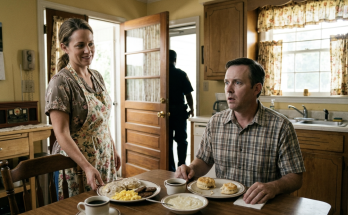
The culmination of the summer’s agonizing experiment arrived on a humid Sunday evening at my mother’s oppressively formal dining room. The air was thick with the smell of roasted poultry and the suffocating tension of impending theatricality.
Martin arrived wearing a freshly pressed, electric-blue Sparkle King polo shirt, a garment he had absolutely no reason to wear on a Sunday evening unless he was planning a performance. Tucked securely under his thick arm were two heavy, cream-colored envelopes.
We suffered through the meal. I chewed my food mechanically, my anxiety manifesting as a sharp pain behind my right eye. Elena was a statue of perfect, terrifying polite grace. She complimented our mother’s dry chicken. She asked Martin engaging, hollow questions about the fluctuating cost of bulk carnauba wax. She was so flawlessly pleasant that the hair on my arms stood up.
Finally, as the plates were cleared and the heavy, crystal dessert bowls of bread pudding were distributed, Martin pushed his chair back. The wood scraped loudly against the hardwood floor—a judge calling a courtroom to order.
“I believe,” Martin boomed, his voice carrying the obnoxious resonance of a man who loves the sound of his own thoughts, “that our little summer experiment has yielded definitive, undeniable data.”
Chloe groaned softly, hiding her face behind her water goblet.
Our mother beamed, clapping her frail hands together. “Oh, this was such a magnificent idea, Martin.”
Martin completely ignored his own daughter’s distress. “Chloe,” he said, adopting a patronizing, faux-professorial tone, “has learned that running around in the dark with flashlights is not entirely devoid of organizational value.”
“Your praise is overwhelming,” I said drily, taking a slow sip of my wine.
“And Elena,” Martin pivoted, his eyes locking onto my daughter with a predatory gleam, “Elena has finally learned what the grinding, unforgiving reality of true labor looks and feels like.”
“She scrubbed the undercarriages of minivans at three separate locations,” I corrected softly. “She didn’t mine coal, Martin.”
Martin waved a dismissive hand, presenting the first envelope to Chloe. “Here you are, sweetheart. Your final evaluation.”
Chloe opened the envelope with the enthusiasm of someone disarming a live explosive. Inside was a piece of cheap printer paper, heavily laminated. It read: Sparkle King Summer Skill Challenge – Honorary Participant.
Chloe stared at the shiny paper, her brow furrowing. “Dad… I didn’t step foot in the car wash once.”
“It is a symbolic gesture,” Martin declared proudly.
“Symbolic of what?” Chloe asked, genuinely confused.
Martin faltered for a fraction of a second. “Of… familial endurance.”
Chloe looked across the table at me. I looked at Elena. Elena’s face was an emotionless mask, though I noticed the microscopic tightening of her jaw.
Then, Martin turned to Elena. The grand finale. The moment he had been salivating over for nine grueling weeks. He slid the second, slightly thicker envelope across the pristine tablecloth.
“And for you, champion,” Martin smiled, a wide, predatory baring of teeth. “Your final compensation.”
Elena picked up the envelope. Her hands were perfectly steady. The knuckles on her right hand were still scarred from the conveyor track incident. She slid her finger under the flap and pulled it open.
She looked inside.
She looked for a long, agonizing moment. It was not a dramatic, theatrical inspection. It was the quiet, confused look of someone trying to ascertain if a crisp twenty-dollar bill had somehow become shy and folded itself into the deepest, darkest corner of the paper.
She tilted the envelope. She flattened it.
It was empty. Completely, definitively empty.
Elena looked up, her dark eyes meeting Martin’s triumphant stare. “There is no check in here.”
Martin leaned back in his heavy dining chair, lacing his thick fingers over his stomach. He looked like a king who had just conquered a peasant village. “You, my dear niece, have received something infinitely more valuable than minimum wage.”
Elena didn’t blink. “Which is?”
“Character,” Martin proclaimed, the word echoing in the quiet dining room.
He laughed. It was a loud, booming, abrasive sound that seemed to rattle the crystal in my mother’s china cabinet.
And then, the ultimate betrayal: my mother laughed, too. A thin, reedy giggle that endorsed the cruelty. “Oh, Martin is right, darling,” she said to Elena, wiping a tear of mirth from her eye. “You should be profoundly grateful. He taught you how the real world operates. The world owes you nothing.”
I felt a sudden, violent heat rise in my chest, flushing my neck and face. My vision actually blurred at the edges. I placed both hands flat on the table, preparing to push myself up, preparing to unleash three decades of suppressed, articulate rage upon my brother that would permanently sever our bloodline.
Beneath the table, a sharp, precise kick connected with my left shin.
It wasn’t a violent strike, but a firm, desperate anchor. I snapped my head toward Elena. She was looking at me, offering a microscopic, almost imperceptible shake of her head. No. Do not.
I clamped my jaw shut so hard my teeth ground together. Do you comprehend the sheer, psychological torment required for an investigative documentary filmmaker—a woman whose entire career is built upon verbally eviscerating frauds and charlatans—to sit in silence while her brother behaves with the moral fortitude of a swamp creature? It required a Herculean suppression of my own soul.
Martin, oblivious to the nuclear reactor humming beside him, continued his victory lap. “This is the fundamental difference between our philosophies, Francine. I prepare the next generation for harsh realities. You coddle them. You throw money around pretending everyone deserves a participation trophy.”
Chloe’s head snapped up, her face draining of color. “Dad… what are you talking about? Aunt Francine paid me.”
Martin’s booming laughter abruptly died. The silence that rushed in to fill the void was deafening. “I’m sorry, what?”
Our mother looked at me, scandalized. “You paid her? With actual money? But she was just helping out!”
Martin’s face began to undergo a fascinating, terrifying metamorphosis, shifting from smug superiority to a mottled, dangerous red. “How much?” he demanded, his voice dropping to a gravelly threat.
“That,” I said, my voice as cold and smooth as polished marble, “is confidential financial information between an employer and her contractor.”
“How much, Chloe?” Martin barked, leaning toward his daughter.
Chloe shrunk back, but she named the sum. The exact, precise figure of her hourly wage multiplied by nine weeks, plus the modest per diem for late-night shoots.
Martin stared at me as if I had just confessed to funding an international terrorism syndicate. “You paid my sixteen-year-old daughter twenty percent above the state minimum wage?”
“She was exceptionally competent, Martin. I compensate for competence.”
“You did this to make me look like a cheap bastard!” Martin roared, slamming his fist onto the table. The silverware jumped.
“No, Martin,” I replied softly, leaning forward. “You achieved that aesthetic entirely on your own merits.”
Elena coughed politely into her linen napkin to mask a sudden, sharp intake of breath.
Martin leveled a shaking finger at me. “This is exactly what you do! Every single time. You have to turn everything into a sick, twisted competition. You couldn’t just let the girls learn a lesson, you had to try and buy a victory!”
Every eye at the table turned to him. The hypocrisy was so dense it had its own gravitational pull.
“That,” I whispered, genuinely awestruck, “is the most astonishing lack of self-awareness I have ever witnessed in a human being. And I have interviewed cult leaders.”
Martin violently shoved his chair backward, rising to his feet. “Whatever. The game is over. Elena learned more sweating in my lot than Chloe learned chasing imaginary shadows with a microphone. I won the skill exchange. I imparted actual wisdom.”
I turned my gaze to my daughter. She was sitting perfectly still, holding the empty envelope. “Are you alright, Elena?” I asked quietly. “Do you want me to handle this?”
“No, Mom,” Elena said, her voice eerily calm, a placid lake hiding a jagged reef. “I am perfectly fine.”
Martin scoffed. “See? The kid gets it. She understands the value of the experience.”
Elena methodically folded the empty, cream-colored envelope in perfect halves, then quarters, pressing the creases flat with her thumb. She slipped it into the pocket of her cardigan. Then, she picked up her dessert spoon, took a delicate bite of bread pudding, and looked at our mother.
“Grandma,” she asked, her voice dripping with lethal sweetness, “would you care for the last dinner roll?”
I felt a chill race down my spine. I should have known right then. Elena only ever became that relentlessly, flawlessly polite when she was about to engineer a catastrophe that would ruin someone’s life.
We departed shortly after. In the dark sanctuary of my car, I gripped the steering wheel until my knuckles ached. “Elena, I am asking you formally. Let me call him. Let me call an employment lawyer. What he did is illegal. It is wage theft.”
Three times during the drive, I offered to unleash hell. Three times, she stared out the passenger window at the passing streetlights and said, “No. Let it go, Mom.”
At ten o’clock that night, unable to sleep, I walked past her bedroom. The door was cracked. She was sitting at her desk, bathed in the harsh, white light of her laptop screen. Beside her keyboard lay the folded empty envelope, a stack of punch-clock receipts, and a small, black notebook.
“What are you doing?” I asked, my voice trembling slightly.
She didn’t stop typing. “Just finalizing my summer project, Mom. Go to sleep.”
The cold detachment in her voice didn’t just worry me. It terrified me. The silence in the house felt heavy, like the breathless quiet right before the hurricane makes landfall.
Chapter Four: The Digital Guillotine
Monday dawned, quiet and unremarkable. Tuesday passed with agonizing mundanity. By Wednesday afternoon, I had begun to convince myself that Elena had internalized the humiliation, that the toxic cycle of our family’s passive-aggression had successfully claimed another generation. I was sitting in the editing bay, trying to salvage the audio from a particularly windy cemetery shoot, when my cell phone vibrated violently against the console.
It was Chloe.
I answered, expecting a question about timecodes. Instead, I heard the sound of someone hyperventilating.
“Chloe? Are you injured? What’s wrong?”
A high-pitched, wheezing sound erupted through the speaker. It took me a full ten seconds to realize my niece was laughing so hysterically she was physically struggling to draw oxygen into her lungs.
“Aunt… Aunt Francine…” she gasped, breaking into a fresh fit of giggles.
“Chloe, take a breath. Speak clearly.”
“Have you… oh my god… have you checked Dad’s Google reviews for the main Sparkle King location?”
My blood turned to ice water. I dropped my pen, minimized the editing software, and frantically opened a web browser. My fingers fumbled over the keys as I searched the business name. I clicked on the glowing, gold stars—which had, until this morning, proudly displayed a 4.6 average.
It was now a 4.1.
At the very top of the page, pinned by algorithmic engagement and a rapidly escalating number of “Helpful” votes, was a brand-new, one-star review. The author name was plain and undisguised: Elena B.
I stopped breathing as I read the text. It was a masterpiece of cold, clinical destruction.
I was employed at this establishment for nine consecutive weeks, from June 8th through August 7th. I am sixteen years old. My total documented time on site was 212 hours and 24 minutes. My total wages received for this labor amounted to exactly $0.00.
I sank slowly back into my ergonomic chair, reading the words as if they were a sacred text.
Elena had not written a rant. There were no exclamation points, no emotional outbursts, no accusations of cruelty. It was a surgical, forensic accounting of her summer.
She listed the exact dates. She detailed her clock-in and clock-out times to the minute. She provided a comprehensive bulleted list of her physical duties, including the use of industrial degreasers, operating the heavy-machinery conveyor controls, and being explicitly mandated by management to cover the shifts of adult employees who failed to report to work.
Then came the paragraph that made me cover my mouth with both hands.
When the term of my employment concluded, management presented me with an empty envelope and explicitly described my compensation as “family experience.” I cannot currently confirm whether “family experience” can be deposited at a federally insured banking institution, as my bank’s mobile application does not currently support the optical scanning of conceptual metaphors.
I let out a sound that was half-sob, half-cackle. Gary, my sound technician, poked his head into the editing bay. “You okay, boss?”
I waved him away blindly, my eyes glued to the screen. There was more.
I did, however, acquire several practical skills. For instance, I learned that industrial tire shine must never be aerosolized against prevailing winds. I learned that paying customers become dangerously volatile when the automated payment kiosk displays ‘Processing’ for twelve consecutive minutes. Furthermore, I learned that if an employer physically laughs while handing a minor an empty pay envelope, that minor should meticulously preserve all timekeeping records.
Beneath the text, Elena had attached high-resolution photographs. There were perfectly lit images of her weekly shift schedules, highlighted with a yellow marker. There were crisp photos of the physical punch-clock slips. There was a beautifully composed, almost artistic photograph of the empty, cream-colored envelope resting on her desk.
And then, the coup de grâce.
Because my daughter had apparently inherited my obsessive attention to detail fused with Martin’s pathological need to keep score, she had uploaded a crystal-clear photograph of the whiteboard in the breakroom: FRANCINE VS. MARTIN: THE REAL WORLD EDITION.
Directly beneath her name, in Martin’s own unmistakable, aggressive handwriting, were dozens of specific tasks and arbitrary point values, conclusively proving his direct knowledge and supervision of her labor.
The review concluded with chilling professionalism: The car wash machinery functions adequately. The adult staff members are kind and overworked. I can recommend the Basic Wash package. I cannot, under any circumstances, recommend the Unpaid Niece Internship. One star.
The review had been live for sixteen hours. It already had 312 “Helpful” votes.
The comments section beneath it was a war zone of local outrage.
-
“Does the ‘family experience’ compensation package cover dental?” one user wrote.
-
“I tried paying my mortgage with character this morning. The bank called the police,” wrote another.
-
“Is this legal? Someone tag the Department of Labor.”
By noon, the algorithm had aggressively pushed Elena’s review to the absolute top of the page. By 1:00 PM, a prominent local community activist had taken a screenshot and posted it to a neighborhood Facebook group with over forty thousand members.
By 2:00 PM, I noticed that the Sparkle King official social media page had frantically changed its long-standing slogan from “We Treat Your Car Like Family” to “Locally Owned and Operated Since 2009.”
Apparently, the word “family” had abruptly become a toxic liability.
At exactly 2:17 PM, my phone rang. The caller ID displayed Martin’s face—a photo I had taken years ago where he looked particularly constipated.
I let it ring three times, allowing the tension to simmer, before answering with a breezy, “Francine speaking.”
He did not say hello. The audio distortion suggested he was gripping the phone tightly enough to crack the casing. “Take it down.”
“Take what down, Martin?” I asked, feigning innocent confusion.
“Do not play this game with me, Francine. Make her take it down.”
“I am genuinely at a loss. Are you referring to the promotional video we edited last week?”
“Elena’s review!” he roared, the sound clipping my phone’s speaker. “You told her to write it. You engineered this whole thing just to humiliate me!”
“I assure you, Martin, I had absolutely no prior knowledge of this literary masterpiece until your own daughter called me, hyperventilating with laughter, to inform me of its existence.”
Silence hung heavy on the line. I could hear the ragged, uneven sound of his breathing.
“Chloe called you?” he asked, his voice suddenly small.
“Yes.”
“Why… why is my own daughter laughing at the destruction of my livelihood?”
“I don’t know, Martin,” I said softly. “Perhaps it is part of the ‘family experience’ package.”
He made a strangled noise, something akin to a large appliance dying. “This is destroying my metrics, Francine! My star rating has plummeted. People are canceling their monthly subscription packages!”
“Is any single statement in her review factually incorrect?” I asked, my tone turning clinical.
“That is not the point!”
“It is the entire point, Martin. She is your family, yes, but for nine weeks, you treated her as a subordinate employee. You weaponized her labor for a petty wager. You thought a sixteen-year-old girl would just absorb the humiliation and walk away.”
“She was learning! Chloe was learning!”
“And I compensated Chloe for her labor,” I reminded him coldly. “Every single week.”
“You only paid her to beat me!” he shouted, desperate to regain the high ground.
“That may have exponentially increased my enthusiasm for the transaction,” I conceded, “but it did not alter the fundamental reality of the labor laws. Actions have consequences, Martin. Sometimes those consequences are algorithmically optimized.”
He hung up on me with such force I was surprised my phone didn’t shatter.
At 4:00 PM, our mother called. Her voice was trembling, stripped of its usual haughty veneer. “Francine. You must order Elena to remove that internet post immediately. The country club ladies are texting me about it.”
“No, Mother.”
“Martin is being publicly humiliated! It is a scandal!”
“Elena labored for nine weeks for zero compensation,” I replied, my patience evaporating. “She scrubbed sludge in ninety-degree heat.”
“She is sixteen!” my mother protested. “She has no living expenses! Martin was attempting to teach the girl character.”
I closed my eyes, pinching the bridge of my nose. “Then Martin can attempt to pay his commercial property taxes with character. He wanted to teach her about the real world, Mother. He succeeded.”
“What on earth do you mean?”
I smiled, a cold, predatory expression to an empty room. “He taught her the unparalleled power of meticulous documentation.”
Thursday brought an escalation that neither Martin nor I could have predicted. Elena’s review acted as a flare in the dark, calling others to the surface. Two former teenage employees posted their own lengthy comments beneath her review. One detailed Martin’s habit of forcing young hires to attend mandatory “training Saturdays” completely unpaid. Another female employee stated she had been routinely instructed that the final hour of closing cleanup “did not count” because she had already officially clocked out.
The digital mob had formed, and they were carrying virtual pitchforks.
That evening, I was preparing dinner in the kitchen when Elena’s phone rang. I saw Martin’s name flash on her screen.
Elena didn’t hesitate. She accepted the call, placed the phone on the granite countertop, and activated the speakerphone. She didn’t say a word.
“Buddy,” Martin’s voice echoed in the kitchen. It was the desperate, forced-casual tone adults adopt when they are attempting to bribe a teenager into forgetting they witnessed a felony. “Listen, things have gotten completely out of hand.”
Elena continued chopping carrots. Chop. Chop. Chop. “I documented the events as they occurred, Uncle Martin.”
“You made me look like some kind of Victorian sweatshop owner, Elena. You don’t understand the nuances of running a small business.”
“I understand that the mathematical value of zero is zero,” Elena replied smoothly.
“Look,” Martin sighed heavily, “I was always going to make it up to you. You didn’t even give me a chance.”
Elena paused her knife. “So, the empty envelope was merely a temporary placeholder? A performance art piece?”
A long, agonizing silence stretched across the digital connection. I had to physically turn my back and bite down on a dishtowel to muffle the sounds of my own feral joy.
Martin’s voice dropped to a conspiratorial whisper. “Just log on and delete the review, Elena. Take it down tonight, and I will personally hand you five hundred dollars cash.”
Elena didn’t miss a beat. “For two hundred and twelve hours of manual labor?”
“Yes! It’s a gesture of goodwill!”
“That equates to roughly two dollars and thirty-five cents an hour,” Elena calculated instantly. “I cannot purchase gasoline with a gesture of goodwill.”
I heard Martin suck in a ragged breath. “What do you want, Elena? Name it.”
“I want the wages I legally earned.”
“You are being intentionally difficult,” he snapped, his temper flaring.
“No,” Elena corrected gently. “I am being legally specific.”
Then, my sixteen-year-old daughter delivered a monologue that cemented her status as the most terrifying entity in our bloodline.
“I am not asking my mother to fight this battle for me,” Elena said quietly, leaning closer to the phone’s microphone. “I have not involved Grandma. I have not complained to Chloe. I performed the labor. You made the conscious choice to withhold my compensation for the sake of your ego. I simply wrote the empirical truth on a public forum. If you desire the review to stop being the truth, Uncle Martin, that is a structural problem you must solve internally.”
She reached out with one finger and ended the call.
I stood paralyzed by the sink, clutching the dishtowel. Elena resumed chopping the carrots.
“You,” I whispered in awe, “have been waiting your entire brief existence to deliver a speech like that, haven’t you?”
She offered a tiny, terrifying smile without looking up. “Pretty much, Mom. Pass the salt?”
Chapter Five: The Collapse of the Empire
Friday morning arrived, bringing with it the kind of manic, desperate energy that usually precedes a spectacular tragedy.
Martin, cornered by public opinion and a plummeting Yelp rating, decided that the only way to survive the crisis was to aggressively win the narrative. A rational business owner would have contacted a crisis PR firm. A cautious man would have hired a labor attorney.
My brother, blinded by decades of toxic competitiveness, called a local, low-budget radio station.
At 8:10 AM, a frantic post appeared on Sparkle King’s heavily battered social media pages: “SPARKLE KING FAMILY WORKDAY! Come down today and witness what REAL work looks like! FREE Deluxe Blueberry Washes for the community from 10 AM to 12 PM!”
He tagged my documentary production company. He tagged my personal account. And then, because his cognitive reasoning had apparently evacuated the premises, he added the caption: “Francine, bring your little ghost cameras. Let’s settle this out in the open, like adults.”
I stared at the screen, my mouth slightly ajar. My production manager, Lena, leaned over my shoulder, reading the post. She looked at me, her eyebrows raised to her hairline.
“Are we… are we mobilizing the crew for this?” Lena asked hesitantly.
“No,” I said, staring at the digital suicide note.
Lena waited. She knew me too well.
I let out a long, heavy sigh. “We are absolutely mobilizing the crew. Grab the 4K rigs. I want this in ultra-high definition.”
By 10:00 AM, the flagship Sparkle King location resembled a carnival sponsored by terrible life choices. Martin had rented two massive, inflatable tube men that flailed erratically in the heavy breeze. He had hired a painfully enthusiastic local DJ who was blasting generic hype music from blown-out speakers. A massive vinyl banner hung precariously over the wash tunnel entrance, reading: REAL JOBS. REAL RESULTS.
A line of vehicles stretched out of the parking lot and down the main thoroughfare, eager for the free service. However, it was immediately apparent that half the crowd had not come for the car wash. They had come for the drama.
I spotted a local high school student wearing a hastily sharpied, homemade t-shirt that read: I ACCEPT MY ALLOWANCE IN CHARACTER.
Martin saw the shirt. I watched, fascinated, as a violent tic developed under his left eye.
I arrived with a skeleton crew—just Gary with a handheld camera and Lena managing audio. We were there strictly for documentation, not participation. A moment later, Chloe arrived, stepping out of an Uber carrying her own sophisticated DSLR camera rig, which she had purchased with her summer wages.
Martin marched toward us, his face slick with anxious sweat. He pointed an accusatory finger at his daughter. “Why are you filming this? You’re supposed to be on my side!”
Chloe didn’t flinch, adjusting her lens focus. “It is an educational experience, Dad. Aunt Francine is teaching me cinema verité.”
I had to turn my back to the sun to hide a smile that threatened to split my face in two.
And then, the universe intervened with a sense of comedic timing so flawless, I couldn’t have scripted it if I tried.
A nondescript, gray government-fleet sedan pulled smoothly into the crowded parking lot, bypassing the line of eager customers. Two individuals stepped out. A woman clutching a thick, manila folder, and a man carrying a heavy-duty tablet. They were dressed in drab, unwrinkled business casual—the only two people in the chaotic lot who had clearly not arrived for the free glazed donuts.
They bypassed the DJ. They bypassed the inflatable tube men. They walked with terrifying, purposeful strides directly toward Martin.
“Martin Bell?” the woman asked, her voice cutting through the thumping bass of the music.
“Yes?” Martin answered, wiping sweat from his forehead.
She produced a badge. “I am Lead Investigator Thorne with the State Department of Labor and Workforce Development.”
The entire atmosphere within a ten-foot radius of my brother seemed to instantly vaporize. The color drained from his face so rapidly I thought he might faint on the wet asphalt.
The DJ, tragically oblivious to the unfolding legal catastrophe, chose that precise second to fade out a pop song and blast the opening chords of Bachman-Turner Overdrive’s Taking Care of Business.
I swear upon the grave of every Victorian specter I have ever investigated, I did not bribe the DJ to play that song.
Martin’s head snapped toward me, his eyes wide with betrayal. “You called them? You called the state on your own brother?”
“I assure you, Martin,” I said, my voice dripping with genuine shock, “I possess neither the political connections nor the sheer malice required to orchestrate a federal raid.”
Elena, who had materialized silently beside me, offered a small shrug. “I didn’t call them either.”
Investigator Thorne opened her manila folder, producing a sheaf of printed documents. “We have received multiple, corroborated complaints following a public testimony that brought several current and former employees forward regarding alleged wage theft, undocumented hours, and child labor violations.”
Martin looked frantically at Elena. Elena merely blinked slowly, a cat watching a mouse run into a corner. “I just left a review,” she stated simply.
Investigator Thorne looked up. “Mr. Bell, we are going to require immediate access to your timekeeping records, payroll logs, and employee schedules for the past thirty-six months.”
Martin’s expression shifted from panic to a unique flavor of profound, existential despair.
And in that moment, a beautiful, horrifying realization washed over me.
Elena had kept her own meticulous records, yes. But Martin… Martin was a man possessed by the pathological need to keep score. Martin had kept the records, too.
He had the electronic punch clock data. He had the scheduling app logs. He had the high-definition security camera footage. And, most damning of all, he had the massive, heavily detailed dry-erase scoreboard still proudly displayed in the glass-walled breakroom, documenting every single hour Elena had suffered on his property, created for the sole purpose of proving his superiority over me.
My brother’s insatiable, toxic hunger for victory had meticulously constructed the exact evidence required to bury him under federal penalties.
I looked at Chloe. Chloe looked at me. The camera in her hands was rolling, capturing the exact moment a kingdom fell. We did not speak. The silence was sacred.
Investigator Thorne tapped her pen against her folder. “Do you have formal employment records indicating the hours worked by an Elena Bell?”
Martin swallowed, his Adam’s apple bobbing. “She… she wasn’t technically an employee. It was a family arrangement.”
The second investigator, the man with the tablet, had wandered closer to the breakroom window. He peered through the glass, his brow furrowing. He pointed a finger at the massive whiteboard.
“Excuse me, Mr. Bell?” the man called out. “What exactly does ‘Elena: 212 Hours’ refer to?”
Martin turned slowly, his boots dragging on the concrete. I watched, in glorious, high-definition reality, as the remaining fragments of his soul evacuated his physical body.
“Oh,” Martin whispered into the void.
The DJ seized the microphone, his voice booming over the parking lot. “WHO WANTS A FREE TIRE SHINE, PEOPLE?!”
Nobody cheered. The silence of the crowd was absolute.
Investigator Thorne stepped toward the window, adjusting her glasses to read the board. “Mr. Bell. I will ask you again. What does that metric refer to?”
Martin opened his mouth. He closed it. He opened it again, resembling a dying fish on a dock. Finally, he croaked, “Family… experience?”
Investigator Thorne did not smile. She clicked her pen and wrote something down in her folder.
I thought my knees were going to give out. I had to physically retreat and sit on a plastic bucket of industrial wax because the sheer, unadulterated comedic perfection of the moment was overwhelming my nervous system.
Then, the alarms started.
A piercing, mechanical klaxon erupted from the wash tunnel. A silver minivan had ground to a halt midway through the conveyor track because the teenager operating the control station had abandoned his post to watch the labor board interrogate his boss. Thick, neon-blue foam was rapidly burying the windshield of the van. The trapped driver began hammering on his horn in a panicked, continuous blast.
The DJ, misreading the panic as excitement, cranked the master volume on the speakers.
The wind shifted violently, causing one of the inflatable tube men to collapse directly onto a premium vacuum station, tangling in the hoses. A chaotic cheer went up from a group of teenagers as someone capitalized on the distraction to steal an entire tray of glazed donuts.
Martin, his eyes wild, tried to sprint toward the screaming wash tunnel.
“Mr. Bell,” Investigator Thorne barked, her voice carrying the authority of the state. “We are not finished here.”
Martin stopped dead in his tracks, paralyzed between a bureaucratic execution and a mechanized disaster. The minivan honked frantically. The DJ yelled, “WE GOT A SITUATION IN THE FOAM TUNNEL, Y’ALL!”
Chloe was filming steadily. Elena stood with her hands folded neatly in front of her, an expression of serene neutrality on her face.
I had spent twenty years of my life descending into the dark bellies of buildings where people claimed the dead still whispered. I had documented unexplainable phenomena and felt the icy touch of the unknown. But I swear to you, I had never witnessed anything as truly, profoundly supernatural as watching my arrogant brother attempt to simultaneously manage six cascading disasters of his own creation.
And then, as if the scene required a final, apocalyptic seal, our mother arrived.
She drove her pristine Cadillac directly over a traffic cone, put the car in park, and marched across the wet asphalt, her pearl necklace bouncing against her collarbone.
“What in the name of heaven is happening here?!” she shrieked.
Martin, shaking with adrenaline and despair, pointed a trembling finger at Elena. “Her! Her vindictive little internet review started this entire circus!”
My mother rounded on my sixteen-year-old daughter. “Elena! This has gone far enough. You need to fix this this instant!”
Elena did not flinch. She met her grandmother’s furious gaze with calm, obsidian eyes. “I am incapable of fixing this, Grandma.”
“You log onto that computer and you delete that review!”
“Deleting the text,” Elena said softly, “would not delete the 212 hours of documented labor, Grandma. The state possesses the records now.”
My mother blinked rapidly, her mouth opening and closing in stunned silence. The realization that her authority had absolutely no jurisdiction over federal labor laws finally dawned on her. I looked away, out of a sudden, unexpected pang of pity. That specific realization deserved a moment of privacy.
Investigator Thorne, ignoring the family drama, addressed Martin again. “Mr. Bell, we will need to schedule formal interviews with several of your former employees to discuss the allegations of unpaid ‘training Saturdays’.”
Near the towel-drying station, a lanky teenage employee wearing a soaked Sparkle King polo slowly raised his hand in the air, exactly as if he were in a classroom.
“Excuse me?” the teenager called out nervously. “Should I… should I tell her about the mandatory Sunday setup shifts?”
“NO!” Martin screamed, a sound of pure, unadulterated terror.
Investigator Thorne pivoted on her heel, locking eyes with the teenager. “What mandatory Sunday setup shifts, young man?”
The teenager’s eyes widened, and he lowered his hand very, very slowly. “Oh. Never mind.”
Martin closed his eyes, his chin dropping to his chest. Behind him, a heavy gust of wind tore the left grommet of the massive vinyl banner loose. The banner folded over on itself, obscuring the text.
Now, flapping wildly in the wind, it simply read:JOBS. RESULTS.
Honestly, it was a much more accurate slogan.
Chapter Six: The Ultimate Currency
Real life, unlike the dramatic arcs of the documentaries I produce, rarely resolves in a single, cinematic afternoon. The Department of Labor did not padlock the doors of Sparkle King that day.
Instead, they opened a deep, agonizingly thorough formal investigation.
They subpoenaed Martin’s digital records. They meticulously interviewed past and present staff. They unearthed a systemic pattern of “casual” wage theft that extended far beyond Elena’s summer ordeal. Minor infractions—unpaid setup times, withheld overtime, illegal deductions—piled up into a mountain of compliance failures.
Martin was legally mandated to pay extensive back wages to multiple employees. He was slapped with severe financial penalties by the state. He was forced to hire an external, licensed payroll management company. Most devastating of all to his fragile ego, he was ordered to attend a mandatory, three-day employer compliance seminar in a windowless conference room in the state capital.
I am fairly certain the seminar inflicted more psychological damage than the financial fines.
Six weeks after the disastrous PR event, a thick envelope arrived in our mailbox. It was addressed to Elena.
Inside was a physical, printed check. It was not from me. It was not extracted via a desperate family negotiation. It was issued directly from Sparkle King’s new, legally compliant payroll firm. It accounted for every single hour she had worked, down to the minute, taxed and documented.
When the mail arrived, I was shocked to see Martin’s truck pull into our driveway. He stepped out, looking older, heavier, and completely stripped of his usual bombast.
He walked up the porch steps. Elena opened the front door before he could knock.
Martin stood there for a long moment, staring at his niece. He didn’t have a speech prepared. The arrogance had been burned out of him. He simply gestured to the envelope in her hand.
“You got it?” he asked, his voice rough.
Elena opened the envelope, verifying the amount printed on the check. “I did. Thank you.”
Martin shifted his weight awkwardly from one foot to the other. He looked past Elena, meeting my eyes where I stood in the hallway.
“You happy now, Francine?” he asked, a trace of the old bitterness lingering in the words.
“This was never my battle to win, Martin,” I replied softly.
His face tightened. That sentence bothered him deeply, because he finally understood the truth of it. For our entire lives, Martin and I had treated every disagreement, every perceived slight, as a championship match. Who possessed the superior intellect? Who commanded the higher salary? Whose child was more resilient? Who was ultimately right?
But Elena had done something neither Martin nor I possessed the emotional maturity to do. She had entirely refused to participate in the competition. She hadn’t yelled. She hadn’t plotted a prank. She had simply documented the empirical reality of her situation and allowed the unvarnished truth to do the heavy lifting.
Martin looked back at Elena, a strange, reluctant respect shining in his tired eyes. “You really didn’t ask your mother to orchestrate this?”
“No,” Elena said.
“You wrote that entire review yourself? The part about the bank app?”
“I did.”
Martin rubbed a heavy hand over his jawline, staring at the porch floorboards. “That bank app line… that was a pretty solid piece of writing.”
Elena offered a genuine, small smile. “Thank you.”
I had to grip the doorframe to keep from swaying. That quiet acknowledgment was the closest thing to a white flag of surrender Martin had raised since the winter of 1994.
Naturally, our family dynamic did not magically transform into a utopia of mutual respect. Martin was still fundamentally Martin.
Two months later, my phone buzzed with a text message. It was a photograph from Martin showing Sparkle King’s newly installed, highly expensive automated license-plate recognition system. The caption read: Bet your little ghost cameras can’t do this.
I immediately replied with a high-definition still frame extracted from our latest edit, clearly depicting a shadowy, humanoid figure standing in an abandoned sanitarium hallway.
He replied: It’s a janitor. I replied: The building has been condemned since 1978.
He did not respond for three hours. I marked it as a decisive victory.
Chloe continued to work with my production crew every other weekend throughout the school year. She was, of course, heavily compensated. She is currently applying to university programs to study documentary film production. Martin aggressively insists that she discovered her passion for cinema because the skill exchange was his brilliant idea. I allow him to cling to this delusion because, frankly, life is too short, and it keeps him quiet.
Elena utilized a portion of her hard-won back pay to purchase a reliable, used sedan. The day after she bought it, she drove it directly into the Sparkle King parking lot.
Martin walked out of the office, slowly circling the vehicle, kicking the tires, inspecting the paint job. “You know,” he muttered, not looking at her, “family gets free washes on Tuesdays.”
Elena leaned against the driver’s side door, arching an eyebrow. “Free? Are you certain?”
Martin froze.
Chloe, who had been sitting in the passenger seat, let out a snort of laughter. I, standing nearby, began to chuckle. Elena joined in. Eventually, even Martin, his face flushing a deep crimson, let out a dry, defeated laugh.
“Fine,” he grumbled, rubbing his temples. “Extremely poor choice of words.”
Our mother still fiercely believes the entire ordeal became tragically, unnecessarily public. During a recent Sunday dinner, she leaned over to Elena and whispered conspiratorially, “You know, darling, you really could have handled that little dispute with your uncle privately.”
Elena took a sip of her water, set the glass down, and replied, “Like my private paycheck, Grandma?”
My mother has not broached the subject since.
And yes, the legendary Google review remains live on the internet. Martin, his ego slowly regenerating, has asked Elena twice if she plans to remove it now that the debt is settled.
Elena informed him that she would gladly update the review to reflect the current reality. And so she did. The addendum at the bottom now reads:
UPDATE: Following a comprehensive investigation by the State Department of Labor, I received full and complete payment for my labor. Management has subsequently overhauled its internal payroll practices under state supervision. My uncle also now becomes visibly nauseous whenever a customer utters the word ‘experience’. The wash service itself remains excellent. I highly recommend the Blueberry Foam. However, I advise avoiding the premises on Saturdays unless you have a high tolerance for unresolved family drama.
The update garnered an additional four hundred ‘Helpful’ votes.
Miraculously, Sparkle King completely recovered. In fact, following the scandal, business actually improved by twelve percent. Apparently, the local community held a strange, grudging respect for a business that survived a very public humiliation, was forced to fix its systemic issues, and maintained an undeniably excellent standard of blueberry foam.
It causes Martin physical pain to acknowledge that the digital guillotine that nearly ended his career is now actively driving customer acquisition. I find a deep, profound spiritual peace in this irony.
As for the lifelong, bitter competition between my brother and me, it continues unabated. It will likely continue until one of us is lowered into the earth, at which point the survivor will absolutely deliver a eulogy highlighting that they won the ultimate endurance race.
But there is one specific battlefield where Martin never, ever challenges me anymore. He has permanently retired from critiquing my parenting.
Last Christmas, the family was gathered around the fireplace. The eggnog was spiked, and the tension was low. Our mother, unable to help herself, sighed happily and said, “I still wonder… which of you truly won the Great Cousin Skill Exchange?”
Martin and I both inhaled simultaneously, opening our mouths to launch into our rehearsed, defensive arguments.
Elena raised a single hand. We both snapped our mouths shut.
“Chloe earned taxable income and mastered the technical aspects of documentary production,” Elena stated, addressing the room with calm authority. “I acquired a visceral understanding of manual labor, mastered state labor law, and executed a masterclass in corporate reputation management. Therefore, the empirical data suggests that Chloe and I both won.”
Chloe lifted her mug of hot cider in a toast. “I also learned the most valuable lesson of all: Never, ever perform labor for Dad without a legally binding contract.”
Martin leveled a glare at his daughter. “You are getting entirely too comfortable in my house.”
Chloe grinned, a wicked, triumphant expression. “Aunt Francine pays me a high enough hourly rate that I can comfortably afford to be insolent.”
I laughed so violently I spilled eggnog onto the Persian rug. Martin glared at me, then his gaze shifted to Chloe, then to Elena, and finally to our mother. For one terrifying, suspended second, I believed he was about to detonate, ruining the holiday entirely.
Instead, his shoulders slumped. He reached across the coffee table and grabbed a heavily frosted sugar cookie.
“Fine,” he muttered around a mouthful of icing. “The kids won.”
I froze, staring at him as if he had just spoken fluent Aramaic. “Did you… did you just publicly admit defeat?”
“No,” Martin countered quickly, swallowing hard.
“You absolutely did,” I pressed, leaning forward. “You conceded. The kids won, which dictates by the laws of logic that you lost. And because you lost, I lost as well. I am fully prepared to accept a shared second place if you are.”
His eyes narrowed into dangerous slits. “There is no such thing in this family as a shared second place, Francine.”
And just like that, the ceasefire ended. We were back in the trenches. By the time dessert was cleared, Martin and I had established a complex, ruthless point system to determine whose Christmas cookies possessed superior structural integrity. Our mother clapped her hands, declaring it a return to “healthy competition.”
Sitting quietly in the corner armchair, Elena smoothly pulled her smartphone from her pocket.
“What are you doing over there?” I called out over Martin’s protests about cookie density.
Elena didn’t look up from her screen. A small, knowing smile played on her lips. “I am just documenting, Mom.”
Martin immediately dropped his cookie onto his plate, his face paling slightly.
And that was the exact moment my sixteen-year-old daughter realized she had discovered the singular force in our family hierarchy that was infinitely more powerful than money, more potent than guilt, more enduring than ego, and certainly more terrifying than the ghosts I chase for a living.
Receipts.
Always, always keep the receipts.
If you want more stories like this, or if you’d like to share your thoughts about what you would have done in my situation, I’d love to hear from you. Your perspective helps these stories reach more people, so don’t be shy about commenting or sharing.