
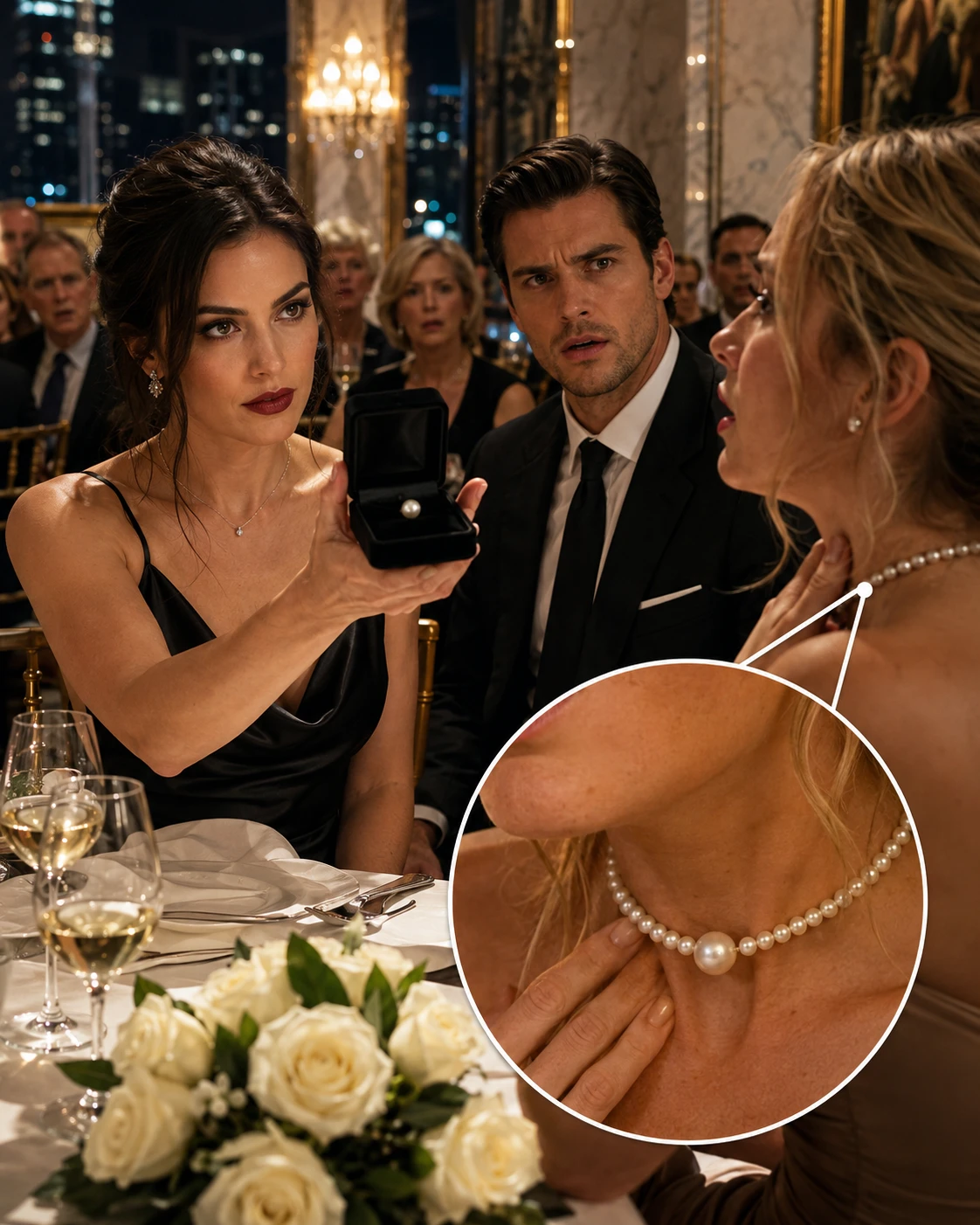
His mistress stood up at dinner and announced she was taking my last name.
My husband’s family clapped softly, like betrayal sounded better with manners.
She said, “It already feels like mine.”
I smiled and asked if she meant the name on the marriage certificate, the business trademark, or the trust documents.
The room stopped clapping before she sat down.
CHAPTER 1 — THE TABLE WHERE THEY BURIED ME
There are restaurants in Manhattan where a woman can be murdered without a single drop of blood touching the floor.
The room will smell like truffle butter and white roses. The silverware will gleam beneath a chandelier imported from Vienna. Men will wear watches worth more than a nurse’s annual salary, and women will pretend not to notice whose hand is resting under which table. A violinist will play something mournful enough to excuse the silence.
That was The Gilded Swan on a rain-polished Thursday night in November.
I arrived six minutes late because I wanted them to watch the door.
Not desperately. Not hungrily. Not the way women look toward entrances when they are waiting for love to save them.
No.
I wanted them to look because my husband, Harrison Blackwood, had spent the last three months telling his family I was unstable, fragile, and fading. He wanted me to walk in looking like a woman already half erased.
So I gave them the opposite.
I wore black satin with a neckline sharp enough to cut a rumor in half. My hair was swept back low and clean. No diamonds except my wedding ring, because sometimes the most dangerous jewel in the room is the one everyone thinks has lost its value. My lipstick was the color of old wine and good manners. My heels were silent on the marble, which meant no one heard me coming until the hostess said, “Mrs. Vale-Blackwood, your party is waiting.”
Every head turned.
Harrison’s mother, Margaret, inhaled like my existence had ruined her appetite. His father, Preston, lifted his bourbon but didn’t drink. His sister, Caroline, glanced at my dress and decided immediately that it cost more than her monthly mortgage. Harrison smiled at me with the soft public cruelty of a man who had learned to betray without blinking.
And beside him sat her.
Serena Pike.
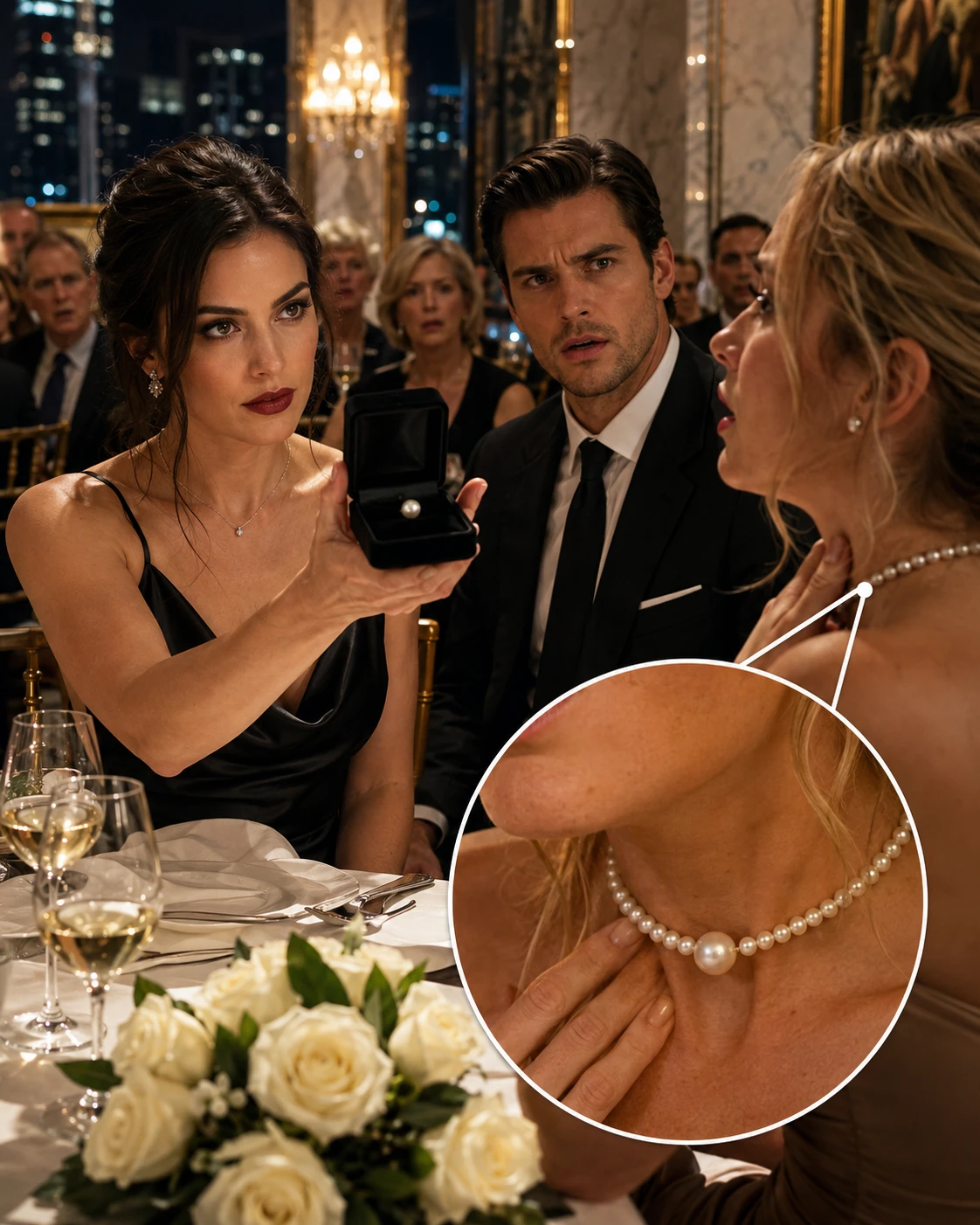
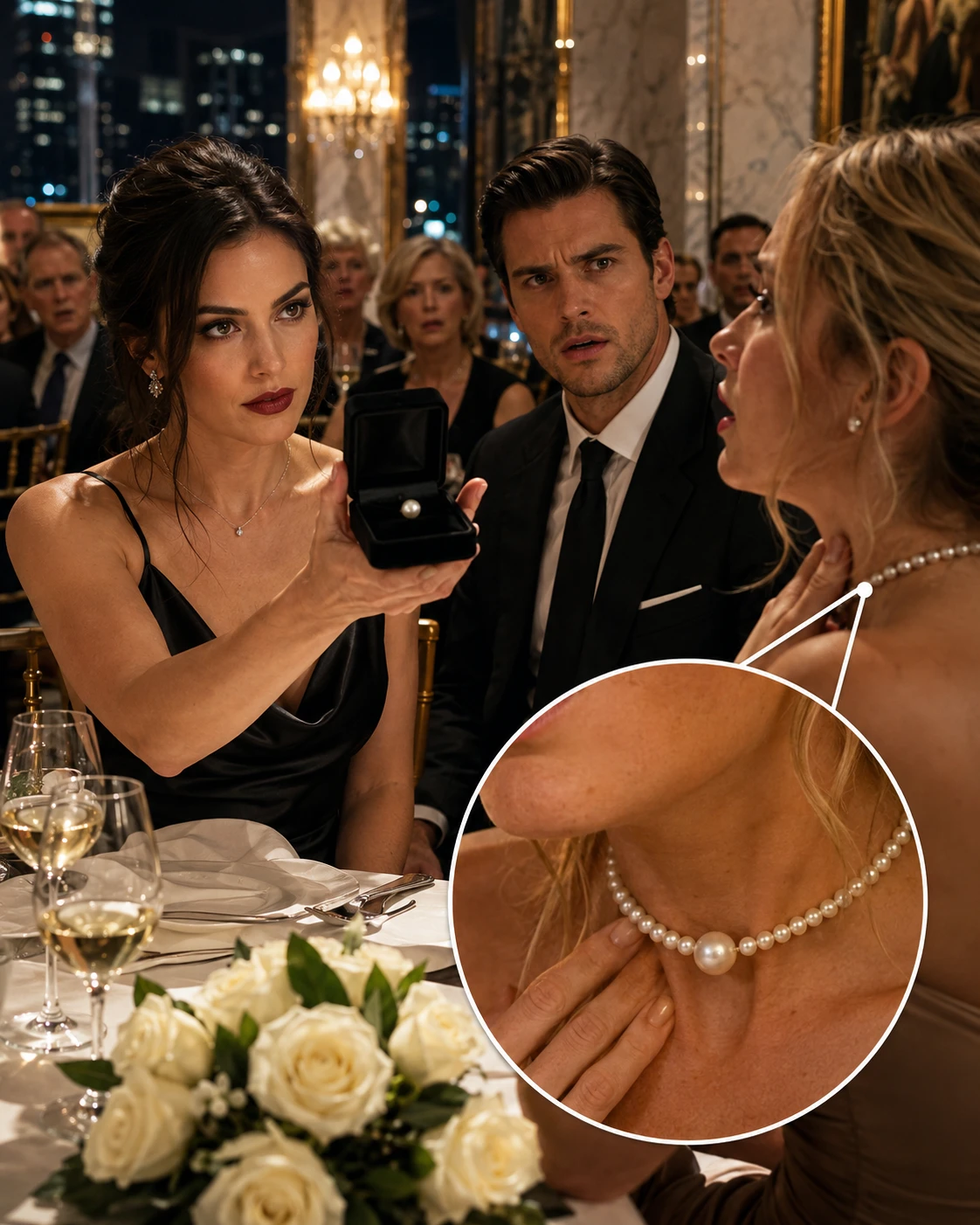
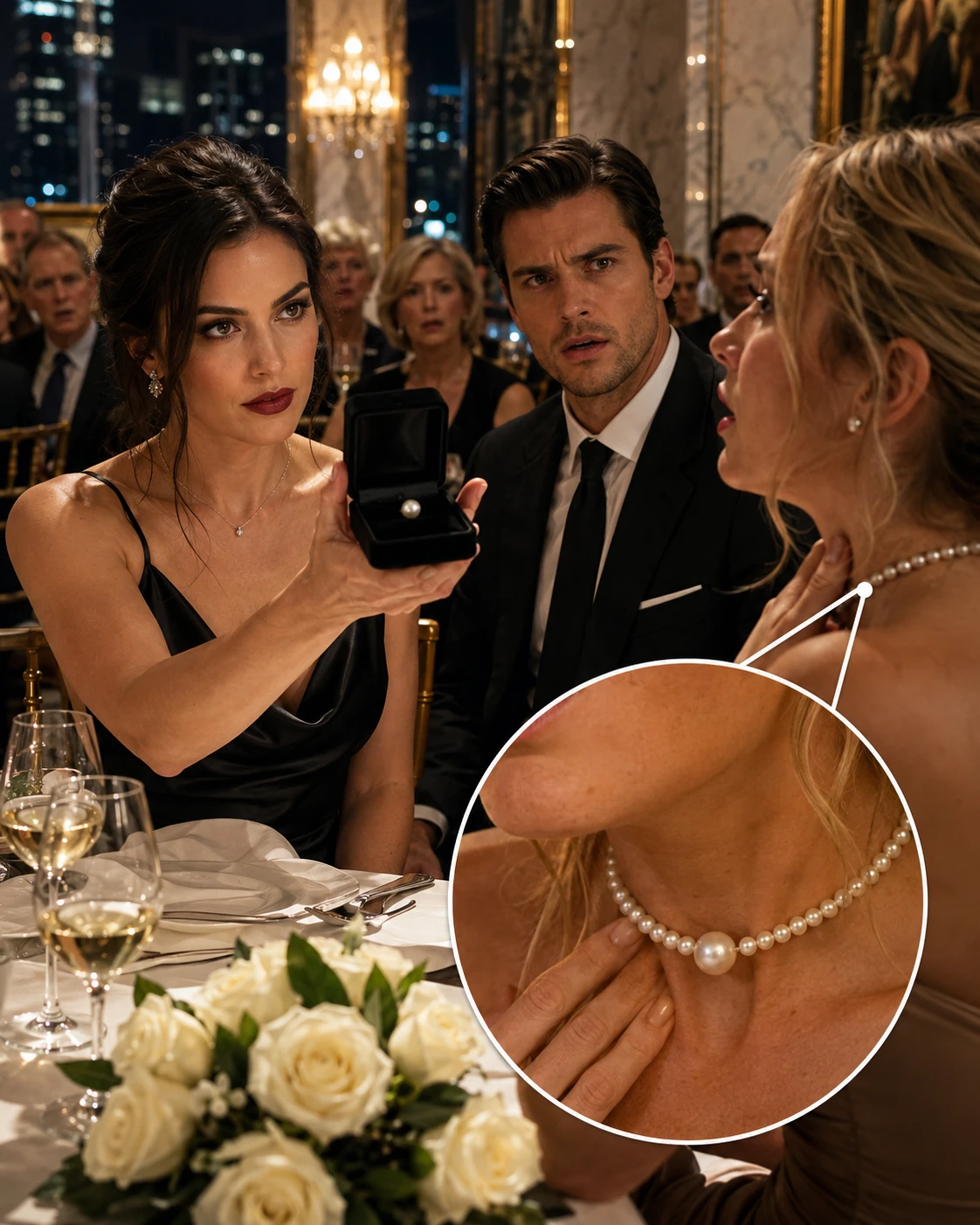
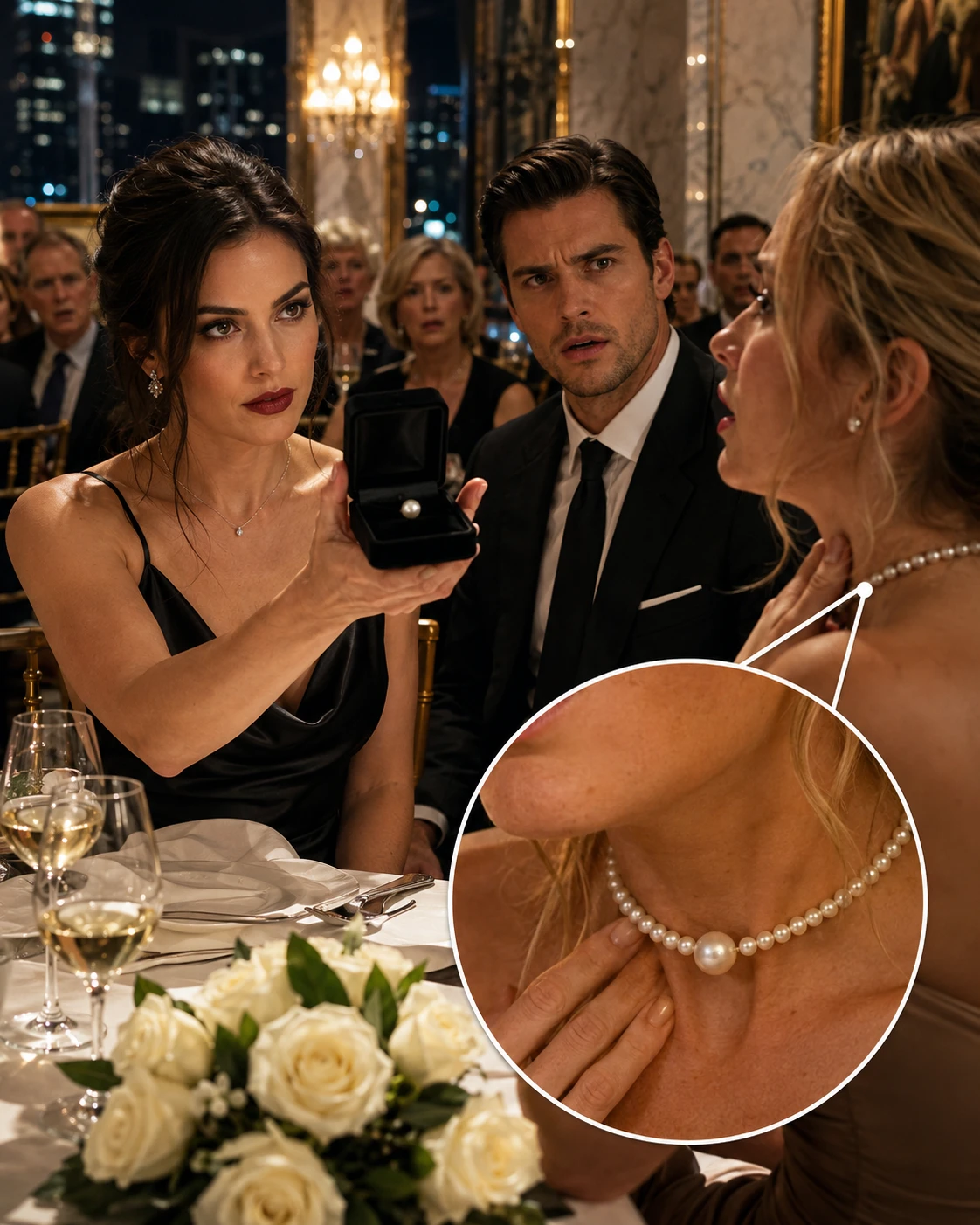
Twenty-seven years old. Blonde in the expensive way, which means not natural, not accidental, and not apologetic. Her shoulders were bare, her laugh was light, and around her throat was my mother’s pearl choker.
That was the first real mistake.
Not the affair. Not the messages. Not the luxury apartment in Tribeca paid through a shell company named after a racehorse. Not even the fact that Harrison had told her things about my father’s trust no mistress should have known.
The first real mistake was wearing my dead mother’s pearls to a family dinner and thinking I would not notice.
I kissed Margaret’s cheek, because I was raised around women who could sharpen knives while setting a table.
“Vivienne,” Margaret said, her voice sugar over poison. “How lovely you could join us.”
“How generous of you to invite me to my own humiliation,” I said softly.
Her smile twitched.
Harrison stood and pulled out my chair. He looked handsome the way inherited men often look handsome: tall, polished, and hollow in the places where struggle should have built character. The Blackwoods had been old money once, before bad investments, private addictions, and three generations of arrogance had turned the family fortune into a museum exhibit. Harrison had married me at thirty-two with the patience of a man buying land he planned to strip for timber.
At the time, I thought he loved me.
That is the embarrassing part of betrayal. Not that someone lied. People lie every day. They lie about traffic, age, desire, whether the wine is good, whether they are fine.
The humiliation is realizing you helped them do it.
I sat down.
Serena gave me a bright, innocent smile. “Vivienne, I’ve heard so much about you.”
“Then you have my condolences.”
Caroline coughed into her napkin.
Harrison placed his hand over mine. “Let’s have a pleasant evening.”
I looked down at his fingers. Once, I had loved those hands. I had loved them on the small of my back in crowded rooms, loved them curled around coffee mugs on Sunday mornings, loved them trembling when he stood at the altar of St. Bartholomew’s and promised to forsake all others.
Now I saw the faint scratch across his knuckle and remembered the photograph my investigator had sent me that morning: Harrison pushing Serena against the elevator wall of the Ritz-Carlton in Boston, one hand gripping the same pearls now glowing at her throat.
I removed my hand gently.
“I adore pleasant evenings,” I said.
Dinner began as all wealthy disasters begin: with champagne and lies.
Preston spoke about markets. Margaret spoke about a charity gala she had not actually helped organize. Caroline complained about the renovation of her Hamptons kitchen as though cabinets were a human rights issue. Harrison performed concern by asking whether I had slept well. Serena performed innocence by asking me what it was like to grow up with a name “everyone recognizes.”
That name was Vale.
Not Blackwood.
Vale.
My grandfather had printed it on the first bottle of perfume he mixed in a rented apothecary in Savannah, Georgia. My father had put it on hotels, cosmetics, silk scarves, charitable foundations, and eventually the side of a glass tower on Madison Avenue. My mother had turned it into a whisper among women who understood quiet luxury before quiet luxury became a hashtag. Vale was not loud. It did not scream. It entered a room and let everyone else become aware of their posture.
The Blackwoods had their ancestry.
The Vales had assets.
When I married Harrison, I hyphenated because I believed marriage was a bridge.
He believed it was a tunnel.
Halfway through the duck course, Margaret lifted her glass.
“I think,” she said, “this family has had enough tension.”
I looked at Harrison. He avoided my eyes.
“We’ve been through a difficult season,” Margaret continued, “but difficult seasons often reveal what is meant to flourish.”
Serena’s cheeks turned pink. Not embarrassed pink. Triumphant pink.
I set down my fork.
Preston raised his glass next. “To new beginnings.”
Caroline smiled down at her lap, where her phone was already angled toward me. Recording. Of course she was recording. Nothing says family like premeditated virality.
Harrison cleared his throat. “Vivienne, there’s something we wanted to discuss with you in person.”
We.
Such a small word. Such a loaded gun.
Serena stood before he could continue.
The whole table stilled with rehearsed anticipation. Waiters drifted away like they had been trained to vanish at the smell of scandal. The violinist changed keys, or perhaps my blood did.
Serena placed one manicured hand on the back of Harrison’s chair.
“I know this may be difficult,” she said, looking at me with the moist-eyed bravery of a woman about to detonate someone else’s life and call it healing. “But Harrison and I are in love.”
Margaret gave a tiny nod, approving the performance.
“And after the divorce,” Serena continued, “I’ll be taking your last name.”
A strange thing happened then.
The room became very clear.
I saw the condensation on Preston’s glass. The tiny gold clasp on Caroline’s clutch. The way Harrison’s jaw tightened because Serena had said too much too soon. The pulse fluttering in her throat beneath my mother’s pearls.
Then came the applause.
Soft.
Civilized.
A patter of fingertips against palms. Margaret first. Caroline next. Preston, reluctantly, because he always followed power even when it wore perfume. Harrison did not clap. He watched me.
The Blackwoods applauded my replacement as though betrayal were a toast at a rehearsal dinner.
Serena smiled wider.
“It already feels like mine.”
I let the silence stretch.
People underestimate silence. They rush to fill it. They confess inside it. They reveal themselves because emptiness terrifies those who have built their lives on performance.
I picked up my champagne glass and studied the bubbles rising like small golden witnesses.
Then I smiled.
“Serena,” I said, “when you say my last name, I need you to be more specific.”
Her expression flickered.
I tilted my head. “Do you mean the name on the marriage certificate?”
Harrison’s eyes sharpened.
“The business trademark?” I continued.
Margaret’s fingers stopped mid-clap.
“Or the trust documents?”
The room stopped clapping before Serena sat down.
There it was.
The first crack in their little crystal kingdom.
Serena looked at Harrison. Harrison looked at his mother. Margaret looked at Preston. Preston looked at me with the slow horror of a man realizing the decorative vase in the corner has been a security camera all along.
I reached for my purse and removed a small velvet box.
Serena’s gaze dropped to it, then to her necklace.
“Those pearls,” I said, “belonged to my mother. She wore them the night she signed the first international distribution deal for Vale No. 7. They were listed in the estate inventory. They were stored in the Fifth Avenue vault. They were removed on September ninth by a man using my husband’s access code.”
Harrison whispered, “Vivienne.”
“No,” I said gently. “Not yet.”
I opened the box.
Inside was a single pearl, luminous and perfectly matched to the strand around Serena’s throat.
“My mother had one replacement pearl made in case the strand ever broke,” I said. “Because she understood something the Blackwoods never did.”
I looked around the table.
“Everything valuable has a record.”
Serena’s hand went to the necklace.
“You don’t have to make this ugly,” Harrison said.
I laughed then.
Not loudly. Not wildly.
A soft, elegant laugh. The kind that made the woman at the next table glance over and realize she had missed something delicious.
“My dear,” I said to my husband, “you invited your mistress to dinner wearing stolen jewelry and told her to announce she was taking my name in front of your family. Ugly arrived before I did.”
Margaret leaned forward. “Vivienne, you’re emotional.”
“And you’re implicated.”
Her face drained.
Preston muttered, “Now, hold on.”
“I have been holding on,” I said. “For months.”
The violinist stopped playing.
I stood.
Every phone in the private dining room was now pointed at us. Caroline’s little recording had attracted company. Strangers could smell blood under velvet.
I placed a cream-colored envelope beside Harrison’s plate.
“What’s that?” he asked.
“A preview,” I said.
He did not touch it.
So I did the kind thing and opened it for him.
Inside was a photograph of him and Serena outside the Boston Ritz. A bank transfer from Blackwood Holdings to Pike Consulting. A copy of a trademark application for House of Vale filed by Serena three weeks earlier. A page from my father’s trust agreement with one clause highlighted in gold.
Harrison stared at the papers as if they had betrayed him.
That was always the difference between us.
When people betrayed me, I studied them.
When paper betrayed Harrison, he panicked.
“You’ve been spying on me,” he said.
“No,” I replied. “I’ve been auditing what I own.”
He went very still.
I looked at Serena. “Keep the pearls for tonight. They look lovely on evidence.”
Then I turned and walked out.
Behind me, the table erupted. Harrison called my name. Margaret hissed something about lawyers. Serena began crying, because women like her always cry when the knife they brought to dinner is handed back with their fingerprints on it.
I did not turn around.
Outside, Manhattan rain fell in clean silver lines. My driver, Anthony, opened the door of the black town car. He had worked for my father before me and had the rare gift of knowing when not to ask questions.
But tonight, as I slid into the back seat, he met my eyes in the rearview mirror.
“Home, Mrs. Vale?”
I looked at the wet city trembling beyond the glass.
“No,” I said. “Take me to Mercer.”
Anthony nodded once.
The car pulled away from the curb, leaving The Gilded Swan glowing behind us like a jewelry box full of snakes.
I touched the bare skin at my throat where my mother’s pearls should have been and felt, for the first time in months, not grief.
Not rage.
Not even heartbreak.
I felt awake.
CHAPTER 2 — THE MAN WHO KEPT MY SECRETS IN INK
Julian Mercer lived above his law office in a restored brownstone on Gramercy Park, because he had never trusted elevators, corporations, or people who used the word “legacy” too often.
His family had money, but not Blackwood money and not Vale money. Mercer money was older than banks and quieter than guilt. It sat in library walls, university wings, judgeships, and the kind of political donations nobody discussed aloud. Julian could have become anything useless and ornamental. Instead, he became the most feared private attorney in New York by making rich people understand that paper could bleed.
He opened the door himself.
No tie. White shirt. Sleeves rolled to the forearms. Dark hair damp, as if he had just stepped out of the shower or a storm. He looked at my dress, then my face, then the absence of pearls at my throat.
“You let her wear them,” he said.
“I let her confess in them.”
A brief smile touched his mouth.
Julian Mercer had loved me once.
No, that is too simple.
Julian had loved me in the careful, restrained way dangerous men love women they respect too much to chase when they choose someone else. We met at Columbia when I still believed brilliance could protect a person from pain. He was two years older, already infuriatingly calm, already writing notes in the margins of books as if the authors had been waiting for his correction.
He kissed me once in a library stairwell during a snowstorm.
Then my mother got sick, my father grew old overnight, Harrison appeared with roses and perfect timing, and Julian stepped aside.
He did not do it dramatically. He simply became useful instead of vulnerable.
When my father died, Julian handled the estate.
When I married Harrison, Julian reviewed the prenup.
When I called him six months ago and said, “I think my husband is trying to steal from me,” he said, “Come over.”
Not “Are you sure?”
Not “Maybe you misunderstood.”
Not “But he seems like such a good man.”
Just: “Come over.”
That is how women learn who actually respects them. Not by who comforts them when they cry, but by who believes them before the evidence is fashionable.
His office smelled like cedar, ink, and the expensive coffee he never finished. The walls were lined with books, framed legal victories, and one black-and-white photograph of his grandmother standing in front of a courthouse in 1968 after winning a housing discrimination case nobody thought she could win.
I removed my gloves and laid them on his desk.
“It happened,” I said.
“Did she say it exactly?”
“‘It already feels like mine.’”
Julian’s eyes cooled.
He walked to the sideboard and poured two fingers of bourbon into a crystal glass. He handed it to me. I did not usually drink bourbon, but revenge has a way of improving the taste of smoke.
“Caroline recorded it,” I said. “So did at least four strangers. By midnight, half of Manhattan will know Harrison Blackwood’s mistress wants to be a Vale.”
“Good.”
I looked at him over the rim of the glass. “That’s not the typical attorney response.”
“I’m not your typical attorney.”
“No. You’re worse.”
“Better,” he corrected.
He moved behind his desk and opened a leather folder. Inside was the life Harrison had tried to hide from me, arranged chronologically and labeled with Julian’s precise handwriting.
March 3: first payment to Pike Consulting.
March 17: Tribeca lease signed by Blackwood Holdings subsidiary.
April 2: private flight to Miami with S. Pike.
April 19: unauthorized access to Vale archives.
May 8: draft licensing agreement created for “House of Vale.”
May 21: email from Margaret Blackwood to Harrison: “V. will break eventually. Keep her isolated.”
I stared at that one for a long time.
Not because I was surprised.
Because some sentences are small rooms, and when you enter them, you find all your nightmares already seated.
Keep her isolated.
That had been the campaign.
It had started gently. Harrison telling friends I was exhausted. Margaret telling donors I was “taking a step back.” Caroline posting carefully angled photos from events I had not been invited to, always captioned with things like family is who shows up. Preston suggesting I let Harrison handle more of the “heavy business matters” because grief had made me too trusting.
Grief.
They loved that word.
They wrapped it around my throat and called it concern.
After my father died, I had been fragile. I will not lie and make myself sharper than I was. I wandered through our Fifth Avenue apartment at night wearing his old cashmere robe. I forgot meetings. I missed calls. I cried in elevators and powder rooms and once in the refrigerated aisle at Dean & DeLuca because I saw the little jars of orange marmalade he used to like.
Harrison had held me then.
He had kissed my hair and said, “Let me carry things for a while.”
So I did.
That was the second mistake.
Not trusting him. Love requires trust, or at least the courage to risk it.
The mistake was confusing being carried with being protected.
Julian watched me read the email again.
“We can use it,” he said.
“I know.”
“Vivienne.”
I looked up.
He softened slightly. “You’re allowed to feel it.”
I laughed once, bitterly. “I don’t have time.”
“Feelings don’t ask for permission. They become strategy if you refuse to name them.”
That annoyed me because it was true.
I walked to the window. Across the street, Gramercy Park sat locked and wet beneath the rain, its iron fence shining black. My reflection looked back at me: composed, expensive, almost serene.
Inside, something was breaking very quietly.
“I loved him,” I said.
Julian said nothing.
“I need you to understand that. Not because it matters legally. Because it matters to me. I loved him when he was still pretending badly. I loved the version of him who brought me coffee in bed. I loved the version who learned my mother’s favorite song. I loved the version who cried at my father’s funeral, even if I know now he was probably crying because he had not been named trustee.”
My voice did not shake.
That almost made it worse.
“I loved a costume,” I said. “But I loved it.”
Julian came to stand beside me, close enough that I could feel warmth from his body, far enough that he did not trap me inside it.
“Loving the wrong man does not make you foolish,” he said.
“No?”
“No. Staying loyal to his lies after you discover the truth would.”
I turned to him.
There are moments in life when you notice a man not because he reaches for you, but because he does not. Julian had always given me space like it was a form of devotion. Harrison filled every room with charm until I forgot where the exits were. Julian stood beside the door and made sure it opened.
I looked away first.
“What happens next?” I asked.
Julian returned to the desk and pulled out another folder.
“The dinner was the spark,” he said. “Now we control the burn.”
He laid out the plan.
At 8:00 a.m., our team would file for divorce in New York Supreme Court, citing adultery, financial misconduct, and breach of marital agreements. At 8:15, cease-and-desist letters would go to Serena, Harrison, Blackwood Holdings, and every agency attached to the unauthorized House of Vale trademark application. At 8:30, a petition would be filed to freeze disputed assets connected to the fraudulent licensing attempt. At 9:00, the board of Vale International would receive a confidential legal packet establishing that Harrison had attempted to transfer proprietary brand materials to an outside party.
“By breakfast,” Julian said, “he’ll lose access to the corporate accounts.”
I touched the folder. “And the trust?”
Julian’s expression changed.
This was where my father entered the room.
Not literally, of course. Dead men have better manners than the living. But his presence was in the paper. In the gold highlight. In the clause Harrison had never truly understood because he had always believed contracts were things rich men paid poorer men to interpret in their favor.
The Vale Legacy Trust had been created by my grandfather, revised by my father, and hidden inside a structure so elegant that even predators mistook it for decoration.
Its essential condition was simple: anyone who married into the Vale family could benefit from certain assets only while acting in good faith toward the principal heir and the preservation of the Vale name. Proven adultery linked to financial exploitation, fraud, coercion, or unauthorized use of the family’s intellectual property triggered immediate forfeiture of access, repayment provisions, and removal from all advisory roles.
Harrison had thought my father was old-fashioned.
He was not.
He was a Southern man with a velvet voice and an assassin’s understanding of paperwork.
“Your father anticipated a Harrison,” Julian said.
“My father anticipated everyone.”
“That too.”
I sat down, suddenly tired.
There was one part of the plan Julian had not mentioned. The quietest part. The most important.
“Tell me about Larkspur,” I said.
Julian opened the bottom drawer and removed a black folder with no label.
Larkspur Holdings.
The name came from my mother’s garden in Savannah, where blue-purple flowers grew along the brick wall and my father used to say beauty was best planted where enemies expected weeds.
After my mother died, my father began moving certain assets out of direct Vale corporate control and into independent trusts managed through Larkspur. Not to hide them from taxes. My father was too proud to be cheap. He hid them from vultures.
Luxury properties in Palm Beach, Aspen, and Newport. Minority stakes in boutique hotels. A controlling interest in the building that housed Blackwood Holdings. The note on Preston’s Nantucket estate. The debt Caroline’s husband had taken against their Connecticut home. Even the private club where Margaret hosted charity luncheons and quietly ruined women she considered socially inconvenient.
I had not known the full extent until six months ago.
Neither had Harrison.
That was the point.
“They still don’t suspect?” I asked.
“No.”
“How is that possible?”
Julian’s smile was cold. “Arrogance is the cheapest blindfold.”
I almost smiled.
He leaned back in his chair. “There’s one more thing.”
I knew from his tone that I would not like it.
“What?”
He placed a photograph on the desk.
It showed Serena outside a clinic on the Upper East Side. Oversized sunglasses. Cashmere coat. One hand over her stomach in that theatrical way women do when they know someone is watching.
“She’s pregnant?” I asked.
“We don’t know.”
“Does Harrison think she is?”
“Yes.”
The word landed strangely.
I waited for the pain. I expected it to rise, hot and animal, but instead a quiet disgust moved through me.
“How convenient,” I said.
“Very.”
“If she is pregnant, the child is innocent.”
“I know.”
“I won’t harm a child.”
“I know that too.”
Julian slid another paper toward me. A bank statement. A wire transfer from Harrison’s personal account to Serena’s doctor. Then another from Preston. Then an email from Margaret to Serena with the subject line: Timing.
I read it.
My stomach turned.
Margaret had not only known about the pregnancy possibility. She had choreographed it. The announcement, the divorce pressure, the name change, the brand takeover. A baby, legitimate or not, would be used as leverage in the court of public sympathy. Poor young mistress. Powerful cold wife. Heir to the Vale legacy. A fresh start. A new family.
The oldest trick in America: make theft look like romance.
“They want the public to believe I’m punishing a pregnant woman,” I said.
“Yes.”
“And the name?”
“Serena filed paperwork two days ago to legally change her surname to Vale.”
I looked at him sharply.
“She can’t.”
“She can call herself whatever she wants socially. Legally, a court may allow a name change unless it’s fraudulent or intended to infringe on protected interests.”
“She filed before the divorce?”
“Yes.”
“Why?”
Julian’s eyes met mine. “Because Harrison promised her that by the time anyone objected, you would be too publicly humiliated to fight without looking cruel.”
I stared at the rain.
Then I laughed again.
This time it had no bitterness in it.
Only recognition.
“They still think I want to be liked.”
Julian’s gaze held mine.
“Do you?”
It was the sort of question no one had asked me in years. Harrison liked me gracious. Margaret liked me silent. The board liked me polished. The press liked me elegant. Donors liked me generous. The world loved a wealthy woman as long as she performed gratitude for the privilege of being envied.
Did I want to be liked?
I thought of Serena’s hand on Harrison’s chair.
Margaret’s soft clap.
My mother’s pearls against another woman’s throat.
“No,” I said. “I want to be unavoidable.”
Julian closed the folder.
“Then we begin.”
By midnight, the video was everywhere.
Not the full dinner. Only the twenty-seven seconds Caroline had posted before panic made her delete it. The internet, of course, had already stolen it.
Serena standing.
The announcement.
The applause.
My voice, calm as a blade:
“Do you mean the name on the marriage certificate, the business trademark, or the trust documents?”
By 12:14 a.m., someone had added dramatic music.
By 12:37, a woman in Dallas had commented, She smiled like she already owned the cemetery plot.
By 1:10, the clip hit two million views.
Harrison called seventeen times.
Margaret called nine.
Serena sent one text.
You humiliated me.
I read it twice.
Then I typed back:
No, darling. I preserved the receipt.
I turned off my phone.
Julian walked me to the guest room because it was past one and the rain had become sleet. The room was quiet, masculine, and warm, with a stack of fresh towels and a cashmere throw folded at the end of the bed. He stood at the threshold, not entering.
“Sleep,” he said.
“I won’t.”
“Then rest your eyes and plan their funeral.”
That made me smile.
He looked at me for a moment too long.
“Vivienne,” he said.
“Yes?”
“When this is over, don’t confuse survival with loneliness.”
My throat tightened unexpectedly.
“Good night, Julian.”
“Good night.”
He closed the door.
I sat on the edge of the bed in my black satin dress and watched Manhattan glitter through rain-streaked glass. Somewhere downtown, my husband was discovering that his mistress had made him famous in precisely the wrong way. Somewhere uptown, Margaret Blackwood was realizing that society forgives affairs faster than it forgives bad strategy. Somewhere in the middle of the storm, the name Vale was moving through phones, group chats, gossip pages, boardrooms, and bedrooms like a match dropped onto silk.
I should have been devastated.
Instead, I slept for four perfect hours and dreamed of my mother’s garden.
The larkspur was blooming.
CHAPTER 3 — EVERY PAPER HAS A PULSE
At 7:42 the next morning, I walked into Mercer & Lowe through the private entrance wearing ivory wool, black sunglasses, and the expression of a woman too well-rested to be pitied.
By then, the internet had chosen sides, changed sides, and built an entire courthouse out of comments.
The first wave called me cold.
The second wave called me iconic.
The third wave found Serena’s old Instagram captions and decided she had been auditioning for my life since July.
Women stitched the clip with their own stories.
My husband brought his girlfriend to Thanksgiving.
My ex tried to give my grandmother’s ring to his coworker.
His family clapped when he announced the divorce.
Under mine, the top comment read: Betrayal sounds different when the wife can afford lawyers.
I did not read more.
Viral attention is not power. It is weather. It can push a fire or drown it, but only a fool mistakes lightning for strategy.
In the conference room, Julian’s team was already assembled.
There was Naomi Park, a litigation partner with cheekbones sharp enough to cross-examine God. Marcus Bell, a forensic accountant from Chicago who wore cheap shoes and found expensive lies. Dana Whitcomb, the crisis communications consultant who had once rehabilitated a senator after a scandal involving cocaine, a yacht, and a woman dressed as the Statue of Liberty. And finally, Grace Mercer, Julian’s aunt, retired judge, current terror, seventy-three years old with silver hair and a voice that could make a guilty man confess to crimes he had only considered.
Grace looked me up and down.
“You’re thinner,” she said.
“Good morning to you too.”
“Don’t disappear. Men like Harrison feed on women who shrink.”
“I’m done shrinking.”
“Excellent. Sit.”
I sat.
Marcus began with money.
Harrison had spent eight months moving funds in increments just small enough to avoid immediate board attention and just large enough to be insulting. Consulting fees. Brand development costs. Travel reimbursements. “Strategic licensing expenses.” Most had gone to companies connected to Serena or to Blackwood family obligations disguised as Vale-adjacent business development.
“How much?” I asked.
Marcus adjusted his glasses. “Directly traceable? Four point eight million. Potentially connected? Twelve to fifteen.”
Naomi’s pen stopped. “Fifteen?”
“Rich men steal emotionally,” Marcus said. “Poor men steal efficiently. Harrison’s sloppy because he believed access meant ownership.”
Julian looked at me.
I nodded for him to continue.
Marcus tapped the next page. “There’s also the building.”
“The Blackwood Holdings office?” I asked.
“Yes. They’re behind on rent. Six months. Notices were sent to their registered agent.”
I looked at Julian. “And their registered agent is?”
He gave me a look.
Of course.
Me.
Not personally. Larkspur.
My father had bought the debt attached to the Blackwood corporate office two years before Harrison proposed. Quietly. Patiently. Without ever mentioning it at dinner.
Daddy, I thought, not for the first time, you beautiful paranoid man.
Grace Mercer smiled like she could hear my thought.
“Your father disliked the Blackwoods,” she said.
“My father disliked most people who talked about horses more than books.”
“He had taste.”
Naomi moved to the legal filings.
The divorce petition had been filed. The asset freeze request was pending. The cease-and-desist letters had gone out, with copies to the agencies, manufacturers, stylists, consultants, and influencers Serena had hired for the planned launch of House of Vale. The trademark opposition was prepared. The board packet had landed in inboxes at 9:00 a.m. exactly.
At 9:07, the CEO of Vale International called me.
I let it go to voicemail.
At 9:11, the chairman called Julian.
Julian answered on speaker.
“Is this true?” the chairman demanded.
“Good morning, Edward,” Julian said.
“Don’t good morning me. Did Harrison attempt to license Vale intellectual property to an unaffiliated company run by his mistress?”
“Yes.”
Silence.
Then, “Jesus Christ.”
“Not currently on the call.”
Grace snorted.
Edward exhaled. “Vivienne?”
“I’m here.”
“I’m sorry.”
That was all he said, and because he was a decent man, he did not make it worse by saying more.
“We’ll convene an emergency board meeting,” he said. “Harrison’s access is suspended effective immediately. We’ll cooperate fully.”
“Thank you,” I said.
After the call ended, Dana slid a tablet toward me.
“We need to discuss public posture.”
“I don’t want a posture. I want facts.”
“That is a posture,” Dana said. “The best one.”
She showed me a draft statement:
Mrs. Vivienne Vale-Blackwood is aware of the video circulating online. This is a private legal matter involving unauthorized use of protected family and business assets. Mrs. Vale-Blackwood will not engage in public speculation, but she will take all necessary steps to protect the Vale legacy and the people employed under its name.
I read it twice.
“Remove Blackwood,” I said.
Dana looked up.
“From your name?”
“Yes.”
“It’s still legally—”
“Professionally. Publicly. Everywhere we can.”
Dana smiled. “Mrs. Vivienne Vale, then.”
The room changed around the name.
It fit.
Not because it was mine again.
Because it had never stopped being mine.
At 10:32, Harrison arrived downstairs.
We watched him on the security monitor because sometimes justice begins as cinema.
He came in wearing last night’s tuxedo pants, a fresh shirt, and panic disguised as outrage. His hair was damp from the rain. His face was unshaven. He looked less like the heir to a dynasty than a man whose credit cards had stopped working at breakfast.
The receptionist did not let him upstairs.
He called Julian.
Julian answered.
“She’s my wife,” Harrison snapped.
“She’s my client,” Julian replied.
“I need to speak to her.”
“No.”
“You can’t keep me from my wife.”
“You managed that on your own.”
I almost applauded.
Harrison looked up at the security camera. He knew we were watching.
“Vivienne,” he said, voice shifting instantly into grief. “Please. We need to talk. Last night got out of hand.”
I took the phone from Julian.
“Last night was the first honest conversation your family has had in years.”
His eyes widened slightly. He had not expected my voice.
“I made mistakes,” he said.
“You committed theft.”
“I was confused.”
“You were photographed in three cities with your mistress while using my company’s money to finance her attempt to become me.”
He flinched.
Good.
“Serena was emotional,” he said. “She shouldn’t have said it that way.”
“How should she have said it?”
He looked away.
I pressed. “Should she have waited until after the papers were signed? Until after your mother leaked that I was unstable? Until after the baby announcement?”
His head snapped up.
There it was.
The word baby moved through him like a hand pulling a wire.
“So you know,” he said.
“I know what Margaret wants me to know. That isn’t always the same as truth.”
His voice dropped. “Don’t drag Serena into this.”
I looked at the screen, at the man who had once kissed the inside of my wrist every morning like it was a ritual, and felt the last living tenderness in me close its eyes.
“Did you just ask me to protect your mistress from the consequences of stealing my mother’s pearls?”
He said nothing.
“Go home, Harrison.”
“Our home?”
“No,” I said. “Your mother’s.”
His face hardened. There he was. Under the charm. Under the guilt. Under the borrowed softness. The man who had always believed the world owed him a softer landing than everyone else.
“You’re making a mistake,” he said.
“No. I married one.”
I ended the call.
For one second, the room was quiet.
Then Grace Mercer said, “Good.”
But I was not celebrating.
That is another truth the internet never understands.
Revenge is satisfying in clips. Thirty seconds. A perfect line. A man’s face collapsing. A woman turning away in heels. Music swelling. Comments cheering.
In real life, revenge has paperwork.
It has coffee gone cold. It has lawyers asking for dates you wish you could forget. It has screenshots that make your stomach drop even when you already know what they say. It has the awful intimacy of seeing hotel charges, lingerie receipts, flight manifests, and affectionate lies arranged in spreadsheets.
By noon, I had signed so many affidavits my hand ached.
At 1:15, we broke for lunch. I did not eat. Julian noticed but did not comment. He placed a small bowl of tomato soup beside me and continued reviewing documents as though he had not done it.
I ate because being known is sometimes more persuasive than being told.
At 2:00, Naomi entered with a strange expression.
“We have a problem,” she said.
Julian looked up. “Legal or emotional?”
“Both.”
She placed her phone in the center of the table and played a video.
Serena sat on a cream sofa in what appeared to be the Tribeca apartment. She wore no makeup, which meant makeup designed to appear as expensive sadness. Her hair was loose. One hand rested over her stomach.
“I never wanted to hurt anyone,” she said, eyes glossy. “But love is complicated. Harrison and I found something real during a painful time. I understand Vivienne is angry, but I hope she remembers there’s an innocent life involved now.”
The video cut before she said more.
Dana cursed under her breath.
“How many views?” I asked.
“Four hundred thousand in twenty minutes,” Naomi said.
There it was. The pivot.
Mistress to mother.
Affair to love story.
Theft to survival.
I looked at Julian. “Is she pregnant?”
“We’re still verifying.”
Grace leaned forward. “Doesn’t matter publicly. She has created the emotional fact.”
I watched Serena’s hand on her stomach.
Something about it bothered me.
Not the gesture. The timing.
The hand was too practiced. The pause too theatrical. The lighting too perfect. Behind her, on the side table, sat a framed photograph of Harrison kissing her forehead.
Not private grief.
Set design.
“Where did she post it?” I asked.
“Instagram, then TikTok,” Dana said.
“Who filmed it?”
Dana blinked. “Why?”
“Because Serena doesn’t own that sofa.”
The room turned to me.
I pointed at the screen. “That sofa is from Maison Gerard. Custom. I ordered one in dove gray for the Palm Beach house last year. That one is ivory with brass feet. Serena doesn’t have the taste or the patience.”
Julian’s mouth curved faintly. “Who does?”
“Margaret.”
Marcus was already typing.
Within twelve minutes, we had the apartment’s design invoices. The Tribeca lease had been paid by Blackwood Holdings, but the furnishings had been purchased through a personal account belonging to Margaret Blackwood.
At 2:31, Marcus found something better.
A payment to a boutique PR firm known for “narrative correction.”
At 2:44, Naomi found the firm’s crisis deck in a shared folder Harrison had been foolish enough to access using his Vale email.
Slide 1: Reframing the Transition.
Slide 4: Positioning Serena as Graceful New Partner.
Slide 7: Pregnancy Sensitivity Shield.
Slide 9: Countering “Gold Digger” Attacks by Emphasizing Legacy Continuity.
Slide 12: Name Adoption Rollout.
I stared at the phrase until it blurred.
Name Adoption Rollout.
My life, reduced to a campaign calendar.
My marriage, a product transition.
My grief, their market opportunity.
Dana read over my shoulder and whispered, “Oh, sweetheart.”
I stood so quickly my chair rolled back.
Julian rose too.
“I need air,” I said.
He followed me to the terrace behind the office, where the city smelled like rain, exhaust, and winter money. Below us, taxis moved like yellow warnings. Above us, clouds gathered low over the glass towers.
I gripped the railing.
My hands were shaking.
I hated that.
Not because shaking is weakness. Because I had learned young that women like me were allowed exactly three acceptable emotions in public: grace, gratitude, and mild amusement. Rage had to be tailored. Grief had to be moisturized. Fear had to wear pearls.
Julian stood beside me.
“I can destroy them,” I said.
“Yes.”
“I can take the buildings, the company access, the trademarks, the apartment, the public narrative.”
“Yes.”
“But I can’t go back to the woman who didn’t know.”
“No,” he said.
The honesty hurt more than comfort would have.
“I want one clean minute,” I whispered. “One minute before I saw the first message. Before I noticed the receipts. Before I understood why Margaret kept calling me fragile. Before I realized every tender thing he said had a purpose.”
Julian turned toward me.
“Look at me.”
I did.
The wind lifted a strand of hair across my cheek. He did not touch it.
“That woman was not stupid,” he said. “She was trusting. She was grieving. She was human. Do not let them steal her too.”
Something in my chest loosened painfully.
“I hate him,” I said.
“I know.”
“I hate that I still remember loving him.”
“I know that too.”
Then he did touch me.
Only his hand over mine on the railing. Warm, steady, asking nothing.
It should not have felt intimate.
It felt like being allowed to exhale after years underwater.
For a second, I imagined leaning into him. Letting my forehead rest against his chest. Letting someone else hold the weight.
But I was not ready to be held.
I was ready to aim.
I withdrew my hand gently.
Julian let me.
“Find out if she’s pregnant,” I said. “Quietly. Legally.”
He nodded.
“And find out who helped her file the name change.”
“Already in progress.”
“One more thing.”
“Yes?”
I looked out over the city.
“I want the pearls back.”
Julian’s expression hardened into something almost beautiful.
“Then we’ll take them first.”
By dusk, our cease-and-desist had gone viral too, though not because we leaked it.
Serena did.
She posted a screenshot with a tearful caption about being “silenced by power.”
Unfortunately for Serena, she forgot to crop the paragraph identifying the pearls as stolen property.
The internet, being the internet, changed sides again.
By 7:00 p.m., #PearlGate was trending.
By 8:15, a jewelry historian on TikTok had found a 1998 Vogue spread featuring my mother wearing the exact choker.
By 9:02, someone slowed down the dinner video and circled Serena’s throat.
By 10:00, women across America were posting pictures of their grandmothers’ jewelry with captions like: Touch his side chick if you want. Touch my mama’s pearls and meet my lawyer.
I watched none of it.
I was in the vault.
The Vale private archive occupied two climate-controlled floors beneath our Madison Avenue headquarters. My father had built it after a fire destroyed part of the original Savannah office. Down there, the air smelled like paper, silk, and preserved memory.
Rows of gowns. Perfume formulas. Handwritten letters. Campaign sketches. First editions. Contracts. Photographs. Jewelry records.
My mother lived there in fragments.
Her handwriting on a guest list. Her lipstick on the rim of a teacup preserved from a charity ball. Her laugh caught in a photograph taken in Newport, head thrown back, pearls blazing at her throat.
I stood before that photograph and let myself miss her.
Not as a symbol. Not as a legacy.
As my mother.
The woman who taught me how to enter rooms slowly. The woman who told me never to confuse softness with surrender. The woman who once took me to a diner in Queens at midnight because I had cried after a boarding school dance and she said pancakes were better than dignity when you were sixteen.
I touched the glass.
“I’m sorry,” I whispered.
For the pearls.
For Harrison.
For letting grief become a door and not checking who walked through.
Behind me, the elevator opened.
I turned, expecting Julian.
It was Harrison.
He had gotten past security because, until 9:00 that morning, he had still been listed as a spouse with archive privileges. Another oversight. Another sentimental allowance I would correct before midnight.
He looked wrecked. Good suit, bad soul. The combination always ages poorly.
“Vivienne,” he said.
“You shouldn’t be here.”
“I needed to see you away from them.”
“Them?”
“The lawyers. The internet. Everyone.”
I almost admired the audacity of a man who could bring his mistress to dinner and then complain about an audience.
He stepped closer.
“I made a terrible mistake.”
“Which one?”
He flinched. “All of it.”
I waited.
He looked at the photograph of my mother.
“I shouldn’t have given Serena the pearls.”
“No.”
“She saw them once. She said they made her feel connected to the family.”
I laughed softly. “She isn’t family.”
“She could be carrying my child.”
“And that made my mother’s jewelry a maternity gift?”
His face tightened. “You’re being cruel.”
“No, Harrison. I’m being specific. You’re confusing the two because specificity makes cruelty harder to deny.”
He rubbed his forehead.
For a moment, I saw the man I had married. The boyish exhaustion. The charm, dimmed but familiar. He knew how to look wounded. He had weaponized it beautifully.
“I was lonely,” he said.
There it was.
The anthem of faithless men.
Lonely.
As if loneliness were a storm that picked him up and dropped him into another woman’s bed. As if loneliness forged invoices, stole jewelry, filed trademarks, signed leases, and hired PR firms.
I stepped closer.
“When my mother died, I was lonely.”
His eyes flickered.
“When my father died, I was so lonely I slept with the television on for four months. When you sat beside me at breakfast and checked your phone because she was texting you, I was lonely. When Margaret told people I was too unstable to attend board dinners, I was lonely. When you touched me with hands that had been on her, Harrison, I was lonely.”
His face paled.
“But somehow,” I said, “I never stole from you.”
He swallowed.
“I can fix this.”
“No.”
“I can leave her.”
“You already did.”
He frowned.
“You left me the moment you decided my grief was useful.”
His mouth opened, but no words came.
That was the closest I ever came to seeing him understand himself.
It did not last.
“What do you want?” he asked, voice rough.
“The pearls.”
He looked away.
My heart slowed.
“Harrison.”
“She won’t give them back.”
“She doesn’t have a choice.”
“She says they’re hers now.”
The room went silent around that sentence.
I thought of Serena at dinner.
It already feels like mine.
The same sickness. The same hunger wearing different perfume.
I walked past Harrison to the archive desk and pressed the security button.
“What are you doing?” he asked.
“Making sure this is recorded too.”
His eyes widened.
The elevator doors opened behind him. Julian stepped out with two security officers.
He took in the scene instantly.
“Harrison,” he said, calm and lethal, “you’re trespassing.”
“This is insane,” Harrison snapped.
“No,” Julian said. “This is the part where your wife stops mistaking access for love.”
Harrison looked between us.
Something ugly entered his face.
“Oh,” he said. “Of course. Mercer. How long has this been going on?”
I almost smiled.
There it was: the final refuge of a guilty man.
If he could not make himself innocent, he would make me dirty.
Julian’s expression did not change.
“I’d be careful,” he said.
“Or what?”
“Or you’ll defame a woman in front of cameras after already committing fraud against her estate.”
Harrison turned to me. “Tell me you didn’t.”
“I didn’t.”
He searched my face, wanting to believe me and wanting not to, because either answer injured him.
“For the record,” I said, “Julian kissed me once in a library fifteen years ago and then behaved with more honor than you managed inside a marriage.”
Julian blinked.
Harrison looked like I had slapped him.
Good.
“Now leave,” I said.
He did.
Not dramatically. Men like Harrison rarely storm when security is present. He walked out with the stiff dignity of someone trying not to look escorted.
Julian remained.
“You remembered the library,” he said quietly.
I looked at my mother’s photograph.
“I remember everything.”
For a moment, neither of us moved.
Then his phone rang.
He answered, listened, and his face changed.
“What is it?” I asked.
He ended the call.
“The clinic Serena visited,” he said. “There’s no confirmation of pregnancy. But there is a confirmed appointment under another name.”
“Whose?”
He hesitated.
That was how I knew the night was about to become worse.
“Caroline Blackwood.”
I stared at him.
“Harrison’s sister?”
“Yes.”
“Why would Caroline be at Serena’s clinic?”
Julian’s jaw tightened.
“Because the account used to pay for the appointment wasn’t Harrison’s. It was Preston’s.”
The archive seemed to tilt.
I looked at the photograph of my mother.
Then at Julian.
For the first time all day, I did not understand the shape of the weapon pointed at me.
But I knew one thing.
It had been loaded long before dinner.
CHAPTER 4 — THE BABY, THE BRAND, AND THE BLACKWOOD LIE
The Blackwoods had always treated family like a private club: old portraits, locked doors, rules made by dead men and enforced by women who had surrendered joy for status.
But every club has a back entrance.
Ours was named Beverly Lane.
Beverly had been Margaret Blackwood’s personal assistant for eighteen years. She knew who sent flowers and who sent invoices. She knew which charities were real, which affairs were tolerated, and which cousins had been quietly removed from Christmas card lists after rehab failed to look charming. She had iron-gray hair, orthopedic shoes, and the ability to make billionaires wait.
My father adored her.
Margaret did not.
That was how I knew Beverly was worth calling.
She agreed to meet me the next morning at a diner in White Plains, forty minutes north of Manhattan, where the coffee tasted burnt and the waitress called everyone honey with democratic indifference.
Julian wanted to come.
I said no.
Not because I did not trust him.
Because some truths come more willingly to women alone.
Beverly was already seated when I arrived, stirring sugar into coffee she did not drink. She looked at my face and sighed.
“I wondered when you’d finally ask the right questions.”
I slid into the booth.
“What is the right question?”
She opened her purse and placed a small manila envelope between us.
“Who is Serena Pike?”
My skin chilled.
“I know who she is.”
“No,” Beverly said. “You know what they wanted you to see.”
I did not touch the envelope.
“Tell me.”
Beverly looked out the window at the gray parking lot. “Twenty-nine years ago, Preston Blackwood had an affair with a woman named Marlene Pike. She worked events at the yacht club in Newport. Pretty. Smart. Poor enough that Margaret thought she could be managed.”
Serena’s mother.
I understood before Beverly said it.
“Serena is Preston’s daughter.”
Beverly nodded once.
Outside, a truck hissed past on the wet road.
Inside, the diner kept moving. Plates clattered. Someone laughed. Bacon burned on a grill. Life continued with appalling confidence.
“Harrison knows?” I asked.
“Not at first.”
My throat tightened. “But now?”
“I think Margaret told him last year.”
Last year.
Before the affair.
Before the apartment.
Before the trademark filings.
My mind began sorting dates, conversations, gestures.
“Why would he—”
Then I stopped.
Beverly’s eyes were full of pity.
“Because it was never only an affair,” she said. “It was a transaction.”
I felt the words before I understood them.
The pregnancy shield.
The name adoption rollout.
The sudden urgency.
The family applause.
Serena was not simply Harrison’s mistress. She was Preston’s illegitimate daughter, brought from the shadows into the Blackwood orbit at precisely the moment the family needed a sympathetic young woman to soften the theft of the Vale name.
My stomach turned.
“Did Serena know Preston was her father?”
“Yes.”
“And Harrison?”
Beverly’s mouth tightened. “He was told after it began. Margaret thought the damage was done and decided to use it.”
For one second, the world went quiet.
There are betrayals so filthy that even rage steps back to avoid touching them.
Harrison had slept with his half-sister.
Perhaps unknowingly at first. Perhaps not later. Either way, Margaret had known and converted horror into strategy. Preston had paid clinic bills. Caroline had gone to appointments. Serena had worn my pearls and announced she would take my name while sitting beside a man who might share her blood.
The luxury vanished.
The money vanished.
Under it all was rot.
“Is she pregnant?” I asked.
Beverly looked down.
“No.”
The word released a breath I did not know I was holding.
“Then why the clinic?”
“Fertility consultation. Not for Serena.”
“For Caroline.”
Beverly nodded. “Caroline and her husband have been trying for years. Margaret arranged for Serena to appear there at photographed times. Different entrances. Same clinic. Confusion if anyone investigated. Plausible rumor.”
I closed my eyes.
The cruelty was architectural.
They had built rooms inside rooms inside rooms.
“Why tell me now?” I asked.
Beverly’s face hardened.
“Because Margaret fired me yesterday. Said I was too old to keep up with the family’s new direction.”
“And revenge?”
She looked at me over her coffee.
“Justice, Mrs. Vale. Revenge is what rich people call justice when women enjoy it.”
I smiled despite everything.
Then I opened the envelope.
Birth certificate. Serena Pike. Mother: Marlene Pike. Father: blank.
A handwritten letter from Preston to Marlene, dated twenty-eight years ago. My little girl will be taken care of.
Bank transfers. School tuition. A lease in Providence. Medical payments. A nondisclosure agreement signed by Marlene Pike and witnessed by Margaret’s father’s attorney.
And one photograph.
Preston Blackwood holding a blond toddler on a beach in Newport, his face turned away from the camera, but his signet ring unmistakable.
“Does Serena have proof?” I asked.
“Yes.”
“Does Harrison know she has proof?”
“No.”
That mattered.
Beverly leaned in. “Margaret wants Serena close enough to be useful but never legitimate enough to inherit. She promised the girl a name because she never planned to give her the Blackwood one.”
I looked up.
There it was.
The deeper hunger.
Serena did not want my name because she loved Harrison.
She wanted a name because the one she was owed had been denied.
It did not excuse her.
But it explained the desperation in her smile.
It already feels like mine.
Poor Serena. Greedy Serena. Cruel Serena. Used Serena.
All true at once.
That is the inconvenience of real villains. They are rarely pure. They are broken in ways that make them dangerous, and then they choose to sharpen the broken edges against someone else’s skin.
“What do you want?” I asked Beverly.
“For Margaret to stop winning.”
I slipped the documents back into the envelope.
“She already has.”
Beverly’s mouth curved.
“Then make sure she knows it.”
By afternoon, Julian had confirmed enough.
Not everything. Enough.
Preston’s payments. Beverly’s documents. A private investigator’s archived photographs. A medical billing trail showing Serena had not received prenatal care. A PR strategy built on a pregnancy implication rather than fact. The name change filing connected to a consultant who had previously worked for Blackwood Holdings. A trust breach so spectacular Marcus Bell called it “financial arson in a tuxedo.”
We had weapons.
But weapons are not victory.
Timing is.
The Blackwoods made their move that night at the Vale Winter Foundation Gala.
Of course they did.
The gala was my mother’s creation. Every December, Vale hosted five hundred donors beneath the glass atrium of the Metropolitan Museum of Art to raise money for arts education, women’s shelters, and scholarships for girls who were always described as underprivileged by people who had never met one. My mother hated that word. “Say brilliant,” she used to tell the committee. “Poverty is a circumstance, not a personality.”
After her death, I took over.
After my father’s death, Margaret tried.
Not officially. Never officially. She simply began arriving early, choosing flowers, correcting seating charts, suggesting donors, and speaking to staff as though my grief had made her queen regent.
Tonight, she planned to make herself visible.
I knew because Dana intercepted the guest list.
Harrison was coming. Serena was coming. Margaret, Preston, Caroline, all of them. They had no legal right to attend after the morning’s filings, but scandal thrives on entrances, and Margaret understood entrances almost as well as I did.
The gala theme was “Inheritance of Light.”
That pleased me.
Some nights, the universe has a sense of humor.
I arrived at 8:10 p.m. in a gown the color of midnight water, sleeveless, sculpted, with a diamond brooch from my grandmother pinned at the waist. Not my mother’s pearls. Not yet. My hair was swept back again. My wedding ring was gone.
In its place, on my right hand, I wore my father’s signet.
The cameras noticed.
So did Harrison.
He stood across the atrium near the champagne tower, Serena at his side in white silk. She had chosen white deliberately. Innocence is always more convincing when it costs five figures. Her neck was bare.
Good.
Margaret wore silver and fury.
Preston looked ill.
Caroline looked like she had not slept, which almost made me pity her. Almost.
The gala glittered around us. Donors murmured. Cameras flashed. Violins played near the Temple of Dendur, because New York enjoys displaying ancient ruins while creating fresh ones. Waiters carried trays of champagne. Women in couture leaned toward one another and whispered into diamonds.
Julian appeared beside me in a black tuxedo.
“You’re enjoying this too much,” I murmured.
“I’m enjoying it the correct amount.”
“Do lawyers have a correct amount of joy?”
“Only when well paid.”
I almost laughed.
Then Harrison started walking toward us.
Serena followed.
Every camera in the room subtly shifted.
Harrison stopped three feet away.
“Vivienne,” he said.
“Harrison.”
His eyes dropped to my bare left hand. Pain flashed there, or perhaps merely possession. Men often mistake the loss of control for heartbreak.
Serena lifted her chin.
“I didn’t take the pearls,” she said.
“No,” I replied. “You wore them.”
Her face flushed.
Margaret joined them, her smile a steel trap.
“Vivienne, tonight is about the foundation,” she said quietly. “Not your personal vendetta.”
“My personal vendetta raised twenty-three million dollars before dinner.”
Julian coughed once into his fist.
Margaret’s eyes narrowed.
“You always did confuse money with virtue.”
“And you always confused manners with innocence.”
Preston said, “Enough.”
His voice was too loud. People turned.
Serena touched his sleeve.
Not Harrison’s.
Preston’s.
A tiny gesture.
A daughter’s reflex.
Harrison saw it.
For one second, confusion crossed his face.
Margaret saw him see it.
The night tightened.
Then Serena did the thing none of us expected.
She stepped forward and looked at me, not with triumph this time, but with something near panic.
“I need to talk to you,” she whispered.
Harrison grabbed her arm. “Serena.”
She pulled away.
The cameras caught that too.
“I need to talk to her,” Serena said louder.
Margaret’s smile vanished.
“Not here,” she snapped.
Serena looked at Margaret, and in that look I saw years of promises, payments, shame, hunger, and obedience cracking down the middle.
“You said it would be mine,” Serena said.
Margaret went pale.
The room hushed.
Harrison frowned. “What?”
Serena’s eyes filled with tears, but this time they were not staged. Real tears make a face ugly. That is how you know.
“You said if I helped, I’d have a name people couldn’t take from me.”
Margaret whispered, “Stop.”
But Serena had already spent too long being hidden. People who have been hidden often mistake exposure for freedom, even when it destroys them.
She turned to Harrison.
“I’m sorry.”
“For what?” he asked.
Preston looked like he might faint.
Serena said, “She told me you knew.”
The words dropped softly, but they destroyed the air.
Harrison stared at her.
“Knew what?”
No one moved.
I felt Julian go still beside me.
Margaret looked at me then. For the first time in all the years I had known her, she looked frightened.
Not ashamed.
Never ashamed.
Only frightened.
Serena’s voice broke. “About Preston.”
Harrison turned slowly toward his father.
Preston said, “Son—”
Harrison stepped back.
“No.”
It was a small word. A child’s word. A word from before lawsuits and mistresses and luxury apartments. It made him look suddenly young, and that was awful because he did not deserve youth in that moment. He deserved the full age of what he had done.
Serena covered her mouth.
Caroline began to cry silently.
Margaret grabbed Serena’s wrist. “You stupid girl.”
That was the moment every camera became a witness.
Naomi, standing near the donor wall, nodded to Dana.
Dana nodded to the AV director.
The giant screens behind the stage changed.
Not dramatically. Not with music. Just a clean Vale Foundation slide dissolving into text:
THE VALE LEGACY TRUST
PROTECTED ASSETS. PROTECTED NAME. PROTECTED PURPOSE.
A murmur moved through the gala.
I walked to the stage.
Not quickly.
Never rush toward a kill.
Julian followed at a distance. Not beside me. Behind me. Letting me own the frame.
At the podium, I looked out over the room: donors, journalists, socialites, staff, trustees, scholarship students, women who knew exactly what it meant to be called emotional by people stealing from them.
I did not look at Harrison.
Not yet.
“Good evening,” I said.
The room quieted.
“I had planned to speak tonight about inheritance. About light. About the duty of those who are given much to build doors for those who were given less.”
My voice carried across the atrium.
“But the last forty-eight hours have reminded me that inheritance is not only what we receive. It is what we defend.”
A ripple.
“My family name has been used this week in a conversation I did not choose. It has been treated as an accessory, a marketing tool, a romantic prize, and a ladder.”
Serena stood frozen below, tears shining.
Harrison looked broken open.
Margaret looked murderous.
“So let me clarify,” I continued. “Vale is not a last name someone can win by humiliating a wife at dinner. It is not a brand available for unauthorized licensing. It is not a trust fund for men who mistake marriage for acquisition. It is not a costume for women promised dignity by people who never intended to give them their own.”
Serena flinched.
I let my gaze touch her, not cruelly.
That mattered. Cruelty is easy. Precision is cleaner.
“This morning, legal action was filed to protect the Vale name, the Vale Foundation, and the thousands of employees, artists, students, and families whose futures are connected to our work.”
The screen changed again.
No salacious photos. No medical records. No illegal disclosures.
Just the facts we could release.
Unauthorized trademark filing.
Misappropriated funds.
Suspension of access.
Pending divorce.
Return demand for estate jewelry.
The room absorbed it with the reverence wealthy people reserve for documents that might affect donations.
Then I turned toward the Blackwoods.
“Some matters remain private for the sake of innocent people,” I said. “But let me say this to anyone who participated in a campaign to isolate me, exploit my grief, misuse my assets, or launder betrayal through public sympathy.”
I paused.
Margaret’s face was white.
“I am not fragile.”
The words landed.
“I was grieving. There is a difference.”
Somewhere in the crowd, a woman exhaled audibly.
“My mother built this gala because she believed girls should inherit more than warning stories. My father protected our trust because he knew predators often arrive smiling, with family crests and excellent tailoring.”
A quiet laugh moved through the room, sharp with recognition.
“So tonight, in honor of my mother, the Vale Foundation is creating the Larkspur Fund. Fifty million dollars dedicated to legal aid, emergency housing, and financial education for women leaving coercive marriages and exploitative households.”
The room erupted.
Not polite applause.
Real applause.
The kind that begins with one person brave enough to clap before checking who approves.
I looked at the scholarship students seated near the front. One of them, a girl in a green dress with braids down her back, was crying openly.
Warmth entered the night for the first time.
But I was not done.
“The fund will be established using assets recovered from improper uses of Vale-controlled property.”
Julian’s mouth twitched below the stage.
That sentence was technically elegant and emotionally savage.
“In simpler terms,” I said, “the money they tried to take from women will now be used to protect them.”
The applause became thunder.
Phones rose.
The clip would be everywhere by midnight.
Good.
Let it be.
Let every woman who had ever been called unstable while being robbed hear the sound of a room choosing her.
I stepped down.
Harrison was waiting.
His face had changed. Not softened. Not redeemed. Shattered.
“Did you know?” he asked.
I did not pretend not to understand.
“About Serena?”
He nodded.
“Not until today.”
He closed his eyes.
“I didn’t know at first,” he whispered.
I believed him.
That surprised me.
“I swear to God, Vivienne, I didn’t know.”
“But later?”
His silence answered.
I nodded.
He opened his eyes, wet and desperate. “Margaret said it would destroy everyone. She said Serena would go public. She said you would use it against us.”
“I didn’t create what destroyed you.”
“No. But you’ll enjoy it.”
I looked at the man I had loved.
“No,” I said. “That’s the saddest part. I won’t.”
His face collapsed then, not because he had lost me. He had lost the version of himself who could still claim confusion. He had lost the luxury of believing his choices were complicated rather than corrupt.
Serena approached slowly.
Security moved, but I lifted a hand.
She stopped in front of me.
Up close, she looked younger. Not innocent. Just young. There was a difference, and tonight I had enough room in me to see it.
“I wanted your life,” she said.
“I know.”
“I thought if I had the name, I’d stop feeling like nobody.”
“That never works.”
She laughed once through tears. “You would know?”
“Yes.”
That surprised her.
Good.
Women like Serena assume women like me are born whole. We are not. We are born watched. We are polished before we are permitted to bruise. We inherit rooms full of beautiful things and still sometimes grow up starving for one person to love us without calculating the resale value.
She reached into her small white clutch and took out a velvet pouch.
My heart stopped.
She held it out.
“The pearls,” she said.
I took the pouch.
It was heavier than it looked.
“Why now?” I asked.
Serena’s eyes moved to Margaret.
“Because she promised me a name and gave me a script.”
Margaret looked away.
“And because,” Serena whispered, “your mother shouldn’t be part of this.”
For a moment, we stood there, two women separated by harm and connected by the same machine that had used us differently.
“I won’t protect you from consequences,” I said.
“I know.”
“But if you tell the truth, I won’t let them bury you with it.”
Her mouth trembled.
That was not forgiveness.
Forgiveness is expensive. I was not ready to buy it.
It was something better for the moment: a boundary with a door.
Serena nodded.
Then she turned and walked toward the exit, past Harrison, past Preston, past Margaret, past the cameras, alone in white silk under ancient stone.
The internet would devour her.
Maybe she deserved some of it.
Maybe none of us deserve the whole appetite of the crowd.
Margaret began moving toward me.
Julian stepped into her path.
She looked at him as if he were staff.
“Move,” she said.
“No.”
“Do you know who I am?”
Julian smiled.
“Yes. That’s why I’m standing here.”
Her eyes cut to mine.
“You think you’ve won.”
“No,” I said. “I think you’re late.”
She frowned.
Then her phone rang.
So did Preston’s.
So did Caroline’s.
Around the room, members of the Blackwood orbit began checking screens.
Marcus Bell had timed it perfectly.
At 9:30 p.m., notices went out.
Larkspur Holdings had accelerated the debt on the Blackwood office building due to material breach and fraudulent activity connected to Vale assets.
The Nantucket estate note had been called.
Caroline’s Connecticut lien had been assigned for review.
Margaret’s club membership was suspended pending investigation into charitable misrepresentation.
Preston’s seat on two advisory boards had been challenged.
And Harrison’s personal line of credit, collateralized in part by expected distributions from the Vale marital trust, had been frozen.
Margaret read her phone.
For once, she had nothing to say.
I almost felt sorry for her.
Then I remembered her email.
Keep her isolated.
“Margaret,” I said.
She looked up.
“I won’t isolate you. I want everyone to see.”
Her hand tightened around the phone.
“This is not over,” she whispered.
“No,” I agreed. “But the private part is.”
Behind her, the gala resumed with the strange, glittering resilience of rich people and charity events. Champagne poured. Donors donated. Cameras flashed. The violinist began playing again, because musicians understand survival better than anyone.
Julian came to stand beside me.
“You okay?” he asked.
“No.”
“Good answer.”
I looked at him.
He offered his arm.
This time, I took it.
Not because I needed help walking.
Because choosing support is different from needing rescue.
We moved through the atrium together as applause rose again behind us for the scholarship recipients taking the stage. Young women in borrowed gowns and new heels stood under the lights, holding certificates that might become doorways. One of them looked at me and smiled.
A real smile.
Not strategic. Not polished.
Warm.
For the first time all week, my eyes burned.
Julian leaned close.
“Don’t cry on camera,” he murmured.
I laughed.
“Terrible advice.”
“I’m a lawyer. Emotional honesty makes me nervous.”
“Noted.”
The girl at the podium began speaking about her mother working double shifts in Atlanta, about painting in the laundromat while waiting for dryers, about wanting to become an architect because buildings were promises people could walk inside.
The room listened.
Even I forgot the Blackwoods for a moment.
That was the first victory that felt clean.
CHAPTER 5 — THE NAME UNDER THE ASHES
Divorce does not end a marriage.
It excavates it.
By January, my life had become a procession of conference rooms, court filings, sealed exhibits, and headlines written by people who had discovered my pain was excellent for engagement.
Harrison moved out of the Fifth Avenue apartment after the court ordered temporary exclusive occupancy to me. He left behind three bespoke suits, a drawer of cufflinks, and a first edition of The Great Gatsby he had once given me with an inscription that read, To Vivienne, who makes every room worth entering.
I kept the book.
Not sentimentally.
Evidence that even beautiful sentences can be counterfeit.
Serena gave a sworn statement.
It was not clean. Truth rarely is. She admitted to the affair, the PR plan, the name change filing, the use of the pearls, the House of Vale strategy. She provided messages from Margaret and Harrison. She confirmed Preston was her biological father. She denied knowing the full legal implications of the trademark application, which Naomi called “selective stupidity but useful testimony.”
The court sealed the family matter involving Preston, partly to protect Serena, partly because no judge wants a tabloid circus when the circus has already bought billboards.
Harrison’s attorneys tried three strategies.
First, remorse.
Then, confusion.
Finally, aggression.
They argued that I had emotionally abandoned the marriage after my father’s death. That Harrison had been vulnerable. That Serena had manipulated him. That the funds were business expenses. That the pearls had been a misunderstanding. That the trust clause was punitive. That my public speech at the gala had damaged his reputation.
Grace Mercer attended that hearing in a navy suit and pearls of her own.
When Harrison’s attorney said, “My client has suffered extraordinary reputational harm,” Grace leaned toward me and whispered, “Self-portraiture often hurts.”
The judge did not laugh.
I did.
Quietly.
By February, the asset recovery had begun.
Blackwood Holdings collapsed first.
Not dramatically. No police raid. No men in handcuffs. Just a cold sequence of notices, resignations, credit denials, and partners discovering that old names do not pay new invoices. Preston resigned from the yacht club before they could ask him to. Caroline sold the Connecticut house and moved to Nashville, where her husband’s family lived and no one cared who sat where at New York galas. Margaret stayed in the city, of course. Women like Margaret do not retreat. They fossilize in place and call it dignity.
Harrison rented an apartment downtown with a view of another building’s brick wall.
The first time I saw him after the gala was in mediation.
He looked thinner. Less polished. More human, which made him both harder and easier to hate.
We sat across a long table at Mercer & Lowe. Julian was beside me. Harrison’s attorneys were beside him. A court-appointed mediator sat between us with the exhausted expression of a woman who had spent twenty years listening to rich people describe consequences as suffering.
Harrison did not look at Julian.
He looked at me.
“I don’t want to fight anymore,” he said.
I believed that too.
Not because he had become noble.
Because he was tired and losing.
“Then sign,” I said.
His attorney shifted. “The proposed settlement is severe.”
Naomi smiled. “So was the misconduct.”
The settlement required repayment of misappropriated funds, forfeiture of claims to Vale-adjacent marital assets, cooperation with the trademark withdrawal, return of all family property, resignation from advisory roles, and a confidentiality agreement preventing him from selling his version of events to the media.
Harrison looked at the agreement.
Then at me.
“Was any of it real?” he asked.
A stupid question.
A devastating one.
I could have been cruel. I had earned cruelty. I could have said no. I could have told him he was a costume I mistook for a man. I could have cut him where he had cut me, with witnesses and paperwork.
Instead, I told the truth.
“Yes,” I said. “For me.”
His eyes filled.
He nodded once.
Then he signed.
When it was done, he pushed the pen away and covered his face with both hands.
No one spoke.
I watched him cry for the marriage he had killed and felt something unexpected.
Not love.
Not pity.
Release.
A door opening inside a house I thought had only walls.
Afterward, I stood in the hallway while Naomi went to make copies. Julian came out of the conference room and found me by the window.
“You handled that with grace,” he said.
“Don’t insult me.”
“With controlled brutality.”
“Better.”
He smiled.
Outside, snow began falling over Park Avenue, softening the city without changing its bones.
Julian stood beside me.
We had grown careful around each other since the gala. Not distant. Careful. There are seasons when desire is less a fire than a candle you protect from wind. He called often, always about the case at first, then about dinner, then about whether I had eaten, then once at midnight to ask if I remembered the name of the terrible diner near Columbia where we used to study because the waitress refilled coffee without judgment.
“Millie’s,” I said.
“I found it.”
“It closed ten years ago.”
“I know. It’s a pharmacy now.”
“Romantic.”
“I was going to say tragic.”
I had laughed into the phone, alone in my father’s robe, and realized I had not laughed like that in years.
Now, in the hallway, he touched the edge of my sleeve.
“Vivienne.”
“Yes?”
“When the decree is final, I’m taking you to dinner.”
I looked at him.
“That sounded dangerously like confidence.”
“It was meant to.”
“As my attorney, is that appropriate?”
“I’ll wait until I’m not.”
“And if I say no?”
“Then I’ll survive with dignity and become unbearable at parties.”
I smiled despite myself.
“Were you always this patient?”
“No,” he said. “You made me worse.”
Something warm moved through me.
Not a rescue.
Not a replacement.
A possibility.
“I’m not ready,” I said.
“I didn’t ask if you were ready.”
“No?”
“I told you I’d take you to dinner when you are no longer my client. You may spend the intervening weeks preparing a rejection, a negotiation, or a dress.”
I laughed.
He looked pleased with himself.
“Julian.”
“Yes?”
“Don’t wait for the woman I was before.”
His expression softened.
“I never loved her more than the woman you became after.”
The hallway went very quiet.
Some lines are too honest to answer immediately.
So I did what women in my family do when emotion gets too close to the surface.
I adjusted my gloves.
“We’ll discuss dinner,” I said.
“Ruthless.”
“Controlled brutality.”
“Exactly.”
By March, the decree was nearly final.
The media had moved on to newer disasters, as media always does. A senator’s affair. A celebrity’s yacht. A tech billionaire’s wedding in Lake Como where the flowers cost more than public school funding in several districts. My dinner clip still resurfaced every few weeks with new captions, new music, new edits.
She asked which legal category of name theft and ended the bloodline.
Luxury wife activates trust fund trap.
When you cheat on the woman whose father wrote the prenup.
I hated some of them.
I loved a few.
Dana told me the public had turned me into an archetype. Cold Wife. Elegant Revenge Queen. The Woman Who Smiled. She advised me not to fight it entirely.
“People need symbols,” she said.
“I’m a person.”
“Yes,” she replied. “That’s why symbols are dangerous. And useful.”
The Larkspur Fund received thousands of letters.
Women wrote from Texas, Ohio, California, Georgia, Maine. Some were married to millionaires. Some were married to mechanics. Some were not married at all but had been trapped by fathers, bosses, landlords, pastors, sons. They sent stories of bank accounts emptied, names changed, credit destroyed, heirlooms pawned, grief exploited. They sent pictures of daughters. Court orders. Bruises. Graduation announcements. Keys to first apartments.
I read as many as I could.
One letter came from a woman in Des Moines whose husband had given her grandmother’s ring to his girlfriend.
I sent her a lawyer.
Not personally. Through the fund.
But when her ring was returned, she mailed me a photograph of it on her hand with a note:
He thought I wanted the diamond. I wanted proof I was not crazy.
I pinned that note in the archive beside my mother’s photograph.
The pearls came back restrung.
Not to erase what had happened. To make them wearable without pretending they had not been broken. The jeweler, an old man on Madison Avenue who had known my mother, cried when he handed them to me.
“She would be proud,” he said.
I wanted to believe him.
I wore them the day the divorce decree became final.
Not to court. There was no dramatic courthouse exit. No rain. No paparazzi blocking the steps. Just an email from Naomi at 10:06 a.m. with the subject line: Done.
Done.
A four-letter word for the end of a life.
I was in the Savannah house when it arrived.
I had gone there alone because some endings deserve geography. The house sat behind iron gates and live oaks, pale as cream, with green shutters and a porch deep enough for secrets. My grandfather had bought it when Vale was still only perfume and nerve. My mother had planted the larkspur along the back wall. My father had died in the upstairs bedroom facing the garden because he wanted the last thing he saw to be something my mother had touched.
I opened Naomi’s email at the kitchen table.
Then I walked into the garden.
The larkspur was beginning to bloom.
For several minutes, I felt nothing.
Then I sat on the stone bench beneath the magnolia tree and cried.
Not elegantly.
Not quietly.
Not like a woman in a viral clip.
I cried until my ribs hurt. I cried for the marriage. For the woman who had believed him. For the mother who was not there to stroke my hair. For the father whose paranoia had become my shelter. For Serena, a little. For Harrison, less than I expected. For the years I had spent making myself palatable to people who were sharpening utensils under the table.
When I stopped, the garden was still there.
That felt important.
My phone buzzed.
Julian.
Decree final?
I typed back:
Yes.
His reply came immediately.
Dinner?
I looked down at my muddy heels, my tear-streaked face reflected faintly in the black screen, my mother’s pearls warm against my throat.
Not tonight.
Three dots appeared.
Then:
Tomorrow?
I laughed.
The sound startled a bird from the wall.
I typed:
Savannah. Friday. No tuxedo.
He replied:
Cruel woman.
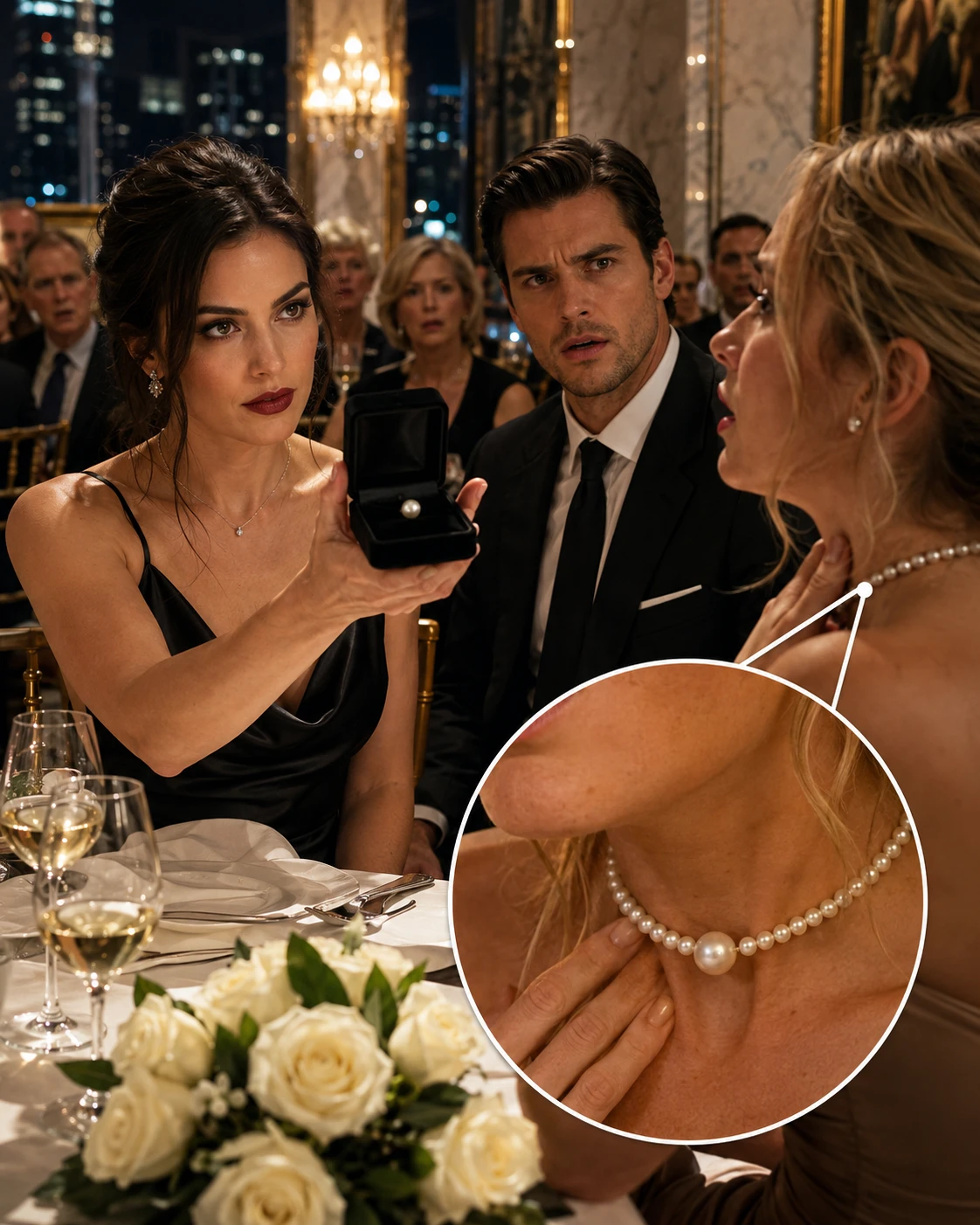
Then:
I’ll bring terrible diner coffee.
That Friday, Julian arrived at the Savannah house in dark jeans, a white shirt, and no tie, carrying two paper cups from a roadside diner outside Charleston because he claimed the worse the coffee, the more sincere the intention.
We drank it on the porch while the sun lowered behind the oaks.
It tasted awful.
I loved it.
For dinner, we drove to a small restaurant near the river where no one cared about my name. The waitress called me ma’am. Julian ordered shrimp and grits. I ordered fried green tomatoes and pecan pie because grief had ended and appetite had returned like a forgiven dog.
We talked about ordinary things first.
Music. Books. The old Columbia diner. His grandmother’s courthouse photograph. My mother’s habit of buying ugly souvenir magnets from every city because she thought expensive people needed cheap joys. The time my father accidentally adopted a stray cat in Palm Beach and pretended for two years that he hated it while feeding it imported tuna.
Only later, walking near the river under gas lamps and Spanish moss, did Julian take my hand.
He did not ask.
He did not claim.
He simply offered his fingers beside mine and let me decide whether the space between us would remain empty.
I took them.
His hand closed around mine, warm and steady.
No fireworks.
No cinematic music.
Just peace, which I was learning is often quieter than passion and far more difficult to counterfeit.
“I need to tell you something,” I said.
He looked down at me. “I’m listening.”
“I’m still angry.”
“I assumed.”
“I may be angry for a long time.”
“Reasonable.”
“I don’t want to be someone’s second chance at a love story.”
His brows drew together. “Vivienne.”
“I mean it.”
“So do I.” He stopped walking. “You are not my second chance. You are not a consolation prize for my patience. You are not a wounded woman I’ve been waiting to collect. I loved you when you chose someone else, and I built a life anyway. I am here because the woman standing in front of me is magnificent and terrifying and occasionally insufferable.”
“Occasionally?”
“Frequently,” he amended.
I smiled.
He touched my chin lightly, giving me all the time in the world to step away.
I did not.
When he kissed me, it was nothing like the library fifteen years ago.
That kiss had been snow and youth and possibility.
This one was warmer. Slower. Less hungry than certain. A kiss with history behind it and no demand inside it. A kiss that did not erase the past but stood beside it without fear.
When it ended, I rested my forehead against his chest for one breath.
Only one.
But I allowed it.
That was enough.
The final twist came in April.
By then, I thought the story had ended.
That is always when truth knocks.
I was in the Madison Avenue archive reviewing materials for the Larkspur Fund’s first annual report when Marcus Bell called.
“I found something strange,” he said.
“With the Blackwoods, you’ll need to be more specific.”
“It’s about the name.”
I sat down.
“What name?”
“Vale.”
He sent a file.
At first, I did not understand what I was seeing.
An incorporation record from 1986.
A dissolved entity in Delaware.
A trademark dispute in the early nineties.
A private settlement.
A sealed addendum.
Then my father’s signature.
And Preston Blackwood’s.
I called Julian.
He arrived twenty minutes later, breathless enough to tell me he had run three blocks, composed enough to deny it.
Together, we read.
In 1986, before Vale became a global luxury house and before the Blackwoods collapsed under their own grandeur, Preston had tried to launch a boutique hospitality brand called Blackwood Vale.
Not because he invented the name.
Because he had stolen it.
My grandfather’s original perfume shop in Savannah had been called Vale & Lark. For a brief period, before the company incorporated nationally, several regional filings had been vulnerable. Preston, young and ambitious and already drowning in debt, attempted to register variations of the Vale name for hotels, clubs, and private labels.
My grandfather sued.
Preston settled.
But the settlement did more than stop him.
It transferred all existing and future commercial rights to any luxury, hospitality, cosmetic, charitable, or trust-related use of the Vale name and its confusingly similar variants to the Vale family and its successors.
Blackwood Vale.
Vale Blackwood.
House of Vale.
The Vale Society.
Even certain personal-brand usages connected to commercial exploitation.
All of it.
Owned by us.
By me.
Julian read the final clause twice.
Then he began laughing.
Not loudly. Not cruelly.
With the astonished joy of a man watching a ghost land the final punch.
“My God,” he said. “Your grandfather beat them before you were born.”
I stared at the paper.
The room seemed full of my dead.
My grandfather in his apothecary. My mother in pearls. My father at his desk, revising trusts by lamplight because love, for him, had always looked like protection disguised as paperwork.
Harrison had thought he was taking my future.
Preston had tried to take my name before I even existed.
Margaret had groomed Serena to wear it.
Serena had stood at dinner and announced it already felt like hers.
And all along, every path they took had been fenced by a man who knew vultures returned to the same fields.
I pressed my fingers to my mouth.
Julian looked at me.
“What are you going to do with it?”
I thought of the dinner.
The applause.
The pearls.
The gala.
The letters from women who wanted proof they were not crazy.
Then I smiled.
“Nothing loud.”
He leaned back, amused. “That means devastating.”
“It means elegant.”
The next morning, Serena’s pending name change petition was withdrawn voluntarily after her new attorney received the settlement records. The unauthorized trademarks were abandoned. Blackwood Holdings was prohibited from using any Vale-related naming convention in future ventures. Margaret’s attempt to launch a private “Vale Circle” donor salon through a friend’s nonprofit died quietly after a single letter from Naomi.
No press conference.
No interview.
No screaming.
Just paper.
Beautiful, merciless paper.
A week later, I received a handwritten note from Serena.
No return address.
Vivienne,
I used to think a name could save me. Now I think maybe telling the truth can. I am leaving New York. I don’t expect forgiveness. But I wanted you to know I gave the rest of the documents to my lawyer. Margaret should not get to keep making daughters out of secrets.
I am sorry about the pearls.
S.
I folded the note and placed it in the archive.
Not beside my mother.
Not yet.
In a drawer labeled Unfinished.
Because some stories are not forgiven.
They are simply no longer fed.
Conclusion — THE WARMTH AFTER THE FIRE
One year after the dinner at The Gilded Swan, the Larkspur Fund opened its first residence in Brooklyn.
We called it The Vale House for Women.
Not because every woman there needed my name.
Because I wanted the name to mean shelter where it had once been treated like a prize.
The building had cream brick, arched windows, a legal clinic on the first floor, childcare on the second, and a rooftop garden where larkspur grew in raised beds despite the wind. The opening ceremony was small by design. No red carpet. No champagne tower. No violinist playing while people measured each other’s worth in diamonds.
Just women.
Lawyers. Social workers. Survivors. Donors who understood discretion. Scholarship students. Staff members who knew every locked door should have someone kind on the other side.
I wore a navy dress and my mother’s pearls.
Julian stood near the back, speaking to a little girl who had asked whether he was a prince because his coat was long and black. He told her no, he was worse, a lawyer. She asked if lawyers fought dragons. He said only the ones with bank accounts.
She seemed satisfied.
We were not married.
Not yet.
People asked, of course. People always ask women whether love has been properly documented. I told them I had survived one dynasty and was in no hurry to file paperwork on joy.
Julian did not mind.
He had a key to the Savannah house, a drawer in my bedroom, and the irritating habit of leaving terrible coffee in beautiful kitchens. Sometimes he still looked at me as if he were waiting for me to vanish. Sometimes I still woke at night expecting betrayal to be breathing beside me.
Healing is not a staircase.
It is a house you rebuild while living inside it.
Some rooms are finished before others.
At the opening, a young woman named Alina spoke. She was twenty-two, from Queens, with a voice that trembled for the first thirty seconds and then found itself.
“My husband used to say nobody would believe me,” she told the crowd. “Then a lawyer from this fund sat across from me and said, ‘Start at the beginning.’ I think that was the first time anyone treated my story like evidence.”
I closed my eyes.
Start at the beginning.
The beginning was a dinner.
No.
The beginning was a name.
No.
The beginning was every woman who had ever been applauded into silence and decided to smile until the room stopped clapping.
After the ceremony, I went to the rooftop alone.
The city stretched around me, bright and brutal and alive. Cars glittered below. Children shouted from a schoolyard nearby. Somewhere, someone was falling in love. Somewhere, someone was discovering a lie. Somewhere, a woman was gathering bank statements in a kitchen after midnight, hands shaking, heart breaking, not yet aware that the shaking was not weakness.
It was the body preparing to move.
Julian found me by the larkspur.
“You disappeared,” he said.
“I relocated.”
“Classic heiress behavior.”
“Careful. I own lawyers now.”
“You rent one emotionally.”
I smiled.
He stood beside me, shoulder brushing mine.
Below, the women of Vale House moved through their new rooms. Staff carried boxes. A toddler dragged a stuffed rabbit down the hall. Someone opened a window. Laughter rose, sudden and bright.
Julian looked at the garden.
“Your mother would like this.”
This time, I believed it.
I touched the pearls at my throat.
For so long, I had thought legacy meant preserving what the dead left behind. Buildings. Trusts. Trademarks. Jewels. Names.
But legacy is not preservation.
It is conversion.
Grief into shelter.
Rage into law.
Humiliation into warning.
Love into doors.
My phone buzzed with a message from Naomi.
Final Blackwood matter closed. Margaret signed. It’s over.
I read it twice.
Then I turned the phone face down on the ledge.
Julian raised an eyebrow. “No victory lap?”
I looked at the larkspur bending in the wind, stubborn and blue against the gray city.
“No,” I said. “I already walked out of the room.”
He took my hand.
Below us, the house filled with women beginning again.
Above us, the sky opened into a clear, cold gold.
For the first time in a long time, my name did not feel like armor.
It felt like a promise.
And somewhere far behind me, in a restaurant full of soft applause and borrowed pearls, a woman I no longer was finally stood up from the table and walked into the rest of her life.
She wanted my last name. I owned every version of it.