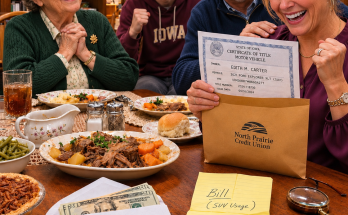
I stared at the paper in Gideon's hand.
I still thought there had to be some misunderstanding.
My family had money.
My parents owned property.
Fallon had always lived comfortably.
And Gideon's foundation was something I associated with charity dinners, hospital assistance, and wealthy donors.
It had nothing to do with my finances.
At least, that was what I believed.
Gideon explained that my mother had claimed the Whitmore family had contributed $250,000 to a neonatal care assistance program over the previous three years.
He said she had provided copies of donation receipts.
I looked at Mom.
She stood with her shoulders straight, wearing the expression she used when someone questioned her decisions.
"We gave what we promised," she said. "I don't see the problem."
Gideon checked his papers.
"The foundation's records don't show those payments."
A few people shifted in their chairs.
He gave the amount the foundation had actually received.
Forty-two thousand dollars.
That was all.
The rest of the supposed donations existed only in records that had been presented as proof.
For a moment, nobody spoke.
Then Gideon explained that the additional payments had been attributed to a private account.
An account bearing my name.
I felt something cold move through my stomach.
"Mine?"
He turned toward me.
"Corrine, have you ever given permission for your personal details to be used in foundation donation records?"
"No."
My answer came immediately.
I had never made a donation through a private family account.
I had never had the kind of money that would make such a thing possible.
Most months, I was carefully deciding which bills could wait until my next paycheck.
My mother gave a dismissive laugh.
"Corrine doesn't understand these arrangements."
I looked at her.
I had heard versions of that sentence my entire life.
Corrine doesn't understand money.
Corrine doesn't understand business.
Corrine doesn't understand what it takes to maintain a family's reputation.
I used to believe her.
It was easier than admitting how little respect she had for me.
Gideon held another document closer to the camera.
He said the foundation had received forms authorizing transactions under my name.
The forms contained personal information.
They also contained a signature.
My mother became very quiet.
Gideon asked her to explain why the signature on those forms didn't appear to match mine.
She didn't answer.
I leaned forward.
The document was difficult to see from where I sat, but I could make out the name.
Corrine Whitmore.
There was an address below it.
My old apartment.
The one I had rented years before Beckett was born.
I felt my hands begin to shake.
I knew that address.
I knew when I had lived there.
And I knew I had never signed the document Gideon was displaying.
"That's not my signature."
Several guests turned toward me.
I hadn't meant to speak so loudly.
But I wasn't going to sit there while somebody presented a false document as though I had authorized it.
Gideon nodded.
"That's one of the reasons I continued looking."
He explained that the address was outdated by seven years.
Whoever had prepared the paperwork had apparently used information from a period long before the supposed donations.
I looked at my mother.
She looked at Dad.
That was the moment I understood they were both frightened.
Not merely embarrassed.
Frightened.
My father had stopped trying to smile.
His hands rested on the back of his chair.
I had seen him uncomfortable before.
But I had never seen him look like that.
Fallon rose slightly from her seat.
"Mom, do you know what he's talking about?"
My mother ignored her.
Instead, she turned toward Gideon.
"You've made your point. This can be discussed with the accountants."
Gideon didn't agree.
He placed the document on a small table beside the microphone.
He explained that an incorrect address was only one problem.
There were other inconsistencies.
Other records that needed examination.
And he had already arranged for independent professionals to review them.
I looked down at Beckett.
He had stopped asking questions.
He was watching the adults carefully.
That worried me.
He was only six.
He should have been thinking about cake or the music or whether he could take home one of the little decorations from the table.
Instead, he was watching his grandmother grow angry and his mother become frightened.
I pulled his chair closer.
"It's all right, sweetheart."
He nodded.
But he didn't look convinced.
Fallon was now standing.
"Gideon, why didn't you tell me about any of this?"
He looked toward her.
"Did you know Corrine's name was being used?"
She shook her head.
"No. I didn't."
I wanted to believe her.
Part of me still remembered the little sister I had protected when we were children.
The girl who held my hand during thunderstorms.
The girl I taught to ride a bicycle.
But another part of me remembered how she had laughed only minutes earlier.
When Mom insulted me.
When Beckett sat there trying to understand what he had done wrong.
I didn't know which version of Fallon was real anymore.
Gideon reached into his jacket and removed another envelope.
He told the room that the donation records weren't the only thing he wanted to address.
Then he looked at Beckett.
I felt myself stiffen.
"What does my son have to do with this?"
Gideon's expression softened.
"He hasn't done anything wrong, Corrine."
"Then why are you looking at him?"
"Because I want everyone to understand who you've been taking care of while managing everything else."
I didn't know what he meant.
He explained that the previous year his foundation had received a recommendation from a hospital administrator.
It concerned a neonatal nurse who regularly helped families struggling with the practical costs of having a premature baby in intensive care.
Transportation.
Meals.
Temporary places to stay.
Things that didn't sound dramatic until you were the parent who couldn't afford them.
My throat tightened.
I knew those problems.
I saw them every week.
A mother sitting beside an incubator with nothing but vending machine crackers for dinner.
A father sleeping in a chair because the family couldn't afford another night at a hotel.
Parents missing work.
Parents borrowing money.
Parents standing in hospital corridors trying not to cry where their children could see them.
I had helped when I could.
Sometimes that meant explaining a hospital form.
Sometimes it meant finding someone who knew about an assistance program.
Sometimes it meant bringing food.
I didn't consider those things extraordinary.
They were simply what needed to be done.
Gideon said the administrator's recommendation had led his foundation to review the nurse's work.
He described someone who had never requested an award or special recognition.
Someone who hadn't tried to turn her kindness into a reputation.
Then he said my name.
I stared at him.
"Corrine."
I could hardly hear anything after that.
My eyes filled.
I didn't know the administrator had submitted my name.
I didn't know anyone had been paying attention.
Most nights, I came home so exhausted that I barely remembered taking off my shoes.
There were times when Beckett ate dinner beside me while I tried to keep my eyes open.
There were times when I sat in my car after a shift because I needed a few minutes before I could manage the drive home.
I thought of those things when Gideon spoke.
Not achievements.
Just ordinary, difficult days.
Beckett leaned toward me.
"Mommy, does everybody know you?"
I let out a small laugh despite myself.
"No, honey."
Gideon heard him.
He smiled.
"Your mom has helped a lot of people, Beckett. That's what I want them to know."
Beckett looked pleased.
For the first time that evening, he sat a little straighter.
Gideon continued.
His foundation had been preparing a new initiative focused on helping families dealing with neonatal medical care.
The program would offer practical assistance to parents facing serious financial hardship.
They had intended to announce it the following month.
But the events of the wedding had made him reconsider waiting.
He addressed me directly.
He said the foundation wanted me to lead the program.
The position would include a salary.
Benefits.
And the responsibility to help develop and manage the assistance being offered.
I was stunned.
I had spent years working beside incubators, watching parents hold their breath over small changes in a baby's condition.
I had never imagined that work might lead to a position where I could help build something larger.
I looked at Gideon.
"Are you serious?"
"Completely."
I couldn't answer.
My mother could.
She stepped forward, furious.
"So you're going to give her a job after she's made this whole evening about herself?"
I stared at her.
She had been the one who stood before two hundred people and insulted me.
She had been the one who turned her daughter's wedding into an opportunity to shame me.
And somehow, she still believed I was responsible.
Gideon looked at her without raising his voice.
"This isn't a favor because of tonight."
"Then what is it?"
"It's recognition for work she's already done."
My mother shook her head.
She looked almost offended that someone else could decide I had value.
I wiped my face with the back of my hand.
I wanted to tell Gideon I was grateful.
I wanted to ask questions about the job.
But my son was still sitting beside me, and my family was still standing near the microphone.
Nothing felt normal enough for a conversation about employment.
Gideon seemed to understand that.
He placed the job document with the other papers.
Then he took out one more sheet.
This one looked different.
I could see columns of numbers even from my seat.
My father noticed it too.
He moved away from his chair.
"Gideon, whatever you're holding, we should discuss it privately."
Gideon waited.
Dad came closer.
"There may be explanations you haven't considered."
"Then you can explain them."
Dad stopped.
Gideon unfolded the paper.
He said it was a bank transaction record.
I saw a name printed near the bottom.
My name.
I frowned.
Because I recognized the bank's name.
But I had never opened an account there.
And I couldn't understand why my father suddenly looked as though he was afraid to hear what Gideon would say next.
Click here to continue reading: PART 3: When Gideon Asked About My Grandfather’s Estate, I Realized the Story My Parents Had Told Me for Twelve Years Was Falling Apart
My Mother Called Me a Worthless Failure at My Sister’s $150,000 Wedding—Then the Groom Took the Microphone and Revealed the $1.8 Million Secret My Family Had Hidden for 12 Years
Part 2 of 15