
His mistress posted a video titled “How to replace a wife in 30 days.”
By breakfast, it had two million views.
By lunch, every woman at the Westchester Children’s Hospital luncheon had seen my closet, my kitchen, my husband’s side of the bed, and my wedding photo turned facedown on the marble console beneath the grand staircase.
By dinner, the whole country had heard my husband laugh in the background.
Not a nervous laugh. Not the guilty kind men use when they are caught and trying to soften the wound.
It was a rich laugh. A careless laugh. The kind that came from a man who believed the house, the money, the marriage, the woman, and the story all belonged to him.
In the video, Brooke Hollis stood barefoot on my heated limestone floors wearing my ivory cashmere robe.
She had arranged her honey-blonde hair in loose waves and filmed herself in the long oval mirror of my dressing room, one hand on her hip, the other holding my La Perla silk slip against her body as if she were testing whether my life came in her size.
“Step one,” she whispered to her followers, smiling like she had invented cruelty, “don’t ask for permission. The old wife never does.”
Then she turned the camera.
There was my closet, built from pale walnut and brass by a craftsman in Vermont who had taken eight months to finish it. There were my gowns lined like ghosts: black velvet, silver silk, a red Carolina Herrera Nate had once said made me look dangerous. There was the pearl necklace my grandmother wore the night she met my grandfather in Savannah, missing from its velvet tray.
Brooke lifted the pearls, kissed them, and said, “Men don’t keep things they don’t want touched.”
In the next clip, she was in my kitchen, opening my drawers.
In the next, she was in my bed, her painted toes brushing the linen duvet I had chosen in Venice.
In the next, she was standing before my wedding portrait.
It had been turned facedown.
From somewhere off camera, Nathaniel Whitmore, my husband of nine years, laughed.
“Careful, baby,” he said. “She’ll make a spreadsheet about it.”
Brooke leaned close to the camera and lowered her voice.
“Let her.”
The comments flooded in like blood in water.
Queen behavior.
This is savage.
Old wife could never.
Teach us, Brooke.
Day one of replacing a wife.
I watched the whole thing without blinking.
I was sitting alone at the end of our twelve-seat dining table in our Greenwich estate, wearing a cream silk blouse, diamond studs, and the kind of calm people confuse for weakness because they have never seen a blade before it is drawn.
My coffee had gone cold.
Outside, rain moved across the lawn in silver sheets. The hydrangeas bowed under it. Somewhere in the house, the grandfather clock chimed nine times.
I picked up my phone.
I downloaded the entire video.
Then I downloaded the reposts, the stitched versions, the screenshots, the live comments, the timestamps, the metadata, the captions, the archived stories, and every clip where Brooke showed the world another piece of evidence she was too vain to recognize.
In thirty days, she had documented trespassing, stolen property, harassment, reputational harm, marital misconduct, and my husband’s consent.
She thought she was making a tutorial.
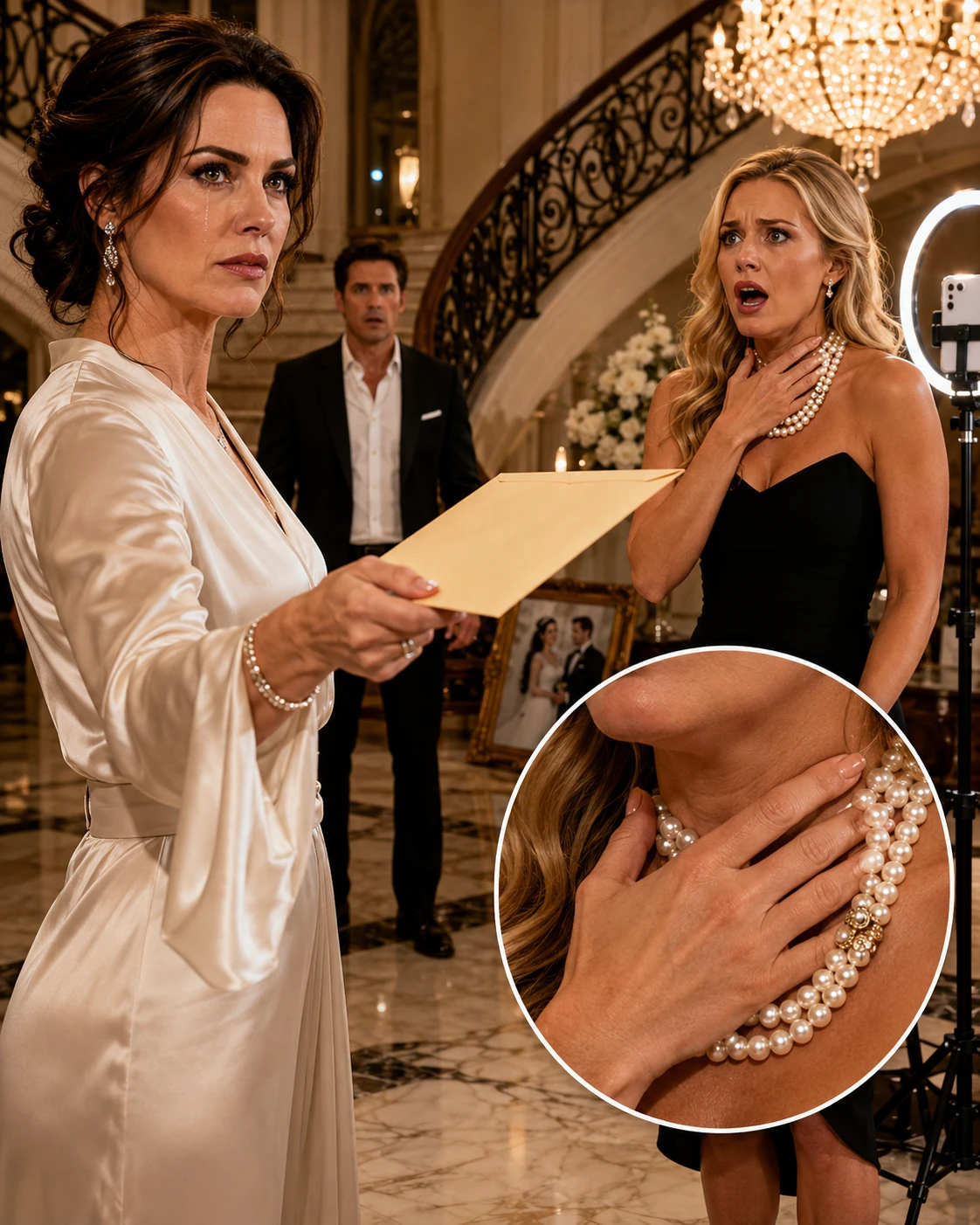
I started making a case.
Chapter One — The Woman in My Robe
The first lesson I learned about luxury was that it never whispers by accident.
A chandelier does not glitter because it is humble. A Rolls-Royce does not glide down Park Avenue because it has nothing to prove. A diamond necklace does not rest at a woman’s throat without reminding every other woman in the room that some wars are fought with silence, inheritance, and impeccable posture.
For nine years, I was Mrs. Nathaniel Whitmore.
To the public, that meant charity galas, private schools we did not have children in, board seats, museum dinners, Hamptons weekends, and photographs where I stood one step behind my husband while he smiled for cameras as if he had personally invented Manhattan.
To Nate, it meant something else.
It meant I was useful.
I knew which senator’s wife had a drinking problem, which hedge fund partner hated his father, which gala chair could be moved with flattery, and which donor would rather die than be seated near a woman who wore white after Labor Day. I knew how to make a room soften around Nate before he entered it. I knew how to turn his arrogance into charm for exactly three hours at a time.
I knew how to save him.
He never understood that part.
Men like Nate believe wives are furniture once the wedding photographs are framed. Polished, expensive, and expected to remain exactly where they are placed.
He met me in Charleston at a coastal preservation benefit when I was twenty-six and still using my maiden name, Claire Ashford. My father was dead by then, my mother had moved to Santa Fe with a sculptor who wore linen in winter, and my grandmother Elaine had left me a narrow house on Legare Street, a trust I barely touched, and one piece of advice written in blue ink inside a Bible she never read.
Do not marry a man until you have seen him lose.
I married Nate before I saw it.
That was my first mistake.
My second was mistaking hunger for ambition.
Nathaniel Whitmore was beautiful in the way expensive men are beautiful. He had dark hair, clean hands, old-school manners, and eyes the color of bourbon held up to candlelight. When he focused on you, the rest of the room disappeared. When he said your name, it sounded like a secret he intended to keep.
He came from a family that looked richer than it was. The Whitmores had portraits, clubs, cufflinks, and opinions about Mayflower bloodlines. What they did not have was liquidity. Their money had been thinned by divorces, bad investments, and the kind of pride that makes people keep houses they can no longer afford.
Nate wanted everything back.
I helped him get it.
Not because I was foolish, although love makes fools of even intelligent women. I helped him because I believed in building. I believed marriage was not a stage where one person performed and the other applauded. I believed a wife could be a partner, a strategist, a harbor.
In our second year, when his private equity firm nearly collapsed after a failed acquisition in Dallas, I introduced him to my grandmother’s banker.
In our fourth, when a lawsuit threatened to drag his name across every financial page in New York, I found the attorney who made it disappear.
In our seventh, when he decided to launch Whitmore Capital Partners as if he had not been quietly rescued three times already, I hosted the dinner where the first serious money came to the table.
He called me brilliant in private.
In public, he called me supportive.
That was how I knew the marriage had begun to die.
By the time Brooke Hollis appeared in my house wearing my robe, Nate had not kissed me with his eyes open in almost a year.
I knew there were other women before her. Perfume in a town car. A receipt from a hotel bar in Miami. A message preview on his phone from someone named Lila who called him “N” and used heart emojis like punctuation.
I noticed everything.
But noticing is not the same as acting.
A woman in my position learns the value of timing. If you leave too early, people call you emotional. If you leave too late, they call you pathetic. If you leave with evidence, they call you untouchable.
So I waited.
Not with tears.
With folders.
The morning Brooke went viral, my phone rang before the video ended.
It was Vivian Cole, my closest friend in New York and the only woman I knew who could insult someone without moving her face.
“Tell me you’re not watching it,” she said.
“I’m watching it.”
“Tell me you have a plan.”
“I’m making coffee.”
“Claire.”
I paused the video on Brooke’s smile. She had used my Chanel compact to blot her mouth. Her lipstick was a shade called Devotion. It looked ridiculous on her.
“Do you remember what my grandmother used to say?” I asked.
Vivian exhaled. “Which terrifying sentence?”
“Never interrupt a person who is destroying themselves.”
There was a long silence.
Then Vivian said, “Good. Because I already sent it to Marisol.”
Marisol Pike was not the sort of attorney people called when they wanted peace. She was the sort they called when they wanted the other side to regret learning to read.
She had silver hair cut sharply at her jaw, a penthouse office overlooking Bryant Park, and a reputation among Manhattan divorce lawyers that bordered on religious fear. She had handled hedge fund divorces, political divorces, one royal-adjacent disaster that never reached the press, and at least three affairs that ended with men moving to Florida for tax reasons and shame.
Her assistant called me at 9:17.
“Ms. Pike can see you at eleven.”
“I’ll be there.”
“Bring any documents you have.”
I looked at Brooke frozen on my screen, holding my grandmother’s pearls.
“Oh,” I said. “I have documents.”
The Whitmore estate in Greenwich sat behind iron gates on seven acres of manicured arrogance. Nate loved to say we restored it together, though what he meant was that I chose everything and he wrote checks from accounts I had helped refill.
The house was white brick with black shutters, a slate roof, and a foyer designed to make visitors lower their voices. There was a library paneled in walnut, a glass conservatory, a wine cellar Nate showed to men he wanted to impress, and a primary suite overlooking the gardens.
It was the kind of house that made strangers assume the marriage inside it was tasteful.
That morning, it felt like a crime scene staged for Architectural Digest.
Before I left for the city, I walked through every room Brooke had filmed.
In the kitchen, my favorite copper pot had been moved. In the butler’s pantry, two Baccarat champagne flutes were missing. In the dressing room, three drawers had been opened, and the tissue paper inside them was torn.
My robe lay over a chair.
I did not touch it.
I photographed everything.
Then I went to the safe hidden behind the antique mirror in my office and removed a thin blue folder labeled WCP — PERSONAL.
Inside were copies of our prenuptial agreement, the amended postnuptial agreement Nate had barely read during his Dallas panic, the deed records for the Greenwich house, the operating documents for Ashford House Trust, and a sealed envelope from my grandmother’s attorney.
The envelope had remained unopened for eight years.
Elaine Ashford had believed in delayed weapons.
I placed it in my bag.
Then I called Owen Leary, the estate’s security consultant.
“Owen, I need the access logs from the last forty-five days. Front gate, garage, mudroom, service entrance, primary suite.”
“Everything all right, Mrs. Whitmore?”
“No.”
A beat.
“I’ll send them encrypted.”
“And Owen?”
“Yes?”
“Do not call my husband.”
Another beat, shorter this time.
“Understood.”
I wore black to Marisol’s office.
Not mourning black.
Execution black.
Marisol watched the video once. Then she watched it again without sound. Then she leaned back in her chair and smiled so slightly that it chilled the room.
“Influencers,” she said, “are God’s gift to discovery.”
Vivian sat beside me with her legs crossed, already furious enough for both of us.
“She’s in Claire’s house,” Vivian said. “Wearing Claire’s clothes. Showing Claire’s bed. This is insane.”
Marisol lifted one finger. “Not insane. Useful.”
She turned to me.
“How long has your husband been bringing Ms. Hollis into the residence?”
“Based on the first clip I found, twenty-nine days.”
Her eyes sharpened.
“Twenty-nine?”
“Yes.”
“You’re sure?”
“I’m sure.”
Marisol slid the prenup toward herself and opened it with surgical calm. She flipped through the pages until she reached the infidelity and abandonment provisions.
I watched her read.
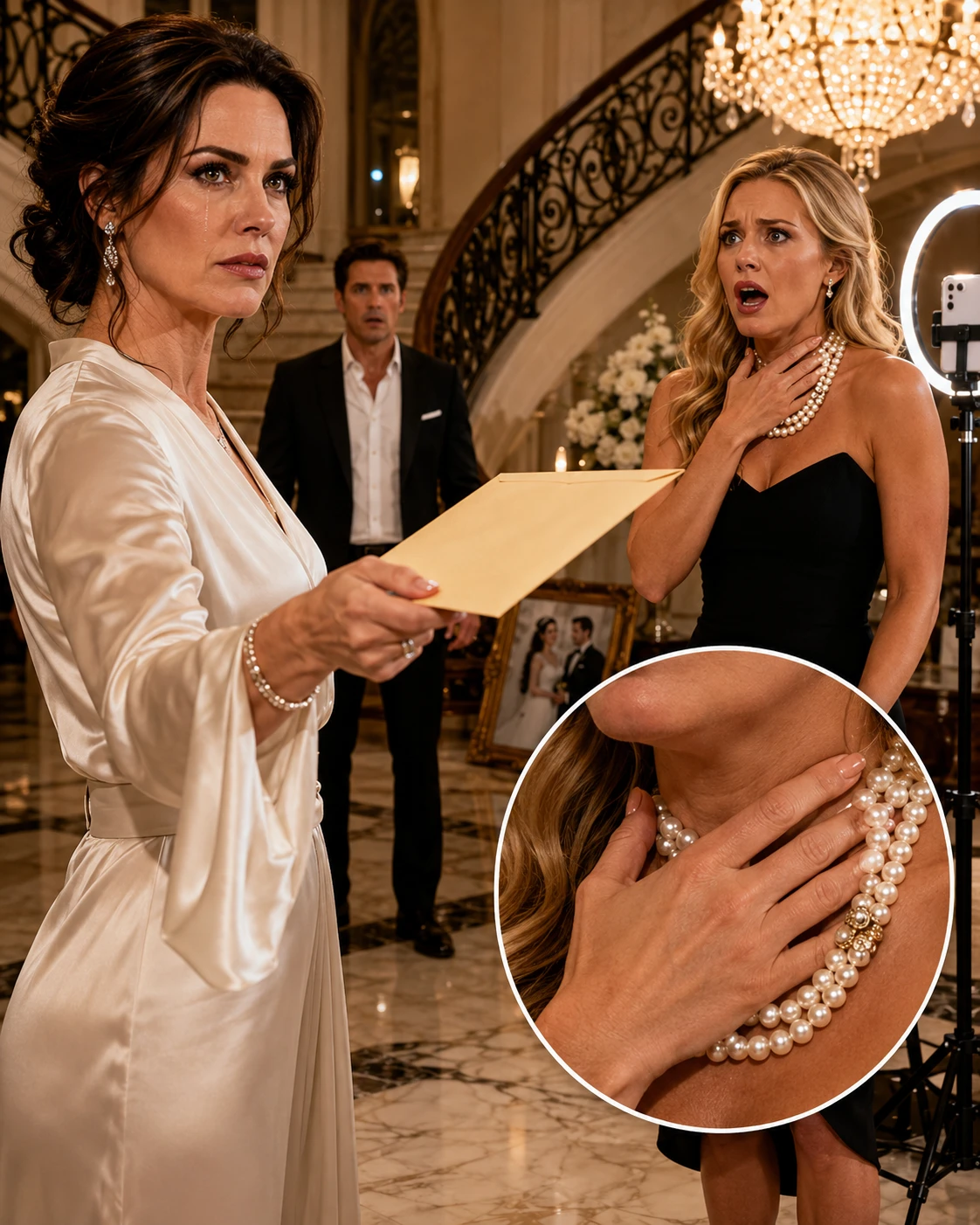
Then she looked up.
“Claire.”
“I know.”
Vivian frowned. “What?”
Marisol tapped the page.
“Section twelve. If either spouse conducts an extramarital relationship in a marital residence for thirty consecutive days with demonstrable consent, public acknowledgment, or reputational injury to the other spouse, it constitutes constructive abandonment, intentional humiliation, and material breach.”
Vivian stared. “Who writes that into a prenup?”
“My grandmother’s lawyer,” I said.
Marisol’s smile returned.
“And who insisted on keeping it?”
I remembered Nate laughing years ago as he signed the amendment after the Dallas lawsuit. He had been impatient, distracted, eager to close the refinancing I had arranged. He barely glanced at the morality clause.
“You and your Southern clauses,” he had said, kissing my temple. “Fine. I’m not planning to move a mistress into the house.”
No.
He had not planned to.
He had simply become arrogant enough to forget he promised not to.
Marisol closed the folder.
“Tomorrow is day thirty.”
Outside the window, Bryant Park glowed wet and green beneath the rain.
Vivian whispered, “Claire, what are you going to do?”
I looked down at my phone.
Brooke had posted again.
A new story.
She was in my bathtub with a glass of champagne, one knee lifted through the bubbles, my husband’s voice murmuring behind the camera.
Text over the video read:
DAY 29: SHE STILL HASN’T STOPPED ME.
I saved it.
Then I looked at Marisol.
“Nothing,” I said. “Until tomorrow.”
Chapter Two — Thirty Days of Evidence
Day thirty arrived with blue skies and a kind of merciless sunlight that made the whole house look newly washed.
I woke in the guest suite, where I had been sleeping for three weeks, and dressed with care.
Ivory trousers. A charcoal cashmere sweater. No wedding ring.
The empty place on my finger looked startling at first, then elegant.
At 8:04 a.m., Brooke posted from my terrace.
She had arranged a breakfast tray beside the pool: berries, croissants, black coffee, a vase of white roses cut from my garden. She wore oversized sunglasses and one of Nate’s shirts, buttoned only halfway.
“Day thirty,” she said, lifting her coffee toward the camera. “Ladies, if you want to replace a wife, consistency is key. You don’t argue. You don’t beg. You simply occupy the space until everyone gets used to seeing you there.”
Nate appeared behind her.
He bent, kissed the side of her neck, and said, “Looks better already.”
The video went viral before noon.
America loves a villain as long as she is pretty, rich-adjacent, and filming in natural light.
By one o’clock, Brooke had gained four hundred thousand followers.
By two, she had posted affiliate links to a white bikini, a “home takeover playlist,” and a gold initial necklace almost identical to mine.
By three, a gossip page had identified me.
CLAIRE WHITMORE, SOCIALITE WIFE OF PRIVATE EQUITY HEIR NATHANIEL WHITMORE, SILENT AS MISTRESS POSTS FROM MARITAL HOME.
Silent.
They loved that word.
Silent wife.
Silent socialite.
Silent victim.
Silent woman.
They did not understand.
Silence is not emptiness.
Sometimes silence is a room filling with gas while everyone else is still striking matches.
I spent day thirty in Marisol’s office with a litigation team, a forensic accountant, and a former federal investigator named Roman Kincaid.
Roman arrived late, as if punctuality were something he did for people he respected. He was tall, dark-haired, and coldly handsome in the way winter landscapes are beautiful. He wore a navy suit without a tie and carried no briefcase, only a black notebook.
We had met once before, years earlier, when Nate’s Dallas problem threatened to become a prison problem. Roman had been the one who found the email chain proving the other party had hidden liabilities first. Nate took credit for surviving that lawsuit. Roman never corrected him.
When he entered Marisol’s conference room, his eyes found mine.
“Mrs. Whitmore.”
“Claire,” I said.
His gaze dropped briefly to my bare ring finger.
“Claire.”
It was the first time in weeks that my name sounded like it belonged to me.
Roman was not my lawyer. He was Marisol’s investigator, retained by the firm. That mattered. In Manhattan, everything mattered. Who emailed whom. Who paid whom. Who touched which file. Who knew which secret and on what date.
He opened his notebook.
“I reviewed the videos. She films reflective surfaces constantly. Mirrors, windows, polished counters, silver trays. She caught more than she meant to.”
Marisol leaned forward. “Such as?”
Roman placed still images on the screen.
Brooke in my closet. Behind her, reflected in the mirror, Nate entered the keypad code to my jewelry drawer.
Brooke in the kitchen. On the counter, visible beside a bottle of champagne, was a corporate AmEx issued by Whitmore Capital.
Brooke in the library. In the glass of a framed map, Nate could be seen handing her a small blue box from Van Cleef & Arpels.
Brooke in the garage. The license plate of my vintage Mercedes convertible appeared behind her while she joked about taking “the old wife’s little car for a spin.”
Roman clicked again.
This time, Brooke stood in my office, panning across the shelves.
I went still.
“That room is locked,” I said.
“Yes,” Roman replied. “But your husband has access.”
On the screen, Brooke lifted a crystal paperweight from my desk and laughed.
“Look,” she said in the video, “she even has a sad little office. What does a wife do all day? Label things?”
Nate laughed from the doorway.
“She labels everything.”
I looked at the blue folder in front of me.
Yes, Nate.
I do.
Roman paused the video at the exact second Brooke turned toward the antique mirror concealing my safe.
My stomach tightened.
“Did she open it?” I asked.
“No,” Roman said. “But he did.”
He clicked.
The next still showed Nate’s hand against the mirror frame.
The safe was open behind him.
Marisol’s expression went flat.
“Claire,” she said carefully, “what was in that safe?”
“Personal documents. Jewelry appraisals. Trust records. A sealed letter.”
“Was anything missing?”
I thought of the pearl necklace. The Van Cleef bracelet. A sapphire ring I had not seen since the previous week.
“Yes.”
Roman looked at me.
“There’s more.”
The screen changed.
A freeze-frame from Brooke’s day twenty-seven video. She had been sitting in the passenger seat of Nate’s Aston Martin, pouting at the camera while Nate drove through Manhattan traffic.
Outside the window, for half a second, reflected in the glass, was the entrance to a building I knew too well.
Sterling House.
Nate’s private office.
Roman zoomed in.
Brooke had angled the phone downward to show her shoes. On her lap rested a manila folder with a label visible through the blur.
ASHFORD HOUSE TRUST — TRANSFER REQUEST.
The room became very quiet.
Marisol said, “Nathaniel accessed your trust documents?”
“He shouldn’t be able to.”
Roman’s jaw tightened. “He tried.”
There are moments when heartbreak changes shape.
At first, it is a wound. Soft, bleeding, personal.
Then one day you discover the person who betrayed your body also reached for your money, your name, your dead grandmother’s careful protection, and something colder enters the bloodstream.
Not sadness.
Not rage.
Clarity.
Nate had not only brought Brooke into my home.
He had opened my safe.
He had taken documents.
He had attempted to move something he thought belonged to me quietly enough that I would be too humiliated to notice.
I looked at Marisol.
“How far did he get?”
She turned to the forensic accountant, a thin man named Graham who had been quietly typing.
Graham cleared his throat.
“We found attempted transfer instructions sent to Ashford House Trust from an email address associated with Mr. Whitmore’s assistant. The request was rejected. However, there are additional wire movements from Whitmore Capital to accounts connected to Ms. Hollis.”
“How much?” Vivian asked.
Graham adjusted his glasses.
“Preliminary review? One point eight million over fourteen months.”
Vivian swore softly.
I did not.
One point eight million sounded like a mistress.
A trust transfer sounded like a husband planning to make sure his wife had no floor beneath her when he finally pushed.
Marisol folded her hands.
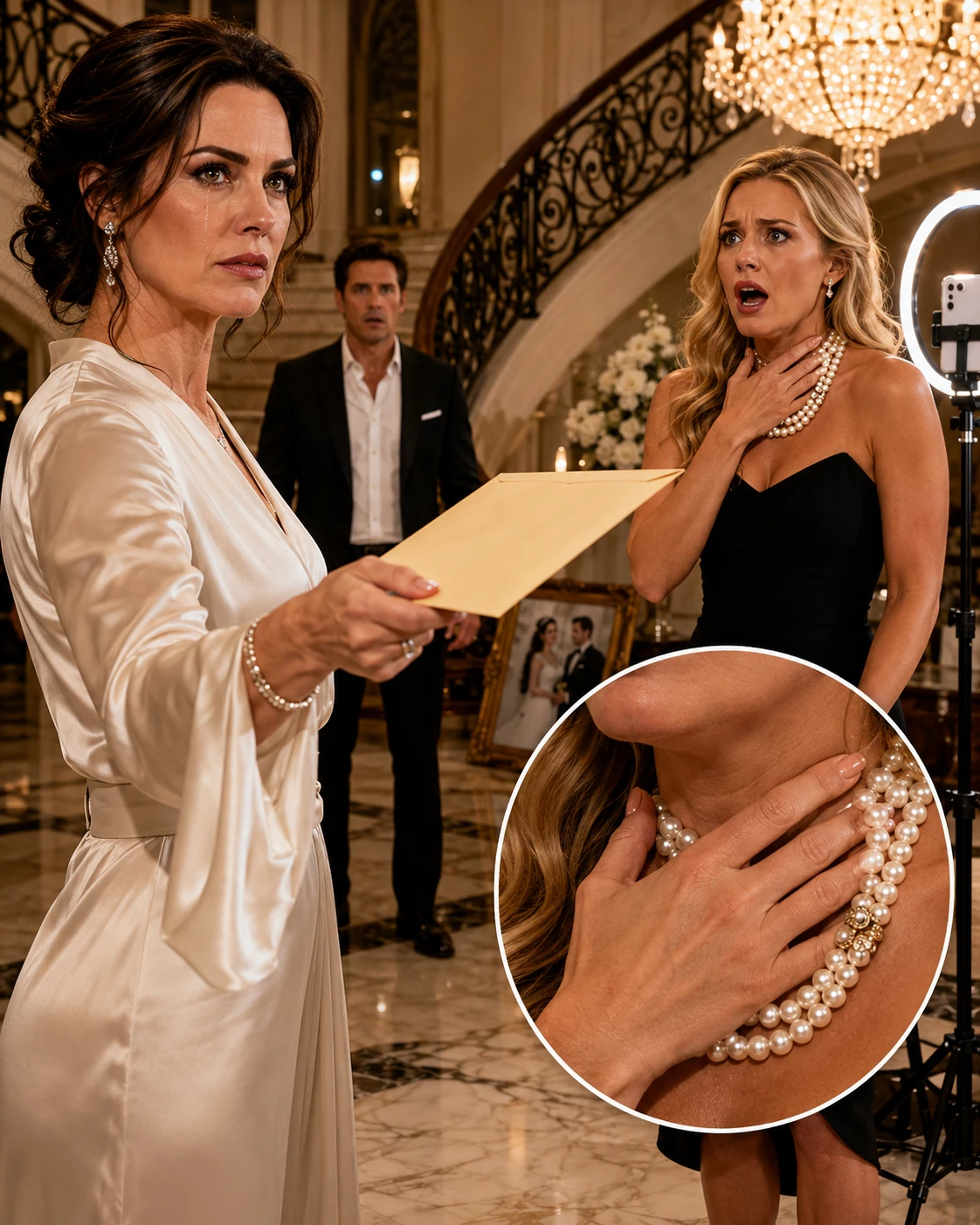
“Claire, I need you to listen carefully. We have grounds for divorce, emergency injunctive relief, civil claims against Ms. Hollis, possible corporate misconduct, and possibly criminal exposure depending on what he accessed and how. But the thirty-day clause became clean only this morning.”
“Because she posted.”
“Because she posted,” Marisol said.
Roman’s eyes remained on the screen.
“She also announced a live event tonight.”
Vivian looked up. “What live event?”
Roman clicked.
Brooke’s Instagram story filled the monitor.
She stood before my staircase wearing a black cocktail dress I recognized because it was mine.
Text glowed over her head:
TONIGHT AT 8.
DAY 30 FINALE.
THE WIFE FINALLY GETS REPLACED.
Below it, a poll.
Should we turn her wedding photo around or throw it away?
The winning answer was throw it away.
I heard Vivian inhale.
Marisol said, “Absolutely not.”
Roman said nothing.
I stared at the image of Brooke in my dress, in my house, beneath the chandelier I had chosen after searching New Orleans antique dealers for six months.
Then I imagined Nate watching the numbers climb.
Nate loved numbers.
Returns. Valuations. Seats at tables. Followers, now. Attention, now. Proof of desirability measured in strangers cheering while his wife was erased from her own life.
I knew exactly what he thought would happen next.
He thought I would break.
He thought I would call him screaming. He thought I would make myself ugly. He thought I would give him the performance he needed to turn me from injured wife into unstable obstacle.
He wanted the divorce narrative ready-made.
Brooke, young and vibrant, stepping into a cold marriage.
Claire, bitter and aging, unable to let go.
Nate, regretful but noble, choosing happiness.
It was a clean story.
Men like Nate survive by writing clean stories over dirty facts.
I stood.
Vivian grabbed my wrist. “Claire.”
“I’m going home.”
Marisol began, “That is not advisable without—”
“I’m not confronting them.” I picked up my bag. “I’m attending the finale.”
Roman’s eyes narrowed.
“Why?”
I smiled then, not because anything was funny, but because I finally understood my grandmother’s letter without opening it.
“Because if someone plans to throw away my wedding portrait on a livestream,” I said, “she should have a proper audience.”
Chapter Three — The House Always Belonged to Me
There is a particular stillness inside a mansion before a scandal.
The staff know before the family admits it. Flowers appear in the wrong vases. Silver is polished too aggressively. Doors close more softly. Everyone walks as if one loud footstep could crack the marble.
When I returned to Greenwich at seven that evening, the gates opened without hesitation. Owen had restored my sole control of the access system at Marisol’s instruction. Nate did not know that yet.
The house glowed against the dark lawn, every window lit as if for a party.
My party.
Brooke had hired lighting.
That almost made me laugh.
Two black SUVs were parked near the carriage house. A hair and makeup team. A videographer. A woman in sneakers carrying a ring light hurried past the fountain with the serious expression of someone enabling moral collapse for an hourly rate.
I walked through the front door at 7:34.
No one expected me.
That was the advantage of being underestimated inside your own house.
The foyer smelled of roses, candle wax, and Brooke’s perfume: vanilla, sugar, and ambition.
My wedding portrait had been moved from the console to the base of the staircase. It leaned against the banister, still facedown, its gilt frame catching the light.
Above it, Brooke stood directing two assistants.
“Make sure you get the stairs in the shot,” she said. “The staircase is iconic.”
“It is,” I said.
Everyone froze.
Brooke turned.
For one delicious second, her face forgot to be beautiful.
She recovered quickly. Women who live on cameras learn to arrange themselves at speed.
“Oh my God,” she said, pressing a hand to her chest. “Claire. You came.”
Nate appeared from the library.
He was wearing a tuxedo jacket without a tie, his hair damp as if he had showered here, as if this house were still his sanctuary and not the place where he had filmed his own ruin.
When he saw me, annoyance flashed first.
Not guilt.
Annoyance.
“Claire,” he said, low and warning. “This isn’t the time.”
I looked around.
Ring lights. Champagne. My portrait on the floor. My husband’s mistress in my dress.
“No,” I said. “It seems perfectly timed.”
Brooke smiled toward her crew. “Can we have a minute?”
“No,” I said.
The smile faltered.
Nate stepped closer. “You need to leave.”
The room went silent.
There are sentences a man should never say to a woman in the house her grandmother’s trust owns.
I tilted my head.
“Do I?”
His jaw worked. “You’ve made your point. You ignored this for weeks, and now you want drama. I’m not doing this with you.”
Brooke’s eyes brightened. She loved the word drama. It turned cruelty into entertainment.
I removed my gloves slowly.
“Nate, do you know what I did today?”
He gave a short laugh. “Met with lawyers, I assume.”
“Yes.”
Brooke rolled her eyes for the camera that was not yet live. “Predictable.”
I looked at her.
“Brooke, when you entered this home for the first time, did Nathaniel tell you he owned it?”
Her chin lifted. “He lives here.”
“That is not what I asked.”
Nate’s expression sharpened.
“Claire.”
I did not look away from Brooke.
“Did he tell you he owned it?”
She shrugged. “It’s the marital home.”
“Interesting phrase.”
Nate stepped between us. “Enough.”
At that exact moment, the grandfather clock chimed eight.
Brooke’s livestream began automatically.
Her phone, mounted on a tripod near the staircase, lit up with hearts.
Viewers poured in.
50,000.
90,000.
140,000.
The comments flew too fast to read.
OMG WIFE IS THERE.
THIS IS NOT A DRILL.
SHE SHOWED UP.
CLAIRE LOOKS RICH RICH.
Why is she so calm?
Brooke don’t back down.
This is insane.
Brooke glanced at the numbers, and greed restored her confidence.
She turned toward the camera, widening her eyes as if inviting America into a secret.
“Well,” she said, “I guess the finale came with a surprise guest.”
Nate muttered, “Turn it off.”
But Brooke had tasted the crowd.
She would not.
That was the thing about people who worship attention. They always mistake exposure for power.
I faced the camera.
“Good evening.”
The comments exploded.
Brooke laughed. “Are you seriously doing a speech?”
“No,” I said. “I’m correcting the record.”
Nate’s face hardened. “Claire, stop.”
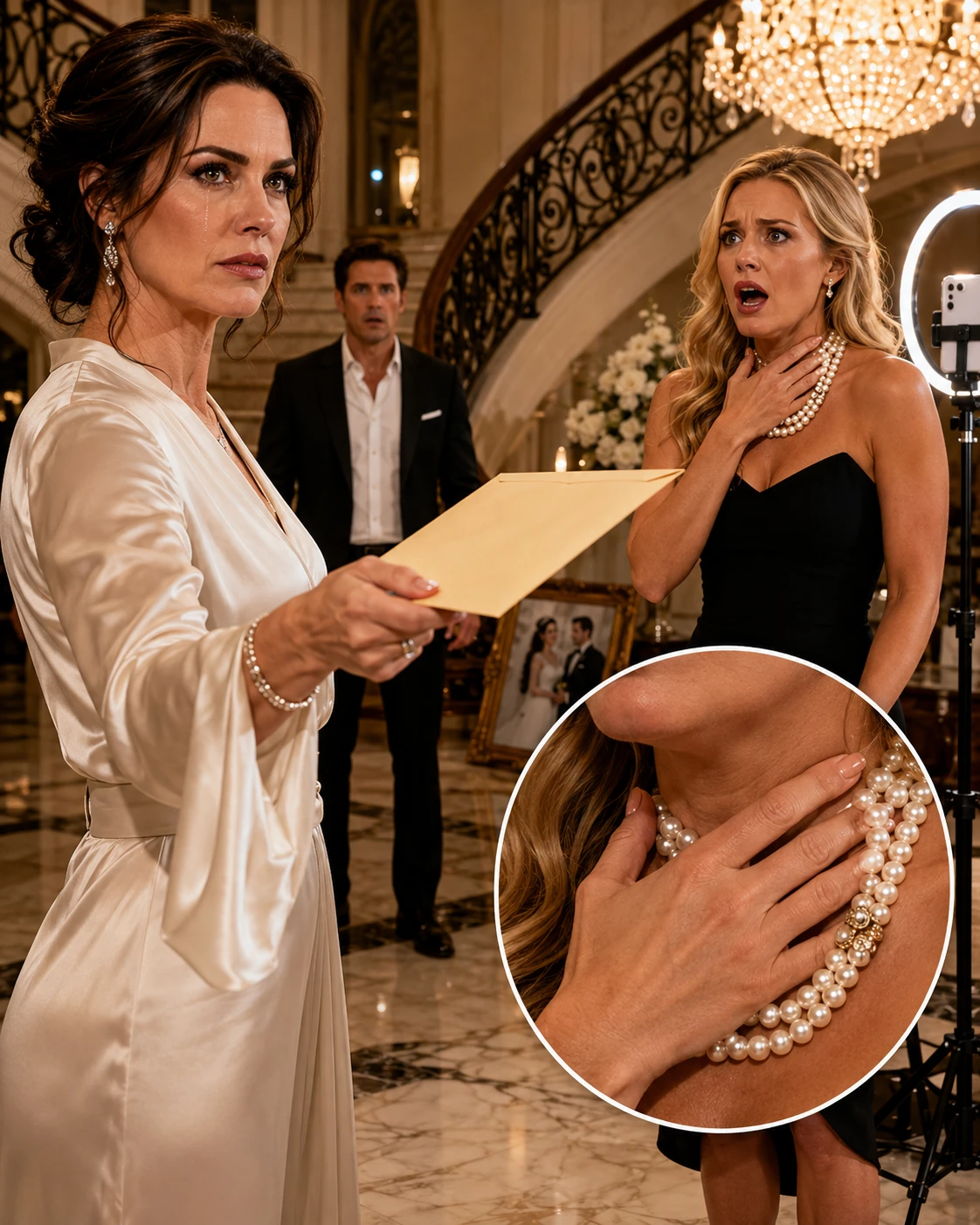
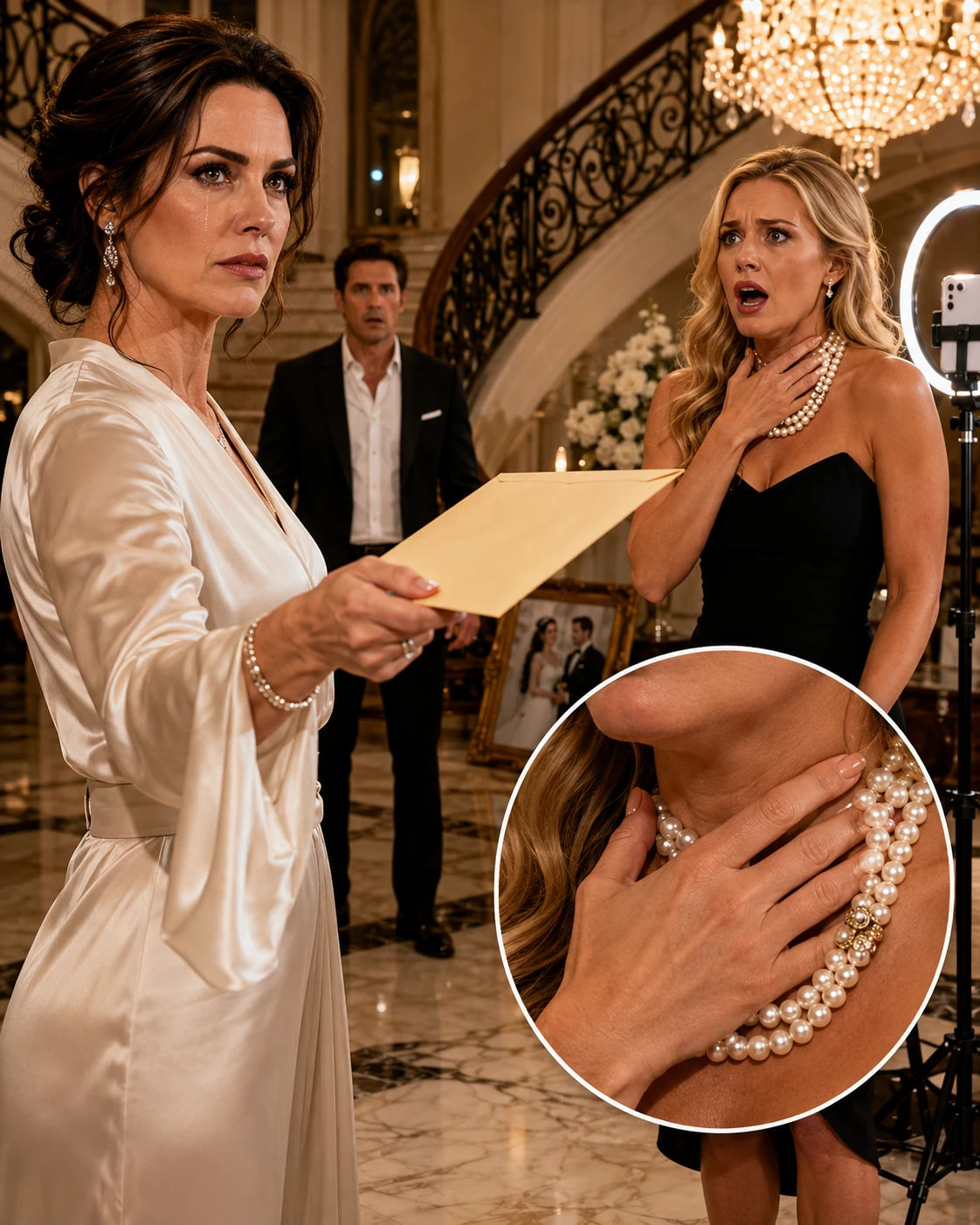
I reached into my bag and removed a cream envelope.
“Nathaniel Whitmore, you are being served.”
The front door opened.
A process server in a dark suit entered with two more envelopes. Behind him stood Marisol Pike, Roman Kincaid, and Owen Leary.
Nate went pale.
Brooke whispered, “What is this?”
Marisol approached with the serene expression of a woman ruining dinner reservations.
“Ms. Hollis,” she said, “you are also being served.”
The comment stream became a waterfall.
SERVED???
ON LIVE???
OH SHE CAME PREPARED.
BROOKE RUN.
This is the best thing I’ve ever seen.
Brooke looked at Nate. “You said she couldn’t—”
He snapped, “Be quiet.”
It was the first honest thing he had said to her all night.
Marisol handed documents to Nate, then Brooke.
“Petition for divorce,” she said. “Emergency motion for exclusive possession of residence. Civil complaint for trespass, conversion, intentional infliction of emotional distress, harassment, misappropriation of likeness, and related claims. Preservation notices for all digital content, devices, and communications.”
Brooke stared at the pages as if legal language were a foreign country.
“I didn’t trespass,” she said. “He invited me.”
Marisol nodded. “Yes. He did. Repeatedly. On camera.”
Nate found his voice. “This is theatrics.”
I looked at the ring lights.
“I agree.”
He lowered his voice. “You’re embarrassing yourself.”
That sentence did something unexpected.
It did not hurt.
It released me.
For years, embarrassment had been the leash. Women like me are trained from girlhood to avoid scenes. Do not raise your voice. Do not make people uncomfortable. Do not let the mask slip. Do not become the kind of woman people whisper about in bathrooms.
But the mask had not saved me.
Politeness had not protected me.
Silence had simply given them better lighting.
I walked to the wedding portrait and lifted it.
Brooke had turned it facedown, but the glass was still clean. The woman in the photograph looked younger, softer. She wore a silk gown with long sleeves and held white orchids. Nate stood beside her with one hand at her waist, smiling like a man who had won.
I remembered that day.
Savannah heat. Church bells. My grandmother’s pearls. Nate whispering, “You’re mine now,” as if it were romantic instead of prophetic.
I set the portrait upright on the console.
Then I turned to the camera.
“This house,” I said, “is owned by Ashford House Trust, established by my late grandmother, Elaine Ashford. Nathaniel Whitmore has never owned it. He was granted residential access as my spouse. That access was revoked at 6:42 p.m.”
Nate’s mouth opened.
For once, no sound came out.
Brooke looked at him. “You said—”
I continued.
“The Aston Martin shown in Ms. Hollis’s day twenty-seven video is leased through a Whitmore Capital entity currently under forensic review. The jewelry worn by Ms. Hollis in days nine, sixteen, and twenty-four belongs either to me personally or to my grandmother’s estate. The pearl necklace she wore in day twelve has been in my family since 1958.”
Brooke touched her throat instinctively.
She was wearing the pearls.
Of course she was.
I almost admired the commitment.
Marisol said quietly, “Ms. Hollis, remove the necklace.”
Brooke recoiled. “No.”
Roman stepped forward, his voice calm as stone.
“That would be wise.”
Nate turned on him. “Who the hell are you?”
Roman smiled without warmth.
“The man who found your transfer request.”
Nate’s face changed.
It was small. Almost invisible.
But I had been married to him for nine years. I knew every expression he owned.
This one was fear.
The viewers knew it too.
The comments shifted.
TRANSFER REQUEST?
Wait what did he do?
This got financial crime vibes.
Brooke girl you in danger.
Claire has receipts.
Brooke looked from Nate to me.
“What transfer request?”
I did not answer her.
Some lessons are more useful when discovered slowly.
Marisol removed another document from her folder.
“This is notice of preservation regarding Ashford House Trust documents accessed from Mrs. Whitmore’s private office and safe. We have video evidence, smart lock records, and reflected footage taken from Ms. Hollis’s own posts.”
Brooke whispered, “Reflected footage?”
Roman gestured toward the mirrors, the polished floor, the phone still streaming.
“You film everything,” he said. “Including crimes.”
The live viewer count passed seven hundred thousand.
Nate lunged toward the tripod.
Owen caught his wrist.
Not violently.
Worse.
Professionally.
“Don’t,” Owen said.
Nate looked at me.
And there it was at last.
Not love. Not remorse.
Astonishment.
He truly had believed I would remain decorative until he decided what to do with me.
“Claire,” he said, softening his voice. The voice he used with donors, judges, wounded animals, and me. “Let’s talk privately.”
I smiled.
“You had thirty days.”
Brooke’s phone buzzed and buzzed and buzzed, still alive, still hungry.
The mistress had gone viral.
The wife had gone legal.
But I was not finished.
Not even close.
Chapter Four — The Courtroom in a Black Dress
The internet does not love justice.
It loves reversal.
One day, they called Brooke savage. The next, they called her stupid. By the third day, they were calling me mother, icon, mafia wife, ice queen, and twenty-seven other things that said more about them than about me.
Clips from the livestream spread everywhere.
Claire Whitmore serves husband and mistress live.
Mistress wore stolen pearls on camera.
Wife reveals husband doesn’t own mansion.
“YOU HAD THIRTY DAYS” is the coldest line of the year.
Luxury divorce drama gets darker.
People slowed the video, zoomed in, analyzed Nate’s face, Brooke’s hands, my bare ring finger, Roman standing behind me like a shadow in a tailored suit.
A woman on TikTok with six million followers made a three-part breakdown using a whiteboard.
A former prosecutor on YouTube explained constructive abandonment with the enthusiasm of a man who had waited his whole life for influencers to commit torts in high definition.
A fashion account identified every item Brooke had worn from my closet and ranked them by potential damages.
Brooke tried to control the narrative.
Her first statement said she had been “misled by a powerful man.”
Her second said she was “a woman in love who made mistakes.”
Her third, posted after Marisol filed the amended complaint, said nothing at all because her attorney had finally taken her phone.
Nate disappeared from public view.
That did not mean he was idle.
Men like Nate do not apologize. They counterattack.
On the fourth morning, Page Six ran a story citing “sources close to Nathaniel Whitmore” who described me as cold, controlling, financially obsessive, and emotionally unavailable.
I read it while eating toast.
Vivian called immediately.
“I am going to set that newspaper on fire.”
“No, you’re not.”
“He called you emotionally unavailable.”
“He brought his mistress into my bathtub.”
“Exactly. That’s your bathtub. You were emotionally available to the plumbing.”
I laughed for the first time in days.
It startled me.
The sound was not large or joyful, but it was mine. A small break in the ice.
Roman looked up from the conference table across Marisol’s office, where he had been reviewing bank records with Graham.
He did not smile, but his expression changed.
“You should do that more often,” he said.
Vivian arched a brow. “Careful, Kincaid.”
Roman returned to the documents.
“I’m always careful.”
He was.
That was what made him dangerous.
Over the next week, the case expanded like ink in water.
Graham traced payments from Whitmore Capital to a lifestyle management company that paid Brooke’s rent in Tribeca, her cosmetic procedures, travel, jewelry, and a consultant who specialized in “romantic brand transition strategy.”
Vivian called it mistress PR.
Marisol called it evidence.
Roman found encrypted messages between Nate and his assistant arranging access to my trust documents. He found calendar entries showing Brooke in the Greenwich house on thirty consecutive days. He found a draft email Nate had never sent to his board blaming me for “increasing instability” and proposing that I be removed from advisory authority over the Whitmore Foundation.
That was when I stopped sleeping.
Not because of Brooke.
Brooke was a matchstick.
Nate had been building a bonfire.
The Whitmore Foundation mattered because it carried my grandmother’s money.
Years earlier, when Nate wanted philanthropic legitimacy, I merged a portion of my family charitable fund with his family’s nearly empty foundation. The public saw a beautiful marriage of legacies. In reality, Ashford money had given Whitmore prestige the way blood gives color to skin.
I had insisted on safeguards.
Nate had called them unnecessary.
Then signed them.
Because he needed the money more than he disliked my caution.
The foundation funded women’s legal clinics, coastal preservation, and scholarships for girls from rural Southern counties who wanted to study finance, law, or engineering. My grandmother had never used the word feminism. She simply believed a woman with her own bank account could survive almost anything.
Nate planned to remove me from it.
That was the wound beneath the wound.
He could humiliate me. He could cheat. He could laugh while a younger woman touched my things.
But he had reached for the one part of my life built to help women escape men like him.
That was when revenge stopped feeling personal.
It became custodial.
A week after the livestream, I opened my grandmother’s sealed letter.
I did it alone in the library, at the desk Brooke had mocked.
The envelope was thick cream paper, the flap sealed with wax. Elaine’s handwriting slanted beautifully across the front.
For Claire, when marriage becomes a negotiation.
I sat for a long time before opening it.
Inside were two pages and a smaller envelope.
My dearest Claire,
If you are reading this, then either your husband has disappointed you, or you have become wise enough to imagine that he might.
Do not confuse disappointment with defeat.
Love is a room. Marriage is a house. Money is the deed.
A woman may share the room. She should understand the house. She must never lose the deed.
I laughed then, softly, through tears I had refused all week.
Of course.
Even dead, Elaine Ashford could still rearrange my spine.
The letter continued.
I have placed certain protections beyond your husband’s reach, and perhaps beyond your pride. Use them without guilt. Pride has never paid a lawyer.
The smaller envelope contained a document I had never seen.
An assignment agreement.
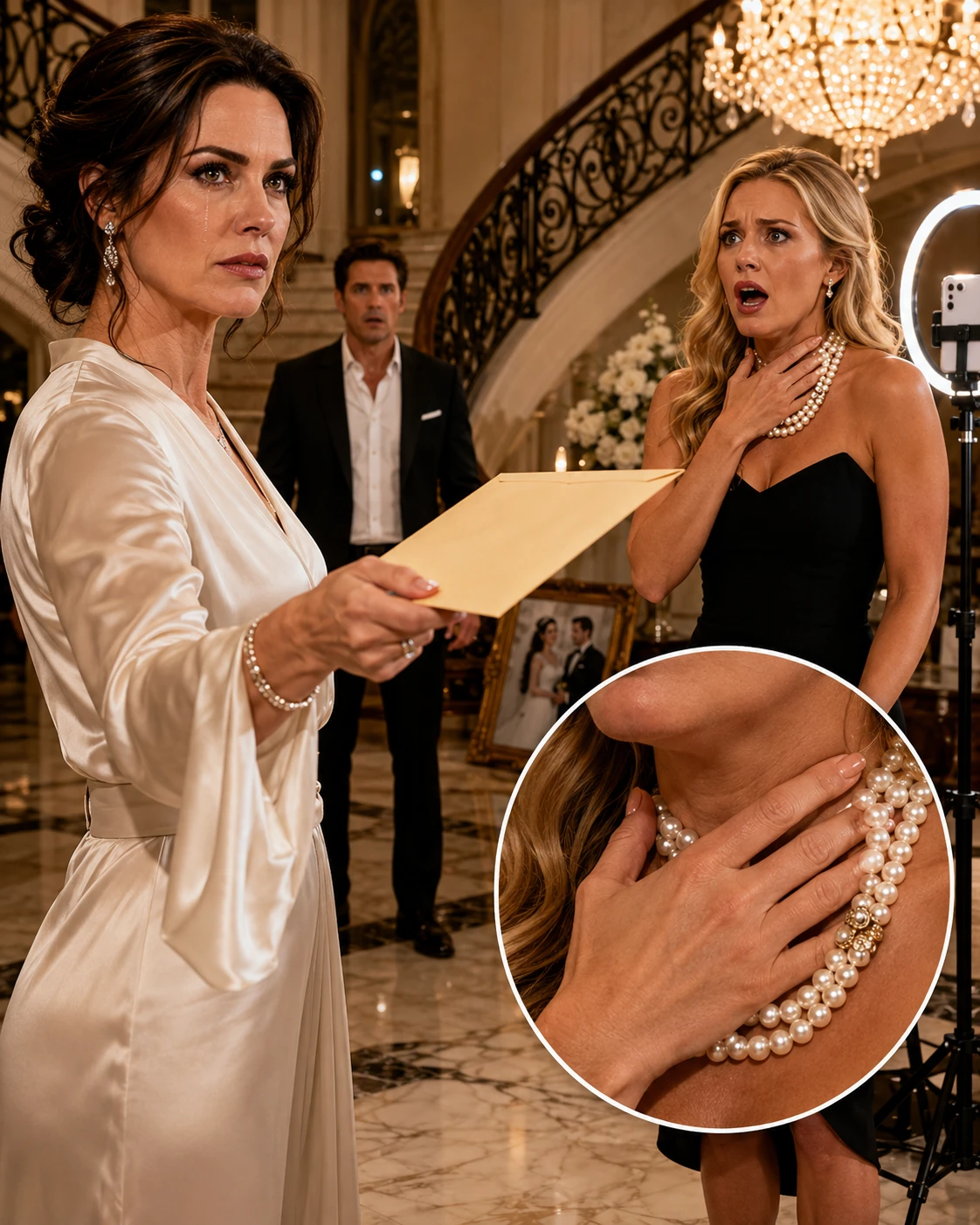
Years before Nate and I married, my grandmother had quietly purchased distressed Whitmore family debt through an entity called Wintermere Holdings. Later, after Nate’s Dallas crisis, additional Whitmore Capital obligations had been refinanced through the same entity.
Wintermere Holdings was owned by Ashford House Trust.
My trust.
I read the document twice.
Then a third time.
The room seemed to tilt, not violently but elegantly, like a ship turning toward war.
Nate’s company did not simply owe money.
It owed me.
Not Claire Whitmore, the wife he thought he could discard.
Claire Ashford, beneficiary of the trust that held the paper beneath his empire.
My grandmother had seen the Whitmores clearly from the start. Their charm. Their hunger. Their decay dressed in custom tailoring. She had smiled through our engagement parties and kissed Nate on both cheeks while quietly buying the leverage his family had spent generations pretending did not exist.
I called Marisol.
Then Roman.
He arrived at the Greenwich house just after dusk.
The estate had changed since Nate left. His clothes were gone from the primary closet, removed by court-supervised movers. The bed had been stripped and replaced. Brooke’s perfume had finally vanished from the hallways.
Still, I avoided certain rooms.
Healing has its own map.
Roman found me in the conservatory, where rain tapped against the glass roof and the lemon trees gave off a faint, clean scent.
He wore a black overcoat and carried no umbrella. Drops of rain darkened his hair.
“You found something,” he said.
I handed him the Wintermere file.
He read in silence.
Roman’s silence was different from Nate’s. Nate’s silence demanded performance. Roman’s made space.
After several minutes, he looked up.
“Does he know?”
“No.”
“He’s been making payments to Wintermere for years.”
“Yes.”
“And he never asked who controlled it?”
“He assumed it was institutional debt. He doesn’t ask questions when answers might make him feel small.”
Roman’s mouth curved slightly.
“That may be the most expensive insecurity I’ve ever seen.”
I looked through the glass at the dark lawn.
“What does this mean?”
“It means,” Roman said, “that if he violates certain covenants, Wintermere can call the debt, convert collateral, or force restructuring.”
“Has he violated them?”
Roman looked back at the file.
“If the transfers to Hollis came from company funds, yes. If he misrepresented marital assets in board disclosures, yes. If he attempted to interfere with trust governance connected to the foundation, very much yes.”
The lemon trees trembled faintly as the heating system turned on.
I wrapped my arms around myself.
“I don’t want to become him.”
Roman stepped closer, stopping at the precise distance respect requires.
“You won’t.”
“You don’t know that.”
“I do.”
“How?”
His eyes held mine.
“Because you’re asking.”
It was a simple answer.
It undid something in me.
For a moment, I was so tired I almost leaned into him. Not because I wanted romance. Not yet. Maybe not ever. But because Roman Kincaid had become the first man in months to stand near me without taking anything.
He saw the movement and did not exploit it.
That was how I began to trust him.
Not because he touched me.
Because he didn’t.
Two weeks later, the first hearing took place in Stamford Superior Court.
The courthouse did not look like the internet expected. There were no chandeliers, no dramatic staircase, no orchestra waiting beneath the judge’s bench. Just beige walls, fluorescent lights, bored clerks, and the quiet terror of rich men discovering procedure.
I wore a black dress with long sleeves and no jewelry except my grandmother’s pearls, recovered from Brooke under court order.
Nate arrived with three attorneys and the expression of a man who believed money could still produce weather.
Brooke arrived separately, pale and smaller without filters.
She did not look at me.
For a moment, I almost pitied her.
Then I remembered her lifting my pearls to her mouth and saying, Men don’t keep things they don’t want touched.
Pity is not the same as forgetting.
The hearing was narrow, technical, and devastating.
Marisol did not perform. She did not need to.
She presented the videos, the access logs, the posts, the livestream, the screenshots, the inventories, the smart lock records, and sworn statements from estate staff.
Nate’s attorney tried to argue that Brooke had been an invited guest.
Marisol agreed pleasantly.
Then she explained that Nate’s consent was exactly what triggered the marital misconduct provisions and exactly what made his removal from the residence appropriate.
Nate’s attorney tried to argue that social media posts were being taken out of context.
Marisol played Brooke’s day thirty video, where Nate kissed her neck and said, Looks better already.
The courtroom watched in silence.
Even the clerk looked up.
Then came the trust documents.
Nate’s side objected.
Marisol smiled.
The judge allowed enough.
Not everything.
Enough.
By the end of the hearing, I had exclusive possession of the Greenwich house, temporary control over disputed foundation authority, preservation orders over Nate’s devices and corporate records, and a judge who looked at my husband as if he had spilled something ugly on her clean floor.
Outside the courtroom, cameras waited.
Nate ignored them.
Brooke tried to hide behind sunglasses.
I walked past without speaking.
A reporter called, “Mrs. Whitmore, do you have any comment?”
I stopped.
Marisol’s hand brushed my elbow in warning.
But I was done letting other people caption my life.
I turned.
The cameras lifted.
“I trusted my husband,” I said. “That was personal. What happened after that is legal.”
Then I left.
By evening, the clip had ten million views.
The comments changed again.
Not queen.
Not savage.
Not poor wife.
This time, they said:
Take notes.
Chapter Five — The Final Twist at The Pierre
Nate should have settled.
A smart man would have.
A humble man would have.
But Nate was neither. He was charming, cornered, and allergic to consequences. He still believed that if he could get me into a private room, he could find the old place in me that loved him and press until it bruised.
He tried flowers first.
White orchids, like our wedding.
I sent them to the courthouse clerk’s office with a note that said, For anyone having a difficult day.
He tried email next.
Claire, this has gotten out of hand.
I forwarded it to Marisol.
He tried nostalgia.
Do you remember Charleston?
I did not answer.
He tried anger.
You are burning down both our lives.
That one I printed.
Marisol wrote useful in the margin.
Finally, he tried the one thing men like him always try when charm fails.
He threatened my reputation.
The call came on a Friday evening, three weeks after the hearing.
I was in the library reviewing foundation grants when my phone lit up with an unknown number.
I almost ignored it.
Then something made me answer.
“Claire.”
His voice.
For one second, my body remembered before my mind could stop it. Nine years of marriage live in muscle. The throat tightens. The breath shifts. Some primitive part of you still turns toward the person who once knew how you took your coffee.
Then the feeling passed.
“Nathaniel.”
He hated when I used his full name.
Good.
“Call off Wintermere.”
So he knew.
I looked at the fire burning low in the grate.
“Speak to your attorneys.”
“I know you’re behind it.”
“You’re behind several cameras, Nate. It didn’t help you.”
His silence had teeth.
“You think you’re untouchable because the internet likes you this month?”
“No. I’m protected because my grandmother read contracts.”
He laughed, but it broke in the middle.
“You have no idea what you’re doing.”
“I know exactly what I’m doing.”
“You call that debt, you hurt investors, employees, innocent people.”
There it was.
The humanitarian costume.
I leaned back.
“You moved company money to your mistress.”
“That’s not—”
“You attempted to access my trust documents.”
“You were freezing me out.”
“You brought her into my office.”
“You stopped being my wife years ago.”
For a moment, the room went quiet enough to hear the fire settle.
There it was.
The sentence he had been polishing.
He wanted me to ask how. Wanted me to defend myself. Wanted me to bleed into the phone so he could feel powerful again.
Instead, I said, “Did you love her?”
He inhaled sharply.
Because cruelty can rehearse many things, but not sincerity.
“No,” he said at last.
It was the ugliest answer.
Not because it hurt me.
Because it made Brooke nothing.
All that humiliation. All those videos. All that public worship of herself as chosen.
And Nate did not even love her.
He had used her as a weapon and entertainment, as proof that he could still take what he wanted from life without being stopped.
“You should have,” I said.
“What?”
“If you were going to destroy a woman, Nate, at least you should have loved her.”
He said nothing.
I ended the call.
The next morning, Brooke’s attorney contacted Marisol.
By Monday, Brooke Hollis wanted to talk.
The meeting took place in a neutral conference room in Midtown, chosen for its excellent security and terrible coffee.
Brooke arrived in a gray sweater, no makeup, hair pulled back. Without the armor of luxury, she looked younger. Not innocent. Just young enough that her arrogance seemed newly expensive.
She sat across from me with her attorney beside her.
For several minutes, no one spoke.
Then Brooke said, “He told me you knew.”
I folded my hands.
“Knew what?”
“That the marriage was over. That you stayed for money. That you had lovers. That you wouldn’t give him a divorce because you liked controlling him.”
I almost smiled.
Nate had never been original.
Brooke swallowed.
“He said the house was basically his. He said the jewelry was insured and you didn’t wear it. He said the videos would pressure you to stop dragging it out.”
“Did he tell you to post them?”
Her attorney shifted.
Brooke’s eyes flicked to him, then back to me.
“Yes.”
Marisol made a note.
“Did he tell you what to say?”
“Some of it.”
“Did he tell you to enter Mrs. Whitmore’s private office?”
Brooke looked down.
“Yes.”
“Did he open the safe?”
“Yes.”
“Did he remove documents?”
A long pause.
“Yes.”
My hands remained still.
Inside, something very old and very tired sat down.
Brooke continued, her voice thinner.
“He said he needed to protect himself. That you were hiding assets. He said if we found proof, he could renegotiate everything.”
“Did you know the documents related to my trust?”
“No. I swear I didn’t. I thought…” She stopped. “I don’t know what I thought.”
“You thought you were winning.”
Her eyes filled, but no tears fell.
“Yes.”
I appreciated the honesty.
Not enough to forgive her.
Enough to use it.
Marisol slid a document across the table.
“Ms. Hollis, cooperation will not erase your exposure. But it may affect how aggressively my client pursues certain claims.”
Brooke’s attorney nodded grimly.
Brooke looked at me.
“If I give you everything,” she said, “will you ruin him?”
It was the first time she had sounded like herself without performing.
I thought of the videos, the laughter, the pearls, the bathtub, the comments calling me old, bitter, replaceable.
Then I thought of Nate’s voice saying no, he had not loved her.
A weapon can cut the hand that holds it.
“No,” I said. “He ruined himself. I’m just organizing the evidence.”
Brooke gave a small, broken laugh.
Then she opened her phone, connected it to Marisol’s secure drive, and gave us the private messages.
All of them.
The case did not go to trial.
That disappointed the internet, but only for a moment. The internet moved on to a senator’s daughter, a country singer’s divorce, and a woman who found a secret room behind her pantry.
Real consequences rarely trend as long as humiliation.
They arrive in paper.
Certified mail.
Court orders.
Board resolutions.
Resignations.
Frozen accounts.
Quiet phone calls from men who used to invite you to golf.
Wintermere did not call all of Nate’s debt at once. That would have been reckless, and I had no interest in harming employees to satisfy rage.
Instead, we forced a restructuring.
Nate was removed from operational control of Whitmore Capital pending an internal investigation. His board seat at the foundation was suspended. His access to the Greenwich house remained revoked. Several investors demanded audits. The corporate AmEx charges became a separate problem that his attorneys referred to as unfortunate optics until Marisol suggested the phrase misuse of funds might age better.
Brooke settled.
The terms were confidential, except for the apology she was required to post and leave pinned for ninety days.
She filmed it against a blank wall.
No filters.
No diamonds.
No stolen robe.
“My name is Brooke Hollis,” she said, voice steady but dead-eyed. “I posted videos from a private residence that did not belong to me. I wore and displayed personal items that did not belong to me. I participated in the public humiliation of a woman based on false statements made to me by Nathaniel Whitmore. I apologize to Claire Ashford Whitmore for the harm I caused.”
The comments were not kind.
I did not read them.
That surprised people.
They assumed revenge meant watching the world punish her.
But there is nothing luxurious about obsession. Nothing elegant about refreshing the pain to see whether strangers have finally valued it correctly.
I had what I needed.
Nate fought longer.
Then, on a cold December evening, the final event took place at The Pierre Hotel in New York.
Not a courtroom.
Not technically.
But it felt like one.
The Whitmore Foundation had scheduled its annual winter gala months before the scandal. Nate had planned to use it as his triumphant social return. He imagined himself walking into the ballroom beneath crystal chandeliers, shaking hands with donors, proving that money forgives faster than women do.
He did not know the foundation board had voted that afternoon.
He did not know Wintermere’s restructuring documents had been signed.
He did not know Brooke’s sworn statement had been delivered to his attorneys that morning.
And he did not know that I would be speaking.
The Pierre ballroom glittered like a jewel box.
Black tuxedos. Champagne towers. White amaryllis. Candlelight trembling against gold walls. A string quartet playing something expensive and mournful beneath the hum of five hundred people pretending not to stare.
I arrived in a dark green velvet gown with long sleeves and a square neckline. My hair was pinned low. My grandmother’s pearls rested at my throat.
Vivian met me near the entrance.
“You look like the widow of a man who is still breathing.”
“That’s very specific.”
“I’ve had time.”
Roman stood a few feet away in black tie, speaking with Marisol. He looked up when I entered, and for one quiet second the room softened around us.
Not romance like fireworks.
Something darker. Safer.
Recognition.
He crossed to me.
“You ready?”
“No.”
“Good.”
I looked at him.
He offered his arm.
“Nerves mean you understand the stakes.”
I placed my hand on his sleeve.
“And if I trip?”
“I’ll make it look intentional.”
This time, my laugh came easily.
Nate saw it from across the room.
That was satisfying in a way I will not pretend was noble.
He looked thinner. Still handsome, still polished, but with a grayness beneath the skin no facialist could fix. His smile flickered when he noticed Roman.
For a moment, I saw the thought pass across his face.
She is mine.
Then I saw the correction.
She never was.
Dinner was served beneath chandeliers bright enough to make every diamond confess. The board chair gave opening remarks. A donor spoke about education. A scholarship recipient from Alabama brought half the room to tears describing how foundation funding had helped her leave an abusive home and study civil engineering at Georgia Tech.
I cried then.
Quietly.
Not for Nate. Not for Brooke. Not for the house or the videos or the pearl necklace.
For the girl at the podium whose hands shook as she held her speech.
For my grandmother.
For every woman who needed a locked door, a lawyer, a bank account, a witness, a ride out, a second chance.
When the applause faded, the board chair returned to the microphone.
“And now, it is my honor to introduce the newly appointed chair of the Whitmore-Ashford Foundation, Mrs. Claire Ashford Whitmore.”
The room changed.
A ripple moved through it. Surprise, delight, confusion, calculation.
Nate stood halfway from his chair.
“What?” he said.
Not loudly.
But loudly enough.
I walked to the stage.
Each step felt like crossing a bridge I had built in secret while everyone laughed at the scaffolding.
At the podium, I looked out across the ballroom.
Donors. Reporters. Board members. Women who had pitied me. Men who had underestimated me. Nate, standing frozen beside his empty chair, realizing too late that his name was on a foundation he no longer controlled.
I began.
“My grandmother, Elaine Ashford, used to say that wealth is not what a woman wears. It is what she can walk away with.”
A soft murmur.
I continued.
“She believed protection should be practical. Legal aid. Education. Housing. Emergency funds. She believed that dignity is easier to keep when survival is not negotiable.”
I looked at the scholarship recipient.
“She was right.”
Then I turned my gaze toward Nate.
“My personal life has been made public in ways I did not choose. Many of you have seen pieces of my home, my marriage, and my humiliation turned into entertainment. I cannot undo that. But I can decide what it funds.”
Nate’s face tightened.
Behind him, Roman stood still as a blade.
“Tonight, the foundation is announcing the Ashford Initiative for Women’s Legal Independence. It will provide emergency legal support, forensic financial services, relocation funds, and trust-protection counseling for women leaving coercive, abusive, or financially manipulative relationships.”
Applause began slowly.
Then grew.
I waited.
“And its first endowment,” I said, “will be funded by settlement proceeds, recovered assets, and restructured obligations connected to the misconduct recently brought before the court.”
The applause stopped, then returned louder.
People understood enough.
Nate understood all of it.
He moved toward the stage, but Marisol intercepted him with one look. It was remarkable how quickly powerful men remembered manners when contempt came in a couture suit.
I lifted a glass of water.
“I once believed betrayal was the end of a story. It is not. Betrayal is an audit. It shows you what was false, what was hidden, what was overvalued, and what remains when the fraud collapses.”
My voice almost broke then.
Not from weakness.
From relief.
“What remains for me is this work. This name. This legacy. And a life I will not spend asking why someone failed to love me properly.”
The room was utterly silent.
Then I said the part that would become the clip.
“Some women are told to be quiet because their pain is inconvenient. Some are told to be graceful because their anger is expensive. Some are told to move on because the people who hurt them would rather not be documented.”
A few women smiled.
A few cried.
I smiled back.
“Document everything.”
The ballroom rose.
Not everyone.
But enough.
Enough that the sound filled the room and went up into the chandeliers and came down again like light.
Nate left before dessert.
This time, no one followed him.
Conclusion — What I Kept
The divorce was finalized in April.
Spring came gently to Greenwich that year. The hydrangeas returned. The lawn softened. The house, stripped of Nate’s suits and Brooke’s perfume and the terrible echo of their laughter, became mine in a way it had not been even before the scandal.
Not because of the deed.
Because I could breathe in it.
I changed the primary bedroom first.
Not dramatically. I did not burn the linens or smash the mirrors or hire a designer to erase every trace of the marriage. Destruction is exhausting, and I had already done enough legal demolition to last a lifetime.
I painted the walls a soft gray-green. I moved the bed to face the garden. I replaced the heavy drapes with linen. I put fresh lavender on the nightstand and slept with the windows cracked, listening to rain without wondering who was lying beside my husband in another room.
The wedding portrait came down.
I did not destroy it.
I wrapped it carefully and placed it in storage, not because I wanted it back, but because I no longer needed to prove I had survived it.
Brooke disappeared from the internet for a while.
Later, I heard she moved to Austin and took a job behind the camera for a production company. Maybe she became better. Maybe she only became quieter. I learned not to confuse disappearance with transformation.
Nate moved to Miami.
That felt predictable.
He sent one final letter through his attorney, not legal, just personal. Marisol advised me not to read it. Vivian offered to read it aloud in a mocking voice over wine. Roman said nothing.
In the end, I burned it unopened in the library fireplace.
Some women need closure.
I needed oxygen.
The Ashford Initiative opened its first office in a renovated brownstone in Brooklyn, then another in Atlanta, then one in Charleston not far from the house where my grandmother had taught me to set a table, read a balance sheet, and never apologize for noticing patterns.
Women came quietly at first.
A teacher whose husband hid her paycheck.
A nurse whose fiancé opened credit cards in her name.
A mother of two whose divorce attorney had missed three offshore accounts.
An influencer whose boyfriend controlled all her brand contracts and passwords.
A widow whose late husband’s family tried to take the house she had paid for.
We helped them.
Not perfectly. Not always quickly. But seriously.
That mattered.
One rainy evening in June, almost a year after Brooke’s first video, I hosted a small dinner in the Greenwich conservatory.
No cameras.
No ring lights.
Just Vivian, Marisol, Roman, Owen and his wife, three foundation attorneys, and the scholarship recipient from the gala, who had started an internship with an engineering firm in Queens and wore confidence like a new dress she was still learning to trust.
We ate lemon risotto and roast chicken. We drank white wine. Vivian told a story so inappropriate Marisol nearly choked. For the first time in a long time, the house sounded alive without performing.
After dinner, I stepped outside onto the terrace.
The air smelled of rain and boxwood. The pool reflected the moon. Somewhere beyond the trees, the world continued to devour scandals, crown villains, forgive men, punish women, and forget almost everything by morning.
Roman found me there.
He did not ask if I was all right.
I liked that about him.
Instead, he stood beside me and said, “You kept the roses.”
I looked toward the garden.
“They were never his.”
“No.”
For a while, we stood in silence.
Then he said, “There’s a donor dinner next month in Boston. Marisol thinks I should go.”
“Do you want to?”
“I want to go if you’re going.”
I turned to him.
He looked almost amused by his own honesty.
A year earlier, I would have mistrusted that. I would have searched it for strategy, hunger, vanity, need. I would have wondered what it cost.
Now I simply let the sentence exist.
“I’m going,” I said.
“Then so am I.”
The warmth that moved through me was not dramatic. It did not erase the past or promise forever. It was quieter than that.
A door opening.
A room with clean light.
A life no longer arranged around betrayal.
Roman reached for my hand, slowly enough that I could refuse.
I didn’t.
Inside, laughter rose from the dinner table. Vivian was probably insulting someone beloved. Marisol was probably pretending not to enjoy it. The house glowed behind me, not as a monument to marriage or money or revenge, but as shelter.
My shelter.
My grandmother had been right.
Love is a room.
Marriage is a house.
Money is the deed.
But freedom, I learned, is the key you keep for yourself.
Months later, a journalist asked me why I never made my own video. Why I never sat in front of a camera with perfect lighting and told my side in tears. Why I let lawyers speak for me until the evidence could speak louder.
I thought of Brooke in my robe, Nate laughing in the background, my wedding photo facedown, and millions of strangers mistaking humiliation for entertainment.
Then I thought of court orders, trust documents, recovered pearls, a foundation full of women learning to leave with proof in their hands.
I smiled.
The mistress went viral.
The wife went legal.
And when the world asked what I had to say for myself, the answer was simple.
She made a tutorial. I made Exhibit A.