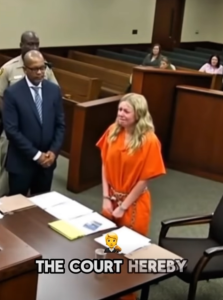
Jurors in Larry Millete murder trial explain why they chose first-degree murder conviction
SAN DIEGO — Applause and cheers rang out in the Chula Vista courthouse after the first-degree murder verdict for Larry Millete was read out Thursday afternoon. It’s been a long five years for loved ones of Maya Millete. Supporters of the missing mother of three wore green, her favorite color, as they shared in this victory. Her family says their journey will continue until her body is found.
But for the jury members, a draining eight weeks has come to an end.
Juror Beverly Feldman spoke with News 8 after the trial concluded. She said there is no winner today — that they owed it to Larry to assume innocence until he was proven guilty beyond a reasonable doubt. Prosecutors did just that.
“My heart was pounding,” Feldman said. “We all wanted to make sure we can go to sleep tonight, that we know for sure that there is no question in our minds that he did it, and it’s in first degree.”
Larry Millete, 44, has been incarcerated since Oct. 2021 after he was arrested on suspicion of murder, despite Maya’s body never being found. It took prosecutors roughly eight weeks to prove beyond a reasonable doubt that Larry killed the mother of his three children. They were forced to rely entirely on circumstantial and digital evidence in the absence of a body.
Feldman said the jury first voted on Thursday and all agreed on first-degree murder with one vote. She said they did not all need to agree on the method of murder but called the trial a “massive puzzle” and described Larry as a “master manipulator.”
She said the jury looked at the spellcasters and his calling out of work as strong evidence.
“If he wouldn’t have done the spellcasting, we probably wouldn’t be here today,” Feldman said. “We wouldn’t have this decision.”
While they’ve never found Maya, Feldman said, only Larry knows where she is – and it was what he wanted all along.
“Even though there is no body, there is a body, she’s here, she’s here on planet earth,” Feldman said. “I think he knows exactly where she is. He wanted her to himself and I think he has accomplished that.”
“She would have never left her children, she would have never left her family,” Feldman said.
News 8 also spoke with juror Leticia Gutierrez said there was a lot of evidence. She pointed to the nearly 12 hours he was gone and the vial with traces of the poison derived from hemlock found in the home after Maya vanished.
What charges were considered against Larry Millete
Seven men and five women decided Larry’s fate and were able to consider a range of four charges with varying degrees of intent. Judge Enrique Camarena instructed them on how to interpret evidence and testimony and urged them to not let bias influence them.
First-degree murder: Larry planned Maya’s death in advance and intended to kill her.
Second-degree murder: Larry intended to kill Maya but the decision was made abruptly or rashly.
Voluntary manslaughter: Larry killed Maya intentionally. It was not premeditated and he was provoked.
Involuntary manslaughter: Larry killed Maya unintentionally and Maya’s death resulted from Larry’s own actions such as he intended to poison her but didn’t mean to kill Maya.
Eight weeks of testimony, evidence presented to a jury
Maya, the Chula Vista mother of three, was last seen alive Jan. 7, 2021, days before the family planned to travel to Big Bear for one of their daughter’s birthdays. Her disappearance sparked massive searches across Southern California but she has never been found, making the case a rare no-body murder prosecution.
Prosecutors argued Larry killed Maya after learning she intended to leave their marriage.
They presented testimony from friends and family who described Larry as emotionally abusive and controlling, saying Maya feared him and had confided that if anything ever happened to her, Larry would be responsible. Witnesses said Maya had decided to divorce Larry, describing their marriage as an “unhealthy, toxic relationship.” One of her final Google searches was for a divorce attorney, and she had scheduled a consultation for after the family’s Big Bear trip. She vanished before she could attend.
Three days before she went missing, Maya texted Larry, “I’m filing for divorce whether you like it or not.”
Prosecutors also presented evidence they said showed Larry closely monitored Maya’s movements, tracked her whereabouts, accessed her social media accounts and attempted to isolate her from friends and family.
But one of the prosecution’s most closely watched pieces of evidence involved Larry’s communications with online spellcasters. Prosecutors argued the messages showed his desperation escalating from trying to save the marriage to asking that Maya become sick or harmed. One spellcaster testified Larry appeared “manic, desperate and obsessive” in the days before Maya disappeared.
Prosecutors also relied heavily on digital evidence. In the weeks leading up to her disappearance, Larry’s online history showed searches for date-rape drugs and subliminal “wife training” messages.
Neighborhood surveillance cameras showed Maya went inside their home before 5 p.m. on Jan. 7, 2021. She was never seen again. A cellphone expert also testified that Maya’s phone data went dark at 1:25 a.m. on January 8. Her phone was never recovered.
Prosecutors also pointed to Larry’s phone, which they said was turned off for roughly 12 hours after Maya disappeared. They also noted there were 444 unaccounted-for miles on the family’s SUV. Garage surveillance audio also captured what sounded like something being dragged after prosecutors allege she was killed.
Prosecutors argued the combination of Maya’s disappearance, phone records, internet searches and Larry’s behavior before and after Jan. 7 pointed to one conclusion: he killed Maya inside their home.
But the defense’s argument was simple: no body, no murder. They said the prosecutors did not definitively prove Maya was dead or that Larry murdered her.
They also questioned whether Chula Vista investigators honed in too quickly on Larry instead of looking at other suspects, like Maya’s coworker and affair partner Jamey Laird.
Larry believed she had become pregnant during the affair. Meanwhile, Laird’s own wife was pregnant and expecting to go into labor in the weeks leading up to Maya’s disappearance. When Laird and his wife Patricia testified in court, they both said Laird was in the hospital with his wife while she was giving birth to their child when Maya vanished. They were among nearly 50 witnesses called by prosecutors.
But the defense only called three witnesses before resting its case. Larry’s attorneys settled their argument in one day. The defense argued investigators found no blood or signs of a struggle inside the home. Attorneys also noted Larry had no documented history of violence and repeatedly referenced Maya’s affair, describing it as evidence she was living a “double life.”
Larry did not testify.
Before the defense rested, the judge questioned him directly to confirm he understood his constitutional right to testify and was voluntarily choosing not to do so.
The defense’s final witness testified it was possible Maya could have left the Millete home without being captured on neighborhood surveillance cameras by climbing over the backyard fence and traveling through a nearby drainage ditch. Defense attorneys argued the possibility supported their theory that Maya left voluntarily.
It’s an argument prosecutors and loved ones have long dispelled. They say she would have never left her children.
Closing arguments in a no-body murder trial
Deputy District Attorney Christy Bowles’ closing argument maintained the rhythm she has carried throughout the entirety of the trial.
“May [Maya] Millete would not, could not, and did not leave her children,” she said. “To think she would have left her house willingly…walked away from her home…left her three children…she spent her life concerned about …it’s unreasonable….unfathomable…it’s impossible.”
Bowles recapped seven weeks of evidence and testimony laid out to jurors. She also reminded jurors of Maya’s family members’ testimony of Larry asking about hiring a hitman $20,000 to “get the other guy.”
It was Maya’s own words that rang loud in the courtroom: “If something happens to me, it’s Larry.”
Maya’s sister-in-law testified to Maya’s fears of Larry hurting or killing her. The message is similar to diary entries Maya penned as letters to her children where she described Larry as verbally and physically abusive.
But Larry’s defense rejected the abuse allegations. They said he was the true victim.
“Larry was being abused,” defense attorney Liann Sabatini said.
Sabatini painted him as a victim of Maya’s. He was being gaslit, she said, and Maya’s affair triggered a downward spiral of turmoil and grief. Sabatini said the Maya’s journal entries were just “talk” and not definitive proof that Larry was abusive.
Sabatini also said Larry’s research on the hemlock plant — which investigators found traces of in a vial in their home — could have been brought inside by their children.
During the prosecution’s rebuttal, they argued he should not be rewarded for successfully hiding a body.
Prosecutors also said either Larry is the unluckiest man in the world or he is guilty of murder.
Kelly Hessedal, Jenny Day and Abbie Black contributed to this story.