My Husband Called Me a Freeloader in Front of His Mother and Said Everyone Should Pay Their Own Way. I Smiled, Split the Refrigerator, the Bills, and Even the Toilet Paper That Night. When His Family Arrived on Saturday With Seven Empty Food Containers, I Served Nothing but a Binder Filled With Five Years of Receipts—Exposing Who Had Really Been Paying for Their Lives All Along.

My husband called me a freeloader in front of his mother. I believed him so little that I even smiled at him. That same night, I divided the refrigerator, the bills, and even the toilet paper. On Saturday, his family arrived with seven empty containers… and was met with twelve months of shame.
“Starting with the next paycheck, everyone pays their own way. I’m tired of supporting you.”
Leo said it while tapping the table with two fingers, as if he had just brought order to a house he single-handedly maintained.
Beside him, Mrs. Brenda smiled with her chin held high.
“It’s about time, son. A wife should help, not leech off her husband.”
Natalie left her mug of chamomile tea on the saucer.
She didn’t argue.
She didn’t cry.
She didn’t even try to defend herself.
She just smiled.
And that smile was the first thing that made Leo nervous.
They lived in an apartment in Lincoln Park, in Chicago. They had a spacious living room, two parking spots, a cleaning service twice a week, and a kitchen that always smelled of roasted garlic, freshly brewed coffee, or warm cornbread.
It all seemed like a comfortable life.
What nobody in Leo’s family knew was who paid for that comfort.
Natalie, thirty-two, directed international operations at a logistics company. She spent whole days resolving held-up shipping containers, customs permits, and stranded shipments.
She earned almost twice as much as her husband.
She never threw it in his face.
Since they got married five years ago, she covered most of the groceries, gas, electricity, internet, cleaning service, insurance, and any unexpected expenses.
She also bought the gifts for his family.
At Christmas, she paid.
On birthdays, she chose and paid.
When Mrs. Brenda needed her refrigerator fixed, Natalie paid.
When Evan, Leo’s brother, said he didn’t have enough for his kids’ school supplies, Natalie made the transfer.
But Leo handed over the gifts, sent the receipts, and received the hugs.
“My son always comes through,” Mrs. Brenda would boast.
Natalie kept quiet.
She cooked because she liked it. Kneading, chopping, and tasting sauces was the only way she had to get work out of her head.
That pleasure turned into an obligation without her noticing.
Every Saturday, at one o’clock sharp, Mrs. Brenda, Evan, his wife Melissa, their three kids, and Aunt Carol would arrive.
Seven people.
They never brought food.
They never chipped in.
But they always brought empty containers.
Natalie would wake up early to prepare BBQ ribs, macaroni and cheese, baked beans, coleslaw, warm dinner rolls, iced tea, and some dessert.
She spent between two and three hundred dollars every Saturday.
Six hours cooking.
Twenty minutes eating.
And the rest of the afternoon listening to criticism.
“The ribs lack salt,” Mrs. Brenda would say while serving herself for the third time.
“The meat is good, but my mom makes it more tender,” Leo would add.
Melissa didn’t even clear the plates.
When everyone finished, they opened their containers and divided the leftovers.
Meat for Evan.
Mac and cheese for Aunt Carol.
Cake for the kids.
Sauce for Mrs. Brenda.
Sometimes they didn’t even leave a single dinner roll.
“So it doesn’t go to waste,” they’d say.
Natalie would clear the empty table and wash the pots.
Leo would go take a nap.
That is why, that night, when he called her a freeloader again, something turned off inside her.
“So, we are in agreement?” Natalie asked.
Leo smiled, satisfied.
“Completely.”
“Everyone pays their own way.”
“Exactly.”
“No exceptions.”
Mrs. Brenda let out a little laugh.
“Let’s see how long your pride lasts when you have to support yourself.”
Natalie took out her phone and opened a note app.
“Perfect. We start today.”
That same night, she made a list.
Half of the rent.
Half of the HOA fee.
Half of the internet.
Half of the electricity.
Half of the gas.
Half of the water.
Then she checked who used each subscription, each insurance policy, and each additional service.
She canceled Leo’s supplementary credit card.
She removed his account from the family phone plan.
She changed the passwords to the streaming platforms she paid for.
And then she went to the kitchen.
She took everything out of the refrigerator.
On the left side, she placed her milk, fruit, cheese, vegetables, coffee, and prepared meals.
On the right, she left three beers, a dried-out half lemon, an open bottle of hot sauce, and a package of ham that Leo had bought two weeks ago.
She put a strip of yellow tape down the middle.
Natalie.
Leo.
When he walked in and saw the division, he burst out laughing.
“No way. Are you really going to make this kind of drama?”
“It’s not drama. It’s your agreement.”
“And what are we having for dinner?”
Natalie opened her side, took out a plate of leftover lasagna, and put it in the microwave.
“I am having lasagna.”
“And me?”
She looked at the right side.
“You have ham.”
Leo’s smile vanished.
The next day, Natalie sent a text with the exact calculation of his share of the rent and utilities.
Leo took twelve minutes to reply.
“You are exaggerating.”
She replied:
“Everyone pays their own way.”
During the week, he discovered that the coffee didn’t refill itself. That clothes didn’t magically return clean to the closet. That bathroom products cost money. That the cleaning lady didn’t accept “I’ll transfer it to you later.” And that ordering takeout every night could swallow a good chunk of his paycheck.
On Friday, Leo opened the refrigerator and found his side empty.
“My family is coming tomorrow,” he said.
“I know.”
“What are you going to prepare?”
“Nothing.”
He turned around slowly.
“What do you mean, nothing?”
“Your family’s food is not my expense.”
“Natalie, don’t start.”
“I’m not starting. I’m complying.”
“My mom already bought new containers.”
“That’s great. She can break them in on your side of the fridge.”
Leo clenched his jaw.
“You’re going to make me look bad.”
“No. I’m just going to stop making you look good.”
On Saturday, at one o’clock sharp, the doorbell rang.
Mrs. Brenda walked in first, carrying a huge bag of plastic containers.
Behind her came Evan, Melissa, the three kids, and Aunt Carol.
Seven relatives.
Seven empty containers.
Zero food.
The dining room was clean.
The table, completely bare.
There was no smell of BBQ.
There were no rolls in the oven.
Not even a pitcher of iced tea.
“Where is the food?” asked Mrs. Brenda.
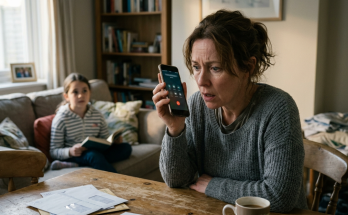

Natalie came out of the study with a thick binder in her hands.

“I didn’t make anything.”

The older woman blinked, as if she had heard a blasphemy.

“What do you mean you didn’t make anything?”

“Leo decided that everyone pays their own way. Your food is not my expense.”

Evan let out an uncomfortable laugh.

“Well, sister-in-law, don’t exaggerate. We are family.”

“Exactly, which is why I thought you would want to support Leo.”

Everyone looked at the man.

He was standing by the kitchen, with a loaf of white bread, two cans of tuna, and a bottle of soda on the counter.

“I thought Natalie was going to cook,” he muttered.

“After calling her a freeloader?” asked Aunt Carol.

Leo shot her a furious glare.

“That was a private argument.”

“You said it in front of your mother,” Natalie replied. “And she agreed.”

Mrs. Brenda left the bag of containers on a chair.

“You don’t have to be spiteful. A decent woman doesn’t leave her guests without food.”

“A decent woman also doesn’t accept food every week and then call the person who buys it a freeloader.”

Silence fell abruptly.

Melissa pretended to check her phone. The kids looked at the empty table with disappointment.

“So what are we going to eat?” asked Evan.

Natalie pointed to Leo.

“He invited you.”

Everyone looked back at him.

Leo opened a pantry cabinet. He found salt, two packets of instant soup, and a box of cereal on the side marked with his name.

“We can order something,” he said.

“Perfect,” Natalie replied. “Order whatever you want.”

Mrs. Brenda regained her smile.

“Order the usual BBQ, son.”

Leo took out his phone and calculated. Eight orders, drinks, sides, and delivery. Over a hundred and fifty dollars.

“We can order four and share.”

“The kids eat a whole one,” Melissa protested.

“Then chip in.”

Evan crossed his arms.

“You invited us.”

“I didn’t invite you. You come every Saturday.”

“Because Natalie always hosts us,” said Mrs. Brenda.

“Natalie is no longer supporting anyone,” she answered.

The phrase left a bitter taste in the room.

Leo ended up ordering four cheap pizzas. When he went to pay, his card was declined.

He tried another one.

It was also declined.

“It must be a bank error.”

“Use the supplementary card,” his mother suggested.

“It doesn’t exist anymore,” said Natalie.

Mrs. Brenda looked at her with genuine alarm.

“You canceled it?”

“It was an extension of my account.”

Leo paid with a transfer after emptying almost all the money he had left.

The pizzas took an hour. While they waited, no one knew what to say. Without food, without music, and without Natalie running between the kitchen and the table, the gathering looked like what it had always been: seven people invading a house to serve themselves for free.

When the order arrived, the kids took first. There was barely enough for two slices per adult.

Mrs. Brenda ate with an offended expression.

“This is not a family meal.”

“We agree on that,” said Natalie.

Later, Evan opened one of the containers.

“We can take the leftover slices.”

Leo pulled away the last one.

“There won’t be any leftovers.”

Natalie placed the binder on the table.

“Since we are all here, I want to show you something.”

“Don’t make another scene,” Leo warned.

“The scene has been going on for five years. I just brought the receipts.”

She opened the binder.

There were twelve dividers, one for each month of the last year. In each section, there were bank statements, transfers, receipts, invoices, and photos.

Natalie took out the first page.

“January. Mrs. Brenda’s refrigerator: nine hundred dollars.”

The woman stopped chewing.

“Leo told me he paid for it.”

“He called the repairman. I made the transfer.”

She took out another page.

“February. Uniforms, shoes, and school supplies for Evan’s kids: five hundred and fifty dollars.”

Melissa lifted her head.

“Leo sent us the receipt.”

“From my account,” Natalie replied.

“But he said it was a gift from him.”

“I know.”

Leo stood up.

“That’s enough.”

Natalie didn’t look at him.

“March. Aunt Carol’s medications: three hundred and forty dollars.”

The old woman frowned.

“I thanked your husband.”

“And he accepted the gratitude.”

“April,” Natalie continued. “Evan’s car repair: eleven hundred dollars.”

“You said you had used your bonus,” Evan complained to his brother.

Leo clenched his fists.

“We are married. The money belongs to both of us.”

Natalie smiled.

“Last night you said everyone pays their own way.”

No one laughed.

She kept turning pages.

Birthdays. Gifts. Medical appointments. Bus tickets. Melissa’s debt. The enrollment fee for one of the kids. A new television for Mrs. Brenda. The in-laws’ anniversary dinner.

Every expense had a date, an amount, and a receipt.

Finally, Natalie placed a sheet of paper in the center of the table.

“And this is just the Saturday food for twelve months.”

Evan read the figure out loud.

“Twelve thousand dollars.”

“Not counting gas, electricity, cleaning, or the hours I spent cooking.”

Mrs. Brenda paled.

“That can’t be.”

“You can check every receipt.”

“But Leo said he bought the meat.”

“Leo bought meat three times in a year.”

“I contributed in other ways,” he protested.

Natalie took out another page.

“Your average contribution to the household expenses was twenty-seven percent. I paid seventy-three.”

“Because you earn more.”

“That was never a problem for me. The problem was that you used my money to pretend you were supporting me.”

Leo slammed the table.

“You are my wife! You have no right to humiliate me in front of my family!”

“You humiliated me first. The difference is I brought proof.”

Aunt Carol closed her empty container.

“Boy, what you did has a name.”

“Stay out of it, Aunt.”

“Coward,” she finished.

Mrs. Brenda stood up, indignant.

“My son is no coward. Maybe Natalie is making everything up because she wants to separate him from his family.”

Natalie slid the refrigerator receipt toward her.

At the top appeared Natalie’s full name and the last digits of her account.

Mrs. Brenda held it for a few seconds. Then she looked at Leo.

“Why did you say you paid for it?”

“Because we are married. It’s the same thing.”

“It’s not the same thing,” Carol replied. “You let your mother insult the woman who helped us.”

Melissa took the receipts for the school supplies. Her eyes filled with shame.

“I spoke badly about you too,” she admitted. “Leo said you spent everything on clothes and that’s why he never had any money.”

Natalie let out a short laugh.

“The clothes I wear, I buy with my money. He never had money because he was paying for a car he couldn’t afford and went out every Thursday with his coworkers.”

Evan turned to his brother.

“Did you lie about that too?”

“I don’t have to explain my marriage to you.”

“But you sure liked explaining to them how much you supported me,” said Natalie.

Leo tried to snatch the binder from her. She closed it first.

“This is over.”

“Yes,” Natalie replied. “We finally agree.”

He stood frozen.

“What does that mean?”

Natalie took out an envelope.

“Here is the calculation of what you need to cover this month. Rent, HOA fee, utilities, and your part of the car insurance. There is also the notice that you have thirty days to get your phone line off my contract.”

“You can’t kick me out of my house.”

“The lease is in my name.”

Leo’s face lost all its color.

“We are married.”

“And tomorrow I’ll talk to a lawyer.”

Mrs. Brenda put a hand to her chest.

“Are you going to destroy your marriage over an argument?”

“No. The marriage was already destroyed. I just stopped paying for it.”

Leo followed her into the hallway.

“Natalie, you are reacting out of anger. Let’s talk when they leave.”

“We’ve been talking for five years. I said I was tired, and you replied that cooking relaxed me. I asked your family to chip in, and you told me not to be petty. I asked you to clarify who paid for things, and you answered that it didn’t matter.”

“I can change.”

“You aren’t worried that you lied. You are worried that they know now.”

He lowered his voice.

“You can’t leave me like this. I have debts.”

“I know. Several are in the binder.”

“My salary isn’t enough for everything.”

“Then you will have to live according to your salary.”

For the first time, Leo understood she wasn’t threatening him.

It wasn’t a tantrum.

It wasn’t a strategy to scare him.

Natalie was done.

The family left before five. The containers returned empty. Mrs. Brenda didn’t say goodbye. Evan walked looking at the floor. Melissa hugged Natalie at the door and whispered an apology.

Aunt Carol was the last to leave.

“I should have realized,” she said.

“Everyone saw what they wanted to see.”

“Not everyone. Some of us saw and chose to stay quiet.”

Natalie nodded.

“That counts too.”

That night, Leo tried to regain control.

First he got mad.

Then he blamed his mother.

Then he said it had all been a joke.

At midnight, he cried.

At two in the morning, he promised therapy, flowers, trips, and a joint account where he would deposit half his salary.

Natalie listened without interrupting.

When he finished, she asked:

“How much do I earn?”

Leo blinked.

“What?”

“We’ve been married for five years. How much do I make?”

He mentioned a figure forty thousand dollars lower.

“What is my exact job title?”

“Manager of something international.”

“What is the name of the woman who cleans this house?”

Leo stayed silent.

“How much is the HOA fee?”

Another silence.

“What medication do I take for migraines?”

He didn’t answer.

Natalie observed him with a calm sadness.

“You don’t know me. You only know the services I provide for you.”

Leo slept on the couch.

The following weeks were a slow fall.

He had to sell the car to pay the credit cards. He moved in with Mrs. Brenda, who quickly discovered that her son didn’t know how to cook, clean, or manage his expenses.

Saturdays stopped being family gatherings. Evan said he couldn’t feed everyone. Melissa started taking her kids to her own mother’s house. Aunt Carol preferred to eat alone.

Mrs. Brenda called Natalie twice.

The first time, to tell her she was exaggerating.

The second, to ask if she could lend her money.

Natalie blocked her number.

The divorce took nine months.

Leo tried to portray himself as the abandoned husband who had paid for everything. Natalie’s lawyer submitted bank statements, receipts, and transfers from the last five years.

His lie didn’t hold up for a single morning.

The day they signed, he waited for her outside.

He looked thinner. He wore a wrinkled shirt and unpolished shoes.

“My mom says all of this was her fault.”

“Your mother said what she thought. You chose to agree.”

“I just wanted to feel like I was the man of the house.”

“You could have been my partner.”

Leo lowered his gaze.

“Did you ever love me?”

“Very much. That’s why it took me so long to see how little you loved me.”

Natalie walked away without looking back.

A year after that meal without food, she celebrated her birthday in the same apartment. She had changed the furniture, painted the walls, and turned Leo’s old space into a small library.

She invited six friends.

Everyone brought something.

One arrived with wine.

Another with a salad.

Two brought desserts.

Someone washed the dishes without being asked.

Nobody showed up with empty containers.

Halfway through dinner, Natalie received a text from an unknown number.

It was Leo.

“My mom is making food on Saturday. She says you can come. We understand everything now.”

Natalie read the message once.

Then she blocked the number.

“Everything okay?” a friend asked.

Natalie looked at the full table, the laughter, the hands sharing food, and the kitchen where nobody expected to be served.

“Everything is exactly as it should be.”

She raised her glass.

She no longer had to prove how much she contributed.

She no longer had to pay to be valued.

And she would never again smile to make anyone’s cruelty more comfortable.

Leave a Reply

Your email address will not be published. Required fields are marked *