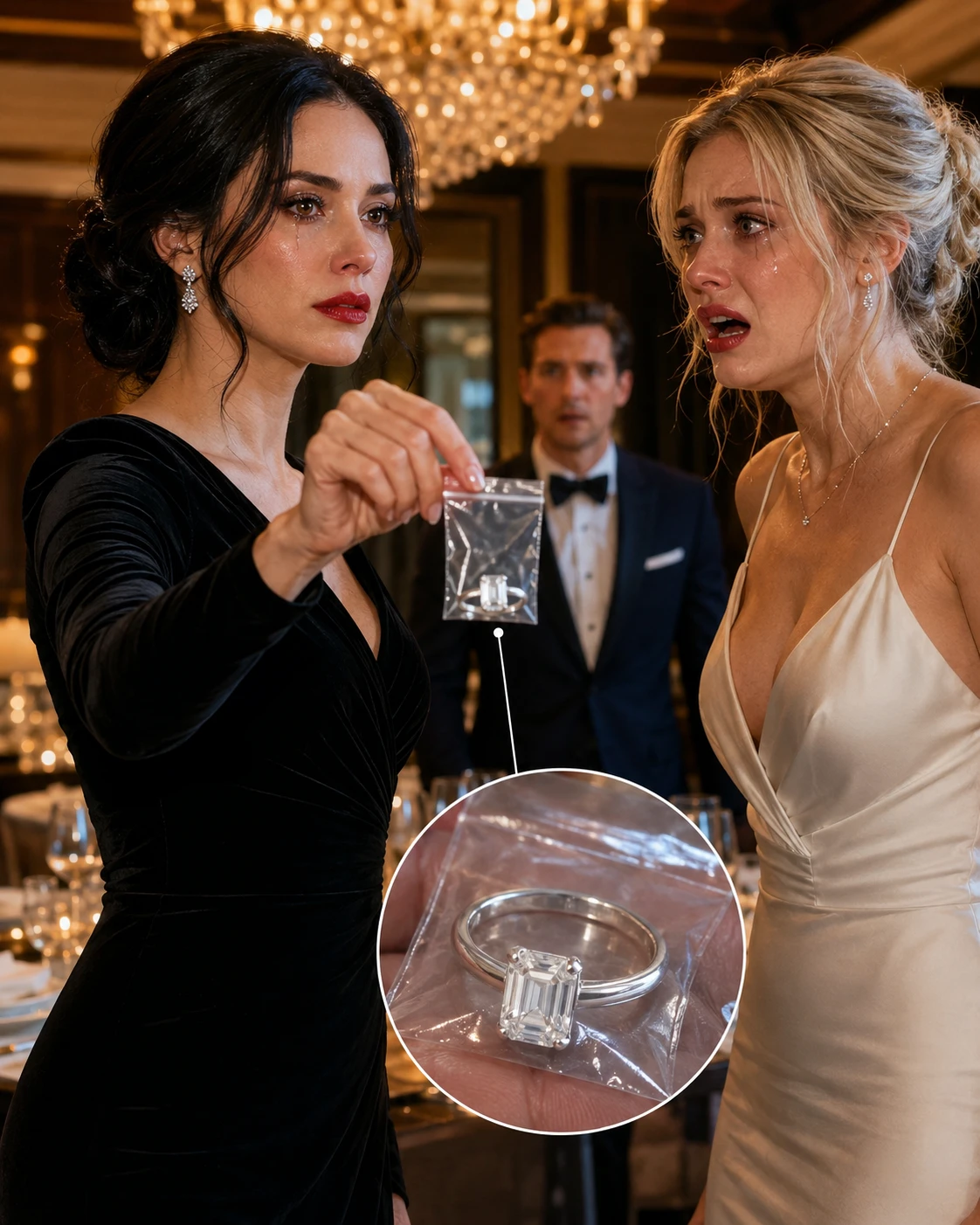
His mistress tried to sell my wedding ring online.
The listing appeared at 2:13 a.m., wedged between vintage Cartier bracelets and a pair of red-bottom heels with the soles scuffed raw.
“Barely used,” the caption said. “Ready for a new beginning.”
I was sitting barefoot on the marble floor of my husband’s wine room, wearing a black silk robe and holding a glass of untouched Bordeaux, when my best friend sent me the screenshot.
At first, I thought it was a cruel coincidence.
Then I saw the diamond.
Then I saw the engraving.
Then I saw the lie.
Inside the platinum band, in letters so small you had to tilt it beneath the light, were the words Grant had whispered to me on our wedding day in Newport:
Forever, Evelyn. G.C.
My husband was asleep upstairs in our $9 million home in Greenwich, Connecticut, probably dreaming with a clear conscience beside the empty space where I no longer fit.
His mistress, however, was wide awake.
And she was selling my marriage for $18,000 on the internet.
I stared at the listing until the room stopped moving.
Then I took one screenshot.
Then another.
Then I called my attorney.
By sunrise, the ring had been purchased through her office under a corporate name no one could trace back to me.
By noon, the seller information was preserved.
By dinner, the payment record was attached to a theft claim.
And by the time my husband smiled across the table and told me, “Sweetheart, I’m sure she just made a mistake,” I had already begun the slow, beautiful work of destroying him.
Chapter 1: The Woman They Laughed At
The first time Grant humiliated me in public, he wore Tom Ford and kissed me on the cheek like he was blessing a servant.
It was the annual Caldwell Foundation Winter Gala, held in the ballroom of The Plaza Hotel in Manhattan, under chandeliers heavy enough to crush a man and mirrors polished enough to show every lie.
Two hundred donors.
Six senators.
Three actresses pretending to care about childhood literacy.
And one blonde woman in a champagne satin gown standing too close to my husband.
Her name was Sloane Mercer.
She was twenty-six, with a face made for camera flashes and a voice that sounded like sugar dissolving in poison. She worked as a “brand consultant,” which in her world meant she posted pictures from restaurants she didn’t pay for and called herself an entrepreneur.
I had known about her for six months.
Grant did not know I knew.
That was one of his many mistakes.
He thought silence meant weakness.
Men like Grant Caldwell always did.
At the gala, I stood beside him while he accepted an award for “Outstanding Civic Leadership,” smiling as photographers captured us beneath the foundation’s gold crest. My diamond ring caught the light every time I moved my hand, throwing little stars across his tuxedo sleeve.
Sloane watched it like a starving animal.
When Grant finished his speech, he raised a champagne flute and said, “None of this would be possible without the women in my life.”
There was a pause.
A small one.
Just long enough.
His hand found my waist, but his eyes went to her.
The table noticed.
A senator’s wife lowered her gaze into her wine.
A young socialite covered her smile with two fingers.
Sloane’s mouth curved slowly, like she had been handed a crown.
I kept my face serene.
That night, the gossip pages ran a photo of Grant laughing with Sloane while I stood half a step behind them.
The caption read: “Caldwell Foundation Gala Sparkles With New Energy.”
New energy.
That was what they called betrayal when the woman being betrayed had too much dignity to scream.
On the ride home, Grant loosened his bow tie and said, “You were quiet tonight.”
“I was listening,” I said.
He looked out the window. Manhattan slid past in gold and black.
“To what?”
“To everything you didn’t say.”
His jaw tightened, but only for a second.
Grant was handsome in the expensive, bloodless way of men who had never been denied anything. He had gray eyes, dark hair, and a smile that made investors open their wallets before reading contracts.
When we married, I was thirty, he was thirty-five, and everyone said we looked inevitable.
Evelyn Hart and Grant Caldwell.
Old money and new ambition.
Newport vows.
Greenwich mansion.
A foundation in both our names.
He gave me a ring with a five-carat emerald-cut diamond and told me it had been chosen because it was “elegant, rare, and impossible to ignore.”
For years, I believed he meant me.
I learned later that men often praise you for the qualities they eventually try to steal.
By the time we reached the house, a storm had rolled in from Long Island Sound. Rain darkened the limestone steps. The house rose in front of us, all glass and white columns, glowing like a museum where joy had once lived.
Grant stepped out first.
He didn’t offer me his hand.
I watched his back as he walked inside, and I felt something inside me go still.
Not break.
Still.
There is a difference.
Broken women cry until they are empty.
Still women become dangerous.
Three nights later, my wedding ring disappeared.
I had taken it off before bed and placed it in the small porcelain dish on my vanity, the one painted with blue hydrangeas, a gift from my mother before she died.
In the morning, the dish was empty.
Grant stood behind me in the mirror, buttoning his shirt.
“Maybe you misplaced it,” he said.
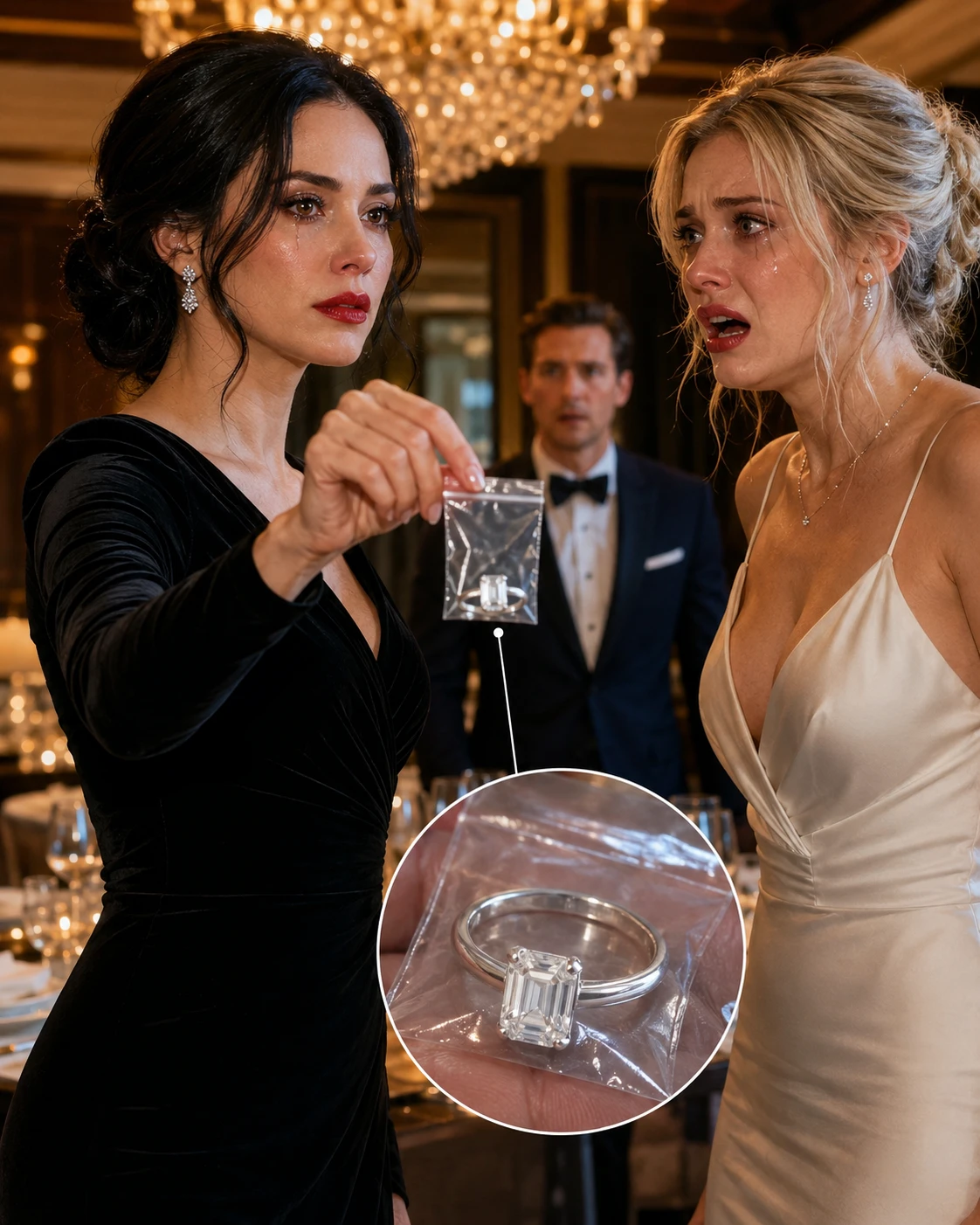
“I don’t misplace five-carat diamonds.”
He gave a soft laugh, the kind meant to make me feel dramatic.
“You’ve been stressed.”
“Have I?”
“Evelyn.”
He said my name like a warning.
I turned from the vanity. “Has Sloane been here?”
His expression didn’t change. That was how I knew.
Grant was excellent at outrage when accused falsely.
When accused accurately, he became calm.
“Don’t be insulting.”
“To whom?”
“To yourself.”
That almost made me smile.
Instead, I filed a police report.
Grant called it unnecessary.
I called it documentation.
Chapter 2: Barely Used, Ready for a New Beginning
I found the listing because my best friend, Mara Whitcomb, had insomnia and a taste for digital bloodshed.
Mara had been my roommate at Columbia and was now a forensic accountant with a bob sharp enough to cut glass. She could find a shell company in the Cayman Islands faster than most people could find their car keys.
At 2:13 a.m., she texted me:
Evelyn. Are you awake?
Then:
Don’t react. Just look.
The screenshot loaded slowly.
A luxury resale marketplace.
Seller name: SloaneStyleNYC.
Item: Platinum Emerald-Cut Diamond Ring.
Price: $18,000.
Description: “Barely used, ready for a new beginning. Gorgeous custom piece. No bad energy attached.”
I could hear my own heartbeat.
Not because I was surprised.
Because I was not.
I zoomed in on the photo. The ring lay on a blush velvet box, staged beside a half-empty glass of champagne and a white hotel robe sleeve.
The diamond had a tiny feather-shaped inclusion near the corner. I had studied it a thousand times in bored meetings and candlelit dinners.
Then the second photo.
Inside the band, blurred but not enough.
Forever, Evelyn. G.C.
Sloane had not even bothered to hide my name.
That was the arrogance of women who believe they have already won.
Mara called me before I could reply.
“Tell me you’re not alone with him,” she said.
“I’m downstairs.”
“Good. Listen carefully. Do not message her. Do not confront him. Do not breathe differently.”
I looked around the wine room, at the climate-controlled walls of bottles Grant collected to impress men he hated.
“I’m breathing beautifully.”
“Evelyn.”
“I know.”
“Do you want me to call Nina?”
Nina Voss was my divorce attorney. She wore cream suits, never raised her voice, and made powerful men look like boys who had forgotten their homework.
“Yes,” I said. “But not from my phone.”
By 3:00 a.m., Nina was on a secure line.
By 3:20, her office had created a buyer profile through a dormant LLC.
By 3:46, an associate placed the order.
By 4:10, Sloane accepted.
She even wrote back:
“So happy this is going to someone who deserves a fresh start.”
I laughed then.
Just once.
It startled me.
There is something almost intimate about being underestimated by stupid people.
The ring was delivered two days later to Nina’s Manhattan office in a small white box tied with satin ribbon.
I was there when they opened it.
Nina photographed everything.
The packaging.
The label.
The seller account.
The tracking number.
The ring.
My ring.
It looked smaller in the evidence bag.
Not less beautiful.
Just less holy.
Nina slid a document across the conference table.
“Purchase record, seller identity, shipping origin, message history, screenshots, appraisal match, police report. We add it to the theft claim.”
Mara sat beside me, legs crossed, expression lethal.
“There’s more,” she said.
Nina looked at her.
Mara opened her laptop.
“I started looking at Sloane’s payment handles, linked emails, public Venmo activity, business registrations, little crumbs. She’s sloppy.”
Nina’s lips curved. “They usually are.”
Mara turned the screen toward me.
There were transfers.
Not enormous ones. Not at first.
$4,800.
$9,200.
$12,500.
From entities connected to Caldwell Holdings.
Consulting fees.
Brand development.
Event strategy.
Sloane had been on Grant’s payroll for eight months.
“She wasn’t just his mistress,” Mara said. “She was an expense.”
Nina leaned back. “That matters.”
I looked at the screen.
My humiliation had a line item.
In that moment, my anger changed shape.
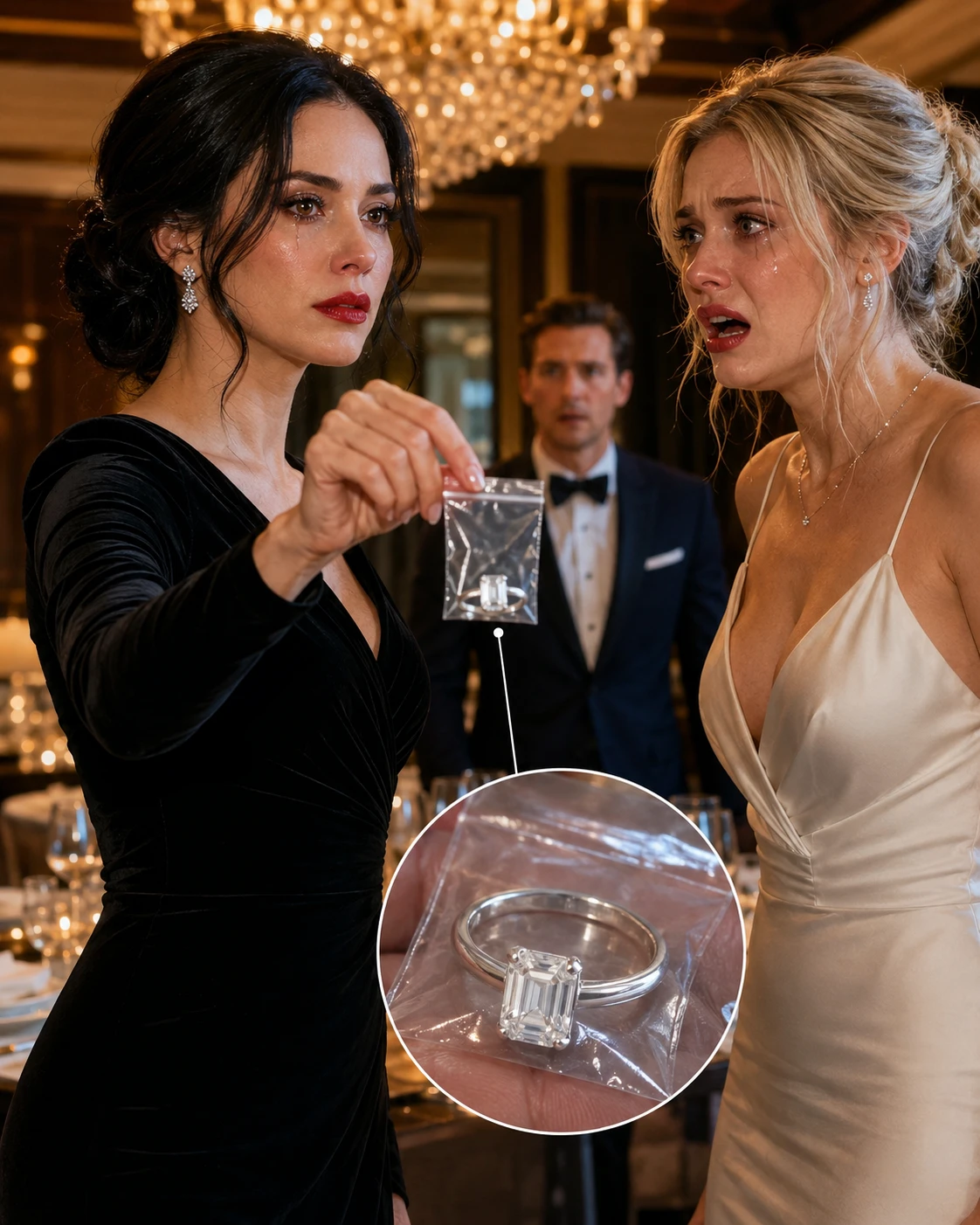
It became architecture.
A cold, elegant structure with locked doors and a view from every window.
“Keep going,” I said.
Mara’s fingers hovered over the keyboard.
“There may be hidden assets.”
Nina’s eyes sharpened.
“What kind?”
“The kind husbands create when they plan to divorce rich wives and pretend the money disappeared first.”
Outside the conference room windows, Manhattan glittered beneath a pale winter sun.
Inside, my wedding ring rested in plastic.
A stolen object.
A purchased confession.
And for the first time in months, I felt calm.
Chapter 3: The House Always Belonged to Me
Grant came home that Friday smelling like cedar, hotel soap, and another woman’s perfume.
I was in the dining room, eating roasted salmon from a plate rimmed in gold.
He kissed the air beside my cheek.
“Long day.”
“I imagine.”
He poured himself whiskey and studied me.
Grant had begun to sense something was wrong. Not guilt. Men like him rarely sense guilt. He sensed a shift in control, the way a predator notices when the fence has moved.
“Did you hear anything from the police about the ring?” he asked.
I cut into my salmon.
“Not yet.”
His shoulders relaxed.
Only slightly.
“Sloane mentioned something odd today.”
I looked up.
There it was.
The opening.
“Oh?”
“She said someone accused her online of selling stolen jewelry. Ridiculous. She bought a ring from an estate sale months ago, apparently. Then resold it. People are insane.”
“How unfortunate for her.”
“She’s upset.”
“I’m sure.”
He frowned. “You don’t sound sympathetic.”
“I usually reserve sympathy for victims.”
His glass stopped halfway to his mouth.
“Evelyn.”
I smiled.
There are smiles that comfort.
There are smiles that warn.
Mine wore diamonds.
“Grant.”
He set down the whiskey. “Are we doing this again?”
“Doing what?”
“This cold little performance.”
I folded my napkin. “I learned from the best.”
For one second, something ugly moved behind his eyes.
Then he laughed.
“You know, you’ve always had a talent for making yourself look wounded in expensive rooms.”
It was meant to hurt.
Once, it would have.
I would have gone upstairs, closed the bathroom door, and stared at myself until I became a stranger.
That night, I only stood.
“Good night, Grant.”
“Don’t walk away from me.”
But I already had.
The next morning, Nina filed emergency motions to preserve financial records connected to Caldwell Holdings, the Caldwell Foundation, and several related entities.
Grant found out at 11:42 a.m.
He called me fifteen times.
I did not answer.
At 1:05 p.m., he arrived at the house with his attorney, a red-faced man named Peter Lyle who looked like he billed by the threat.
I was in the library with Nina, Mara, and a pot of Earl Grey.
The library had been my mother’s favorite room. Green velvet chairs, walnut shelves, brass lamps, first editions locked behind glass. Grant hated it because the books made him feel judged.
He walked in without knocking.
“What the hell is this?” he demanded.
Nina looked up calmly. “Good afternoon, Mr. Caldwell.”
Peter Lyle puffed behind him. “This is an outrageous overreach.”
Mara sipped tea.
I said nothing.
Grant stared at me.
“You’re freezing accounts?”
“We’re preserving records,” Nina said.
“For what?”
“Theft. Misappropriation of marital assets. Fraudulent transfers. Possible foundation misuse. We’ll know more after discovery.”
Grant laughed too loudly.
“Evelyn, this is insane.”
I looked at him then.
Really looked.
At the man I had loved.
At the boy beneath the tailoring.
At the fear he thought he could disguise as fury.
“My wedding ring was stolen,” I said. “Then sold online by your mistress.”
Peter Lyle’s face twitched.
Grant turned pale, then red.
“She made a mistake.”
Nina slid a folder across the table.
“No,” she said. “She made a transaction.”
Grant did not touch the folder.
“That proves nothing.”
“It proves possession,” Nina said. “It proves sale. It proves knowledge through her messages. It establishes a timeline. And it gives us probable cause to examine how she obtained it.”
Mara opened her laptop. “Which is where things get interesting.”
Grant’s eyes cut to her.
He had never liked Mara.
Smart women irritated him unless they were being paid to admire him.
“We found payments to Ms. Mercer,” Mara said. “From accounts connected to your private investment arm. Labeled as consulting fees.”
“She consulted.”
“For what?”
“Brand strategy.”
“For a woman whose largest brand partnership is detox tea?”
Peter Lyle cleared his throat. “We should continue this discussion privately.”
Grant ignored him.
“You think you can embarrass me?” he said to me.
The room went quiet.
Outside, snow began to fall against the tall library windows.
I stood and walked to the fireplace mantel, where a silver-framed photograph of our wedding day still sat. Newport sunlight. White roses. Grant’s hand at my waist. My mother alive beside me.
“No,” I said. “You embarrassed yourself. I simply kept receipts.”
He stepped closer.
“This house is under Caldwell occupancy rights. Don’t forget that.”
That was when I smiled.
Truly smiled.
“Grant,” I said softly. “You should have read the trust documents.”
His expression changed.
Just a flicker.
But I saw it.
Nina saw it too.
The house in Greenwich had never belonged to Grant.
Not really.
It belonged to the Hart Family Trust, created by my grandfather and amended by my mother before her death. Grant had occupancy rights as my spouse, contingent upon good-faith marital conduct and absence of financial harm to the trust beneficiary.
Me.
The clause had seemed old-fashioned when I first read it years ago.
Now it felt like my mother reaching from the grave to hand me a sword.
Nina placed a second folder on the table.
“Notice of termination of occupancy rights,” she said. “Effective pending court approval. Given the theft claim and financial misconduct allegations, we’re requesting expedited review.”
Grant stared at the folder.
For the first time in our marriage, he looked at something on paper and understood it could defeat him.
“You can’t throw me out of my home,” he said.
I picked up my teacup.
“It was never yours.”
Chapter 4: The Mistress Wore White
The video went viral before breakfast.
Sloane posted it from the powder room of The Mark Hotel, because of course she did.
She wore a white silk slip dress and diamond earrings I recognized from a Christmas receipt Grant had told me was “for a donor gift.” Her lips were glossy, her eyes wet, her voice trembling in the practiced way of women who cry without ruining mascara.
“I never wanted drama,” she said to her 300,000 followers. “But when a powerful older woman uses her money to destroy a young woman for falling in love, I think people deserve the truth.”
Mara sent it to me with one word:
Breathe.
I watched the video in bed, sunlight spreading across the linen sheets.
Sloane continued, “I was told the marriage was over. I was told she was cruel. Cold. Obsessed with appearances. He gave me a ring as a symbol that he was finally choosing happiness. I didn’t know it was hers.”
She placed a hand over her heart.
“I would never steal from another woman.”
By 9:00 a.m., strangers had called me bitter, aging, jealous, barren, evil, and my personal favorite: “the villain in a Nancy Meyers movie.”
By 10:30, three lifestyle pages had reposted the video.
By noon, Grant released a statement through a publicist:
“This is a private family matter. I ask for compassion for all involved.”
Compassion.
The perfume men spray over arson.
Nina advised silence.
Mara demanded violence.
I chose both.
That evening, the Caldwell Foundation hosted an emergency board dinner at Le Bernardin. Grant wanted to reassure donors. He wanted to look stable, wounded, noble.
He also wanted me there.
Not because he loved me.
Because my absence would confirm the scandal.
So I went.
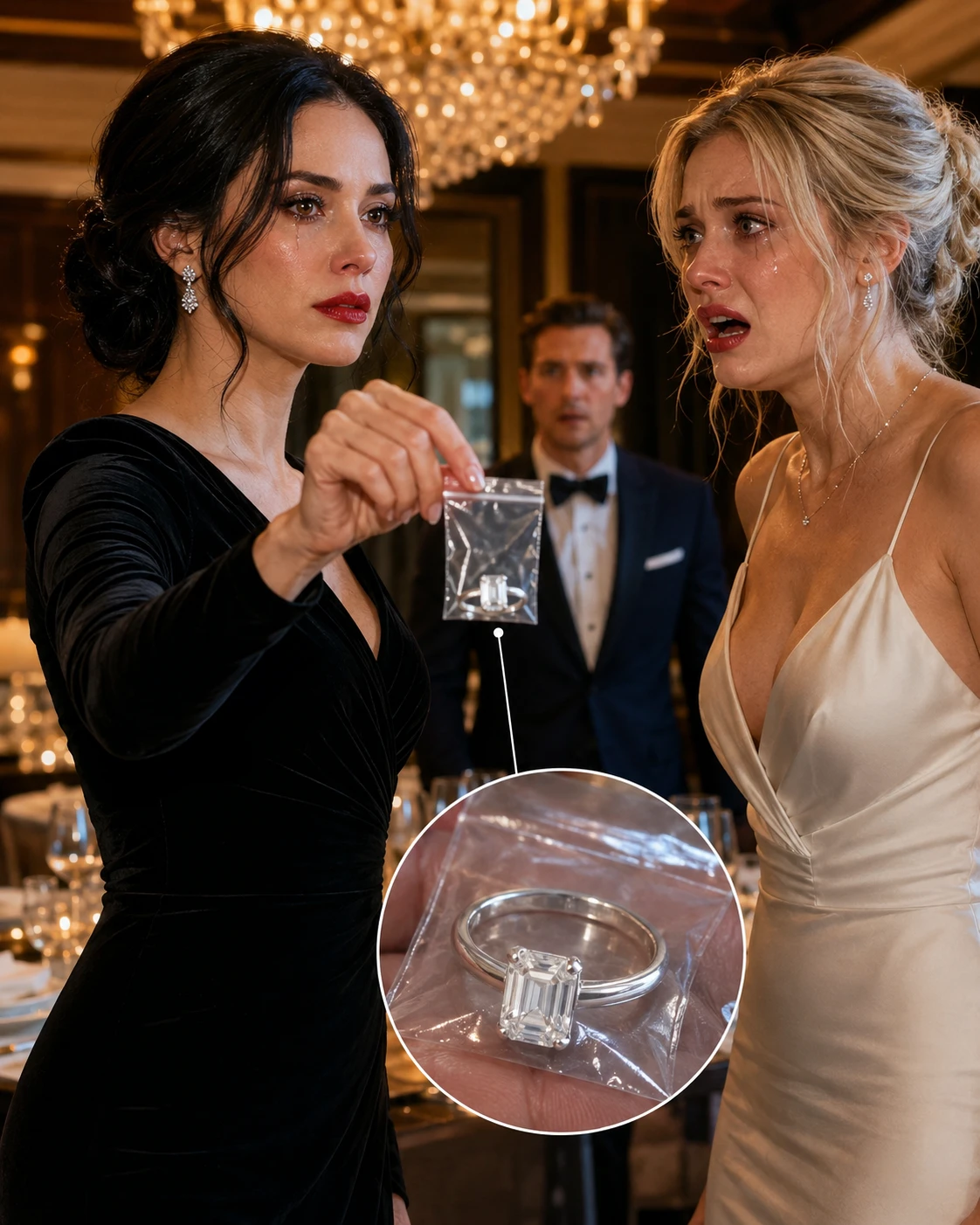
I wore black velvet.
No necklace.
No wedding ring.
My hair was pinned low, my makeup soft, my mouth red.
When I entered the private dining room, conversation thinned to a whisper.
Grant stood near the window, holding court with two board members and a billionaire from Dallas. Sloane stood beside him in white again, as if innocence were a dress code.
She looked startled when she saw me.
Then delighted.
Predators love a stage.
“Evelyn,” Grant said, voice warm for the room. “Thank you for coming.”
I kissed his cheek.
The cameras from a society blog clicked.
“Of course,” I said. “The foundation matters.”
Sloane approached with the trembling smile of a woman auditioning for sainthood.
“I hope we can all find peace,” she said.
I looked at her earrings.
“Peace is expensive,” I said. “But I’m sure Grant told you that.”
Her smile faltered.
Dinner was unbearable in the way only wealthy dinners can be: beautiful plates, ugly hearts.
Grant spoke about resilience.
Sloane spoke about being misunderstood.
Board members avoided my eyes.
Halfway through dessert, Grant stood.
“I want to say something,” he announced.
The room quieted.
He looked at me with a softness so false it was almost art.
“Evelyn and I have had challenges, like any couple. But I hope we can move forward with dignity. I regret any pain caused by misunderstandings.”
Misunderstandings.
A stolen ring.
A mistress on payroll.
Hidden accounts.
Public humiliation.
All of it folded into one elegant little word.
I set down my spoon.
Grant continued, “And I hope no one rushes to judgment against Sloane, who has been unfairly targeted.”
Sloane lowered her eyes.
Someone murmured approval.
Then Grant held out his hand to me.
It was a performance.
A trap.
If I refused, I looked cruel.
If I accepted, he looked forgiven.
I stood.
The room leaned in.
I placed my hand in his.
For a moment, his fingers tightened around mine.
He smiled, victorious.
Then I turned to the room.
“Grant is right,” I said. “No one should rush to judgment.”
His smile paused.
“Facts deserve patience,” I continued. “Proof deserves respect. And women deserve not to be called bitter simply because they refuse to bleed quietly.”
A hush fell.
Grant’s fingers went cold.
I gently removed my hand from his.
“I have said nothing publicly about my marriage, my missing ring, Ms. Mercer’s listing, or the financial review currently underway.”
Someone gasped.
Sloane’s face drained.
Grant leaned toward me. “Evelyn.”
I did not look at him.
“But since my silence has been mistaken for shame, let me correct that.”
I opened my clutch and removed a small envelope.
Nina, seated at the far end of the table as my guest, looked like a woman enjoying very expensive theater.
I handed the envelope to the foundation chair, Margaret Ellison, a seventy-year-old philanthropist with pearls, steel-gray hair, and the moral patience of a guillotine.
“These are preliminary documents for the board,” I said. “They concern payments made to Ms. Mercer from entities connected to Caldwell Holdings and possibly billed through foundation-adjacent event budgets.”
Grant’s chair scraped back.
Peter Lyle, who had materialized near the door like bad weather, whispered urgently into his phone.
Margaret opened the envelope.
Her face did not change.
That was worse for Grant than fury.
I turned to Sloane.
“And Ms. Mercer,” I said, “you’re right. The truth matters.”
Her lips parted.
“The ring you sold was purchased by my attorney’s office. Every message you sent is preserved. Every shipping detail is recorded. Every claim you made online is now evidence.”
Sloane swayed slightly.
Grant stepped toward me. “Enough.”
I looked at him.
“No,” I said. “That was your mistake. Thinking I had reached enough.”
The room was so silent I could hear ice settle in glasses.
Margaret stood.
“Mr. Caldwell,” she said, “the board will be convening without you.”
Grant stared at her.
“You can’t be serious.”
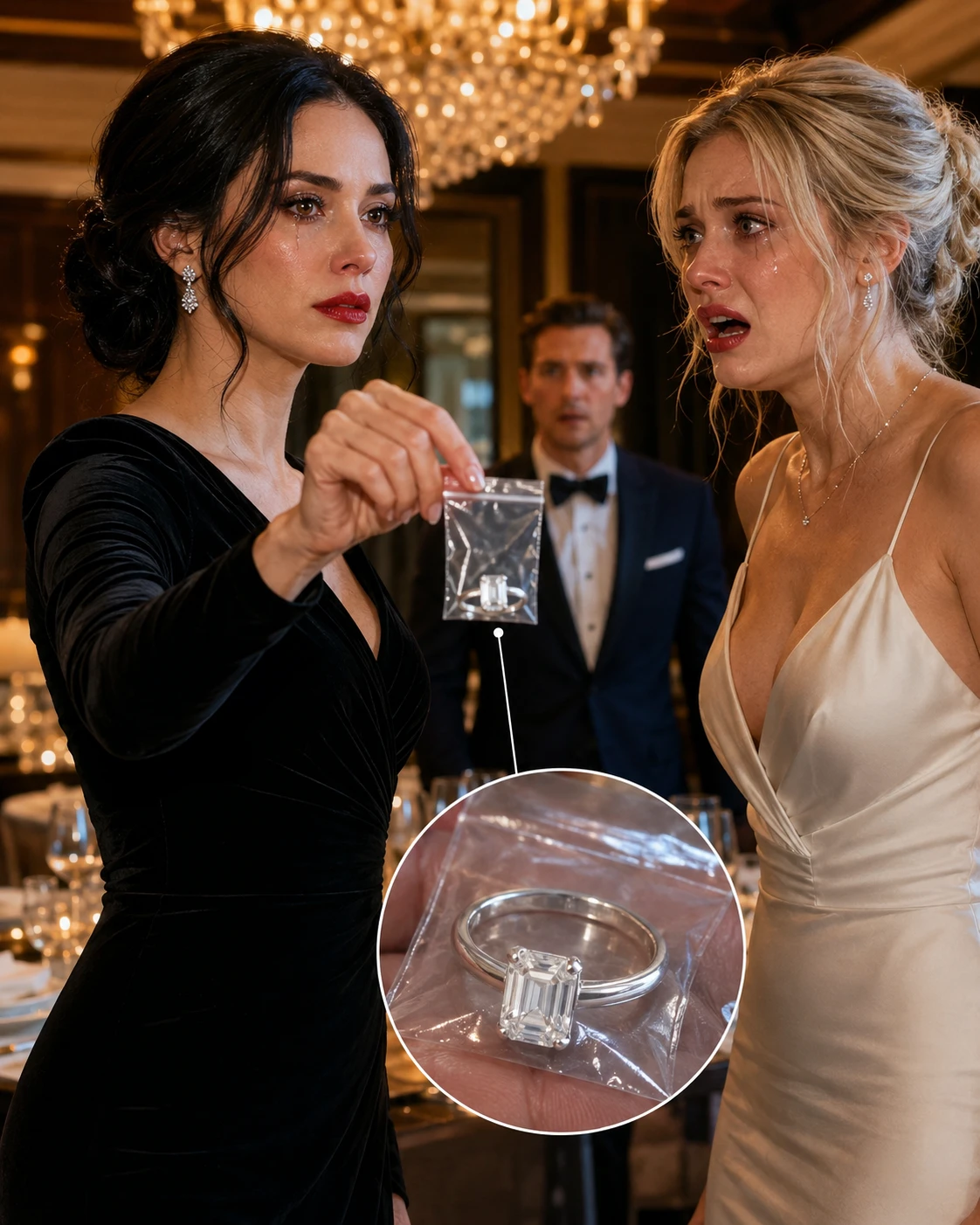
“I have never been less amused,” she replied.
It was the most devastating sentence I had ever heard spoken over crème brûlée.
Outside, cameras flashed through the window.
Inside, Sloane began to cry for real.
Chapter 5: The Confession Was Wrapped in Velvet
Two weeks later, Grant moved into a suite at The Lowell Hotel and told anyone who would listen that he had “chosen distance for healing.”
The judge temporarily suspended his occupancy rights in the Greenwich house pending review.
The foundation placed him on leave.
Three donors withdrew from his new venture.
Sloane’s follower count doubled, then collapsed when the evidence began leaking—not from me, never from me, but from the natural bloodstream of scandal. A board assistant talked to a friend. A friend talked to a blogger. A blogger found court filings.
The internet loves a mistress until she becomes bad at paperwork.
Still, Grant was not finished.
Men like him do not surrender.
They rebrand.
He countersued.
He claimed emotional distress, reputational damage, malicious prosecution, and, in one particularly desperate paragraph, “marital cruelty through strategic silence.”
Nina laughed for nearly eight seconds.
Then she filed our response.
Discovery opened like a locked room.
And inside, we found the truth.
Grant had been planning to leave me for over a year.
Not for Sloane.
That was the first twist.
Sloane was never the destination.
She was the distraction.
While the world watched the pretty blonde in hotel mirrors, Grant had been moving money through consulting contracts, offshore investment vehicles, inflated event invoices, and a private art acquisition fund registered through a Delaware LLC.
The hidden assets were not meant to build a life with Sloane.
They were meant to build a life without consequences.
He had underestimated me.
But worse, he had overestimated her.
Sloane, furious after Grant stopped taking her calls, made one final mistake.
She contacted me.
Not directly.
Through a burner email.
Subject line: We both know he lied.
The message was short:
I’ll tell you everything. But I want protection.
Nina arranged the meeting at a boutique hotel in Tribeca, in a private room with gray walls, a velvet sofa, and a recorder placed in plain sight.
Sloane arrived without makeup.
She looked younger that way.
Not innocent.
Just breakable.
For a moment, I almost pitied her.
Then I remembered the listing.
Barely used.
Ready for a new beginning.
She sat across from me and twisted a napkin between her fingers.
“He said you were cruel,” she whispered.
“I’m sure he did.”
“He said the ring was a duplicate.”
I said nothing.
“He told me he had bought it years ago for you, but you hated it. That it was sitting in some drawer. That giving it to me was symbolic.”
“And selling it?”
Her eyes filled.
“He told me to.”
The room went still.
Even Nina stopped writing.
Sloane swallowed.
“He said if I sold it, there would be proof I had handled it independently. He said if things got ugly, it would make you look unstable. Like you planted something or couldn’t keep track of your own jewelry.”
I felt my pulse in my wrists.
Grant had not merely allowed the sale.
He had designed it.
“What changed?” Nina asked.
Sloane looked at me.
“He abandoned me. He told me I was becoming a liability. Then I found out about the other woman.”
I almost laughed.
Of course.
There was always another woman.
“Who?” I asked.
Sloane wiped her cheek.
“Not a woman.”
Nina’s pen paused.
Sloane opened her bag and removed a small velvet pouch.
My stomach tightened.
Inside was a flash drive.
“He was leaving for himself,” she said. “New name, new accounts, new passport through some fixer. He joked about becoming a ghost. I thought it was dramatic rich-man nonsense until I found copies.”
Nina reached for the drive with gloved fingers.
Sloane continued, voice shaking.
“There are emails. Wire instructions. Recordings. He made me record things sometimes, for leverage. But I recorded him too.”
There it was.
The final twist.
Not the mistress.
Not the ring.
Not the hidden money.
Grant had been preparing to vanish before the divorce, drain what he could, frame the chaos around two women, and emerge somewhere warm with clean accounts and a cleaner story.
But he had given a desperate woman access to his secrets.
Because he thought beauty made her harmless.
Because he thought love made me blind.
Because he thought every woman in his life was an object he could price, move, or discard.
A ring.
A mistress.
A wife.
He was wrong three times.
The recording that destroyed him was only forty-three seconds long.
Grant’s voice, relaxed, intimate, unmistakable:
“List it. Use something cute. ‘Barely used, ready for a new beginning.’ She’ll see it eventually. Evelyn won’t react at first. She’ll go quiet and look crazy. Then we control the narrative.”
Sloane’s voice asked, “What if she files a police report?”
Grant laughed.
“Let her. By the time anyone understands what actually happened, the money will be gone.”
At the final hearing, Grant wore navy.
He always wore navy when he wanted to look trustworthy.
I wore ivory.
Not white.
Ivory.
Warmer. Older. Unbothered.
The courtroom was packed with reporters pretending not to be reporters.
Sloane testified under immunity for certain financial disclosures. Her hands shook, but her voice held.
Mara traced the money.
Nina presented the transaction.
The prosecutor, now very interested, sat in the back row taking notes.
Grant’s attorney objected until even the judge looked tired of him.
Then the recording played.
Grant did not move.
He stared straight ahead, jaw locked, while his own voice filled the room and buried him alive.
I watched without satisfaction.
That surprised me.
I had imagined revenge would feel like fire.
It felt like winter sunlight.
Clear.
Clean.
Merciless only because it revealed everything.
When it was over, the judge granted immediate protective financial orders, referred matters for criminal investigation, and upheld the termination of Grant’s occupancy rights.
The foundation removed him permanently the next morning.
His accounts were frozen by Friday.
By Monday, three newspapers used the phrase “Caldwell fraud probe.”
By Wednesday, a social media editor clipped my courthouse exit into a thirty-second video.
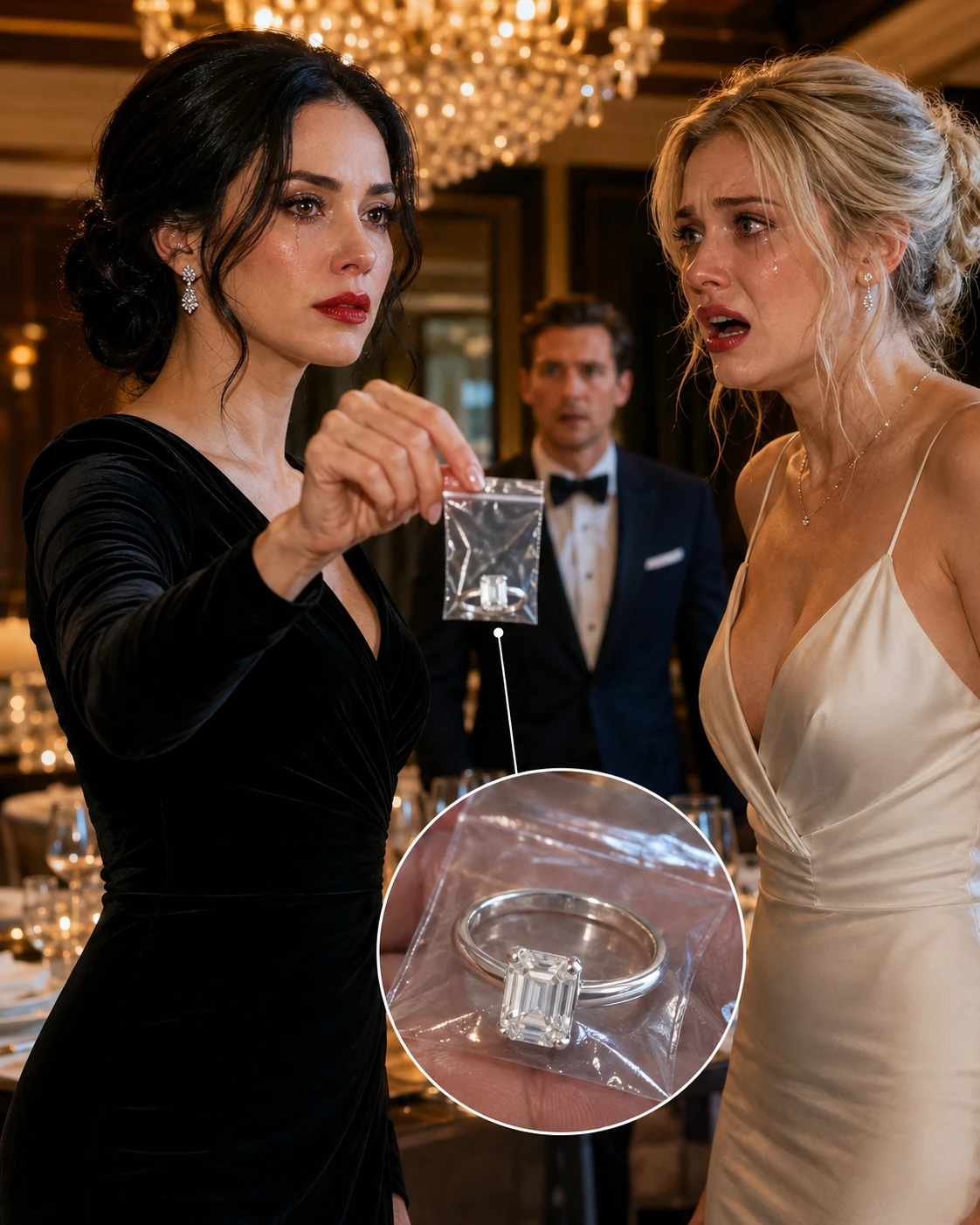
In it, a reporter shouted, “Mrs. Caldwell, do you have any comment on the ring?”
I paused on the courthouse steps.
Snow drifted around me.
Nina stood to my right.
Mara to my left.
For a moment, I thought of my mother, her blue hydrangea dish, her quiet warnings, her trust documents tucked away like love letters disguised as law.
Then I looked into the cameras.
“She listed my ring,” I said. “I purchased her confession.”
Conclusion: A New Beginning That Was Actually Mine
Spring came slowly to Greenwich that year.
The snow melted from the hedges. The rose garden behind the house began to breathe again. The rooms Grant had filled with his appetite became quiet, then spacious, then mine.
I changed very little at first.
People expected me to burn his suits, smash the decanters, sell the art.
I did not.
Destruction had already had its season.
I chose restoration.
I turned Grant’s wine room into a small reading lounge with dark green walls, brass lamps, and shelves for the books my mother loved. I donated most of the unopened bottles to charity auctions and kept one ridiculous Bordeaux because Mara said every survival story deserved at least one overpriced punchline.
The foundation was renamed.
Not Caldwell.
Not even Hart-Caldwell.
The Elise Hart Literacy Trust, after my mother.
Margaret Ellison became chair.
Mara joined the financial oversight committee and frightened everyone into excellence.
Nina sent flowers with a card that read: “Documentation is a love language.”
As for Sloane, she disappeared from New York for a while.
Months later, I received a handwritten letter from Nashville. She did not ask forgiveness. I respected that. She wrote that she had taken a job with a small nonprofit, that she was learning to live without mirrors, and that she hoped someday she would become the kind of woman who never confused being chosen with being valued.
I folded the letter and placed it in a drawer.
Not because we were friends.
Because some women are not villains forever.
Some are warnings that survive themselves.
Grant’s story ended less gracefully.
There were investigations. Settlements. Charges still moving through the slow machinery of consequence. His face, once polished across charity magazines and investor decks, became a thumbnail beside words like alleged and scheme.
I did not follow every update.
Freedom, I discovered, is not needing to watch someone fall after you have already stepped away from the ledge.
By June, the house smelled like peonies and lemon oil.
I hosted a dinner for twelve women in the garden. Widows, divorcees, founders, artists, mothers, daughters, women who had lost fortunes, women who had built them, women who had been called cold because they refused to remain convenient.
We ate beneath strings of warm lights.
We drank champagne from crystal coupes.
We laughed too loudly for Greenwich.
Near midnight, Mara found me standing alone by the rose arbor.
“You okay?” she asked.
I looked at the house glowing behind us.
For years, I had mistaken endurance for love. I had believed keeping composure meant swallowing pain prettily. I had stood in ballrooms while people watched my marriage collapse and called my silence grace.
But grace was not silence.
Grace was choosing not to become what hurt you.
I touched my bare ring finger.
The skin there had finally stopped feeling haunted.
“I’m happy,” I said, surprised by how simple it sounded.
Mara smiled. “Good. It looks expensive on you.”
I laughed.
Above us, the sky was clear and dark, scattered with stars sharp as diamonds.
Not the kind you wear.
The kind no one can steal.
And when people ask me how I survived betrayal, humiliation, theft, and the kind of love that arrives dressed as ownership, I tell them the truth.
I did not scream.
I did not beg.
I did not chase.
I documented.
I waited.
And when the woman he chose tried to sell the symbol of my marriage as “barely used,” I let her.
Because she thought she was selling my ending.
She was handing me my beginning.
She listed my ring. I purchased her confession.