
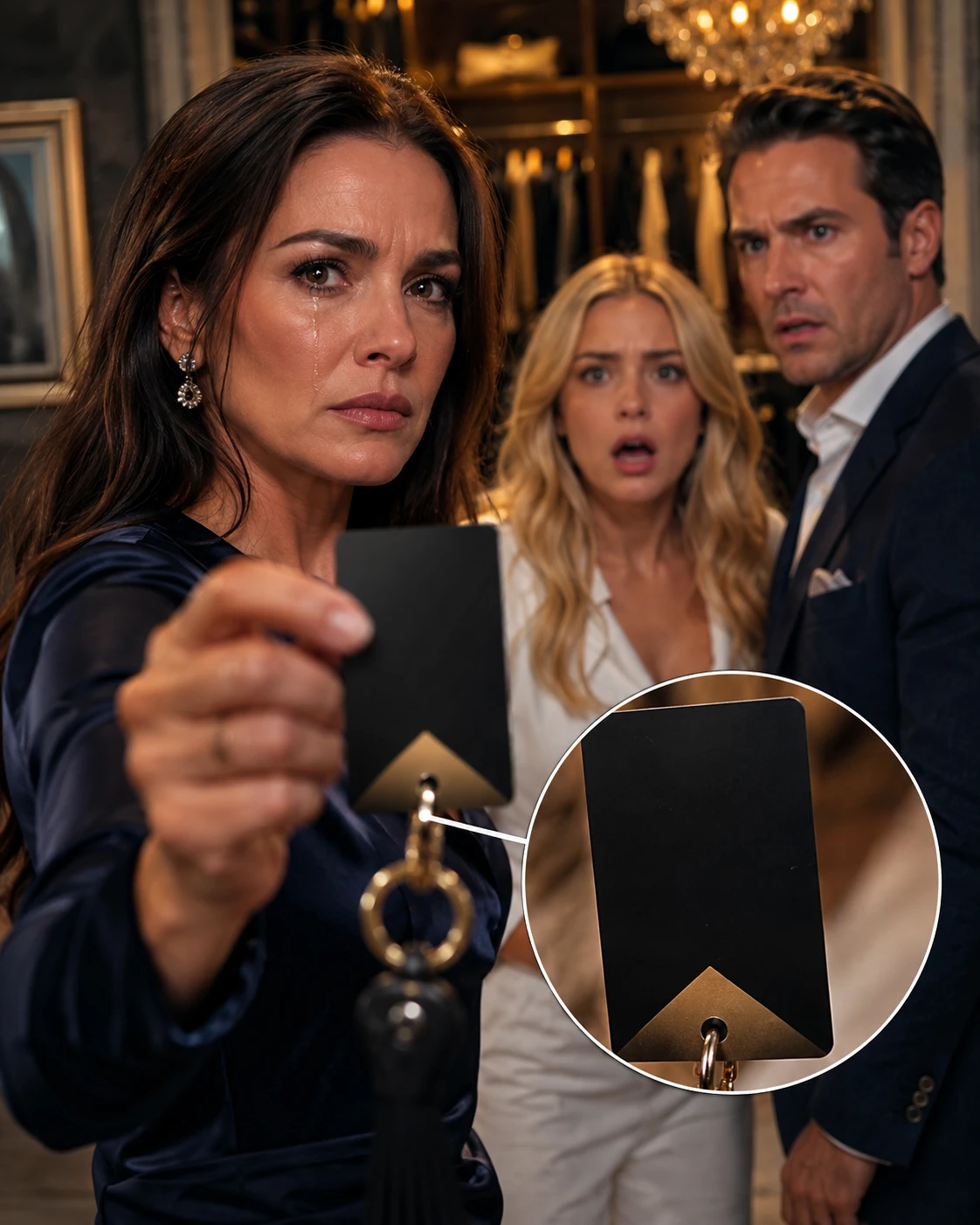
His mistress posted a TikTok in my closet saying, “Old wife aesthetic.”
She held up my gowns like they were dead birds. She laughed at my shoes, slipped her manicured fingers through my silk scarves, and called my life “expired luxury” while standing barefoot on a handwoven rug I had shipped from Santa Fe after my mother died.
Behind her, my wedding portrait hung in a silver frame.
My husband commented with a heart emoji.
Not a private apology. Not a panicked text. Not even a weak little lie.
A heart.
So I did what a woman with fourteen years of marriage, three homes, two lawyers on speed dial, and a lifetime of being underestimated does.
I saved the video.
Every comment.
Every timestamp.
Every reflection in the mirror.
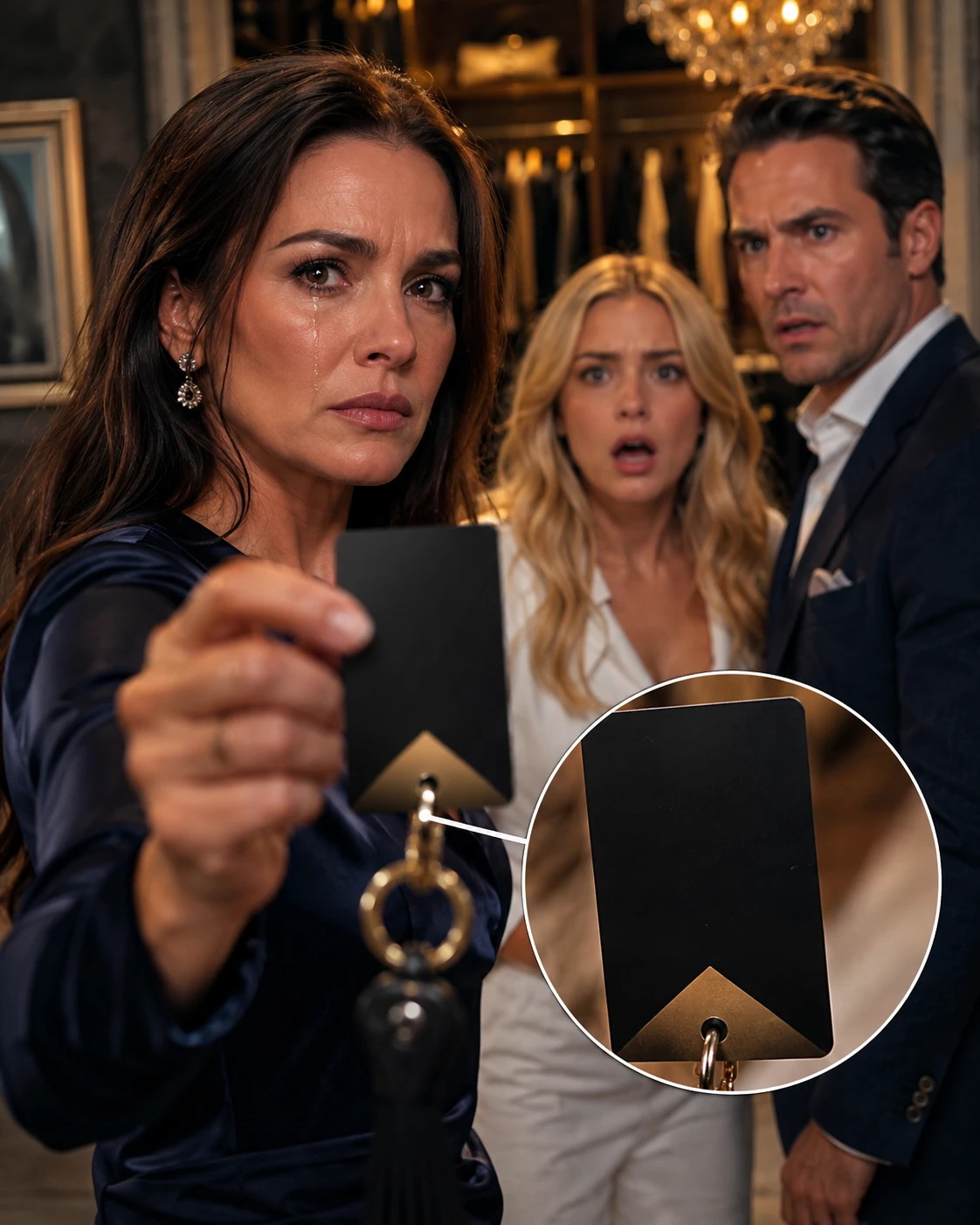
Then I zoomed in and saw something Grant didn’t know he had left behind.
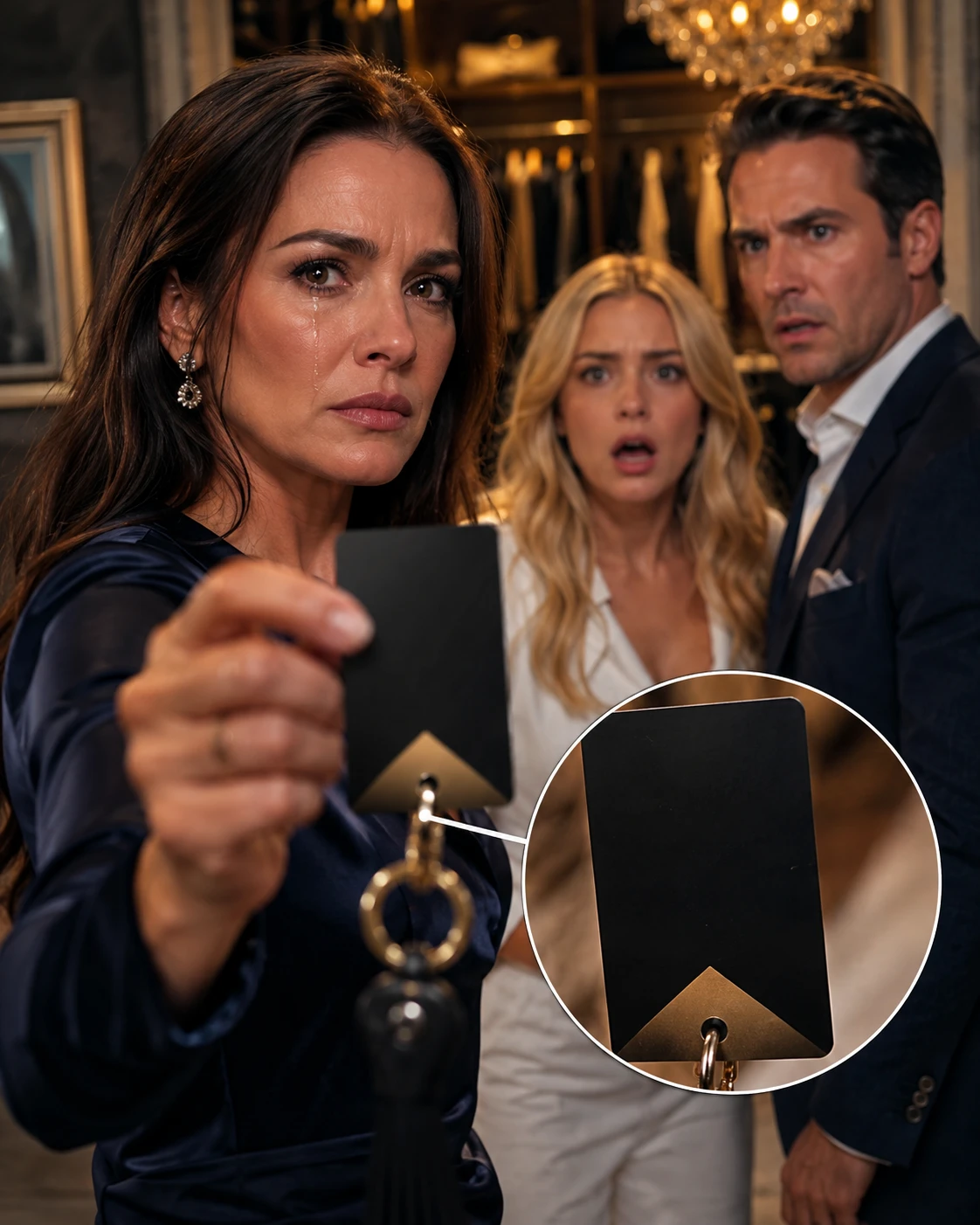
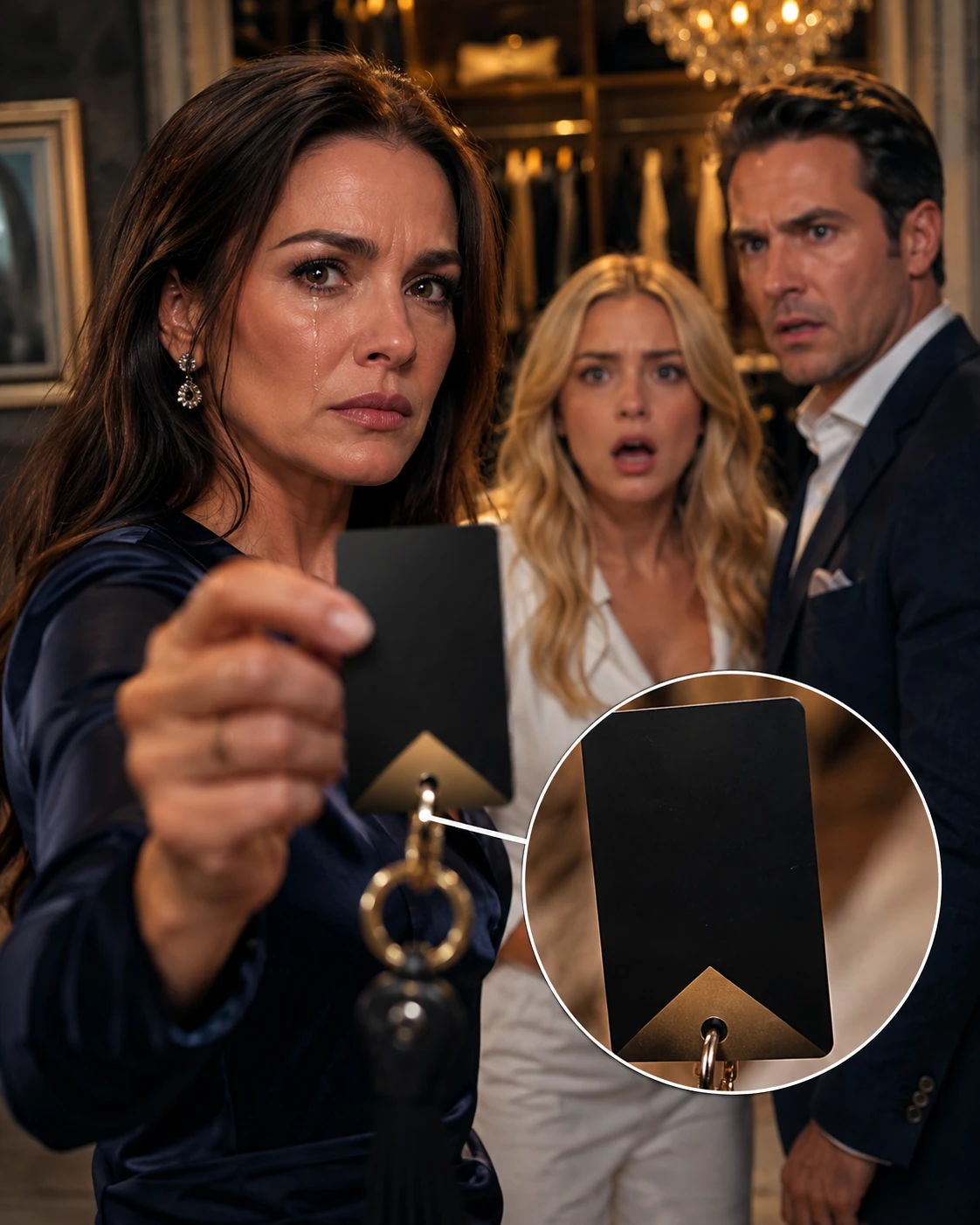
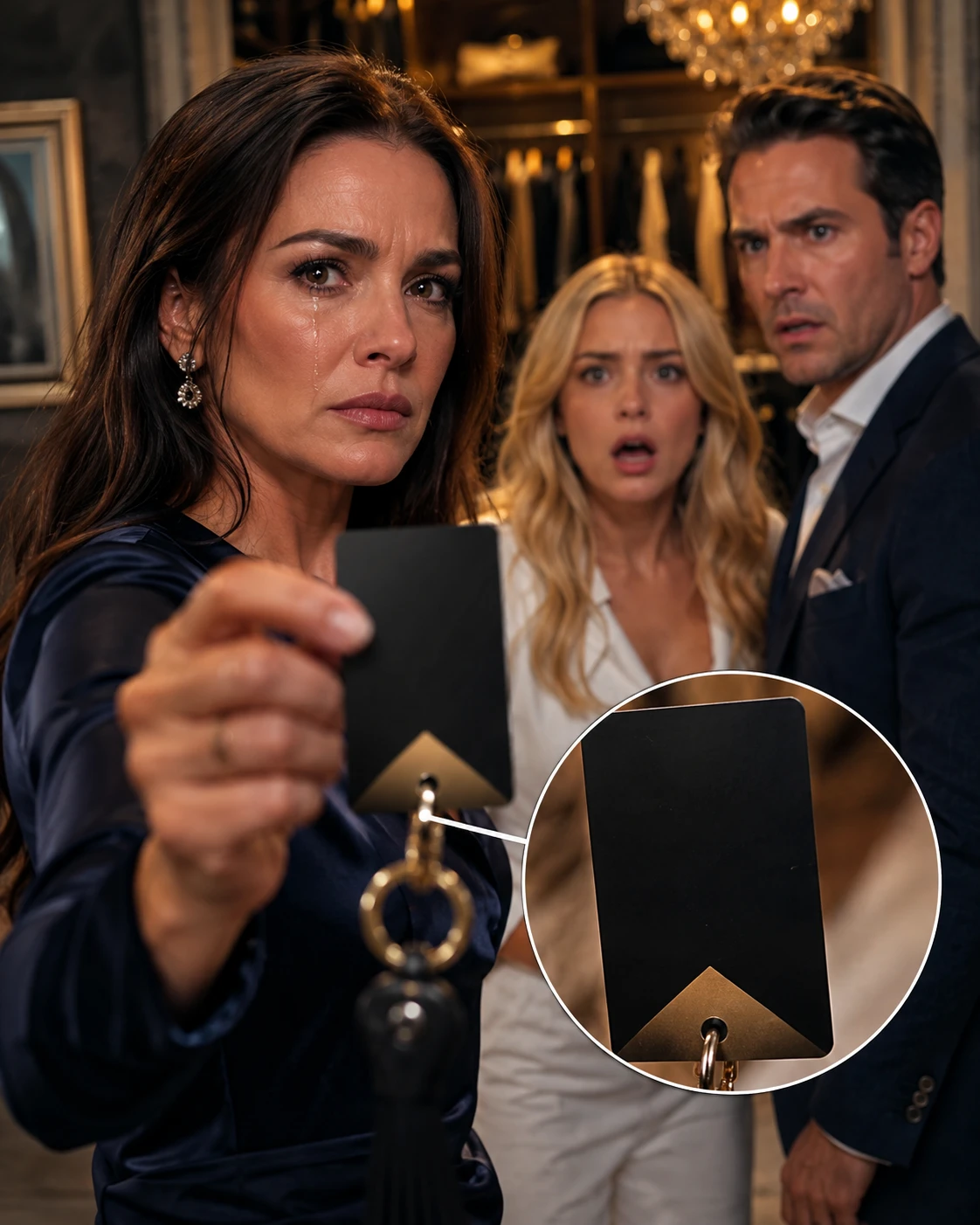
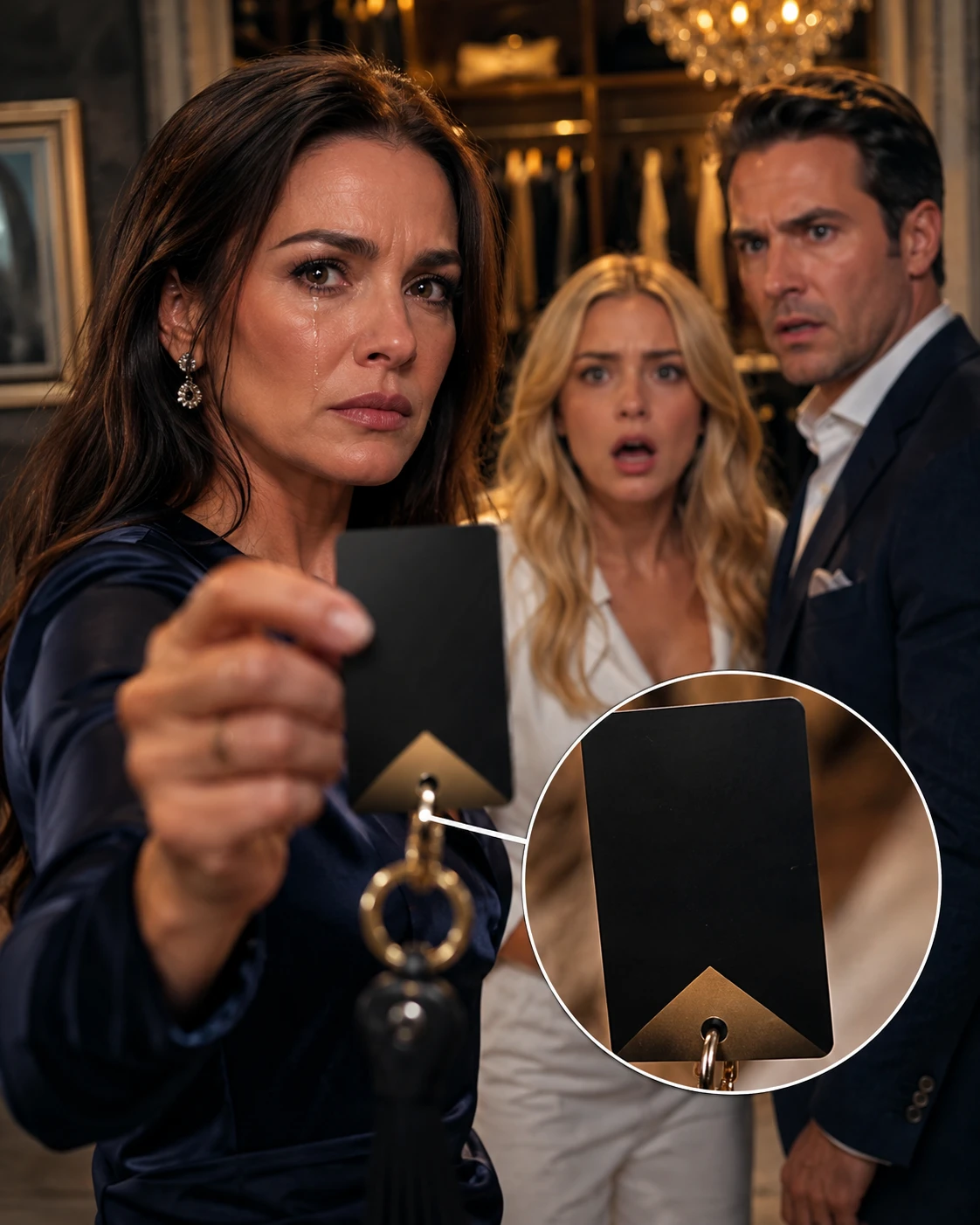
A key card.
A hotel logo.
And the beginning of the end.
CHAPTER 1 — THE WOMAN IN MY MIRROR WAS NOT THE ONE THEY MOCKED
The closet was never just a closet.
It was a white marble chamber off the primary bedroom of our Fifth Avenue penthouse, lined with smoked-glass cabinets, brass rails, and a chandelier that looked like frozen champagne. Vogue once photographed it for a profile titled “Quiet Power: Inside Evelyn Voss’s Manhattan.” Grant hated that article because his name appeared only twice.
My name was Evelyn Voss.
Before Grant, I was Evelyn Hart, daughter of a New Hampshire judge and a woman who taught me that elegance was not the absence of rage. It was rage with posture.
Grant Voss liked to tell people he built our life.
He did not.
He built a public face. I built the foundation under it.
I introduced him to investors when his first hospitality fund was a PowerPoint and a prayer. I hosted dinners where men in hand-stitched suits leaned across candlelight and whispered commitments over my coq au vin. I sat through construction delays, licensing disputes, tax audits, and the kind of quiet financial storms that don’t make headlines until someone goes to prison.
For years, Grant called me his “good luck charm.”
That was a man’s way of admitting he had never understood the machinery.
On the morning the TikTok appeared, I was in Newport for a museum board weekend. The fog was lifting off the harbor, the kind of silver morning that makes wealthy women forgive themselves for everything.
My phone began vibrating like a trapped insect.
First came my sister, Claire.
Then my assistant, Penelope.
Then a message from a number I didn’t recognize.
“Mrs. Voss, I’m so sorry. You need to see this.”
The link opened to a girl in my closet.
Not a girl, technically. Savannah Cole was twenty-eight, old enough to know cruelty, young enough to mistake attention for power. She had the glossy confidence of someone who had never been truly denied anything. Blonde extensions. Small waist. Big eyes sharpened by filler and ambition. A voice made for selling skin serum and ruining marriages.
She stood beneath my chandelier wearing Grant’s white dress shirt.
My husband’s shirt.
“My followers keep asking what it’s like dating a man whose wife lives in a museum,” she said, pouting at the camera. “So welcome to the closet of expired luxury.”
She pulled out my Oscar de la Renta gown, the ivory one I wore to the Met benefit after Grant’s father died. “This is giving tragic swan.”
She stepped into my Louboutins. “I mean, I love vintage, but this is basically estate sale trauma.”
She lifted my black cashmere coat, pressed it against herself, and laughed. “Old wife aesthetic.”
The comments were worse.
OMG SAVAGE.
She’s so iconic.
Imagine being rich and still getting replaced.
Grant really upgraded.
And there, beneath a comment that said “Mr. Voss chose youth,” was my husband’s verified account.
A red heart.
I sat in the Newport guesthouse kitchen, steam rising from untouched coffee, and watched my life become entertainment.
Penelope called again.
“Evelyn,” she said, voice shaking, “we’re having it reported. I can get it taken down.”
“No.”
Silence.
“Mrs. Voss?”
“Screen-record everything. Download it. Save the comment thread. Get the URL, timestamp, account ID, any reposts, stitches, duets. Put it all in a secure folder and send it to Maya.”
Maya Rhodes was my attorney. She was five foot two, dressed like a saint, smiled like a scalpel, and had once made a billionaire cry during mediation without raising her voice.
“Should I call Mr. Voss?” Penelope asked.
I looked out at the harbor. A sailboat cut through fog like a secret.
“No,” I said. “Let him enjoy his heart emoji.”
Grant called twelve minutes later.
I let it ring.
He called again.
Then a text.
Evelyn, don’t overreact.
There it was. The marital anthem of guilty men.
Don’t overreact.
Not I’m sorry.
Not I have betrayed you.
Not She had no right to be there.
Don’t overreact.
I typed one word.
Seen.
Then I turned off my phone, finished my coffee, and went upstairs to dress for the museum luncheon.
I wore navy silk, pearl earrings, and a red lipstick Grant once said made me look “dangerous at brunch.”
At the luncheon, I smiled through speeches about preservation while my marriage burned in a thousand comment sections.
Across the room, Claire watched me with worried eyes. My sister had always been softer than me, which meant she was often the first to see where I was bleeding.
She caught me near the French doors.
“Evie,” she whispered, “what are you going to do?”
I touched the stem of my champagne flute.
“Nothing loud.”
“That scares me more.”
“It should.”
Because the truth was, humiliation had a taste.
Metallic. Cold. Almost clean.
And beneath it, something older than heartbreak began to wake in me.
Not jealousy.
Not grief.
Recognition.
For fourteen years, I had lived beside a man who mistook my restraint for weakness. He thought because I did not shout, I did not notice. He thought because I wore diamonds, I was decorative. He thought because I loved him once, I would protect him forever.
Savannah had walked into my closet and made content.
Grant had given her access.
Together, they had made one fatal mistake.
They had forgotten I kept receipts.
CHAPTER 2 — THE HEART EMOJI WAS ADMISSIBLE
By Monday morning, the video had reached 3.2 million views.
By noon, Savannah was on a podcast laughing about “luxury dinosaurs.” By evening, a fashion account had made a side-by-side of her in my closet and me at a charity gala with the caption: “When the replacement tours the museum.”
Grant came home at seven carrying white roses.
White roses were his apology flowers. He had used them for missed anniversaries, embarrassing headlines, and one very public photograph in Miami with a woman he claimed was “a wellness consultant.”
I was in the library, reviewing a spreadsheet.
The library was my favorite room in the penthouse. Dark walnut shelves, green velvet chairs, a fireplace framed in black marble. Grant preferred glass and chrome. I preferred rooms that knew how to keep secrets.
He stopped in the doorway.
“Evelyn.”
I did not look up.
“Those are for you,” he said.
“I assumed they were for the girl in my closet.”
His jaw tightened. Grant was handsome in the expensive, slightly cruel way that aging men become when their faces still get them forgiven. Gray at the temples. Broad shoulders. A watch collection obscene enough to qualify as a mental illness.
“This is ridiculous,” he said. “Savannah was being stupid.”
“She was being stupid in my home.”
“She didn’t mean anything by it.”
“She wore your shirt.”
He exhaled, as if I were the difficult one.
“Listen to yourself. You’re acting like a teenager.”
I closed the spreadsheet and finally looked at him.
“No, Grant. A teenager records herself trespassing in another woman’s closet. A teenager comments with a heart emoji because he wants applause from children.”
His face darkened.
“You’re not going to make this ugly.”
I almost laughed.
Men always say that when they’ve already made it ugly and don’t want women to name it.
“You gave her access to the penthouse,” I said.
“She had my card.”
“Your card doesn’t open my closet wing.”
That stopped him.
The penthouse had biometric locks in certain areas after a burglary scare five years earlier. My closet, jewelry vault, and archive room required either my fingerprint, Penelope’s temporary security clearance, or an override from the building’s management system.
Grant looked away too quickly.
I felt the click of something inside me.
“What did you do?” I asked softly.
He set the roses on the desk.
“Evelyn, I’m warning you. Don’t start digging.”
There it was again.
Not remorse.
Fear disguised as authority.
I stood.
“I’m not starting.”
His eyes narrowed.
“I’m finishing.”
The next morning, I sat in Maya Rhodes’s office overlooking Bryant Park while she watched Savannah’s video on a large monitor.
Maya did not react when Savannah called my gowns “emotional support curtains.”
She did not react when Savannah opened my jewelry drawer and squealed at a diamond bracelet Grant had given me after our first resort deal closed.
But when Grant’s comment appeared, Maya paused the video.
“Well,” she said. “That was generous of him.”
I sipped tea.
“Can we use it?”
“Use it?” Maya smiled. “Evelyn, this is practically gift-wrapped.”
She began ticking points off with a gold pen.
“Unauthorized entry into a private residence. Unauthorized filming inside a private residence. Possible access breach. Public humiliation connected to marital misconduct. Potential harassment if we establish intent. Potential conversion or theft if any property was removed. And if Grant facilitated access while concealing it during asset negotiations or business dealings, then we open a separate door.”
“What door?”
“The one men build their own gallows behind.”
Maya had already contacted the building’s security contractor. She had requested entry logs, elevator footage, digital lock records, and visitor sign-ins. She had also filed a preservation letter to prevent deletion of relevant data.
“Grant will fight,” I said.
“Grant will posture,” she corrected. “Then he will lie. Then we will compare the lie to documents.”
She tapped the screen, zooming in on the mirror behind Savannah.
I leaned forward.
There, reflected between my gowns, was a black key card on the vanity.
Gold lettering.
THE LARK — PALM BEACH.
Maya’s eyes flicked to mine.
“Do you own a property in Palm Beach?”
“No.”
“Does Grant?”
“Not officially.”
Maya’s smile vanished.
“Good. Then we begin there.”
The Lark was not a hotel. Not exactly.
It was a members-only oceanfront residence club pretending to be discreet while charging enough per month to make discretion profitable. Grant had once considered acquiring it through Voss Hospitality, then claimed the deal fell apart.
Apparently, the deal had not fallen far.
Maya’s investigator traced the key card to a suite leased under an LLC called Blue Heron Management.
Blue Heron was owned by another LLC.
That LLC was owned by a Delaware trust.
The trust listed a registered agent who had once worked for Grant’s private banker.
By Thursday, Maya had found three more entities.
By Friday, we had a map.
Palm Beach suite. Aspen chalet. A controlling interest in two wine bars in Nashville. A storage unit in New Jersey. A brokerage account Grant had failed to disclose in a refinancing affidavit. A vintage Ferrari insured under a corporate policy but garaged at an address I had never heard of.
Hidden assets.
Not just adultery.
Fraud.
When Maya showed me the preliminary report, I felt no triumph. Not yet.
Only a deep, strange stillness.
I thought of all the nights Grant came home smelling of expensive smoke and someone else’s perfume, kissing my forehead like I was furniture. I thought of the dinners where he squeezed my knee under the table while negotiating deals built on introductions I had made. I thought of the way he had begun calling me “dramatic” whenever I asked direct questions.
A woman can be married for years before she realizes she has not been loved.
She has been used as architecture.
That evening, Savannah posted again.
This time, she sat in a car outside what looked like The Mark Hotel, wearing sunglasses too large for her face.
“Some people are mad because they got called out,” she said. “But like… if you don’t want your closet reviewed, maybe don’t be boring.”
Grant liked the post.
Not a heart this time.
A fire emoji.
Maya sent me the screenshot with three words.
“Please thank him.”
CHAPTER 3 — THE PARTY WHERE EVERYONE WATCHED ME BLEED
Grant’s annual winter gala took place at The Plaza.
He had insisted we attend together.
“Optics,” he said over breakfast, as though optics were a god we both worshipped.
I looked at him across the long marble table, where sunlight touched the silver coffee service and made everything look clean.
“You want me to stand beside you?”
“I want you to behave like an adult.”
“How inconvenient for you.”
His mouth flattened.
“Half the investors will be there. We cannot look unstable.”
“We?”
He leaned closer.
“Evelyn, I know you’re upset. But you enjoy this life too. Don’t pretend otherwise.”
There it was.
The threat beneath the silk.
Behave, or lose the life.
What Grant still did not understand was that luxury had never been my cage. It was camouflage. A woman in couture is often presumed harmless because men confuse beauty with surrender.
I wore black to the gala.
Not widow black. Weapon black.
A column gown with a high neck, bare back, and no jewelry except my wedding ring. Let people look for the crack. Let them find polish instead.
The Plaza ballroom glittered with chandeliers, champagne towers, white orchids, and people who knew everything but said nothing. New York society is not discreet because it is kind. It is discreet because everyone is holding a knife and a secret.
Grant placed his hand on my lower back as cameras flashed.
“Smile,” he murmured.
I smiled.
The kind of smile that has already chosen a casket.
For the first hour, people approached us with careful faces.
“Evelyn, you look stunning.”
“Grant, wonderful turnout.”
“Such a silly internet thing, isn’t it?”
Women squeezed my hand too long. Men avoided my eyes. A few young influencers across the room whispered and glanced at me like I was an exhibit at the Museum of Public Betrayal.
Then the room shifted.
Savannah had arrived.
She wore silver.
Of course she did.
A liquid dress cut nearly to the waist, diamonds at her throat, Grant’s hand briefly touching her elbow as she entered through a side door. Not long enough for the cameras. Long enough for me.
She looked at me and smiled.
Not nervously.
Victoriously.
Grant came to my side ten minutes later smelling like her perfume.
“Don’t make a scene,” he whispered.
I took a sip of champagne.
“I never do.”
At nine-thirty, he walked to the stage for his speech. Behind him, the Voss Foundation logo glowed in gold. The foundation had been my idea, born after my mother’s cancer treatment. It funded housing for women leaving abusive marriages. Grant liked the photo opportunities.
He spoke about dignity.
About second chances.
About protecting women’s futures.
The irony was so thick I could have cut it with a butter knife.
Halfway through his speech, Savannah began filming.
She stood near the bar, phone angled toward me, lips curved. I knew the look. She was going live.
My phone buzzed.
Penelope.
“She’s streaming. Comments are disgusting. Do you want us to report?”
I glanced at Grant onstage, his voice smooth as bourbon.
“No.”
Savannah zoomed in on my face.
Later, the internet would say I looked calm.
They were wrong.
I looked disciplined.
There is a difference.
After the applause, Grant approached me with two board members. Savannah drifted closer, still filming low.
“Evelyn,” one of the men said, “remarkable work tonight.”
“Thank you, Arthur.”
Savannah laughed softly.
I turned to her.
The ballroom seemed to hush around us. Not silent. Never silent. But alert.
Savannah tilted her head.
“I just wanted to say,” she began, voice sugary, “you have amazing taste. Seriously. Your closet was like stepping into history.”
Grant’s face went pale.
I looked at her for one long second.
Then I smiled.
“How kind. And how brave of you to mention trespassing in a room full of witnesses.”
Her smile faltered.
A few nearby guests turned.
Grant gripped my arm.
“Evelyn.”
I looked down at his hand.
“Remove it.”
He did.
Savannah gave a small laugh, trying to recover.
“Everyone knows it was a joke.”
“No,” I said. “Everyone saw evidence.”
That was the first crack in her confidence.
But I did not raise my voice. I did not accuse. I did not cry.
I simply opened my clutch, removed a folded card, and handed it to Grant.
He stared at it.
“What is this?”
“A gift.”
His eyes scanned the paper.
Then the blood drained from his face.
It was a notice. Not the full lawsuit. Not yet. Just enough.
A preservation demand naming Grant Voss, Savannah Cole, Blue Heron Management, and all related entities.
Maya had timed service with surgical elegance. Copies were being delivered to Grant’s office, Savannah’s apartment, his private banker, and the registered agent in Delaware at the exact moment he held that card under chandelier light.
Grant looked at me.
For the first time in years, he saw me.
Not the wife.
Not the ornament.
Not the woman he could quiet with flowers.
Me.
“Evelyn,” he said, barely audible. “What have you done?”
I leaned close enough that only he could hear.
“I learned from you.”
His phone began buzzing. Then buzzing again. Then again.
Across the ballroom, Savannah’s phone lit up too. Her live stream comments exploded.
Wait what notice?
Did she say trespassing?
Blue Heron??
OMG this is real.
Mrs. Voss came with paperwork.
Savannah stopped filming.
Too late.
The clip was already being downloaded, reposted, stitched, captioned, remixed.
By midnight, the internet had a new favorite woman.
Not Savannah.
Me.
CHAPTER 4 — EVERY LOCK HAS A MEMORY
Grant moved out two days later.
Not because he wanted to. Because Maya obtained a temporary order restricting unauthorized access to my private areas of the penthouse while the investigation proceeded. Grant could access common marital property. He could not access my closet, office, jewelry vault, or archive room.
The phrasing delighted me.
My closet had become legally protected territory.
Savannah, meanwhile, tried to pivot.
Her apology video appeared on a Tuesday morning.
She wore a beige sweater and no makeup, which was how influencers signaled sincerity after monetized cruelty.
“I never meant to hurt anyone,” she said, eyes wet but not red. “I was invited there. I believed it was okay.”
Maya paused the video in her office and sighed.
“Never let a liar speak this much.”
Because Savannah did not stop.
She said Grant told her the penthouse was “basically his.” She said he gave her the access code. She said he told her I knew about their relationship and was “fine with it because the marriage was over.”
Grant’s attorneys sent a cease-and-desist within hours.
Savannah’s attorneys responded with screenshots.
The betrayal began eating itself.
That is the beautiful thing about weak alliances. They are built from appetite, not loyalty. The minute consequences arrive, everyone starts looking for someone else to feed to the fire.
Maya filed the divorce petition in New York County Supreme Court with claims tied to financial misconduct, dissipation of marital assets, hidden property interests, and reputational harm. She filed a separate civil action regarding unauthorized entry, recording, and publication of private spaces.
The press found the filings by lunch.
By dinner, the headline was everywhere.
VOSS BILLIONAIRE DIVORCE TURNS ON VIRAL CLOSET VIDEO.
Grant hated public embarrassment. He believed scandal was for people with poor tailoring.
He called me from a blocked number that night.
I answered only because Maya was listening.
“Evelyn,” he said, voice ragged. “You’re destroying everything.”
“No. I’m documenting what you destroyed.”
“You think you’re innocent? You think you didn’t enjoy the money?”
“I enjoyed the money I helped create.”
He laughed bitterly.
“You were never involved in the real business.”
I looked at Maya. She raised an eyebrow.
“Say that again,” I said.
“The dinners, the charity nonsense, the pretty rooms—that’s not business. That’s decoration.”
There it was.
Fourteen years reduced to floral arrangements.
Maya scribbled a note.
I felt something in me loosen.
Not break. Release.
“Thank you,” I said.
“For what?”
“For finally speaking clearly.”
I hung up.
The next week was discovery.
If marriage is intimacy, divorce is archaeology.
People dig.
They find the bones.
Grant’s bones were everywhere.
In emails to his banker describing “E’s optics value.” In texts to Savannah promising her the Palm Beach suite after “the transition.” In wire transfers marked as consulting fees to a shell company that had no employees. In insurance schedules. In private aviation logs. In the Aspen property taxes paid from a Voss Hospitality subsidiary during a year Grant had sworn under penalty of perjury that no such personal benefit existed.
But the closet gave us the key.
The security company produced access logs showing Grant had requested a temporary override for “styling staff” on the afternoon Savannah filmed. He used my assistant’s name without authorization.
Penelope cried when Maya told her.
I hugged her.
“Don’t cry,” I said. “Your name just became evidence.”
The building footage showed Savannah entering with two garment bags, a ring light, and Grant’s private security escort. It showed her leaving with one of my vintage Hermès scarves around her neck.
A small thing.
A $4,800 thing.
But in court, small things matter because they prove contempt.
Savannah’s attorney offered to return it.
Maya declined.
“We prefer it logged as conversion.”
I began to sleep again.
Not well. Not peacefully. But deeply enough that I woke without reaching for the ghost of a man beside me.
The public narrative shifted with delicious speed. First I had been the humiliated wife. Then the elegant victim. Then the avenging queen. Then, after someone leaked Grant’s “decoration” comment, the internet gave me a new title.
Mrs. Receipts.
Women sent me messages by the thousands.
He did this to me too.
I wish I had saved the texts.
Thank you for not collapsing.
Thank you for making paperwork look powerful.
I read them late at night in the library, wrapped in a robe, with the city glittering beyond the windows like a drawer of knives.
One message came from a woman named Lena in Ohio.
“My husband’s girlfriend posted from my kitchen. I thought I was crazy for saving it. I’m calling a lawyer tomorrow.”
That one made me cry.
Not because of Grant.
Because humiliation is lonely until it becomes evidence.
CHAPTER 5 — THE FINAL TWIST WORE PEARLS
The settlement conference took place in a private room on the forty-second floor of a Midtown law firm where the coffee was excellent and the art was aggressively neutral.
Grant arrived with three attorneys, a crisis manager, and the expression of a man who had recently discovered consequences.
He looked thinner. Angrier. Less polished. Scandal had a way of making expensive men look rented.
Savannah did not attend. She had signed an affidavit the night before confirming Grant provided access, encouraged the closet video, and told her my property would soon be “hers to enjoy.”
Her betrayal of him was complete.
His betrayal of her had been faster.
Two weeks earlier, Grant’s team had tried to paint Savannah as unstable, opportunistic, and solely responsible for the public humiliation. Savannah responded by producing audio.
In it, Grant laughed while she rehearsed lines for the TikTok.
Say old wife aesthetic, he told her. That’ll sting.
That recording changed everything.
Not legally, perhaps. But atmospherically. Judges are human. Mediators are human. Investors are human. And the public is ravenous for one clear villain.
Grant had volunteered.
Maya placed a thick binder on the table.
Grant’s lead attorney, a silver-haired man named Bennett Cole, opened with a speech about privacy, family dignity, and the mutual benefit of avoiding prolonged litigation.
Maya let him finish.
Then she said, “My client agrees dignity is valuable. That is why Mr. Voss will pay for stealing hers.”
Grant stared at me.
I looked back.
There was a time when I knew every shade of his face. The boyish charm when he wanted something. The injured pride when challenged. The warm softness after wine in the early years, when I still believed ambition and tenderness could live in the same man.
That man was gone.
Or perhaps he had never existed.
Perhaps I had been in love with lighting.
Bennett slid a proposal across the table.
Maya read it.
She laughed once.
Not loudly.
Enough.
“No,” she said.
Bennett stiffened. “It’s a generous offer.”
“It’s an insult with commas.”
Grant leaned forward.
“What do you want, Evelyn?”
I folded my hands.
“The disclosed marital share. Full accounting of the hidden entities. Transfer of the penthouse to me. Liquidation or buyout of undisclosed assets at current valuation. Public apology. Foundation control transferred to my board. Payment of my legal fees. Civil damages for the unauthorized entry and publication. And Savannah’s content removed with no further monetization.”
Grant’s mouth twisted.
“You want everything.”
“No,” I said. “I want what you thought I wouldn’t find.”
He scoffed.
“You think the judge will give you that?”
Maya opened the binder.
“Let’s discuss the judge.”
Grant went still.
Maya removed a document from a clear sleeve and placed it in front of him.
It was not from Blue Heron.
Not from Palm Beach.
Not from Aspen.
It was older.
Grant looked at it.
Then at me.
His voice changed. “Where did you get this?”
I felt the room sharpen.
Here was the final twist. The one even Grant had not seen coming. The one that had been waiting quietly for fourteen years beneath all his arrogance.
When Grant and I married, his first fund was drowning. Banks were circling. Vendors were unpaid. His father’s name had opened doors, but not wallets.
I had used my inheritance to stabilize his first acquisition.
Not as a gift.
Never as a gift.
My mother had insisted on paperwork.
At twenty-nine, newly married and stupidly in love, I had signed a private capital agreement through a family trust called Hartwell Preservation. It gave my trust a silent equity position in the original Voss Hospitality asset pool if Grant defaulted on repayment or materially misrepresented ownership structure in future refinancing.
Grant repaid the first note.
He did not read the clawback clause.
Men like Grant read women. They rarely read contracts women bring to the table.
For years, the clause slept.
Then Grant hid assets tied to the original hospitality pool.
Maya found the trigger.
The hidden Palm Beach interest was not merely marital property.
It touched the original asset pool.
Which meant Hartwell Preservation had a claim.
Not only against Grant personally.
Against the empire he thought was his.
Maya’s voice was calm.
“Under the 2012 capital agreement and subsequent refinancing certifications, Mr. Voss’s failure to disclose related entities activates reversion rights and an equity adjustment in favor of Hartwell Preservation Trust.”
Bennett went pale.
Grant whispered, “That agreement expired.”
“No,” Maya said. “The repayment schedule ended. The representations survived.”
I watched comprehension crawl across Grant’s face like frost.
The penthouse. The resorts. The management fees. The hidden entities. The foundation optics. The empire he had paraded through society as proof of his genius had been built, in part, on a woman’s money and a contract he dismissed because he thought love made me careless.
He looked at me then with something close to hatred.
But beneath it was fear.
At last.
“You planned this,” he said.
“No,” I answered. “My mother did.”
For the first time in the meeting, my throat tightened.
My mother, Eleanor Hart, had sat beside me at our kitchen table in Portsmouth before the wedding and tapped the contract with one elegant finger.
“Love him,” she told me. “But never become collateral.”
I had rolled my eyes then.
I wanted romance, not safeguards.
She kissed my forehead and said, “Romance is lovelier when a woman can afford to leave.”
She had been dead seven years.
Still protecting me.
Grant shoved back his chair.
“This is theft.”
Maya closed the binder.
“No, Mr. Voss. This is literacy.”
The settlement changed within forty-eight hours.
Grant transferred the penthouse. He agreed to a forensic accounting. He relinquished control of the foundation. He paid civil damages. He signed a public statement acknowledging Savannah had entered my private closet without my permission and that his actions contributed to the violation of my privacy.
It was not poetic.
Legal language rarely is.
But it was better than poetry.
It was enforceable.
Savannah deleted the videos, but the internet never forgets. She lost brand deals. Then she lost Grant. Then she posted a tearful video about “healing from narcissistic men” while sitting in an apartment with very white walls and no view.
I did not watch it.
Grant resigned from two boards. Voss Hospitality announced “strategic restructuring.” Hartwell Preservation quietly assumed a significant position in the company’s original assets.
The first resort we ever saved together, a weathered but beautiful property on the coast of Maine, became mine.
Not ours.
Mine.
CONCLUSION — THE HOUSE THAT FINALLY FELT LIKE HOME
In April, I drove to Maine alone.
The resort sat on a cliff above the Atlantic, all gray shingles, white trim, and salt-worn windows. My mother had loved that coastline. She said the ocean there did not flirt. It told the truth.
I stood on the terrace in a cream sweater and watched waves break against black rock.
For the first time in months, no one was filming me.
No one was commenting.
No one was measuring my pain against my age, my wardrobe, or my husband’s appetite.
I was simply a woman breathing cold sea air in a house that had survived storms.
Penelope came up the following week to help me convert one wing into a retreat for women rebuilding their lives after divorce, abuse, and financial control. The Voss Foundation, now under my board, funded the first year.
Claire visited with her children and filled the kitchen with noise. We ate lobster rolls from paper baskets and drank cheap beer from bottles because not every beautiful thing needed crystal.
One evening, Maya arrived wearing jeans, which felt more shocking than any scandal. She brought a bottle of champagne and a stack of documents.
“Final transfers,” she said, placing them on the table.
I signed where she pointed.
When it was done, she lifted her glass.
“To your mother.”
“To my mother,” I said.
“And to closets with better security.”
I laughed.
A real laugh.
The kind that begins in the ribs and surprises you on the way out.
Later, after everyone had gone to bed, I walked through the empty ballroom of the resort. Moonlight spilled across the floorboards. The old chandeliers swayed faintly in the ocean wind.
I thought about the girl I had been when I married Grant, full of faith and pearls and dangerous generosity. I did not hate her. That surprised me. For a while, I had wanted to. I had wanted to call her foolish, blind, soft.
But she had loved with an open hand.
That was not a crime.
The crime belonged to the person who mistook an open hand for an empty one.
My closet in New York was quieter now. The gowns had been cleaned. The shoes returned to their shelves. The stolen scarf was sealed in an evidence bag somewhere in Maya’s office, which felt like exactly the kind of retirement Hermès never advertised.
People still recognized me sometimes.
At airports. In restaurants. Outside the courthouse.
Women would lean close and whisper, “Mrs. Receipts,” like a blessing.
I always smiled.
Not because revenge healed everything. It didn’t. Revenge was a door, not a home. It got me out of the burning room, but I still had to learn how to sleep without smelling smoke.
Healing was slower.
It was coffee by the sea. It was signing my own name without flinching. It was turning a foundation from a photo opportunity into a lifeline. It was calling my sister for no reason. It was wearing the red lipstick again.
It was understanding that public humiliation does not end a woman.
Sometimes, it introduces her.
The last time I saw Grant, it was outside the courthouse. He was thinner, wearing a navy suit I had chosen for him years earlier. He looked at me as if searching for the wife who used to soften when he said her name.
She was not there.
Only I was.
“Evelyn,” he said, “was it worth it?”
I considered him for a moment.
The man. The empire. The lies. The girl in my closet holding up my life for strangers to laugh at.
Then I thought of the women arriving next month at the Maine house, carrying children and suitcases and secret bank statements. I thought of my mother’s contract. I thought of the way silence, when sharpened correctly, can cut through steel.
“Yes,” I said.
And I walked away without looking back.
Because Savannah had been right about one thing.
My old life was expired.
She just hadn’t understood that expired luxury can still be appraised, authenticated, and sold at auction for far more than anyone expected.
She mocked my closet. I cleaned out his accounts.