He paused.
“But I’ve also learned something about Corrine.”
My heart began pounding.
I had no idea what he was about to say.
“Corrine is one of the most hardworking people I’ve ever met. She spends her nights caring for premature babies, some of whom weigh less than two pounds. She comforts parents who are terrified their children might not survive. She works twelve-hour shifts and comes home exhausted, yet somehow finds the energy to raise a wonderful little boy.”
He glanced toward Beckett.
“And tonight, instead of being treated with respect, she and her son were seated beside the kitchen doors. Then her own mother stood in front of two hundred people and called her a failure.”
The ballroom became painfully quiet.
My mother grabbed Gideon’s arm.
“That’s enough. This is a private family matter.”
Gideon gently removed her hand.
“No, Lorraine. You made it public when you picked up that microphone.”
A few guests shifted uncomfortably.
Dad finally stood.
“Gideon, let’s not turn this into something bigger than it is. Your wedding day should be about you and Fallon.”
Gideon looked at him.
“That’s exactly what I thought when I walked into this room tonight.”
Then he lifted the papers.
“But there’s something else.”
He removed the first document and held it toward the camera.
“Three months ago, I began reviewing the financial records of the charitable foundation I direct. We work with hospitals, shelters, and organizations that support vulnerable children. During that review, I noticed several irregularities involving a donor account connected to the Whitmore family.”
My mother’s face changed.
I recognized that expression.
It wasn’t embarrassment.
It was fear.
Gideon continued.
“Initially, I thought it was a bookkeeping mistake. But after examining the records more closely, I discovered that several donations had been recorded under the name of a person who had never authorized them.”
Fallon slowly lowered herself into her chair.
“What are you talking about?” she asked.
Gideon turned toward her.
“Your mother told me that the family had donated $250,000 to our neonatal care assistance program over the past three years. She even showed me copies of the donation receipts.”
Mom immediately interrupted.
“That money was donated. I don’t know why you’re bringing this up tonight.”
Gideon looked down at his documents.
“Because the money never arrived.”
A murmur traveled through the ballroom.
He continued.
“The foundation received only $42,000. The remaining amount was listed as a series of donations that were supposedly made by a private account belonging to Corrine Whitmore.”
My stomach dropped.
“What?”
I hadn’t intended to speak aloud.
Gideon looked at me.
“Corrine, did you ever authorize your name to be used for charitable donations?”
I shook my head.
“Never.”
Mom’s voice became sharp.
“That’s ridiculous. She knows nothing about our family finances.”
Gideon held up another page.
“Then perhaps you can explain why your signature appears on these authorization forms.”
My mother went completely still.
Fallon looked between them.
“Mom?”
Gideon placed the document on the small table beside the microphone.
“These records indicate that someone used Corrine’s personal information to create donation authorizations. The foundation was also provided with a false contact address.”
I stared at the paper from across the room.
My name was there.
My old address was there.
But the signature wasn’t mine.
I had seen enough forged paperwork in my life to recognize that something was wrong.
“I never signed that,” I said.
Gideon nodded.
“I know.”
He reached into his jacket again and produced another envelope.
“Because the person who signed these documents made one very important mistake.”
He turned toward my mother.
“They used an address belonging to an apartment Corrine left seven years ago. An apartment she rented before Beckett was born.”
Mom looked toward Dad.
For the first time that evening, Dad wasn’t laughing.
He looked terrified.
Gideon placed the envelope beside the first document.
“I haven’t finished.”
Fallon began crying.
“Gideon, please. We can talk about this privately.”
He looked at her for a long moment.
“Fallon, did you know about this?”
She shook her head.
“No. I swear.”
I believed her.
At least, I wanted to.
Gideon took a deep breath.
“There’s one more reason I brought these documents tonight.”
He looked toward Beckett.
“And it has something to do with the little boy sitting beside his mother.”
I instinctively pulled my son closer.
“What does Beckett have to do with any of this?”
Gideon softened his voice.
“Nothing wrong. Quite the opposite.”
He turned back toward the guests.
“Last year, our foundation received an anonymous recommendation from a hospital administrator. It concerned a neonatal nurse who had repeatedly helped families facing overwhelming medical expenses. She had quietly organized support for parents who couldn’t afford transportation, food, or temporary accommodation while their babies received treatment.”
I blinked.
I remembered those families.
I remembered the nights I had stayed late to help parents understand hospital procedures.
I remembered bringing food for a mother who hadn’t eaten in two days.
But I had never expected anyone to notice.
Gideon continued.
“We investigated the recommendation. We discovered that this nurse had never asked for recognition, never requested financial assistance for herself, and never mentioned her circumstances to anyone.”
He looked directly at me.
“That nurse was Corrine.”
My eyes filled with tears.
I looked down at Beckett, who was now staring at Gideon with enormous eyes.
“Mommy, are you famous?” he whispered.
I almost laughed.
“No, sweetheart.”
Gideon smiled faintly.
“No, buddy. Your mommy is something much better than famous. She’s someone who makes a difference.”
Then he turned back toward the audience.
“Our foundation has been preparing a new program to help nurses and families facing financial hardship. We intended to announce it next month.”
He held up a final document.
“But after tonight, I think there’s no reason to wait.”
He looked at me.
“Corrine, if you are willing, I would like to offer you the position of director of our new neonatal family support initiative. It comes with a salary, full benefits, and the authority to develop programs that help families like the ones you’ve spent years caring for.”
The ballroom was completely silent.
I couldn’t speak.
I had spent years being told that I wasn’t good enough.
Now, in the middle of the wedding where my mother had publicly humiliated me, someone was offering me an opportunity because of the work I had done when nobody was watching.
But before I could respond, my mother stepped forward.
“This is outrageous!”
Her voice cracked through the ballroom.
“You cannot stand here and reward her for embarrassing this family!”
Gideon looked at her.
“Lorraine, I think you’ve misunderstood something.”
He placed the microphone closer to his mouth.
“I’m not rewarding Corrine. I’m recognizing her.”
Then he looked toward the head table.
“And I haven’t even reached the most serious document yet.”
My father slowly approached the stage.
“Gideon, please. Whatever you think you’ve found, there has to be an explanation.”
Gideon studied him.
“Then I suggest you give one.”
He unfolded the final document.
At the top was the name of a bank.
Below it was a transaction history.
And at the bottom was a name I recognized immediately.
My name.
My hands began trembling.
Because I had never opened an account at that bank.
Gideon looked at me.
“Corrine, I need to ask you something. Did your parents ever ask you to sign any financial documents when you were younger? Anything involving an inheritance, a trust, or money left by your grandparents?”
I frowned.
“My grandfather died when I was twenty-one. But I never received an inheritance. Mom told me there was nothing left after his medical expenses.”
My mother’s face turned white.
Gideon slowly nodded.
“That’s what I suspected.”
Then he turned toward the camera.
“The account I’m holding contains financial records showing that money intended for Corrine was transferred elsewhere over several years.”
A woman at the second table gasped.
My father closed his eyes.
And then Aunt Nadine stood up.
“Lorraine,” she said, her voice trembling. “Tell them the truth.”
Everyone turned toward her.
Mom looked as though she might collapse.
“Nadine, sit down.”
“No,” Aunt Nadine replied. “I’ve stayed quiet for too many years.”
She reached into her handbag and pulled out a small, worn envelope.
“I kept the original documents because I knew this day might come.”
Gideon looked at the envelope.
Then he looked at my mother.
“Is that what I think it is?”
Mom didn’t answer.
Aunt Nadine walked toward the stage.
And as she handed Gideon the envelope, she looked directly at me.
“Corrine, sweetheart, there’s something your grandfather wanted you to know before he died.”
My throat tightened.
“What?”
She took a shaky breath.
“Your grandfather didn’t leave you nothing.”
She paused.
“He left you something worth more than your parents’ entire estate.”
And when Gideon opened that envelope, my mother finally began to cry.
Aunt Nadine’s hands trembled as Gideon opened the envelope.
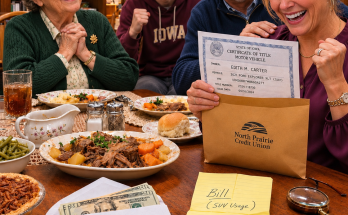
Inside were several old documents, a handwritten letter, and a photograph of my grandfather sitting on the porch of his summer home.
I hadn’t seen that photograph in years.
My grandfather, Arthur Whitmore, had been the only person in my childhood who made me feel that I mattered.
He used to call me his little lighthouse because, as he explained, I always seemed to find my way through difficult situations.
When I was young, he would take me to the harbor, buy me hot chocolate, and tell me stories about how he built his business from nothing.
He never treated Fallon differently from me.
He never measured our worth by our clothes, grades, or family connections.
When I was twenty-one, he died after a long illness.
I remembered standing beside his hospital bed, holding his hand while Mom and Dad discussed funeral arrangements in the corridor.
A few days after his funeral, Mom told me that Grandpa had left no meaningful inheritance.
She explained that his medical expenses had consumed most of his savings.
I believed her.
I had no reason not to.
Now, standing in a ballroom surrounded by two hundred people, I was about to discover that the story I had believed for twelve years was a lie.
Gideon carefully unfolded the first document.
It was a copy of my grandfather’s last will and testament.
He read the first paragraph silently.
Then he looked at me.
“Corrine, your grandfather established a trust in your name.”
I stared at him.
“What kind of trust?”
He glanced at the document.
“A family trust funded through several investments, commercial properties, and a portfolio of securities. According to the original paperwork, the trust was valued at approximately $1.8 million when it was established.”
I couldn’t breathe.
One million eight hundred thousand dollars.
I looked at my mother.
She was staring at the floor.
Gideon continued.
“The trust was intended to provide you with financial security, educational opportunities, and support for your future children. Your grandfather appointed your father as temporary administrator until you reached the age specified in the agreement.”
My father looked down.
“That’s enough,” he muttered.
But Aunt Nadine stepped forward.
“No, Richard. It isn’t enough.”
She turned toward me.
“Your grandfather knew how Lorraine treated you. He knew you were expected to take care of yourself while Fallon received everything. Before he died, he asked me to witness several conversations with his attorney.”
I felt tears gathering in my eyes.
“Why didn’t you tell me?”
Nadine’s face crumpled.
“Because your mother told me the trust had been legally dissolved. She said the money had been used to pay medical expenses and settle your grandfather’s debts.”
She swallowed.
“I believed her at first. But a few months later, I received a letter from your grandfather’s attorney. He had concerns about the administration of the trust. He asked me to keep copies of certain documents.”
She handed Gideon another paper.
“I kept them because something never felt right.”
My father suddenly stepped forward.
“This is a family matter. These documents have nothing to do with the wedding.”
Gideon looked at him.
“Richard, the documents concern financial transactions that may have involved misuse of entrusted funds. Whether you like it or not, that is no longer simply a family matter.”
Mom finally found her voice.
“Corrine, please. Don’t let these people destroy our family over money.”
I looked at her.
I had heard that sentence before.
Whenever I questioned why Fallon received more, I was accused of creating conflict.
Whenever I asked why I was treated differently, I was told not to destroy the family.
Whenever I needed help, I was reminded that family members shouldn’t keep score.
But somehow, the rules had never applied when they were taking from me.
“Mom,” I said quietly, “you called me a worthless failure in front of two hundred people. You laughed while your grandson asked why everyone hated his mother. And now you’re asking me not to destroy the family?”
She began crying.
“Corrine, I was upset. I didn’t mean it.”
I looked at Beckett.
He was sitting beside me, holding his little jacket in both hands.
“Mommy, are we in trouble?”
That question broke something inside me.
I knelt beside him.
“No, sweetheart. We’re not in trouble.”
“Did Grandma do something bad?”
I brushed his hair away from his forehead.
“Sometimes adults make choices they shouldn’t. But that’s not your responsibility.”
He nodded slowly.
Then he whispered something that made my eyes fill again.
“Can we go home now?”
I kissed his forehead.
“Yes, baby. We can.”
But Gideon wasn’t finished.
He placed the original documents on the table.
“Before anyone leaves, I think Corrine deserves to know the rest.”
He turned toward my father.
“Richard, would you like to explain the transfers?”
Dad said nothing.
Gideon opened a folder containing bank statements.
“The trust’s assets were gradually transferred into several accounts over the years. Some funds were used to purchase investment properties. Others were transferred into accounts connected to the Whitmore family.”
He turned another page.
“According to these records, approximately $620,000 was transferred into an account associated with Fallon.”
Fallon stood up.
“What?”
Her face was completely drained of color.
Gideon continued.
“Another $310,000 was used toward property renovations and personal expenses. There are also transactions involving an account belonging to your mother.”
Fallon looked at Mom.
“You told me Grandpa left everything to the family!”
Mom shook her head.
“Fallon, please.”
“You said the money for my apartment came from Dad’s investments!”
“Stop talking!”
Fallon flinched.
It was the first time I had ever seen my mother look genuinely afraid of losing control over her younger daughter.
Dad finally spoke.
“I handled the finances. Your grandfather trusted me. I made decisions based on what I thought was best for everyone.”
Gideon looked at him.
“Then why was Corrine never informed that the trust existed?”
Dad rubbed his forehead.
“Because she was young.”
“I was twenty-one,” I said.
He looked at me.
“You were struggling. You had no financial experience. We thought it would be better to manage things until you were settled.”
“Settled?” I repeated.
“By the time I was twenty-six, I was working nights at a hospital and living in a tiny apartment. I was pregnant, abandoned by my husband, and drowning in debt. I came to your house asking for somewhere to sleep.”
My voice began shaking.
“And Mom closed the door in my face.”
Dad looked away.
“You should have told me you were having that much trouble.”
I stared at him.
“I did tell you.”
He didn’t respond.
I remembered that night so clearly.
I remembered standing on their porch with a suitcase, one hand on my stomach, asking my own parents for a few weeks of shelter.
I remembered Mom saying that my situation would embarrass the family.
And I remembered Dad standing behind her without saying a word.
“You knew,” I whispered. “You both knew I had nothing. You knew I was struggling, and you still let me believe Grandpa had left me nothing.”
Mom started sobbing.
“Corrine, I was trying to protect the family.”
“From what?”
She didn’t answer.
Gideon turned toward Nadine.
“Is there anything else in the envelope?”
Aunt Nadine nodded.
“There is a letter.”
She looked at me.
“Your grandfather asked that you receive it personally.”
Gideon handed it to me.
My hands trembled as I opened the folded paper.
The handwriting was unmistakable.
It was Grandpa’s.
I read the first few lines, and the ballroom disappeared around me.
My dearest Corrine,
If you are reading this, I am no longer here to tell you how proud I am of you.
I know you sometimes feel that you have to work harder than everyone else just to be seen. I have watched you grow into a young woman who takes responsibility even when nobody offers to help.
I want you to understand something. Your worth has never depended on your parents’ approval, your sister’s achievements, or the amount of money in your bank account.
I established this trust because I want you to have choices. I want you to be able to leave a situation that makes you unhappy. I want you to raise your children without the fear that one unexpected bill will destroy everything you have built.
Most importantly, I want you to teach your children that kindness is not weakness and that money cannot make someone a better human being.
I love you, my little lighthouse.
Grandpa.
I couldn’t continue.
I pressed the letter against my chest and cried.
For twelve years, I had believed my grandfather had forgotten me.
But he hadn’t.
He had thought about my future.
He had wanted to protect me.
And the people who were supposed to carry out his wishes had taken that protection away.
Beckett climbed onto my lap.
“Mommy, are you crying because of Grandpa?”
I nodded.
“He loved you very much,” I whispered.
Beckett looked at the photograph on the table.
“Was he a nice man?”
I smiled through my tears.
“The nicest.”
Gideon waited until I had finished reading.
Then he addressed the guests.
“I want to make something clear. I have not made any legal determination about these transactions. The documents are being reviewed by independent attorneys, and the relevant financial records will be provided to the appropriate authorities. Nobody should assume that an accusation is a verdict.”
He paused.
“But I will not allow my organization to be used to conceal questionable transactions.”
He turned toward Fallon.
“And Fallon, there is something we need to discuss.”
She wiped her cheeks.
“What?”
Gideon removed a final document.
“Our engagement agreement.”
The room became silent again.
Fallon stared at him.
“What engagement agreement?”
“The agreement we signed concerning the management of our shared charitable interests and financial commitments after marriage.”
She looked confused.
“Gideon, this isn’t the time.”
“I agree. It isn’t. But tonight has made something very clear to me.”
He took a long breath.
“I cannot marry someone simply because the wedding has been planned, the invitations have been sent, and the money has been spent.”
Fallon began shaking her head.
“Please don’t do this.”
“I’ve spent months hoping that the things I noticed about your family were misunderstandings. I hoped that when I married you, I would become part of a family that valued people beyond their bank accounts.”
He looked at the head table.
“But tonight, I watched your mother humiliate your sister and your nephew. I watched your father laugh. And I watched you sit there smiling.”
Fallon began crying harder.
“I didn’t know what to do!”
“You could have stood up.”
Those four words were quiet.
But they seemed louder than anything else he had said.
“You could have told your mother to stop. You could have walked over to your sister. You could have defended a six-year-old boy who was being humiliated in front of strangers.”
Fallon covered her face.
Gideon lowered the microphone.
“I am not going to continue with this marriage tonight.”
The room erupted into whispers.
Mom rushed toward him.
“You cannot cancel a wedding after everything we’ve spent!”
Gideon looked at her.
“I am not obligated to marry your daughter because you spent $150,000 on a party.”
Then he placed the microphone on the table.
He walked toward me and Beckett.
“Corrine, I’m sorry you had to experience this.”
I looked at him.
“Thank you for standing up.”
He glanced at Beckett.
“Take care of your mom, buddy.”
Beckett nodded seriously.
“I do.”
For the first time that evening, Gideon smiled.
Then he walked away from the head table.
And the wedding was over.
The following morning, I woke up in my small apartment with Beckett sleeping beside me.
I hadn’t slept much.
My phone had been buzzing since six in the morning.
There were messages from relatives, acquaintances, and people who had attended the wedding.
Some expressed sympathy.
Others asked whether the accusations were true.
A few simply wanted gossip.
I ignored most of them.
At 9:15 a.m., I received a call from Gideon.
“Corrine, I hope I’m not disturbing you.”
“Not at all.”
“I wanted to check on you and Beckett. Also, our legal team has arranged an independent review of the documents. I want you to have your own attorney, completely separate from our organization.”
I appreciated that.
“Thank you.”
“There is one more thing. I meant what I said about the position. But I don’t want you to feel pressured to accept it because of what happened last night.”
I looked toward Beckett, who was drawing at the kitchen table.
“I need some time to think.”
“Of course.”
After the call, I made breakfast.
For the first time in years, I wasn’t thinking about how I would cover the next bill or whether I could afford to replace Beckett’s winter shoes.
I was thinking about what Grandpa had written.
I want you to have choices.
That afternoon, I contacted an independent attorney recommended by Aunt Nadine.
Her name was Evelyn Marsh.
She specialized in inheritance disputes and financial misconduct involving trusts.
After reviewing the documents, she explained that we would need to obtain the original trust records, verify the transactions, and determine whether the statute of limitations or other legal issues affected any potential claims.
She also warned me that recovering money could take time.
“I don’t want to promise you a quick victory,” she said. “But these documents are worth investigating.”
For the first time, I felt that someone was taking my situation seriously.
Over the following weeks, the investigation became more complicated.
The original trust had been established with approximately $1.8 million.
Some investments had grown in value.
Some properties had been sold.
Other funds had been moved through multiple accounts.
My parents had also received several notices from financial institutions that they had apparently never disclosed to me.
Then, one Thursday afternoon, Evelyn called.
“Corrine, we found something important.”
I sat down.
“What?”
“We located a separate investment account connected to the original trust. It was never listed in the financial summaries your parents provided.”
“How much?”
“Based on the latest statement, approximately $740,000 remains in that account.”
I covered my mouth.
“Are you sure?”
“The bank has confirmed the account exists. We are now verifying the ownership structure and the history of the transactions.”
I couldn’t speak.
For years, I had worried about whether I could afford a reliable car.
I had delayed dental treatment because I didn’t want another expense.
I had bought Beckett’s clothes from discount stores and sometimes skipped meals when money was tight.
And all that time, money intended to protect my future had been sitting somewhere under someone else’s control.
But Evelyn wasn’t finished.
“There is another matter. We found records suggesting that your father transferred part of the trust’s assets into an investment property registered jointly with your mother.”
I closed my eyes.
“Can they keep it?”
“That depends on the evidence and the court’s findings. We will pursue the appropriate legal remedies.”
For the first time, I understood that getting justice would require more than one dramatic evening.
It would require patience.
Documents.
Professional advice.
And the courage not to back down.
Three months later, I received another unexpected phone call.
It was Fallon.
I almost didn’t answer.
But something made me pick up.
“Hello?”
There was a long silence.
Then she whispered, “Corrine?”
“Yes.”
“Can we talk?”
I looked out the window.
“About what?”
“Everything.”
I didn’t answer immediately.
Finally, I agreed to meet her at a small coffee shop away from Newport.
When she arrived, she looked different.
Her expensive clothes were gone. Her engagement ring was missing. She wore a simple sweater and had dark circles beneath her eyes.
She sat across from me.
“I don’t know where to begin.”
“Then start with the truth.”
She looked down at her hands.
“I knew Mom treated you differently.”
I said nothing.
“I knew she gave me more. I knew she made excuses whenever you needed something. I knew she said things about you behind your back.”
She swallowed.
“But I never knew about Grandpa’s trust.”
I studied her face.
“Did you know where the money for your apartment came from?”
She nodded slowly.
“Mom told me it was Dad’s investment money.”
“And the $620,000?”
“I didn’t know that number until Gideon showed me the documents.”
I leaned back.
“Then why did you laugh at the wedding?”
She started crying.
“I was embarrassed. I wanted Mom to like me. I wanted Gideon to think my family was perfect. When Mom started talking about you, I laughed because everyone else was laughing.”
She wiped her face.
“I knew it was cruel. I just didn’t want to be the next person she attacked.”
I stared at her.
For a moment, I remembered us as children.
I remembered sharing a bedroom during summer vacations at Grandpa’s house.
I remembered teaching her to ride a bicycle.
I remembered holding her hand when she was afraid of thunderstorms.
But I also remembered every birthday when Mom bought her expensive presents while telling me to be grateful for a card.
Every family gathering where my accomplishments were ignored.
Every time I was expected to understand.
“You were my little sister,” I said quietly. “I wanted you to be someone I could trust.”
“I know.”
“No, Fallon. I don’t think you do.”
She lowered her head.
“I am sorry.”
I looked at her for a long time.
“I don’t know if I can forgive you yet.”
She nodded.
“I understand.”
“And I don’t want you asking me to drop the legal case.”
“I won’t.”
She stood up, then hesitated.
“Can I ask one thing?”
“What?”
“Does Beckett hate me?”
My chest tightened.
“He’s six, Fallon. He’s trying to understand why adults laughed at his mother. He doesn’t need to carry your guilt.”
She began crying again.
I picked up my bag.
“I hope you figure out who you want to be. But you have to do that without expecting me to make everything comfortable for you.”
Then I left.
The legal process continued for another eight months.
My parents initially denied wrongdoing.
Their attorneys argued that the money had been managed for the benefit of the family and that certain transfers were legitimate.
But the independent review uncovered discrepancies in the trust accounting, missing authorization records, and transactions that required further explanation.
My attorney worked with financial investigators to trace the funds.
Eventually, a civil settlement was reached.
My father agreed to repay a substantial portion of the improperly transferred assets, while the remaining disputed property was placed under court supervision pending further proceedings.
The final amount recovered for my trust, after accounting for legitimate expenses, taxes, legal costs, and asset valuations, was approximately $1.12 million.
It wasn’t the entire amount my grandfather had originally intended.
But it was enough to change our future.
There were also separate legal proceedings concerning the financial records associated with the charitable foundation.
Gideon’s organization cooperated with the review and implemented additional safeguards to prevent unauthorized donations from being attributed to other people.
Mom and Dad lost several friendships.
Some relatives stopped inviting them to family events.
But I didn’t celebrate their embarrassment.
I had spent too many years living under the weight of their judgment.
I didn’t want to spend the rest of my life waiting for them to suffer.
I wanted peace.
I wanted my son to grow up knowing that love wasn’t something he had to earn by being impressive.
And I wanted to build a life that belonged to us.
About six months after the wedding, I accepted Gideon’s offer.
The position was exactly what he had described.
I became the director of a neonatal family support initiative that helped parents facing financial difficulties while their babies received intensive care.
We developed transportation assistance, temporary housing support, emergency grocery funds, and practical guidance for families navigating hospital stays.
I continued working part-time in the NICU because I wasn’t ready to leave the bedside completely.
The first time I walked into a hospital room wearing my new director identification badge, a young father stopped me.
“Are you the person who helped us with the hotel last week?”
I smiled.
“Yes.”
He shook my hand.
“My daughter is doing better. My wife and I don’t know how to thank you.”
I looked at the tiny baby sleeping in the incubator.
“You don’t have to thank me. Just take care of each other.”
That evening, I went home and found Beckett sitting on the floor surrounded by building blocks.
“Mommy!”
He ran toward me.
“Look! I made us a house!”
He showed me a little blue structure with three windows and a crooked chimney.
“It’s not very big,” he explained, “but everybody is happy inside.”
I knelt beside him.
“It’s perfect.”
He smiled.
“Can we live there?”
I hugged him.
“We already do, sweetheart.”
One year after the wedding, something unexpected happened.
Aunt Nadine called and invited us to a small family gathering.
I hesitated.
“Will Mom and Dad be there?”
“Yes,” she replied. “But you don’t have to come if you’re uncomfortable.”
I thought about it for a few days.
Then I decided to go.
Not because I wanted an apology.
Not because I wanted to prove anything.
I simply didn’t want fear to control where I could go.
The gathering was held at Nadine’s home.
When we arrived, Fallon was already there.
She approached us carefully.
“Hi, Corrine.”
“Hi.”
She looked at Beckett.
“Hey, buddy. How’s school?”
“Good. I can read chapter books now.”
“That’s wonderful.”
She handed him a small wrapped present.
“Only if your mom says it’s okay.”
I looked at Beckett.
He looked at me.
I nodded.
He opened it and found a children’s science book.
“Thank you!”
Fallon smiled.
Then she turned toward me.
“I’ve been seeing a therapist.”
I didn’t respond.
“I’m trying to understand why I needed Mom’s approval so badly. I think I spent my entire life believing that being the favorite meant I was winning.”
She looked down.
“But I wasn’t winning anything. I was just learning how to hurt people to keep my place.”
I studied her.
“That was your choice.”
“I know.”
She took a breath.
“I don’t expect you to forgive me. I just wanted you to know that I’m trying to change.”
For the first time, I believed she might actually mean it.
I didn’t hug her.
I didn’t tell her everything was okay.
I simply said, “Keep working on yourself.”
She nodded.
That was enough for that day.
Mom and Dad arrived later.
Mom looked older.
She wore a plain navy dress and carried a dish she had prepared.
When she saw me, she stopped.
“Corrine.”
“Mom.”
She glanced toward Beckett.
“Hello, sweetheart.”
Beckett gave her a small wave.
Then Mom looked back at me.
“Can we talk?”
I followed her into the kitchen.
For several seconds, she said nothing.
Finally, she whispered, “I owe you an apology.”
I waited.
“I shouldn’t have said those things at the wedding. I shouldn’t have treated you that way.”
“Why did you?”
She looked toward the window.
“I thought you were strong enough to handle it.”
I almost laughed.
That old explanation.
The same excuse she had used since I was a child.
“Being strong doesn’t mean I didn’t need a mother,” I said.
Her eyes filled.
“I know.”
“No, Mom. You don’t. You knew I was struggling. You knew I was raising Beckett alone. You knew I was working nights and barely sleeping. And instead of helping me, you made me feel ashamed.”
She lowered her head.
“I was wrong.”
I looked at her.
“I’m not going to pretend that one apology fixes twelve years.”
“I understand.”
“And I won’t let Beckett grow up thinking he has to accept disrespect just because someone is related to him.”
She nodded.
“I don’t want that either.”
I took a breath.
“If you want to be part of his life, you have to earn his trust slowly. And you have to respect my boundaries.”
“I will.”
I didn’t know whether she would keep that promise.
But I had learned something important.
I didn’t need to control what happened next.
I only needed to control what I allowed into my life.
Two years later, Beckett and I moved into a comfortable three-bedroom home outside Newport.
It wasn’t a mansion.
It didn’t have marble floors or crystal chandeliers.
But it had a sunny kitchen, a small garden, and a bedroom where Beckett could display all his drawings.
We planted flowers in the backyard.
I bought him a bicycle.
We adopted a golden retriever named Harbor.
And on Sunday mornings, we made pancakes together.
My career continued growing.
The neonatal family support initiative expanded to several hospitals, helping hundreds of families.
I also established a small scholarship in my grandfather’s name for nurses who wanted additional training in neonatal care.
The first scholarship recipient was a young nurse who reminded me of myself.
She was raising a little boy alone, working difficult shifts, and trying to complete her advanced nursing education.
When I handed her the scholarship letter, she began crying.
“I don’t know how to repay you,” she said.
I smiled.
“You don’t have to repay me. Someday, when you’re in a position to help someone else, do it.”
That was exactly what Grandpa had wanted.
One evening, as I was putting Beckett to bed, he asked me something.
“Mommy?”
“Yes, sweetheart?”
“Do you remember the big wedding where everyone laughed?”
I stopped folding his pajamas.
“Yes.”
“Why did Grandma say you were a failure?”
I sat on the edge of his bed.
“What made you think about that?”
“Someone at school said people who don’t have big houses aren’t successful.”
I brushed his hair away from his forehead.
“Beckett, can I tell you something?”
He nodded.
“Some people think success means having expensive things. A big house, a fancy car, lots of money, or beautiful clothes.”
“Like Grandma’s house?”
“Exactly. But those things don’t tell you whether someone is a good person.”
I pointed toward his bookshelf.
“Remember when we helped that little boy at the park find his mother?”
He nodded.
“And remember when you shared your lunch with your friend because he forgot his?”
He smiled.
“Yeah.”
“Those things matter. Being kind matters. Keeping your promises matters. Working hard matters. And never making someone feel small just because they have less than you matters.”
He thought about it.
Then he asked, “So are we successful?”
I kissed his forehead.
“Very successful.”
He smiled and closed his eyes.
A few minutes later, he was asleep.
I stood beside his bed for a moment, watching his chest rise and fall.
And I thought about the little boy who had once sat beside me at table twenty-eight, wondering why two hundred people were laughing at his mother.
I wished I could go back and tell that little boy something.
I wished I could tell him that one day, he would live in a home filled with laughter.
That he would have a dog, a garden, and a mother who no longer cried herself to sleep.
That he would grow up knowing he was loved.
And that the people who had humiliated his mother would never again decide his worth.
Three years after the wedding, I received a package in the mail.
There was no return address.
Inside was a framed photograph of Grandpa and me at the harbor.
I was about seven years old, wearing a yellow raincoat and holding a small fishing rod.
On the back was a handwritten note.
Corrine,
I should have protected you when you were young. I cannot change the past, but I hope you know how sorry I am.
Love,
Dad.
I sat at the kitchen table for a long time.
My father had never been good at apologies.
He had spent his life avoiding conflict, even when that meant allowing someone else to be hurt.
I didn’t know whether the note represented genuine change or another attempt to repair his reputation.
So I placed the photograph on the bookshelf.
I didn’t call him.
I didn’t throw it away.
I simply allowed it to exist without giving it control over my emotions.
Some relationships could be rebuilt.
Others could only be remembered.
And I was finally comfortable with not knowing which one ours would become.
On Beckett’s tenth birthday, we invited a few friends to our backyard.
There were balloons, pizza, a homemade chocolate cake, and a small inflatable swimming pool.
Nothing extravagant.
But every child was laughing.
Aunt Nadine came with a present.
Fallon arrived later and helped Beckett set up his science experiment.
Mom sent a birthday card.
Dad sent a telescope.
Beckett thanked everyone.
Then, just before blowing out his candles, he looked at me.
“Mommy, do you remember when I asked why everyone was laughing at you?”
My heart tightened.
“Yes, sweetheart.”
He looked at the candles.
“I wish I could have told them you were the best mommy.”
I pulled him into my arms.
“You don’t have to tell anyone that, baby.”
He frowned.
“Why?”
“Because you already show me every day.”
He hugged me tightly.
Then he blew out the candles.
And everyone cheered.
I looked around the garden.
The house was modest.
The decorations were simple.
The people around us were imperfect.
But there was something in that moment I had never experienced in my childhood.
Peace.
Real peace.
I finally understood that my grandfather’s greatest gift had never been the money in the trust.
It had been the lesson he left behind.
I had spent so many years trying to prove to my parents that I was worthy of love.
I had worked harder, sacrificed more, and endured insults because some part of me still hoped that one day they would look at me and say they were proud.
But I didn’t need their approval anymore.
I had a son who knew how to love without conditions.
I had work that made a difference.
I had a home where nobody needed to hide in a dark corner.
And I had finally learned that being strong didn’t mean accepting mistreatment.
It meant knowing when to walk away.
Sometimes the people who call you a failure are simply afraid that you will discover your worth without them.
My mother once pointed at me in front of two hundred people and called me worthless.
She wanted everyone to believe that my life was a warning about what happens when a woman fails.
But she was wrong.
I wasn’t a failure.
I was a mother who kept her promises.
A nurse who cared for families when they were frightened.
A daughter who survived the disappointment of the people who were supposed to protect her.
And a woman who finally stopped asking permission to be happy.
That night, after the guests had left and Beckett was asleep, I stood in the garden beneath the little string lights.
I looked up at the sky and whispered:
“I hope you’re proud of me, Grandpa.”
The breeze moved gently through the flowers.
And for the first time in a very long time, I didn’t feel like I had to prove anything to anyone.
I was home.
I was happy.
And that was more than enough.
My Mother Had Already Humiliated Me When My Sister’s Groom Picked Up the Microphone and Said Something Nobody Expected
I knew my mother was angry with me before she said another word.
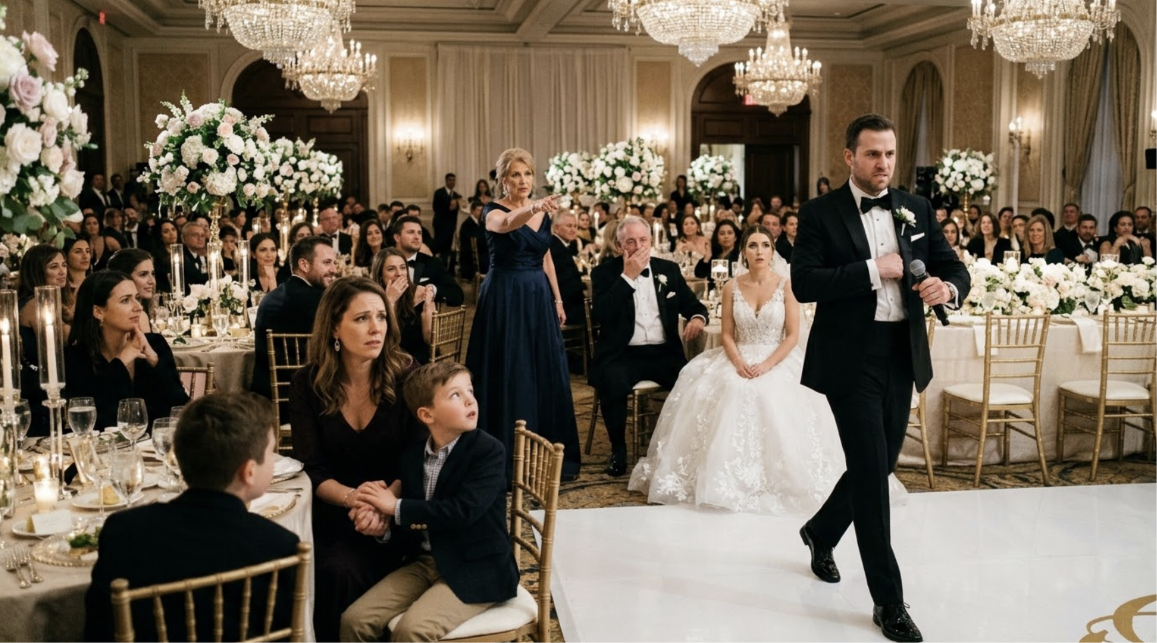
I could tell by the way she stood near the front of the ballroom, holding the microphone as though she had every right to decide what everyone thought of me.
Two hundred people were watching.
My six-year-old son, Beckett, was sitting beside me.
And I was trying very hard not to cry.
My name is Corrine Whitmore.
I was thirty-three years old that night, and I had spent most of my adult life trying to convince my parents that I wasn’t the disappointment they believed I was.
I was a neonatal nurse.
I worked long shifts caring for babies who sometimes weren’t much bigger than my hands.
I raised Beckett alone.
Most days, I barely had enough energy to wash my uniform before going back to work.
But I paid my bills.
I kept food in our refrigerator.
And I made sure my son never went to sleep wondering whether his mother loved him.
Apparently, none of that mattered to Lorraine Whitmore.
My mother had her own definition of success.
It involved beautiful houses, expensive clothes, important friends, and children who made other people jealous.
My younger sister, Fallon, fit that description perfectly.
I never had.
That evening was supposed to belong to Fallon.
She was marrying Gideon, a man who directed a charitable foundation that supported hospitals, shelters, and struggling families.
The wedding had cost approximately $150,000.
There were enormous flower arrangements, crystal decorations, and enough food to feed a small neighborhood.
Everything looked expensive.
Even the silence between people seemed carefully arranged.
Beckett and I had been placed at table twenty-eight.
It was close to the kitchen doors.
Every few minutes, someone carrying dishes pushed through those doors, and a burst of noise from the kitchen interrupted the music.
Beckett noticed immediately.
“Mommy, why are we sitting back here?”
I straightened his jacket.
“It’s just where they had room for us.”
He looked toward the front of the ballroom.
“Grandma’s over there.”
“I know.”
“Can we go say hello?”
I looked at my mother, who was standing among guests wearing jewelry that probably cost more than my car.
“Maybe later.”
He accepted that answer.
Children often accept explanations that adults would question.
Looking back, I wished I had been more honest with him.
I wished I had told him that we were sitting there because my mother didn’t consider us important enough to be seen beside her.
But I wasn’t ready to admit that.
Not even to myself.
The evening had already been uncomfortable before the speeches began.
Fallon looked beautiful.
Her wedding dress was carefully fitted, her hair was perfect, and her engagement ring caught the lights whenever she moved her hands.
I was happy for her.
That was the difficult part.
I really was.
I had spent years watching my parents give her things they told me they couldn’t afford.
Expensive birthday presents.
Help with an apartment.
Money whenever she needed something.
I received explanations instead.
Sometimes I received criticism.
And sometimes I received nothing at all.
Still, I wanted Fallon to have a good wedding.
I didn’t want a fight.
I wanted to eat dinner, let Beckett enjoy the celebration, and take him home before he became too tired.
That was all.
But my mother had other plans.
When she picked up the microphone, people turned toward her with polite smiles.
She started by talking about Fallon.
She praised her beautiful daughter.
She spoke about Fallon’s accomplishments and how proud the family was of the life she had built.
I listened quietly.
Then my mother’s attention moved toward the back of the room.
Toward me.
I noticed it before she said my name.
Her expression changed.
She gave a small laugh.
And then she began comparing her two daughters.
At first, the remarks sounded almost harmless.
The kind of comments people sometimes make when they want their cruelty to pass as humor.
But the longer she spoke, the more obvious it became.
She wanted the guests to laugh at me.
She wanted them to see Fallon as the successful daughter.
And she wanted them to see me as the warning.
My father, Richard, laughed along.
Fallon smiled at the head table.
I sat still.
My hands were folded in my lap.
I remember staring at the white tablecloth because I couldn’t bear to look around and see who else was laughing.
Then Mom said it plainly.
She called me worthless.
A failure.
Someone whose life had turned into an embarrassment.
The words seemed to remain in the air long after she finished speaking.
I had heard similar things privately.
I had heard them in my parents’ kitchen.
On their porch.
During telephone conversations that ended with me apologizing for something I hadn’t done.
But never like that.
Never in front of two hundred people.
And never with my little boy sitting beside me.
Beckett pulled at my sleeve.
“Mommy?”
I turned toward him.
His face was confused.
“Why are they laughing?”
I opened my mouth.
Nothing came out.
He looked toward the head table.
“Did you do something bad?”
That question hurt more than anything my mother had said.
Because he wasn’t asking whether I had made a mistake.
He was asking whether there was a reason people were treating his mother that way.
And I didn’t know how to explain that sometimes the people who should protect you are the ones who enjoy seeing you hurt.
I touched his cheek.
“No, sweetheart.”
He looked at me carefully.
“Then why is Grandma being mean?”
I swallowed.
“I don’t know, baby.”
That wasn’t completely true.
I knew why my mother behaved that way.
I had known for years.
She didn’t like that I had built a life outside her approval.
She didn’t like that I kept going even when she refused to help me.
And she certainly didn’t like that I had a child she couldn’t control through me.
But knowing those things didn’t make the humiliation easier.
I considered leaving.
I could have taken Beckett by the hand, walked past the kitchen doors, and gone home.
No scene.
No argument.
Just gone.
I had spent years getting good at disappearing when my family wanted me to feel small.
But before I could stand, someone at the head table reached for the microphone.
It was Gideon.
The groom.
He had been unusually quiet during my mother’s speech.
I remembered noticing that he wasn’t laughing.
His attention had stayed on my mother.
Then on Fallon.
Then on Beckett and me.
Now he stood beside the table with a small stack of papers in his hand.
My mother seemed pleased when he took the microphone.
I think she expected him to continue praising Fallon.
Perhaps she expected him to thank the Whitmores for arranging such an impressive celebration.
Instead, Gideon looked toward the back of the room.
He looked directly at me.
And he began speaking about the work I did at the hospital.
He told the guests that I spent long nights caring for newborns whose lives were uncertain.
He described the frightened parents I worked with.
The exhausting hours.
The responsibility.
The fact that I came home from those shifts and still had a little boy depending on me.
I didn’t understand why he was saying any of it.
I barely knew Gideon outside family gatherings.
He had always been polite.
But I had never discussed my work with him in that kind of detail.
He glanced toward Beckett.
Then he mentioned our table beside the kitchen doors.
My face grew hot.
He told the room that a woman who cared for critically ill children had been seated out of sight and publicly insulted by her own mother.
Nobody laughed this time.
I heard the kitchen doors open behind us.
A server stopped in the doorway.
Then the doors swung shut again.
That small sound seemed terribly loud.
My mother moved toward Gideon.
She caught his arm.
“Gideon, this doesn’t belong in a wedding speech.”
He looked down at her hand.
Then he gently stepped away.
“You brought Corrine into this in front of everyone, Lorraine.”
Mom’s expression hardened.
“This is between members of our family.”
“Then it should have stayed between members of your family.”
I looked at Fallon.
She had stopped smiling.
My father rose from his chair.
He tried to sound calm.
“Gideon, tonight is about the two of you. There’s no need to make this worse.”
Gideon regarded him for a moment.
“I came here expecting to celebrate my marriage.”
He paused.
“I didn’t expect to watch a child being humiliated.”
Beckett moved closer to me.
I placed an arm around his shoulders.
I wanted to thank Gideon.
I wanted to ask him to stop.
Both feelings came at once.
My parents were accustomed to controlling every uncomfortable conversation.
They decided what could be discussed.
They decided who owed whom an apology.
They decided when something was finished.
Gideon wasn’t following their rules.
He glanced at the papers in his hand.
Then he told the room that there was another reason he needed to speak.
Something he had discovered while reviewing records connected to his foundation.
My mother stopped moving.
It was a small change.
Most people probably wouldn’t have noticed it.
But I knew her face.
I knew the difference between the anger she used to intimidate people and the fear she tried to hide.
Her fingers tightened around her handbag.
My father looked toward her.
Neither of them spoke.
Gideon explained that he had been examining financial records for several months.
Some entries didn’t match.
He had initially believed the problem was ordinary bookkeeping.
Then he began checking the supporting documents.
I didn’t understand what any of this had to do with me.
Or with Fallon’s wedding.
Gideon lifted the first sheet.
He explained that the irregularities were connected to a donor account associated with the Whitmore family.
My mother interrupted.
“Whatever you’re looking at, it can be handled later.”
But Gideon didn’t lower the page.
And for the first time in my life, I watched my mother realize that telling someone to stop might not be enough.
Click here to continue reading: PART 2: The Groom Showed Everyone Financial Records Bearing My Name, and My Mother Could No Longer Explain Why the Money Was Missing
My Mother Called Me a Worthless Failure at My Sister’s $150,000 Wedding—Then the Groom Took the Microphone and Revealed the $1.8 Million Secret My Family Had Hidden for 12 Years
Part 1 of 15