
PART 1: The Night My Son Couldn’t Breathe
The image still comes back to me sometimes when the house is quiet.
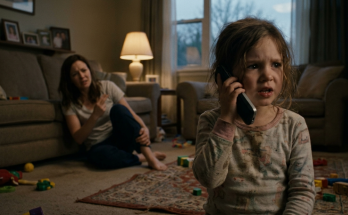
My eight-year-old son was lying on my parents’ living room floor, curled onto his side and struggling to breathe. Around him, life continued as if nothing serious was happening. The television flashed colorful lights across the room, a pot cooled in the kitchen, and the adults who were supposed to protect him stood watching without urgency.
His name is Noah.
Two months earlier, he had turned eight years old. He was the kind of child who apologized when someone else bumped into him. He held doors open for strangers, thanked cashiers without being reminded, and worried more about other people’s feelings than his own. Even when he was nervous, he folded napkins into tiny squares to keep his hands busy.
That evening, there were no folded napkins.
There was only pain.
When I knelt beside him, his face was pale and sweaty. One hand was pressed tightly against his side, and every breath seemed like a battle his body was losing. At first, I told myself it couldn’t be serious. Children get hurt all the time. They fall off bicycles, crash into furniture, and come running inside convinced they’re dying when all they really need is a bandage and a hug.
But the moment I touched the area beneath his ribs, Noah flinched so violently that my stomach dropped.
“Mom,” he whispered. “It hu3!s.”
The sound of his voice terrified me.
I looked across the room toward my nephew Ryan.
Ryan was twelve years old, bigger than most boys his age, and standing near the end table with his fists still clenched. One of his knuckles was scraped and red. Nobody else seemed interested in that detail.
That was the first clue that something was very wrong.
“What happened?” I asked.
Nobody answered immediately.
My sister Carla leaned casually against the kitchen counter with her arms crossed. She didn’t look worried. She didn’t look guilty. If anything, she looked annoyed that the situation was becoming inconvenient.
Finally, she shrugged.
“He shoved him,” she said. “Kids get rough.”
Noah tried to take another breath and failed halfway through.
My heart began pounding.
I turned toward my parents.
My mother stood beside the sofa with her arms folded. My father sat in his chair pretending to read a magazine. Neither of them moved toward Noah. Neither of them seemed alarmed by the fact that an eight-year-old child was lying on the floor struggling to breathe.
I couldn’t understand it.
This was the same house where Noah had spent countless weekends. He had eaten grilled cheese sandwiches at that kitchen table. He had watched cartoons on that carpet. He had helped my father change the oil in his truck and proudly called my mother every time he earned a good grade in school.
He loved them.
And I had trusted them.
That realization would haunt me later.
Not because they failed him.
Because I never believed they would.
I reached into my purse and pulled out my phone.
My hands were shaking as I dialed 911.
Before the call could connect, my mother lunged forward and snatched the phone from my hand.
For a second, I simply stared at her.
I couldn’t believe what had happened.
“Mom,” I said. “What are you doing?”
“Don’t you dare.”
Her voice wasn’t frightened.
It was angry.
As though I had embarrassed her somehow.
“He can’t breathe,” I said.
“Boys fight.”
The answer came immediately.
No hesitation.
No concern.
Just an excuse.
I stared at her.
“My son is on the floor.”
My father finally spoke without looking up from his magazine.
“You’re overreacting,” he said. “He’ll be fine in a day or two.”
A day or two.
That was apparently the value of my child’s pain.
Not an emergency.
Not a doctor.
Not an ambulance.
Just a day or two.
I looked toward Carla.
She was smiling.
Not a nervous smile.
Not an uncomfortable one.
A small, satisfied smile that made my stomach turn.
At that moment, something inside me changed.
I stopped seeing a family gathered in a living room.
I saw a room full of people protecting each other while a child suffered on the floor.
Family loyalty sounds noble until it becomes an excuse for cruelty.
Until it becomes a shield that protects the wrong person.
Noah let out another painful breath.
That was enough.
I slipped one arm beneath his knees and another behind his back. He felt both lighter and heavier than he should have. Lighter because he was only eight years old. Heavier because fear adds weight to everything.
“Give me my phone,” I said.
“No.”
My mother clutched it against her chest.
“You are not calling the police on family.”
I looked at her.
Then at my father.
Then at Carla.
Finally, I looked down at Noah.
His eyes were full of tears.
“Mom,” he whispered. “Am I in trouble?”
The question shattered me.
He was injured.
He was scared.
And somehow he believed he might be the one who had done something wrong.
I kissed the top of his head.
“No, sweetheart,” I said. “You’re not in trouble.”
Then I carried him toward the front door.
At that moment, I didn’t know how badly he was hurt.
I didn’t know what the doctors would find.
And I certainly didn’t know that before the night was over, the people I had trusted my entire life would be facing consequences they never saw coming.
PART 2: The Drive to the Hospital and the Recording Nobody Knew Existed
I carried Noah out of that house without looking back.
The moment I stepped onto the front porch, the cool evening air hit my face. Normally, that neighborhood felt familiar and comforting. That night, it felt completely different. The place where I had spent countless holidays and family dinners suddenly felt like somewhere I needed to escape.
Noah rested his head against my shoulder as I hurried toward the driveway. His breathing was shallow, and every small movement seemed to cause him pain. I could feel him trying to stay quiet, trying not to complain, even though I knew he was hurting far more than he wanted me to see.
At 6:49 p.m., I carefully helped him into the back seat of my SUV. My hands were shaking so badly that I missed the seatbelt latch the first time. When it finally clicked into place, Noah looked up at me with tears in his eyes.
“I’m sorry,” he whispered.
The apology nearly broke me.
I leaned into the car and pressed my forehead gently against his.
“You did nothing wrong,” I told him. “Do you hear me? Nothing.”
He nodded weakly.
Behind me, the front door opened.
My mother stepped onto the porch holding my phone. Carla followed close behind her, and my father appeared in the doorway a few moments later. Ryan stayed inside, hidden somewhere behind the adults who seemed determined to protect him.
For a few seconds, nobody spoke.
Then my mother held up my phone.
“Come back inside,” she said.
I stared at her.
“Give me my phone.”
She tightened her grip.
“No.”
The certainty in her voice was beginning to fade.
For the first time, she seemed to realize that I wasn’t going to argue with her. I wasn’t going to beg. I wasn’t going to follow the family script where everyone pretended nothing serious had happened.
I simply turned away and walked to the driver’s side door.
That’s when her expression changed completely.
She understood I was leaving.
And she couldn’t stop me.
What none of us realized at that moment was that another witness had been recording the entire scene.
Mounted on my windshield was a small dash camera my ex-husband had installed years earlier after a minor parking lot accident. Most days I forgot it was there.
That night, it recorded everything.
My mother’s refusal to return my phone.
My father’s dismissal of Noah’s injury.
Carla minimizing what happened.
Every word.
Every excuse.
Every choice.
I didn’t know it yet, but that tiny camera would eventually become more reliable than anyone standing on that porch.
I pulled out of the driveway and headed straight toward the nearest emergency room.
The drive felt endless.
Every bump in the road made Noah wince. Every red light felt like a personal attack. I found myself apologizing for things I couldn’t control—the traffic, the potholes, the distance.
Parents do that when their children are hurting.
We apologize to the universe because we can’t fix what’s already happened.
About fifteen minutes later, I pulled into the emergency entrance.
I parked crooked across two spaces and barely remembered turning off the engine. The moment I opened Noah’s door, a security guard noticed something was wrong and rushed over.
“I need help,” I said.
Those four words were all I could manage.
The guard immediately called for assistance.
Within seconds, a nurse appeared with a wheelchair.
One look at Noah’s face and her expression changed.
Medical professionals have a way of recognizing emergencies before anyone else does.
She wasn’t panicked.
She was focused.
And somehow that made me feel slightly less afraid.
They brought Noah inside almost immediately.
At the intake desk, a receptionist asked for my phone number.
I stared at her blankly.
“My mother took my phone,” I said.
The receptionist paused.
Then she looked directly at me.
Not with judgment.
Not with confusion.
With concern.
It was the first time that evening another adult had listened to what I was saying and treated it as important.
A wristband was placed around Noah’s arm. Forms appeared. Questions followed.
What time did the injury happen?
Who was present?
Was he having trouble breathing immediately afterward?
Had anyone prevented you from seeking medical attention?
That last question stopped me.
For a second, I looked down at the floor.
Then I answered honestly.
“Yes.”
The nurse looked up.
“Can you explain?”
“My mother took my phone when I tried to call 911.”
She typed something into her computer.
I noticed one word appear on the screen.
Noted.
That single word gave me more comfort than I expected.
Someone was listening.
Someone was documenting what happened.
Someone believed this mattered.
A few minutes later, a doctor entered the room.
He examined Noah carefully, explaining every step before touching him. When he pressed lightly beneath Noah’s ribs, my son cried out in pain.
The doctor’s expression tightened immediately.
“We need imaging,” he said.
The room became busier after that.
Nurses arrived.
Paperwork appeared.
Tests were ordered.
And then another staff member asked a question I wasn’t prepared for.
“Is there anyone safe you can call?”
Safe.
The word hit harder than I expected.
A few hours earlier, I would have listed my parents without hesitation.
Now I wasn’t sure I recognized them.
I borrowed a hospital phone and called Mrs. Patterson, my neighbor from two houses down.
She answered on the second ring.
When I explained the situation, she didn’t question me. She didn’t ask whether I was sure. She didn’t suggest waiting until morning.
She simply said, “I’m on my way.”
Twenty minutes later, she walked into the emergency waiting room wearing a cardigan buttoned incorrectly and carrying a phone charger because she thought I might need one.
That was what real support looked like.
Not speeches.
Not excuses.
Just showing up.
Unfortunately, she wasn’t the only person who arrived.
My parents showed up too.
And they weren’t there because they were worried about Noah.
They were there because they were worried about losing control of the story.

PART 3: The Recording That Changed Everything
By the time my parents arrived at the hospital, Noah was undergoing imaging tests and being evaluated by the emergency team.
My mother walked through the waiting room holding my phone as if she were returning a borrowed sweater instead of evidence. Carla followed close behind, while my father trailed several steps back with his hands in his pockets.
The moment I saw them, I knew why they were there.
Not because they were worried about Noah.
Because they were worried about themselves.
Mrs. Patterson had already arrived and was sitting beside me when my mother approached.
“I was going to bring your phone back,” she said loudly.
The performance was almost impressive.
If I hadn’t been there.
If I hadn’t watched her refuse to give it back while my son struggled to breathe.
Maybe I would have believed her.
Instead, I simply looked at her.
Then at the phone.
Then back at her.
The nurse working at the intake desk noticed the exchange immediately.
Her eyes moved from my mother to me.
Nobody said anything for a moment.
Then Carla broke the silence.
“This has gotten completely out of hand.”
The words made me laugh.
Not because they were funny.
Because they were unbelievable.
My son was in an emergency room.
And somehow Carla still thought the real problem was my reaction.
Before I could respond, the doctor returned.
He carried a tablet in one hand and several printed reports in the other.
The entire atmosphere changed.
Even my mother stopped talking.
Doctors have a way of commanding attention without raising their voices.
“Mrs. Walker,” he said, looking at me. “We need to discuss a few things.”
I immediately stood.
“How is he?”
“We’ll talk about that in a moment.”
His expression remained professional, but there was concern behind it.
Then he glanced toward my parents.
“First, I’d like clarification regarding what happened before the child arrived here.”
My mother’s voice appeared instantly.
“It was a family misunderstanding.”
Family.
That word again.
Always family.
Always reputation.
Always loyalty.
Never accountability.
I was suddenly tired of hearing it.
Very tired.
That’s when I remembered the dash camera.
The small camera mounted inside my SUV.
The one nobody knew had been recording.
Slowly, I reached into my purse and removed the memory card.
The room became silent.
“What is that?” my father asked.
“A witness.”
My mother’s face changed immediately.
For the first time all evening, genuine uncertainty appeared.
I handed the card to the nurse.
“The camera in my vehicle records audio and video whenever the engine is running.”
The nurse looked toward the doctor.
The doctor nodded.
“Let’s review it.”
My mother took a step forward.
“That recording is private.”
The doctor turned toward her.
“A child with a suspected serious injury was delayed from receiving emergency care.”
His voice remained calm.
“That is not private.”
Nobody argued after that.
Because nobody could.
A hospital security officer quietly appeared near the doorway.
A social worker entered carrying a folder.
An incident report was placed on the counter.
The room felt different now.
No longer a family argument.
A formal investigation.
And everyone knew it.
The nurse inserted the memory card into a computer.
A few moments later, the video appeared on the screen.
The recording showed me carrying Noah from the house.
It showed my mother following us.
It showed Carla standing nearby.
Then the audio began.
Crystal clear.
“You are not calling the police on family.”
My mother’s voice filled the room.
Nobody spoke.
The recording continued.
“He can’t breathe.”
My voice.
Then my father’s.
“You’re overreacting.”
Another pause.
Then Carla.
“Kids get rough.”
The words sounded far worse when played back.
Not because they were different.
Because there were no excuses left around them.
No explanations.
No context.
Just the truth.
Raw and undeniable.
Across the room, my mother’s confidence vanished.
My father stared at the floor.
Carla looked like she wanted to disappear.
The doctor paused the video.
Silence filled the room.
Then he asked a simple question.
“Do you understand why this must be reported?”
Nobody answered.
Because there was nothing left to say.
The social worker stepped forward and began documenting everything.
Hospital staff copied the recording.
Statements were collected.
Reports were filed.
The process moved forward with quiet efficiency.
No shouting.
No drama.
Just consequences.
Then the doctor finally shared Noah’s test results.
I held my breath.
“So?”
He looked directly at me.
“Your son has a fractured rib.”
The words hit like a physical blow.
A fractured rib.
Not bruising.
Not soreness.
Not roughhousing.
A broken bone.
My mother began crying.
Carla immediately started defending Ryan.
“He didn’t mean it.”
The doctor didn’t respond.
Neither did I.
Because intent no longer mattered.
The injury was real.
The delay in treatment was real.
Everything was real.
My son lay in a hospital bed because adults had chosen to protect a twelve-year-old from consequences instead of protecting an eight-year-old from harm.
That was the reality.
Nothing could change it.
The police arrived later that evening.
A uniformed officer took my statement in a quiet consultation room.
I gave exact times.
When Noah was injured.
When I tried to call 911.
When my mother took my phone.
When I left the house.
When we arrived at the hospital.
Everything.
The dash-camera footage was copied as evidence.
The officer listened carefully.
Never interrupting.
Never minimizing.
Never telling me I was overreacting.
It was amazing how different the truth felt when someone actually cared about it.
Noah remained overnight for observation.
Mrs. Patterson returned to my house and brought back his favorite stuffed dog.
The one he always claimed he didn’t need anymore.
When I tucked it beneath his arm, he finally relaxed.
For the first time all night.
Just before he fell asleep, he looked at me.
“Mom?”
“Yes?”
“Am I in trouble?”
The same question.
The one that had shattered me hours earlier.
I took his hand carefully.
“No.”
My voice was steady this time.
“Not anymore.”
He nodded.
Then drifted off to sleep.
The weeks that followed weren’t easy.
There were follow-up appointments.
Interviews.
Reports.
Court hearings.
More paperwork than I thought possible.
My mother called repeatedly after she finally returned my phone.
I never answered.
Carla sent dozens of messages.
First she blamed me.
Then she blamed Noah.
Then she blamed everyone except herself.
Not once did she ask how he was recovering.
That told me everything I needed to know.
Months later, people occasionally asked whether I regretted making the report.
Whether I regretted exposing my own family.
The answer never changed.
No.
Because some people use the word family as protection.
A shield.
A weapon.
An excuse.
But family isn’t supposed to protect the person causing harm.
It’s supposed to protect the child getting hurt.
The last time I saw my mother before the hearing, she cried when she looked at Noah.
He didn’t cry back.
He didn’t hide.
He didn’t run.
He simply stood beside me and held my hand.
And for the first time, I realized something important.
The night I carried him out of that house wasn’t the night our family fell apart.
It was the night I finally chose the right family member to protect.
My son.
And from that moment forward, that choice never became difficult again.