Part 1: The Boy With Twelve Dollars
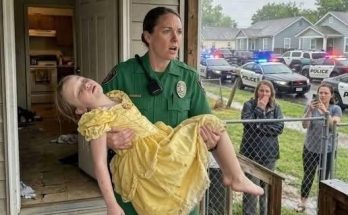
I was preparing to close my neighborhood clinic when an eight-year-old boy appeared in the doorway carrying a plastic grocery bag. Rainwater dripped from his oversized shirt, and he struggled to keep his weight off his right leg.
Our receptionist told him the clinic was closing but immediately called me when she noticed his condition. The boy shook his head when I offered him a wheelchair and held out the bag instead.
“I have money,” he said. “The recycling man told me this is worth twelve dollars.”
Inside were sticky coins, two crushed cans and three empty soda bottles. He promised to bring more the following day if twelve dollars was not enough to have his leg examined.
I told him treatment did not depend on what he could pay. When I asked whether an adult had brought him, he looked toward the rain-darkened parking lot and said he had walked from a bus stop several blocks away.
His name was Noah. He would not give me a last name at first, and he became fri:ghten:ed whenever the receptionist moved near the telephone.
I guided him onto the examination table without touching the in:ju:red leg. His ankle and lower leg were badly swollen, and the way he held them suggested an in:jury that needed hospital imaging and specialist care.
There were also fading marks on his arms and shoulder. I could not determine their cause by looking alone, but their different stages of healing and Noah’s behavior made me concerned that this was not one isolated accident.
“What happened to your leg?” I asked.
“I fell.”
“Where?”
“At home.”
He stared at his hands. When I gently asked whether anyone had seen him fall, he whispered that he had been washing dishes and spilled water on the kitchen floor.
Someone became angry. Noah would not say who, but he explained that he had been sent to the basement and hurt his leg on the stairs.
He said the injury happened three days earlier. No one had taken him to a doctor because he had been told the pain would improve if he stopped complaining.
I reached toward his ankle to check circulation without warning him quickly enough. Noah jerked backward, covered his head with both arms and nearly fell from the table.
“Don’t hit me,” he cried. “I’ll be good now.”
I stepped away and kept my hands where he could see them. I told him no one in the clinic would hurt him and explained each thing I needed to do before moving closer again.
He watched every motion, but eventually allowed me to check his foot. His toes were warm and he could move them slightly, yet the swelling and pain required urgent evaluation at a hospital.
I asked the receptionist to call an ambulance. Because I was a physician and suspected that a child had been harmed or denied necessary care, I also reported my concerns to the police and child protective services.
Noah heard the calls and began crying. He tried to climb down from the table, saying he had made a mistake and needed to return before anyone noticed he was gone.
I promised that he would not be sent anywhere until trained professionals determined where he could be safe. He did not appear comforted by that answer, but he stopped trying to leave.
While we waited, I warmed some soup from the staff refrigerator. Noah ate slowly and asked whether he needed to wash the bowl or work at the clinic to repay me.
Something about his face had troubled me since he entered. His straight eyebrows, brown eyes and stubborn little chin reminded me of photographs I had kept hidden inside a box at home.
Five years earlier, my former husband, Michael Hayes, received primary custody of our three-year-old son while I completed medical residency and struggled to afford a prolonged legal fight. I retained visitation rights, but Michael moved out of state and repeatedly failed to bring our child to scheduled visits.
I filed complaints and returned to court more than once. Each delay cost money I did not have, while Michael’s attorneys portrayed every missed visit as a misunderstanding rather than a pattern.
Eventually, the photographs stopped arriving. My son’s phone number changed, birthday gifts were returned and every address Michael provided led to another explanation about why Noah could not see me.
I looked at the boy on the examination table and told myself that grief could create resemblance where none existed. Then I noticed a small crescent-shaped birthmark behind his left ear.
My son had been born with the same mark.
“What is your full name?” I asked.
He hesitated before answering. “Noah Edward Hayes.”
My father’s name had been Edward. Michael and I chose it together for our son’s middle name before our marriage collapsed.
I asked Noah for his birth date. When he gave it, I gripped the edge of the counter because the room seemed to shift beneath me.
The frightened child who had brought bottles to pay for treatment was the son I had not been allowed to hold in five years. He did not recognize me, and this was not the moment to place another overwhelming truth on him.
The ambulance arrived with two police officers and a child-protection worker. As a paramedic prepared Noah for transport, an officer found a small prepaid phone inside his backpack.
It began ringing before anyone touched it. The screen displayed the word Grandma, followed by seventeen missed calls.
The officer activated the latest voicemail on speaker. A woman’s voice ordered Noah to return home and warned him that if anyone asked about his leg, he was to say he had fallen from his bicycle.
Then she added one final instruction.
“Whatever you do, don’t tell them your father hasn’t been home for six weeks.”
Part 2: The Father Who Said He Never Knew
At the hospital, an emergency physician named Dr. Ruiz took over Noah’s care. I told her privately that I was his biological mother, then stepped back so no one could later claim my medical judgment had been influenced by our custody history.
The X-rays showed a fracture in Noah’s lower leg that had remained untreated for several days. The bones had shifted enough that an orthopedic surgeon needed to realign them while Noah was under anesthesia.
None of the injuries immediately threatened his life, but the delay had increased his pain and complicated his recovery. Dr. Ruiz also documented the older marks without guessing how they occurred.
A child-protection worker named Ms. Carter interviewed Noah in a quiet room away from me, the police and the adults from his household. She explained that he would not be punished for telling the truth and that he could stop answering whenever he became tired.
I waited in the hallway with my hands pressed against the sleeves of my coat. Finding my son had been the moment I dreamed about for five years, yet I could not hold him, tell him who I was or promise that he would come home with me.
My legal relationship to Noah had not disappeared, but I had not seen him since he was three. The hospital needed to verify the custody orders and determine what arrangement would be safest after treatment.
An officer photographed the grocery bag, coins and bottles before placing them with Noah’s belongings. His prepaid phone was preserved because the voicemail from his grandmother appeared to instruct him to conceal how the injury occurred.
The police contacted Michael only after Noah was safely admitted. He arrived nearly two hours later in the same dark coat he used to wear to business meetings, his suitcase still in the SUV outside.
When Michael saw me in the hospital corridor, he stopped walking. Surprise passed across his face before his attention shifted toward the treatment room.
“Where is Noah?”
“Preparing for surgery,” Ms. Carter answered. “We need to speak with you before you see him.”
Michael said he had returned early from a six-week work assignment in London after receiving a message from the police. He believed Noah had been staying safely with his mother, Evelyn, and his second wife, Laura.
I asked how a father could leave for six weeks without noticing that his son had been injured for three days. Michael said Evelyn told him Noah had caught a stomach virus and did not want to appear on their recent video calls.
“You accepted that?” I asked.
“She sent messages from his phone. I thought he was sleeping.”
The explanation was possible, but it did not remove his responsibility. Michael had chosen the people caring for Noah and spent weeks relying on their descriptions instead of speaking directly with his son.
He asked why I was involved. Before I could answer, the officer explained that Noah had entered my clinic alone and that I had recognized him during the examination.
Michael stared at me as though our son finding my clinic could not have happened by chance. The truth was that it probably had been chance; Noah said he followed a bus route and chose the first medical sign he saw after getting off.
“You cannot take him,” Michael said.
“I haven’t tried to,” I replied. “I called an ambulance and reported what I found.”
Ms. Carter reminded both of us that custody would not be decided in the hallway. Noah would remain at the hospital after surgery while the agency investigated his home and identified a safe temporary arrangement.
Michael insisted his mother had never harmed Noah. He described Evelyn as strict but loving and said she had helped raise him after our divorce.
The detective played the voicemail. Michael’s face changed when he heard Evelyn instruct Noah to lie about falling from a bicycle.
He said he had never heard her speak to his son that way. I reminded him that he had also spent years allowing her to intercept my calls, return my gifts and tell the court that Noah became distressed whenever I requested a visit.
Michael denied knowing she returned the gifts. He claimed his attorneys and mother handled most of the scheduling because his work required frequent travel.
For five years, he had described that arrangement as organization. Now he was beginning to understand that handing every uncomfortable responsibility to Evelyn had given her control over the truth reaching him.
Noah’s surgery lasted a little more than an hour. The orthopedic surgeon realigned the fracture and placed his leg in a cast, then said he would need follow-up appointments and several weeks without bearing weight.
When Noah woke, he asked whether the police had arrested him for stealing bottles. A nurse explained that collecting discarded bottles was not why anyone was concerned.
He then asked whether his father had come. Ms. Carter said yes but did not bring Michael inside until Noah agreed to the visit.
Michael sat beside the bed and reached for his son’s hand. Noah pulled away and looked toward the doorway as though searching for someone else.
His eyes found me.
“Can the clinic doctor stay?” he asked.
Michael turned toward me, but Ms. Carter answered before he could object. She said I could remain if Noah wanted me there.
That evening, the hospital searched its records for earlier visits under Noah’s name. Dr. Ruiz found two urgent-care appointments for separate injuries within the previous year, followed by several orthopedic appointments that had been canceled.
Michael claimed he knew nothing about them. Then Dr. Ruiz opened the scanned paperwork from the most recent visit.
The discharge form stated that Noah had injured his wrist after falling from a playground ladder. It also said the parent declined further imaging and promised to arrange follow-up care elsewhere.
At the bottom was Michael’s full signature.
He stared at it for several seconds before quietly saying it was not his handwriting.
The detective enlarged the page. Beside Michael’s name was a copy of his driver’s license, and the person who brought Noah to the clinic had been recorded in the chart as his father.

Part 3: The Mother He Thought Was Dead
Michael voluntarily gave the detective access to records showing that he had been in Toronto on the date of Noah’s earlier urgent-care visit. The signature on the discharge form resembled his, but the clinic had accepted only a photocopy of his license rather than checking the identification of the adult who accompanied the child.
A note buried in the chart described that adult as an older woman accompanied by a man in his thirties. The receptionist remembered being told that Noah’s father was parking the car, but no father ever entered the building.
The evidence suggested someone had used Michael’s information to avoid questions. It did not prove who had copied his signature, but it supported his claim that he had not personally refused the recommended treatment.
That discovery did not make him blameless. He had allowed his mother to control Noah’s medical care, school communication and contact with me while he traveled for weeks at a time.
Child protective services interviewed Evelyn and Laura separately. Evelyn said Noah was clumsy, dramatic and prone to inventing stories when disciplined, while Laura claimed she had seen him limping but believed Evelyn had already spoken with Michael.
Neither woman could explain why an injured eight-year-old had been allowed to leave the house alone in the rain. They also disagreed about who last checked on him before he disappeared.
Police searched the home with the authority obtained during the investigation. They found Noah’s sleeping bag in the basement beside a laundry sink, although his furnished bedroom remained untouched upstairs.
Evelyn said the basement was used only for brief time-outs. Noah later told Ms. Carter that he sometimes slept there after making mistakes because crying upstairs disturbed the family.
Laura admitted that she knew he had spent nights below the house. She said she disagreed with it but avoided confronting Evelyn because Michael trusted his mother’s judgment.
While those interviews continued, Noah remained in the hospital. He became quiet whenever anyone discussed where he might go after discharge and repeatedly asked whether he had caused his family to be arrested.
A child therapist explained that telling the truth did not make him responsible for adult consequences. She also helped prepare him for the fact that the clinic doctor was someone from his past.
Ms. Carter first confirmed that my parental rights had never been terminated. The old court order still identified me as Noah’s mother and granted visitation, although Michael’s relocation and years of obstruction had prevented that relationship from continuing.
That did not mean Noah could immediately leave the hospital with me. The agency inspected my home, reviewed my background and asked whether my work schedule could support an injured child who needed regular appointments.
I accepted every question because Noah’s safety mattered more than my desire to reclaim lost time. I also agreed that the therapist should be present when I told him who I was.
Noah sat propped against his pillows with his cast resting on a cushion. He watched my face carefully as I pulled a chair beside the bed.
“There’s something important I need to tell you,” I said. “My name is Dr. Emma Carter, but before I became your doctor, I was your mother.”
He blinked without speaking.
I told him that I had not stopped loving him and that I had tried for years to see him. I did not blame Michael or Evelyn in front of him because he did not need to carry our adult conflict while recovering from surgery.
“You can’t be my mother,” he finally said. “My mother died.”
My throat tightened. I asked who had told him that.
“Grandma said she died because she didn’t want a family anymore.”
I explained gently that I was alive and had never chosen to disappear. Noah turned his face toward the window, and for several minutes he refused to look at me.
I had imagined our reunion countless times. In those fantasies, he recognized me, ran into my arms and somehow understood that every year apart had hurt me too.
Real life gave me a frightened child who had been taught that I abandoned him. He needed time, not another adult demanding the reaction she wanted.
Before I left, Noah asked why I had not come to his school. I told him I had never been given the school’s name or current address.
“I sent birthday cards and gifts every year,” I said. “They were returned to me.”
He looked confused. “I never got any.”
Michael was standing outside when I entered the hallway. He had heard enough to understand what his mother told Noah about me.
“I never knew she said you were dead,” he whispered.
“But you knew she kept me away.”
Michael denied that at first. Then the detective approached with information recovered from Evelyn’s house.
Inside a locked bedroom closet, officers had found a large storage box containing my letters, birthday cards and unopened gifts. Some still carried the return labels that had convinced me Noah’s family no longer lived at the address.
Michael stared at the photographs of the box. He said Evelyn must have hidden everything without his knowledge.
The detective then handed him a printed copy of an old text conversation preserved on his phone backup. Five years earlier, Evelyn told him I had called again and asked what she should do.
Michael’s reply contained only seven words.
“Block her number. Noah needs a clean break.”
Part 4: The Home He Was Afraid to Enter
Michael read his old message several times before admitting he remembered sending it. He said Noah struggled after the divorce and claimed his attorney had advised him that limited contact would help the child adjust.
No court had ordered him to block me. Michael made that decision because answering my calls, arranging visits and dealing with his mother’s anger had become inconvenient.
“You did not give Noah a clean break,” I told him. “You gave your mother enough control to erase me.”
Michael apologized, but the detective ended the conversation before it became another argument. The investigation needed to focus on what happened to Noah, not the marriage that ended five years earlier.
During a separate interview with a trained child specialist, Noah explained that Evelyn had grabbed his arm after he spilled water and pulled him toward the basement. He lost his balance on the stairs, and his leg twisted beneath him when he fell.
Noah did not say she deliberately broke his leg. He said she became angrier because he could no longer stand and left him downstairs until Laura returned several hours later.
Laura brought him food and pain medication but did not call a doctor. She later admitted that Evelyn warned her an examination might lead to questions about earlier punishments.
The copied identification and false signature from the previous urgent-care visit were traced to paperwork kept in Evelyn’s home office. Investigators could not immediately establish who wrote Michael’s name, but the records showed a repeated effort to avoid follow-up care.
Evelyn and Laura were prohibited from contacting Noah while prosecutors reviewed possible charges related to neglect, false records and the treatment that caused his injuries. The final charges would depend on the full investigation rather than the family’s wealth or my anger.
An emergency custody hearing took place before Noah left the hospital. Michael asked for his son to be returned to him, arguing that he had not personally caused the injury and had already removed Evelyn and Laura from the house.
The judge acknowledged that no evidence showed Michael was present when Noah fell. She also said a parent could not avoid responsibility simply by handing every part of a child’s care to someone else and refusing to notice warning signs.
Michael’s contact became supervised temporarily while the investigation continued. Because my parental rights remained intact and my home had passed the agency’s safety inspection, I was approved to care for Noah under a temporary plan.
The decision did not erase five years of separation or instantly make me the parent he remembered. Ms. Carter arranged counseling, regular home visits and a gradual schedule designed around Noah’s recovery.
On discharge day, Michael helped Noah into a wheelchair. He asked whether his son wanted a hug, and Noah allowed one but kept both arms close to his body.
“I’m sorry I wasn’t there,” Michael said.
Noah looked at the cast rather than his father. “You’re always not there.”
Michael had no answer. For once, he did not ask Noah to soften the truth.
My house was smaller than the Hayes property and stood above the clinic in a modest two-bedroom apartment. I had converted my office into a bedroom during the days Noah remained hospitalized.
He examined everything from the doorway before entering. A new blanket covered the bed, but I had also placed several familiar objects on a shelf: copies of his baby photographs, the stuffed dog he once carried everywhere and one birthday card that had been returned unopened.
Noah touched the stuffed animal cautiously. “This was mine?”
“You called him Pepper.”
“I don’t remember.”
“That’s all right. You don’t have to remember anything for me.”
The first evening was quiet. Noah asked permission before opening the refrigerator, using the bathroom and choosing which television program to watch.
At dinner, he ate only half his food and attempted to carry the plate to the sink while balancing awkwardly on crutches. I took the plate and told him his only job was to heal.
He looked suspicious, as though every kind sentence might contain a rule he had not yet discovered. Trust did not arrive because the court approved my address.
That night, I left the hallway light on and told Noah he could call me whenever he needed help. At two in the morning, I heard movement and found him sitting on the floor beside his bed.
He said he had dreamed that Evelyn was coming to take him back. I sat several feet away so he would not feel trapped and reminded him that she was not allowed to contact him.
After a long silence, Noah asked whether his father would be angry because he had told the specialist what happened. I said Michael was responsible for managing his own feelings and that children never deserved punishment for telling the truth.
Noah began twisting the edge of his blanket. Then he told me this was not the first time he had tried to tell his father.
During a video call the previous Christmas, Noah said Evelyn sometimes locked him in the basement. Michael told him not to exaggerate and reminded him that Grandma had sacrificed a great deal to care for him.
“Dad said I should stop trying to make her look bad,” Noah whispered. “So after that, I stopped telling him things.”
Michael had claimed he missed the signs because other people hid them. Sitting beside our son in the middle of the night, I learned the truth was more painful.
Noah had given his father a warning. Michael had simply chosen the explanation that demanded the least from him.

Part 5: The Name He Chose to Call Me
The next morning, I told Ms. Carter what Noah had shared. A child specialist spoke with him again without asking leading questions, and Michael was given an opportunity to respond through the custody process.
He admitted remembering the Christmas conversation. He said he believed Noah was complaining about ordinary discipline and had trusted Evelyn because she raised him the same way.
That explanation clarified his failure but did not excuse it. Noah had asked for help, and Michael had chosen family loyalty over listening to his child.
The court continued supervised visits while Michael attended parenting classes and counseling. He was also required to participate in Noah’s treatment plan and demonstrate that he could respond appropriately when his son expressed fear or discomfort.
Michael did not lose every right as a father, nor did the court pretend his absence could be repaired in one hearing. For the time being, Noah remained with me while professionals evaluated what arrangement served him best.
Evelyn initially denied wrongdoing. After investigators reviewed the medical records, voicemail and Noah’s statements, she accepted a plea involving child endangerment and falsifying information connected to his earlier treatment.
The court prohibited her from contacting Noah. Laura faced a separate neglect case, and her cooperation with investigators was considered when she received probation, counseling requirements and a no-contact order.
Michael was not criminally charged because investigators found no evidence that he caused the physical injuries or forged the medical paperwork. Family court still found that his repeated absence and failure to respond to Noah’s warnings placed his son at risk.
He did not appeal the temporary placement. Instead, he told the judge that fighting to preserve his authority would mean little if Noah remained afraid to speak to him.
Noah’s leg healed gradually. We attended orthopedic appointments, physical therapy and counseling, while a tutor helped him catch up on schoolwork missed during recovery.
The emotional injuries were harder to measure. He continued apologizing whenever he dropped something, ate the last piece of bread or woke me during the night.
Each time, I reminded him that accidents were not moral failures and needing help did not make him difficult. Some days he believed me, while other days fear returned before he could stop it.
I did not ask him to call me Mom. At first, he called me Doctor, then Emma, and sometimes nothing at all when he could simply point or wait for me to understand.
We looked through the letters recovered from Evelyn’s closet only when his therapist believed he was ready. I had written about birthdays, ordinary days and the little memories I was afraid I would forget.
One letter described the way he once refused to sleep unless his stuffed dog, Pepper, was placed beneath the blanket beside him. Noah read it twice before carrying Pepper to bed that evening.
Michael visited twice a week under supervision. During one session, he apologized directly to Noah for dismissing what he had said about the basement.
“I should have listened the first time,” Michael told him. “You should never have needed to get hurt badly before I believed you.”
Noah asked whether his father had been too busy to care. Michael did not blame work, Evelyn or the divorce.
“I cared,” he replied. “But I acted as if caring was enough when I wasn’t paying attention. It wasn’t.”
Months later, the visits moved from a supervised center to public outings with a family therapist’s approval. Noah still lived with me, and Michael stopped treating custody as something he needed to win.
At the final hearing nearly a year after Noah entered my clinic, the judge gave me primary physical custody. Michael received a structured schedule that could expand only if Noah continued feeling safe and his therapist supported the change.
The decision did not return the five years we lost. It gave us a lawful path forward without requiring Noah to choose one parent and erase the other.
On the first day he returned to school full-time, Noah stood in front of the mirror adjusting his backpack. His leg had healed, although he still moved cautiously when descending stairs.
I offered to walk him to the classroom. He said he could manage alone, then paused beside the front door.
“Will you be here when I get back?”
“I will.”
He nodded, but before leaving, he turned around and said, “Bye, Mom.”
The word came naturally, almost quietly. I did not make him repeat it or turn the moment into something he had to manage for me.
I simply told him I loved him and watched him walk toward school.
A few weeks later, Noah visited the clinic after an appointment. The plastic bag containing his twelve dollars and empty bottles had remained sealed with his belongings because investigators no longer needed it.
I asked what he wanted to do with the coins. Noah said the clinic should keep them for another child who arrived without money.
I explained that children would receive urgent help whether they brought money or not. He thought for a moment, then placed the coins in a jar supporting bus fares for families who struggled to reach medical appointments.
He kept one coin for himself. It did not represent what his care had cost; it reminded him that he had found help when the adults around him failed.
That rainy evening did not instantly restore my motherhood or heal my son. It began a year of difficult questions, court visits, medical appointments and moments when Noah tested whether my promises would remain true.
The most important promise was also the simplest. He would never again have to earn safety by being quiet, useful or perfectly behaved.
Five years earlier, powerful adults used paperwork and money to separate us. When Noah returned, he carried only twelve dollars and things other people had discarded.
None of that rescued him. What saved him was finally being heard—and learning that the truth would no longer send him back to the place he feared.