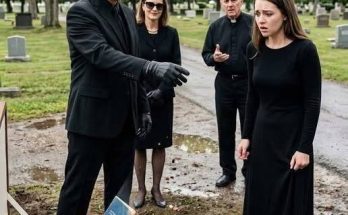
Part 1: The Call from the Grocery Store
I was sorting my mother’s clothes into donation boxes when an unfamiliar number appeared on my phone. I almost let it go to voicemail because I had spent the previous week answering calls from funeral homes, attorneys and relatives.
“Is this Laura Miller?” a woman asked. “I manage a grocery store in Columbus, and your son says you are his mother.”
For a moment, I thought she had called the wrong person. My eight-year-old son, Liam, was supposed to be home with my husband while I handled my mother’s funeral and estate in Milwaukee.
The manager explained that Liam had entered the store alone shortly after five that afternoon. He bought bread, peanut butter and bottled water with cash, then sat on a bench near the entrance until an employee noticed he had no adult with him.
“He says no one is at home,” she continued. “We have contacted the police, but he asked us to call you first.”
I gripped the edge of my mother’s kitchen counter. Brandon had sent me a message less than three hours earlier saying Liam was playing a video game after eating lunch.
“Please put him on the phone.”
Liam’s voice was so quiet that I barely recognized it. Before telling me anything else, he apologized for interrupting me while I was taking care of Grandma’s belongings.
“You never apologize for calling me,” I said. “Tell me where Brandon is.”
A long silence followed. Then Liam said Brandon was in San Diego with his two biological children, eleven-year-old Lucas and nine-year-old Alyssa.
Brandon and I had been married for five years. My first husband died when Liam was two, and I believed marrying someone who already understood parenthood would give my son the stable family he had lost.
During the first year, Brandon included Liam in most activities. Over time, however, invitations to fishing trips and weekend games became reserved for Lucas, while Alyssa received thoughtful birthday gifts and Liam received whatever Brandon considered practical.
I noticed the differences but repeatedly softened them. Blended families required patience, I told myself, and Brandon could not be expected to feel exactly the same way about every child immediately.
The San Diego trip was supposed to include all five of us. Liam had marked the departure date on his summer calendar and talked constantly about seeing the ocean for the first time.
Then my mother died unexpectedly, forcing me to fly to Milwaukee before the trip. Brandon promised he would manage the children while I handled the funeral, legal documents and the apartment my mother had occupied for thirty years.
Every day, I asked to speak directly with Liam. Brandon always had an explanation: Liam was swimming at a friend’s house, taking a shower, asleep early or outside playing basketball.
Twice, messages arrived from Brandon’s phone that appeared to be written by my son. They said he had eaten dinner, loved me and did not want me to worry.
Now Liam told me he had not written either message. Brandon had taken the family tablet and told him that contacting me would create more problems while I was grieving.
“How long have you been alone?” I asked.
“Since Saturday morning,” he whispered.
It was Thursday. My eight-year-old son had spent six days and five nights in our apartment without an adult.
Brandon had left frozen meals, instant noodles and cash in a kitchen drawer. By Wednesday, the prepared food was gone, and most remaining pantry items were stored on shelves Liam could not reach safely.
He called Brandon twice that afternoon. Both calls were rejected, so Liam walked almost a mile to the store because he was hungry and frightened of spending another night alone.
“Why didn’t you call Aunt Nora?” I asked.
“Brandon said she went to visit friends on a farm and wouldn’t have phone service.”
Nora was my mother’s younger sister and lived forty minutes from us. She had not mentioned any trip, but I could not yet know whether Brandon had lied about her too.
The store manager returned to the phone and told me officers had arrived. Liam would not be sent back to an empty apartment, and they needed the name of a trusted adult who could reach him while I traveled home.
I called Nora immediately. She answered from her living room and said Brandon had told her Liam was enjoying the beach with the rest of the family.
That was when the structure of the deception became clear. Brandon told me Liam was safe with him, told Nora my son was in San Diego and told Liam that the only nearby relative had left town.
He had isolated an eight-year-old child by giving every adult a different story. Then he used his own phone to impersonate Liam so I would continue believing my son was safe.
Nora left for the store while I booked the first available flight to Columbus. Before ending our call, the officer asked Liam one final question about when Brandon planned to return.
“He said they would be gone for one week,” Liam answered. “He told me if I behaved, nobody would ever need to know I stayed by myself.”
Brandon had not misjudged a babysitter or forgotten to confirm a childcare arrangement. He had deliberately left my son alone for six days—and expected a frightened child to help him keep it secret.
Part 2: The Note on the Refrigerator
Nora reached the grocery store forty minutes after my call. By then, the officers had given Liam water and a snack, but he remained worried that Brandon would punish him for leaving the apartment.
“He told me the door had to stay locked,” Liam explained. “I only went outside because there wasn’t anything left I knew how to cook.”
The police contacted child protective services and arranged for Nora to take Liam for an immediate medical evaluation. A pediatrician found mild dehydration and fatigue but no acute injury requiring hospitalization.
The emotional signs concerned her more. Liam repeatedly minimized what had happened and described himself as “good at being alone,” as though needing an adult would reflect badly on him.
Nora stayed beside him while an advocate asked basic questions without forcing him to repeat every detail. She then brought him home, prepared a warm meal and left the hallway light on because he was afraid of sleeping in a dark room.
I reached Columbus shortly after sunrise. When I entered Nora’s house, Liam ran into my arms and apologized again for walking to the store.
“You found help when you needed it,” I said. “That was the right thing to do, and you will never be punished for it.”
He asked whether I was angry with him for eating all the frozen meals. I told him the food should never have been expected to last because an eight-year-old should never have been responsible for feeding himself for six days.
After Liam fell asleep, an investigator accompanied me to our apartment. She asked me not to rearrange or discard anything until the conditions had been documented.
The kitchen was clean enough to suggest preparation rather than an unexpected departure. Seven frozen meal boxes had been stacked beside the trash, while the refrigerator contained mustard, half a carton of milk and vegetables Liam did not know how to prepare.
A handwritten note was attached to the door with a magnet. Brandon had listed instructions for the microwave, the Wi-Fi password and the location of three hundred dollars inside a drawer.
The final sentence had been underlined twice: Do not contact Laura unless someone is seriously hurt. She has enough to handle.
I had asked Brandon not to burden me with routine bills or household repairs while I managed my mother’s funeral. He had converted that request into an order telling my son his hunger and fear were not important enough to reach me.
The police photographed the note and the kitchen. They also documented that the smoke detector near Liam’s room had a low-battery warning and that no nearby adult had been given a key or asked to check on him.
Our neighbor across the hall was visiting family in Canada. Brandon knew because she had given us a spare key and asked him to water her plants.
Nora had never left town. Brandon told her Liam was traveling with the family, ensuring she had no reason to stop by or call him.
I opened the travel folder we kept in a shared desk drawer while the investigator watched. The original itinerary listed five passengers flying from Columbus to San Diego: Brandon, Lucas, Alyssa, Liam and me.
My ticket had been canceled after my mother died, which I already knew. Liam’s ticket was canceled two days later, without any discussion with me.
The refund was applied toward a larger hotel suite, a harbor tour and reserved beach seating for three people. Brandon had not simply decided Liam was too young for the trip; he removed him from the reservation and used the savings to improve the vacation for himself and his biological children.
The investigator asked whether Brandon ever discussed another caregiver. I searched our messages and found nothing except assurances that all three children were eating, swimming and enjoying the trip.
The two messages supposedly written by Liam had been sent from Brandon’s phone after flight records placed him in San Diego. Liam had never touched that device during the week.
I preserved screenshots and provided copies without deleting the originals. The investigator explained that the report would be reviewed for potential child-endangerment and related allegations, while child protective services would assess Liam’s immediate safety.
She also advised me not to arrange a private confrontation when Brandon returned. The evidence mattered, but keeping the children away from another volatile scene mattered more.
A family-law attorney helped me create a temporary safety plan. Liam would remain with Nora, and I would not remove Brandon’s belongings or attempt to force him out without proper legal guidance.
That afternoon, Brandon sent me another cheerful update. He said Liam had spent the morning reading and was excited for everyone to be together again.
I stared at the message while sitting beside my sleeping son. Brandon was pretending to see a child who had not been near him for six days.
A second message arrived several minutes later. He said their return flight would land the following evening and asked whether I needed him to bring anything from California.
Brandon still believed I was in Milwaukee and Liam was alone inside the apartment. He did not know the store manager had called me, the police had photographed his instructions or investigators possessed the canceled ticket.
He was flying home to the story he had constructed. This time, every person he had lied to would be waiting with a different version of the truth.

Part 3: The Children He Lied To
Liam remained with Nora when Brandon’s flight landed. He had started trembling at the idea of returning to the apartment, and no confrontation was important enough to make him feel unsafe again.
An investigator met me at home shortly before Brandon was expected. She had already asked me not to arrange evidence across the table or attempt to force a confession, because the purpose of her visit was to document his account rather than stage an argument.
Brandon opened the door just after seven with two suitcases and a sunburn across his face. Lucas followed carrying a new volleyball, while Alyssa held a plastic bag filled with seashells.
Brandon stopped when he saw the investigator. “Why are the police in my home?”
The investigator introduced herself and asked whether another responsible adult could collect Lucas and Alyssa while she spoke with him. Brandon objected, but she explained that the children should not be present for questions about Liam’s care.
Their mother, Renee, was already on her way after receiving a call from the department. Until she arrived, Lucas and Alyssa were asked to remain in the living room where they could see us but were not part of the interview.
Brandon glanced around the apartment. “Where is Liam?”
“He is safe with Nora,” I said.
Confusion appeared briefly before anger replaced it. Brandon accused me of returning without warning and involving police in a private family misunderstanding.
The investigator asked a simple question. “Who cared for Liam while you were in San Diego?”
Brandon said our neighbor checked on him each day. When reminded that she had been in Canada for two weeks, he changed the answer and claimed Nora had agreed to visit.
I placed neither accusation nor evidence in front of him. The investigator told Brandon that Nora denied any arrangement and had been informed Liam was traveling with the family.
Brandon rubbed his forehead. He said he must have misunderstood a conversation and insisted Liam was mature, had food, money and access to a phone.
“The phone he used twice to call you?” the investigator asked.
Brandon claimed he missed the calls because the beach was noisy. Phone records showed both had been actively declined within seconds of ringing.
Before he could offer another explanation, Alyssa approached the kitchen doorway. She asked whether Liam was angry that they had gone without him.
Brandon told her to return to the living room. She stayed where she was, holding the bag of shells against her chest.
“You said he wanted to stay with Nora,” she said.
Lucas joined her. He explained that Brandon had told them Liam disliked beaches and preferred spending the week with his great-aunt.
“That isn’t what happened,” I said. “Liam’s ticket was canceled after I left for Milwaukee, and he was left here alone.”
Lucas looked at his father, waiting for him to deny it. Brandon instead told both children that adults sometimes changed plans for complicated reasons.
Renee texted that traffic had delayed her, so the investigator allowed the children to collect chargers and overnight clothes. Lucas passed the refrigerator and stopped when he saw Brandon’s handwritten instructions still attached to the door.
He read the final line aloud: “Do not contact Laura unless someone is seriously hurt.”
Alyssa looked at the empty refrigerator shelves, then at her father. “Why would Liam need microwave instructions if he was staying with Nora?”
Brandon removed the note and folded it. The investigator asked him to return it because it had already been documented as part of the scene.
Lucas then noticed a copy of the original travel itinerary inside the open evidence folder. All five names were listed, with Liam’s cancellation confirmation clipped behind it.
“You told us he was never supposed to come,” Lucas said.
Brandon responded that Liam had seemed less enthusiastic once I left for Milwaukee. Alyssa shook her head and said Liam had spent weeks drawing pictures of the ocean.
She opened the bag of shells. “I collected these for him because you said he changed his mind.”
Neither child appeared angry with Liam. Their anger came from realizing their father had used them to make the exclusion look mutual.
The investigator ended the informal questioning and informed Brandon that any further detailed interview could occur through the proper process. She also told him the child-safety investigation would continue and that he should not contact Liam directly while the temporary plan was being reviewed.
Brandon turned toward me. He said I was destroying a family over one badly arranged week and insisted the vacation had been important because he rarely received uninterrupted time with Lucas and Alyssa.
“You had three children under your care,” I said. “Why did only two of them deserve an adult?”
He answered too quickly. “Because I needed time alone with my own two.”
The room became silent. Lucas stared at his father, while Alyssa slowly lowered the bag of shells.
Brandon tried to correct himself, but Lucas spoke first. “If we are your own two, then what have you been calling Liam for the last five years?”
Renee arrived before Brandon found an answer. She took both children with her, leaving him in the apartment with the investigator, the canceled ticket and the sentence he could no longer pretend he had not meant.
The lie was no longer separating Liam from Lucas and Alyssa. It was separating all three children from the father they thought they knew.
Part 4: Six Days No One Could Explain Away
Renee kept Lucas and Alyssa at her home while the investigation continued. She did not ask them to defend Brandon or decide whether he had committed a crime; she only assured them that his choices were not their responsibility.
With their mother present, the children showed an investigator messages from the trip. Alyssa had asked twice whether they could video-call Liam, but Brandon said he needed space and did not want to see beach photographs.
Lucas had suggested buying Liam a souvenir from the aquarium. Brandon discouraged him by claiming Liam would feel guilty for choosing not to attend, so Lucas stopped asking questions.
The messages confirmed that Brandon had not only lied to the adults. He actively prevented his children from contacting Liam because one ordinary conversation would have exposed that he was alone.
Renee later called me and apologized for believing Liam had chosen to stay behind. I told her she had been deceived too, and neither of us would help the children by turning our anger toward one another.
Our responsibility was to protect them from the consequences of Brandon’s decisions. Lucas and Alyssa loved their father, and learning what he had done did not make those feelings disappear.
My attorney filed for legal separation and requested temporary exclusive use of the apartment. We also asked the family court to prevent Brandon from contacting Liam directly while the child-safety assessment and criminal investigation remained open.
The temporary arrangement did not decide the final outcome. It gave Liam a stable place to return and required any communication from Brandon to pass through attorneys or professionals involved in the case.
Brandon moved to his mother’s house after retrieving essential belongings at an agreed time. I changed the locks only after the temporary order gave me authority to do so.
He continued claiming I had approved the arrangement by asking him not to bother me with domestic problems. The full message history showed something different: I repeatedly requested video calls, and he repeatedly assured me Liam was safe beside him.
Investigators collected the handwritten instructions, canceled ticket, rejected-call records and store security footage. They also preserved the messages Brandon sent while pretending to be Liam.
The grocery manager provided a statement describing Liam’s condition and how carefully he counted his cash before purchasing the cheapest food he could find. The pediatrician documented dehydration, fatigue and the emotional effects of prolonged isolation.
Child protective services interviewed me about why I had not spoken directly with Liam. I told them the truth: I had asked many times, accepted Brandon’s excuses and failed to recognize that the messages did not sound like my son.
Being deceived did not make me responsible for Brandon leaving him, but it forced me to reconsider how easily I had allowed one adult to control access between my child and me. From that point forward, Liam had multiple ways to contact me and other trusted adults without Brandon’s permission.
The prosecutor’s office reviewed the evidence for potential charges related to leaving a young child without appropriate supervision and providing false information about his care. No one promised me a particular sentence or an immediate resolution.
Brandon’s attorney advised him to stop contacting me directly. His public explanations became more careful, but the facts did not become less serious simply because he stopped arguing about them.
He had been gone six days. No adult entered the apartment, prepared a meal, checked the smoke detector or confirmed that Liam was safe.
The three hundred dollars and microwave instructions did not transform an eight-year-old into his own caregiver. They proved Brandon expected the absence to last long enough for written survival instructions to become necessary.
Liam began meeting with a child counselor twice a week. At first, he described the experience as an adventure and emphasized that he had not broken anything or forgotten to lock the door.
The counselor explained that children often focus on how well they performed during danger because admitting fear can feel like admitting failure. She helped him understand that surviving an unsafe situation did not make the situation acceptable.
He also began sleeping at our apartment again, although Nora stayed with us for the first week. Every night, Liam checked the refrigerator and asked who would be home when he woke.
I answered with names and times rather than vague promises. If a plan changed, I told him before it happened and identified the adult responsible for staying with him.
One evening, Renee asked whether Lucas and Alyssa could send letters through the counselors. Liam agreed but said he was not ready to see them in person.
Lucas wrote that he had never wanted a beach trip without Liam and was sorry he believed the story about Nora. Alyssa included a drawing of three children standing beside the ocean and said she had kept the shells.
Liam placed both letters in his desk without responding. Later that night, he came into my room holding the original vacation calendar he had made before my mother died.
He had crossed out every day Brandon left him alone. Beneath the final square, he had written one question in small letters.
“Did he leave me because I wasn’t really his?”
The legal case could determine what Brandon had done and what consequences followed. It could not answer the question my son had carried from the moment he learned only two children were going to the beach.

Part 5: The Seashells Alyssa Saved
I did not answer Liam’s question by telling him Brandon secretly loved him or had simply made a mistake. Reassurance built on another softened version of the truth would only teach my son to distrust what he had experienced.
“Brandon treated you differently because you were not his biological child,” I said. “That was his failure, not something missing in you.”
Liam asked why I had not noticed sooner. I apologized for explaining away the fishing trips, unequal gifts and small exclusions because I wanted our blended family to succeed.
“I should have listened more carefully,” I told him. “I cannot change those years, but I can make certain no adult teaches you that love has to be earned by staying quiet.”
His counselor later helped us continue that conversation without making Liam responsible for comforting me. Recovery did not begin with him forgiving anyone; it began with adults allowing him to be angry, frightened and disappointed.
The criminal case took several months. Brandon eventually accepted responsibility through a plea related to child endangerment, and the court imposed conditions that included supervision requirements, counseling and restrictions on contacting Liam.
The family court kept the safety plan in place. Brandon had no unsupervised role in Liam’s life, while his parenting arrangements with Lucas and Alyssa were handled separately with Renee and reviewed according to their needs.
My marriage ended through divorce. The process involved ordinary financial arguments and difficult paperwork rather than one dramatic hearing, but no settlement required Liam to live with the man who abandoned him.
Brandon continued claiming he had believed Liam could manage. The handwritten note, rejected calls and false messages showed that he had understood enough risk to hide the arrangement from every adult who might stop it.
Nora remained one of Liam’s emergency contacts and received permission to collect him from school. Two trusted neighbors also had our phone numbers, and Liam kept a simple card in his backpack listing adults he could call without asking anyone’s permission.
For months, he checked the refrigerator every morning. Eventually, the habit faded, although he still asked precise questions whenever I traveled or worked late.
I answered honestly, even when the answer was inconvenient. If I would return at eight, I said eight; if Nora was staying overnight, Liam knew before she arrived.
Lucas and Alyssa continued sending letters through their counselors. Neither asked Liam to excuse Brandon, and neither described the vacation as something he had chosen to miss.
Lucas wrote about school and baseball. Alyssa sent drawings, jokes and photographs of the bag of shells still sitting on her dresser.
Four months after the investigation began, Liam agreed to meet them at a public park with Renee and me present. He waited beside the picnic table with both hands inside his jacket pockets, uncertain whether seeing them would feel like another reminder that he had been excluded.
Lucas approached first and apologized without offering an explanation for Brandon. He said he wished he had called Liam from San Diego, even though he understood that their father had deliberately discouraged it.
“You didn’t know I was alone,” Liam said.
“No,” Lucas replied. “But I want you to know I didn’t want a trip that left you behind.”
Alyssa stepped forward holding the plastic bag she had carried home from California. She gave Liam the shells and told him she collected the smallest white one because it looked like an ear listening to the ocean.
“I thought you decided not to come,” she said. “I know now that you never got to decide.”
Liam held the shell for several seconds. “I really wanted to see the beach.”
Alyssa nodded, and neither child tried to make the moment happier than it was. Then Liam asked whether they wanted to play basketball, and the three of them moved toward the court.
Their relationship did not return to exactly what it had been. It became more honest because it no longer depended on Brandon controlling what each child believed about the others.
Renee and I developed a careful friendship built around that goal. We did not discuss the legal case in front of the children or ask them to carry messages between our homes.
Nearly a year later, Nora joined Liam and me on a short trip to the Carolina coast. I did not present the vacation as a replacement for San Diego or a reward for surviving what happened.
The first evening, Liam stood at the edge of the water with the small white shell in his hand. He called Lucas and Alyssa to show them the ocean, then stayed on the phone while the three children argued about whether the waves sounded louder through the shell.
That night, Liam left the shell on the table beside his bed. He no longer kept food in his backpack or asked whether the adults would still be home when he woke.
I once believed Brandon’s favoritism consisted of disappointing gifts and missed fishing trips. It took six days of lies for me to recognize that Liam’s quiet independence had been a survival strategy, not a personality trait.
My son should never have needed to cross busy streets in search of an adult willing to notice him. When he finally asked for help, the family Brandon tried to divide began choosing one another without him.
The shells Alyssa saved could not give Liam back the vacation he lost. They gave him something more important: proof that Lucas and Alyssa had never chosen to leave him behind.