PART 3
He leaned forward, his face suddenly serious.
“Audrey, I think there’s been a misunderstanding.”
I clicked to the next page.
“Then maybe you can explain this.”
The loan agreement appeared again.
$180,000.
Borrower: Richard Harrison.
Co-signer: Marcus Hale.
Collateral: Grace Harrison residence.
Vivien stared at the screen.
“Dad?”
My father rubbed his forehead.
“It’s complicated.”
“No,” I said. “It’s actually very simple.”
I opened another photograph.
Grandma’s signature.
The date.
The hospital admission record.
Then another document showing the medication she had been prescribed that week.
Vivien’s mouth fell open.
“You told me Grandma signed that after she came home.”
Nobody answered.
I watched my sister’s face change.
For years, Vivien had been the person who received everything first.
The bigger bedroom.
The newer car.
The expensive university.
The designer clothes.
The vacations.
The praise.
Whenever I questioned it, my mother had an explanation.
“Vivien needs more support.”
“Vivien has children.”
“Vivien’s husband is building a business.”
“You’re independent, Audrey.”
But now, watching my sister stare at those documents, I realized something.
She hadn’t known.
At least not all of it.
And for the first time, I felt sorry for her.
Not because she was innocent.
But because she had spent years believing she was standing on solid ground.
She didn’t know someone had been digging underneath her.
Marcus stood abruptly.
“This conversation is over.”
I smiled.
“No, Marcus.”
His eyes narrowed.
“You have no idea what you’re talking about.”
“Then sit down.”
Something in my voice made him stop.
I clicked again.
The next file appeared.
A spreadsheet.
Dates.
Names.
Amounts.
Transfers.
Dozens of them.
Marcus’s face changed instantly.
Vivien noticed.
“What is that?”
Marcus didn’t answer.
I looked at him.
“Would you like to explain it?”
“I don’t have to explain anything to you.”
“Not to me.”
I paused.
“To the investigators.”
Silence.
My mother whispered, “Investigators?”
I nodded.
“Thomas Smith has already sent copies of the documents to the appropriate people.”
Dad slammed his palm against the table.
“You went to a lawyer?”
“Yes.”
“You’re trying to destroy this family!”
I stared at him.
“No, Dad.”
My voice was quieter now.
“You started destroying this family long before I ever picked up a camera.”
My father looked away.
Vivien was crying.
“Dad,” she whispered, “tell me this isn’t true.”
He didn’t.
That was all the answer she needed.
She turned toward Marcus.
“And you?”
Marcus remained silent.
“Marcus, tell me.”
He finally sighed.
“Vivien, you don’t understand how business works.”
She stared at him.
“You told me you were helping small businesses.”
“I was.”
“You were lending money at those rates?”
“They agreed to the terms.”
“You threatened people?”
“They owed money.”
“And Diana?”
Marcus froze.
My sister slowly turned toward him.
“What did she say?”
Marcus looked at me.
For the first time, there was genuine fear in his eyes.
I opened another document.
A message.
Then another.
Then another.
I didn’t read them aloud.
I didn’t need to.
Vivien could see the screen.
She read the messages herself.
Her hand rose to her mouth.
“No…”
Marcus stepped toward the camera.
“Vivien, listen to me.”
She backed away.
“No.”
“It’s not what you think.”
“Then why did you say I served my purpose?”
Marcus said nothing.
“Why?”
Nothing.
“WHO IS DIANA?”
Her scream echoed through the speakers.
My mother began crying.
Dad told everyone to calm down.
But there was no calming anything anymore.
The carefully constructed family picture had finally shattered.
And strangely, I didn’t feel victorious.
I felt tired.
Thirty-two years of being the daughter who swallowed everything had taught me something.
Sometimes revenge wasn’t about hurting people.
Sometimes it was simply about refusing to protect them from the consequences of what they’d done.
I closed the documents.
“There’s more.”
My father stared at me.
“What more could there possibly be?”
I smiled faintly.
“The house.”
His expression changed again.
“Grandma’s house isn’t yours.”
“It was supposed to be.”
“No.”
I shook my head.
“That’s where you’re wrong.”
Thomas had explained everything to me two days earlier.
Grandma Grace had created a trust years before.
A trust my parents had never told me about.
The house wasn’t merely a family property.
It was protected.
And I was one of the beneficiaries.
But there was something else.
Grandma had anticipated that someone might eventually try to pressure her into selling it.
She had instructed Thomas to intervene if that happened.
And there was one clause that made everything different.
If anyone attempted to obtain the property through fraud, coercion, or deception, the trust would immediately freeze the transfer and trigger a full financial review.
My father had unknowingly walked directly into the trap.
Or perhaps he had simply assumed the quiet daughter would never notice.
I opened the final document.
“Grandma knew.”
Vivien looked confused.
“Knew what?”
“She knew someone would eventually try to take the house.”
My mother whispered, “That’s ridiculous.”
I shook my head.
“No. It’s not.”
I remembered Grandma squeezing my hand on Thanksgiving.
Call Thomas Smith this week.
She had known.
Maybe she had been trying to tell me for months.
Maybe she had been waiting for someone to finally listen.
My father stood.
“I want to speak to your attorney.”
“You can.”
“I want this resolved immediately.”
“It won’t be.”
“Why?”
“Because it’s already beyond us.”
He stared at me.
“What does that mean?”
I looked directly into the camera.
“It means the bank has been notified.”
Marcus’s face went pale.
“The bank?”
“And the cruise company.”
My mother blinked.
“What does the cruise have to do with this?”
“Nothing.”
I smiled.
“But the credit card Marcus used to pay for the cruise belongs to the same company account currently under review.”
Marcus looked at Vivien.
She slowly turned toward him.
“You used the company account?”
“It’s reimbursable.”
“Reimbursable?”
“It was a business trip.”
“You took my parents on a two-week Caribbean cruise.”
Marcus became defensive.
“Networking.”
“With whom?”
He had no answer.
I almost felt sorry for my sister again.
Almost.
Then she looked at me.
“Audrey…”
I waited.
“Why didn’t you tell me?”
That question surprised me.
Because the honest answer was complicated.
“Because I didn’t know if you would believe me.”
Vivien lowered her eyes.
“You could have tried.”
“I tried for years.”
She looked at me.
I continued.
“Every time I told you something felt wrong, you said I was jealous.”
She began crying again.
“You were.”
I shook my head.
“No.”
The word came out gently.
“I wasn’t jealous of you.”
I paused.
“I was jealous of the way they loved you.”
Vivien looked devastated.
My mother covered her face.
And for the first time in my life, nobody interrupted me.
I continued.
“I wanted them to look at me the way they looked at you.”
My voice cracked.
“I wanted Dad to be proud when I graduated.”
“I wanted Mom to ask about my work.”
“I wanted to be invited because they wanted me there, not because someone needed help setting the table.”
Nobody spoke.
“And I wanted my sister to notice.”
Vivien started sobbing.
“I did notice.”
“No.”
I shook my head.
“You noticed when I was useful.”
That sentence destroyed whatever remained of the conversation.
I ended the call.
Not dramatically.
Not angrily.
I simply pressed the button.
The screen went black.
For the first time in decades, I was alone with my own thoughts.
And then my phone rang.
Thomas.
I answered.
“Hello?”
“Audrey, you need to come to my office tomorrow morning.”
His tone was different.
“Why?”
“I received something tonight.”
“What?”
“A letter.”
“From whom?”
There was a pause.
“Your grandmother.”
I sat upright.
“Grandma?”
“She apparently arranged for a letter to be delivered to you only after you claimed the lottery prize.”
My heart stopped.
“Why?”
“I don’t know.”
“What does it say?”
“I haven’t opened it.”
“Why not?”
“Because it’s addressed to you.”
I stared at the wall.
“What time?”
“Eight in the morning.”
“I’ll be there.”
The call ended.
I barely slept.
The next morning, I arrived at Thomas’s office before eight.
He was waiting.
On his desk sat a small cream-colored envelope.
My name was written across it in Grandma’s handwriting.
Audrey.
Nothing else.
My hands trembled as I picked it up.
Thomas watched silently.
I opened it.
Inside was a single handwritten page.
I recognized her handwriting immediately.
My dearest Audrey,
If you are reading this, then the thing I feared has finally happened.
My breathing stopped.
I continued.
I know your father has borrowed against my house.
I know Marcus has been moving money.
And I know Vivien has been kept in the dark.
I looked at Thomas.
He said nothing.
I kept reading.
But those things are not the reason I am writing to you.
The next sentence made my heart pound.
The lottery ticket is.
I stared at the page.
There was more.
Your mother thinks I don’t know what she did.
She believes the five-dollar ticket was simply a cruel joke.
It wasn’t.
My fingers tightened around the paper.
I was the one who gave her the money.
I looked up.
Thomas finally spoke.
“Keep reading.”
I did.
Years ago, when you were twenty-three, you helped me after your mother refused to come to the hospital. You sat beside me for three nights. You never complained.
I watched you become the woman everyone depended on while nobody protected you.
So I made arrangements.
The room suddenly felt too small.
The lottery ticket was purchased from the store near your mother’s house.
But I had already purchased another ticket for you.
My eyes widened.
Another ticket?
Thomas leaned forward.
I continued.
The ticket your parents gave you was not the important one.
My heart began pounding.
It was a test.
I stopped reading.
“A test?”
Thomas nodded.
“Keep going.”
I looked down.
I wanted to know whether you would accept their insult with grace or allow it to change who you were.
You did what I hoped.
You thanked them.
You didn’t become cruel.
You didn’t beg.
And you didn’t stop being yourself.
I wiped my eyes.
Then I reached the final paragraph.
There is one more thing you must know.
The handwriting became shakier.
The $87 million is not the greatest thing you have inherited.
I stared at the sentence.
Below it was a name.
A company.
A percentage.
And a number so large I had to read it three times.
I looked at Thomas.
“What is this?”
He exhaled slowly.
“That,” he said, “is the part we need to discuss.”
I turned the page over.
There was a second sheet.
And at the top were six words that made my entire understanding of my family change.
Your father is not your biological father.
PART 4
PART 5
“You’re his only legal heir.”
The words seemed to hang in the air.
I stared at Thomas.
Then at the document.
Then back at Thomas.
“No.”
He nodded slowly.
“Yes.”
“That can’t be right.”
“It is.”
My mother suddenly stood.
“Thomas, you don’t understand.”
He turned toward her.
“I understand perfectly well, Eleanor.”
She froze.
“You knew about this trust?”
My mother looked at me.
“I knew there was something.”
“Something?”
Her voice trembled.
“Your grandmother told me years ago that Daniel had left provisions for his child.”
“And you never told me.”
“I was afraid.”
“Of what?”
My mother looked toward the floor.
“Your father.”
I laughed bitterly.
“Richard isn’t even my father.”
“He was still your father in every way that mattered.”
“No.”
The word came out sharper than I intended.
“He stopped being my father when he decided I wasn’t worth loving.”
My mother began crying.
Vivien sat motionless.
Thomas closed the folder.
“We need to focus on what happens next.”
I looked at him.
“What happens next?”
“You become the controlling beneficiary of Whitmore Holdings.”
My heart pounded.
“How?”
“The trust owns 61 percent of the voting shares.”
“Sixty-one percent?”
“Yes.”
“And I own them?”
“Upon activation, yes.”
I stared at the paperwork.
The company I’d never heard of was worth $1.8 billion.
The lottery had suddenly become almost insignificant.
Thomas continued.
“There are also properties, investment accounts, and other assets attached to the trust.”
“How much?”
“We’re still auditing everything.”
“How much, Thomas?”
He sighed.
“Approximately $420 million in liquid and investment assets.”
My knees nearly gave out.
The lottery had given me $87 million.
My grandmother had apparently left me an empire.
But instead of feeling excited, I felt strangely empty.
Because all I could think about was Grandma.
She had known.
She had spent years preparing for the day when I would finally discover the truth.
And she wasn’t here to see it.
I touched the edge of the document.
“Why didn’t she tell me?”
Thomas answered softly.
“Because she wanted you to become Audrey before you became wealthy.”
I looked at him.
“What does that mean?”
“She didn’t want money to define you.”
He paused.
“She wanted to know that when the money came, you would still be yourself.”
I remembered the lottery ticket.
The cruel joke.
The laughter.
The Thanksgiving table.
Maybe Grandma had known exactly what would happen.
Maybe she had known my family would see money and reveal themselves.
And suddenly, the $5 ticket didn’t feel like an insult anymore.
It felt like a final lesson.
My mother stepped toward me.
“Audrey…”
I looked at her.
“I am sorry.”
I said nothing.
“I should have told you.”
“Yes.”
“I should have protected you.”
“Yes.”
“I should have treated you differently.”
“Yes.”
She began crying.
“I don’t expect you to forgive me.”
I looked at her for a long time.
“I don’t know if I can.”
She nodded.
“That’s fair.”
Vivien stood.
“I need to tell you something.”
I looked at her.
“Marcus called me again.”
My body stiffened.
“What did he say?”
“He said he has something that belongs to you.”
“What?”
She handed me her phone.
There was a photograph.
An old wooden box.
I recognized it immediately.
Grandma’s.
“Where did he get that?”
“He said he took it from Dad’s office.”
My heart began pounding.
“Why?”
“I don’t know.”
Then my phone rang.
Unknown number.
I answered.
“Hello?”
Marcus.
“Hello, Audrey.”
My jaw tightened.
“Where are you?”
“Doesn’t matter.”
“It does to the police.”
He laughed.
“You think I’m stupid enough to tell you?”
“No.”
“Good.”
I waited.
“What do you want?”
“You have something I need.”
“Money?”
“A lot of it.”
“How much?”
“Ten million.”
I almost smiled.
“You stole millions from your wife.”
“I need ten million.”
“And if I refuse?”
“You’ll never see the box.”
“What box?”
Silence.
Then he said:
“The one your grandmother hid from everyone.”
My heart stopped.
“What is inside it?”
“You’ll find out.”
“Marcus.”
“Midnight. Old Whitmore greenhouse.”
The call ended.
Thomas immediately stood.
“You’re not going.”
“I am.”
“No.”
“I need to know what’s inside.”
“We can find him through the phone records.”
“By then he could destroy whatever is in the box.”
Thomas stared at me.
“You’re not going alone.”
“I wasn’t planning to.”
At 11:47 p.m., I sat in the back seat of a car parked three blocks from the old Whitmore estate.
Thomas was beside me.
Two investigators waited nearby.
The greenhouse stood abandoned behind a wall of overgrown ivy.
I remembered something.
Grandma had taken me there once when I was fourteen.
She had shown me how to propagate roses.
She’d said:
“People think gardens are about flowers.”
Then she’d smiled.
“They’re really about patience.”
I hadn’t understood.
I did now.
At exactly midnight, a light appeared inside the greenhouse.
Marcus stepped out.
He looked exhausted.
His expensive clothes were wrinkled.
His hair was disheveled.
He no longer looked like the confident man who had laughed at Thanksgiving.
He looked like a man who had finally realized the world was not obligated to save him.
He held the wooden box.
I stepped forward.
“Where’s the money?”
“I knew you’d come.”
“I asked you a question.”
“You really are different now.”
“No.”
I shook my head.
“I just stopped being afraid of you.”
His jaw tightened.
“Ten million.”
“You’re not getting anything.”
He raised the box.
“Then this burns.”
Thomas stepped forward.
“Marcus, put it down.”
Marcus laughed.
“You think I’m going to prison?”
“You committed fraud.”
“I’ll make a deal.”
“With who?”
He pointed at me.
“With the billionaire.”
I stared at him.
“You’re looking at the wrong person.”
“What?”
“I won $87 million.”
He smiled.
“You inherited hundreds of millions.”
I corrected him.
“It’s not mine yet.”
He frowned.
“But it will be.”
“Yes.”
“And you could give me ten million.”
“I could.”
His face brightened.
“But I won’t.”
He looked confused.
“Why?”
“Because you think money solves everything.”
I stepped closer.
“It doesn’t.”
He raised the box.
“You’re making a mistake.”
“No.”
I looked at him.
“You did.”
Suddenly, lights flashed behind him.
Police vehicles surrounded the greenhouse.
Marcus froze.
Thomas had already given them everything.
Marcus dropped the box.
Two officers moved toward him.
He tried to run.
He made it three steps.
Then he was on the ground.
The box landed beside him.
I picked it up.
It was heavier than it looked.
Thomas opened it carefully.
Inside were documents.
Photographs.
A small envelope.
And one cassette tape.
I stared at it.
“What is this?”
Thomas examined the label.
Then his face changed.
“A recording.”
“Of what?”
He looked at me.
“Your parents.”
The next morning, we listened to the recording in Thomas’s office.
The audio was old.
Thirty years old.
My mother’s voice came first.
“I can’t do this.”
Then my father’s.
“You already did.”
My mother was crying.
“Daniel is dead.”
“He’s dead because of his own choices.”
“What are you saying?”
“He left everything to the child.”
There was silence.
Then my mother’s voice.
“She doesn’t know.”
“She doesn’t need to.”
My father’s voice became colder.
“We raise her as ours.”
“And the inheritance?”
“I’ll deal with it.”
My heart began pounding.
Then my mother said something that made my blood freeze.
“What if the child is a girl?”
My father laughed.
“Then she’ll be easy to control.”
The recording continued.
“She’ll never know about Daniel.”
“And the trust?”
“Your mother knows about it.”
“She’ll protect the girl.”
“Then we’ll wait.”
“Wait for what?”
“Until the girl turns eighteen.”
Silence.
Then my father’s voice.
“Once she’s legally old enough, we convince her to sign away the rights.”
I stopped the recording.
Nobody spoke.
Thomas looked at me.
“You okay?”
I shook my head.
“No.”
But I was beginning to understand.
My father had known.
Maybe not immediately.
But eventually.
He had known exactly who I was.
And he hadn’t simply failed to love me.
He had deliberately kept me ignorant because of money.
The years of favoritism suddenly made sense.
The manipulation.
The constant reminders that I was independent.
The way they had encouraged me to stay away from family finances.
They hadn’t wanted me asking questions.
They wanted me useful.
But there was one thing they hadn’t expected.
Grandma.
She had protected the trust.
She had protected me.
And she had waited.
Until I was strong enough to protect myself.
Richard was arrested three days later.
The fraud investigation expanded quickly.
The $180,000 loan against Grandma’s house was invalidated.
The forged documents were turned over to investigators.
Marcus was charged with fraud, financial crimes, and other offenses related to the loans and forged transfers.
Diana disappeared for several days before eventually cooperating with investigators.
She provided records showing that Marcus had been moving money through multiple accounts.
The $4.7 million he’d stolen was traced.
Most of it was recovered.
Vivien filed for divorce.
She didn’t ask me for money.
That surprised me.
Instead, she asked for something else.
“Can I come to your office?”
I agreed.
She sat across from me.
“I don’t want your money.”
I looked at her.
“I believe you.”
“I want to rebuild my life.”
“You can.”
“How?”
I smiled slightly.
“You already started.”
She looked down.
“I was awful to you.”
“Yes.”
“I was jealous.”
I raised an eyebrow.
She laughed through her tears.
“Yes.”
“I thought because I had everything, I was better.”
“You weren’t.”
“I know.”
We sat quietly.
Then she said:
“I should have protected you.”
I nodded.
“Yes.”
“I don’t expect you to forgive me.”
“I don’t know if I ever will completely.”
She looked disappointed.
“But I want to try.”
I looked at my sister.
For thirty-two years, I’d wanted her to acknowledge me.
Now she finally did.
And somehow, I no longer needed it.
“You can try,” I said.
She smiled through her tears.
“Thank you.”
Six months later, I returned to Grandma’s house.
The bank had cleared the property.
The trust had been fully transferred.
The house was mine.
I walked through every room.
Her chair was still beside the window.
Her gardening gloves were still in a drawer.
Her favorite teacup remained on the kitchen shelf.
I sat in her chair and cried.
Not because I was sad.
Because I finally understood.
She hadn’t left me money.
She had left me freedom.
The $87 million lottery winnings were transferred into a carefully structured trust.
I kept enough to live comfortably for the rest of my life.
But I didn’t become the woman everyone expected.
I didn’t buy a mansion.
I didn’t buy ten cars.
I didn’t start wearing clothes covered in logos.
Instead, I bought something Grandma would have understood.
Land.
A large piece of neglected property outside the city.
I turned it into a botanical garden.
But that wasn’t all.
I created a scholarship for young landscape architects who couldn’t afford university.
I funded community gardens.
I built housing for women leaving abusive relationships.
And I created a foundation called the Grace Harrison Foundation.
Its first project was restoring Grandma’s old greenhouse.
I kept one sign above the entrance.
It read:
A garden doesn’t care where you came from. It only cares what you choose to grow.
A year after Thanksgiving, I hosted the opening ceremony.
Hundreds of people attended.
Children ran through the gardens.
Older couples walked beneath flowering trees.
Students stood beside sculptures they had designed themselves.
I stood near the greenhouse.
Then I saw Vivien.
She had changed.
She looked calmer.
She was working with a nonprofit helping women rebuild their lives after financial abuse.
She approached me.
“It’s beautiful.”
“Grandma would have loved it.”
She smiled.
“She would have loved you doing this.”
We stood together.
Then she handed me an envelope.
“What is this?”
“I found it in Grandma’s things.”
My heart skipped.
“Another letter?”
Vivien nodded.
I opened it.
Only one sentence was written inside.
Now that you have everything, remember that you were enough when you had nothing.
I closed my eyes.
That was Grandma.
Always knowing exactly what I needed to hear.
Three years passed.
My family changed.
Not perfectly.
Not magically.
But genuinely.
My mother began volunteering at the foundation.
She never asked me for money.
My father eventually pleaded guilty to several financial offenses.
I never visited him.
I forgave him eventually.
But forgiveness did not mean giving him access to my life again.
There was a difference.
Vivien rebuilt her career.
She and her children moved into a modest house near the gardens.
She worked hard.
For the first time, she wasn’t living because someone else was paying the bills.
She was building something herself.
And Marcus?
He lost everything.
The investigation exposed more victims than any of us expected.
People he had threatened began coming forward.
The man who had once walked into rooms believing everyone belonged beneath him eventually stood before a judge answering for what he’d done.
I never celebrated his downfall.
I simply let justice do its work.
Five years after the lottery ticket, I returned to the same convenience store where my mother had bought it.
The owner recognized me.
“You’re Audrey, aren’t you?”
I laughed.
“Yes.”
“The $87 million winner.”
I nodded.
He smiled.
“Still buying lottery tickets?”
“No.”
He laughed.
“I figured.”
I looked through the window.
The same fluorescent lights.
The same shelves.
The same little counter.
Five dollars had changed my life.
But not because of luck.
Because that ticket had arrived at the exact moment I needed to learn who my family really was.
I walked outside.
My phone rang.
Vivien.
I answered.
“Hello?”
“Where are you?”
“Just left the store.”
“Come to the garden.”
“Why?”
“There’s someone here who wants to meet you.”
“Who?”
She laughed.
“You’ll see.”
When I arrived at the garden, I found a little girl standing beside Vivien.
She was holding a small rose plant.
“Is this yours?” I asked.
She nodded.
“Mom says you know everything about plants.”
I crouched down.
“I know some things.”
She held out the plant.
“Can you teach me?”
I smiled.
“Of course.”
I helped her dig a small hole.
She carefully placed the rose inside.
Then covered the roots with soil.
“Will it grow?”
I looked at the tiny plant.
“Yes.”
“How do you know?”
I smiled.
“Because someone took care of it.”
She looked at me.
“Like Grandma took care of you?”
I stopped.
Vivien smiled sadly.
“Exactly.”
I looked across the garden.
The sun was setting.
For the first time, I didn’t think about the $87 million.
I didn’t think about the $1.8 billion company.
I didn’t think about my father’s betrayal.
Or Marcus.
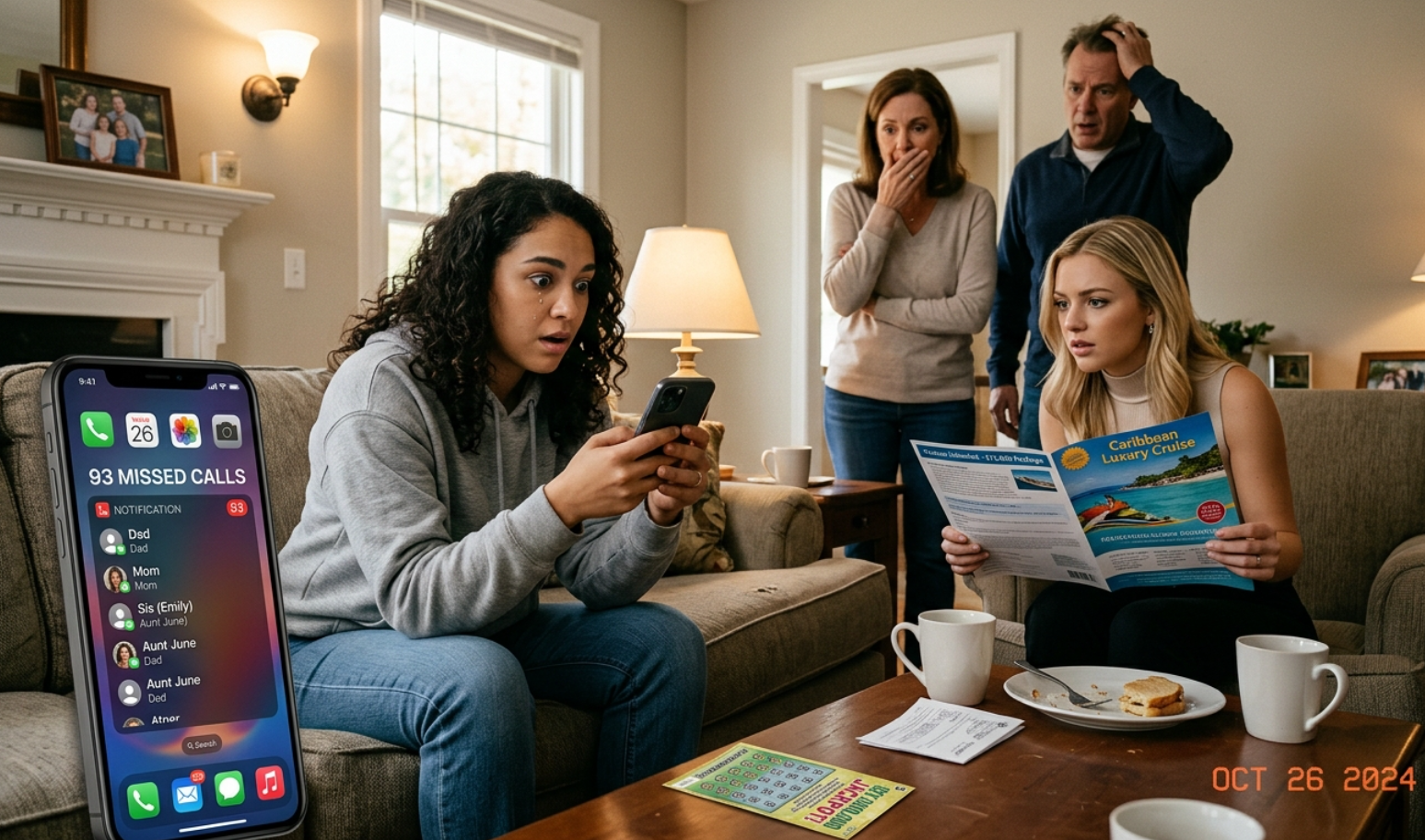
Or the ninety-three missed calls.
I thought about a little old woman squeezing my hand in a hallway on Thanksgiving.
Call Thomas Smith this week.
She had known.
She had always known.
And suddenly, I understood why she had given me that final lottery ticket.
It wasn’t a joke.
It wasn’t pity.
It wasn’t even luck.
It was her way of reminding me that sometimes the people who make you feel small have no idea how large your life is about to become.
My family had given my sister a $15,000 luxury cruise.
They had given me a $5 lottery ticket because they thought I was worth less.
They were wrong.
But the greatest lesson wasn’t that I became rich.
It was that I had been valuable long before the money arrived.
The lottery only changed my bank account.
Grandma changed my life.
And the woman standing in that garden years later wasn’t the forgotten daughter anymore.
She was Audrey Harrison.
Landscape architect.
Granddaughter.
Sister.
Founder.
Heir.
And, finally, free.
I looked at the little rose in the soil.
Then I smiled.
Some things take years to bloom.
But that doesn’t mean they were never growing.
Sometimes, beneath the surface, the roots are becoming strong enough to survive anything.
And sometimes…
the quietest daughter becomes the one nobody can ever silence again.