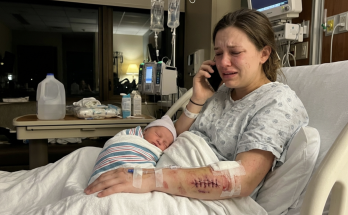
“Mom, why would Marcus demand five thousand dollars for a rug he knows I didn’t damage?”
I considered the question.
“I don’t know. We shouldn’t assume his motive without more information.”
“But what if he wants to make me look guilty?”
“Then the evidence will matter more than his accusations.”
She looked down at her hands.
“He always does this. Whenever I challenge him, he finds something to hold over my head. Money. His mother’s approval. My job. My reputation.”
I pulled my chair closer.
“Then one of the things we need to do is make sure you are no longer dependent on him for your safety or your ability to make decisions.”
She nodded.
“I don’t want to go back.”
“You don’t have to decide your entire future today. But you can decide where you sleep tonight.”
“With you.”
“Then that’s where you’ll sleep.”
For a moment, she looked like the little girl who used to fall asleep on the couch after Thanksgiving dinner, her head resting in my lap while the adults talked in the kitchen.
I wanted to take away every terrible thing she had experienced.
I couldn’t.
But I could make sure she did not have to face the next day alone.
At 3:16 PM, Detective Morgan called with an update.
The investigators had reviewed an initial portion of the available video footage. It appeared to show a vehicle consistent with Marcus’s car arriving near the terminal around the time Chloe had described.
They were still verifying the vehicle and assembling the full timeline.
The footage did not, by itself, establish what had happened inside the house.
But it gave the investigation an independent lead.
The detective also said officers were attempting to contact the housekeeper and determine whether she had witnessed anything relevant.
I thanked her.
Then she added, “One more thing. Your son-in-law has contacted the department.”
“What did he say?”
“He claims this is a private family dispute and that your daughter is making false allegations because of a marital argument.”
I closed my eyes briefly.
“Of course he does.”
“We’ll record his statement and compare it with the evidence. For now, please don’t contact him.”
“I won’t.”
After the call, I stood by the window and watched the sky darken.
Thanksgiving dinner was probably still going on at Marcus’s house.
The guests would be passing plates.
Someone would be pouring wine.
Sylvia would be telling stories.
Marcus would be smiling at his CEO, pretending that his life was exactly as he wanted it.
And somewhere in that beautiful dining room, a chair that should have belonged to Chloe would be occupied by another woman.
I wondered whether anyone at the table knew where my daughter was.
I wondered whether anyone had asked why she was missing.
Then my phone rang.
An unknown number.
I answered without speaking.
A woman’s voice whispered, “Mrs. Hayes?”
“Yes.”
“My name is Maria. I work at Sylvia’s house.”
I straightened.
“Are you safe right now?”
“I think so. I’m calling from outside. I don’t have much time.”
“Tell me what you need to tell me.”
Her breathing was unsteady.
“I heard what happened to Chloe last night. I wanted to help her, but Mrs. Sylvia told me to stay out of it.”
“Did you see anything?”
“I saw Marcus take Chloe’s phone. I heard shouting. Then I heard something break.”
I remained silent, allowing her to continue.
“Mrs. Sylvia told me to clean the hallway before the guests arrived. There were broken pieces near the dining room, and she told me not to tell anyone.”
“Did you see Chloe get hurt?”
“No. I was in the kitchen when the shouting started. But I heard her crying.”
“Do you know where she is now?”
“I heard Marcus tell his mother that Eleanor would collect her.”
I looked toward Chloe’s room.
Maria lowered her voice.
“There’s something else. After Marcus left, Mrs. Sylvia called someone. She said they needed to get rid of the folder before anyone found it.”
My pulse quickened.
“What folder?”
“I don’t know. I only heard her say it.”
“Did you see what happened to it?”
“No. I had to return to the kitchen.”
I took a slow breath.
“Maria, I appreciate you contacting me. I don’t want you to put yourself in danger. Please don’t search for anything or confront anyone. If you are willing, I can give you the detective’s official contact information so you can provide what you know directly.”
There was a long pause.
Then she said, “I want to tell the truth. But I’m afraid they’ll blame me.”
“The detective can explain your options and discuss how to communicate safely. You don’t have to make any decisions with me on this call.”
“Thank you.”
She ended the call.
I immediately informed Detective Morgan about the conversation and gave her the number that had called me.
I did not try to investigate the folder myself.
I did not call Sylvia.
I did not send Marcus an angry message.
I simply made sure the information reached the people responsible for determining whether it was relevant.
Then I sat beside my daughter.
“Mom?” Chloe asked quietly.
“Yes?”
“Is something happening?”
I took her hand.
“Someone may have information that could help establish what happened. The investigators will follow up.”
She looked frightened.
“What if they lie?”
“Then the investigators will examine what they can verify. We cannot control what other people say. We can control whether we tell the truth and preserve the evidence.”
Chloe nodded.
For the first time that day, she did not ask me to make the problem disappear.
She asked me to stay.
And I did.
At 6:42 PM, while Chloe was resting, Marcus sent his final message of the day.
You have until tomorrow morning to bring her home. After that, don’t expect us to help either of you.
I read it twice.
Then I put the phone away.
Marcus still believed the world worked according to his rules: the person with the money decided what was true, the person with the title decided who mattered, and the person who stayed silent could be treated however he pleased.
He had not yet understood that Chloe’s life was no longer his to control.
Nor was mine.
I had spent years believing that my greatest achievement was putting dangerous people behind bars.
But sitting in that hospital room, watching my daughter sleep, I realized that the most important work I would ever do might not happen in a courtroom at all.
It might happen in the quiet decisions that followed.
Helping Chloe recover.
Protecting her privacy.
Making sure she had independent legal advice.
Preserving evidence without manipulating it.
And refusing to let fear determine what she was allowed to say.
The old badge lay in my handbag.
I no longer needed to hold it to remember who I was.
I had spent twenty-five years learning that justice was rarely delivered in one dramatic moment. It came through careful work, honest witnesses, records that survived scrutiny, and people who refused to abandon the truth when telling it became inconvenient.
That night, Chloe slept safely in the hospital.
Marcus sat at his Thanksgiving table.
And somewhere between those two places, the facts were beginning to catch up with the story he had told himself.
But the most important revelation had not yet arrived.
Because at 8:13 PM, Daniel Reeves called again.
His voice was unusually serious.
“Eleanor, I need you to listen carefully. The financial records Chloe mentioned may be connected to something much larger than a disputed payment.”
I stood and walked into the corridor.
“What have you found?”
“We haven’t established the connection yet. But an investigator has identified a company that appears in several of the records. It has received payments linked to projects Marcus worked on.”
“And?”
“And one of the documents reportedly carries Chloe’s name as an approving engineer.”
My stomach tightened.
“She told me she never approved those payments.”
“Then that needs to be examined. Don’t assume who created the document or why. But make sure she preserves any records she already possesses.”
“I will.”
Daniel paused.
“Eleanor, there’s another issue. If someone is trying to conceal evidence, we need to be particularly careful about how we handle this. No unauthorized access, no confrontation, and no attempts to obtain company files she isn’t entitled to possess.”
“Understood.”
After we ended the call, I returned to Chloe’s room.
She was awake, staring at the ceiling.
“Mom,” she whispered, “I think I know why he wanted me out of that house so badly.”
I sat beside her.
“Tell me.”
She reached for her phone, then stopped.
“I remember an email. It came two days ago. Marcus thought I was asleep, but I saw him reading it in bed.”
“What did it say?”
“I couldn’t read the whole thing. But I remember one sentence.”
Her voice shook.
“Someone wrote, ‘If Chloe asks questions, make sure she can’t access the records before Friday.’”
I felt the room grow very quiet.
Friday was the day after Thanksgiving.
And Marcus had thrown his wife out of the house before dawn.
I did not tell Chloe what I was thinking.
It was too early to draw conclusions.
Instead, I asked the only question that mattered.
“Do you remember who sent the email?”
She closed her eyes, searching her memory.
Then she whispered a name.
A name that made me reach for my phone and call Daniel back immediately.
Because it belonged to someone who was supposed to be sitting at Marcus’s Thanksgiving table that very evening.
And someone who might know exactly why my daughter had been forced into the cold.
PART 4
The name Chloe whispered was Richard Coleman—Marcus’s CEO.
For several seconds, I said nothing. Richard was the very man Marcus had been preparing to impress at Thanksgiving dinner.
The next morning, investigators began examining the financial records and interviewing witnesses. Maria, the housekeeper, provided her account of the previous night. Chloe also preserved the records she already had, which investigators reviewed through the proper channels.
The evidence revealed that Chloe’s name had been used to authorize payments she had never approved. Investigators traced suspicious transactions to a consulting company connected to the financial inquiry. Richard cooperated with investigators, providing records that helped clarify who had approved the payments.
Marcus’s confident story began to collapse.
The medical documentation, messages, witness accounts, and video footage also contradicted parts of his explanation of how Chloe had ended up at the terminal.
When Marcus learned that investigators wanted to question him further, he called me.
“Eleanor, please. We can settle this privately. Tell Chloe to withdraw her accusations.”
I looked at the daughter he had abandoned, now recovering in my home.
“You had the chance to treat her with kindness,” I replied. “You chose cruelty instead.”
He went silent.
“I never knew you were a federal prosecutor,” he finally muttered.
“I’m retired, Marcus. I cannot decide your fate, and I won’t try to. The evidence and the law will determine what happens next.”
I ended the call.
Months later, the investigation led to formal charges against Marcus relating to the financial scheme and his alleged role in the assault. The case proceeded through the legal system, where the evidence was tested and the allegations were addressed in court. Sylvia also faced legal consequences for her own conduct.
Chloe filed for divorce.
She never returned to that house.
Instead, she rebuilt her life, returned to engineering, and gradually recovered her confidence. On the following Thanksgiving, she stood beside me in my kitchen, helping prepare the turkey.
There were no expensive decorations or influential guests. Just warm food, soft music, and the peaceful sound of someone laughing without fear.
Before dinner, Chloe hugged me.
“Mom, do you know what I remember most about that terrible morning?”
“What, sweetheart?”
“You didn’t promise to destroy them. You promised not to leave me alone.”
I held her close.
“Because you never needed revenge, Chloe. You needed someone to believe you and help you find your way out.”
She smiled through her tears.
That evening, we set an extra place at the table for Maria, who had become a dear friend.
And as the candles flickered, I finally understood something I had spent my career learning but had sometimes forgotten at home:
Justice isn’t about making powerful people afraid of you. It’s about making sure they can no longer use their power to make others afraid.
Marcus had once thrown my daughter into the cold because he believed she had nowhere else to go.
He was wrong.
She had a home.
She had a future.
And she had a mother who would stand beside her—not because of an old badge, but because love should never require someone to suffer in silence.
The End.
He Abandoned His Wife on Thanksgiving—Never Knowing Her Mother Was a Retired Federal Prosecutor
Part 2 of 2