I looked at him.
“What arrangement?”
“The garage apartment. The agreement we gave you. We haven’t heard back.”
“I remember.”
“Well, the owner is waiting for an answer. We need to know whether you’re taking it.”
I smiled gently.
“That’s why I invited you here.”
Stephanie sat down, but her eyes kept moving around the room.
I placed the pot roast in the middle of the table. The smell filled the apartment, and for a moment I remembered Calvin sitting across from me after a long day at the ranch.
He always said my pot roast could make a bad day better.
I wished he were there.
Not because I needed him to speak for me.
Because I missed having someone who loved me without expecting something in return.
“Let’s eat first,” I said.
Brett finally sat down.
He took a large helping of potatoes and gravy.
“Smells good,” he said.
“Thank you.”
Stephanie barely touched her food.
“Mama, seriously. Where did this money come from?”
I put down my fork.
“Do you remember the coffee cans your father kept in the barn?”
Stephanie frowned.
“What coffee cans?”
“The ones he used to keep under his workbench.”
“Oh, those old things?”
“Yes. Every time your father received a bonus, he put some money aside. Every time he sold a calf from the little herd he raised on his own, he saved the money.”
Brett stopped chewing.
“How much are we talking about?”
I looked at him.
“Enough.”
“That’s not an answer.”
“It’s the answer you’re getting tonight.”
He wiped his mouth with a napkin.
“Look, Delia, I’m happy you’ve found somewhere to stay. But you need to be realistic. You’re seventy-one. You don’t have a husband anymore. You don’t have a job. Money disappears faster than people think.”
“I know.”
“Then you understand why our arrangement made sense.”
I nodded.
“Actually, Brett, that’s exactly why I wanted to talk to you.”
I reached for the envelope beside Stephanie’s plate.
It was a plain white envelope with her name written across the front.
I slid it toward her.
She stared at it.
“What’s this?”
“Something I wanted you to read.”
She opened it and pulled out several pages.
The first page was a bank statement.
The second was a copy of the property purchase agreement.
The third was a letter from the attorney who had helped me arrange everything.
Stephanie read the first page.
Then she read it again.
Her face changed.
“Mama…”
Brett leaned across the table.
“What is it?”
She handed him the bank statement.
His eyes moved quickly down the page.
Then he looked at me.
“Two hundred and eighty-seven thousand dollars?”
I nodded.
“That’s what your father saved over the years, along with the money we had already put away.”
Brett turned the page.
There was another figure.
The ranch house had never been ours, but Calvin and I had purchased a small piece of land many years earlier. It was outside town, near a quiet creek, and we had planned to build a retirement home there someday.
After Calvin died, I sold it.
Between the savings, the land, and the money we had accumulated together, I had enough to buy a modest little house.
Not a mansion.
Not a luxury retirement community.
Just a comfortable two-bedroom home with a small garden and a porch.
The purchase agreement showed that I had paid for it without borrowing money.
Stephanie stared at the paperwork.
“You bought a house?”
“Yes, sweetheart.”
“When?”
“Last week.”
“Without telling me?”
I folded my hands.
“I didn’t realize I needed permission.”
Her eyes filled with tears.
“Mama, that’s not fair.”
I almost laughed.
Not because anything was funny.
Because of that word.
Fair.
The same word Brett had used when he handed me a lease demanding every cent of my pension.
Brett put the papers down.
“Okay. This changes things.”
I looked at him.
“Does it?”
“Of course. We need to reconsider the arrangement.”
“What arrangement?”
“The one we discussed. Maybe we could adjust the rent. You could contribute less.”
I stared at him for a moment.
“Less than what?”
He shifted in his chair.
“Well, obviously, we wouldn’t need all your pension now.”
I looked at Stephanie.
“Would I still have to pick up the children?”
She opened her mouth, but nothing came out.
“And would I still have to cook supper every night?”
Brett cleared his throat.
“Delia, don’t twist my words.”
“I’m not twisting anything. I’m asking.”
He leaned back.
“You’re making this unnecessarily difficult.”
I took a slow breath.
“Let me tell you something, Brett. For forty-two years, I got up before sunrise. I cooked breakfast for your father, packed his lunch, washed his clothes, kept our home, helped with the animals when the ranch was short-handed, and raised a daughter.”
I looked at Stephanie.
“I did all of that because I loved my family. I never sent your father a bill for cooking his supper.”
Stephanie looked down.
“But after he died, the first thing you two brought me was a lease.”
Neither of them spoke.
I continued.
“You didn’t ask what I wanted. You didn’t ask whether I was lonely. You didn’t ask whether I needed help finding somewhere to live. You simply decided how much my pension was worth to you.”
“Mama, we were trying to help,” Stephanie whispered.
I looked at her for a long moment.
“Then why did the agreement say I would owe you my entire pension?”
She wiped her eyes.
Brett pushed his chair back.
“Look, this is getting emotional. We came here to discuss a practical solution.”
“No,” I said quietly. “You came here because you thought I had no other choice.”
He looked offended.
“That’s ridiculous.”
“Is it?”
I stood up and walked to the kitchen.
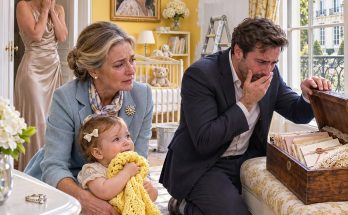
I returned with a small wooden box.
It was Calvin’s old cigar box, although he had never smoked cigars. He used it to keep important papers.
I placed it on the table.
Inside were photographs, handwritten notes, and a small envelope.
I took out one photograph.
It showed Calvin standing beside a young girl with two missing front teeth.
Stephanie.
She was about eight years old, wearing a red dress and holding a calf’s bottle.
“Your father took this picture the summer you learned to feed the calves,” I said.
Stephanie smiled faintly.
“I remember that.”
“He was so proud of you.”
I placed the photograph beside her plate.
Then I pulled out another piece of paper.
It was a handwritten note from Calvin.
His handwriting was uneven because his hands had begun to shake during his final months.
He had written it about a year before he died.
I had found it in the box while sorting through his things.
I had not shown it to anyone.
Not even Stephanie.
“Your father wrote this for me,” I said.
I unfolded it carefully.
“Delia, if you’re reading this, I hope I’m still around to complain about the weather. But if I’m not, I want you to remember something. We worked too hard to spend our old age worrying about what other people think we owe them. Take care of yourself. Enjoy the little house by the creek if we never get to build it. And don’t let anyone make you feel guilty for keeping what we worked for.”
My voice broke.
I stopped reading.
For a moment, nobody moved.
Then Stephanie began to cry.
Brett looked uncomfortable.
I folded the note.
“Your father loved you both. He wanted you to have good lives. But he also wanted me to have one.”
Stephanie reached for my hand.
“Mama, I’m sorry.”
I let her hold it.
But I didn’t squeeze back immediately.
There was something I needed to understand first.
“Stephanie, why did you agree to that lease?”
She looked at Brett.
Then she looked at me.
“I thought it would make things easier.”
“For whom?”
She didn’t answer.
I waited.
Finally, she whispered, “Brett said we needed the money.”
I turned toward him.
“Why?”
Brett’s expression hardened.
“That’s none of your business.”
Stephanie looked startled.
“Brett…”
I slowly sat down.
“Well, now I’m interested.”
He rubbed his forehead.
“We’ve had some financial problems. That’s all.”
“What kind of problems?”
“Business expenses.”
Stephanie shook her head.
“That’s not all of it.”
Brett glared at her.
She swallowed.
“He’s been behind on the mortgage for three months, Mama.”
I felt something cold settle in my stomach.
“Three months?”
She nodded.
“And there are credit cards.”
Brett stood.
“Stephanie, stop.”
But she continued.
“We owe almost twenty thousand dollars. He said if you moved into the garage apartment, your pension would help us catch up.”
I looked at my daughter.
“And the cooking? The school pickups?”
She lowered her head.
“I thought it would help me, too. I’ve been working longer hours, and the children need someone after school.”
There it was.
The truth.
They hadn’t been offering me a home.
They had been offering me a job disguised as a family favor.
And they expected me to pay them for the privilege.
I felt terribly sad.
Not angry.
Sad.
Because I had spent my whole life believing that family was the one place where you didn’t have to prove your worth.
That night, I discovered my daughter had started measuring mine in dollars.
Brett grabbed his jacket.
“We’re leaving.”
“That’s fine,” I said.
He looked at the envelope.
“What are you planning to do with all that money?”
I raised my eyes.
“Enjoy my retirement.”
He gave a humorless laugh.
“You’re going to need help eventually.”
“Perhaps. But I will choose who helps me.”
Stephanie stood slowly.
“Mama, can I come back tomorrow? Just you and me?”
I nodded.
“You’re always welcome to visit.”
She walked toward the door.
Before leaving, she turned around.
“Do you still have the old photographs?”
“All of them.”
“Could I see them sometime?”
“Of course.”
Then she followed Brett down the stairs.
I closed the door.
I stood in the quiet apartment for a long time.
Then I went to the window and watched their car disappear into the evening traffic.
Wynell came upstairs about twenty minutes later carrying two cups of coffee.
“Well?” she asked.
I smiled weakly.
“They know.”
She looked at the empty plates.
“Did they behave?”
I laughed.
“About as well as a pair of hungry raccoons.”
Wynell laughed so hard she nearly spilled her coffee.
Then she sat beside me.
“How are you feeling?”
I looked at the photograph of Calvin on the shelf.
“Like I just buried my husband twice.”
She reached across the table and held my hand.
We sat quietly for a while.
Outside, the highway lights flickered on.
And for the first time since Calvin’s funeral, I didn’t feel like I was waiting for my life to begin again.
I felt like it already had.
But the following morning, something happened that I hadn’t expected.
At 8:15, my phone rang.
It was Stephanie.
“Mama, I need to talk to you.”
“What’s wrong, sweetheart?”
She was crying.
“Brett found out about the house.”
I frowned.
“He was there last night.”
“No. I mean he found out something else.”
“What?”
There was a long silence.
Then she said something that made me sit down.
“He wants me to ask you for a loan.”
I closed my eyes.
“How much?”
“Forty thousand dollars.”
I didn’t answer.
“Mama, please don’t hang up.”
“I’m listening.”
“He says if we don’t pay the mortgage arrears and the other debts, the bank might start foreclosure proceedings.”
I stared at the coffee cup in front of me.
“Stephanie, why does he need forty thousand dollars?”
“He says it’s to save the house.”
I took a breath.
Then I asked the question I had been afraid to ask since the night before.
“Does he know how much money your father and I saved?”
She hesitated.
“Yes.”
“Exactly how much?”
Another silence.
Then she whispered:
“Mama, I think he knows more than you told him.”
My stomach tightened.
“What do you mean?”
“I found something in his office this morning.”
“What?”
“A printed copy of your bank statement.”
I felt my fingers tighten around the phone.
“How did he get that?”
“I don’t know.”
Then Stephanie began crying harder.
“And Mama… there was something else on his desk.”
“What was it?”
She took a shaky breath.
“It was a loan application.”
I closed my eyes.
“Whose name was on it?”
She whispered the answer.
“Yours, Mama.”
I couldn’t speak.
Because I had never signed a loan application.
And I had never given Brett permission to use my name.
For several seconds, I couldn’t find my voice.
I sat at my kitchen table with the telephone pressed against my ear, staring at Calvin’s old photograph on the shelf.
“What did you say, sweetheart?”
Stephanie was crying so hard I could barely understand her.
“The loan application has your name on it, Mama. Your full name. Your date of birth. Your old ranch address. Everything.”
I closed my eyes.
“Did I sign it?”
“No.”
“Then you know what that means.”
“I know.”
I heard her take a shaky breath.
“Mama, I think Brett is planning to use your savings as collateral.”
I looked toward the window.
The morning sunlight was coming through my yellow curtains. A little bird was sitting on the railing outside.
It was such a peaceful morning.
And yet my daughter’s words made the whole room feel cold.
“Stephanie, listen to me carefully. Don’t touch anything else on his desk. Don’t argue with him about it. And don’t let him know you called me.”
“Okay.”
“Do you have a copy of the application?”
“Yes. I took pictures with my phone.”
“Good. Keep them somewhere safe.”
She began crying again.
“Mama, I’m so sorry.”
I didn’t answer immediately.
I wanted to tell her that everything would be fine.
I wanted to tell her that I would fix it, just as I had fixed so many things throughout her childhood.
But she was no longer a little girl with a scraped knee.
She was a grown woman who had allowed her husband to place an impossible burden on her mother.
And I couldn’t keep rescuing her from every decision.
“Stephanie, I love you,” I finally said. “But this time, I need you to tell the truth, even if it hurts.”
“I will.”
We ended the call.
I sat there for another ten minutes before picking up my purse.
Then I drove to the bank.
The same young man who had helped me two weeks earlier recognized me.
“Good morning, Mrs. Delia. How can I help you?”
“I need to speak with someone about my accounts. And I need to make sure nobody can borrow money using my information.”
His expression became serious.
He called the branch manager.
Her name was Mrs. Henderson. She was probably in her late fifties, with silver hair and glasses that rested on the end of her nose.
She invited me into her office.
I explained everything.
I showed her the photographs Stephanie had sent.
She studied the documents carefully.
“Mrs. Delia, have you ever authorized your son-in-law to access your accounts?”
“No.”
“Have you signed any loan documents?”
“No.”
“Have you given him permission to use your personal information?”
“Absolutely not.”
She nodded.
“Then we need to take precautions immediately.”
She helped me place additional security restrictions on my accounts and explained how to report the suspected identity misuse.
I also contacted an attorney Wynell had recommended.
His name was Mr. Collins.
He listened without interrupting while I explained the situation.
When I finished, he leaned back in his chair.
“Mrs. Delia, I want you to understand something. Your money is yours. Your son-in-law cannot simply decide to use your savings because he is having financial difficulties.”
“I understand.”
“And if someone forged your signature, that’s a serious matter.”
“I understand that, too.”
He looked at me kindly.
“Do you want to protect your daughter?”
I thought about that question.
“Yes.”
“Do you want to protect your son-in-law?”
I looked down at my hands.
“I want to protect myself.”
He nodded.
“Then we’ll start there.”
That afternoon, I filed the necessary reports and made sure my financial information was protected.
I also made one decision.
I would not give Brett a single dollar.
Not because I wanted him to suffer.
Because I had finally learned that helping someone and allowing them to take advantage of you were two very different things.
The following evening, Stephanie came to my house alone.
She looked exhausted.
Her hair was pulled into a loose ponytail, and her eyes were swollen from crying.
I opened the door and stepped aside.
“Come in, sweetheart.”
She walked inside slowly.
For a moment, she simply stood in the living room looking at everything.
Then she noticed the photograph of her father on the bookshelf.
She picked it up.
“He looks so young here.”
“He was forty-three.”
“I remember this shirt.”
“He wore it every Sunday until I threatened to throw it away.”
She smiled through her tears.
Then she sat down.
“Mama, I need to tell you everything.”
I poured two cups of tea and sat opposite her.
“Go ahead.”
She took a deep breath.
“Brett has been in trouble for almost a year.”
I listened.
“He started borrowing money to keep his insurance business going. He said it was temporary. He told me he had some clients who would pay him back.”
She rubbed her hands together.
“Then he started using our credit cards. At first, it was a few hundred dollars. Then a few thousand.”
“Did you know?”
“Not all of it.”
She looked ashamed.
“I trusted him. Every time I asked, he said he was handling it.”
“What happened to the mortgage?”
“He stopped paying because he was trying to cover the other debts.”
I remained quiet.
“He told me your pension would solve everything. He said you wouldn’t need much because you’d have a room, food, and family around you.”
I looked at her.
“And you believed him?”
She started crying.
“I wanted to believe him.”
That answer hurt more than I expected.
Stephanie continued.
“Then he started talking about your savings. He said you were too old to manage that much money. He said we could help you invest it.”
I slowly put down my cup.
“Invest it?”
“That’s what he called it.”
“Did he ask you to convince me?”
She nodded.
“He said you would listen to me because I’m your daughter.”
I looked toward the photograph of Calvin.
He had always told me that money showed people what they truly valued.
I had never understood exactly what he meant.
Now I did.
“Stephanie, what did the loan application say?”
She opened her handbag and pulled out her phone.
She showed me the photographs.
There was my name.
My address.
My date of birth.
And a signature at the bottom.
It looked similar to mine.
But it wasn’t mine.
I stared at it.
Then I noticed something else.
The application listed my new savings account as an asset.
I hadn’t even told Brett the account number.
“How did he get this information?” I asked.
Stephanie lowered her head.
“He went through the papers in the box of your belongings that I brought home after the funeral.”
I felt a strange heaviness in my chest.
Calvin’s papers.
Our private documents.
The things I had trusted my daughter to help sort.
“He took them?”
“Yes.”
I looked at the photographs again.
Then I handed the phone back.
“Thank you for telling me.”
Stephanie looked at me.
“Are you going to report him?”
“I already have.”
She covered her mouth.
“Oh, Mama.”
“I won’t lie for him, Stephanie.”
“I know.”
“And I won’t give him money.”
She nodded slowly.
“I know that, too.”
Then she began to cry.
This time, I moved closer and put my arms around her.
She leaned against me like she had when she was a little girl.
But something had changed.
I could comfort her.
I could love her.
I could forgive her.
What I could no longer do was take responsibility for the choices she made as an adult.
Three days later, Brett showed up at my door.
He didn’t call first.
He simply knocked.
When I opened it, he was holding a folder.
“Delia, we need to talk.”
I didn’t invite him in.
“What about?”
He looked past me into the house.
“Can I come inside?”
“No. You can talk from there.”
His jaw tightened.
“Stephanie told me you’ve been asking questions.”
“I have.”
“She shouldn’t have gotten involved in our financial business.”
“She is my daughter. You used my name on a loan application.”
He looked away.
“That was a misunderstanding.”
“Was my signature a misunderstanding, too?”
He sighed.
“Look, I was trying to help everyone.”
“By signing my name?”
“I had no intention of hurting you.”
I looked at him for a long moment.
“Brett, if a stranger had taken my personal information and signed my name to a loan application, would you call that helping?”
He said nothing.
He opened his folder and pulled out several pages.
“I have a proposal.”
I almost smiled.
Another proposal.
He seemed to have a proposal for every occasion.
“Go on.”
He placed the papers on the small table beside my door.
“We can make this right. You lend us forty thousand dollars. We pay off the mortgage arrears and the credit cards. In return, we’ll pay you back over five years.”
I looked at the documents.
There was another agreement.
This one offered to pay me interest.
I picked it up and read the first page.
Then I noticed the second page.
It stated that I would allow Brett and Stephanie to use my financial assets as security for future borrowing.
I put it down.
“No.”
He frowned.
“You haven’t even considered it.”
“I considered the last agreement you gave me. That was enough.”
“You’re being unreasonable.”
I looked directly at him.
“No, Brett. I’m being careful.”
He stepped closer.
“Your daughter is going to lose her home.”
“That’s very unfortunate.”
“Your grandchildren could lose their rooms.”
My heart tightened.
I loved those children.
I had spent countless afternoons making cookies with them, helping with homework, and listening to their little stories.
But Brett knew exactly where to aim.
He was using them as a weapon.
I stepped back.
“Don’t bring the children into this.”
“I’m not. I’m telling you the truth.”
“Then tell me another truth. Why did you need my entire pension if all you wanted was to help me find a place to live?”
He stared at me.
I continued.
“Why did you want me to cook, clean, and drive your children around? Why did you need my savings? And why did you sign my name?”
His face turned red.
“Because you have more money than you know what to do with!”
The words came out before he could stop himself.
We both stood still.
Then he looked at me.
I had never seen him look so angry.
“Do you know how hard things are right now? We have bills. We have responsibilities. We have children.”
“So do other people.”
“You don’t understand what it’s like to run a household.”
I almost laughed.
For forty-two years, I had helped run a household while working alongside my husband.
I had raised a child, managed a ranch home, stretched groceries, paid bills, and made every dollar count.
But I didn’t argue.
I simply said:
“I understand more than you think.”
He picked up his folder.
“You’re making a big mistake.”
“Perhaps.”
“Stephanie won’t forgive you if we lose the house.”
I looked at him.
“Then she will have to make that decision herself.”
He turned and walked down the stairs.
Before getting into his car, he shouted:
“Don’t come crying to us when you’re old and need help!”
I watched him drive away.
Then I closed the door.
My hands were shaking.
Not because I was afraid of him.
Because I was sad that the man my daughter married had become someone I couldn’t trust.
That evening, Wynell came upstairs with a plate of biscuits.
She found me sitting on the porch.
“Did the insurance salesman come by?”
I nodded.
“He’s persistent.”
“That’s one word for it.”
I told her what had happened.
She shook her head.
“Delia Mae, you need to stop feeling guilty for having money.”
I looked at her.
“Sometimes I wonder whether Calvin should have told the children.”
Wynell sat beside me.
“Would it have changed anything?”
I thought about that.
“I don’t know.”
“Then don’t spend your retirement wondering about something you can’t change.”
She handed me a biscuit.
“Eat. You’re getting too thin.”
I laughed.
And for the first time in days, I felt a little lighter.
PART 5
Two weeks passed.
During that time, I heard very little from Stephanie.
She sent a few messages asking how I was doing.
I replied politely.
But something told me she was struggling.
Then, on a Thursday morning, my attorney called.
“Mrs. Delia, we’ve received an update regarding the financial documents.”
I sat down.
“What kind of update?”
“The institution that received the application has placed it under review. They have also requested additional information because the signature and authorization could not be verified.”
I closed my eyes.
“Thank you.”
“There is another matter.”
“What is it?”
“Your son-in-law has been contacting people who know you. We have received a report that he told someone you had agreed to support his business financially.”
I felt my stomach tighten.
“That’s not true.”
“I know. We have documented your position.”
He explained that I should continue keeping records of every communication and avoid signing anything without independent legal advice.
I thanked him.
After the call, I sat quietly.
I thought about Calvin.
He had never been a rich man in the way people imagined wealth.
He didn’t drive expensive cars.
He didn’t wear fancy watches.
He bought the same brand of boots every year.
He fixed broken fences instead of hiring someone.
He saved.
Not because he wanted to become wealthy.
Because he wanted us to be safe.
And now, years after his death, those savings had become the reason someone was trying to take advantage of me.
I decided I would not let that happen.
That afternoon, I went to the small house by the creek.
It was a modest place.
Two bedrooms, one bathroom, a kitchen with old-fashioned cabinets, and a porch that needed painting.
But it was mine.
I walked into the backyard and stood beside the little garden.
I could already imagine tomatoes growing there.
I could imagine roses along the fence.
I could imagine Calvin sitting in a chair, complaining about the mosquitoes.
I smiled.
Then I heard a car pull into the driveway.
It was Stephanie.
She got out alone.
Her eyes were red.
“Mama?”
I walked toward her.
“Hello, sweetheart.”
She looked at the house.
“I didn’t know you were coming here today.”
“I wanted to check on the garden.”
She nodded.
Then she looked down.
“Mama, Brett and I are separating.”
I didn’t know what to say.
She started crying.
“He’s furious with me. He says I betrayed him by telling you about the loan application.”
I put my hand on her shoulder.
“Are you safe?”
She nodded.
“Yes. I’m staying with my friend for now.”
“Good.”
She looked at me.
“I should have listened when you asked me whether the arrangement was fair.”
I didn’t interrupt.
“I thought I was being practical. I thought if you moved in with us, everything would become easier.”
“For whom?”
She looked away.
“For us.”
I nodded.
“That’s what I thought.”
She wiped her cheeks.
“I don’t know how to fix this.”
I looked at the house.
“Sometimes, sweetheart, the first step is admitting what you broke.”
She nodded.
Then she said something that surprised me.
“I found something else.”
“What?”
She reached into her handbag and pulled out a small photograph.
It was an old picture of Calvin holding her when she was a baby.
“Do you remember when Daddy used to put me on his shoulders?”
“Of course.”
“He used to tell me I could be anything I wanted.”
I smiled.
“He did.”
She looked at the picture.
“Do you think he would be disappointed in me?”
I took a slow breath.
“I think your father would want you to become a better person than you were yesterday.”
She started crying again.
“And do you think you can forgive me?”
I looked at my daughter.
I remembered the little girl who used to run through the ranch yard with muddy shoes.
The teenager who cried when her first boyfriend broke her heart.
The young woman who held my hand when Calvin went into the hospital.
I loved all those versions of her.
And I still loved the woman standing in front of me.
But love didn’t mean pretending nothing had happened.
“I can forgive you,” I said. “But trust takes longer.”
She nodded.
“I understand.”
We stood together in the yard.
For a moment, neither of us spoke.
Then she asked:
“Could I help you plant the garden?”
I looked at her.
“Do you know how to plant tomatoes?”
She gave a small smile.
“Not really.”
“Well, then you’re going to learn.”
And for the first time in months, we laughed together.
The following months were not easy.
Stephanie and Brett’s marriage officially ended.
The financial investigation continued, and Brett had to answer for the documents he had submitted using my personal information.
I didn’t celebrate his troubles.
I didn’t want revenge.
I simply wanted the truth to be recognized.
Stephanie moved into a small rental house with the children.
She found a second job and began working toward financial independence.
It wasn’t glamorous.
She had to learn how to budget, pay bills, and make difficult choices.
Sometimes she called me for advice.
Sometimes she came over just to sit on the porch.
I never gave her money.
Not because I didn’t care.
Because I wanted her to understand that she could build a life without depending on someone else’s savings.
One afternoon, she brought the children to my house.
My grandson, Noah, was eight.
My granddaughter, Lily, was six.
They ran through the front door like they owned the place.
“Grandma!”
I laughed as they wrapped their arms around my waist.
“Careful! You’re going to knock me over.”
Noah looked toward the kitchen.
“Did you make cookies?”
“Not yet.”
“Can we help?”
“Only if you promise not to eat all the dough.”
Lily raised her hand.
“I promise.”
Noah looked at her.
“You always eat the dough.”
“That’s because it’s good.”
We all laughed.
Stephanie stood by the doorway watching us.
Her eyes filled with tears.
Later, while the children were outside, she came into the kitchen.
“Mama, I want to tell you something.”
“What is it?”
“I’ve been thinking about that lease.”
I wiped my hands on a towel.
“Go ahead.”
“I can’t believe I let Brett hand you that paper.”
She looked down.
“You were seventy-one. You had just buried Daddy. You were losing the only home you’d known for forty-two years. And instead of asking how you were feeling, I helped him calculate how much of your pension we could take.”
I didn’t speak.
She continued.
“I don’t think I’ll ever forget that.”
I put the towel down.
“Neither will I.”
She nodded.
“I don’t expect you to.”
I walked over and hugged her.
“Stephanie, you made a terrible mistake. But you are allowed to spend the rest of your life becoming someone who wouldn’t make that mistake again.”
She cried into my shoulder.
“I love you, Mama.”
“I love you, too.”
That evening, after everyone left, I sat alone on the porch.
The sun was setting behind the trees.
I could hear crickets in the grass and a dog barking somewhere down the road.
I thought about the last year.
Losing Calvin.
Leaving the ranch.
Finding Wynell’s apartment.
Buying my little house.
Discovering what my daughter and son-in-law had planned.
It had been a difficult year.
But I had learned something important.
Being old did not mean being helpless.
Being a mother did not mean sacrificing everything.
And being a widow did not mean my life was over.
I still had choices.
I still had dreams.
I still had a future.
PART 6
One year after Calvin died, I held a small supper at my house.
I invited Wynell.
I invited Stephanie and the children.
I even invited a few of the old ranch workers who had known Calvin for decades.
Nobody brought expensive gifts.
Wynell brought pie.
One of the ranch hands brought a jar of homemade pickles.
Stephanie brought flowers from her garden.
We ate pot roast, mashed potatoes, green beans, and warm bread.
After supper, everyone went outside.
The children ran around the yard.
Wynell sat on the porch with a cup of coffee.
Stephanie helped me clear the dishes.
When the kitchen was quiet, she reached into her handbag.
“I brought something for you.”
She handed me a small wooden frame.
Inside was a photograph of Calvin standing beside the creek.
It was one I had never seen before.
On the back, she had written:
For Mama, who taught me that love should never have to be purchased.
I stared at the words.
Then I looked at her.
“Where did you find this?”
“Daddy took it years ago. I found it in one of the boxes.”
I ran my fingers over the frame.
“He would have liked this.”
“I hope so.”
I hugged her.
Then I placed the photograph on the mantel beside our wedding picture.
Later that evening, after everyone had gone home, I walked into the bedroom and opened the drawer where I kept Calvin’s old belongings.
There was his watch.
His pocketknife.
His wedding ring.
And the handwritten note he had left me.
I unfolded it once more.
Take care of yourself. Enjoy the little house by the creek if we never get to build it. And don’t let anyone make you feel guilty for keeping what we worked for.
I smiled.
“We did it, Calvin,” I whispered.
“We got our little house.”
I put the note back in the drawer.
Then I walked outside.
The night was cool.
The moon was bright.
I sat in the old wooden chair on the porch and looked toward the creek.
For forty-two years, I had been someone’s wife.
For many years, I had been someone’s mother.
And for a while, after Calvin died, I had been afraid that without those roles, there would be nothing left of me.
I was wrong.
There was still Delia.
A woman who liked yellow curtains.
A woman who made too much pot roast.
A woman who enjoyed coffee with her old friend.
A woman who had finally learned that saying no did not make her cruel.
The next morning, I received a text from Stephanie.
It read:
“Good morning, Mama. Thank you for supper. I hope one day I can be as strong as you.”
I smiled and typed back:
“You don’t have to be like me, sweetheart. Just learn to stand on your own two feet. And remember, I will always love you.”
Then I put my phone down and made myself a cup of coffee.
My pension check would arrive at the end of the month.
Every dollar would remain in my account.
Nobody would tell me what I owed them.
Nobody would decide how I should spend my days.
And nobody would make me sign away my independence in exchange for a place to sleep.
I had a home.
I had my memories.
I had my family, even if we had to learn how to love one another differently.
Most importantly, I had my dignity.
And that was worth more than every dollar in Calvin’s coffee cans.
My Daughter and Her Husband Came Expecting an Answer About My Pension, but I Had Prepared a Dinner They Would Never Forget
I had spent most of my life believing that my daughter would never make me feel like a burden.
At seventy-one, I was beginning to understand how wrong a mother could be.
My name was Delia.
My husband, Calvin, was gone.
And the two people sitting across from me wanted an answer about the little apartment above their garage.
They had already decided what it should cost me.
My entire monthly pension.
Every last dollar of the $1,380 I received.
I had not forgotten the agreement.
I had read it carefully.
More than once.
What bothered me was not only the amount of money.
It was how easily they had decided what my remaining years were worth.
Brett was the one who brought it up.
He was my son-in-law, and he had always liked to speak as though every problem could be settled with a piece of paper.
That evening was no different.
He looked at me across the table and asked whether I had made up my mind.
I asked him to be specific.
He reminded me about the garage apartment.
The agreement.
The answer he and Stephanie had been expecting.
He spoke as though we were discussing an ordinary business arrangement.
Something practical.
Something reasonable.
I looked at him for a moment before answering.
“I know exactly what you’re asking about.”
He seemed relieved.
At least, that was how I understood his expression.
He probably thought I was finally ready to agree.
I had a different reason for inviting them.
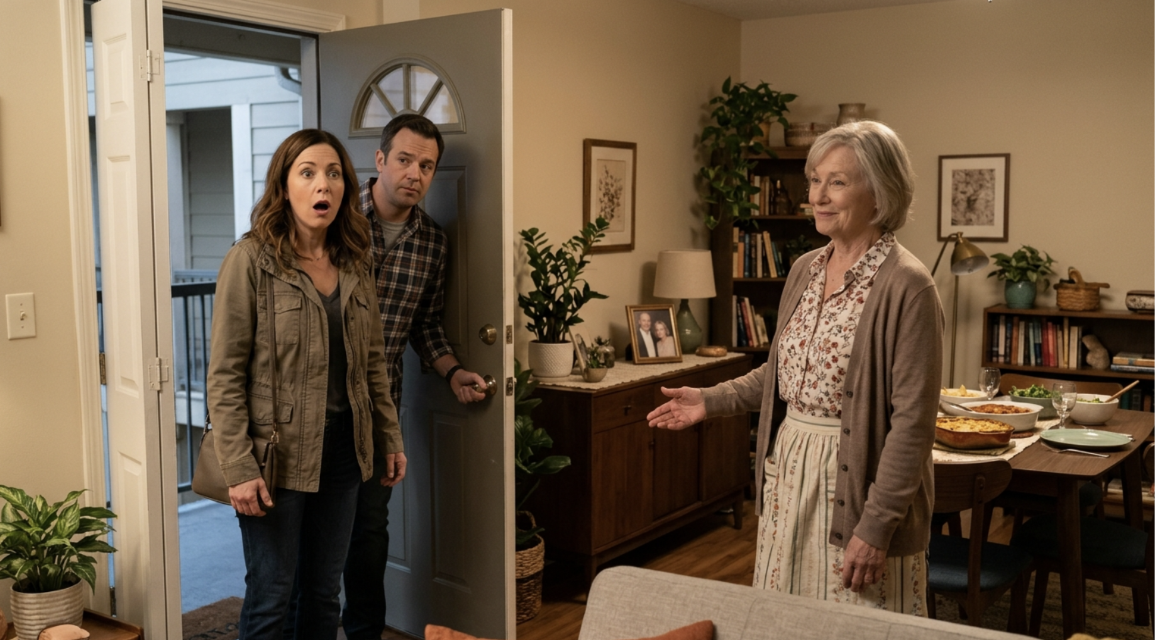
“I wanted us to have this conversation here,” I told him.
Stephanie lowered herself into her chair.
My daughter had always been quick to notice changes in a room.
That evening, her eyes kept wandering.
From the furniture to the walls.
From the kitchen to the small things I had arranged around me.
She was looking at everything except me.
I brought the pot roast to the table.
The potatoes were ready.
The gravy was warm.
For a few moments, the familiar smell made the room feel like the home Calvin and I had shared for so many years.
I remembered how he used to come in after working at the ranch.
He would sit down tired and hungry.
Then he would take one bite of supper and smile.
He had always been fond of my pot roast.
He believed a good meal could take the edge off the worst day.
I would have given almost anything to see him sitting there again.
Not because I needed him to argue with Brett.
I could speak for myself.
I missed him because Calvin had never made me wonder whether I deserved a place in my own family.
Forty-two years together had taught me what that kind of love felt like.
His absence had taught me how much I had depended on it.
I asked everyone to eat before we discussed anything serious.
Brett reached for the potatoes.
He helped himself generously.
Then he added gravy.
He said the food smelled wonderful.
I thanked him.
It was such an ordinary exchange.
A son-in-law complimenting his mother-in-law’s cooking.
A mother thanking him.
Anyone walking into that room would have thought we were having a pleasant family dinner.
Stephanie was not eating much.
She kept moving her fork around her plate.
Eventually, she looked up.
“Mom, I need to ask you something.”
I waited.
She glanced around the room again.
“How are you paying for all this?”
I placed my fork beside my plate.
I had expected that question.
In fact, I had been expecting it since the moment she walked through the door.
My daughter was not asking whether I was comfortable.
She was asking where the money had come from.
That difference mattered to me.
More than I wanted it to.
I studied her face.
For a moment, I saw the little girl she had once been.
The girl who followed Calvin around the ranch.
The girl who could spend an entire afternoon asking him questions.
The girl who believed her father knew the answer to everything.
I wondered what that child would have thought of the agreement now sitting between us.
Then I asked her about something she might remember.
“Do you recall the coffee tins your dad kept out in the barn?”
Stephanie looked puzzled.
She wanted to know which tins I meant.
I reminded her of the ones beneath Calvin’s workbench.
Old containers that had been there for years.
She recognized them then.
But she still seemed confused about why I was bringing them up.
I told her what her father had been doing.
Whenever Calvin earned extra money, he put some of it away.
He did not spend every bonus.
He did not treat every good year as permission to buy something new.
He saved.
Calvin also had a small herd of his own.
When he sold one of those calves, he set aside money from the sale.
He did it quietly.
Year after year.
Those old coffee tins had been part of a habit that lasted far longer than Stephanie understood.
Brett stopped eating.
His fork remained in his hand.
He wanted to know how much Calvin had saved.
I watched him carefully.
Only a few minutes earlier, he had seemed interested in the roast.
Now the potatoes could wait.
Money had become the most important thing on the table.
I told him there was enough.
He did not like that answer.
He pressed me for a number.
I shook my head.
“You’ll hear what I want to tell you tonight.”
Brett put down his fork.
His expression changed.
He began explaining why I needed to be sensible.
I listened.
He reminded me of my age.
Seventy-one.
He reminded me that Calvin was dead.
As though I could possibly forget.
He mentioned that I no longer worked.
He talked about how quickly savings could disappear.
None of those things was news to me.
I had spent enough years keeping a household running to understand what things cost.
I knew the price of groceries.
I knew what it meant to save money.
I knew what happened when expenses rose but income did not.
I had learned those lessons long before Brett married my daughter.
Still, I let him finish.
He believed those facts made their garage arrangement the responsible choice.
That was what he wanted me to accept.
A small apartment.
My full pension handed over each month.
And the other duties they had included.
I was supposed to help with the children.
I was supposed to prepare meals.
I was supposed to make their household easier to manage.
For a time, I had tried to look at it the way they wanted me to.
Maybe they truly thought they were helping.
Maybe they believed living close to family was worth the cost.
But every time I read that agreement, I felt smaller.
It was not simply asking me to contribute.
It was asking me to surrender the little independence I still had.
Calvin and I had not worked for forty-two years so that I could spend my old age requesting permission to use my own money.
I had needed time to understand that.
Now I understood it.
Brett was still talking about being realistic.
I nodded.
He seemed encouraged.
But I was thinking about something else.
An envelope.
A few sheets of paper.
And the quiet decision I had already made.
I turned toward my daughter.
“Stephanie, there’s something I want you to look at.”
She glanced down.
I had placed a plain white envelope near her plate.
Her name was written on it.
Nothing fancy.
Just a simple envelope holding information I had chosen not to share until that evening.
She picked it up.
She asked what was inside.
I told her to open it.
Brett leaned forward slightly.
I noticed that.
Stephanie pulled out the documents.
There were several pages.
She began with the first one.
A bank statement.
Her eyes moved over the numbers.
Then she stopped.
She read the page again.
I did not interrupt.
I had lived with those numbers for years.
I had known what they represented.
Stephanie was seeing them for the first time.
Her mouth opened slightly.
“Mom?”
I waited.
Brett asked her what she had found.
Instead of answering him, she passed over the statement.
He took it.
I watched his eyes move down the page.
Then back up.
Then down again.
He stared at me.
“Is this saying you have $287,000?”
I nodded.
That was the amount shown.
It represented Calvin’s years of saving, together with money we had already put aside.
It was not something I had discovered by accident.
It had not arrived through some miraculous stroke of luck.
It was money connected to years of work.
Long mornings.
Careful decisions.
Expenses we had weighed before paying.
And a husband who had kept saving even when nobody was watching.
Brett sat back.
Stephanie remained very still.
I could almost see them trying to fit the bank statement into the picture they had made of me.
The picture of an elderly widow who needed their garage.
A woman who would have to accept whatever terms they offered.
That was the woman they had expected to find.
But the statement in Brett’s hand told a different story.
There was another document in the envelope.
And it concerned something Calvin and I had once dreamed about together.
The ranch house where we had lived had never belonged to us.
We knew that.
For many years, we had called it home anyway.
But Calvin had wanted something permanent for our retirement.
Something small.
Something peaceful.
Years earlier, we had purchased a piece of land outside town.
There was a creek nearby.
We talked about building a home there someday.
We never needed anything grand.
A comfortable house would have been enough.
A place where Calvin could sit outside.
A place where I could have a garden.
A place where we could grow old without worrying about whose property we were living on.
Those plans changed when Calvin died.
After losing him, I had looked at our land differently.
I could no longer imagine building the house we had once planned.
Not in the same way.
So I sold the property.
It was not an easy decision.
That land had carried a dream.
But I knew that holding on to a dream was not always the same as honoring it.
Calvin had wanted us to enjoy our retirement.
He had not wanted me to spend mine trapped by memories.
Between our savings, the money from the land, and what we had accumulated together, I had enough to make another choice.
A smaller choice.
A practical one.
Something I could manage on my own.
Brett turned to the next document.
I watched the moment he understood.
It was the agreement for a house.
Not a rental.
Not a garage apartment.
A home purchased in my name.
A modest two-bedroom house.
With a porch.
And a little garden.
I had paid for it outright.
No mortgage.
No borrowed money.
No monthly payment that could swallow my pension.
Stephanie looked from the agreement to my face.
She asked whether I had actually purchased a house.
I told her yes.
Then she wanted to know when.
I answered simply.
“The purchase was completed last week.”
She stared at me.
Brett said nothing.
My daughter appeared more upset than pleased.
She wanted to know why I had not told her.
Why I had made such a decision without discussing it with her first.
I looked at the papers spread across the table.
Then I looked at my seventy-one-year-old hands.
Those hands had worked for decades.
They had cooked.
Washed.
Carried.
Cleaned.
Comforted.
Saved.
And helped build the life Calvin and I had shared.
I had used those same hands to sign the papers for my own home.
Yet my daughter was looking at me as though I had done something wrong.
I answered her quietly.
“I didn’t know buying my own home was something I had to get approved.”
Her eyes filled with tears.
She said I was being unfair.
That word stayed with me.
Unfair.
I had heard it before.
Brett had used the same idea when he explained why I should give them every dollar of my pension.
It was supposed to be fair.
Fair to their household.
Fair to their expenses.
Fair to their needs.
But I had not heard either of them explain what was fair to me.
I sat there looking at my daughter.
I loved her.
Nothing about that had changed.
But love did not make the agreement disappear.
It did not make the demands reasonable.
And it did not make my savings belong to somebody else.
Brett finally placed the documents on the table.
His expression had changed completely.
He was no longer explaining why I had to accept his arrangement.
He was reconsidering it.
Suddenly, he seemed willing to discuss different terms.
I could see the change before he spoke.
The same man who had presented my pension as necessary rent was now studying the proof that I did not need his garage at all.
For the first time that evening, he was the one who needed to find another answer.
And I was ready to hear what he had to say.
Click here to continue reading: PART 2: After My Son-in-Law Saw My Savings, He Wanted to Rewrite Our Agreement, but My Husband’s Old Box Held a Harder Truth
My Daughter Demanded My Entire $1,380 Pension for Her Garage Apartment—But When She Discovered What Her Late Father Had Left Behind, Everything Changed
Part 1 of 16