The Student Who Vanished Between Frames
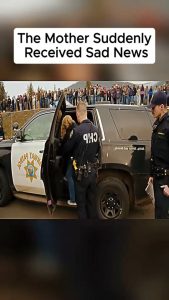
Part 1 → The Last Known Moment
It was supposed to be an ordinary afternoon.
The school corridors were already thinning out, the noise of students fading into the usual end-of-day calm. Teachers were wrapping up lessons, some rushing to meetings, others packing their things without a second thought.
But in one classroom, a student stayed behind a little longer than the rest.
Not because they were in trouble… but because no one noticed they were still there.
The teacher had stepped out briefly. “Just a minute,” they said. It should have been harmless. Routine. Forgettable.
But that was the last confirmed moment anyone could clearly account for.
After that, the timeline begins to blur.
A classmate later said they saw the student sitting quietly near the back, looking down at their desk. Another thought they had already left with the group. No one checked twice. No one asked.
And then—silence.
By the time the school realized something was wrong, the corridors were empty, the gates were closing, and the normal rhythm of the day had already moved on… leaving behind a gap no one could immediately explain.
And that gap would soon become the center of a much bigger question: where was the student now?
Part 2 → The First Alarm
It didn’t start as panic.
At first, it was just confusion.
A teacher noticed something small—too small to raise concern immediately. A backpack still in the classroom. A seat that hadn’t been packed up. A name missing from the usual end-of-day checklist.
“Maybe they already left,” someone suggested.
But that didn’t feel right.
Minutes passed. Then the quiet concern turned into searching. A quick walk through corridors became a faster pace. Names were called out along empty hallways. Classrooms were double-checked. Restrooms. The library. Even the school gate area.
Nothing.
That’s when the first alarm truly sounded—not an actual siren, but the shift in tone. Voices grew sharper. Phones came out. Calls were made that no one wanted to make.
“Have you seen the student?”
“Are you sure they didn’t go home early?”
Each answer made it worse.
Because now the certainty was gone.
The school that had felt normal just moments ago suddenly felt too large… too quiet… and filled with places no one had looked closely enough.
And in that growing uncertainty, one question began to repeat itself in every conversation:
How does someone simply disappear from a place they were just seen in minutes ago?
Part 3 → Locked Doors and Missing Clues
By now, the search had stopped feeling like a routine check.
It had turned into urgency.
Teachers and staff moved room to room, retracing every possible step the student might have taken. But the school, which once felt familiar, now seemed full of overlooked corners—places no one thought to question before.
A locked storage room.
A side corridor rarely used.
A stairwell door that only opened from the inside.
Each location was checked, one after another.
And each one returned the same result: nothing.
Still, something didn’t feel right.
A staff member mentioned the side exit near the maintenance area—the one often used for deliveries. When they reached it, the door was closed… but not properly secured.
That detail changed everything.
Now, it wasn’t just about whether the student had been seen leaving. It was about whether someone could have left without being seen at all.
Security footage became the next focus. Screens were pulled up, timestamps rewound, voices lowered as everyone leaned closer.
But the footage didn’t give clear answers.
Only fragments.
A hallway. A shadow passing too quickly to confirm. A door that might have moved… or might not have.
And in that uncertainty, the situation shifted again.
Because missing clues are one thing.
But clues that don’t fully explain themselves are far more unsettling.
And now, the school wasn’t just searching for a student—
it was searching for a moment it might have already missed.
Part 4 → What the Cameras Didn’t Catch
The security room was quieter than before.
Not because there was less urgency—but because everyone had gone still, watching the same screen over and over, hoping repetition would reveal something new.
The footage was there. Technically complete. Time-stamped. Continuous.
And yet… it didn’t feel complete.
The student appeared briefly in a corridor frame—walking at a normal pace, head slightly lowered, as if nothing unusual was happening. No running. No distress. Nothing that suggested alarm.
Then the camera angle changed.
A blind spot.
Just a few seconds of obscured view caused by a structural corner near the stairwell.
When the student reappeared on the next camera, they were no longer alone.
That detail made the room shift instantly.
Someone rewound it again. Slowed it down. Enhanced the image. But the angle, the distance, the lighting—it all refused to give certainty.
Was it a staff member? Another student? Someone from outside the usual routes?
No one could confidently say.
And that uncertainty spread quickly through the room, heavier than any clear answer would have been.
Because if the cameras didn’t capture what happened in those missing seconds…
then the real question wasn’t just what happened to the student—
it was what else had gone unnoticed inside the school all along?
Part 5 → The First Name Mentioned
The room had been tense for hours, but now it changed again—subtly, sharply—like a thread finally being pulled from something tightly wound.
It started with a single comment from a staff member watching the footage for the third time.
“Wait… go back.”
The video rewound. Paused. Zoomed.
And then it happened.
A name was spoken.
It wasn’t loud. It wasn’t dramatic. In fact, it was almost swallowed by hallway noise and distance. But once heard, it couldn’t be unheard.
Someone in the footage had called out to the student.
A first name.
The kind of detail that should have helped everything make sense—but instead made it more complicated.
Because not everyone in the room agreed on who had said it.
Two staff members leaned in, arguing softly. One insisted it was a familiar voice—someone who had every reason to be there. The other shook their head immediately, certain it didn’t match any known staff member.
Then came the worse realization.
If that voice belonged to someone inside the school, it should have been easy to identify.
But it wasn’t.
And if it didn’t belong to someone inside…
then it raised a question no one wanted to say out loud.
How did an unknown voice enter a place that was supposed to be secure?
The footage ended there.
The silence that followed wasn’t confusion anymore.
It was suspicion.
And now, the investigation had a direction—but it was one no one felt ready to follow.
Part 6 → The Person Who Shouldn’t Be There
The investigation shifted from what happened to who was involved.
And that change made everything heavier.
The footage was reviewed again, frame by frame, with every angle adjusted to catch even the smallest detail. This time, the focus wasn’t just the student—it was the figure beside them in those unclear seconds near the stairwell.
At first glance, nothing seemed definitive.
A partial silhouette. A shadow crossing the edge of the frame. Someone standing just outside full visibility, positioned exactly where the camera struggled to capture detail.
But then came the small inconsistencies.
The timing of their movement didn’t match scheduled staff rounds.
Their presence wasn’t logged at that location.
And no student matching that position or height was accounted for.
One of the staff members finally said it out loud.
“That person shouldn’t be there.”
The room went still again.
Because that statement carried more weight than it sounded like. It didn’t just suggest a mistake or oversight—it suggested a breach in something that was supposed to be controlled.
Security logs were checked. Access points reviewed. Staff schedules cross-referenced.
Nothing matched.
And the more they looked, the clearer one uncomfortable idea became:
If the person in the footage wasn’t supposed to be there…
then they had been moving through the school without being recorded properly at all.
And that meant the missing student might not have been alone in those final moments.
Part 7 → The Door That Was Never Opened
The focus shifted again—this time away from people and toward places.
Because if someone “shouldn’t have been there,” the next question was simple:
How did they get there in the first place?
That’s when the maintenance map came out.
Old building plans. Updated security routes. Emergency exits. Staff-only corridors. Everything was laid across the table like a puzzle that had never been fully assembled.
And something stood out immediately.
A door.
Not the main entrances. Not the visible exits.
A side door near the stairwell corridor—one that was rarely used, often assumed to be permanently locked during school hours.
On paper, it was marked as secured at all times.
But when staff checked the actual system logs, the reality didn’t match the assumption.
The door had registered activity.
Not just once.
Multiple times around the same window of time the student disappeared from clear view.
The problem?
No one remembered opening it.
And no one was assigned to it.
Security footage near that angle was supposed to cover the area—but that camera had the same issue again. Just enough blind space. Just enough delay between frames to miss what mattered most.
Someone tried the door code history. It showed entries—but not consistent authorization. A few attempts didn’t match any known staff credentials.
That detail changed the atmosphere in the room again.
Because now it wasn’t just about a missing student or an unidentified figure.
It was about a system that should have recorded everything… but didn’t.
And the most unsettling thought returned:
If that door had been used without authorization…
then the disappearance wasn’t just something that happened inside the school.
It might have been made possible by the school itself.
Part 8 → The Moment the Timeline Broke
It was supposed to be the part that clarified everything.
Instead, it did the opposite.
When the team tried to reconstruct the sequence of events, they aligned every piece they had—security footage, door logs, staff movements, and timestamps from the school system. Each element, on its own, seemed consistent enough.
But when placed together… they didn’t match.
There was a gap.
Not a small one. Not a rounding error. A gap of several minutes where nothing aligned the way it should have.
Camera A showed the corridor empty.
Camera B, seconds later, showed movement already happening in the same space.
The door logs indicated access at a time when no recorded person was nearby.
It was impossible.
And yet it was there.
One of the investigators finally said what everyone was thinking but trying not to name:
“The timeline doesn’t hold.”
That was the moment everything shifted.
Because once a timeline breaks, the investigation stops being about missing pieces—and starts being about which version of reality is wrong.
People began re-checking everything from the beginning. Not just the disappearance, but the hours before it. Staff schedules were re-examined. Students were re-questioned. Even routine events that had seemed irrelevant were pulled back into focus.
And the more they checked… the more unstable the story became.
A teacher swore they had seen the student leave early.
A classmate insisted they never left the room.
A timestamp showed an action that no one could physically account for.
Three versions of the same day were now competing against each other.
And none of them fully made sense.
That’s when a new possibility emerged—quietly, almost reluctantly:
If the timeline itself couldn’t be trusted…
then the investigation wasn’t missing information.
It was missing certainty about what actually happened in the first place.
And somewhere in that broken sequence of minutes…
the truth was still waiting to be placed back in order.
Part 9 → The Truth Behind the Missing Minutes
The “missing minutes” became the center of everything.
Not the student. Not the corridor. Not even the unidentified figure anymore.
Just time itself.
Investigators went back to the raw system data—logs pulled directly from the school’s internal servers rather than the edited playback footage. At first, they expected the same contradictions. Instead, they found something even more unsettling.
The system hadn’t failed.
It had recorded too much.
Multiple overlapping entries appeared for the same timeframe—door access events that contradicted camera movement, attendance updates that happened after the school day was already marked as finished, and security pings that suggested motion in areas where no live feed existed.
One technician leaned back from the screen, uneasy.
“It’s like the system is showing two versions of the same minutes.”
That line changed the direction of the entire investigation.
Because if the data wasn’t simply missing… but duplicated in conflicting ways…
then the question was no longer what happened during those minutes.
It was which record of those minutes was real.
A deeper audit revealed something even stranger: certain logs had been automatically “reconciled” by the system—small adjustments made in real time to resolve conflicts between inputs. Normally, that would be harmless.
But here, it meant something critical:
The system itself had been trying to decide what the truth was.
And failing.
One version of events showed the student alone in the corridor.
Another showed movement just behind them.
Another showed nothing at all during the same interval.
All of them existed at once in the records.
And all of them could be “correct” depending on which layer you trusted.
That’s when one investigator made the observation no one wanted to hear:
“If the system can’t agree on what happened… then we’re not looking at a missing person case anymore.”
He paused.
“We’re looking at a broken account of reality inside the school’s own records.”
The room went quiet again.
Because now, the missing minutes weren’t just unexplained.
They were unstable.
And somewhere inside that instability…
was the last clear moment anyone could still agree on.
Part 10 → The Final Frame That Changed Everything
After the conflicting logs, the team returned to the one thing they still trusted the most: the raw footage.
No edits. No summaries. No system interpretations. Just the original recordings from every camera near the corridor, stairwell, and side exit.
They synchronized everything again, frame by frame.
And this time, they slowed it down further than before.
For a long stretch, nothing seemed unusual. Empty hallway. Flickering fluorescent light. The distant sound of movement from another part of the school.
Then—approaching the critical timestamp—they stopped.
The student appeared again.
Still walking. Still calm. Still following the same path seen earlier.
But now, with every frame isolated, a detail became visible that hadn’t been caught before.
A second shadow.
Not directly beside them. Not fully formed. But present in the background reflection of a glass panel near the stairwell corner.
It wasn’t obvious at first glance. It didn’t move like a typical passerby. And it didn’t match the timing of any known staff route.
The team froze the frame.
Zoomed in.
Enhanced contrast.
And that’s when it became clear enough to change the entire tone of the room.
The shadow wasn’t just nearby.
It was positioned as if it had been following the student the entire time—matching their movement through blind spots, staying just out of direct camera view.
Then came the final seconds of that clip.
The student turned slightly toward the stairwell.
The shadow shifted with them.
And right before the frame cut to the next camera—
the figure moved fully into the blind corner.
And disappeared from view completely.
No struggle clearly visible. No sound captured. No definitive action recorded.
Just a transition from seen to unseen.
That was the moment everything changed.
Because now it wasn’t about where the student went.
It was about the fact that the last confirmed image of them…
was shared with something no one could clearly identify.
And that raised the final, uncomfortable question no one had answered yet:
What exactly followed them into that blind spot?
Part 11 → What Was Never Meant to Be Seen
After the final frame, no one spoke for a while.
Not because there was nothing left to analyze—but because everyone was now aware that looking closer wasn’t necessarily going to bring clarity.
Still, they tried.
The image from the blind corner was isolated again. Enhanced again. Filtered through every available setting the system allowed. And each time, the result stayed the same: a shape that refused to fully resolve into something identifiable.
It was there… but never fully there.
One investigator finally broke the silence.
“We’ve been assuming the cameras are showing us everything they captured.”
He hesitated.
“But what if they’re only showing what they were allowed to keep?”
That question shifted the room in a way no new frame ever had.
They went back to the system configuration. Not the footage itself—but the infrastructure behind it. Storage protocols. Motion-triggered compression rules. Blind-zone optimization settings.
And that’s when they found it.
A routine setting—one no one had questioned before—designed to reduce storage load by compressing “non-critical transitional frames” in low-visibility areas.
Stairwells. Corners. Maintenance corridors.
The exact places where the most important gap had occurred.
In other words, the system had been actively simplifying what it couldn’t clearly capture.
Not deleting it.
But flattening it.
Turning complex movement into partial, incomplete visual data that could no longer be reconstructed with certainty.
That meant the “missing moment” wasn’t entirely missing.
It had been processed into something less readable than before.
And whatever happened in that blind corner…
had passed through a layer of recording that no longer preserved it in full detail.
The realization landed heavily.
Because now it wasn’t just a question of who was in that space.
It was the fact that part of what happened there had been rendered unrecoverable by design.
And that left only one remaining certainty:
Whatever followed the student into that corner…
was never meant to be fully seen again.
Part 12 → The Case Reaches Its Edge
By now, the investigation no longer felt like it was moving forward.
It felt like it was circling something it couldn’t fully touch.
Every new attempt to rebuild the sequence only led back to the same breaking points—the blind corner, the compressed frames, the contradictory logs. Each layer they pulled apart revealed another limitation beneath it.
And the worst part was how close everything still looked to being solvable.
One investigator finally summarized what everyone had been avoiding:
“We don’t have a missing piece anymore. We have a boundary.”
That word changed the atmosphere instantly.
Because a missing piece suggests something can still be found.
A boundary suggests something cannot be crossed.
They reviewed everything one last time—footage, access logs, witness statements. Not to find new answers, but to confirm whether anything had been overlooked.
It hadn’t.
Instead, what became clear was how every system in the school—cameras, doors, digital records—had behaved exactly as designed. The problem wasn’t malfunction. It wasn’t negligence. It was limitation.
The system could only record what it was built to understand.
And whatever happened in that final corridor space existed just beyond that understanding.
The student’s last confirmed path ended at the edge of a blind zone.
The shadow’s final movement disappeared into it.
And every record after that point stopped agreeing with itself.
The investigation team stood with the same conclusion, unspoken but shared:
They could keep analyzing forever—but they would not cross into anything clearer than what they already had.
Because beyond that edge, there were no more reliable frames to recover, no stable logs to trust, and no version of events that fully held together.
Just fragments.
And questions that no system in the school could answer anymore.
The case didn’t end with a resolution.
It ended where information itself stopped being dependable.
And the final entry in the report was simple:
“Further clarification unavailable beyond recorded system limits.”