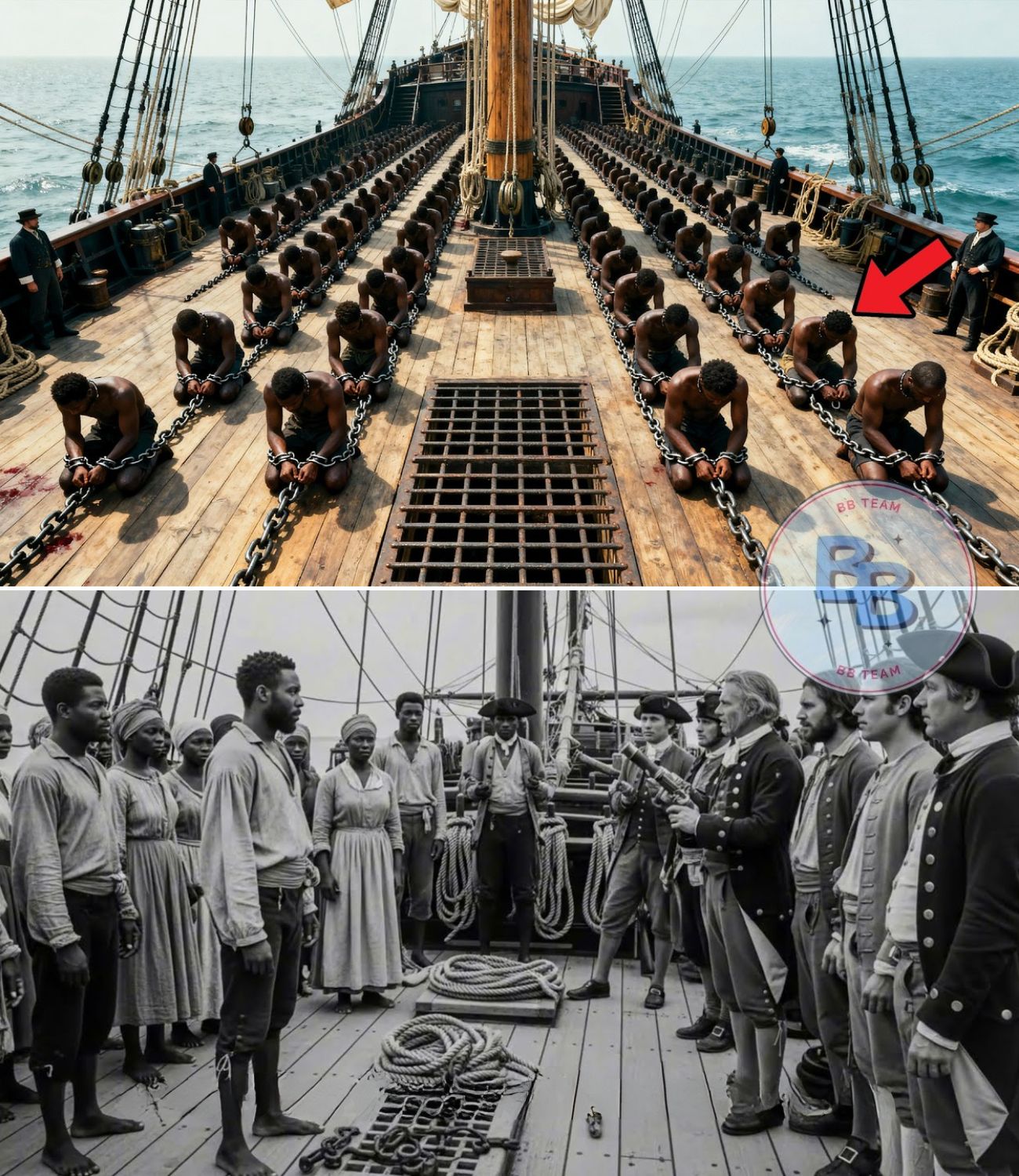
In 1791, 121 enslaved Africans were forced aboard a slave ship called the Providence Crown. Logged as cargo, chained by number, and promised a short coastal transfer that required no restraints on deck, the captain recorded their weight, their teeth, and their resale value. Confidence in the ocean erased accountability.
Seven days later, those same men and women returned to shore, standing upright, unchained, commanding three ships instead of one. Behind them were 500 free men who had not boarded with them. And in the holds were no longer slaves, but terrified crews awaiting judgment. The merchants who owned those ships never learned how control slipped from their hands.
They only learned the result. vanished fleets, silent ports, and a trade route that went dark overnight. What happened during those seven days was never written down, and the men who believed they owned the sea never saw it coming. Before we go any further, comment where in the world you are watching from. And make sure to subscribe because tomorrow’s story is one you don’t want to miss.
The horizon bled red. Dawn came to the upper Guinea coast like a wound opening. Kofi Adam stood in line with 120 others, iron shackles biting into his wrists. The metal was still warm from the forge. It had been heated just enough to brand flesh without quite burning through skin. He did not flinch. Behind him, someone whimpered, a young man, maybe 20 seasons old. Kofi recognized the sound.
the first breaking of spirit. The moment when reality crushed hope. He had heard it before on battlefields. In the moments after defeat when warriors realized their kingdoms had fallen. Kofi had been that young man once 15 years ago when a rival faction stormed his king’s compound and dragged the royal guard into captivity.
He had learned then that survival required silence, observation, patience. The line shuffled forward. The ship rose from the water like a wooden beast. The Providence crown painted in peeling white letters across the stern. Three masts, twin gun decks, a merchant vessel retrofitted for human cargo.
Kofi counted the crew, 23 visible, likely more below. He noted the cannon placements, the rigging weak points, the single gang plank creating a bottleneck. He stored each detail like stones in a pocket. Move along. A sailor shoved the woman ahead of Kofi. She stumbled but did not fall. Her back was straight despite the chains. Kofi recognized strength when he saw it.
The woman turned her head slightly. Her eyes met his for half a breath. Brown eyes, clear and unafraid. She wore clay beads woven into her hair. Seven white, three red, healer’s marks, priest markings. She was Amma Jerry. Kofi had heard whispers about her during the three nights in the holding pen.
The woman who spoke to spirits, the one who kept captives calm even as men went mad with fear. She nodded once, barely perceptible. Then she faced forward and continued walking. The branding station sat at the base of the gang plank. A portable forge belched smoke into the pale morning air. Two sailors worked in rotation.
One heating irons, one pressing them into flesh. The smell hit Kofi before he reached the front of the line. Burned meat. Charred hair. Human skin turned to leather. Next. Kofi stepped forward. The sailor barely looked at him. Just another piece of inventory. Another number in the ledger. Left shoulder, the sailor said. The iron came down.
Kofi felt heat, then pressure, then a bright flower of pain blooming beneath his collarbone. He counted to five while his skin sizzled. The sailor lifted the brand. Kofi looked down at the mark. A stylized crown with the letters PC beneath. property of the Providence crown. Move. He climbed the gang plank.
Each step felt like walking into a tomb. On deck, another sailor called out numbers from a ledger. Adam Kofi, male, estimated 35 seasons. Former soldier, mark of insubordination. The sailor made a notation. [clears throat] Chain him with the others below. Kofi was pushed toward the forward hatch. Before descending, he glanced back at the shore.
The sun had fully risen now. Golden lights spilled across the beach, where village children sometimes played, where fishermen launched their boats, where life continued as if 121 people had not just been erased. He descended into darkness. The hold was smaller than it appeared from outside. Rows of wooden platforms ran along both walls, shelves essentially, built to stack human beings like cargo.
The ceiling was so low that Kofi could not stand fully upright. He would spend this voyage bent, broken, compressed into the smallest possible space. A sailor chained him to a iron ring bolted into the platform. The chain was just long enough to allow him to lie flat. Not long enough to stand. Not long enough to reach another captive.
There’s been some mistake, a voice said in accented Portuguese. Captain Bryce promised relocation only. Coastal work. He gave his word. Kofi turned his head. The speaker was a young man, maybe 25, with lighter skin than most captives. His features showed mixed heritage. African mother, European father. He wore the rough clothes of a sailor, not the bare minimum scraps given to the enslaved. The sailor laughed.
Captain promised lots of things. You’ll learn. The mixed heritage man’s face went pale. He opened his mouth, closed it, then nodded slowly. Acceptance settling over him like a shroud. The loading continued for 6 hours. Kofi watched each new arrival. He memorized faces, noted which captives maintained composure, and which had already surrendered to despair.
He counted how many sailors entered the hold, tracked their routines, observed which ones showed hesitation, and which showed only cruelty. By noon, the hold was packed. 121 people compressed into a space meant for cargo. The air was already thick with sweat and fear. Some captives prayed, others wept quietly.
A few sat in stunned silence. Ammon Jerry was chained near the center of the hold. Even bound and branded, she carried herself with dignity. She whispered to the woman beside her. Soft words Kofi could not hear. The woman’s breathing slowed. Her panic eased. Amma moved to the next captive and the next, offering whatever comfort could exist in this place.
Kofi recognized what she was doing. Not just comfort, organization. She was mapping the hold through conversation, identifying leaders, building invisible networks in plain sight. Smart. Midafter afternoon brought Captain Edmund Bryce. He descended into the hold with a lantern in one hand and a leatherbound ledger in the other. His uniform was spotless, his boots polished to a mirror shine.
He looked like a man reviewing inventory, not human lives. Listen carefully, Bryce said. His voice was calm, reasonable, almost kind. This voyage will last 8 days. Coastal waters only. We sail to a colonial outpost 300 mi south. You will work plantations there. Better conditions than the interior. Better ration.
Behave and this arrangement becomes permanent. Resist and you will be sold to the highest bidder for transatlantic transport. 8 days coastal waters. Kofi filed the information away. Bryce continued his inspection making notations in his ledger. He paused before Amma. You’re the priest woman, he said. I’ve heard about you.
Keep these people calm and I’ll ensure you receive extra water rations. Cause trouble and I’ll have you flogged until you cannot stand. Understood? Amma looked up at him. Her expression was serene. I understand, she said softly. Bryce nodded satisfied and moved on. The mixed heritage sailor returned as the sun began its descent. He carried a water bucket and ladle.
He moved down the rows, offering each captive a single drink. When he reached Kofi, their eyes met. Josiah Reed, the sailor said quietly. I was told this would be different. I believed them. They always lie, Kofi replied. Josiah’s jaw tightened. I saw the ship’s log this morning. the cargo manifest. We’re carrying supplies for a 3-week journey, not 8 days, extra food, medical supplies for scurvy, materials for building holding pens.
Kofi’s expression did not change, but his pulse quickened. Why, tell me. Because I can read, Josiah said. And because I think you can lead. He moved to the next captive before Kofi could respond. Evening arrived like a mercy. The hatches were sealed. Darkness swallowed the hold. Kofi heard the anchor being raised. Heard sailors shouting commands.
Heard the ship groan as wind filled its sails. The Providence crown was leaving shore. In the darkness, someone began to weep. Then another. Soon the hold filled with the sound of breaking. Spirits cracking under the weight of realization. Then Amma’s voice rose above the grief. She sang. a traditional blessing. Words about ancestors and protection and strength that endures beyond death.
Her voice was clear despite the chains, steady despite the darkness. One by one, other voices joined her. Kofi did not sing. He was not a man of spirits or prayers, but he listened. And in the rhythm of Amma’s song, he heard something else, a pattern, a code. She was counting, organizing, signaling. He shifted on his platform until he could see her across the hold.
The faint light from cracks in the deck above caught her face for just a moment. Amma turned her head. Her eyes found his through the darkness. She nodded once. Then she touched her chest seven beats. Touched her forehead three beats. Spread her fingers all five. Twice. 7 3 10. Guards changed rotation every 10 hours. Kofi touched his own chest in acknowledgement. Seven beats.
Understanding received. The song continued. The ship sailed into open water. And in the suffocating darkness of the hold, two people who had never spoken began to plan. Night fell hard over open water. The sky turned from copper to charcoal to absolute black. No moon, no stars visible through the thick cloud cover that had rolled in from the west.
The darkness was complete, suffocating, alive with the sound of waves slapping against the hull. In the hold, 121 people waited. The evening feeding had come an hour after sunset. Two sailors descended with buckets of thin grl, mostly water, some grain, occasionally a piece of salted fish that had gone soft with age. They worked quickly, eager to finish, and returned to the fresh air above.
Kofi watched them through half-closed eyes, appearing exhausted. In truth, he was counting, memorizing the rhythm of their movements. The first sailor was young, maybe 18, with nervous hands that shook when he ladled the grl. The second was older, harder, a man who had done this work long enough to stop seeing faces. The young one would hesitate, the older one would not. Useful information.
After the sailors left, the hold settled into the particular silence of captivity. Not true quiet. There were always sounds, chains scraping against wood, quiet weeping, prayers whispered to gods who seemed very far away. But beneath the surface noise, something else moved. Something deliberate. Tap tap. Pause. Tap tap tap.
The sound came from Amma’s section of the hold. Her fingers against the wooden platform. A rhythm that meant nothing to the sailors but everything to those who understood. Three guards on deck, two below with the crew. Five total on night rotation. Kofi responded with his own pattern. Knuckles against iron. Two sharp strikes. One long pause.
Three quick beats. Armory location confirmed. Two locks. Three weapons inside reach. The conversation continued invisibly. Others joined. An older man who had been a village chief before capture. A young woman who had survived two previous attempted sales. A boy barely 15 who had lost his entire family to the trade.
Each one contributing small pieces of information gathered through observation. Guard rotation times. Weapon locations which sailors drank heavily after dark. Which ones slept deeply? which ones showed the faint cracks of hesitation that could be exploited. Amma wo it all together through rhythm and song, her voice rising occasionally in what sounded like prayer, but was actually instruction.
The sailors heard a woman seeking comfort from her gods. The captives heard a general coordinating her forces. 2 hours past midnight, Amma collapsed. She went down hard enough that her chains rattled loudly. Her body convulsed once, twice, then went still. The woman beside her screamed, a piercing sound that cut through the darkness like a blade. She’s dying.
The priest woman is dying. More screams, panic spreading like fire, chains rattling as captives surged against their bonds, the carefully maintained order of the hold fracturing into chaos. on deck. Boots thundered toward the forward hatch. Quiet down there. A guard’s voice sharp with annoyance. Please, the woman screamed.
She cannot breathe. She needs air. Please. Kofi heard urgent conversation above. Then footsteps moving away from the hatch. Someone going to wake the captain. Perfect. Josiah Reed intercepted Captain Bryce before he reached the main deck. Captain, forgive the interruption. Josiah’s voice carried the precise mix of difference and urgency that he had perfected over years of survival.
The navigation charts are showing concerning discrepancy. I think we may have drifted further north than intended during the evening winds. Bryce stopped, irritation flickering across his face concerning how we should be encountering the coastal current by now. Sir, the water temperature is wrong. the stars.
Before the clouds came in, they suggested we might be off course by several degrees. Josiah held out a chart pointing to markings that meant nothing. If we continue this heading through the night, we could miss the rendevous point entirely. It was complete fiction, but it was technical fiction, delivered with enough confidence that Bryce could not immediately dismiss it.
The captain snatched the chart. Show me your calculations. Of course, sir, if you’ll follow me to the navigation room. Behind them, the screaming from the hold intensified. Deal with that first, Bryce snapped at a nearby sailor. One woman’s hysteria is not worth waking the entire cargo. Give them extra water and tell them to be silent. He turned back to Josiah.
You have 5 minutes to justify this interruption. They disappeared toward the stern. The guard descended into the hold with a lantern and a water bucket. He was alone, overconfident, annoyed at being pulled from his dice game to handle what he assumed was simple panic. “Which one collapsed?” he demanded. “Here, here, please.
” The woman beside Amma gestured frantically. The guard moved closer. Lantern held high. Amma lay motionless on her platform, eyes closed, breathing so shallow it was nearly invisible. He leaned down to check her pulse. Amma’s eyes snapped open. Her hand, freed from its chain using a piece of metal she had been working loose for 3 days, grabbed the guard’s wrist.
She pulled him off balance. Before he could shout, Kofi’s chain wrapped around his throat from behind. The older man had used the same hidden metal piece to unlock his own restraint. He pulled tight. The guard thrashed once, twice, then went limp. Silence. Kofi lowered the body carefully. No sound. No alarm raised. He searched the guard’s belt, found keys, found a knife around him.
Others were already moving. The village chief freed himself and began unlocking nearby chains. The young woman, who had survived multiple captures, took the guard’s club. The boy took his whistle and tucked it into his waistband to prevent accidental noise. Amma rose smoothly, her collapse revealed as performance.
She moved through the hold with quiet authority, touching shoulders, making eye contact, keeping panic from spreading among those still chained. Patience, she whispered. Silence, trust. Kofi climbed the ladder toward the deck. Each step calculated, each breath controlled. At the top, he paused, listening. Two voices, guards talking near the starboard rail, comparing luck and dice, complaining about the cloud cover, ordinary conversation. They had heard nothing.
Kofi emerged like a shadow. The first guard died without understanding what was happening. Knife between the ribs. Quick, surgical. Kofi lowered him to the deck without sound. The second guard turned, mouth opening to shout. The village chief was already there, having followed Kofi up the ladder. The club came down hard. The guard collapsed.
Armory, Kofi whispered. They moved a weapons room was locked but not guarded. Kofi used the seized keys. Inside, musketss, cutlesses, pistols, powder. He distributed them to the freed captives emerging from below. Careful to arm only those who had demonstrated discipline during the planning.
The young woman received a cut list, she tested its weight, nodded once, and moved toward the crew quarters. What followed was methodical extermination. No battle cries, no chaos, just silent figures moving through the dark ship, eliminating threats with ruthless efficiency. Sailors were pulled from sleep and dispatched before they could raise alarm.
The few who resisted were overwhelmed by numbers. Kofi found the second mate in the navigation room with Josiah and Captain Bryce. Josiah’s eyes widened as Kofi entered. He stepped aside without hesitation. Bryce reached for his pistol. Kofi was faster. The captain went down hard, blood spreading across his pristine uniform. “The others?” Kofi asked.
Secured, the village chief reported from the doorway. Crew quarters cleared. Engine rooms secured. Four sailors locked in the brig. No deaths among our people. Kofi nodded. He walked to the ship’s wheel. Placed his hand on wood that had guided this vessel through countless voyages of human misery. It was theirs now.
Dawn arrived like a revelation. The clouds had cleared during the night. The sun rose over open water, painting the sky in shades of gold and pink. Lights spilled across the deck of the Providence Crown, illuminating 121 people standing in free air. Some wept, others laughed. Many simply stood in silence, faces turned toward the warmth, breathing deeply.
Amma stood at the bow, clay beads catching the light. She had led the captives in a blessing for the dead. Both those who had perished in captivity and those killed during the uprising. Now she smiled. Genuine joy breaking through her usual composure. Kofi joined her. Together they watched the sun climb higher. We did it, Amma said softly. We did.
The ancestors guided us. Perhaps, she looked at him. You do not believe in spirits. I believe in planning, Kofi replied. But I will not argue with your gods today. Around them, freed people explored the ship with wonder, touching the rails, examining the sails, claiming space that had been denied to them.
The danger felt distant now. The threat of recapture seemed impossible. They had seized their freedom. They had won. [clears throat] The celebration continued as the ship sailed into morning light, carrying its transformed cargo toward home. The joy lasted until midm morning. Josiah Reed stood at the navigation table in what had been Captain Bryce’s cabin, examining documents he had quietly gathered during the night, manifests, trading schedules, correspondents marked with wax seals from Liverpool and Bristol. His hands shook slightly as he
read. Kofi entered without knocking. The people are asking about our heading. When do we turn toward home? We cannot. Josiah’s voice was flat. Not yet. Explain. Josiah spread three documents across the table. The Providence Crown operates as part of a flotilla. Three ships total. They rendevous every 7 to 10 days to transfer captives, share supplies, and coordinate routes.
He pointed to a schedule written in neat script. The next meeting is scheduled for 4 days from now. If this ship fails to appear, the others will investigate. They will find evidence of what happened here. Then they will send word to every port, every naval station, every colonial authority within a thousand miles. Kofi studied the papers.
His expression remained neutral, but his jaw tightened. How many ships? Two others, the Seahawk and the Mercy’s Gate. Combined, they likely carry between 400 and 600 captive souls and crew. Perhaps 40 men per vessel, wellarmed, experienced. Kofi was silent for a long moment. Outside, the sounds of celebration continued.
people who believed they had already won their freedom. If we sail home now, Josiah continued, “We bring pursuit down on our villages. European warships will follow. They will demand retribution, blood for blood, property for property. The coastal kingdoms that profit from the trade will assist them to maintain their relationships. So we run, Kofi said.
Disappear into open ocean. For how long? With limited supplies and no safe port. Josiah shook his head. We would die slowly instead of quickly. Then what do you propose? Josiah met his eyes. We take the other ships. The words hung in the air like smoke. You are suggesting we attack two fully crude slave vessels.
I am suggesting we use deception. Josiah tapped the signal book. I know their codes, their procedures. The Providence crown is expected at the rendevu. We can appear to be exactly what they expect until we are close enough that resistance becomes impossible. And if your deception fails, then we die fighting instead of running.
Josiah’s voice hardened. But if we succeed, we free 600 people. We claim three ships. We return home with enough force that pursuit becomes complicated. Kofi walked to the window. Dawn light reflected off calm water. Behind him, he could hear Amma leading prayers on deck. Voices raised in gratitude to ancestors and gods. Tell them, he said finally.
Tell them what the truth. All of it. Kofi turned back. We do not build freedom on lies. We tell them about the rendevous, about the choice. Then we let them decide. The meeting convened at noon. 121 freed people gathered on deck. Amma stood beside Kofi at the bow. Josiah remained near the navigation room, documents in hand. Kofi spoke plainly.
He explained the rendevous, the risk of immediate return, the possibility of capturing additional ships and freeing more captives. He did not soften the danger or promise easy victory. “This choice is yours,” he concluded. “We can attempt to slip home quietly and hope we are not pursued, or we can strike at the system that enslaved us.
Both paths carry risk. Both may end in death.” Silence followed. Then the village chief stood. “I vote, we fight. My children were taken by these ships. If there is chance to free others, I will take it. The young woman rose next. They will hunt us regardless. Better to hurt them first. One by one, voices joined. Not all. Some argued for immediate return.
Some begged to see their families again. But the majority, scarred by years of trauma, burning with rage that had nowhere else to go, chose violence. The decision was made. Day two passed in preparation. They repaired damage from the uprising, cleaned blood from the deck, reorganized the hold to accommodate free people rather than cargo.
The four surviving sailors were brought up from the brig and interrogated. Kofi conducted the questioning personally. He did not use torture. He did not need to. The sailors, faced with armed former captives and no rescue coming, told him everything. signal procedures, weapon counts, captain personalities, weaknesses in standard operations.
Josiah spent hours teaching volunteers how to operate the ship’s basic functions, sails, rigging, navigation. Most had never touched rope before, but they learned quickly. Necessity made excellent teachers. Amma organized food rationing and medical care. Several freed people carried injuries from captivity.
She treated infections, set broken bones, and prepared remedies from the ship’s limited supplies. Day three brought the first real test. A merchant vessel appeared on the horizon. Not part of the flotilla, just a trader moving along the coast. But Josiah had to demonstrate that the Providence crown could pass inspection. He coached volunteers on appropriate behavior.
had them duck below deck, raised the correct flags. The merchant passed without incident. They had looked exactly like what they were supposed to be. Kofi watched the other ship disappear. We are ready. Day four arrived with clear skies and steady wind. The rendevous point was a sheltered cove used for decades by slavers.
Remote enough to avoid colonial oversight. Deep enough for large vessels. The Seahawk was already anchored when they arrived. Josiah stood at the wheel, dressed in Captain Bryce’s coat. The fit was poor, but from a distance he would pass. He signaled their approach using the exact codes from the manual. The Seahawks signaled back. Welcome. All clear.
They pulled alongside, close enough to see sailors moving on the other deck, close enough to hear casual conversation. No alarm, no suspicion. Kofi waited below deck with 40 armed fighters. Amma stood ready with another group at the forward hatch. Everything depended on the next 60 seconds.
Josiah called out the standard greeting. The Providence Crown requests permission to transfer cargo and resupply. Granted, came the reply. Send your boat across. We have medical emergency aboard. Request your surgeon attend us here. a pause, then stand by. The Seahawks surgeon appeared at their rail with two assistants. A small boat was lowered.
They rode across the gap between ships. The moment they climbed aboard the Providence Crown, Kofi’s fighters erupted from below. The surgeon died first. His assistance surrendered immediately. On the Seahawk, sailors rushed to respond, but they were too slow and too disorganized. Kofi’s people were already swinging across on ropes, already firing musketss, already pouring through the seahawks hatches.
The fight lasted 11 minutes. When it ended, the seahawk belonged to the freed. 230 captives emerged from its hold, blinking in afternoon sunlight. Some could barely walk. Others kissed the deck in gratitude. Amma moved among them, explaining quickly, offering choice. Join us or take boats to shore. Every single one stayed.
Day five brought the Mercy’s gate. This ship arrived expecting to meet both the Providence Crown and the Seahawk. Josiah signaled from the Providence Crown while volunteers aboard the Seahawk raised appropriate flags. Everything appeared normal. The Mercy’s gate anchored between them. But this captain was more cautious.
He demanded verbal confirmation from both ships before allowing close approach. He kept his crew armed and alert. He seemed to sense something wrong even if he could not identify what. When Kofi’s fighters attempted boarding, they met organized resistance. The battle was brutal. Musketss fired at close range. Cutlesses clashed on slippery decks.
Men screamed and died. The element of surprise was gone, replaced by desperate violence. The village chief took a pistol ball to the shoulder, but kept fighting. The young woman killed three sailors before being wounded herself. Blood mixed with seaater. It was the captives from the mercy’s gate who turned the tide. Hearing the chaos above, they began breaking their chains from below.
They surged up through hatches. They attacked their capttors from behind. The captain of the Mercy’s gate died with a slave collar around his throat, strangled by the very instrument he had used to control others. By sunset, the third ship was secured. 270 more freed, 16 dead among Kofi’s forces, countless wounded.
Amma worked through the night treating injuries. Her prayers mixed with screams of pain. Her hands never stopped moving. Day six was spent consolidating. Three ships, 500 people, limited food and water, weapons distributed, guard rotations established. The surviving sailors, those who surrendered or could be trusted, were given choice.
Serve the fleet or take boats toward the nearest European settlement. Most chose service. Day seven dawned with preparation for return. The three ships formed a line. The Providence Crown at the lead, the Seahawk and the Mercy’s Gate following in formation. Sails raised to catch morning wind. They turned toward home.
As sunset painted the sky, the African coast appeared. The flotillaa approached familiar waters. On shore, drums began. Deep rhythmic thunder that carried across the waves. Villages had spotted them. Word was spreading. 121 who had been marched to ships in chains now commanded 500 free men. Three vessels that had carried human cargo now sailed under black authority.
The impossible had occurred. Morning broke with drums and dancing. The shore erupted in celebration as the three ships dropped anchor. Women oulated. Men raised spears in salute. Children splashed into shallow water, desperate to touch vessels that had returned against all natural law. The impossible fleet floated just offshore, proof that the powerless could become powerful, that captives could become commanders, that the order of the world was not fixed.
Kofi stood at the rail of the Providence crown, watching the chaos. Behind him, 500 freed people prepared to disembark. Some wept, others stared at familiar coastline with expressions of shock as though they had been dead and now lived again. They celebrate without understanding, Amma said quietly, joining him. They understand enough. Victory is victory.
Victory has consequences, she pointed toward a cluster of village elders standing apart from the celebration. Their faces showed no joy, only calculation and fear. Kofi recognized the look. He had worn it himself for years. It was the expression of people who understood that today’s triumph could become tomorrow’s funeral.
The village chief from the Providence crown came to stand beside them. His shoulder was bandaged where the pistol ball had struck. We should go ashore, speak with the elders, explain what occurred. They already know what occurred, Kofi said. Now they must decide what it means. By midday, the celebration had fractured into argument.
The elders gathered in the main village square. Representatives from three neighboring settlements joined them. Kofi attended with Amma, the village chief, and a dozen fighters who had led the uprising. The young woman came despite her wounds, walking with a cane fashioned from ship timber. The mood was tense before anyone spoke.
Finally, the eldest among the elders stood. His name was Oay. He had lived through Portuguese raids, Dutch occupation, and generations of slave trading. His voice carried weight. You have done something extraordinary, he began. You have struck at the slavers, freed your brothers and sisters, returned with ships and weapons. For this you deserve honor.
He paused. The silence stretched. But you have also brought danger to our doorstep. Three ships do not disappear without consequences. European powers will seek revenge. They will come in force. And when they arrive, it is our villages they will burn. Our children, they will take in reprisal. Murmurss of agreement rippled through the gathering.
A younger elder stepped forward. We have families here, farms, trade relationships. We have built fragile peace through careful neutrality. Your actions destroy that peace. Kofi listened without expression. He had expected this. Fear always spoke before courage. The village chief responded, his voice tight with anger.
You speak of peace while our people are stolen and sold. You speak of neutrality while ships anchor in our waters to load human cargo. There is no peace. There is only the illusion of peace purchased through our silence. Better illusion than annihilation. Another elder snapped. The argument escalated. Voices rose. Accusations flew.
Some defended the flotilla as heroes. Others denounced them as reckless fools who would doom everyone. The gathering threatened to collapse into violence. Amma stood. Her movement was quiet, but it commanded attention. The arguing voices gradually stilled. She walked to the center of the gathering, leaning on her walking stick.
When she spoke, her voice carried the authority of ritual and prophecy. “I have treated wounds for three days,” she said. I have washed blood from decks and held dying men as they spoke their final words. I know the cost of what we have done. I do not celebrate it lightly. She turned slowly, meeting eyes around the circle.
But I have also descended into the holds of slave ships. I have seen children chained to their mothers. I have seen men who have forgotten their own names. I have seen what our neutrality purchases. Not peace, but permission. Permission for monsters to operate without consequence. An elder near the back spoke up, his tone carefully neutral.
The trade will continue whether we resist or not. It is too profitable. Too many kingdoms depend on it. Then let us speak plainly about profit. Amma said coldly. Who among you has accepted gifts from the coastal factors? Who has sold prisoners of war rather than integrating them into clans? Who has looked away while raiders operated in neighboring territories because they avoided your own? Silence answered her.
A silence that confirmed everything. The young woman pulled herself to standing, her cane scraping against stone. You want us to disappear quietly, to take our ships and flee north or south, to pretend this never happened. You want us to protect your neutrality with our absence. We want to survive, Osi said quietly. Survival at what cost? Kofi’s voice cut through the tension.
He had not moved from his position at the edge of the gathering. How many children must be taken before survival becomes collaboration? How many ships must leave our shores before peace becomes participation? He walked forward until he stood before the elders. You are right to fear reprisal. Europeans will come. They will demand blood for blood.
But they would come regardless. We have not created this danger. We have only made it visible. The threat has always existed. You have simply pretended otherwise. So what do you propose? Oay demanded. Open war. We cannot win. We do not have the weapons or numbers. We do not need to win everything.
Kofi said, “We only need to make the trade unprofitable. Make it dangerous. Make it costly enough that European powers seek easier routes and more compliant partners. And how long before they return with warships? How long before entire villages burn? They burn already, slowly, one person at a time.
Kofi’s voice remained level, but intensity radiated from him. You ask me to weigh certain future deaths against possible immediate ones. I cannot make that calculation. Neither can you. So, we must choose based on principle rather than probability. Another elder spoke, this one younger and clearly sympathetic. If we support you, what exactly do you intend? Kofi glanced at Amma. She gave a slight nod.
We form a council aboard ship, Kofi said. Represent all freed people and any villagers who wish to join. We do not operate as raiders or pirates. We operate as an autonomous force dedicated to dismantling the slave trade in this region. We target ships, trading posts, coastal factories. We document collaborators.
We make examples when necessary. You speak of war, OC said flatly. I speak of resistance. War has already been declared. We simply refused to notice. The gathering dissolved into smaller arguments. Elders debated among themselves. Freed people argued with villagers. Families torn between fear and rage struggled to find coherent positions.
Finally, Oay raised his hand for silence. “We cannot support you openly,” he said. “The risk is too great, but we will not betray you either. You may resupply here, recruit volunteers, seek shelter when needed, but you must not anchor close to shore again. Your presence must remain ambiguous.” It was not an endorsement, but it was permission.
That night, the council convened aboard the Providence Crown. Kofi sat at the captain’s table with Amma, Josiah, the village chief, and representatives from each of the three ships. Maps covered the wooden surface. Documents taken from the captured vessels lay scattered among navigation charts. Josiah spread a coastal map before them.
These marks indicate known slaving stations within two weeks sailing. These routes show typical patrol patterns for European vessels. These symbols mark villages known to collaborate actively in the trade. The young woman studied the map, her fingerracing coastline. We cannot strike everywhere at once. We do not need to, Kofi said.
We need to establish pattern. Show that resistance is possible. create enough disruption that the trade becomes uncertain. And when warships come hunting us, the village chief asked, we scatter, reform, strike again elsewhere. Kofi met each person’s eyes. This cannot be simple conquest. We do not have resources for that.
It must be persistence, patience, the slow creation of doubt. Amma leaned forward. We must also target the infrastructure, not just ships, the forts, the holding pens, the factor houses. Destroy the machinery that makes the trade function. That means going ashore, Josiah said carefully. It means raids, casualties. It means becoming what we fought against. No. Amma’s voice hardened.
What we fought against stole people who had done no harm. We will strike only those who profit from that theft. The difference matters, does it? The village chief’s question hung in the air. When we burn buildings and kill traders, when we become feared along the coast, when people whisper our names with terror, how are we different from the monsters we oppose? Kofi had wrestled with this question for days.
He had no perfect answer, only a practical one. We are different because we can stop, he said quietly. When the trade ends in this region, we can put down weapons and rebuild. The system we fight cannot stop. It can only expand or collapse. That asymmetry is what makes us human rather than machinery. The council debated until midnight.
Plans took shape, targets identified, strategies argued and revised. Finally, consensus emerged. Not perfect agreement, but sufficient unity to move forward. As the meeting broke apart, Amma pulled Kofi aside. “You believe what you told them?” she asked about being able to stop. “He considered lying, chose truth instead.
” “I believe it must be possible. Whether we achieve it is another question,” she nodded slowly. “We are walking a narrow path. One side leads to surrender, the other to becoming the very evil we resist. There is no map for this journey. Then we walk carefully, Kofi said, and we watch each other for signs of falling.
Near midnight, the flotillaa weighed anchor. Sails caught night wind. The three ships turned away from shore, away from villages and uncertain safety. They moved south along the coast toward known slaving routes, toward targets and consequences. On deck, freed people prepared weapons and said prayers. Some sang quietly, others sat in silence, processing what came next.
Kofi stood at the bow, watching darkness ahead. Behind him, Amma performed a ritual blessing. Her voice rose and fell in ancient rhythms, asking ancestors for strength, asking gods for clarity, asking the universe for justice. The ships sailed on through black water, not retreating into safety, not fleeing into anonymity, moving deliberately toward violence and transformation, and the slim possibility of freedom earned through blood.
Dawn broke cold and colorless over empty water. Kofi stood at the bow of the Providence crown, watching the horizon through a captured spy glass. Beside him, Josiah studied charts marked with trading routes and estimated ship positions. There, Josiah said, pointing southeast. Standard approach vector for vessels moving from Sierra Leone toward Cape Coast.
If the schedule documented in the log books is accurate, we should see sails within the hour. Kofi lowered the spy glass. Behind him, the deck was already prepared, weapons distributed, men positioned at stations, the appearance of normaly carefully maintained, European flags still flying, no obvious signs of changed command. The other two ships held position 3 mi distant, barely visible as dark shapes against morning gray.
They would wait, watch, move only when signaled. And if the ship is defended, asked Quqaame, a young man freed from the third vessel. He held a cutless with the easy grip of someone who had used blades before. If they resist, then we demonstrate why resistance is unwise, Kofi said flatly. 30 minutes later, sails appeared on the horizon.
Josiah studied them through the spy glass. Dutch colors, midsized merchant vessel, likely carrying between 60 and 80 captives based on displacement. The ship approached steadily, showing no signs of concern. Why would it? The Providence Crown flew proper flags, maintained correct positioning, appeared to be exactly what it claimed.
Kofi watched the distance close. He felt nothing. No rage, no satisfaction, only the cold calculation of necessary action. He wondered briefly if this emptiness was corruption or evolution, whether the absence of emotion made him more dangerous or simply more efficient. Ready positions, he said quietly. Men ducked below sightelines.
Others moved to appear as ordinary crew. The charade held perfectly as the Dutch vessel came alongside close enough for shouted communication. A portly captain appeared at the rail. Aoy Providence Crown. You’re holding unusually far north for this season. [clears throat] Josiah responded with rehearsed ease. Engine damage two days back.
Just completed repairs. Where are you bound? Cape Coast Castle. Full cargo. Should make excellent time if this wind holds. full cargo. The words settled like stones in Kofi’s chest. We’ll match your course for safety, Josiah called back. Pirates reported in these waters. The Dutch captain waved acknowledgement. His ship maintained parallel course.
Perhaps 50 ft of water between vessels. Kofi waited, watched, counted heartbeats. Then he raised his hand. Grappling hooks flew across the gap. Iron caught wood with solid impact. Men hauled on ropes, dragging the ships together despite the Dutch crew’s sudden alarm. The boarding was brutal and efficient.
Kofi led the first wave across, moving with mechanical precision. He cut down a sailor who raised a musket, disarmed another who swung a blaying pin. Around him, freed men poured onto the Dutch deck with controlled violence. The Dutch captain tried to rally defense, but his crew was small and unprepared. Within minutes, resistance collapsed.
Survivors were herded to the for deck, disarmed and bound. Kofi descended into the hold. The smell hit him first. Human waste and fear and desperation compressed into darkness. As his eyes adjusted, he saw them. Dozens of people chained in rows, most too weak to react to the sudden noise above.
We are not here to harm you, he said in three languages. We are here to free you. Skeptical eyes watched him. They had heard lies before. He began unlocking chains personally, working methodically down each row. Behind him, other freed men brought water and what little food they had. Amma descended moments later immediately assessing injuries and illnesses.
On deck, the Dutch captain demanded explanation. By what authority do you commit this piracy? He shouted. You will hang for this. Every one of youame stepped forward before Kofi could respond. His blade moved fast. Too fast. The captain’s throat opened. Blood sprayed across white deck planks. By the authority of those you would have sold,qwame said coldly.
The remaining Dutch sailors went very still. So did Kofi’s men. The violence had crossed from necessary to vengeful. Kofi climbed back to deck and facedame directly. That was not your decision to make. He was a slaver. He deserved death perhaps. But we are not executioners driven by rage. We are a liberation force operating with purpose and discipline.
wami<unk>’s jaw tightened. You want me to show mercy to men who showed none to ask permission before defending our humanity? I want you to remain human rather than becoming the mirror of what we fight. Other young men gathered behindwame, not hostile, but clearly sympathetic to his position. A division was forming between those who viewed this as war requiring ruthless efficiency and those driven by righteous fury seeking immediate justice.
What would you have done?qaame demanded. Let him live. Give him trial and judgment. I would have kept him alive until we extracted every piece of information he possessed about trade routes, partner vessels, and coastal collaborators. Then I would have made a strategic decision about his fate.
Instead, you gave us blood without benefit.Wami looked away but did not apologize. The freed captives were brought on deck gradually. Most could barely walk. Some wept. Others stared with the hollow expression of people whose capacity for hope had been systematically destroyed. Amma moved among them, offering water and quiet words.
She examined injuries with practice deficiency, treating what could be treated, marking those who needed urgent care. These will join us, asked one of the village representatives who had volunteered for the expedition. They will be given choice, Kofi said. Some will want to return home if home still exists. Others will join our cause.
Some will simply want to disappear. and never think about ships again. All options are valid. By midday, they had transferred supplies and freed captives to the Providence Crown. The question of the Dutch vessel remained. We take it, argued. Add it to our flotilla. More ships mean more power. We burn it, countered an older man named Delhi. Send a message.
Make slavers fear these waters. Kofi studied the ship, considering strategic implications. Another vessel would extend their operational range, but it would also require more crew, more coordination, more complexity. We burn it, he decided, but we do so deliberately. We leave survivors to tell the story. The Dutch sailors were placed in longboats with enough supplies to reach shore.
They watched in terror as their ship was set ablaze. Sails first then deck then hull. Flames climbed into afternoon sky, visible for miles in all directions. A warning, a declaration, a promise as the burning ship sank slowly into the sea. Kofi saw mixed reactions among his people. Some watched with grim satisfaction.
Others seemed disturbed by the destruction. Amay stared at the flames with an expression that bordered on hunger. That evening, as the flotilla moved away from the still smoking wreckage, Amma found Kofi standing alone at the stern rail. You are troubled, she said. Not a question. Is not wrong, Kofi admitted.
They are slavers. They deserve death. My discipline is strategy, not morality. Strategy shaped by morality is wisdom. strategy divorced from it is mere violence. She moved beside him, watching the darkening water. But I worry about something deeper, which is fear sustains power. We have learned this truth intimately.
The entire slave trade operates on fear. Fear of violence, fear of death, fear of resistance being punished so severely that compliance becomes survival. We are now wielding that same fear against our oppressors. Kofi waited for her to continue. The question is whether we can use fear as a tool without letting it define us. Whether we can inspire terror in monsters without becoming monstrous ourselves.
Her voice dropped lower. Fear is powerful. It works. But it corrods the soul of those who wield it. I have seen it transform healers into torturers, protectors into predators. She turned to face him directly. We walk a narrow edge, Kofi. One side is defeat, the other is damnation, and I do not know if any of us possess the balance required to stay upright.
Weeks dissolved into rhythm. Dawn meant position checks and sail adjustments. Morning brought weapon maintenance and hull inspections. Afternoon meant navigation updates and supply inventory. Evening brought council meetings and strategic planning. Night meant watches rotating every 4 hours, men scanning horizons for sails that might represent opportunity or threat.
The flotilla operated as a single organism now. Three ships moving in coordinated patterns across known slave routes. The Providence Crown held the center position, flanked by two captured vessels renamed liberation and redemption. Names chosen deliberately, statements of purpose rather than mere identification.
Kofi maintained strict discipline. Every man had assigned duties. Every action followed established protocol. They drilled combat formations until coordination became instinct. practiced boarding procedures until they could execute in darkness. Studied captured charts until they knew these waters better than most European navigators.
They intercepted seven ships over those weeks. Four surrendered immediately upon recognizing what approached. Two fought briefly before crews abandoned resistance and fled in Longboat. One captain tried to sink his own vessel rather than allow liberation of his cargo. 43 captives went into the water in chains before Kofi’s men could cut them free.
They saved 31. Each liberation followed the same pattern. Secure the vessel. Free the captives. Offer choice. Return home. Join the flotillaa or take supplies and forge independent paths. Most chose to return to families and villages. Some joined the growing force. A few simply disappeared into coastal settlements, wanting nothing more than anonymity and peace. Word spread along the coast.
Stories multiplied and transformed in the telling. Some villages spoke of ghost ships commanded by the vengeful dead. Others claimed supernatural protection blessed the flotillaa. A few whispered that ancient warrior spirits had returned to reclaim stolen children. Kofi neither confirmed nor denied any tale.
Let them believe what brought comfort or fear as appropriate. The freed men trained constantly. Morning drills taught sword work and hand-to-hand combat. Afternoon sessions covered boarding tactics and ship handling. Evening practice focused on coordinated maneuvers.Wame proved himself an exceptional fighter and demanding instructor, pushing men to develop the hardness required for sustained conflict.
Tensions between Kofi’s methodical approach andqame’s aggressive instincts continued, but found uneasy balance. They needed both strategic patience to identify targets and righteous fury to execute violence when necessary. The combination worked, though Kofi recognized it could fracture under sufficient pressure. Amma continued her work among the traumatized.
She treated wounds physical and spiritual, offering healing that addressed more than visible injury. Many who joined the flotillaa carried damage that would never fully repair. She could not fix them, but she could witness their pain and validate their rage and help them channel both into purpose rather than self-destruction. Josiah managed the increasingly complex logistics.
Food and water for hundreds required constant attention. Weapon maintenance demanded skilled hands and spare parts. Ship repairs needed materials and expertise. He established trade relationships with sympathetic coastal settlements. Bartering captured European goods for necessary supplies. The flotillaa became more than a military force.
It evolved into a mobile community. Men formed bonds forged through shared trauma and common purpose. They developed their own culture. Mixture of traditions from dozens of ethnic groups unified by experience rather than origin. Songs emerged, rituals formed. A collective identity crystallized around resistance and reclamation.
But the true test came when scouts reported a major slaving operation near Cape Appalonia. Not just a temporary beach camp, a permanent structure, stone warehouse, guarded compound, barracing 200 captives awaiting ship transport, multiple European and African partners involved, a centerpiece of the regional trade network.
Kofi studied the reconnaissance for 3 days. The compound represented everything they opposed. But attacking it meant escalating from ship raids to land assault. Meant directly confronting the systems infrastructure rather than disrupting individual transaction. It is too dangerous, warned, always cautious. They will have armed guards, defensive positions, reinforcements nearby.
Which is precisely why we must strike.Wame countered. show that nowhere is safe, no operation too large. Amma said nothing, watching the debate with unreadable expression. Kofi made the decision. We attack, but we do it methodically. No rushing forward on rage alone. We plan every detail. They spent a week in preparation, studied guard rotations, mapped escape routes, identified weak points in the compound’s defenses, coordinated timing with lunar cycles to maximize darkness, assigned specific roles to specific men based on proven
skills. The assault launched 2 hours before dawn. Three teams moved simultaneously. The first disabled guards silently, cutting throats and hiding bodies before alarm could spread. The second breached the barraces. The third secured the warehouse and prevented European overseers from organizing resistance.
It unfolded with brutal efficiency. By the time defenders realized they were under attack, the compound was already compromised. Some guards fought. Most fled. A handful of European traders barricaded themselves in the main building untilqwaame’s team broke through and dragged them into the courtyard. 173 captives freed.
Massive quantities of trade goods seized. The entire compound put to the torch as liberated people watched walls that had contained their suffering burn to ash. Coastal villages celebrated the victory with unrestrained joy. The flotillaa anchored offshore while freed people returned to nearby communities.
Drums echoed through the night. Fires burned on beaches. Songs of praise and thanksgiving rose toward stars. For one night the weight lifted. Men who had known only grinding tension allowed themselves to feel triumph, to believe they were winning, that their resistance mattered, that freedom could be permanently reclaimed rather than temporarily seized.
Kofi walked among celebrating crowds, accepting gratitude with quiet nods. He sawqwame surrounded by admirers describing the assault in vivid detail. Watched Amma tending to the newly freed with gentle efficiency. Observed Josiah coordinating distribution of supplies to villages offering shelter. The joy felt fragile, temporary, but real.
Just before midnight, a messenger arrived from inland. young man, well-dressed, carrying sealed correspondence marked with the symbol of King Tara, a regional ruler whose territory bordered the coast. The messenger presented the letter formally to Kofi. His majesty sends greetings and congratulations. He wishes you to know that you operate with his blessing and protection.
You have nothing to fear from his warriors or his territory. Kofi read the letter carefully. flowery language, expressions of solidarity, asurances of safety, promises of support, every word perfectly crafted, every phrase designed to sound reassuring. Tell his majesty, “We are honored by his recognition,” Kofi said neutrally.
The messenger bowed and departed into darkness. Amma appeared at Kofi’s shoulder moments later. She had read his expression accurately. “You do not trust it,” she said. I do not trust anything that arrives this quickly and speaks this smoothly. Kofi folded the letter carefully. We burned that compound hours ago.
This messenger traveled through the night to reach us, which means King Tara was watching, waiting, prepared to respond immediately. Perhaps he genuinely supports our cause, perhaps. or perhaps he sees opportunity in appearing to support us while calculating how to profit from our existence. The celebration continued around them.
Drums pounded, voices sang, people danced, but Kofi felt cold certainty settling in his chest. The king’s assurance felt less like protection and more like the moment before a trap snapped shut. The fog came thick that morning. It rolled across the water in dense walls that swallowed the anchored ships and turned the world into shifting gray shadows.
Visibility dropped to a few ship lengths. Sound became muffled and directionless. The celebration fires on shore burned as dim orange smudges barely visible from the deck. Kofi stood watch despite the late hour. Sleep would not come. King Trees letter sat in his cabin like a coiled snake. Something felt wrong, offbalance.
The joy on shore rang too loud against his growing unease. The fog suited his mood. Hidden threats seemed appropriate. Movement caught his attention. Shapes emerging from the gray. He tensed, hand moving toward his blade before recognizing Amma approaching with careful steps on the wet deck. You feel it too, she said quietly.
Feel what? The wrongness. The spirits whisper warnings. They have been restless all night. Kofi had learned not to dismiss her intuitions. Her connection to forces beyond ordinary perception had proven accurate too many times. What do they say? That something approaches, something that brings ending. Before Kofi could respond, a sound cut through the fog, distant but growing louder, regular and mechanical.
The creek of rigging under sail, the splash of water against a moving hull. Multiple hulls. He moved to the rail, straining to see through the gray. Amma stood beside him, absolutely still. The sounds grew clearer, closer, more numerous than could be explained by merchant vessels or fishing boats. Then the fog shifted, thinned, and revealed what approached.
Three massive warships, European naval vessels heavily armed, moving in coordinated formation. Gunports already open, cannons run out, battle flags streaming. They emerged from the fog like iron demons. Kofi’s shout shattered the pre-dawn quiet. To arms, warships approaching. All hands to stations. The deck exploded into controlled chaos.
Men scrambled from below. Weapons seized. Battle positions taken. But even as they moved with practice efficiency, Kofi recognized the impossible situation. The warships held position upwind. Professional naval crews manned those vessels. Proper military commanders directed their movements. His flotillaa held freed slaves and former captives.
Brave men, determined men, but not trained naval warriors facing purpose-built instruments of naval warfare. The first broadside erupted before his ships could attempt escape. Thunder rolled across the water. Smoke and fire bloomed from the warship’s flanks. Cannonballs screamed through the fog and tore into the liberation with devastating accuracy. Wood exploded.
Rigging collapsed. Men died screaming or simply disappeared in sprays of blood and splinters. The liberation shuddered under the impact. Listed immediately already taking water. Return fire. Kofi roared. Signal the redemption to break away. Get those people on shore to cover. His crew worked the guns with desperate speed.
They managed to discharge a ragged volley that accomplished little beyond announcing resistance. Their captured cannons were poorly maintained and badly aimed compared to professional naval artillery. The second broadside came moments later, this time targeting the Providence crown. Holes punched through the hull.
The main mast cracked and swayed. Fire caught in the forward section where stored powder waited. Kofi saw Josiah running across the deck toward the flames. The mixed heritage deck hand carried buckets of sand, shouting orders to men trying to control the blaze before it reached the magazine. His movements were precise despite the chaos, methodical despite the terror.
The third broadside focused entirely on the liberation. The ship was already dying. This volley finished the execution. The hull cracked open like rotten fruit. Water rushed in. Men jumped or fell or simply went down with the vessel as it capsized and sank. Screams filled the air. Not battle cries, death sounds, drowning sounds. The liberation disappeared beneath the surface in less than 3 minutes, taking dozens of freed men with it.
Amma grabbed Kofi’s arm. We cannot win this. We must run. He knew she was right. But the knowledge tasted like bile and failure. Signal the redemption to scatter. Cut the anchor. Get us moving. He turned to findwame. Prepare boarding parties. If they close, we fight handto hand. But the warships maintained distance. Professional tactics.
Stay beyond boarding range. Use superior firepower. systematically destroy the enemy without risk to your own vessels. The Providence Crown struggled to build momentum. The damaged rigging slowed their acceleration. The fire continued spreading despite efforts to contain it. Water poured through the hull breaches.
Kofi watched the Redemption attempting to flee. It made perhaps 300 yards before a devastating volley from two warships caught it in a crossfire. The vessels simply disintegrated. One moment it was a ship. The next floating debris and drowning men. Two ships destroyed. Hundreds dead or dying in the water.
And now the warships focused all attention on the Providence crown. Captain Dlay’s voice cracked with panic. The magazine. Josiah is trying to The explosion cut off his words. The forward section erupted in flame and smoke. The blast threw men across the deck like discarded dolls. Kofi felt the shock wave slam into his chest. His ears rang.
Vision blurred. When the smoke cleared enough to see, he found Josiah’s body. The deck hand had thrown himself onto the magazine access to prevent the entire powder store from detonating. His sacrifice had saved the ship from total destruction. But the cost was written in burns that had consumed most of his torso and face.
Josiah’s eyes were still open, still conscious. Blood bubbled between his lips as he tried to speak. Kofi dropped to his knees beside him. Do not try to talk. We will get you. No. The word came out wet and broken. You run. Get them away. Josiah did what? I could. His hand found Kofi’s, gripped with fading strength. Make it matter. The light went out of his eyes.
Kofi had no time to mourn. Another broadside struck the stern. The rudder cracked, steering became nearly impossible. Amma appeared through the smoke, blood streaming from a gash across her forehead. We are taking too much damage. The ship is dying. Then we abandon ship. Get everyone who can swim over the side. Make for sure.
Scatter into the villages. She hesitated. And you? I will follow after I ensure everyone is away. Kofi, go. He pushed her toward the rail. That is an order. Men were already jumping. Some helped wounded comrades. Others simply fled the burning sinking vessel. The water filled with swimming figures and floating debris and bodies that would never swim anywhere again.
appeared, his face twisted with rage and grief. We should fight, board them, die like we die like fools if we do that. Kofi grabbed his shoulders. Live, regroup. This is not the end unless we allow it to be. Another explosion rocked the ship. The deck tilted at a steep angle. The Providence crown was going down. Over the side now.
Kofi shoved Kwaami toward the rail. The younger man went, though fury radiated from every movement. Kofi stood alone on the dying ship for one moment. Around him, everything they had built was being systematically destroyed. The liberation force scattered. The freed ships sinking. the hope that had burned so bright reduced to ash and drowning men.
Through the smoke he saw the warships maintaining their positions, professional, methodical, they would ensure complete destruction before departing. He went over the rail into the cold water. The swim to shore seemed endless. His muscles burned. His lungs screamed around him. men struggled or went under or simply floated face down in the water.
He reached the beach as the first rays of dawn broke through the fog. Behind him, the Providence Crown settled beneath the surface. The celebration fires had been extinguished. The villages emptied as people fled inland. Survivors gathered in small clusters, wet, bloodied, broken. Kofi counted perhaps 70 men, maybe fewer. Most were wounded. All were traumatized.
Amma limped toward him through the sand. Her face was gray with shock and exhaustion. “Three ships,” she said numbly. “Gone. Just gone.” sat nearby, staring at the water with blank eyes. The rage had burned out, leaving only hollow devastation. In the distance, the warships began turning away, their work complete, the threat eliminated. the example made.
Kofi looked at the scattered remnants of his force. Everything they had accomplished in weeks had been destroyed in less than an hour. They were broken, hunted, and dawn was coming. The mangrove channels offered concealment, but little comfort. Twisted roots rose from black water that smelled of rot and salt.
Dense canopy blocked most sunlight, creating a perpetual twilight that matched the mood of the survivors. Kofi sat on a partially submerged log, watching the channels for pursuit that never materialized. Three days had passed since the massacre. Three days of hiding like hunted animals. 3 days of counting losses that seemed to grow heavier with each passing hour. 72 men remained.
He had counted them multiple times, hoping the number would somehow change. It never did. From over 600 freed souls, 72 survived. The math of that failure sat in his chest like a stone. Around him, men moved quietly through the swamp. Some tended wounds that would likely fester in this wet environment. Others sat in silent groups, staring at nothing.
A few kept watch, though what they would do if warships appeared again remained unclear.Wame approached through the shallow water. The young warriors face showed new lines that had not existed a week ago. Three more died in the night. The fever took them. 69. Kofi nodded slowly. Burial. We waited them and put them in deep water. No markers, nothing that could be tracked. This was what they had become.
disposing of their deadlike criminals, hiding evidence. Men who had sailed into port as liberators now crouched in swamps, afraid to light fires or speak above whispers. “The wounded?” Kofi asked. “Bad? Maybe a third cannot walk without help. Another third will not survive another week without proper medicine.”Wame’s jaw tightened.
We need to move soon. This place is killing us slowly. Where would we go? The warships patrol the coast. The inland kingdoms will not shelter us. We are too dangerous to be seen with. Kofi gestured at the water here. At least we are hidden. Hidden or trapped? The question hung unanswered. Amma emerged from deeper in the mangroves.
She carried roots and leaves she had been gathering. Traditional medicines that could ease pain but not cure the deeper wounds. Blood still stained the makeshift bandage wrapped around her head. Her movements showed stiffness from injuries not yet healed. She settled on a nearby root without speaking. Her hands worked automatically, crushing leaves and mixing compounds, the familiar motions of healing, of trying to preserve life in a place designed for death.
How many more tonight? She asked quietly. Three, answered. Maybe more by morning. her hands stilled. “We cannot stay here much longer. We cannot leave either,” Kofi said. “The moment we move, we expose ourselves. One sighting, one report, and the warships return to finish what they started.
So we hide until fever and infection finish their work instead.” Amma’s voice remained level, but something sharp edged her words. “Until the number reaches zero and the swamp claims us all.” Kofi looked at her. really looked the exhaustion in her face, the weight pressing down on shoulders that had carried so much already, but also something else, a hardness that had not existed before the massacre.
What would you have me do? He asked. I would have you remember why we fought in the first place. She set aside her medicines. We did not break our chains to die slowly in a swamp. We did not free 600 men to watch them drown or burn or waste away from wounds. We fought for something. That something is not hiding like animals waiting for death. Shifted uncomfortably.
Amma speaks truth. The men, they need purpose right now. They have nothing but grief and fear. Purpose? Kofi felt anger rising in his chest. What purpose can I give them? We had three ships. We had over 600 warriors. We had momentum and hope and the element of surprise all gone. Destroyed in less than an hour because we were betrayed to professional military forces.
We had no chance of defeating. Then we were fools to think we could ever win. Amma said flatly. The words landed like a physical blow. What? She stood facing him directly. If one betrayal and one battle destroyed everything, then we never had anything real to begin with. We had a dream that collapsed the moment it faced true opposition.
Her eyes held his without flinching. Is that what you believe? That we were always doomed? That resistance was pointless? I believe we underestimated the cost. Kofi’s voice came out harder than intended. I believe our actions drew exactly the response I predicted. European powers will not allow slaves to successfully rebel. They proved that.
We got hundreds of people killed, proving something I already knew. Then why did you lead them? Amma’s question cut like a blade. Why help them take the ship if you believed they would all die anyway? Why free 600 men if you knew the warships would come? Why give them hope? You did not believe in Kofi had no answer. Looked between them.
This is not. Be silent. Amma did not look away from Kofi. I asked him a question. Why did you lead them if you believed we could not win? Because they deserved the chance to fight. The words came out raw. Honest. Because living as slaves was a death that never ended. Because dying free seemed better than living in chains.
And now what do they deserve now? They deserve to survive. To hide and scatter and maybe live quiet lives somewhere far from the coast. That is not survival. Amma’s voice dropped to something dangerous. That is slow death. With breath still moving through the body. You are asking them to accept defeat. to let everything we did, everyone who died amount to nothing but a warning to others never to resist.
What alternative exists? Kofi stood to face her. We have no ships, no weapons beyond what we carried into this swamp, no allies willing to shelter us, no way to strike back at forces that outgun and outnumber us by orders of magnitude. What would you have me do? March these broken men against professional armies? Send them to die in some glorious last stand that accomplishes nothing? I would have you finish what we started.
Amma stepped closer. We set out to dismantle the slave trade on this coast. Not to survive, not to hide, to destroy the system so completely that fear prevents its return. With 69 men, Kofi gestured at the survivors around them. Against warships and armies and kingdoms that profit from trading human beings. Yes.
The single word hung in the air. Stared at her. Amma that is suicide. No. Suicide is accepting death without purpose. She looked at both men. We know where the trade centers. We know which rulers cooperate. We know which ships carry the chains and which warehouses store the goods bought with human suffering.
We know all of this because we lived it, studied it, fought against it, knowing and acting are different things, Kofi said. Then what did Josiah die for? Amma’s voice cracked. What did the hundreds in the water die for? What did we all suffer for if the answer is to hide in a swamp until disease takes us? Kofi felt something shift in his chest.
A pressure building that had no release. I will not lead more men to pointless deaths, he said quietly. Then ask them. Amma gestured at the survivors. Ask them if they want to hide or fight. Ask them if survival alone is enough or if justice matters. Ask them what they would die for. I already know the answer. Do you? She moved closer still.
or are you afraid of it? The question struck deeper than any weapon could reach. The decision came without ceremony, no grand speeches or democratic votes. Kofi looked at Amma across the dying light of their concealed fire and simply nodded. “We move tonight,” he said. Word spread through the mangroves in whispers. Men who had been preparing to die found something else taking root in their chests.
Not hope exactly, something harder, something that burned. They had salvaged one small boat from the wreckage, a fishing vessel barely large enough for 20 men, but it would serve their purpose. They did not need to transport everyone. They needed to be seen. Organized the able-bodied warriors, 19 men capable of fighting. The rest would remain hidden in the swamps, tended by those too wounded to move.
If this final action failed, at least some might survive to scatter and disappear. Amma prepared in silence, gathering what little she needed. A small knife, the ceremonial markings she painted on her face with ash and blood. The words she whispered to ancestors who had walked this path before. “If we do this, there is no coming back,” Kofi said quietly as they loaded the boat.
There was never any coming back, Amma replied. That ended the moment we broke our chains. The boat pushed through dark water under moonless sky. The men paddled in rhythm, trained by weeks of coordinated action. No one spoke. The only sounds came from water against wood and the distant crash of ocean waves.
They carried oil, torches, weapons that would likely prove useless but felt necessary in their hands, and something more dangerous than any blade. Knowledge, the locations of warehouses, the names of collaborators, the schedules of shipping operations, information gathered through pain and observation, and the intimate understanding that comes from being traded like cargo.
The coast appeared as a darker line against dark sky. Lights from the trading settlement glowed in the distance. Fortified, protected, confident in its safety because who would dare attack such an established operation. There Kofi pointed to the northern approach. Three warehouses, all owned by the Portuguese factors. The middle one holds goods bought with slave trade profits.
Rum, weapons, cloth, things that fuel the cycle. The ships,ame asked. Two in harbor now. The Santa Maria and the Blessed Trinity, both slave ships between voyages. Crews will be ashore drinking and sleeping off their last journey. Amma studied the settlement. and the African collaborators. Chief Oay’s compound sits on the eastern edge.
He controls access to the inland roots. Nothing moves without his permission or his profit. They brought the boat to shore well north of the main docks. Moving through darkness felt familiar now. They had become creatures of shadow and silence, men who existed in the spaces between established order. The first warehouse burned easily.
Old wood, stored goods soaked in alcohol. The oil they spread ignited with a roar that split the night. Flames climbed walls and caught roofing. Within minutes, the entire structure blazed like a beacon. They did not run. That was the point. As men emerged from buildings to fight the fire, Kofi’s warriors moved to the second warehouse. More oil, more flames.
The heat grew intense enough to feel from 50 paces away. Shouts filled the air. Confusion spread through the settlement. Who was attacking? How many? Where did they come from? Amma walked directly to Chief Oay’s compound. Four guards stood watch. They saw a woman approaching alone and hesitated in fatal confusion.
Her knife opened the first guard’s throat before they processed the threat. The others died quickly, efficiently, without ceremony. Inside, she found Chief Osi emerging from his sleeping chamber. He stared at her blood soaked figure with dawning recognition. You, he breathed. You are supposed to be dead. Yes, Amma said. We all are.
She did not kill him immediately. Instead, she dragged him through his own compound and out into the street where the entire settlement could see, where flames from two burning warehouses provided perfect illumination. This man, she called out in a voice that carried across the chaos, sold your brothers to slavers.
He profited from chains. He grew rich on human suffering. Oay struggled, but she held him with strength, born from something beyond physical power. “We know the others, too,” she continued. “The factors who buy human beings, the ship captains who transport them, the merchants who profit from their labor. We know all of you.
” Kofi appeared beside her. Behind him, the third warehouse began to burn. “We are the ones who broke free,” Kofi said. The ones you thought destroyed, the ones you hoped would disappear quietly into death or slavery. The crowd grew larger. Settlement residents, sailors, merchants, African middlemen, European traders, all drawn by the flames and the spectacle of impossible resurrection.
We return tonight with a message. Kofi continued, “The trade in human beings ends on this coast, not through negotiation or gradual reform. It ends because you will fear the consequences of continuing it.” He gestured toward the harbor, where his remaining warriors worked with torches and oil. The Santa Maria caught fire first.
Flames raced up, rigging and consumed sails. Within minutes, the entire ship blazed. The blessed trinity followed moments later. Every ship that carries slaves will burn. Amma said, “Every warehouse that stores slave trade goods will burn. Every collaborator will be exposed and marked. Every transaction will carry the risk of destruction.
” She released Chief Oay, shoving him forward into the crowd. Let him live. Let him tell others what happens to those who trade in human flesh. The warriors began withdrawing toward the boat methodically, without panic. They had accomplished what they came for. Fires consumed three warehouses now. Two ships blazed in the harbor.
The entire settlement glowed with light visible for miles. A beacon, a warning, a promise. They pushed the boat back into dark water. Behind them, flames reached toward the sky. The entire horizon burned with unnatural brightness. No one pursued them. No one called for their capture. The settlement stood transfixed, watching its infrastructure burn, watching impossible people disappear back into the night from which they had emerged.
Silence followed. The kind that comes after violence so complete that words lose meaning. the kind that settles into bones and memory and changes how people move through the world. The boat carried them back toward the mangroves, back toward the 69 survivors who waited to learn if the final gamble had succeeded or simply added more deaths to an already unbearable count.
Flames continued burning behind them, lighting the horizon, marking the night with evidence that could not be denied or forgotten. Four months passed before anyone dared return to the coast. The first traders came from the south. Portuguese factories with clean ledgers and empty ships. They found charred warehouses still standing like broken teeth.
The harbor smelled of burnt wood and salt rot. Local merchants refused to meet their eyes. “No goods,” the merchants said. “No transactions.” “We have gold,” the Portuguese insisted. We have memories, the merchants replied. The traders left within 3 days. Their ships sailed empty. Word spread along the coast like fever. The upper Guinea settlements had gone quiet.
No captives moved through the old routes. No ships anchored in the harbors that once thrived on human cargo. Something had broken in the machinery of commerce, and no one could identify exactly which piece had failed. Some blamed the fires. Some blamed the spirits. Some spoke in whispers about the impossible people who had returned from death to burn the world. But mostly people stayed silent.
Kofi lived in a fishing village 70 mi north of the settlement they had destroyed. He went by a different name now, Quesy, a common name that carried no particular significance. He worked nets in the morning, repaired boats in the afternoon, spoke little, moved through his days with the careful precision of a man who understood exactly how fragile peace could be.
The village elders knew who he was. They saw the scars that marked his wrists. They recognized the way he watched horizons, but they asked no questions. Some truths were better left unspoken. A young boy approached him one morning as he worked on a damaged hull. My father says you came from the fire ships, the boy said.
Kofi continued working. Your father talks too much. Is it true that you killed the slavers? I survived. That is all. But the stories stories grow larger than the truth. Kofi set down his tools. What matters is that no ships come anymore. Your generation will not be stolen in the night. Remember that. Not the violence, not the burning, just that you are free to live quietly.
The boy frowned, disappointed by the mundane answer. He had wanted tales of glory. Instead, he received something more difficult. The truth that freedom often looks like ordinary days. Quaame settled in a farming community in land. He took a wife, planted cassava, built a small compound with his own hands.
He spoke of the rebellion only once to his bride on their wedding night. I have killed men, he told her. Many men. I do not regret it, but I carry their weight. If you cannot bear that truth, tell me now. She looked at him for a long moment. My brother was taken by slavers 6 years ago. He never returned. I carry that weight.
Perhaps we can carry both together. They never spoke of it again. But sometimes when drums echoed from distant villages,ame would pause in his work. His hands would still. His eyes would track toward the sound with an intensity that suggested listening for something more than rhythm. His wife learned not to interrupt those moments.
She understood that some part of him would always be standing on the deck of a burning ship, calculating angles of attack and retreat. Amma moved between settlements, never staying long enough to establish roots, never distant enough to lose connection. She worked as a healer, birth attendant, dream interpreter. The skills that had served her in captivity served her in freedom, though the context had shifted entirely.
Women sought her counsel. She delivered children. She prepared medicines from herbs and roots. She spoke words that eased grief and blessed new marriages. But she never took a permanent home. “Why do you wander?” a young mother asked after Amma had helped birth her daughter. “You could stay, build a compound, take a husband.
” “I am too old for building,” Amma said. And some of us must remain between places carrying stories ensuring memory does not fade into comfort. What stories? Amma wrapped the newborn daughter carefully. That freedom is possible. That resistance matters. That ordinary people can break systems that seem eternal. The slave trade stories. Yes.
And the truth beneath them that nothing is inevitable if enough people refuse to accept it. The mother held her daughter close. Will you tell her when she is old enough? If I am still walking, Amma said, “Yes.” 8 months after the fires, a British naval officer came ashore at the settlement. His mission was to investigate why the slave trade had ceased in this particular region.
He interviewed merchants, questioned village chiefs, examined the ruins of burned warehouses. His report would eventually reach London, where bureaucrats would debate causes and implications. The local chief who received him offered careful answers. The people grew tired of the trade. They requested it stop. Requested? The officer’s tone suggested skepticism. Firmly requested.
I see evidence of considerable violence. Yes, firm requests sometimes require emphasis. The officers studied the chief’s expression. Were there casualties among the Europeans? Some crew members died during fires, accidents, confusion, and the liberated slaves. Where did they go? The chief spread his hands.
Into the land, into villages, into lives. Does it matter? The officer wrote careful notes. His report would describe localized resistance and trading disruption. It would not mention impossible resurrections or burning ships commanded by the formerly enslaved. Such details did not fit official narratives. Two years passed.
Then five ships occasionally approached the coast. Traders tested the waters, but something had shifted in the collective consciousness. The settlements that once eagerly facilitated human trafficking now met inquiries with closed faces and empty promises. The trade moved elsewhere, southward, deeper into regions where memory had not yet been seared into the landscape.
But on the upper Guinea coast, children grew up knowing only stories of the time before, when ships came to steal people, when freedom was something purchased rather than claimed. Amma found herself in a village preparing for harvest festival. Children gathered around the evening fire as elders told stories.
She sat at the edge of the circle, watching flames dance against darkness. A girl of perhaps 8 years approached her. “Grandmother, will you tell us a story?” Amma was not actually anyone’s grandmother, but the title fit her age and authority. What kind of story about the fire ships? About the people who broke their chains? The other children leaned forward eagerly.
Even the adults grew quiet, listening. Amma considered her words carefully. These children had been born into freedom. They could not comprehend what had been risked, what had been lost, what had been necessary. Once, she began, there were people who lived in chains. They believed chains were natural, permanent, the way the world worked. The children listened.
But chains are made by human hands, and what humans make, humans can break. She paused, letting them absorb that truth. Breaking chains is not clean. It requires violence. It requires sacrifice. It requires becoming something you never wanted to be. A boy interrupted. Did they become monsters? They became what survival demanded, Amma said.
And afterward they became ordinary people again. [clears throat] Farmers, fishermen, healers, parents. So they won. Amma looked at the children’s faces. They freed themselves. They changed what was possible. They proved that no system is eternal if enough people refused to accept it. She leaned forward slightly, her voice dropping to something more intimate.
Freedom is never clean. It is never simple. It always costs more than you imagine, but it is possible. Remember that when anyone tells you that things cannot change, that injustice is natural, that resistance is futile. Remember that ordinary people once broke an empire because they refused to stay broken. The flames crackled in the silence that followed.
I hope you found that story powerful. Leave a like on the video and subscribe so that you do not miss out on the next one. I have handpicked two stories for you that are even more powerful. Have a great day.