
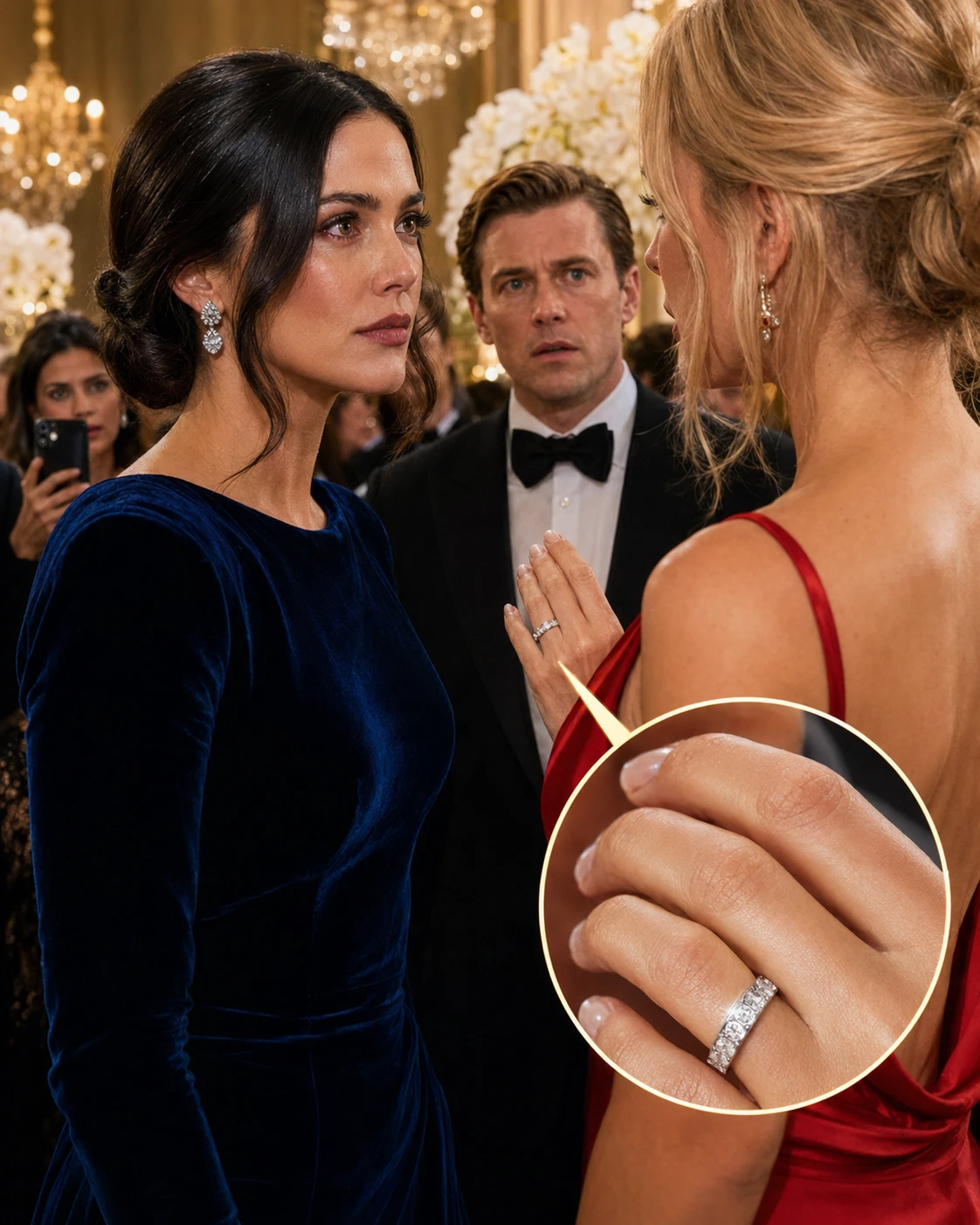
My husband’s mistress wore my wedding band to meet the adoption agency.
Not a lookalike. Not a tasteful imitation purchased from a boutique on Madison Avenue. Mine.
A narrow platinum band with a crescent of pavé diamonds hidden on the inside, where only the wearer could feel them against the skin. A secret shimmer. A private promise. My mother had called it “quiet wealth,” the kind that never begged to be noticed.
Sloane Mercer noticed everything.
She swept into the waiting room of Linden House Family Services wearing winter white, red lipstick, and the exact ring I had worn the day Preston Whitaker vowed before three hundred guests beneath a ceiling of imported roses that he would love me until the end of his life.
Then she smiled at the caseworker and called my husband “my future husband.”
I sat across the room, silent, my hands folded around a paper cup of coffee I had not tasted.
Beside me, my attorney, Naomi Price, clicked open her pen.
Preston had told the family court the affair was over.
He had sworn it under oath. He had said Sloane was “a mistake born from marital strain,” that he was “fully recommitted to repairing the marriage,” and that he wanted the adoption process to continue because he and I were “a stable, unified household.”
The judge believed his face.
The board believed his donations.
The newspapers believed the photograph he sold them: Preston Whitaker, real estate prince of Boston, holding my hand on the courthouse steps while I wore pearls and looked like forgiveness.
But Sloane’s ring, Sloane’s words, and Preston’s silence said otherwise.
And I had spent the last three months learning that silence, when documented correctly, could be louder than a scream.
Chapter 1: The Woman in My Seat
There are women who fall apart loudly.
There are women who break china, flood their friends with voice messages, throw clothes out of windows, and make a scene so big the world knows exactly where to look.
I used to envy them.
There is a mercy in public destruction. Nobody expects elegance from a house on fire.
But I was raised by a mother who believed pain should be poured into crystal, chilled, and served only when the guest deserved poison.
So when my husband’s mistress sat beneath the soft gold lights of Linden House and crossed her legs like she was auditioning to become the next Mrs. Whitaker, I did not gasp.
I did not slap her.
I did not point to the ring and say, That’s mine.
I only watched.
Linden House occupied a limestone townhouse on East Seventy-Third Street, the kind of place that made hope look expensive. A brass plaque beside the front door carried the agency’s name in tasteful serif letters. Inside, the air smelled faintly of lilies, lemon oil, and money pretending to be compassion.
The waiting room was designed to soothe wealthy women whose grief had been professionally upholstered. Pale sofas. Framed watercolors. Stacks of parenting magazines. A silver tray of bottled water. Everything soft, everything neutral, everything chosen to keep desperation from staining the furniture.
I had spent fourteen months in that room.
Fourteen months of interviews, home studies, medical disclosures, financial audits, reference letters, background checks, and smiling through the phrase “birth mother preferences” while pretending my heart did not collapse every time a profile vanished from the portal.
The child we hoped to adopt was a little girl named Ava.
Not legally ours yet. Not promised. Never promised. Linden House reminded us of that every time our hearts got ahead of procedure.
Ava was six months old, with solemn brown eyes and a habit of gripping the collar of whoever held her, as if making sure the world could not drop her again. Her birth mother had chosen us from a short list. Not because Preston was rich, though he was very rich in the way men like him always seemed to be rich: loudly on paper, quietly in debt, and endlessly admired for it.
She chose us because of me.
She told the agency she liked my letter. She liked that I wrote about bedtime stories, rainy Sundays, and teaching a child how to make pancakes from scratch. She liked that I did not say Ava would complete me. I wrote that a child was not a missing piece in an adult’s life. A child was a whole life asking for safe hands.
When Linden House called and said we were moving to the final review phase, I cried in the laundry room for forty-two minutes.
Preston found me there and kissed my forehead.
“We’re almost there, Vivi,” he said.
Three weeks later, I found the hotel receipt in the pocket of his charcoal overcoat.
The room had been charged under Whitaker Development’s executive account.
The champagne was Cristal.
The guest initials were S.M.
Sloane Mercer was not hard to find. Women like Sloane arrange their lives so they can always be found.
She was an interior designer with two magazine covers, a divorce settlement from a plastic surgeon in Greenwich, and a social media feed that looked like an altar to beige. She posted marble kitchens, French antiques, silk pajamas, and captions about feminine energy.
She had first appeared in our world when Preston hired her to redesign the penthouse lobby at The Alder, one of his boutique residential buildings in Back Bay. She was thirty-two, delicate in the weaponized way of women who know exactly how much space their beauty takes from others. Her blond hair always looked freshly slept on by someone important. Her voice had the breathy softness of a secret told after midnight.
When I confronted Preston, he did not deny it.
That was his first mistake.
He looked tired, then wounded, then noble. Men like Preston cycle through emotions the way other people cycle through passwords.
“It meant nothing,” he said.
“It meant enough for Cristal.”
He closed his eyes. “Don’t make this cheap.”
That was his second mistake.
He thought dignity belonged to him because he could afford it.
The affair, he explained, had happened during “a period of disconnection.” He had felt lonely. I had become consumed by the adoption. I had stopped being “present.” Sloane had listened. Sloane had understood pressure. Sloane had not looked at him like he was a failure.
“I looked at you like a husband,” I said. “Apparently that was less flattering.”
He cried then, beautifully. Preston had a gift for tears. He could summon one in the left eye first, let it travel slowly, and make the room feel cruel for witnessing it.
He promised to end it.
He promised counseling.
He promised he wanted our family.
And because Ava existed somewhere in the fragile distance between possibility and law, I did not file for divorce that night.
I filed for control.
There is a difference.
Naomi Price was recommended by a friend of my mother’s, a woman who had divorced a senator and kept the vineyard.
Naomi had an office overlooking Bryant Park, a wardrobe composed entirely of black suits, and eyes that made liars lower their voices. During our first meeting, she listened without interrupting. When I finished, she tapped one manicured nail against my file.
“Do you want him back,” she asked, “or do you want the truth preserved?”
I looked out the window at the winter trees.
“I want Ava protected.”
Naomi nodded once. “Then we move quietly.”
The first court hearing was not about divorce. Not yet. It was about the adoption review. Linden House had flagged our household after someone—Preston insisted he did not know who—sent the agency screenshots of Sloane’s private Instagram story.
A blurred hotel room.
A man’s hand with Preston’s signet ring resting on white sheets.
A caption: Some men are worth waiting for.
Preston’s attorneys argued the affair was over and that the marriage remained intact. He swore he had no ongoing relationship with Sloane Mercer. He swore he had ended all contact unrelated to business. He swore he was committed to our adoption.
The judge warned him that misrepresentation in family proceedings could affect custody, adoption suitability, and related financial disclosures.
Preston said he understood.
His voice was steady.
His jaw was clean-shaven.
His suit was navy.
The judge looked at me.
“Mrs. Whitaker, do you wish to proceed with joint adoption review at this time?”
My heart thudded so hard I could feel it in my teeth.
Naomi’s hand rested lightly on the table between us. Not touching me. Just there.
“Yes,” I said. “With monitoring.”
Preston squeezed my hand for the cameras outside.
The newspapers called it a reconciliation.
Sloane called it an intermission.
Two days after the hearing, my wedding band disappeared from the marble dish beside my bathroom sink.
Preston claimed I must have misplaced it.
I did not accuse him.
I called the insurance company. I called the jeweler. I called Naomi.
Then I began taking photographs of everything.
By the morning of the Linden House meeting, I already knew Sloane would come.
Not because Preston told me.
He had stopped telling me anything useful years ago.
But Sloane had a private account, and one of the women watching it had once been humiliated by Preston at a charity auction and had a long memory.
The night before the meeting, Sloane posted a close-up of her left hand resting on a cream cashmere blanket.
The ring glowed faintly in the candlelight.
Caption: Some promises just arrive late.
Naomi forwarded the screenshot to herself, to me, and to a secure evidence folder she had created under the name “Household Stability.”
Then she called.
“Tomorrow,” she said, “you do nothing.”
I stood in my closet, staring at rows of dresses arranged by shade. Ivory, pearl, champagne, black. The wardrobe of a woman trained to bleed invisibly.
“Nothing?”
“Nothing emotional. Nothing theatrical. We need her comfortable enough to be specific.”
“She’s wearing my ring.”
“I know.”
“He gave it to her.”
“Then let her show us.”
I chose a black wool dress with long sleeves and a high collar. No jewelry except my mother’s small diamond studs. Preston always hated that dress. He said it made me look “severe.”
That morning, he barely looked at me at all.
In the car from our townhouse on Marlborough Street to Logan, where his driver took us to the private terminal, Preston stared at his phone and spoke only once.
“Today matters,” he said.
“Yes.”
“Please don’t make it harder than it needs to be.”
I turned my face toward the window. Boston slid by in old brick, bare trees, and cold silver light.
“That sounds like advice for both of us.”
His mouth tightened.
We flew to New York in silence.
At Linden House, the caseworker, Margaret Bell, greeted us with the careful smile of a woman who had seen rich families become poor in character under fluorescent legal scrutiny.
“Mr. and Mrs. Whitaker,” she said. “Thank you for coming in.”
Naomi sat beside me as my legal representative, officially there because of the ongoing court monitoring. Preston had brought his own lawyer, a soft-palmed man named Richard Hale, who always smelled faintly of expensive cinnamon and panic.
We were led into the waiting room while Margaret prepared the conference space.
Five minutes later, the front door opened.
Every head turned.
Sloane Mercer entered as if the building had been expecting her.
Her coat was winter white, belted tightly at the waist. Her hair fell in polished waves. Her heels clicked against the herringbone floor with a sound so crisp it felt rehearsed.
Preston stood too quickly.
His lawyer’s face drained.
Naomi did not move.
Sloane kissed the air near Preston’s cheek, then turned toward Margaret Bell, who had stepped out of the conference room holding a folder.
“Margaret?” Sloane said brightly. “I’m Sloane Mercer.”
Margaret blinked. “I’m sorry, I wasn’t aware—”
“I know it’s a little unusual,” Sloane said, lowering her voice in a way designed to be overheard. “But Preston thought it would be helpful for me to introduce myself, since I’ll be part of Ava’s life soon.”
Preston said nothing.
The room inhaled.
Sloane lifted her left hand to tuck hair behind her ear.
The ring flashed.
My ring.
A small sound escaped someone at the reception desk.
Sloane smiled at Margaret and placed her hand gently on Preston’s arm.
“I’m his future wife,” she said. “I didn’t want there to be any confusion.”
I looked at Preston.
He looked at the floor.
That was the moment everything changed.
Not because I finally understood he was cruel. I had known that.
Not because I finally understood he was weak. I had known that too.
Everything changed because, for the first time, Preston allowed his lies to stand in the same room as the child he claimed to love.
Naomi’s pen moved quietly across the page.
Sloane glanced toward me with eyes full of soft victory.
“Vivienne,” she said, as if greeting a woman whose chair she had borrowed at brunch. “I hope this isn’t too uncomfortable.”
I smiled.
Not warmly.
Not kindly.
Just enough to make her uncertain.
“It’s very helpful,” I said.
Chapter 2: Pearls Don’t Break, They Scatter
There are rules for women like me.
Never raise your voice in a lobby.
Never let your mascara run where a camera can catch it.
Never reveal exactly how much you know.
And above all, never interrupt an enemy who is making a clean record.
Margaret Bell recovered faster than Preston.
“I’m afraid only approved parties may attend today’s meeting,” she said, her tone clipped now. “Ms. Mercer, you are not listed as a participant.”
Sloane’s smile flickered.
“Oh. Preston said—”
Richard Hale coughed.
Preston finally lifted his head. “Sloane, this isn’t the time.”
He said it softly. Not angrily. Not with shock. Not like a man surprised by an ex-mistress violating a court-monitored adoption review.
He said it like a man reminding a woman they had discussed timing.
Naomi wrote that down too.
Sloane touched the ring again.
“I’m only trying to be honest,” she said. “I thought that was what everyone wanted.”
It was almost beautiful, the way she mistook exposure for honesty.
Margaret turned to Preston. “Mr. Whitaker, did you invite Ms. Mercer to this meeting?”
“No,” he said.
The word came too quickly.
Sloane turned toward him.
Her face did not collapse. Women like Sloane do not collapse in public either. They sharpen.
“Preston.”
“I did not invite her inside,” he clarified.
Naomi’s pen paused.
Richard Hale closed his eyes.
Inside is a dangerous word. It admits there was an outside.
Margaret’s expression hardened by one careful degree.
“Ms. Mercer, I’ll need you to leave the premises.”
Sloane looked at Preston again. He did not defend her. He did not defend me. He stood between us like a man waiting for the weather to choose a direction.
So Sloane chose for him.
She turned toward me, that diamond-bright smile returning.
“I know this is painful,” she said. “But eventually, we all have to accept what’s real.”
The old me might have gone cold with humiliation.
The woman I had become felt something else entirely.
Gratitude.
Sloane had walked into a monitored family services agency wearing stolen marital property, identified herself as the future spouse of a married man, linked herself to a pending adoption, contradicted sworn testimony, and done it in front of a caseworker, two lawyers, a receptionist, and security cameras.
She thought she had come to claim legitimacy.
She had actually come to notarize her own destruction.
When the door closed behind her, the room remained quiet.
Margaret asked us to step into the conference room.
The meeting lasted twenty-three minutes.
Preston tried to speak in the language of regret, but regret requires a past tense. He kept reaching for one and finding only present evidence.
Naomi asked only three questions.
“Mr. Whitaker, when did you last communicate with Ms. Mercer?”
He said, “Weeks ago.”
Naomi looked at Margaret. “For the record, Ms. Mercer stated Mr. Whitaker believed it would be helpful for her to introduce herself today.”
Richard objected that this was not a deposition.
Margaret said, “It is an agency review, and I will note all relevant household stability concerns.”
Naomi’s second question: “Did you provide Ms. Mercer with Mrs. Whitaker’s wedding band?”
Preston’s head snapped toward me.
I did not blink.
“No,” he said.
Naomi: “Do you know how Ms. Mercer obtained it?”
“No.”
The third question was the softest.
“Did you correct Ms. Mercer when she described herself as your future wife?”
His mouth opened.
Nothing came out.
Margaret wrote something in her folder.
Preston’s silence had finally become useful.
By noon, Linden House suspended the joint adoption review.
By one, Naomi filed an emergency notice with family court.
By three, Preston was screaming in the suite he had booked at The Carlyle because he believed old-world hotels made disasters look temporary.
“You ambushed me,” he said.
I stood near the window, watching taxis slide through the rain below.
“No, Preston. She did.”
“You knew she was coming.”
“I knew she wanted to be seen.”
His laugh was ugly. It startled me. Preston was rarely ugly by accident.
“You think this makes you look good? Sitting there like some frozen martyr while everyone watched my private life explode?”
“Our adoption review is not your private life.”
He flinched, just a little.
“Don’t weaponize Ava.”
I turned then.
It was the first time I let him see my face without any polish on it.
“You brought your affair into her life before she could even say your name.”
His anger shifted. Men like Preston dislike moral clarity. It leaves them nowhere attractive to stand.
“She shouldn’t have come,” he muttered.
“But she did. Wearing my ring.”
He looked toward my left hand, bare except for the faint indentation where the band had lived for seven years.
“I didn’t give it to her.”
“Then call the police.”
His eyes met mine.
There it was.
The tiny pulse of calculation.
Not fear of losing Sloane. Not fear of losing me. Fear of records.
“I’m not turning this into a circus,” he said.
I almost smiled. “The circus is already here. You simply dislike the lighting.”
He stepped closer.
“You need to think very carefully about what happens next.”
I had thought about little else.
For three months, while Preston performed remorse in court and Sloane posted shadows of his shirts on her bedroom floor, I had learned the architecture of his life.
I learned that Whitaker Development was not as strong as people believed.
I learned that Preston had borrowed against future projects, leveraged his reputation, and hidden debt beneath polished renderings and charity galas.
I learned that he had used marital funds for Sloane’s apartment, Sloane’s consulting fees, Sloane’s travel, and one limited-edition Van Cleef bracelet she had posted with the caption: When a man pays attention.
I learned that the penthouse where Sloane lived in Tribeca was owned by an LLC nested under another LLC, ultimately tied to a holding company Preston had failed to disclose in his court filings.
I learned that the holding company had been seeded with money from my trust.
That was his third mistake.
Preston had always assumed I did not understand money because I did not worship it in public.
My mother, Elise Calloway, had been old Boston in the way that meant the family name appeared on museum wings but not reality television. She had inherited mills, converted them into medical office parks, then converted those into private equity before people like Preston learned to call debt “vision.”
She died when I was twenty-seven and left most of her estate in a trust managed by people who wore gray suits and distrusted charm.
When I married Preston, he signed a prenuptial agreement so thick it arrived in its own box.
He joked about it at parties. “Vivienne’s family made me sign away rights to air and sunlight.”
Everyone laughed.
I did not.
He signed because he believed love was a temporary inconvenience on the path to access. He believed I would soften. He believed eventually every locked door would open if he stood in front of it looking handsome and wounded.
Some did.
Not the important ones.
Years later, when Preston’s company began struggling, I allowed one trust-owned entity to provide bridge financing for a luxury development in Boston’s Seaport District.
He never knew the money came from me.
The documents named Vesper Holdings.
Preston thought Vesper was a faceless institutional lender. He sent quarterly reports to men he imagined in glass towers. He performed competence for them. He never realized every report landed on Naomi’s desk, then mine.
Vesper held the senior note on his most valuable project.
Vesper held warrants triggered by fraud.
Vesper held personal guarantees he had signed without reading carefully because arrogance makes men skim.
The week I found the hotel receipt, I asked the trustees to review every loan covenant.
They found irregularities.
Then they found more.
Then they found enough.
So when Preston told me to think carefully about what happened next, I was already thinking about the courthouse, the adoption board, the forensic accountant, the lender remedies, the missing ring, the stolen trust funds, and the woman downstairs who believed wearing diamonds meant she had won.
I picked up my purse.
“Where are you going?” Preston demanded.
“To dinner.”
“With whom?”
“Myself.”
He laughed once. “You’re unbelievable.”
I paused at the door.
“No,” I said. “I’m finally believable. That’s your problem.”
Dinner was at Bemelmans Bar.
I ordered soup, a martini I barely touched, and Dover sole. A pianist played something melancholy. Beautiful women spoke softly under murals of Central Park animals. Men in tailored jackets lied with practiced tenderness across small tables.
My phone buzzed seventeen times.
Preston.
Sloane.
Preston again.
Then an unknown number.
I answered only when Naomi called.
“The agency will provide a written incident report,” she said. “Margaret Bell is concerned enough to recommend suspension of the joint petition.”
My throat tightened.
“And Ava?”
“She cannot be placed with the two of you jointly while this is unresolved.”
I closed my eyes.
The restaurant noise thinned.
“She deserves better than unresolved,” I said.
“Yes,” Naomi said. “She does.”
There was a pause.
Then Naomi added, “There is another path.”
I opened my eyes.
Across the room, a woman in red laughed, throwing her head back as if her life had never once asked her to be quiet.
“What path?”
“Individual petition. It will be harder. Preston will fight it if he believes there’s leverage. But the agency already favored your caregiving profile. Your finances are independent. Your home study can be updated. If we establish that Preston misrepresented household stability and exposed the process to harmful conflict, we may be able to separate your application.”
Hope is dangerous when it arrives before certainty.
I kept my voice still.
“Do it.”
“Vivienne.”
“Yes?”
“Once we file against him, there’s no returning to polite.”
I looked at my bare hand.
“There was never anything polite about what he did. Only quiet.”
That night, back in Boston, I slept in my mother’s room at the Calloway house on Louisburg Square.
The room had not changed much since she died. Cream walls. Blue silk curtains. A silver-framed photograph of her standing beside me at my college graduation, her arm around my waist, her smile private and proud.
In the closet, behind cedar panels, was a safe.
Inside was the original appraisal packet for my wedding band.
I took it out and read the inscription description again.
Interior pavé crescent of twelve diamonds. Inner engraving: E.C. to V.C. — choose yourself.
My wedding band had never been from Preston.
He had placed it on my finger at the altar, yes.
But my mother had designed it before she died.
She had known, somehow, that marriage could become a room where a woman forgot the location of the door.
Choose yourself.
I pressed the paper to my chest and finally cried.
Not because Sloane had worn the ring.
Not because Preston had given away something sacred.
I cried because for seven years, I had mistaken endurance for devotion.
In the morning, my tears were gone.
The appraisal went into the evidence file.
Chapter 3: The Velvet Knife
Rich men do not fear losing women.
They fear losing audience.
Preston could survive my grief. He could survive Sloane’s tantrums. He could survive gossip, provided the gossip stayed fragrant and vague.
What he could not survive was documentation.
Naomi filed three motions in four days.
One in family court regarding Preston’s false statements during the adoption review.
One in probate and matrimonial court seeking preservation of marital assets and disclosure of funds transferred to Sloane Mercer or entities benefiting her.
One confidential lender notice on behalf of Vesper Holdings, citing potential covenant breaches in Whitaker Development’s Seaport project.
Preston received the notices on a Thursday morning.
By Thursday afternoon, he appeared at the Calloway house with flowers.
White peonies.
Out of season. Ridiculously expensive. Entirely wrong.
My housekeeper, Mrs. Alvarez, found him on the steps and told him I was unavailable.
He told her he was my husband.
She told him that explained why he was outside.
I watched from the second-floor library as he stood in the cold, peonies wilting in his hand.
Preston hated locked doors.
At five, he called.
I answered because Naomi had taught me the value of controlled access.
“Vivi,” he said, voice thick with practiced remorse. “Please.”
I said nothing.
“I know I’ve hurt you.”
Still nothing.
“I handled Sloane badly.”
I looked at the fire burning low in the marble fireplace.
Handled. Not betrayed. Not funded. Not lied under oath.
Handled.
“I’m listening,” I said.
He exhaled, relieved. Men like Preston mistake silence for softness.
“She got carried away. She’s emotional. She thought if she showed up, it would force clarity.”
“It did.”
“I ended it.”
“When?”
A pause.
“After New York.”
I closed my eyes.
The lie was smaller than the ones before it, but somehow more insulting.
“You told the court it ended before New York.”
Another pause.
Then, softly, “I was trying to save our family.”
“No. You were trying to save your options.”
His voice hardened. “Don’t let Naomi turn you into someone you’re not.”
That amused me.
“Preston, Naomi is not the reason you gave your mistress my wedding ring.”
“I told you, I didn’t give it to her.”
“Then she stole it?”
“I don’t know.”
“Again, call the police.”
He inhaled sharply.
Then he changed tactics.
“What do you want?”
There it was. The first honest question he had asked in months.
I wanted my child safe.
I wanted my mother’s ring back.
I wanted the world to stop rewarding men for being sorry only after consequences arrived.
But those answers were not for him.
“I want full financial disclosure,” I said. “I want no interference with my individual adoption petition. I want you to sign a statement correcting your prior testimony. I want all marital funds used for Sloane Mercer reimbursed. I want my ring returned.”
He laughed in disbelief.
“You can’t be serious.”
“I am rarely funny by accident.”
“You’re going to humiliate me?”
“No, Preston. I’m going to itemize you.”
He went silent.
That was when I knew he finally understood I was not negotiating for his affection.
He lowered his voice. “You don’t want me as an enemy.”
I looked at the portrait of my mother above the mantel. Elise Calloway in black satin, diamonds at her throat, eyes like winter water.
“No,” I said. “You don’t want me as evidence.”
He hung up.
By the weekend, Sloane began posting again.
At first, it was subtle.
A champagne glass beside a man’s cuff.
A hallway that looked suspiciously like Preston’s private club.
A caption: Truth always rises.
Then it became less subtle.
A black-and-white selfie, tearful but beautiful.
Caption: One day I’ll tell the story of what it costs to love a man before the world understands him.
Her followers reacted exactly as she intended.
Queen.
Stay strong.
You deserve happiness.
Old wives always try to punish new beginnings.
I watched the comments from the library while my forensic accountant, Martin Cho, spread bank records across the table like a surgeon laying out instruments.
Martin was thirty-eight, calm, brilliant, and allergic to drama. He wore wire-rim glasses and drank green tea from a thermos. Naomi trusted him because he once found $14 million hidden inside “landscaping expenses” during a Palm Beach divorce.
Now he was tracing Preston’s generosity.
“Sloane’s apartment lease was paid through Bellwether Interiors,” Martin said.
“Her company?”
“Yes. But the funds originated from Whitaker Development consulting payments.”
“Legitimate?”
He gave me a look.
I almost smiled. “Sorry.”
“Bellwether submitted invoices for design consultation on The Alder and two Seaport projects,” Martin continued. “The invoices are inflated by roughly four hundred percent based on comparable work. Some deliverables do not exist. Several payments were routed after court preservation obligations began.”
Naomi marked the page.
“Marital waste,” she said. “Potential fraudulent transfer.”
Martin pointed to another column. “There are also jewelry purchases. Travel. A private medical spa in Arizona. One payment to a fertility clinic.”
The room went very still.
Naomi looked up.
“A fertility clinic?”
Martin slid the document toward us.
My pulse moved once, hard.
The clinic was in Scottsdale.
The payment date was six weeks before Preston told the court the affair had ended.
The patient name was not visible on the bank summary, but the charge was large enough to suggest more than a consultation.
For a moment, the world narrowed to the edge of that paper.
Fertility.
Preston and I had spent years in clinics. Years of cold exam rooms, hormone schedules, bruises hidden beneath silk, whispered prayers over embryos that did not stay. He had held my hand through the first miscarriage, then become busier for the second. By the third, he sent flowers from a meeting in Dallas.
When doctors told me carrying a pregnancy again could be dangerous, Preston said we would adopt.
He said biology did not matter.
He said love made a family.
Then he paid for Sloane to try to give him what my body could not.
Naomi’s voice cut through the silence.
“Vivienne.”
I looked up.
Her expression was not pity. I was grateful.
“I need that record,” I said.
“We’ll subpoena.”
“No,” Martin said quietly. “There may be a faster way.”
He pulled out another sheet.
“The payment memo references a concierge coordinator. Same coordinator billed travel to Nantucket under Sloane Mercer’s corporate card, reimbursed by Whitaker Development. If we can obtain business records from Whitaker, the memo trail may connect.”
Naomi nodded. “We move through corporate discovery.”
I stared at the clinic charge until the numbers blurred.
Then I stood.
“Excuse me.”
I walked into the powder room, locked the door, gripped the sink, and stared at myself in the mirror.
My face looked untouched.
That felt obscene.
Some pain should alter bone.
For a long moment, I was not a woman planning legal strategy. I was thirty-four years old, sitting on a bathroom floor with blood soaking through a nightgown while Preston shouted into his phone at a contractor because concrete delays were costing him forty thousand dollars a day.
I was thirty-six, signing adoption documents with trembling hands while Preston told me we needed to “lead with optimism.”
I was thirty-seven, watching Sloane Mercer wear the ring my dead mother had made to remind me not to disappear.
Then my phone buzzed.
A message from an unknown number.
It was a photo.
Sloane, in a silk robe, her left hand resting on her stomach.
The ring visible.
Caption typed beneath, not posted publicly.
He wants a real family.
The cruelty was so intimate it felt almost bored.
I did not break the phone.
I did not throw up.
I forwarded the image to Naomi.
Then I washed my hands, reapplied lipstick, and returned to the library.
Naomi looked at my face and knew.
“What is it?”
“Add intentional emotional distress to the list,” I said.
She read the message.
For the first time since I’d hired her, Naomi Price looked genuinely angry.
“Vivienne,” she said carefully, “this may be bait.”
“I know.”
“She wants you to react.”
“I won’t.”
But something inside me had changed shape.
Until that moment, I had wanted clean separation. Legal consequence. Ava’s safety. My ring.
Now I wanted Sloane Mercer to experience the full loneliness of becoming a document.
Three days later, Preston filed a counterpetition.
He alleged I was unstable, vindictive, and using the adoption process to punish him. He claimed I had become “emotionally fixated” on Sloane. He submitted photographs of me leaving a therapy clinic, which meant someone had followed me. He argued that my family wealth allowed me to manipulate the legal system.
He asked the court to pause my individual adoption petition.
He asked for access to the Calloway trust records, claiming marital entanglement.
He asked for our Boston townhouse to be declared a marital residence subject to equal division, despite signing a prenup stating otherwise.
It was arrogant.
It was desperate.
It was also useful.
Because in asking the court to examine everything, Preston opened doors his own lawyers had tried to keep closed.
Naomi smiled when she read the filing.
Not happily.
Hungrily.
“He wants discovery,” she said. “Let’s give him discovery.”
What followed was not glamorous.
Revenge rarely is. In films, revenge is black gowns, candlelight, and a perfect speech delivered at a gala. In real life, it is PDFs, subpoenas, timelines, coffee gone cold, and the slow satisfaction of watching lies fail to match bank statements.
We built the record piece by piece.
The hotel receipt.
The Instagram stories.
The Linden House incident report.
Security footage showing Sloane entering the agency after exchanging three text messages with Preston outside.
Visitor logs.
The appraisal packet for my ring.
Insurance correspondence.
Invoices from Bellwether Interiors.
Payments from Whitaker Development.
Corporate reimbursements.
Private flights.
The Scottsdale clinic charge.
A Nantucket rental under a shell company.
Photos Sloane had posted in that rental, including one where Preston’s reflection appeared in a window behind her.
Preston’s sworn testimony.
Preston’s revised testimony.
Preston’s silence.
Every lie became a column.
Every column became leverage.
Still, the public saw only the surface.
And the surface turned vicious.
A Boston society blog ran a blind item: Which icy heiress is blocking her husband’s chance at fatherhood because she can’t stand being replaced?
A podcast host called me “the villain in a cashmere headband.”
Sloane posted a black square and wrote: Protect your peace from women who confuse ownership with love.
I received messages from strangers telling me to let Preston be happy.
Let him be happy.
As if happiness were a chair in my house he had politely asked to borrow.
I wanted to respond.
I wanted to post every receipt.
Naomi forbade it.
“Court first,” she said. “Audience later.”
So I said nothing.
I attended charity lunches.
I sat on the museum board.
I toured schools for Ava, though I did not know whether she would ever come home to me.
I smiled when women touched my elbow and asked how I was.
I learned that humiliation has a temperature. At first it burns. Then it cools into something dense and metallic. Carried long enough, it becomes armor.
The only person who saw me without it was Adrian Vale.
He was not supposed to matter.
Adrian owned a quiet investment firm in New York and a vineyard in Oregon that made the kind of Pinot restaurants hid from ordinary guests. He had known my mother through philanthropy and had served on Linden House’s national advisory board years earlier. He was forty-two, widowed, with dark hair threaded at the temples and a habit of listening as if every word deserved a room of its own.
He called after the agency incident.
“I heard enough to be concerned,” he said.
“People are hearing many things.”
“I’m calling about Ava.”
That made me trust him a little.
Only a little.
We met in a corner booth at a restaurant in Beacon Hill, where the lighting made even water look expensive.
Adrian did not ask about Preston first.
He asked about the nursery.
I almost laughed.
No one had asked me about the nursery since the scandal began.
“It’s pale green,” I said. “Not sage. Softer. There’s a mural of a willow tree.”
“Books?”
“Too many.”
“No such thing.”
I looked at him then.
His expression was gentle but not soft. There was a difference. Softness bends around pain to avoid discomfort. Gentleness walks toward it carefully.
“I don’t know if she’ll ever see it,” I said.
He folded his hands on the table.
“What does your attorney think?”
“She thinks there’s a path.”
“Then follow the path.”
“Everyone thinks I’m doing this to win.”
“Are you?”
I looked down at the candle between us.
“I’m doing it because a child should not be handed to a man who lies about the rooms he brings her into.”
Adrian nodded.
“Good,” he said. “Winning is too small a reason to raise a child.”
That sentence stayed with me.
Over the next month, Adrian became a steady presence at the edge of my life. He sent no flowers. He made no dramatic declarations. He recommended a child trauma specialist for my updated home study. He introduced Naomi to a former agency compliance officer who explained exactly how Linden House weighed household instability. He never asked for anything in return.
That restraint felt luxurious.
Not the way Preston’s life had been luxurious, all shine and appetite.
Adrian’s luxury was silence without threat. Dinner without performance. A car door opened without ownership. A hand at my back that never pushed.
One snowy evening, after a long court preparation session, he walked me to my gate on Louisburg Square.
The gas lamps glowed through the storm.
I was exhausted enough to be honest.
“Do you think I’m becoming cruel?”
Adrian considered the question.
“No.”
“You paused.”
“I paused because I think you’re confusing cruelty with precision.”
I looked at him.
He continued, “Cruelty enjoys unnecessary pain. Precision ends the source of it.”
The snow caught in his hair.
For the first time in months, I felt something inside me unclench.
“I don’t know who I am after this,” I whispered.
He stepped closer, not touching me.
“You don’t have to know tonight.”
That was the first moment I understood romance did not have to arrive like rescue.
Sometimes it arrived like witness.
Chapter 4: The Gala Where Glass Cut Back
Preston’s downfall began in a ballroom.
Of course it did.
Men like Preston build their lives in ballrooms. They believe chandeliers forgive everything.
The Whitaker Foundation Winter Gala was scheduled for the first Saturday in March at the Museum of Fine Arts. Canceling would have looked guilty. Proceeding looked insane. Preston chose insane, dressed it in Tom Ford, and called it resilience.
The event raised money for foster youth scholarship programs.
That irony was not lost on anyone intelligent, which meant it was lost on most of the room.
Naomi advised me not to attend.
“You don’t need the optics,” she said.
“I do.”
“Vivienne.”
“I have spent months letting them tell a story without me in it.”
“Court is in nine days.”
“I know.”
“What are you planning?”
I adjusted one diamond earring in the mirror.
“To sit at my table.”
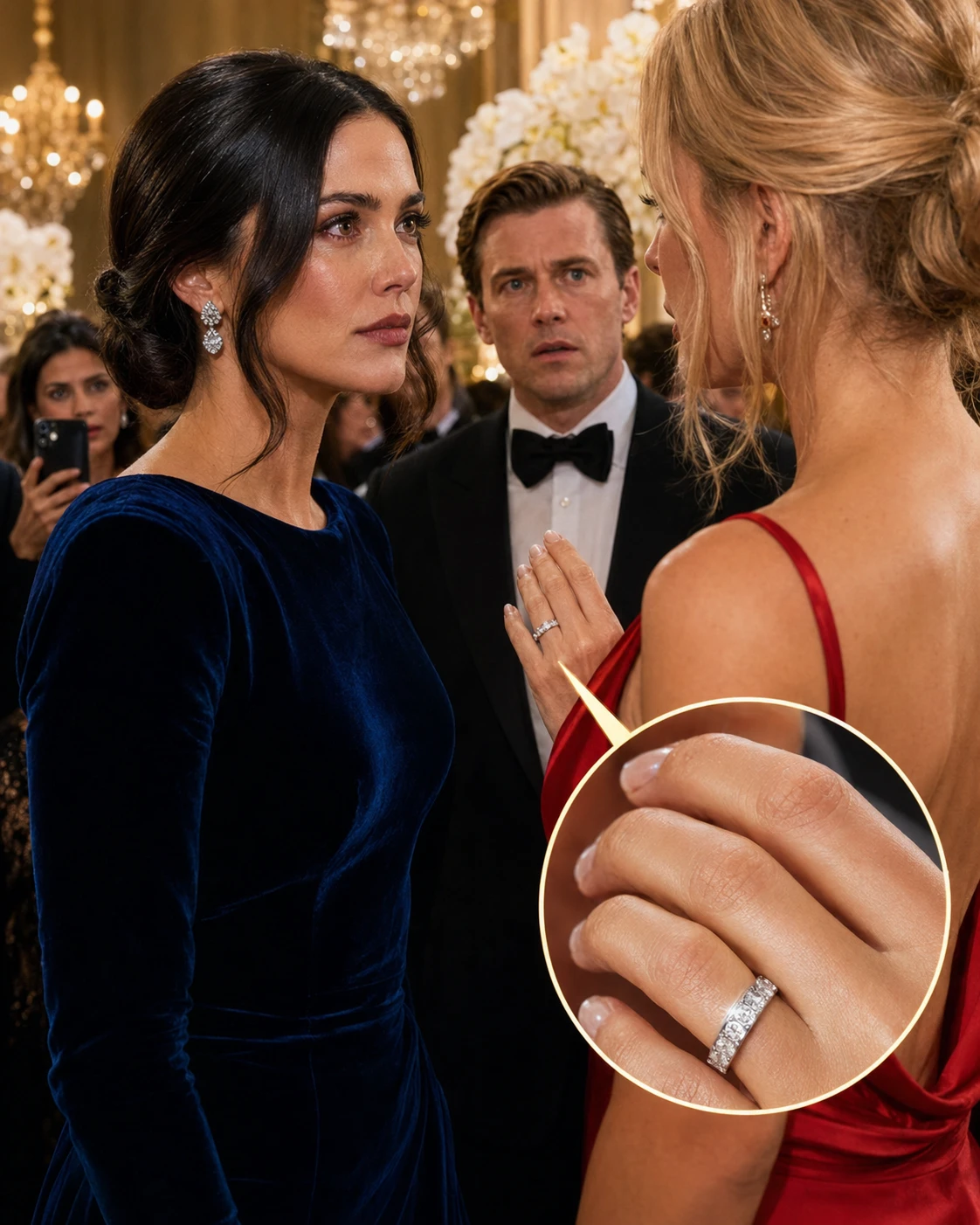
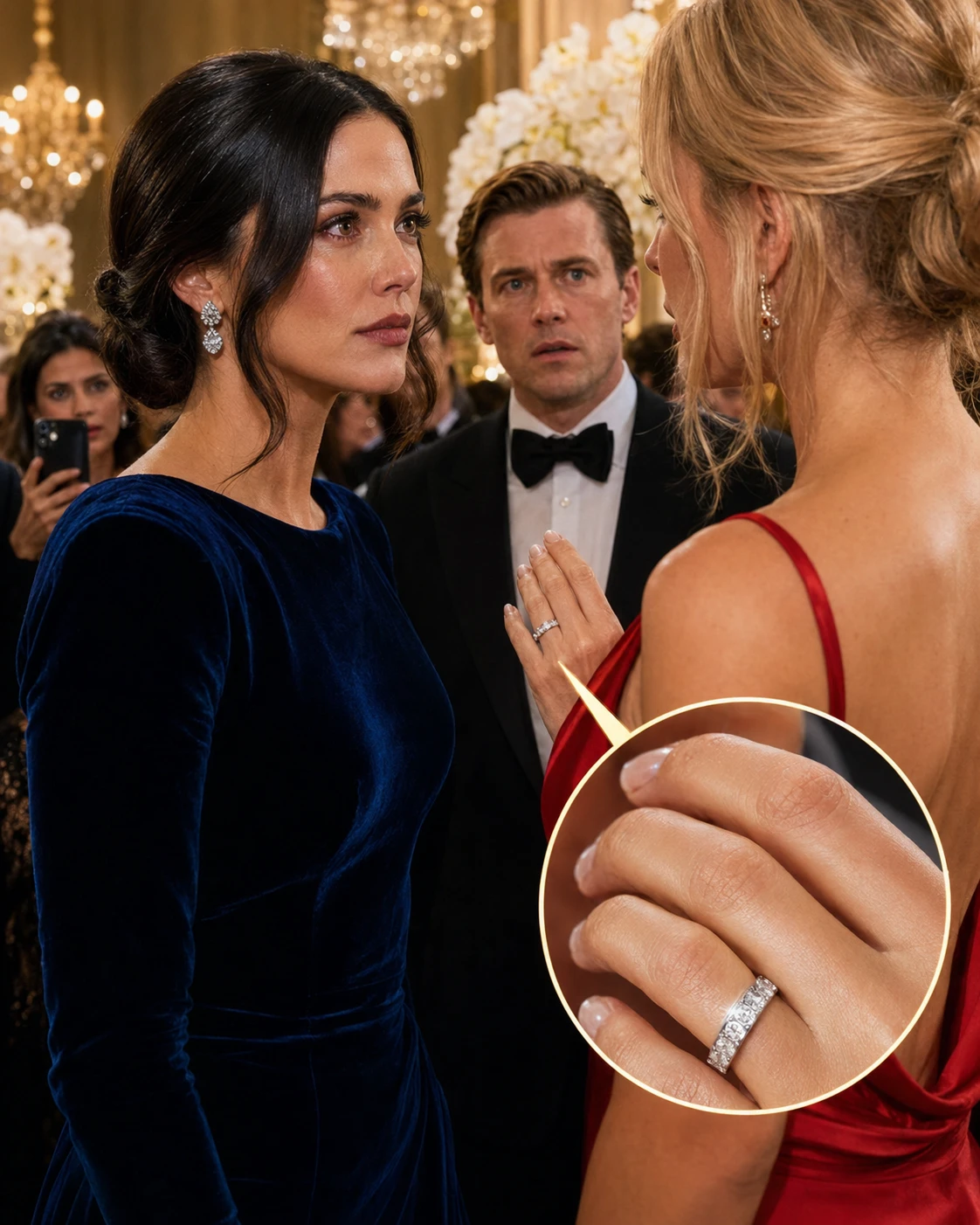
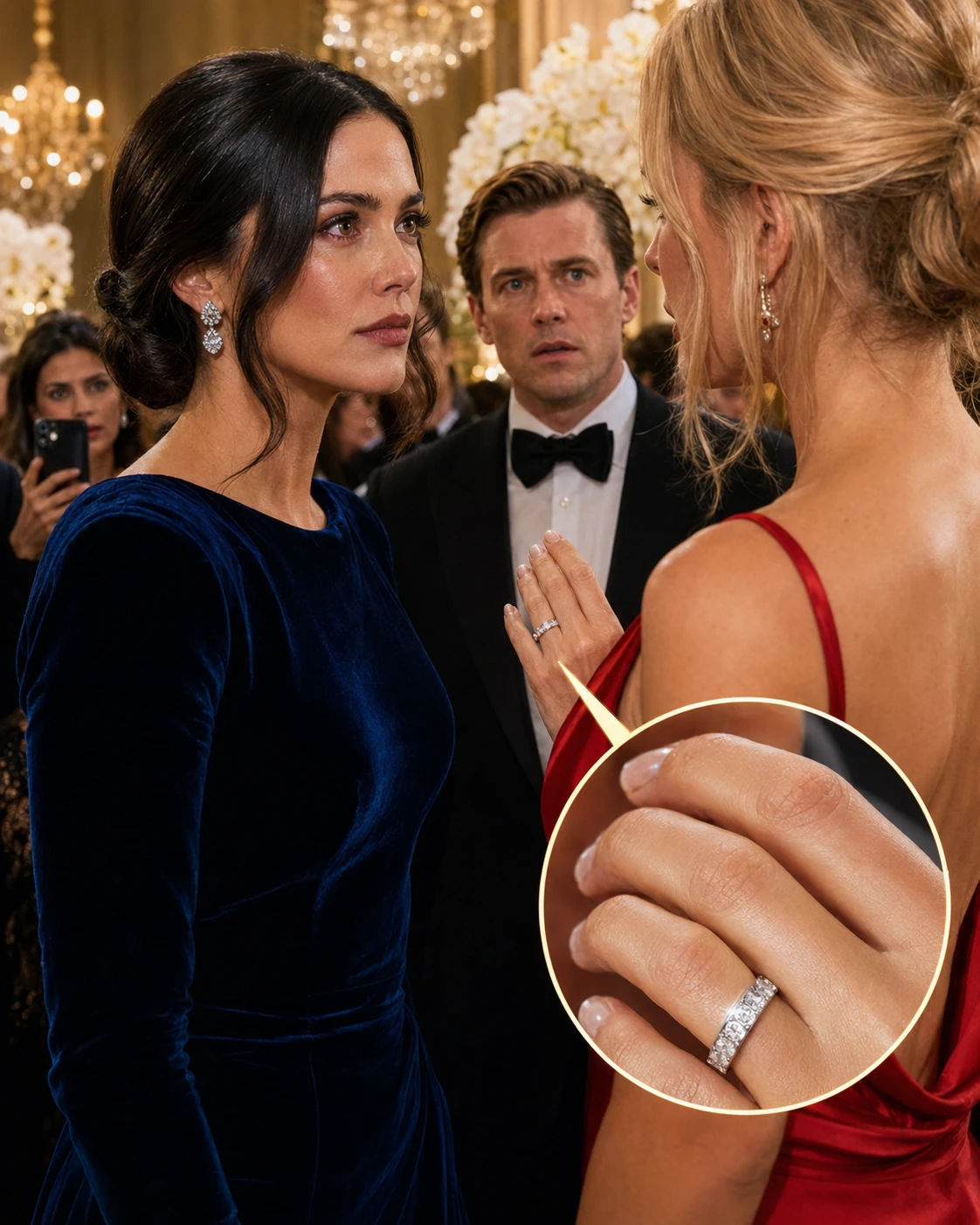
The dress was midnight blue velvet, long-sleeved, high-necked, severe in exactly the way Preston hated. Around my wrist, I wore my mother’s sapphire bracelet. My left hand remained bare.
No substitute ring.
No symbolic replacement.
An empty finger can accuse more elegantly than a diamond.
Adrian offered to accompany me. I declined. Not because I didn’t want him there, but because that room needed to see me arrive alone and unbroken.
The MFA ballroom glowed with gold light. White orchids spilled from silver urns. Champagne moved in crystal waves. Women glanced at my hand. Men pretended not to. Conversations dipped as I entered, then resumed with the bright artificial pitch of people trying to sound innocent.
Preston stood near the donor wall, smiling too hard.
Sloane stood beside him.
Not hidden. Not distant. Not subtle.
She wore red.
And my ring.
Even after the agency report. Even after legal notice. Even after being asked through counsel to return disputed property.
There is boldness, and then there is stupidity wearing couture.
The room noticed.
A ripple moved through it.
Preston’s face tightened when he saw me.
Sloane’s chin lifted.
I walked toward them because some humiliations deserve to be met head-on, preferably in heels.
“Preston,” I said.
His smile became a warning. “Vivienne.”
“Sloane.”
She touched the ring with her thumb. “I wasn’t sure you’d come.”
“And miss the scholarships?”
Her eyes narrowed.
Preston lowered his voice. “Don’t do this here.”
I tilted my head. “Do what?”
He glanced around. Cameras hovered near the step-and-repeat. Donors watched from behind champagne flutes. A board member’s wife leaned so far toward us I feared for her necklace.
Sloane smiled suddenly.
She wanted a scene.
She wanted the clip.
The mistress in red. The wife in blue. The billionaire husband between them. A perfect little tragedy for strangers to consume between skincare ads.
“I think people appreciate honesty,” Sloane said, raising her voice just enough.
I looked at her ring.
“Do they?”
She extended her hand slightly, as if offering evidence of victory.
“Vivienne, I know this is difficult. But Preston and I are building a life. You can’t keep punishing him for choosing happiness.”
Someone gasped softly.
Preston murmured, “Sloane.”
But he did not deny it.
Again.
He never understood that failing to contradict a lie could become a confession when the right people were listening.
I smiled.
“You’re right,” I said.
The room stilled.
Sloane blinked.
“I can’t punish Preston for choosing happiness,” I continued. “That’s not my role.”
Preston looked suspicious.
I turned slightly, allowing the nearest camera a clean view of my face.
“But I can ask for the return of my mother’s ring.”
The silence changed texture.
Sloane’s hand dropped.
Preston went pale.
I did not raise my voice. I did not need to.
“It was designed by Elise Calloway before her death,” I said. “It is trust property, individually appraised, insured, and currently the subject of a pending legal claim.”
Sloane laughed. It came out too sharp.
“That’s ridiculous. Preston gave it to me.”
The second the words left her mouth, Preston closed his eyes.
There are moments in life when a person steps off a cliff and only realizes afterward that the air has no floor.
Naomi had told me not to corner Sloane publicly unless I was willing to catch whatever fell out of her mouth.
I was willing.
“Thank you,” I said.
Sloane’s face changed.
“What?”
“Nothing. Enjoy the gala.”
I turned and walked away.
Behind me, I heard Preston hiss her name.
By the time dessert was served, half the room knew Sloane had admitted Preston gave her my ring. By midnight, a video of the exchange appeared online. Not posted by me. I would never be that careless.
It spread anyway.
The caption read: Boston wife asks husband’s mistress for her dead mother’s ring back. I’m unwell.
By morning, the internet had chosen new roles.
Sloane was no longer the brave new love.
Preston was no longer the misunderstood husband.
And I, for the first time, was not the ice queen.
I was the woman in blue velvet who did not cry while asking for what belonged to her.
But public sympathy is not justice.
It is weather.
Useful, shifting, impossible to build a house on.
The real storm arrived three days later.
Naomi subpoenaed Bellwether Interiors.
Sloane’s attorney tried to quash it, arguing harassment.
The judge denied the motion after reviewing the agency incident report, gala video, and financial records suggesting business payments from Whitaker Development had benefited Sloane personally.
That denial cracked everything open.
Bellwether produced invoices.
Then emails.
Then text messages.
Then a file Sloane had apparently forgotten existed.
The file was named “W Future.”
Inside were mood boards.
Not for interiors.
For a life.
A nursery in cream and gold.
A wedding at a private estate in Newport.
A press strategy titled “Graceful Transition.”
A list of donors likely to support Preston if he separated from me after finalizing the adoption.
And one document that made Naomi go utterly still.
It was a draft email from Sloane to Preston.
Subject: after placement
I read it twice before understanding the full horror.
Sloane had not merely wanted Preston.
She had wanted Ava.
Not because she loved her.
Because Ava completed the image.
The email proposed that Preston continue the joint adoption with me until placement, then file for divorce afterward. It suggested positioning me as emotionally unstable so Preston could seek primary custody. Sloane wrote that “a young child bonds quickly” and that “Vivienne’s attachment issues can be framed as unhealthy.”
My hands went numb.
Naomi took the paper from me.
“There’s more,” she said quietly.
There was always more.
A message from Preston to Sloane, sent two weeks before he swore the affair was over:
Once Ava is placed, everything changes. V can’t walk away without looking like she abandoned a child.
Sloane replied:
Then let her do the hard part. I’ll do the forever part.
I stood from the table so quickly my chair struck the wall.
For a moment, I could not breathe.
Not because he had betrayed me.
Because he had planned to use my love for a child as a trap.
That was the first time I wanted to hurt him in a way no court could measure.
Naomi followed me into the hallway.
“Vivienne.”
I pressed one hand against the wall.
“He was going to take her.”
“We will use this.”
“He was going to let me become her mother, then make my motherhood look like sickness.”
Naomi’s voice softened, but only slightly.
“Yes.”
Something inside me went quiet.
Not calm.
Quiet.
A room after the last guest leaves and the candles are still burning.
“File it,” I said.
“We need to be strategic.”
“File it.”
“We will.”
“And Naomi?”
“Yes?”
“No settlement that includes his privacy.”
Her eyes held mine.
“Understood.”
The hearing took place on a Monday morning in Suffolk County Family and Probate Court.
Outside, March rain turned the courthouse steps black.
Inside, Preston looked older.
Not ruined yet. Just aged by the labor of pretending not to be afraid.
Sloane was not present. Her lawyer had advised against it, which proved she had finally found someone competent.
Preston sat between Richard Hale and a litigation partner I recognized from a firm that charged enough per hour to make even guilt look sophisticated.
I wore charcoal gray.
Naomi wore black.
The judge, Honorable Patricia Hennessey, had the expression of a woman who had raised teenagers and therefore feared no man in a suit.
The matter began with the adoption petition.
Naomi laid out the timeline.
Preston’s sworn statement that the affair was over.
Sloane’s appearance at Linden House.
The incident report.
The ring.
The financial records.
The draft custody strategy.
The messages about using Ava’s placement to limit my ability to leave.
Preston’s attorney objected repeatedly.
The judge let Naomi continue.
When the screenshots were entered, Preston stared straight ahead.
I watched him carefully.
Not with love.
Not with hatred.
With recognition.
This was the man he had always been when no one was disappointing him by having needs of their own.
Naomi stood with a printed copy of Sloane’s Linden House statement.
“Your Honor, Ms. Mercer arrived at the adoption agency and identified Mr. Whitaker as her future husband in the presence of agency staff, counsel, and Mrs. Whitaker. Mr. Whitaker did not correct her. He later denied inviting her, but security footage and text records show coordination immediately before her entry.”
Richard rose. “Your Honor, Ms. Mercer’s behavior is not my client’s—”
Judge Hennessey raised a hand.
“Counsel, sit.”
He sat.
Naomi continued.
“Mr. Whitaker represented to this court that the extramarital relationship had ended and that the marital household remained stable for purposes of adoption. The record now shows ongoing contact, financial support, concealed property transfers, and a written plan to pursue placement of the child before initiating divorce and custody action.”
The judge looked at Preston.
“Mr. Whitaker.”
He stood.
For once, no camera softened him.
“Is there an explanation you wish to provide?”
Preston touched his cufflink.
A tiny movement. Expensive. Helpless.
“Your Honor, these messages are being taken out of context.”
Judge Hennessey’s eyebrows lifted.
“In what context is ‘let her do the hard part’ appropriate?”
The courtroom went silent.
Preston’s attorney whispered urgently.
Preston swallowed.
“I was under enormous stress.”
The judge stared at him.
I almost felt sorry for him then.
Almost.
Not because he deserved pity. Because it is a sad thing to watch a person arrive at the end of charm and discover he brought no other tools.
Naomi called Margaret Bell.
The caseworker testified calmly.
She described Sloane’s arrival, her words, Preston’s failure to correct her, the visible wedding band, the impact on the agency’s assessment of household stability.
Naomi asked, “In your professional opinion, did Ms. Mercer’s appearance support Mr. Whitaker’s sworn statement that the relationship had ended?”
“No,” Margaret said.
“Did it raise concerns about the proposed joint placement?”
“Yes.”
“What concerns?”
Margaret looked briefly at me, then at the judge.
“That the child could be placed into an active adult conflict involving deception, instability, and competing parental claims not disclosed to the agency.”
The words landed like stones.
Then came Martin Cho.
Financial records are less dramatic than tears but far more obedient.
Martin walked the court through payments to Bellwether Interiors, inflated invoices, personal expenses, jewelry purchases, the Scottsdale clinic, the Tribeca apartment, and transfers made after preservation obligations.
Preston’s attorney tried to suggest these were business expenses.
Martin adjusted his glasses.
“The invoice labeled ‘Seaport Lobby Conceptual Package’ was submitted during a period when Bellwether performed no work on the Seaport project. The attached deliverable is a Pinterest board containing twelve images of European nurseries.”
Even the court clerk looked up.
Naomi asked, “Were marital or company funds used to benefit Ms. Mercer personally?”
“Yes.”
“Were all such transfers disclosed by Mr. Whitaker?”
“No.”
“Were any funds traceable to entities connected with Mrs. Whitaker’s separate trust?”
“Yes.”
Preston turned his head slightly.
For the first time, he looked at me not with anger, but confusion.
He still did not know about Vesper.
Not fully.
That pleasure was quiet and cold.
After Martin stepped down, Naomi introduced the ring appraisal.
She did not make a speech.
She simply established ownership.
The ring was my separate property. Designed by my mother. Appraised before marriage. Listed in trust records. Insured separately. Reported missing. Seen on Sloane Mercer’s hand at Linden House and the gala. Admitted by Sloane, on video, as a gift from Preston.
When Naomi played the gala clip, my own voice filled the courtroom.
“But I can ask for the return of my mother’s ring.”
Then Sloane’s voice:
“Preston gave it to me.”
The clip ended.
Naomi turned to the judge.
“She came to look like family. She proved he was lying.”
No one moved.
It was the line the entire case had been waiting for.
Chapter 5: The House That Was Never His
The court did not rule immediately on everything.
Courts rarely deliver the kind of instant satisfaction movies promise. They reserve judgment. They request supplemental filings. They schedule reviews. They move at the pace of procedure, which is painful until you realize procedure is the only reason powerful men sometimes lose.
But that day, Judge Hennessey issued three temporary orders.
The joint adoption petition was terminated.
My individual petition could proceed with expedited review.
Preston was barred from contacting Linden House, Ava’s interim caregivers, or me except through counsel.
The financial matter was referred for further proceedings, with preservation orders expanded and sanctions under consideration.
Preston walked out of the courtroom without looking at me.
That was fine.
I was no longer a room he could enter.
Outside, reporters waited.
I had not invited them. But scandal attracts cameras the way blood attracts sharks in silk ties.
Naomi told me to say nothing.
This time, I disagreed.
Only once.
Only carefully.
I stepped to the microphones in the rain.
My hair was pinned low. My coat was black. My hands were steady.
“This has never been about punishing anyone for falling out of love,” I said. “It has been about truth, child safety, and the misuse of trust. Ava is not a symbol. She is not leverage. She is a child. That is all I will say today.”
Then I left.
The clip went viral before dinner.
Not because I cried.
Because I didn’t.
America loves a woman’s tears when they can be consumed safely. But sometimes, what stops people scrolling is a woman refusing to collapse in the costume assigned to her.
The comments changed again.
She ate him alive without raising her voice.
That line about Ava not being leverage? Chills.
The mistress wanted legitimacy. The wife watched the record form.
Sloane disappeared from social media for forty-eight hours.
Then she returned with a statement drafted by someone who hated punctuation.
She claimed she had been misled by Preston. She claimed she believed his marriage was over. She claimed the ring had been presented to her as “a family heirloom intended for his next chapter.” She claimed she had never intended harm to any child.
The internet was not kind.
Someone found old posts where she had liked comments calling me barren.
Someone else reposted her “real family” message.
A former assistant anonymously described Sloane as “a woman who made interns cry over curtain pleats.”
By the weekend, brands began deleting her from sponsored posts.
By Monday, Bellwether Interiors lost two contracts.
I took no pleasure in that.
Then I remembered the photo of her hand on her stomach.
I took a little.
Preston tried to settle.
The first offer was insulting.
A quiet divorce. Mutual non-disparagement. No admission of wrongdoing. He would not oppose my adoption petition if I agreed not to pursue claims related to Sloane’s expenses beyond a capped reimbursement.
Naomi read it aloud in my library.
Adrian sat near the window with Ava’s updated home study materials, not as counsel, not as savior, simply as someone I had allowed to be present.
When Naomi finished, she looked at me.
“No,” I said.
She smiled faintly. “I assumed.”
The second offer was better.
Full reimbursement of documented marital waste. Return of the ring if recovered. Cooperation with adoption review. Confidentiality.
“No.”
The third offer arrived after Vesper Holdings sent formal notice of default.
That was the day Preston finally called Naomi in a panic and asked, “Who the hell is Vesper?”
Naomi put him on speaker.
I sat across from her, silent.
“Vesper Holdings is the senior secured lender on the Seaport Harborlight project,” she said.
“I know what it is,” Preston snapped. “Who controls it?”
Naomi looked at me.
I nodded.
“Mrs. Whitaker’s separate trust holds the controlling interest.”
The silence on the line was magnificent.
Not loud.
Not theatrical.
Just the sound of a man realizing the floor beneath him had always belonged to the woman he was trying to push down.
“That’s impossible,” Preston said.
“No,” Naomi replied. “It’s recorded.”
“You let me borrow from you?”
“I believe Mrs. Whitaker allowed a properly managed trust entity to invest in a project that your company represented as financially sound.”
His breathing changed.
“She set me up.”
I leaned toward the phone.
“No, Preston. I believed in you.”
That was the cruelest truth I had.
He had no answer for it.
The Vesper documents were devastating because they were clean.
Preston had signed personal guarantees tied to material misrepresentations. He had certified accurate disclosures while concealing side payments and related-party benefits. He had triggered default provisions not by adultery, but by fraud.
That mattered.
Adultery embarrasses.
Fraud collects.
Vesper had the right to accelerate the loan, seize collateral, and force restructuring. If exercised publicly, Preston’s company would lose its flagship project, his lenders would panic, and his board would remove him before lunch.
For two days, he tried to find financing elsewhere.
No one wanted to lend into scandal secured by lies.
On the third day, his board requested his resignation as CEO pending investigation.
On the fourth, Sloane’s attorney returned the ring.
Not in person.
Of course not.
It arrived at Naomi’s office in a velvet pouch, accompanied by a letter stating Sloane “did not concede ownership issues” but wished to “avoid further distress.”
I went to Naomi’s office to retrieve it.
For several minutes, I could not open the pouch.
Naomi waited.
Finally, I tipped the ring into my palm.
It was colder than I expected.
Smaller too.
Pain had made it enormous in memory.
The diamonds inside still held their secret crescent. The engraving remained.
E.C. to V.C. — choose yourself.
I did not put it on.
Naomi watched me.
“What will you do with it?”
“I don’t know yet.”
“Safe deposit box?”
“Maybe.”
But that night, I took the ring home and placed it not in the marble dish beside my sink, but inside the nursery.
The room was pale green. The willow tree mural stretched across one wall, branches painted in soft gray and silver. On the bookshelf were books I had bought before I knew whether hope was wise. Goodnight Moon. Corduroy. The Snowy Day. A collection of fairy tales my mother had read to me, the spine cracked from use.
I placed the ring in a small porcelain box on the highest shelf.
Not hidden.
Not worn.
Kept.
Some promises are not meant to continue.
Some are meant to remind you that you survived believing them.
The final hearing on the divorce settlement happened in April.
By then, Preston had resigned from Whitaker Development. The board had appointed an interim CEO. Vesper agreed not to immediately accelerate the loan in exchange for restructuring terms that removed Preston from operational control and protected the project’s employees and investors.
That part mattered to me.
Revenge should not burn innocent people for warmth.
Preston arrived thinner.
He wore a gray suit I used to like.
There had been a time when I could identify his mood by the knot of his tie. Now he looked like a stranger dressed in old memories.
The settlement placed the Boston townhouse fully with me, as already required by the prenup. Preston reimbursed marital waste. He accepted responsibility for inaccurate disclosures. He waived any claim to my trust assets. He agreed not to oppose my adoption petition. He signed a statement correcting his prior testimony about the affair timeline and acknowledging that Sloane Mercer had been present in his life during the period he represented otherwise.
No confidentiality clause protected him from court records.
No nondisparagement clause silenced me from telling the truth.
At the end, the judge asked if we understood the agreement.
“Yes,” Preston said.
“Yes,” I said.
The judge signed.
Seven years of marriage ended with a stamp.
It should have felt bigger.
Instead, I felt the clean emptiness of a room after heavy furniture has been removed.
Outside the courtroom, Preston approached me.
Naomi stiffened.
“It’s fine,” I said.
He stopped several feet away.
For the first time in months, he did not perform. No tears. No noble exhaustion. No wounded husband.
Just Preston.
“I did love you,” he said.
I believed him, which surprised me.
I believed he had loved me as much as he was able. The way some people love houses with beautiful windows. They enjoy the light but never wonder who keeps the glass clean.
“I know,” I said.
His eyes reddened.
“I ruined everything.”
“No,” I said softly. “You revealed everything.”
He looked down.
“Is there any version where you forgive me?”
The question might once have destroyed me.
Now it simply passed through the air between us and found nowhere to land.
“There is a version where I stop carrying you,” I said. “That will have to be enough.”
He nodded.
Then he walked away.
I never saw him again in person.
Sloane sold her Tribeca lease, closed Bellwether’s New York office, and moved to Miami for six months, where she briefly rebranded herself as a “resilience consultant.” The internet, having the attention span of weather and the memory of wolves, mocked her for a week and then moved on.
Preston moved to a smaller apartment in Boston and began “advising” a friend’s development firm in Denver. His name appeared occasionally in business pages, always with careful language. Stepped down. Reorganized. Pursuing new opportunities.
That is how men fall when they still know people with editors.
My life became quieter.
Not simple.
Never simple.
The adoption review continued.
There were more interviews. More home visits. More questions about support systems, divorce, emotional readiness, child welfare, public attention, long-term guardianship, and whether I understood that love did not erase trauma.
I answered honestly.
I did not try to look perfect.
Perfect had nearly cost Ava everything.
Adrian was listed as part of my support network, alongside Naomi, Mrs. Alvarez, my cousin Claire, and two friends who had shown up when silence stopped being fashionable.
One afternoon in May, Margaret Bell visited the Calloway house.
She inspected the nursery, the kitchen, the garden, the safety gates, the references, the pediatrician plans. She asked difficult questions kindly. She did not once mention Sloane’s ring.
At the end, she stood beneath the willow mural and looked at the empty crib.
“You understand,” she said, “that Ava’s placement decision must center her needs, not your loss.”
“Yes.”
“And that adoption is not compensation for betrayal.”
“Yes.”
“And that if this proceeds, she is not coming into a story where she fixes what adults broke.”
I felt tears rise, but they did not fall.
“No,” I said. “She is coming into a home where the adults finally told the truth.”
Margaret studied me.
Then she smiled.
Only a little.
It was enough.
The call came on a Thursday morning.
I was in the garden, cutting peonies that had bloomed late and stubborn after a cold spring.
Naomi’s name flashed on my phone.
I answered with dirt on my hands.
“Vivienne,” she said.
I knew from her voice.
My knees weakened.
“Say it.”
“The agency approved your placement.”
The garden blurred.
Naomi continued, her own voice uncharacteristically soft.
“There are still finalization steps, but Ava can come home next week.”
I sank onto the stone bench.
For a long moment, I could not speak.
Mrs. Alvarez saw me from the kitchen window and came outside, wiping her hands on a towel.
I looked up at her.
“She’s coming home,” I whispered.
Mrs. Alvarez covered her mouth.
Then she cried loudly enough for both of us.
When Ava arrived, there were no cameras.
No press.
No gala.
No perfect family portrait staged beneath museum lighting.
Just a gray morning, a social worker’s car, a diaper bag, and a little girl with solemn brown eyes gripping the collar of my sweater like she had decided to test gravity personally.
I held her carefully.
Not as a prize.
Not as proof.
As a person.
“Hello, Ava,” I whispered. “I’m Vivienne.”
She stared at me.
Then she placed one small hand against my cheek.
Something in me broke open.
Not the way glass breaks.
The way dawn breaks.
Slowly, then all at once.
That first night, she cried for two hours.
I walked the hallway with her against my shoulder, humming every song I could remember. Mrs. Alvarez warmed bottles. Claire slept on the nursery floor. Adrian sat downstairs in the kitchen assembling a toy shelf with instructions in three languages and no useful diagrams.
At three in the morning, Ava finally slept.
I stood beside the crib and watched her breathe.
The porcelain box with my mother’s ring sat high on the shelf.
I thought about Preston.
I thought about Sloane.
I thought about the waiting room at Linden House, the winter white coat, the red dress, the courtroom, the video, the rain, the ring.
For so long, that moment had been the center of the story.
My husband’s mistress wore my wedding band to meet the adoption agency.
It was a good hook. Brutal. Shiny. Easy to share.
But it was not the whole story.
The whole story was this:
A woman was humiliated in public and did not mistake humiliation for defeat.
A child was nearly used as leverage and was protected instead.
A ring was stolen and returned, but the hand it left behind became stronger without it.
A man lied beautifully until the truth learned to speak in exhibits.
And a mistress came to look like family.
She proved he was lying.
Conclusion: The Warmth After the Fire
Months later, when the adoption was finalized, the judge let Ava bang the gavel.
She missed the sound block entirely and hit the desk.
Everyone laughed.
Even Naomi.
Ava wore a yellow dress and tiny white shoes. I wore cream. Not bridal cream. Not mourning black. Just cream, soft and ordinary and warm.
Adrian stood behind us, holding a small stuffed rabbit Ava had thrown at him twice that morning. He did not stand like a replacement. He stood like a promise still earning its place.
After the hearing, we went home to Louisburg Square.
No reporters knew. No one posted. No one needed to.
In the nursery, I took the porcelain box down from the shelf.
Ava sat on the rug, chewing the ear of her rabbit.
I opened the box and looked at the ring one last time.
For years, I had thought it symbolized marriage.
Then betrayal.
Then evidence.
But my mother had known better.
Choose yourself.
I closed the box and carried it downstairs to the library, where the morning sun touched the old wood floors. I placed it in the safe with her letters, her pearls, and the documents that proved she had protected me long before I understood danger could wear a wedding suit.
I did not need the ring on my hand.
My hands were full.
That evening, Ava fell asleep against my chest while rain tapped softly against the windows. Adrian lit the fire and set a mug of tea beside me. He did not ask if I was happy. He knew happiness was not a single bright thing after a year like that. It arrived carefully. In pieces. In warm weight against your heart. In quiet rooms. In the absence of fear.
I looked down at Ava.
Her fingers curled around my sweater.
For the first time in a long time, I did not feel like a woman who had survived a scandal.
I felt like a home.
Caption: The mistress wanted legitimacy. The wife watched the record form.