PART 3
I lowered my voice.
“Lily…”
She looked up.
“Does your mom know about your shoulder?”
Her little face immediately changed.
Not confusion.
Fear.
She nodded once.
“Did she take you to the doctor?”
Another nod.
“But…”
She hesitated.
“…she cried.”
That wasn’t the answer I expected.
I looked back at the road.
“What happened afterward?”
Lily’s fingers began twisting together.
“A man came.”
“What man?”
“I don’t know.”
“What did he look like?”
“He wore blue.”
Blue?
Doctor?
Nurse?
Security?
Police?
There wasn’t enough information.
My phone buzzed again.
Another message.
I mean it, Claire. Turn around before you make this worse.
No explanation.
No concern.
No “Is Lily okay?”
Just…
Turn around.
I pressed the accelerator a little harder.
Three minutes later my phone rang.
Sarah.
I answered using the car’s speaker.
“Claire.”
Her voice sounded strained.
Almost desperate.
“Where are you?”
“Driving.”
“I know you’re driving.”
“Then why ask?”
“You have to bring Lily home.”
“I’m taking her to Children’s Hospital.”
“No!”
The word exploded through the speakers.
Emma jumped.
Lily closed her eyes.
Sarah immediately lowered her voice.
“Please…”
She sounded like she was trying not to cry.
“Please don’t go there.”
I kept my eyes on traffic.
“Why?”
Silence.
“Sarah.”
“…please.”
“No.”
Another silence.
Finally she whispered—
“They’ll call the police.”
“They probably should.”
“No!”
She sounded genuinely terrified now.
“You don’t understand.”
“Then help me understand.”
“I can’t.”
The line went dead.
She had hung up.
The closer I got to the hospital, the more unsettled I became.
Not because of Lily.
Because of Sarah.
My sister wasn’t acting like someone trying to hide child abuse.
She was acting like someone terrified of something bigger.
Much bigger.
Denver Children’s Hospital came into view.
I parked near the emergency entrance.
Before getting out, I turned toward the girls.
“Emma.”
“Yeah?”
“I need you to be my big helper.”
She straightened proudly.
“Okay.”
“Stay beside Lily.”
“I will.”
“No wandering.”
“No wandering.”
I smiled despite everything.
“Good.”
Inside the emergency department, a triage nurse greeted us.
“What brings you in today?”
I lowered my voice.
“I need someone to examine my niece.”
The nurse smiled kindly.
“What happened?”
“I’m…not entirely sure.”
I glanced toward Lily.
“But I found what appears to be a recent surgical incision that nobody told me about.”
The nurse’s expression immediately became serious.
“Come with me.”
Within minutes we were placed in a private examination room.
A pediatric physician introduced herself.
“I’m Dr. Rachel Kim.”
She knelt in front of Lily.
“Hi, sweetheart.”
Lily barely whispered hello.
Dr. Kim never rushed.
She asked about favorite cartoons.
Favorite ice cream.
Favorite stuffed animals.
Only after Lily relaxed slightly did she ask—
“Would it be okay if I looked at your shoulder?”
Lily looked at me.
I nodded encouragingly.
“It’s okay.”
Very carefully, Dr. Kim peeled back the surgical tape.
Her face remained calm.
Too calm.
Doctors who stay calm worry me the most.
She examined the stitches for nearly a minute.
Then she replaced the dressing.
“When was this procedure performed?”
I answered honestly.
“I didn’t even know she’d had one.”
Dr. Kim looked directly at me.
“And her parents didn’t tell you?”
“No.”
She nodded once.
“I’ll be right back.”
She left.
The door quietly clicked shut.
Five minutes passed.
Then ten.
Finally the door opened again.
Only…
It wasn’t just Dr. Kim anymore.
Two hospital administrators entered.
Behind them…
A police officer.
And a woman wearing an identification badge that read:
Child Protective Services.
My heart pounded.
The officer smiled politely.
“Ms. Claire Morgan?”
“Yes.”
“We’d just like to ask a few questions.”
I looked toward Lily.
She had gone completely pale.
The CPS worker sat beside Lily.
“I’m Melissa.”
She smiled warmly.
“I’m here to help.”
Lily stared at the floor.
Melissa spoke gently.
“Can you tell me what happened to your shoulder?”
Nothing.
No response.
Melissa didn’t push.
Instead she asked—
“Did someone hurt you?”
Lily slowly shook her head.
“No.”
“Did someone help you?”
A tiny nod.
“Who?”
Lily whispered—
“A doctor.”
That wasn’t surprising.
“What did the doctor do?”
“He…”
She frowned.
“…took it out.”
The room became still.
Melissa looked up.
“Took what out?”
Lily placed one tiny hand against the bandage.
“The little box.”
Every adult in the room exchanged confused looks.
“The little…box?”
She nodded.
“It beeped.”
Dr. Kim re-entered carrying a tablet.
“I think I know what she’s describing.”
She showed us an X-ray.
A tiny rectangular object appeared beneath the skin.
Except…
The object wasn’t there anymore.
Only the pocket where it had been.
Dr. Kim looked at me.
“Your niece recently had a subcutaneous glucose monitor removed.”
I blinked.
“A what?”
“A continuous glucose monitor.”
She enlarged the image.
“It’s a medical device used to monitor blood sugar.”
I stared.
“So…”
“This incision is consistent with the removal of an implanted diabetic monitoring device.”
Everything inside me stopped.
“Lily has diabetes?”
Dr. Kim looked confused.
“According to her medical records…”
She clicked through the chart.
“…she was diagnosed with Type 1 diabetes eighteen months ago.”
I felt sick.
“I never knew.”
The room fell silent.
Then I whispered—
“Can I see those records?”
Dr. Kim hesitated.
“Normally only a parent—”
“I’m her aunt.”
“I understand.”
She looked toward the police officer.
After a brief discussion, she turned the screen toward me.
There it was.
Dozens of appointments.
Blood work.
Endocrinology visits.
Insulin prescriptions.
Emergency admissions.
How had I never known?
Sarah and I talked almost every week.
We celebrated birthdays together.
Shared holidays.
How could someone hide something this enormous?
Then something else caught my eye.
The most recent surgery…
Had been performed just four days earlier.
Reason listed:
Device removal due to manufacturer recall.
Not abuse.
Not assault.
A recall.
Just then…
The examination room door burst open.
Sarah.
She was crying so hard she could barely breathe.
“I made it.”
She rushed straight to Lily and hugged her tightly.
“I’m so sorry.”
Lily immediately hugged her back.
Neither of them wanted to let go.
The room watched quietly.
After several moments Sarah looked up at me.
“I know what you’re thinking.”
“I don’t know what to think.”
She nodded.
“You deserve the truth.”
She took a long, shaky breath.
“Lily has Type 1 diabetes.”
“I figured that much.”
“I didn’t tell anyone.”
“Why?”
She closed her eyes.
“Because after my divorce…”
Her voice cracked.
“…my ex-husband started fighting for custody.”
I frowned.
“What does that have to do with this?”
“He claimed I was making Lily sick.”
The words hit like a punch.
“He accused me of Munchausen syndrome by proxy.”
My stomach turned.
“He told everyone I was inventing illnesses for attention.”
I suddenly remembered.
Two years earlier…
Sarah had stopped coming to family gatherings.
She’d become isolated.
Quiet.
Withdrawn.
I’d assumed she needed space after the divorce.
Instead…
She’d been fighting for her daughter.
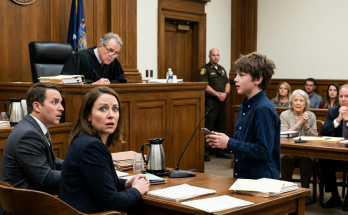
“For almost two years,” Sarah whispered, “every medical decision has been used against me in court.”
Tears rolled down her face.
“My lawyer begged me not to discuss Lily’s treatment with extended family because my ex kept twisting innocent conversations into evidence.”
She looked absolutely exhausted.
“When the monitor was recalled, she needed surgery to remove it.”
“I wanted to tell you.”
“I really did.”
“But I was terrified that one wrong word would end up in another custody hearing.”
I sat down slowly.
Everything I had imagined…
Everything I had feared…
Had been wrong.
The incision had been real.
The secrecy had been real.
The fear had been real.
But not for the reasons I’d assumed.
Sarah hadn’t been hiding abuse.
She’d been hiding from a legal battle that had consumed her life.
The police officer finally spoke.
“Ms. Morgan…”
I looked up.
“You did exactly the right thing.”
“I did?”
He nodded.
“You saw something unusual.”
“You sought medical attention.”
“You protected a child.”
“No one here faults you for that.”
Dr. Kim smiled.
“In fact…”
She looked toward Sarah.
“…I hope every adult would respond the same way.”
Sarah reached across the room and squeezed my hand.
“I’m sorry I scared you.”
I squeezed back.
“I’m sorry I assumed the worst.”
She managed a small smile.
“No.”
She glanced at Lily.
“You assumed someone might be hurting my little girl.”
“You were willing to fight for her.”
“I’ll never apologize for having someone like that in her life.”
That evening, after the girls had fallen asleep together on my couch, Sarah and I sat on the back porch wrapped in blankets.
For hours we talked.
Really talked.
For the first time in years.
About the divorce.
The custody battle.
The endless court hearings.
The loneliness.
The fear of making one mistake that could cost her daughter.
Finally I looked toward the living room window where Lily and Emma slept peacefully.
“You know…”
“What?”
“Next time you need help…”
She laughed softly.
“…try asking before it becomes an emergency.”
She smiled through fresh tears.
“I promise.”
Months later, the custody judge ruled in Sarah’s favor after reviewing overwhelming medical evidence from Lily’s specialists. Her ex-husband’s accusations were rejected, and Sarah was granted primary custody, giving Lily the stability she needed.
Lily adjusted well to a new glucose monitor, and she gradually became less afraid of doctor’s appointments. Emma proudly told everyone that she was Lily’s “emergency cousin,” a title Lily accepted with a giggle.
As for me, I learned a lesson I would never forget.
Sometimes the truth is far less sinister than our imagination.
Sometimes it isn’t.
But when a child’s safety is involved, it’s always better to ask difficult questions than to ignore the warning signs.
Because love doesn’t stay silent when something feels wrong.
It acts.
PART 4
One year later…
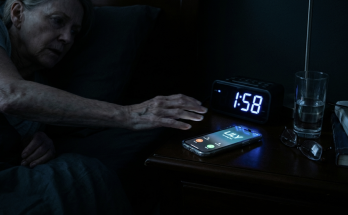
The sound that woke me wasn’t my alarm.
It was my phone vibrating relentlessly on the nightstand.
Three missed calls.
All from Sarah.
I sat upright immediately.
Sarah never called repeatedly unless something was terribly wrong.
I answered before the phone could ring again.
“Sarah?”
Her breathing was uneven.
“Claire…”
“What happened?”
“It’s Lily.”
Every muscle in my body tensed.
“Is she okay?”
“I don’t know.”
“What do you mean you don’t know?”
There was a long silence.
Then Sarah whispered something that made my blood run cold.
“She remembered something.”
Forty-five minutes later, I pulled into Sarah’s driveway.
The front door was already open.
Sarah met me before I could knock.
She looked exhausted.
Dark circles sat beneath her eyes.
She hadn’t slept.
“Where’s Lily?”
“In her room.”
“Is she sick?”
Sarah slowly shook her head.
“No.”
“Then what’s wrong?”
She swallowed hard.
“She had a nightmare.”
I frowned.
“Lots of kids have nightmares.”
“This one was different.”
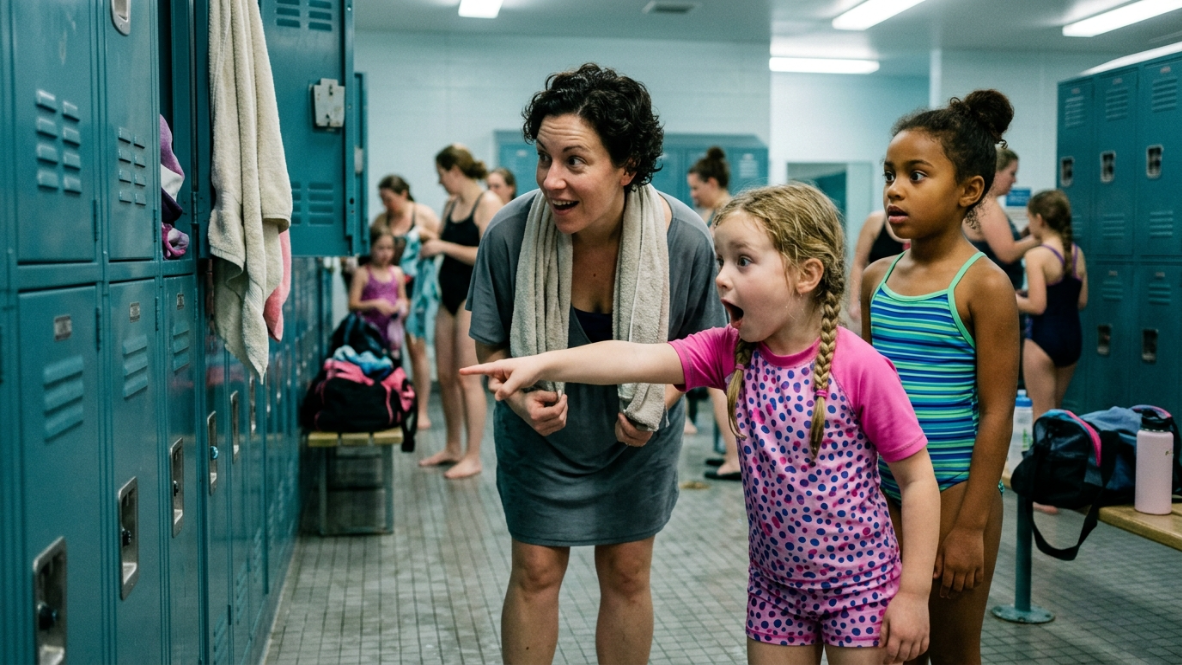
Lily was sitting on her bed, hugging the same stuffed rabbit she’d carried everywhere since she was four.
When she saw me, she smiled weakly.
“Aunt Claire.”
I sat beside her.
“Your mom says you had a scary dream.”
“It wasn’t a dream.”
Children often blur the line between dreams and memories.
So I answered carefully.
“What do you mean?”
Lily stared at the floor.
“I remembered.”
“Remembered what?”
“The hospital.”
Sarah and I exchanged a glance.
The surgery?
“I remembered what happened before I went to sleep.”
My pulse quickened.
“What happened?”
Lily looked directly at me.
“There were two doctors.”
Sarah frowned.
“There was only one surgeon, sweetheart.”
Lily shook her head.
“No.”
“There were two.”
“They were arguing.”
Sarah sat down slowly.
“What were they arguing about?”
Lily closed her eyes as if trying to hear the voices again.
“One man said…”
She spoke slowly.
“…’We have to tell her mother.’”
“And then?”
“The other man said…”
Another pause.
“…’No. If we report it, the whole program gets shut down.’”
Neither Sarah nor I spoke.
Children rarely invent conversations with that level of detail.
Especially a year later.
“What program?” I asked gently.
Lily shook her head.
“I don’t know.”
“Did they say anything else?”
She nodded.
“They said…”
Her tiny voice became almost a whisper.
“…’She’s not the only child.’”
Sarah looked pale.
“Claire…”
“I know.”
No.
I didn’t know.
But I knew enough to realize this wasn’t something we should ignore.
That afternoon Sarah requested Lily’s complete medical records.
Not just the summary she’d received before.
Everything.
Operative notes.
Consent forms.
Nursing records.
Medication logs.
The hospital agreed to release them within a few days.
Neither of us expected what arrived.
Three days later, Sarah spread hundreds of pages across her dining room table.
At first everything appeared normal.
Vitals.
Medication.
Recovery notes.
Nothing unusual.
Until I noticed something.
“Sarah.”
She looked up.
“The surgery started at 8:14 a.m.”
“Okay.”
“The anesthesia record says Lily entered the operating room at 8:02.”
“So?”
I pointed farther down the page.
“This nursing note says she didn’t leave pre-op until 8:28.”
Sarah stared.
“That’s impossible.”
Exactly.
One child couldn’t be in two places at once.
The inconsistencies kept coming.
One signature looked copied.
A medication was documented before it had been ordered.
A physician listed on one page hadn’t worked at the hospital for over six months.
Daniel Mercer agreed to review everything.
Two days later he called.
“Claire.”
“You found something.”
“I found several somethings.”
My stomach tightened.
“Documentation errors?”
“No.”
His voice was unusually serious.
“Someone altered portions of Lily’s medical record.”
“Why would anyone do that?”
“I don’t know.”
“But hospitals don’t falsify records by accident.”
He paused.
“And Claire…”
“Yes?”
“I think this goes beyond Lily.”
Over the next several weeks Daniel quietly contacted other attorneys.
Families whose children had received the same recalled glucose monitor.
One by one…
The stories began sounding strangely familiar.
Missing paperwork.
Conflicting timelines.
Doctors refusing to answer simple questions.
Parents told not to worry.
Most had accepted those explanations.
Until now.
One evening Sarah received an unexpected phone call.
The woman on the other end introduced herself.
“My name is Rebecca Torres.”
Sarah had never heard of her.
“My son Noah had the same device as Lily.”
Sarah glanced toward me.
“Okay…”
Rebecca took a deep breath.
“I think our children were part of something nobody told us about.”
Within two months…
Seven families had connected.
Then eleven.
Then twenty-three.
Each child had received the same model of glucose monitor.
Each required removal.
Each family noticed unexplained inconsistencies afterward.
Individually…
They looked like paperwork mistakes.
Together…
They formed a pattern.
The state health department opened a preliminary review.
Not because anyone accused the hospital of intentionally harming children.
But because too many unanswered questions remained.
Parents deserved answers.
Doctors deserved transparency.
Children deserved honesty.
One afternoon, while leaving another meeting with investigators, Lily slipped her hand into mine.
“Aunt Claire?”
“Yes?”
“Am I in trouble?”
My heart broke.
I knelt beside her.
“No, sweetheart.”
“Then why are all these grown-ups asking me questions?”
I smiled gently.
“Because sometimes children notice things adults miss.”
She thought about that.
“So…”
“I’m helping?”
I squeezed her hand.
“You’re helping a lot.”
Six months later, the investigation concluded.
The findings surprised everyone.
There had been no secret experiments.
No illegal surgeries.
No conspiracy to harm children.
Instead, investigators uncovered something different—still serious, but far more believable.
During the nationwide recall of the glucose monitor, several hospitals had rushed through hundreds of removals while switching to a new electronic medical records system. In the chaos, some operative notes were copied from templates, timestamps were entered incorrectly, and documentation from different patients was occasionally merged before being corrected. Staff members, afraid of lawsuits and reputational damage, had quietly fixed some records without clearly documenting the corrections, creating inconsistencies that later looked suspicious.
The review also found that a few administrators had discouraged doctors from reporting documentation problems promptly, fearing public panic during the recall. They weren’t hiding harm to children—they were trying to hide embarrassing administrative failures.
Several hospital administrators resigned.
New policies were introduced requiring complete transparency whenever medical records were corrected.
Parents were given direct access to their children’s surgical documentation.
Most importantly, hospitals across the state adopted stronger safeguards to prevent similar errors during future medical device recalls.
Months later, Sarah and I sat together watching Lily and Emma race through the park.
Lily laughed louder than I’d heard in years.
She looked healthy.
Confident.
Free.
Sarah smiled.
“You know…”
“What?”
“If you hadn’t taken her to the hospital that day…”
I looked at Lily.
“I was just doing what felt right.”
She shook her head.
“No.”
“You reminded me that protecting children sometimes means asking uncomfortable questions.”
I reached over and hugged my sister.
Neither of us had been perfect.
Both of us had been scared.
But together…
We had chosen to act instead of assume.
And because of that, not only had Lily remained safe, but countless other families gained clearer answers and better protections.
Sometimes courage isn’t exposing a grand conspiracy.
Sometimes courage is insisting on the truth—even when the truth turns out to be more ordinary than fear imagined.
And in the end, that truth still changed lives.