
The driveway was empty except for Monica’s white Tesla, and that should have been my first clue. Thursday night, 7:30 p.m. I was supposed to be two hours away at a packaging plant, cursing at a barcode scanner. Instead, the sensor had just needed a wipe, and I’d driven home with a six-pack of gratitude and a tired spine.
Our kitchen light bled through the blinds. I heard their voices before I touched the door—muffled, quick. I stopped on the porch step, one hand on the cold railing, and listened.
— You’ve been talking about this for weeks, Sarah. It’s time to stop overthinking.
Monica’s tone was crisp, the way she pitched startup ideas. I almost smiled. They’d been planning some surprise, maybe a weekend trip. I eased the screen door open an inch, careful not to let the hinge whine.
— I know. But the timing has to be right. Travis is working so much overtime right now… maybe this is the perfect window to see what else is out there.
Sarah’s voice, softer. The same voice that used to laugh at my trivia answers. I froze, the beer bottles suddenly heavy in the cardboard carrier.
— You deserve to explore your options. If the new thing doesn’t work out, you can always come back. Travis is too nice for his own good. He’d take you back in a heartbeat.
Monica said it like she was describing weather. I felt the words land behind my ribs, a dull thud.
— But what about the money? He’s been saving like crazy for that car…
— So use this time. I’ll help with the logistics. I’ve got connections—people who can make the whole process smoother. You’ve been wondering “what if” forever. Life’s short, babe.
Sarah sighed. Not a sad sigh—a relieved one, like she’d finally been given permission. I watched my knuckles go white on the railing.
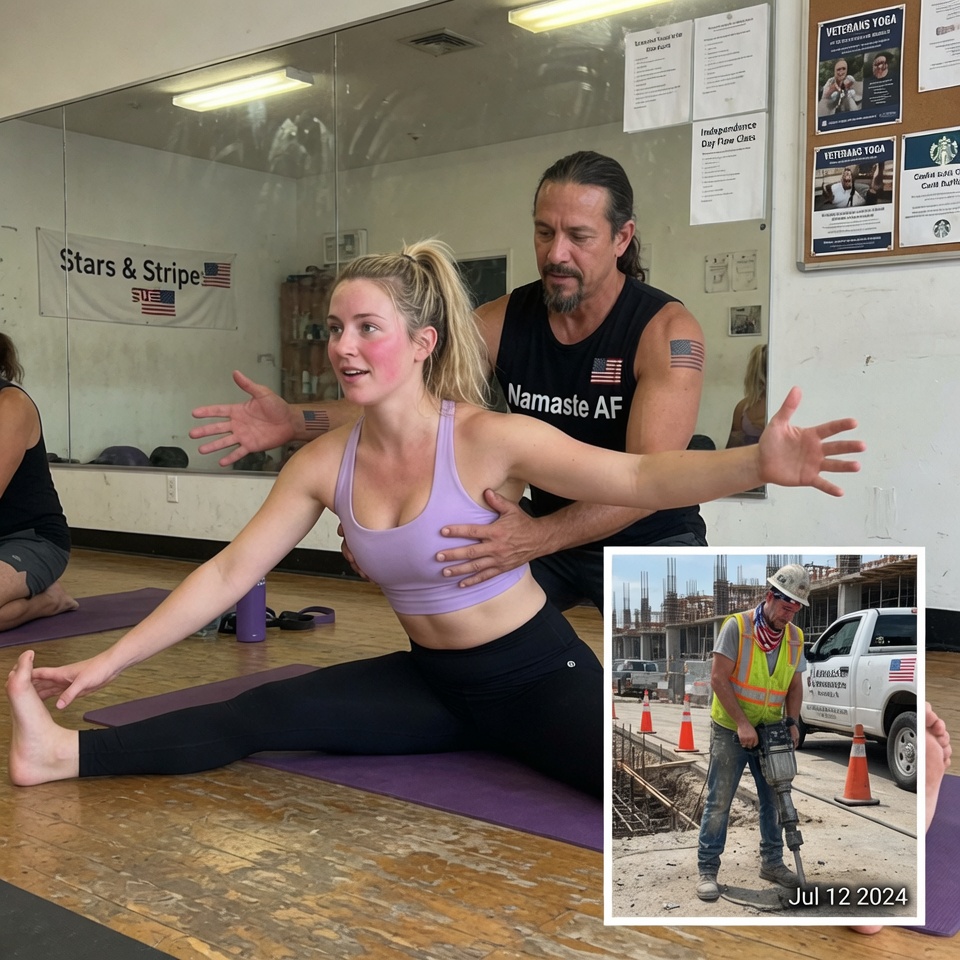
— The yoga guy… Ryan. Monica, he’s been flirting with me for months. Nothing’s happened yet. But I keep thinking about it. What it would be like.
— Then find out. You don’t want to be sixty and wondering. Travis doesn’t have to know. Just tell him you need space to figure yourself out. That line always works.
I took a step back, then another. The wood creaked and I stopped breathing. Inside, Sarah chuckled at something, low and secret. My chest tightened until I could count every heartbeat.
— What if he figures it out?
— He won’t. You said it yourself, he’s clueless when he’s stressed with work. And if the worst happens, you cry a little, say you were confused, and he’ll forgive you. The man is practically a golden retriever.
I set the six-pack down on the porch step, silent as a burglar. My hands didn’t shake—they just went numb. The air smelled like cut grass and Monica’s lavender perfume drifting through the screen. I could still see Sarah’s silhouette, leaning against the counter, nodding.
She wasn’t asking if she should cheat. She was ironing out the schedule.
I backed away from the door, the taste of betrayal like copper in my mouth. Somewhere inside that kitchen, my wife was planning to keep me as a fallback while she tried out a new man. And I was standing outside, still holding the car fund I’d built for her with seventeen-hour days.
Part 2:
I didn’t drive straight home. Couldn’t. My hands were welded to the steering wheel at ten and two, and the truck’s headlights swept across empty strip-mall parking lots while I looped the same three-mile circuit around the industrial park. Every time I blinked, I heard Monica’s voice.
He’s too nice for his own good. He’d take you back in a heartbeat.
Not “Travis.” Not “your husband.” Just he, like I was a piece of furniture they were deciding whether to keep in storage. I pulled into the lot behind a closed Culver’s, killed the engine, and sat in the dark with the windows down. The air smelled like fryer oil and damp asphalt. I hadn’t cried in years—not since my dad’s funeral—but something wet and hot rolled down my cheek before I could stop it. I wiped it away with the heel of my palm, furious.
Sarah wanted to explore her options. Sarah had a yoga guy. Sarah, who used to steal the blankets on camping trips and leave me shivering at three a.m. Sarah, who stood in our kitchen and nodded while her best friend turned my loyalty into a punchline.
I replayed the last two months like a security tape. The overtime shifts I’d volunteered for, the weekends I’d spent inside freezer warehouses while some meatpacking supervisor screamed about a broken conveyor. I’d come home with ice still crusted on my eyelashes, and Sarah would kiss my cheek and say, “You’re working so hard for us.” And I’d felt proud. Useful. I was building a future. Turns out I was just buying her the free time to audition my replacement.
At 10:15 p.m., I pulled into our driveway like a ghost returning to its own life. The Tesla was gone. Inside, Sarah was curled on the couch in her favorite gray leggings, scrolling her phone. She looked up and smiled.
— Hey, babe. How was the site visit?
— Fine. Sensor just needed cleaning. Saved them a few grand.
— That’s my genius.
She stretched her arms over her head, and I saw the same woman I’d slow-danced with at our wedding, the one who cried during the vows and whispered, “You’re the safest place I’ve ever known.” I felt the disconnect like a physical sickness. I wanted to grab her shoulders and demand to know who Ryan was, whether she’d already kissed him, whether she’d already made plans to meet him at some motel while I was elbow-deep in packing tape. But some instinct older than rage told me to wait. To watch.
— Long day, I said. — I’m gonna shower.
In the bathroom, I locked the door and stared at my reflection. The man in the mirror looked exhausted, his shirt collar gray with factory dust. I’d been working myself into an early grave for a Subaru. For a woman who was using my overtime as a countdown clock.
I didn’t sleep that night. I lay next to Sarah in the dark, listening to her breathe, and I made a list in my head. Lawyer. Bank. Evidence. If she was going to treat our marriage like a lease she could break, I was going to hand her the keys and change the locks before she could trash the place.
—
The next morning, Wednesday, I left for work at my usual time, kissed Sarah on the forehead like everything was normal. My first call wasn’t to a client. It was to Morrison & Hale, the family-law firm that had handled my buddy Kevin’s divorce after his wife decided she preferred her CrossFit coach. The receptionist patched me through to a woman named Diane Holcomb, who had a voice like a knife being sharpened.
— Mr. Callahan, tell me what’s going on.
I told her. Not the emotional version—just the facts. Overheard my wife planning an affair. Prenup in place. Savings account built mostly from my overtime. No kids. Diane listened without interrupting.
— All right. Here’s what you do. Do not confront her yet. Do not move money yet. Write down everything you heard, date and time, while it’s fresh. I’ll draft a separation-of-assets timeline based on your prenup. You said the prenup designates your income as separate property?
— Yes. She agreed to it. Her idea, actually.
— Then she handed you a gift, whether she knows it or not. When you’re ready to move the funds, we’ll do it cleanly. And Travis? Don’t tell her a word about this call. Let her make the first move. It gives us a cleaner narrative.
I hung up feeling like I’d swallowed concrete. But I did what she said. I opened a note on my phone and typed out the conversation I’d overheard, every word I could remember. “He’s too nice for his own good.” “Life’s short, babe.” The yoga guy. I locked the note behind a password and went about my day.
—
Sarah started laying her groundwork that evening. We were eating rotisserie chicken at the kitchen table, and she pushed a green bean around her plate with her fork.
— Can I ask you something weird?
— Sure.
— Do you ever think we got married too young?
I chewed slowly, buying time. — I was thirty-one. You were twenty-eight. Seems pretty normal.
— I don’t mean age, exactly. I mean… experience. We were only together a few years before we got married. Sometimes I wonder if we rushed into a routine without really knowing what else was out there.
The green bean fell off her fork. She didn’t pick it up.
— Are you saying you feel stuck? I asked. My voice came out steadier than I felt.
— Not stuck. Just… curious. Monica says everyone goes through this phase. She says it’s healthy to ask questions before you wake up at forty and realize you haven’t lived.
Monica says. Of course.
— So what do you want to do about it? I asked. — You want to take a trip, pick up a new hobby?
— I don’t know. Maybe I just need a little space to figure things out. No big decisions, just… breathing room.
She looked at me with wide eyes, the same expression she’d used when she wanted a puppy and I’d argued we didn’t have time to train one. I’d folded then. She expected me to fold now.
— If you need space, then take some space, I said. — I’m not going to trap you here.
Her shoulders dropped two inches. Relief.
— Really? You’re not mad?
— I’m not mad. I’m just tired. If this is what you need, we’ll figure out the details.
She reached across the table and squeezed my hand. Her fingers were cold. I didn’t squeeze back.
—
Thursday morning, I called Diane again from the parking lot of a distribution center in Beloit. I told her Sarah was about to propose a trial separation, that she’d mentioned Monica’s place. Diane’s keyboard clicked in the background.
— Let her go. The separation works in your favor. It establishes a date of physical separation and gives you time to secure your finances. Has she accessed the joint savings recently?
— Not that I’ve seen.
— Good. Friday, I want you to open a new account at a different bank—one she has no connection to. Move only the funds you’ve earned since you started the overtime push, and your direct deposit. Leave the joint checking alone for now. Document everything.
I asked the question that had been knotting my stomach since Tuesday night. — Do I need proof of the affair? Recordings, texts?
— In our state, no. The prenup doesn’t have an infidelity clause, and you’re not seeking alimony. But it does help if she claims you’re the bad guy. You said you heard her admit she hadn’t done anything yet. That means we’re in emotional-affair territory. It’s messier. Keep a journal. Time-stamp every interaction. And Travis? Don’t let her provoke you. If you lose your temper, she’ll twist it.
I sat in the truck for ten minutes after the call, watching forklifts shuttle pallets. The sky was the color of old dishwater. I remember thinking: This is what heartbreak looks like in real time. It isn’t dramatic. It’s a Thursday morning, and you’re scheduling your divorce between service calls.
—
Friday night, Sarah finally gave me the official speech. We were sitting on the back deck, citronella candles flickering against the mosquitoes. She wore a sundress I’d bought her for our second anniversary, and I remember thinking that was either deliberate or cruelly ironic.
— Travis, I’ve been doing some thinking. About what I said the other night.
I nodded and waited.
— I love you. I really do. But I’m not sure I’m in love with you the way a wife should be. And I think it’s partly because I’ve never given myself the chance to figure out who I am outside of “us.”
Her voice trembled on the last word, and I could tell she’d rehearsed this in the mirror.
— Okay, I said. — What are you asking for?
— Monica offered to let me crash at her place for a few weeks. Just to clear my head. No lawyers, no drama. I just need time to miss you, I think. And if we’re meant to find our way back, we will.
The citronella flame bent in the breeze. I thought about the car fund. Twelve thousand dollars and change, every penny of it earned while I was missing dinner and standing in freezer lockers. I thought about Ryan the yoga instructor, doing downward dog with my wife’s attention.
— I understand, I said. — If you need to go, go. I’ll keep working. Keep saving. Let’s just… not make any permanent decisions until you’ve had your space.
She leaned over and kissed my cheek, and I let her. She smelled like the lavender perfume Monica had been wearing in our kitchen.
— You’re the most patient man I’ve ever known, she whispered.
Later that night, after she went to bed, I sat in the garage with the door closed and laughed until my stomach cramped. Patient. A golden retriever. Monica had been right about everything except the part where I stayed loyal after the betrayal.
—
Sunday morning, Sarah packed. I helped her carry a suitcase to her car, a 2019 Ford Escape with a transmission that shuddered when she backed out of the driveway. She hugged me at the door, pressed her face into my chest, and I felt her tears soak through my shirt.
— This isn’t the end, okay? she said. — I just need to figure some things out.
— I know, I said. — Take your time.
The moment her taillights vanished around the corner, I went inside and locked the door. Then I leaned against it and let myself feel the full weight of what I was about to do. For three years, I’d built my life around that woman. I’d memorized her coffee order, learned to braid her hair when she broke her wrist snowboarding, held her while she sobbed through her mother’s cancer diagnosis. And she’d decided I was a safety net.
I didn’t sleep that night either. But by 8:00 a.m. Monday, I was sitting in a vinyl chair at a credit union across town, signing forms that separated my finances from hers. The teller, a grandmotherly woman with a cross necklace, didn’t ask questions. I moved the car fund, the overtime checks, and redirected my direct deposit. The joint checking account I left alone—Diane said it would look better if I didn’t strip everything.
Tuesday morning, I met Diane at her office. She slid a brown folder across the conference table. Inside was a petition for dissolution of marriage, grounds of irreconcilable differences, division of assets per the prenup. No alimony. Equity in the house to be split if we sold. A clean, surgical document.
— You can still back out, she said. — Once she’s served, it’s a bell you can’t unring.
I signed my name on the last page without hesitating. The pen scratched against the paper like a match strike.
—
Wednesday, Sarah texted me. Had a few days to think. Ready to have a real conversation about us? I stared at her message for a long time. A real conversation. As if the previous twenty conversations had been dress rehearsals.
— I’m ready too, I typed back. — Come by Thursday evening.
She sent a heart emoji. I didn’t.
—
Thursday at 6:30 p.m., Sarah pulled into the driveway carrying a brown paper bag of Thai takeout—our favorite, the one from the place with the terrible parking lot we always joked about. She wore a soft blue sweater I’d given her for Christmas. She looked hopeful. Nervous. Beautiful.
I led her to the dining room and asked her to sit. She started unpacking containers, chattering about her week, how Monica’s guest room smelled like patchouli, how much she missed our morning routine. I let her talk. I wanted to remember this version of her—the one who still thought she could manage me.
— So, she said, settling into the chair across from me. — I’ve been thinking a lot. Being away made me realize how much I miss our life. How much I miss you. I was overthinking everything. Sometimes you have to step away to appreciate what you have, right?
— Sometimes, I said.
I reached into my back pocket and slid the divorce papers across the table. The folder made a soft thump against the wood.
— What’s this? She smiled, still in her “we’re reconciling” mode.
— Open it.
Her face changed the way a window shatters—slowly at first, then all at once. The confused smile, then the frown of concentration, then the wide-eyed panic as the words Dissolution of Marriage registered. She flipped through the pages like she was checking for a misprint.
— Travis, this isn’t funny.
— It’s not meant to be.
— You’re filing for divorce? Over me needing two weeks of space? Are you insane?
She stood up so fast her chair scraped the floor. The takeout containers wobbled. I stayed seated, hands flat on the table.
— This isn’t about the space, Sarah. This is about the conversation I overheard last Tuesday. In our kitchen. With Monica.
Her mouth opened. Closed. Opened again.
— What conversation?
— The one where Monica told you to explore your options. The one where she said I’m too nice for my own good and would take you back. The one where you mentioned a yoga instructor named Ryan and Monica offered to help with logistics.
The color drained from her face so quickly I thought she might faint. She gripped the edge of the table.
— You… you were home?
— The sensor repair took twenty minutes instead of three hours. I got home around 7:30. I heard enough.
— Travis, that’s not what it sounded like—
— Then tell me what it was. Tell me exactly what I misunderstood.
She stood there, lips pressed together, and for a long moment the only sound was the refrigerator humming. Then her expression shifted. The fear calcified into something harder.
— You spied on me.
— I came home to my own house.
— No. You eavesdropped on a private conversation and then—what?—plotted behind my back? Moved money? Talked to a lawyer? Without even giving me a chance to explain?
— You had a chance, I said. — You had the “I need space” conversation. The “I’m not sure I’m in love with you” conversation. You had every chance to tell me the truth, and instead you fed me a script Monica probably helped you write.
She grabbed the folder and threw it at my chest. Pages scattered across the floor like dead leaves.
— I never actually did anything! Thinking about something isn’t the same as doing it!
— You’re right. And I’m grateful for that. It makes the divorce cleaner. No adultery complications. Just two people who want different things.
Her voice cracked. — You’re being dramatic. We can work through this. Couples counseling—
— Were you going to work through it before or after you slept with Ryan?
She flinched like I’d slapped her. The name hung in the air between us, ugly and undeniable.
— It wasn’t like that, she whispered.
— Then what was it like?
She didn’t answer. She wrapped her arms around herself and stared at the floor, and I saw it—the exact moment she realized she’d miscalculated. She’d built her whole exit strategy on the assumption that I’d wait. That I’d be there, tongue out, tail wagging, the moment her adventure fizzled.
— What about money? she asked, her voice suddenly flat. — I need to get my own place. Buy a reliable car. I can’t live on my yoga income alone.
— The savings account is closed. The money I earned working overtime is in an account you can’t access. According to the prenup, that money is mine.
— You’re taking away everything? That’s financial abuse, Travis!
— No, it’s consequences, I said. — You planned to use the car fund—the one I was building with seventy-hour weeks—to finance your “exploration phase.” You don’t get to call it abuse when your backup plan stops paying.
She grabbed her purse, and for a second I thought she was going to swing it at me. Instead she just stood there, chest heaving, mascara starting to smudge.
— You’re going to regret this.
— Maybe. But at least I won’t regret being someone’s second choice.
She left at 9:00 p.m., taking the Thai food with her. I locked the door behind her and sat down in the dark living room. The divorce papers lay scattered on the dining room floor. I didn’t pick them up. I just sat there, listening to my own breathing, and wondered if I’d feel guiltier by morning.
—
Friday at 6:30 a.m., pounding on the front door jerked me out of a dreamless sleep. I pulled on jeans and stumbled downstairs to find Sarah standing on the porch, hair unwashed, eyes red-rimmed. She pushed past me the second I opened the door.
— We need to talk. For real this time.
— It’s 6:30 in the morning.
— I don’t care. I didn’t sleep. I can’t sleep. Travis, seeing those papers… it made me realize something.
She grabbed both my hands. Hers were freezing.
— I’ve been an idiot. I was scared. Scared of commitment, scared of being boring, scared that I’d wake up one day and realize I’d never lived. But you’re the best thing that ever happened to me. I don’t want anyone else. I never did.
— Sarah—
— Let me finish. Monica got in my head. She’s bitter about her own divorce, and she projected all that poison onto our marriage. She kept saying I deserved to see what was out there, and I was weak enough to listen. But I never would have gone through with anything. I swear.
I pulled my hands free and walked to the kitchen. She followed me.
— Was there a specific someone? I asked, pouring coffee. — Or was this a general shopping trip?
She went quiet. The coffeemaker gurgled in the silence.
— There was a guy from the studio. Ryan. He flirted with me, and I… I liked the attention. That’s all. I never touched him. Never even met him outside class. But I’d been thinking about what it would be like, and Monica kept pushing me to find out.
I turned around and leaned against the counter, coffee mug warm in my palms.
— So when you asked for space, the plan was to finally find out. While I kept working overtime to buy you a car.
— I wasn’t thinking clearly—
— You were thinking clearly enough to coordinate with Monica. Clearly enough to give me a practiced speech. Clearly enough to make sure your backup husband was still clocking in while you test-drove someone new.
Tears spilled down her cheeks. — Please. I’ll do counseling. I’ll cut Monica out of my life. I’ll do anything.
I looked at her—really looked at her—and for a moment I remembered the woman I’d married. The one who’d laughed so hard at my terrible karaoke she snorted beer through her nose. The one who held my hand during my dad’s funeral and didn’t let go for hours. That woman was still in there somewhere, buried under layers of fear and selfishness and Monica’s poison. But she wasn’t the woman standing in front of me anymore. And I wasn’t the man who’d take her back on blind faith.
— Go home, Sarah. Or go to Monica’s. I’m not changing my mind.
Her tears dried up almost instantly, replaced by something colder.
— You’re throwing away six years because of a conversation I had with my best friend. That’s not justice. That’s cruelty.
— Then I’ll be cruel. At least I’m honest about it.
She stormed out, slamming the door so hard the frame rattled. I stood in the kitchen and finished my coffee, each sip a small victory.
—
The next few weeks became a masterclass in desperation. Sarah, realizing the nice approach had failed, shifted to a strategy I can only describe as psychological erosion. It began with a call from my HR department.
— Mr. Callahan, we received an anonymous concern about your emotional stability during this divorce. We’re required to check in. Are you feeling safe at work? Do you need counseling resources?
The HR manager’s voice was professionally kind, but I heard the implication beneath it. Someone had tried to plant a flag on my career. I thanked her, explained the situation briefly, and pointed out my sales numbers were actually up. My manager backed me, and the call ended with a note in my file. But I sat at my desk afterward, staring at my phone, and felt a cold fury settle into my bones. She was willing to burn my livelihood to get leverage.
Then the mortgage company called. Someone had phoned them claiming to represent both parties in the divorce and asking about options to remove a spouse from the mortgage. The representative wanted to confirm the inquiry was legitimate. I told them it absolutely was not and spent the next hour on the phone with my lawyer, documenting yet another incident.
But the real masterpiece came Wednesday, when I pulled into the driveway and saw my neighbor Mrs. Kowalski waving at me from her porch. She was in her seventies, a retired biology teacher with a garden full of tomatoes and an unshakeable sense of justice.
— Travis, come here a minute, she said. — Something odd happened today.
I walked across the lawn, the evening sun warm on my neck.
— A young woman came by asking questions about you. Said she was a social worker. Asked if I’d heard any loud arguments from your house, seen suspicious visitors, thought you were controlling or aggressive.
My stomach dropped. — What did she look like?
— Tall, dark hair, very polished. Drove a white electric car. She was very professional at first, but when I asked for a business card, she got flustered and left in a hurry.
Monica.
— Mrs. Kowalski, did you get her name?
— She said “Andrea,” but it didn’t feel right. That’s why I’m telling you. I’ve seen enough true crime shows to know when someone’s fishing.
I thanked her and promised to keep an eye out. That night, I called Monica directly. She answered on the third ring, voice dripping with faux cheerfulness.
— Travis! To what do I owe the pleasure?
— Did you really impersonate a social worker and question my neighbors about domestic violence?
A pause. Just a fraction too long.
— I have no idea what you’re talking about.
— Mrs. Kowalski described you perfectly. White Tesla, dark hair, “Andrea.” She asked for ID and you bolted. Sound familiar?
— If your neighbor is confused, that’s not my problem. I was just trying to look out for Sarah. She’s been a wreck since you pulled the rug out from under her.
— I pulled the rug? Monica, you spent months convincing my wife to cheat on me. You called me a golden retriever. You offered to help with what—logistics? Setting up a hotel room? Alibi?
Her voice sharpened. — I was being a good friend. Sarah was unhappy, and you were never around. You think working yourself to death makes you a good husband? You weren’t even there.
— I was working overtime to buy her a car, I said, my jaw tight. — The same car fund she was going to use to finance her affair.
— She never actually did anything! You’re punishing her for thoughts, Travis. Thoughts!
— No. I’m protecting myself from a woman who made a clear plan to betray me and expected me to pay for it. And from a friend who thinks “life is short” justifies destroying a marriage.
— You’re heartless.
— I’m practical. The difference is, I face consequences. You and Sarah just rearrange them.
I hung up before she could respond. My heart was hammering, but for the first time in weeks, I felt like I could breathe.
—
Thursday, I got home from work late again—a genuine emergency this time, a packaging line so mangled it took four hours to untangle. The driveway was empty except for the faint oil stain where Sarah’s Ford used to leak. But as I walked to the front door, I noticed something that made my blood go cold.
The door was ajar. Half an inch, no more, but the lock wasn’t catching. I backed away slowly, got in my truck, and called 911. Two officers arrived within ten minutes, a young man with a crew cut and an older woman with a calm, steady gaze. They did a sweep while I waited on the curb.
— No sign of forced entry, the woman officer said when she came back out. — Nothing appears disturbed. But there’s something on your kitchen counter you’ll want to see.
They led me inside. There, on the granite island, lay a single set of keys on a silver ring. The keychain—a tiny enamel sunflower—was the one I’d given Sarah our first Christmas together.
— Your wife’s? the officer asked.
— Estranged wife, I said. — She doesn’t live here anymore. Hasn’t for weeks.
— She return these voluntarily, or…?
— I never asked for them back.
The officer—her badge read Garcia—nodded slowly and pulled out a small notepad. — We see this a lot. The key drop. It’s a message. Either “I’m done” or “I can still get in.” Either way, not great.
— Should I file a report?
— I’d recommend it for documentation. Even if you don’t press charges now, you’ll want a paper trail if this escalates. I’d also change your locks today and think about a camera system.
I nodded, feeling the surreal weight of the moment. My own wife, sneaking into our house uninvited, leaving her keys like a calling card. The officer squeezed my shoulder briefly—a surprisingly human gesture—and handed me a card.
— Divorces make people act unrecognizable. Don’t blame yourself for the person she’s become.
—
Saturday morning, I changed the locks myself. Bought a heavy-duty deadbolt from the hardware store and installed it in the crisp October air while a robin watched from the gutter. Then I mounted a doorbell camera, connecting it to my phone. The app’s default settings offered motion alerts. I turned them all on.
That afternoon, my lawyer called with a mixed bag. Sarah’s motion for spousal support had been denied; the prenup held exactly as Diane had predicted. But her lawyer had filed for an extension to review “complex financial documents,” which meant more weeks of legal limbo.
— This is harassment, plain and simple, Diane said. — She can’t win on the merits, so she’s trying to bleed you out with delays. Some people do this hoping you’ll settle to make it stop.
— I’m not settling.
— Good. Stay the course. Keep documenting.
—
Monday evening, I was sitting on the back deck, watching the sun slip behind the maple trees, when a text from Sarah buzzed my phone.
I need to see you. Please. I owe you the truth. All of it.
I almost deleted it. Every logical instinct said to ignore her. But something in the phrasing—all of it—tugged at me. There were still puzzle pieces missing. The timeline. The depth of her deception. Whether Monica had been a cheerleader or a co-conspirator. I wrote back:
One hour. My house. No surprises.
She arrived at 7:00 p.m. on the dot, no food this time, just a woman who looked like she’d aged five years in six weeks. Her hair was pulled into a messy bun, and her sweater hung loosely on a frame that had clearly lost weight. She sat down heavily on my front step and didn’t try to come inside.
— I can’t keep carrying this, she said. — I need you to know the real story.
I leaned against the porch railing and waited.
— It started with Monica’s divorce. When her husband left, something broke in her. She started seeing betrayal everywhere. Every husband was a villain, every marriage a cage. I was her only audience. She’d come over, open a bottle of wine, and tell me all the ways I was “settling.” How I’d never lived alone, never dated around, never had that wild phase. At first I laughed it off. But she kept at it. Every week. For months.
She picked at a loose thread on her jeans.
— Then Ryan started at the studio. He was charming and young and he looked at me like I was fascinating. I don’t know when harmless flirting turned into something else. Maybe when I started looking forward to his classes. Maybe when I didn’t tell you about him because I knew how it would sound.
She swallowed hard.
— The plan was Monica’s invention. She said I could have a trial separation, see what it felt like to be single, and you’d never need to know the real reason. If things with Ryan were amazing, I could move on guilt-free. If they weren’t, I’d come home and you’d be so relieved you’d never ask questions. It was… an insurance policy. And I bought into it because I was a coward.
I stayed very still.
— The night you overheard us, we were finalizing the timeline. Monica had a friend with a vacant Airbnb near Ryan’s apartment. She was going to help me book it so there’d be no paper trail. I’d tell you I needed a weekend away to “journal and hike.”
— But you never went through with it, I said. — Why?
— Because when I actually tried to make a move, Ryan found out I was still married. He backed off. Told me he doesn’t get involved with married women. The whole fantasy collapsed in ten seconds. I was left standing in a parking lot, humiliated, realizing I’d risked everything for a man who had more integrity than I did.
Tears were streaming down her face now, but her voice stayed eerily steady.
— That’s when the panic set in. Your overtime. The car fund. The way you’d been so patient while I spun my lies. I realized what I’d done and I couldn’t face it. So I ran to Monica’s and convinced myself I could still salvage it. The fake pregnancy was Monica’s idea too, by the way. She said it was the nuclear option. If you thought I was carrying your child, you’d drop the divorce instantly.
I felt my hands tighten on the railing.
— And when that didn’t work?
— I spiraled. The HR call, the mortgage company, the neighbor… Monica handled a lot of it. She was neck-deep in this from the start. But I signed off on all of it. I was so desperate to avoid the consequences that I became someone I don’t recognize.
She wiped her nose with her sleeve.
— The house key thing… that was just me, alone. I wanted to see the house one last time. I wanted to feel what I’d thrown away. I walked through the rooms and I could smell your coffee, your deodorant, the wood polish you use on the mantelpiece. And then I put the keys down because I knew I didn’t deserve to carry them anymore.
She stood up slowly, as if her bones ached.
— I’m not asking you to take me back. I know that door’s closed. But I wanted you to hear it from me, not from a lawyer’s filing. I made my own disaster, Travis. Every piece of it.
I looked at her for a long moment. The sun had set fully now, leaving us in the blue-gray twilight. A dog barked somewhere down the block. A car door slammed. Normal sounds for a world that no longer felt normal.
— I appreciate the honesty, I said finally. — But you’re right. The door’s closed.
She nodded, a small, defeated motion.
— I know. I just… needed to say it out loud. For my own sanity.
She walked to her car without looking back. The engine turned over with that familiar shudder, and the taillights disappeared down the street, red ghosts fading into the dark.
—
Monica called one last time, Saturday morning. Sarah had apparently been staying at her place again after the confession, and by Monica’s account, she was “completely shattered.”
— Are you satisfied now? Monica’s voice was raw. — She’s a shell of herself. You destroyed her.
— Monica, I said quietly, — you convinced a married woman to cheat. You helped plan the logistics. You told her I was too nice to catch on. You pushed a fake pregnancy. You impersonated a social worker. And now you’re blaming me for the wreckage you helped create.
— I was being her friend.
— Friends don’t hand someone a match and then blame the house for burning.
Silence stretched between us, thick and poisonous.
— She’s my best friend, Monica whispered. — I didn’t want this.
— Then next time, be a better friend.
I hung up and blocked her number. Then I blocked Sarah’s number too. Not out of cruelty, but out of necessity. Every conversation was a hook trying to pull me back into a story where I was the villain, and I couldn’t afford to keep bleeding.
—
The divorce finalized six weeks later, on a Tuesday morning so unremarkable I almost forgot to mark the date. Diane called while I was in the middle of a site survey at a bottling plant, surrounded by the roar of machinery. I stepped into a quiet hallway to hear her.
— It’s done. The judge signed off. Everything per the prenup. You are officially, legally single.
I thanked her, hung up, and stood there for a moment with the hum of the factory vibrating through the concrete floor. Six years, condensed into a single phone call. No confetti, no catharsis. Just the sudden, hollow quiet of a finished chapter.
That evening, I sat on the back deck where Sarah had first asked for space, and I let the silence settle around me. The maple tree was dropping its last leaves, golden and weightless. I thought about the man I’d been a few months ago—the guy who’d worked himself to exhaustion to buy a surprise for a wife who was already mentally packing her bags. He’d been naive. Trusting. A little too eager to believe that love was a fixed point, not a daily choice.
But he wasn’t a golden retriever. He was just someone who’d believed in the promises he’d made, and who’d expected the same in return. When that faith shattered, he didn’t collapse. He gathered the pieces, filed them neatly, and walked away with his self-respect intact.
A notification buzzed on my phone: the doorbell camera detecting motion. I glanced at the screen—just a postal worker dropping a package, nothing sinister. I smiled faintly and swiped it away.
The world kept turning. Somewhere across town, Sarah was probably picking up her own pieces, learning to live with the consequences of her choices. I didn’t wish her harm. But I also didn’t owe her a life raft. She’d had one, and she’d drilled holes in it while complaining about the view.
I cracked open a beer—the same six-pack brand I’d been holding the night I overheard everything—and raised the bottle toward the empty yard.
— Here’s to not being a backup plan, I said to no one.
The breeze carried the words away, and for the first time in months, I felt something close to peace. Not the cheap peace of ignoring pain, but the hard-earned kind that comes from facing it, dissecting it, and deciding you are worth more than someone’s fallback fantasy.
The house was quiet. The locks were new. The future was unwritten.
And I was finally, completely free.