
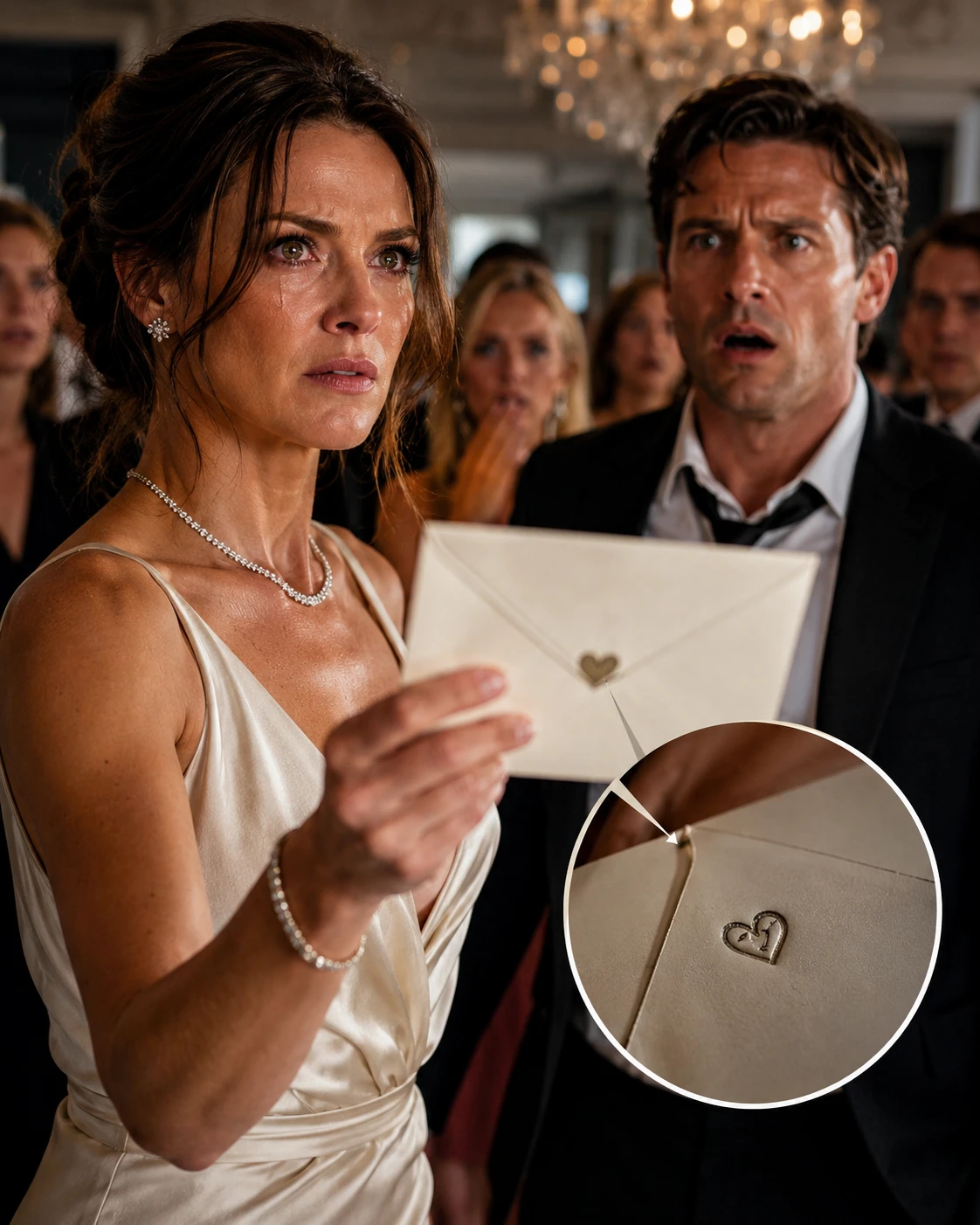
His mistress sent my son a birthday card signed “Love, Mom.”
The envelope was thick cream cotton, the kind that came from a stationery shop where the saleswoman offered champagne while you picked your shade of white. The ink was dark green. The handwriting was beautiful, slanted and confident, as if the woman who wrote it had never once been told no.
My son, Noah, stood in the middle of our Lake Forest dining room wearing a paper birthday crown crooked over his dark curls. Seven years old. Chocolate frosting on his cheek. A gap where his front tooth used to be.
He held the card in both hands and looked up at me.
“Mom?” he asked softly. “Why is another woman writing your name?”
The room went quiet.
Not the polite kind of quiet.
The dangerous kind.
Twenty-four children had been laughing over a magician and a cake shaped like Wrigley Field. Their parents—partners at law firms, wives with diamond tennis bracelets, men who bought boats they rarely used—stood frozen with champagne flutes halfway to their mouths.
Across the room, my husband, Grant Whitaker, loosened his tie.
He didn’t look ashamed.
He looked inconvenienced.
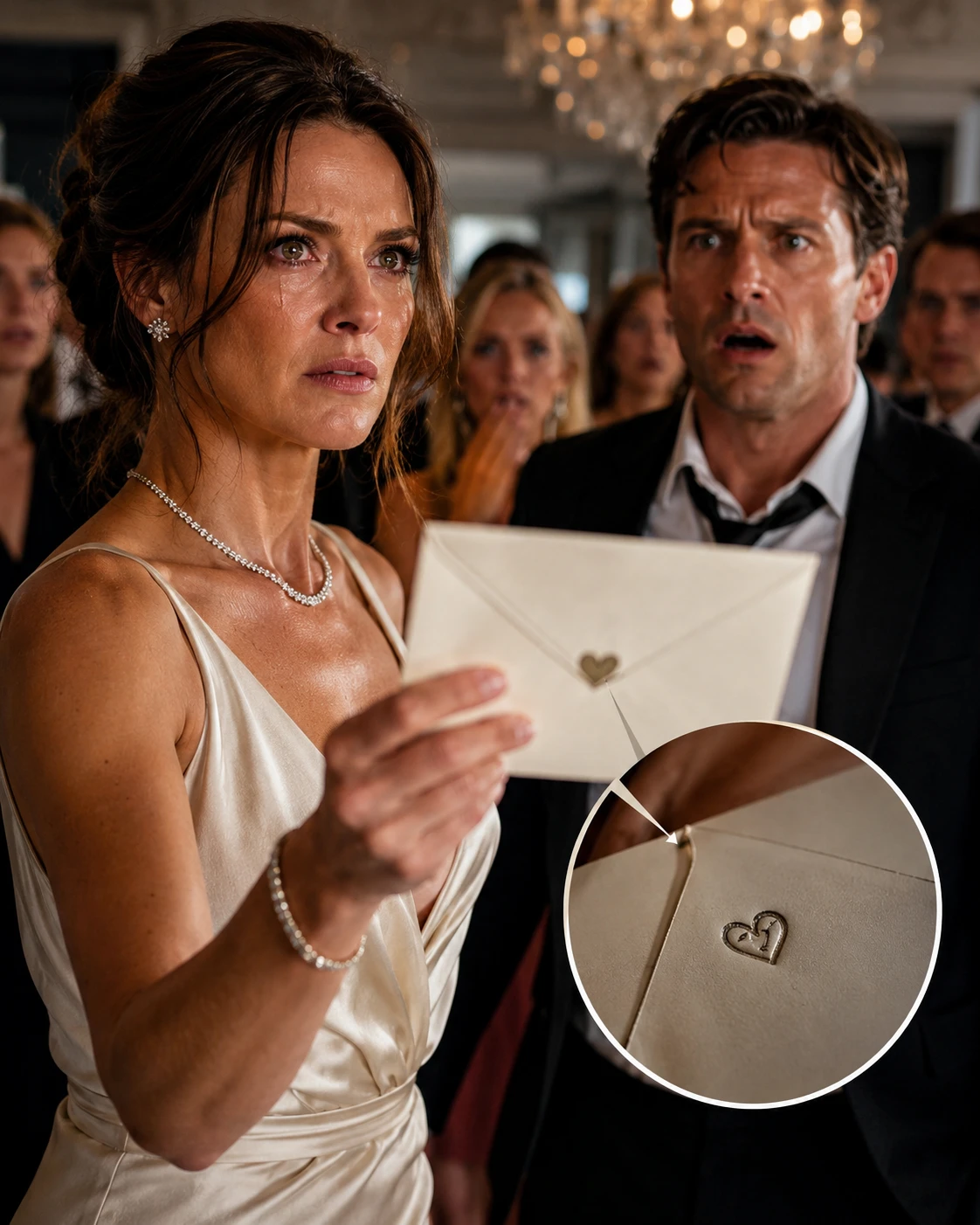
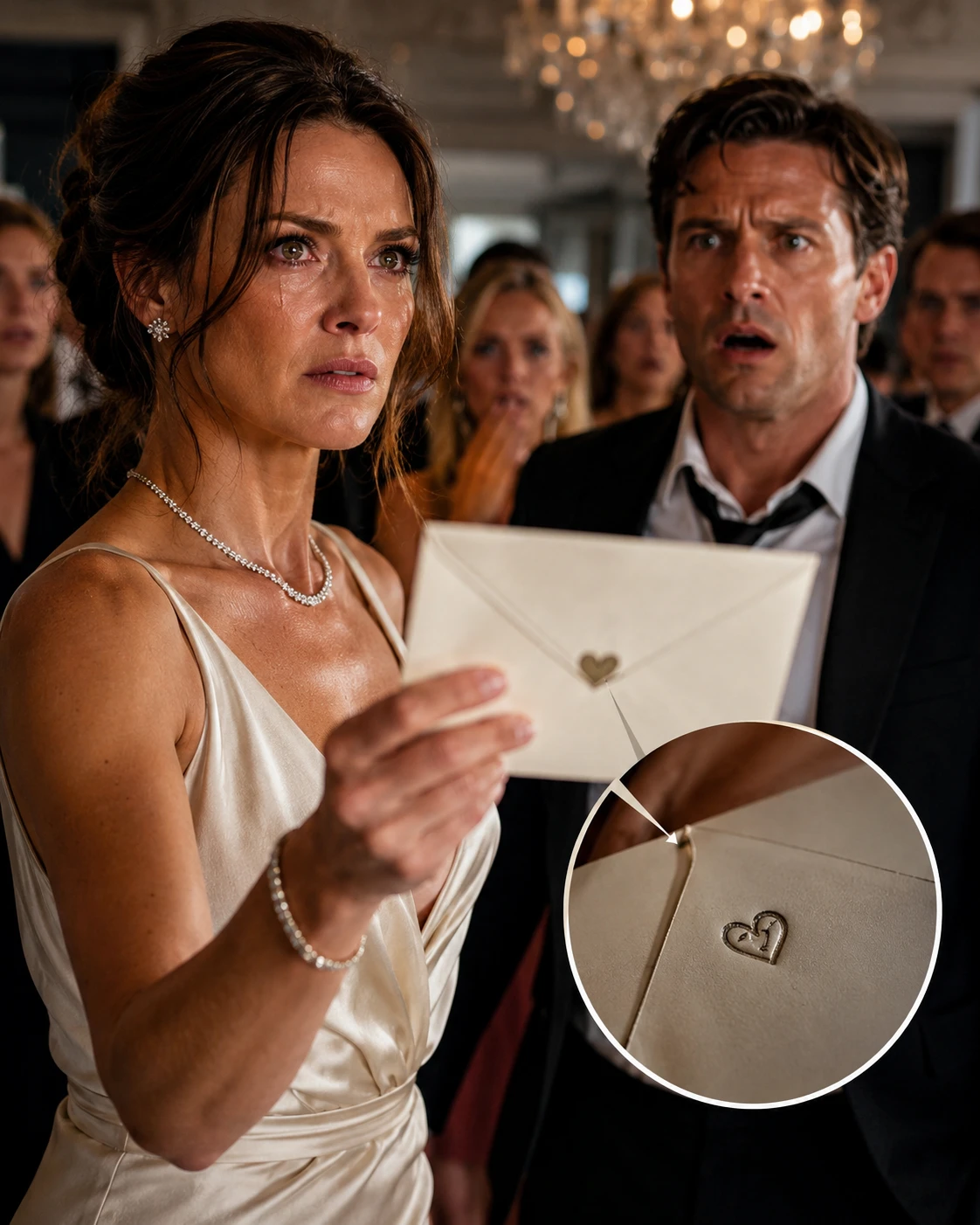
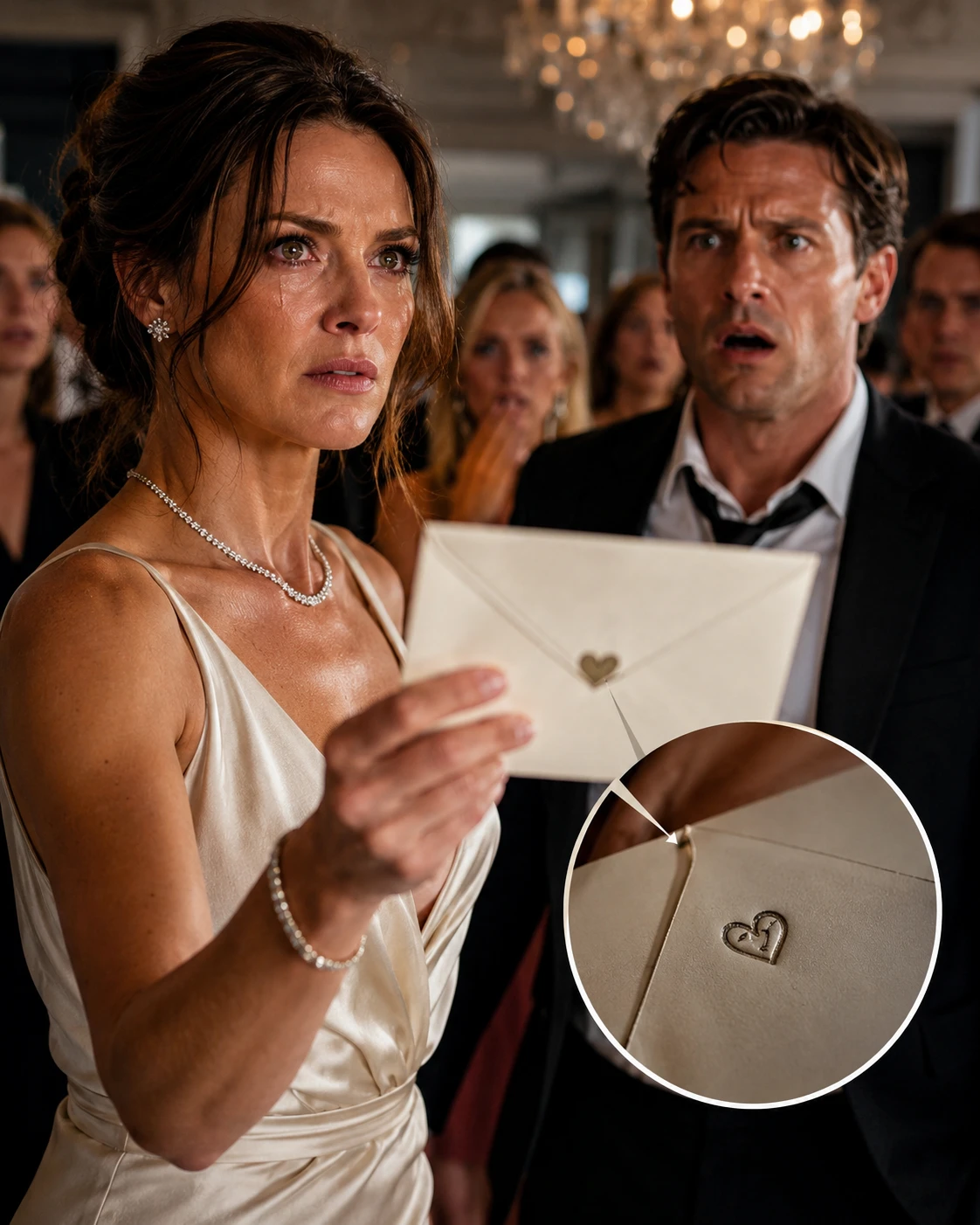
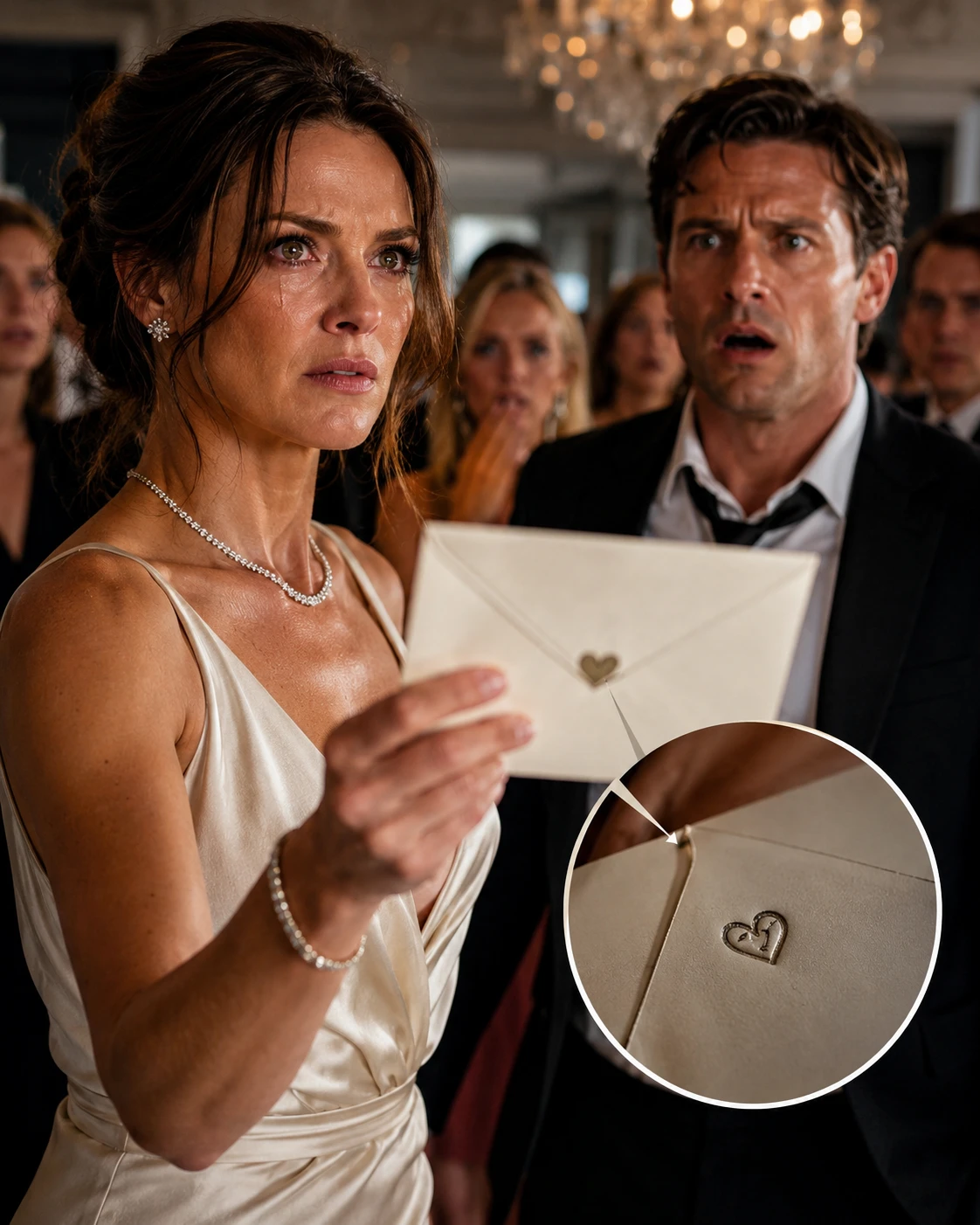
I took the card from Noah’s hand. The front had silver balloons embossed on it. Inside, the message read:
Happy birthday, sweet boy. You deserve all the love in the world.
Love, Mom.
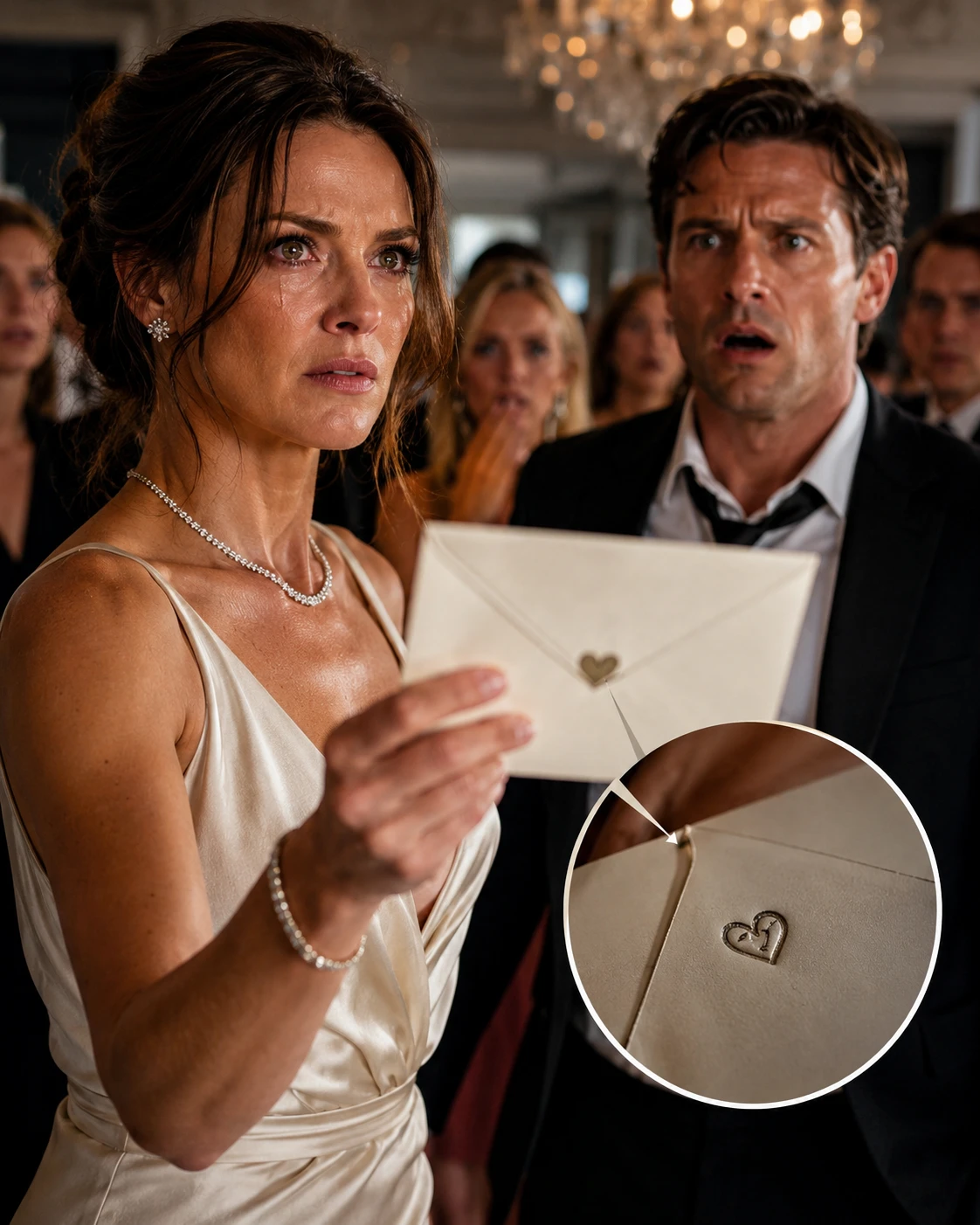
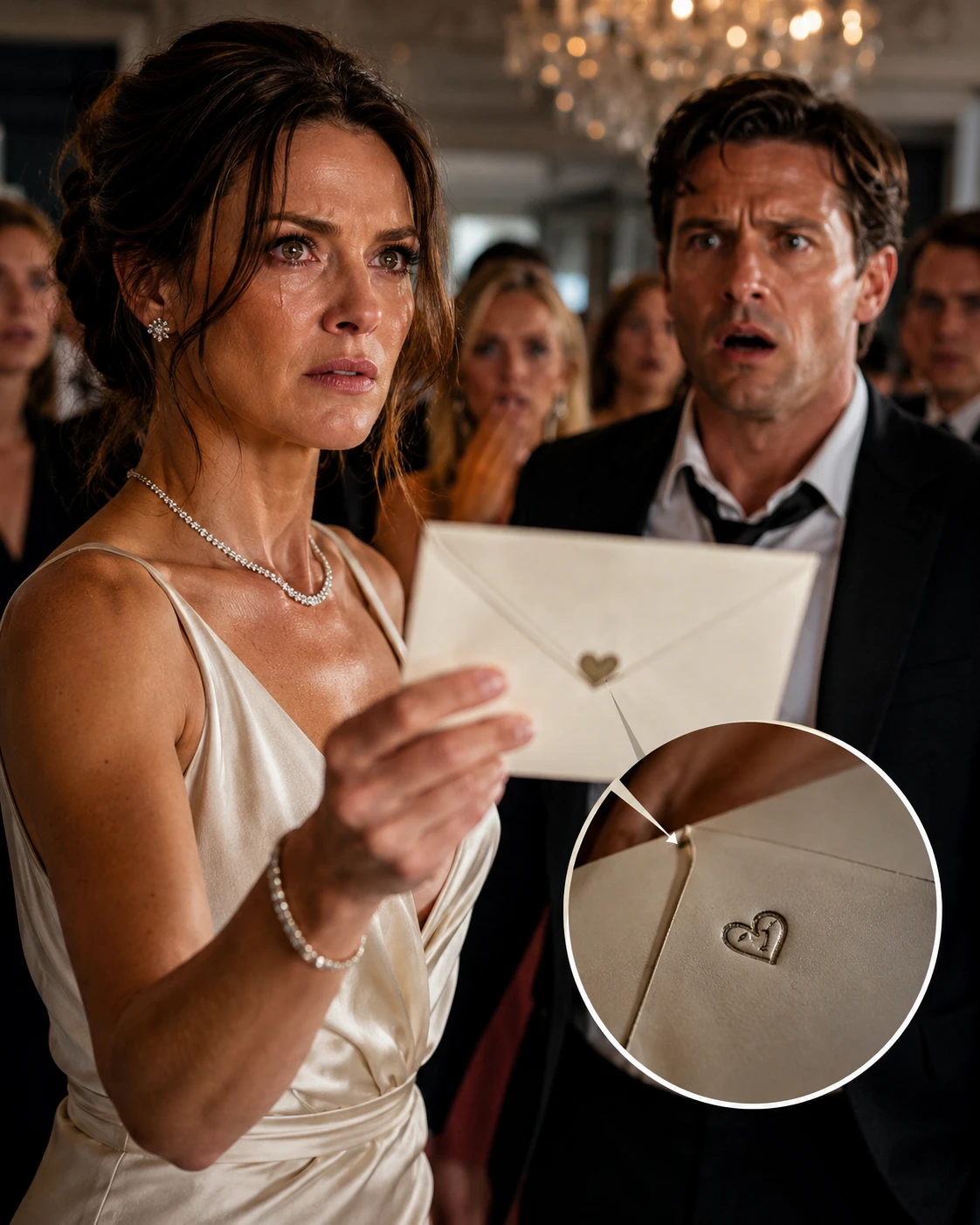
Under the signature was a tiny heart.
Sloane Mercer’s heart.
Grant’s mistress.
I knew her handwriting because she had once written her name on a hotel receipt I found inside my husband’s tuxedo jacket. I had known about her for six months. I had known about the penthouse on Oak Street. The emerald bracelet. The charity luncheons where she arrived two minutes after my husband and left two minutes before him.
I had known.
But Noah had not.
My hands shook for the first time in months.
Grant crossed the marble floor toward me, his voice low enough that he thought no one else could hear.
“She meant well.”
I looked at him.
“She signed my name.”
He exhaled through his nose. “Don’t make a scene.”
That was the moment something inside me became still.
Not broken.
Not furious.
Still.
I smiled at Noah, wiped the frosting from his cheek, and told him to go finish opening presents with his cousins. Then I slipped the card back into its envelope, folded the flap without creasing it, and walked upstairs to my bedroom.
I placed it inside a clear archival sleeve.
Then I downloaded the delivery camera footage from our front gate. The timestamp showed the courier arriving at 2:14 p.m. The sender information showed a luxury stationery boutique in Chicago’s Gold Coast. The courier’s handheld scanner captured the account name.
Sloane Mercer Interiors.
I saved the video three times.
One copy to a hard drive.
One copy to the cloud.
One copy to my attorney.
By midnight, while my husband slept beside me with the arrogance of a man who believed money could soften any consequence, I sent an email to Maeve Callahan, the most terrifying family attorney in Cook County.
Subject line:
She crossed the mother line in ink.
Chapter 1 — The Woman Who Learned to Bleed in Silk
Before I became Mrs. Grant Whitaker, I was Evelyn Monroe, the girl from a red-brick house in Winnetka whose mother taught her how to write thank-you notes and whose grandmother taught her how to read contracts.
“Love is beautiful,” my grandmother Celeste used to say, tapping her manicured nail against a document. “But signatures are binding.”
I met Grant at a winter fundraiser at the Art Institute of Chicago.
He was handsome in the expensive way: dark hair, clean jaw, voice polished by private schools and boardrooms. He could make a room lean toward him without raising his voice. He had the kind of confidence that made people mistake appetite for ambition.
He looked at me across a room full of donors and said, “You’re the only woman here not pretending to enjoy the champagne.”
I said, “That’s because it’s terrible.”
He laughed like I had surprised him.
For a while, I mistook that for love.
Grant pursued me with the intensity of a man trying to acquire something rare. Weekends in Napa. A vintage Cartier watch for my birthday. Peonies delivered to my office every Friday until my assistant knew their scent before she saw them.
When he proposed, it was on a private terrace above the Chicago River, with the city glittering below us like a jewelry box.
I said yes because I loved him.
I also said yes because I believed he loved the parts of me that were quiet.
That was my first mistake.
After we married, Grant grew louder. Not in volume, but in presence. His preferences became our preferences. His calendar became our life. His dreams swallowed the walls of our marriage until there was no room left for mine.
I left my job in brand strategy when Noah was born because Grant said our son deserved one parent fully present.
“You’re better at warmth than I am,” he told me, kissing my forehead.
At the time, I heard tenderness.
Years later, I understood it was delegation.
I became the beautiful wife beside him at galas. The mother who knew the pediatrician’s after-hours number. The woman who remembered birthdays, allergies, teacher gifts, holiday cards, condolence flowers, seating charts, donor names, and which board member’s wife hated being placed near the kitchen.
Grant built towers.
I built the life that made him look human.
Then Sloane Mercer entered it wearing ivory satin and a smile sharp enough to cut glass.
She was thirty-one, an interior designer with a million followers and a talent for making other women feel outdated. She called herself “curated.” Her apartment had been photographed for magazines. Her hair was the color of expensive honey. Her laugh always arrived half a second too late, as if she had studied charm and was still practicing.
Grant hired her to redesign the lobby of Whitaker Capital’s newest building.
Within three months, he had redesigned his conscience around her.
The first clue was his scent.
Not perfume. Sloane was too clever for perfume.
It was her candle line: fig, smoke, and white tea.
Then came the late meetings. The phone turned face down. The credit card charge from a boutique hotel in New York when he was supposedly in Dallas. The text that appeared on his screen while he was in the shower:
Still taste you.
I stood in the bathroom steam holding his phone with both hands.
For a moment, I was every betrayed wife in every old story. Pale. Humiliated. Disposable.
Then Noah knocked on the door and asked if I knew where his dinosaur pajamas were.
So I put the phone back.
I found the pajamas.
I kept breathing.
For six months, I collected everything.
Not because I wanted revenge.
Because I wanted safety.
There is a difference.
Revenge is fire.
Safety is architecture.
I built mine quietly.
Grant believed my silence was weakness. He thought because I still wore my wedding ring, still hosted dinners, still kissed our son goodnight in the house he claimed to own, I had accepted the arrangement.
He underestimated a woman who had been raised by Celeste Monroe.
My grandmother had left me more than pearls.
She left me a trust.
Not the flashy kind men brag about over cigars. A clean, old, private structure of assets: property, bonds, shares in holding companies, and one quiet investment vehicle named Marigold Trust.
Grant knew it existed.
He did not know what it owned.
That was his mistake.
Chapter 2 — A Birthday Party for the Dead Marriage
Noah’s seventh birthday party was supposed to be small.
By Grant’s standards, that meant eighty guests, a private chef, a balloon arch, a magician flown in from Los Angeles, and a dessert table designed to look effortless by five women who had arrived at 6 a.m. with ladders.
I wanted cupcakes in the backyard.
Grant wanted photographs.
“Families like ours have a certain visibility,” he said that morning, adjusting his cufflinks in the mirror.
I watched him from the bed.
“Families like ours?” I asked.
He met my eyes through the reflection. “Don’t start, Evelyn.”
That had become his favorite sentence.
Don’t start.
As if pain began when I named it, not when he caused it.
Downstairs, the house gleamed. White roses. Silver trays. Crystal pitchers of lemonade. The kind of afternoon that looked perfect in pictures because pictures did not capture the rot beneath the floorboards.
Sloane was not invited.
She came anyway.
Not in person. She was smarter than that.
She arrived as a card.
As ink.
As a weapon disguised as affection.
After Noah asked why another woman was writing my name, the party continued in the brittle way disasters do when wealthy people are too trained to react honestly. Children ran outside. Adults pretended to admire the cake. Someone’s husband laughed too loudly near the bar.
Grant followed me upstairs after I saved the evidence.
He shut our bedroom door behind him.
“You humiliated me,” he said.
I almost laughed.
“Your mistress signed a birthday card to my son as his mother.”
“She was being affectionate.”
“She was establishing territory.”
He looked away.
There it was.
The truth had entered the room, and even Grant had to make space for it.
I stepped closer. “Did you know she was sending it?”
His silence answered.
My chest tightened, but my voice stayed calm.
“Did you tell her she could call herself Mom?”
“She didn’t call herself anything,” he snapped. “It was one word on a card.”
“One word is enough when it’s mine.”
Grant’s face hardened. “You’re being dramatic.”
I had heard that word from him so many times it no longer hurt.
Dramatic meant inconvenient.
Emotional meant accurate.
Bitter meant awake.
I walked past him to my vanity, removed my earrings, and placed them in a velvet tray.
“You need to apologize to Noah,” I said.
“For what?”
“For making him wonder whether his mother can be replaced.”
Grant stared at me as if I had spoken in a language he did not respect enough to learn.
Then he said the sentence that ended whatever mercy I had left.
“Sloane loves him too.”
The room did not spin.
I did not scream.
I did not throw the crystal perfume bottle beside my hand, though for one vivid second I imagined the sound it would make against the wall.
I only nodded.
“All right.”
He frowned. “All right?”
“All right,” I repeated.
Grant mistook my calm for surrender.
That night, after the last guest left and Noah fell asleep clutching a stuffed bear from his cousins, Grant went downstairs to pour himself bourbon. I sat at my desk and wrote everything down.
Date.
Time.
Witnesses.
Exact words.
Card contents.
Noah’s question.
Grant’s response.
She meant well.
Sloane loves him too.
Then I opened the folder I had been building for months.
Hotel receipts.
Photos from charity events.
Screenshots of Sloane wearing jewelry bought from our joint account.
A wire transfer to a shell company called Cedar & Pearl LLC.
A lease for a Gold Coast penthouse Grant claimed was a “corporate entertainment suite.”
A school pickup authorization form I had never signed.
That one had made my blood turn cold.
Two weeks earlier, Noah’s school had emailed both parents about updating emergency contacts. I had opened the attachment casually while drinking coffee.
Authorized Adult for Pickup:
Sloane Mercer.
Relationship to Child:
Family friend.
My signature sat at the bottom of the form.
Except I had not signed it.
Grant had forged it.
Or Sloane had.
Or both.
At the time, I did not confront him. I sent the document to Maeve.
She called me in under three minutes.
“Do not speak to him about this,” she said.
“I wasn’t planning to.”
“You understand what this means?”
“It means he gave his mistress access to my child.”
Maeve’s voice lowered. “It means we stop preparing and start moving.”
The birthday card made it more than adultery.
It made it emotional harm.
The mistress had not just entered my marriage.
She had reached for my son.
Chapter 3 — The Quiet Wife Builds a Guillotine
Maeve Callahan’s office overlooked the river from the thirty-second floor of a black glass building where men in expensive suits went to discover women could be more dangerous with paperwork than rage.
She was fifty, silver-haired, elegant, and allergic to nonsense. Her office smelled like leather, espresso, and consequences.
When I handed her the card in its sleeve, she did not touch it at first.
She simply read it.
Then she looked up.
“She signed it Mom?”
“Yes.”
“To your seven-year-old child?”
“Yes.”
“And your husband defended it?”
“He said she meant well.”
Maeve leaned back in her chair. “Judges are human beings, Evelyn. They see affairs every day. They see money fights every day. They see rich men behaving badly so often it becomes weather. But this?” She tapped the air above the card. “This is different.”
I swallowed.
“Noah asked why another woman was writing my name.”
Maeve’s expression shifted. Not pity. Focus.
“Has he started therapy?”
“Tomorrow.”
“Good. We’ll need the therapist’s observations, not coached, not exaggerated. Just the truth.”
“The truth is ugly.”
“The truth usually is.”
She sent the card to a handwriting analyst. She subpoenaed the stationery boutique. She requested courier logs, camera footage, credit card records, and the full chain of purchase.
The boutique cooperated immediately.
Rich women who sell paper understand reputation better than anyone.
The order had been placed by Sloane Mercer’s assistant. Paid for with a card linked to Cedar & Pearl LLC. Delivered to my house with instructions:
Make sure child opens before cake.
When Maeve read that line aloud, my breath left me.
Before cake.
Sloane had wanted an audience.
She had wanted the moment captured in front of friends, family, children, staff, neighbors—the polished society orbit Grant worshiped.
She did not want to love my son.
She wanted to dethrone me in front of him.
Maeve looked at me over the file.
“That instruction matters.”
“Because it shows intent?”
“Because cruelty with scheduling is still cruelty.”
For the next six weeks, I became two women.
In public, I was Evelyn Whitaker, serene wife in camel coats and diamond studs, nodding through luncheons, standing beside Grant at donor events, smiling in photographs as if my marriage were not already a body under white sheets.
In private, I was Evelyn Monroe, granddaughter of Celeste, signing affidavits, reviewing statements, and learning just how much rot Grant had hidden beneath marble.
The Gold Coast penthouse had not been leased by Whitaker Capital.
It had been purchased.
Through Cedar & Pearl LLC.
With funds moved from a marital investment account.
The down payment alone was more than most families would earn in ten years.
Sloane’s name was not on the deed.
Not directly.
She was too careful.
But her mother was the registered manager of Cedar & Pearl. Her assistant had paid the property taxes. Grant had listed the penthouse as a business expense. And the decorator invoices, all issued by Sloane Mercer Interiors, included line items for “primary bedroom,” “private dressing suite,” and “child guest room.”
Child guest room.
For Noah.
When Maeve showed me the photographs obtained through discovery, I felt something colder than grief.
There was a small bedroom in the penthouse with navy wallpaper, a model rocket lamp, and a shelf of dinosaur books.
My son had never been there.
But Grant and Sloane had prepared a room for him.
Not as a kindness.
As a plan.
The therapist’s report arrived a week later.
Noah had drawn two houses.
One big house with me inside.
One tall building with Grant, Sloane, and a stick figure labeled “new mom?”
At the bottom of the page, in crooked seven-year-old letters, he had written:
Do I have to choose?
I sat in my car outside the therapist’s office and cried without making a sound.
Then I wiped my face, checked my lipstick, and drove to a meeting with Adrian Vale.
Adrian had been my grandmother’s final protégé, a quiet man with dark-blond hair, sharp suits, and the unnerving habit of listening before speaking. He managed Marigold Trust now, though “managed” was too small a word for what he did. He protected it.
He met me in a private room at the Peninsula Hotel, where the tea came in silver pots and the waiters knew when to disappear.
“I’m sorry,” he said when I sat down.
“I don’t need sorry.”
“I know.” He slid a folder toward me. “You need leverage.”
Inside were documents Grant had never bothered to understand.
Marigold Trust owned a minority but controlling-preference position in one of Whitaker Capital’s earliest debt instruments. Years ago, before I even met Grant, my grandmother had quietly financed part of the distressed portfolio that became the foundation of Grant’s empire.
Not because she trusted him.
Because she believed distressed men were sometimes more profitable than distressed buildings.
After her death, those notes became mine.
Grant knew I had family money.
He did not know my family money could call his company’s debt.
Adrian watched me read.
“If Grant committed fraud using marital assets, concealed liabilities, or triggered a morality clause in the debt covenants, the trust has rights,” he said.
“What kind of rights?”
“The kind that make boardrooms very quiet.”
For the first time in months, I smiled.
It was not happy.
It was ancestral.
Chapter 4 — The Gala Where the Crown Cracked
Grant chose the Whitaker Capital anniversary gala as the place to erase me.
He had always loved symbolism when it made him look powerful.
The gala was held in the ballroom of the Langham Chicago, all black orchids, mirrored tables, gold flatware, and a string quartet playing covers of songs no one wanted to admit they recognized.
Three hundred guests.
Investors.
Reporters.
Board members.
Women with diamonds at their throats and secrets in their handbags.
I arrived in a black velvet gown with long sleeves and no necklace. My hair was pinned low. My wedding ring was still on my finger.
Grant hated that.
“You look like you’re attending a funeral,” he murmured as we posed for photographs.
“I am.”
His smile did not move.
“What is that supposed to mean?”
I turned toward the camera flash. “You’ll understand soon.”
Sloane arrived twenty minutes later.
Ivory silk.
Emerald earrings.
My emerald earrings.
The ones Grant had told me were “lost at the jeweler.”
The room noticed.
That was the thing about society: people pretended not to see, but they saw everything. They saw Sloane’s hand brush Grant’s arm. They saw Grant lean down to whisper in her ear. They saw me watching them with a champagne flute in my hand and no expression on my face.
Then Sloane made her mistake.
She approached me.
Not publicly enough to seem vulgar.
Not privately enough to be safe.
“Evelyn,” she said, smiling. “You look beautiful.”
“So do my earrings.”
Her smile trembled, then recovered. “Grant said you didn’t wear them anymore.”
“Grant says many things.”
She stepped closer, lowering her voice. “I know this is hard for you.”
I looked at her then.
Really looked.
At the flawless makeup. The curated sorrow. The arrogance hiding beneath softness.
“No,” I said. “You don’t.”
Her eyes flicked toward Grant, then back to me. “I never wanted to hurt Noah.”
“You gave instructions for him to open your card before cake.”
The blood drained from her face.
Good.
I leaned in just enough that only she could hear me.
“You wanted witnesses. So did I.”
Before she could answer, the lights dimmed.
Grant walked onto the stage to applause.
He was beautiful up there. I will give him that. Some men are built for spotlights the way predators are built for tall grass.
He thanked investors. He thanked partners. He thanked the city.
Then he said, “And of course, none of this would have been possible without the support of my family.”
The screen behind him showed a photograph of Grant, Noah, and me from two years earlier.
A perfect family.
A purchased lie.
His voice softened. “My wife, Evelyn, has been the heart of our home.”
The audience applauded.
I lifted my glass.
Grant looked relieved.
He thought I would protect him because I always had.
Then the ballroom doors opened.
Maeve entered first.
Behind her came two men from the firm serving legal documents, a court-appointed process server, and Adrian Vale.
Grant stopped mid-sentence.
The room shifted like silk sliding off a blade.
Maeve walked calmly to the front table and handed an envelope to Grant’s chief legal officer.
Another to the board chair.
Another to Grant.
Then she handed one to me.
I did not open it.
I already knew what it said.
Petition for dissolution of marriage.
Emergency motion for temporary custody orders.
Motion to restrict unauthorized third-party access to minor child.
Motion for forensic accounting.
Notice of creditor rights by Marigold Trust.
Grant’s face lost color one layer at a time.
“What the hell is this?” he whispered into the microphone, forgetting it was still on.
The ballroom heard him.
Maeve smiled.
Not kindly.
“Service.”
Someone gasped.
Someone else’s phone rose.
Of course it did.
In America, public humiliation travels fastest when dressed in black tie.
Grant stepped down from the stage and grabbed my arm.
I looked at his hand until he released me.
“You planned this?” he said.
“No,” I replied. “You planned it. I documented it.”
His eyes went to Adrian.
“What are you doing here?”
Adrian’s voice was quiet. “Representing Marigold Trust.”
Grant laughed once, harshly. “Evelyn’s little inheritance?”
Adrian opened a leather folder. “Your company’s original distressed acquisition notes were financed through Monroe family capital. Those notes contain default provisions triggered by fraud, asset concealment, and misuse of funds.”
Grant stared at him.
The arrogance did not leave all at once.
It fought for its life.
“You can’t touch my company.”
I took the microphone from the stand.
The room went silent.
I had given speeches before. Charity remarks. Toasts. Soft little sentences designed to make rich people feel generous.
This was different.
“My husband is right,” I said. “This company was built on vision. But vision without integrity becomes theft.”
Grant whispered, “Evelyn, stop.”
I continued.
“For months, I have remained silent while private betrayal became public disrespect. Tonight, silence would be dishonest.”
Phones were everywhere now.
Little black mirrors catching the end of a kingdom.
“I will not discuss the details of my son’s life in a ballroom,” I said. “He deserves better than that. But I will say this: any person who uses a child to humiliate his mother has already lost the right to call himself a protector.”
Sloane stood near the bar, white as her dress.
I turned toward her.
“And any woman who signs another mother’s name should be prepared to answer for the ink.”
A sound moved through the room.
Not applause.
Not yet.
Recognition.
The kind that happens when people realize they are not watching a scandal.
They are watching a verdict.
Chapter 5 — The Card on the Judge’s Desk
Family court did not look like revenge.
It looked like beige walls, tired chairs, vending machine coffee, and parents trying to pretend their hearts were not on public record.
Grant arrived with two attorneys and no wedding ring.
Sloane did not appear the first day.
Cowards often outsource the beginning of consequences.
I sat beside Maeve in a navy dress, my hands folded, my face calm. Noah was not in the courtroom. I had fought for that. Whatever Grant and I had destroyed between us, I would not let our son become a spectator.
The judge was a woman named Patricia Harlan. Sixty, sharp-eyed, and unimpressed by money. She had the stillness of someone who had heard every excuse and buried them all.
Grant’s attorney opened with the usual symphony.
Misunderstanding.
Private marital issues.
Loving father.
No danger to the child.
Attempt by wife to punish husband financially.
Maeve let him talk.
That was one of her gifts.
She allowed foolish men to build ladders, then removed the wall.
When it was our turn, she did not begin with the affair.
She began with Noah.
She submitted the therapist’s observations. The school form with my forged signature. The proposed child bedroom in the Gold Coast penthouse. The delivery instructions from Sloane’s stationery order.
Then she placed the birthday card in front of the judge.
The courtroom seemed to shrink around it.
Cream cotton.
Green ink.
Love, Mom.
Maeve said, “Your Honor, adults may make selfish decisions. They may betray vows, lie to spouses, conceal money, and attempt to rewrite their public image. But a seven-year-old child should not be forced to process an adult affair through a birthday card.”
Grant’s attorney objected.
The judge overruled him before he finished standing.
Maeve continued. “This was not accidental. The sender requested that the child open the card before cake. In front of guests. In front of his mother. The child then asked why another woman was writing his mother’s name.”
Judge Harlan looked at Grant.
“Did you know about this card?”
Grant shifted.
“Not the exact wording.”
That was the first crack.
The judge leaned forward. “Did you authorize Ms. Mercer to participate in your son’s birthday in this manner?”
“I thought she was sending a gift.”
“Did you tell Ms. Mercer she could refer to herself as the child’s mother?”
“No.”
Maeve stood. “Your Honor, we have text messages.”
Grant closed his eyes.
Maeve read only a few lines. She did not need more.
Sloane: I want him to get used to me before everything changes.
Grant: Go slow.
Sloane: She had seven years. I’m not waiting forever.
Grant: Just don’t make it ugly.
Sloane: Then let me sign it how it will be soon.
Grant: Fine. But be subtle.
The judge removed her glasses.
No one spoke.
There are moments when silence has weight.
This one pressed down on Grant until even his expensive suit looked cheap.
Judge Harlan issued temporary orders that afternoon.
Primary residential custody to me.
Restricted contact between Noah and Sloane.
No third-party pickup without my written consent.
Grant’s parenting time supervised pending further review.
Forensic accounting approved.
Emergency injunction preventing transfer or disposal of marital assets.
Grant stood very still as the orders were read.
He had expected embarrassment.
He had not expected containment.
But the final twist did not happen in court.
It happened three weeks later at the Gold Coast penthouse.
Sloane opened the door herself when the receiver arrived.
I know because Adrian sent me the report, and Maeve later described the scene with the dry satisfaction of a woman who preferred justice served with itemized attachments.
Sloane was wearing a silk robe.
The walls behind her were covered in art purchased with marital funds.
My emerald earrings sat in a velvet dish near the entry.
The dinosaur bedroom waited down the hall, untouched.
The receiver informed her that Cedar & Pearl LLC was under review for fraudulent transfer and improper use of marital assets. The penthouse, furnishings, jewelry, and all related purchases were frozen pending litigation.
Sloane called Grant.
Grant called his attorneys.
His attorneys called Maeve.
Maeve sent them the card.
Again.
Because that little piece of paper had opened every locked door.
The boutique account led to Cedar & Pearl.
Cedar & Pearl led to the penthouse.
The penthouse led to the forged school form.
The forged school form led to custody restrictions.
The accounting led to Grant’s debt covenants.
The covenants led to Marigold Trust.
And Marigold Trust led to me.
Grant had thought Sloane’s signature would erase me.
Instead, it proved everything.
By the time settlement talks began, his empire was bleeding quietly from every elegant wound.
Board members resigned.
Investors requested disclosures.
The gala video spread online under captions strangers wrote better than any publicist could.
The wife didn’t scream. She served papers.
Never sign “Mom” unless you’re ready for court.
Rich men fear one thing: a calm wife with receipts.
I did not watch most of them.
Viral humiliation was not the prize.
Peace was.
Noah started sleeping through the night again.
He stopped asking if he had to choose.
He began drawing one house.
Ours.
Not the Lake Forest mansion. I sold that eventually. Too many echoes.
We moved into a restored brownstone in Lincoln Park with tall windows, creaking stairs, and a small garden where Noah planted tomatoes and forgot to water them. I let him paint his room blue. Not designer blue. Seven-year-old blue. Loud, impossible, happy blue.
One Sunday morning, months after the first hearing, Noah padded into the kitchen in dinosaur pajamas and asked if we could make pancakes shaped like bears.
“They’ll probably look like clouds,” I warned him.
“That’s okay,” he said. “Cloud bears.”
So we made cloud bears.
Flour on the counter.
Syrup on his chin.
Sunlight on the floor.
For the first time in a long time, my home did not feel curated.
It felt alive.
Later that afternoon, Grant came by for his scheduled supervised visit. He looked thinner, older, less golden. Consequences had taken the shine off him.
Noah hugged him politely, then ran to get his soccer ball.
Grant stood on my front steps, looking past me into the warm little house he no longer had access to.
“I never thought you’d go this far,” he said.
I looked at the man I had loved, the man who had mistaken devotion for permission.
“I know.”
His jaw tightened. “Sloane is gone.”
I felt nothing.
No triumph.
No jealousy.
No wound reopening.
Just air.
“She was never the problem,” I said. “She was the symptom.”
Grant swallowed. “And me?”
“You were the diagnosis.”
For once, he had no answer.
He looked down at the envelope in my hand. The final custody motion, signed and filed that morning.
His eyes narrowed.
“What is that?”
I smiled then.
Not cruelly.
Clearly.
The way my grandmother Celeste had smiled when a man finally reached the paragraph he should have read first.
“You signed my title. I signed the custody motion.”
Conclusion — What Survived the Fire
Some endings arrive like storms.
Mine arrived like morning.
Not all at once. Not dramatically. Not with music swelling or the city kneeling at my feet.
It arrived in small things.
Noah laughing in the garden.
Fresh sheets on a bed no one lied in.
A phone that no longer made my stomach tighten when it lit up.
My own name on documents, doors, accounts, and choices.
People asked me later how I stayed so calm.
The truth is, I was not calm.
I was precise.
There is a difference.
Calm means untouched.
Precise means you are bleeding, but you do not waste the blood.
I learned that a woman does not need to scream to be heard. Sometimes she only needs evidence. Sometimes she needs a good attorney, a locked folder, a grandmother’s wisdom, and the patience to let arrogant people write their own confessions.
Sloane tried to take my name.
Grant tried to take my son’s peace.
In the end, they lost access to both.
And every year on Noah’s birthday, I still save the cards.
The messy ones from school friends.
The glittery ones from cousins.
The crooked homemade ones with too much glue.
I save them because love should never confuse a child.
Love should not arrive as a weapon.
Love should not need an audience.
And motherhood is not a word another woman gets to borrow because a man made her feel entitled to it.
It is earned in the midnight fevers, the packed lunches, the bedtime stories, the scraped knees, the whispered prayers, the ordinary devotion no camera ever catches.
That is the part they never understood.
They thought “Mom” was a title to steal.
But it was a kingdom I had already built.
Caption: The mistress crossed the mother line in ink.