I thought the hardest part would be learning that my parents had hidden Grandpa's trust.
I was wrong.
The hardest part was waiting while other people decided what the documents meant.
Every time Evelyn called, I hoped she would have a final answer.
Every time a new statement arrived, I wanted it to explain everything.
But the truth came slowly.
One account at a time.
One transfer at a time.
One missing authorization at a time.
The legal process continued for another eight months after my meeting with Fallon.
I still worked at the hospital.
I still took care of Beckett.
And I still came home to a kitchen table that had become a place for legal documents as well as dinner.
I kept the papers in a folder.
At first, the folder was thin.
Then it became difficult to close.
There were copies of Grandpa's trust agreement.
Records from financial institutions.
Notes from Evelyn.
Summaries prepared by investigators.
And correspondence concerning transactions I had never authorized.
Sometimes I looked at the folder and felt exhausted before I opened it.
I wanted my life to be ordinary again.
I wanted to wake up thinking about Beckett's school day instead of a bank account established years before he was born.
I wanted to stop wondering what my parents had done.
But I couldn't.
Not while the questions remained unanswered.
Evelyn was careful with every development.
She never told me we'd won simply because a document looked suspicious.
She never promised that every dollar would be returned.
She explained what the evidence suggested and what still needed verification.
At times, her caution frustrated me.
I wanted certainty.
I wanted someone to look at the records and say exactly what had happened.
But slowly, I learned why she worked that way.
My parents had their own attorneys.
They challenged parts of the investigation.
They argued that my father had managed the assets for the benefit of the family.
They said some transfers were appropriate.
They maintained that certain expenses were legitimate.
I heard those explanations through Evelyn.
I didn't attend family meetings to debate them.
That had been her advice.
Let the records speak.
Let the attorneys handle the claims.
Don't turn every disagreement into a personal confrontation.
I tried to follow it.
But some evenings, I still found myself staring at the ceiling, imagining what I would say to my father.
I wanted to ask him why he'd accepted responsibility for the trust and then allowed me to believe it didn't exist.
I wanted to ask him whether he'd remembered Grandpa's wishes when I came to the house pregnant and desperate.
I wanted to know whether he felt any shame.
Those questions kept returning.
They didn't help Evelyn trace the money.
But they mattered to me.
I had grown up believing Dad was the reasonable parent.
Mom was difficult.
Mom raised her voice.
Mom criticized people.
Dad stayed quiet.
For years, I'd confused that quietness with kindness.
Now I was beginning to see the difference.
A person could remain calm while allowing terrible things to happen.
A person could avoid arguments and still make harmful decisions.
My father had been named temporary administrator of Grandpa's trust.
He hadn't merely stood nearby.
He had accepted a responsibility.
And the records showed that responsibility needed serious examination.
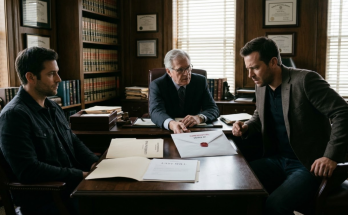
One afternoon, Evelyn arranged a meeting to review the findings so far.
I arrived with my notebook.
I had begun carrying it everywhere.
I didn't trust myself to remember every number.
Evelyn spread several documents across the desk.
She explained that investigators had traced substantial transfers from the trust.
Some funds had gone into accounts associated with my parents.
Some had been used in property transactions.
Others appeared in records connected to Fallon.
I looked at the figures.
Approximately $620,000 had been transferred into an account associated with my sister.
Another $310,000 appeared in transactions involving property renovations and personal expenses.
There were also movements involving an account belonging to my mother.
I stared at the pages.
I remembered the wedding.
Gideon standing beside the microphone.
Fallon looking shocked when he read the amount associated with her.
Mom ordering everyone to stop speaking.
Dad saying he had managed the money for the family.
Now those same figures were being examined outside the ballroom.
There were no guests.
No microphone.
No wedding decorations.
Only evidence.
Evelyn reminded me that not every transaction was automatically recoverable.
Some expenses might have been permitted under the trust.
Others could be challenged.
The original agreement mattered.
The authorization records mattered.
And the history of the assets mattered.
I nodded.
I was getting better at understanding the distinction.
I asked about the separate investment account.
The one containing approximately $740,000.
Evelyn explained that its connection to the original trust had been established sufficiently to continue pursuing the appropriate remedies.
The ownership history was still part of the review.
I asked whether the balance had changed.
She explained that investment values could fluctuate.
The figure from the earlier statement was not a guarantee of what would ultimately be recovered.
I wrote that down.
It was disappointing.
But I needed accurate information more than comforting promises.
Then she turned to the property records.
Part of the trust's assets appeared to have been used toward an investment property held jointly by my parents.
The investigators were examining how that transfer had been authorized and whether the trust had received appropriate value.
I looked at the documents.
I thought about all the times my mother had spoken proudly about the family's investments.
How she described my father as financially clever.
How she reminded me that I'd never had his judgment about money.
For years, those comments had made me feel inadequate.
Now I wondered how much of the family's apparent success had depended on assets I was never told belonged to a trust established for me.
I looked at Evelyn.
"Can they just say they used it for the family?"
She shook her head slightly.
She explained that the trustee's responsibilities couldn't be replaced by a general claim that everyone benefited.
The actual terms of the trust and the supporting records had to be examined.
I felt relieved hearing that.
Because the phrase for the family had been used against me for years.
Whenever Mom wanted something, it was for the family.
Whenever Fallon received help, it was for the family.
Whenever I asked why I was excluded, I was told not to keep score.
I had begun to hate those words.
Not because families shouldn't help one another.
But because my parents used them to hide who was giving and who was receiving.
The investigators also found gaps in the accounting.
Records that should have explained certain transactions weren't available.
Other documents contained inconsistencies.
Evelyn explained that those problems could affect the legal claims.
I listened.
Then I asked about the authorization forms Gideon had shown at the wedding.
She reminded me that the foundation's donation records were being reviewed through a separate process.
The questions involved the use of my personal information and donations that appeared in the records without corresponding funds.
The foundation had to determine what had happened.
I appreciated that she kept the issues separate.
I didn't want anyone making assumptions simply because my parents were involved.
I wanted each question answered properly.
After the meeting, I sat in my car for a while.
The folder was beside me.
I remembered Grandpa's photograph.
The porch.
The harbor.
The way he had always made me feel welcome.
He had built a business from very little.
He knew the value of money.
But I couldn't imagine him approving of the way his trust had been handled.
The thought made me angry.
I sat with that anger for a moment.
Then I started the car.
I had to pick up Beckett.
Life kept moving.
Even when the legal process seemed to stand still.
Over the following months, the discussions between attorneys continued.
My parents initially denied wrongdoing.
They maintained that Richard had acted in what he considered the family's best interests.
Their lawyers disputed the interpretation of certain transactions.
Evelyn continued working with financial investigators.
She requested supporting documentation.
She examined the trust's terms.
She traced funds through accounts and property records.
There were days when I received no news.
Then several developments would arrive at once.
I learned to wait without checking my phone every few minutes.
That took practice.
At first, every vibration made my stomach tighten.
I worried that something had gone wrong.
Or that a new document would reveal another betrayal.
Eventually, I began setting aside time for legal matters.
When Beckett was home, I tried to be present.
When I was at the hospital, I focused on my patients.
When Evelyn needed something, I responded.
I couldn't let the investigation take every part of my life.
One evening, Beckett found me sitting at the kitchen table with the folder open.
He was carrying a book.
He looked at the papers.
"Are you doing homework?"
I smiled.
"Something like that."
He climbed into the chair opposite me.
"Is it hard?"
I looked at the folder.
"Sometimes."
He nodded seriously.
Then he held up his book.
"I can read while you work."
I felt my eyes sting.
I closed the folder.
"How about I read with you instead?"
His face brightened.
We moved to the couch.
He leaned against me while we read.
For half an hour, I didn't think about accounts or attorneys.
I thought about the little boy beside me.
About how much he trusted me.
And about how carefully I wanted to protect that trust.
I understood then why Grandpa's actions mattered so much.
He hadn't established the trust simply to make me wealthy.
He had wanted me to build a life where I could make decisions without being frightened of losing everything.
I wanted the same thing for Beckett.
Not endless money.
Not expensive possessions.
Security.
Choices.
The ability to say no when something was wrong.
The legal negotiations became more serious as the review progressed.
The financial evidence made it difficult for my parents to dismiss every question as a misunderstanding.
There were discrepancies in the accounting.
Missing authorizations.
Transfers that required explanations.
And assets connected to the original trust that had been placed elsewhere.
Evelyn explained that pursuing a judgment could involve further costs and uncertainty.
A settlement might resolve substantial parts of the dispute without answering every personal question I had.
I struggled with that.
I wanted to know exactly who had decided to hide the trust.
I wanted someone to admit why.
I wanted my father to explain the night he let me walk away from his house while pregnant.
But the legal process wasn't designed to give me every emotional answer.
It dealt with evidence.
Rights.
Obligations.
And remedies.
Evelyn was honest about that.
She said I needed to decide what outcome would allow me to move forward.
I thought about the years I'd already lost.
I didn't want to spend the rest of my life trapped in an argument with my parents.
I wanted the assets recovered where possible.
I wanted the trust properly accounted for.
And I wanted enough stability to build a different future.
Eventually, a civil settlement was reached.
When Evelyn called to explain it, I sat at the same kitchen table where I'd first heard about the surviving investment account.
My hands were shaking again.
She told me my father had agreed to repay a substantial portion of the assets that had been improperly transferred.
The remaining disputed property would be placed under court supervision while further proceedings continued.
I listened carefully.
I asked her to explain the terms again.
She did.
I wrote them down.
Then I asked the question I'd been afraid to ask.
"How much will actually be recovered?"
Evelyn explained that the final amount reflected the legitimate expenses, taxes, legal costs, and asset valuations involved in the case.
The approximate recovery for my trust was $1.12 million.
I stared at the page.
One million one hundred twenty thousand dollars.
I wrote the number slowly.
Then I read it again.
It wasn't the full amount Grandpa had originally intended for me.
The original trust had been established with approximately $1.8 million.
There had been years of transactions.
Changes in asset values.
Legal expenses.
Money that couldn't simply be returned in its original form.
I understood that.
But I also understood what $1.12 million meant.
I could plan for Beckett's future.
I could stop treating every unexpected bill as a possible disaster.
I could make decisions without asking my parents for help.
I could finally experience some of the security Grandpa had wanted me to have.
I covered my face.
And I cried.
Not because I felt rich.
Not because I had won some competition with Fallon.
I cried because I remembered the nights I had skipped meals to make the grocery money last.
I remembered delaying dental treatment.
I remembered working exhausted shifts while worrying about rent.
I remembered standing on my parents' porch with a suitcase and asking for shelter.
And I remembered my mother telling me Grandpa had left nothing.
For twelve years, I had believed her.
Now the records had shown something very different.
When I ended the call, I stayed at the table.
The apartment was quiet.
I looked toward the window.
I thought I would feel triumphant.
I didn't.
I felt relieved.
And sad.
There was no way to recover the years.
No settlement could give Beckett a less exhausted mother during his earliest childhood.
No payment could erase the shame I'd felt asking for help.
No financial agreement could restore the trust I'd once placed in my parents.
The money mattered.
Of course it mattered.
It would change our future.
But it couldn't change the past.
I looked at Grandpa's letter.
It was still in its envelope.
I opened it.
I read the part about having choices.
Then I sat quietly.
I had spent months trying to prove that the trust existed and that its assets had been mishandled.
Now a substantial recovery had been secured.
The remaining property questions still had to proceed through the proper legal process.
The foundation's separate investigation also continued.
But the central question about my grandfather's gift had finally received a meaningful answer.
He had left me financial protection.
It had been hidden from me.
And through the legal process, much of it was being restored.
I folded the letter.
Then I put it away.
I didn't call my parents.
I didn't send Fallon a message.
I didn't tell anyone I had won.
I simply went into Beckett's room.
He was asleep.
His blanket had slipped toward the floor.
I pulled it back over him.
Then I stood there for a moment.
I thought about all the things I wanted to give him.
A safe home.
A good education.
A childhood that didn't revolve around money.
And the knowledge that his worth would never depend on what he earned.
I leaned down and kissed his forehead.
The settlement meant we could begin building that life with less fear.
That was enough for one night.
Click here to continue reading: PART 11: After Recovering More Than a Million Dollars, I Chose the Work My Mother Had Mocked and Began Helping Families Like Mine
My Mother Made Me the Joke of My Sister’s Wedding, but One Man at the Head Table Refused to Laugh
Part 10 of 16