| WHOLE STORY:
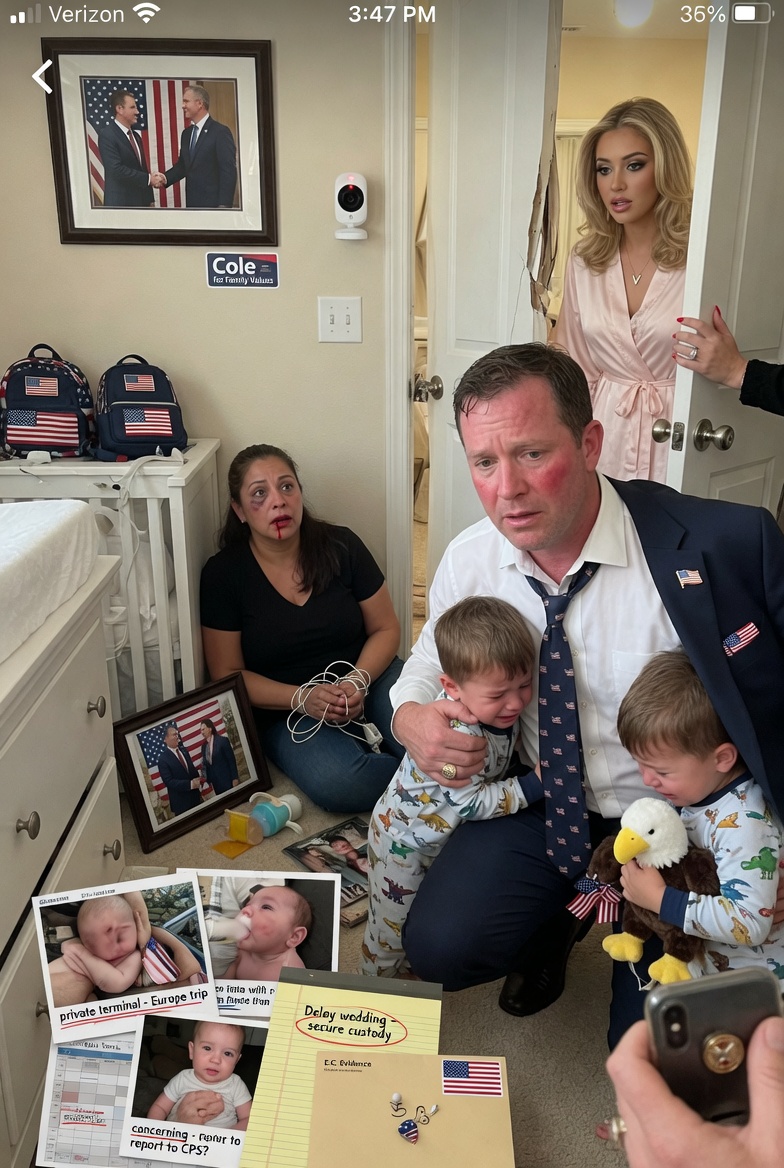
I didn’t open the door. I couldn’t. My hands were full—my left hand gripping the envelope that held her entire war plan, my right hand clutching the phone to the 911 operator who was already tracing my location. The weight of that envelope was suffocating. Inside was her blueprint for destruction: screenshots of my late nights twisted to look like abandonment, photos of tiny bruises she had likely caused herself, a schedule of custody battles she had been planning in secret. Delay the wedding. Secure custody first. Her handwriting. Her plan. Her betrayal. My three-year-old sons were pressed against me like they were trying to crawl inside my skin. Noah had his face buried in my hip. Mason was trembling so hard I could feel the vibrations in my own bones. Eli sat perfectly still against the wall, staring at the door with the same wide, unblinking gaze he had worn for months. The gaze I had written off as shyness. The gaze that was actually frozen terror. And Rosa. Our nanny. She was on the floor, propped against the crib, trying to untangle the phone charger from her wrists with her teeth. Her hands were shaking too much to use her fingers. The charger had cut deep red grooves into her skin. Her lip was split, the dried blood flaking on her chin. She looked at me and shook her head once. Don’t open it. I didn’t. “Ethan?” Vanessa’s voice drifted through the painted wood, soft and intimate, the voice she used when she wanted something. “I know you’re scared. But whatever Rosa told you… it’s not the truth. Open the door.” I looked down at the envelope again. The photos of the bruises. The small ones, the ones she must have pinched into their skin while I was at work, documented and labeled with dates. “Concerning,” she had written in the margins. As if she was building a case. As if she was already the victim. “The police are on their way, Vanessa,” I said. My voice was calm. It surprised me. “I called them before I kicked the door down. I have the evidence in my hands. I have the recording of what you said to them tonight. I have Rosa. It’s over.” The silence that followed was the loudest thing I had ever experienced. It stretched like a held breath, then cracked. “Ethan…” Her voice changed, dropping lower, more dangerous. “Don’t do this to us. Don’t do this to our family. You’re not well. You’ve been under so much pressure. You’re seeing things that aren’t there. Just open the door. Let me hold you. Let me fix this.” Gaslighting. Even now, standing on the other side of a door she had locked, with a woman she had beaten bleeding on the floor, she was trying to make me question my own sanity. I felt something inside me settle. The panic was gone. The rage was gone. What remained was a cold, crystalline clarity. “They’re my family, Vanessa. You’re the one who tried to take them from me.” The silence changed again. This time, when she spoke, the mask fell completely. The sweetness evaporated. What emerged was the voice I had heard on the recording. The real Vanessa. Hard. Cruel. Cornered. “You stupid fool. You think a few papers and a bruised maid are going to stop me? I have lawyers. I have resources. I have a story. You just made the biggest mistake of your life.” “The only mistake I made was trusting you.” A crash echoed from the hallway. She was tearing the mirror off the wall. The boys flinched. I pulled them closer. Rosa struggled to her feet, using the crib for support. “YOU DID THIS TO ME!” Vanessa screamed through the door. “YOU MADE ME THIS WAY! YOU LEFT ME ALONE WITH YOUR SCREAMING BRATS WHILE YOU PLAYED BIG SHOT CEO!” The sirens filled the air, growing louder, closer. I heard her heels click down the hall, then stop. “This isn’t over, Ethan,” she hissed. “You think you’ve won? You’ve just started a war.” Her footsteps fled down the stairs. I fell to my knees. The boys surrounded me immediately, their small arms wrapping around my neck. Rosa limped over and put her hand on my shoulder. We stayed like that, a broken circle, until the police burst through the front door. — The next few hours were a blur of controlled chaos. Search warrants. Medical exams. Interview rooms. I told the story again and again. The camera. The drive home. The U-turn. The locked door. The envelope. Vanessa was in the living room, crying for the officers. She was good. She was so good. She told them I was the one who locked the door. She told them Rosa attacked her. She told them I had a history of paranoia, that I was unstable, that she was scared for her life. But the evidence didn’t lie. The audio recording of her threatening my children. The bruises on Rosa’s wrists. The envelope full of framed evidence. The note in her handwriting. The processing took hours. I sat in the police station waiting room, holding a cup of cold coffee, watching the clock tick. The boys were with a child services officer, drawing pictures. I couldn’t stop staring at the drawings. One of them had a door with a giant lock on it. Another had a woman with a red mouth and black hands. I had let this happen. I had brought her into their home. I had trusted her. And while I was working to give them a “better life,” she was teaching them to be afraid of the dark. — The trial lasted two weeks. Vanessa’s lawyer was a magician. He painted me as a workaholic who didn’t know his own children. He painted Rosa as a grifter looking for a payout. He painted Vanessa as a saint who snapped under the pressure of raising three difficult toddlers alone. “Mr. Cole,” he said, pacing in front of the jury. “How many hours a week do you work?” “A lot.” “Eighty? Ninety?” “Sometimes.” “And during those eighty to ninety hours a week, who was caring for your children?” “My fiancée and the nanny.” “And isn’t it true that you grew suspicious of your fiancée and installed a hidden camera in the nursery without her knowledge?” “Yes.” “Does that sound like a trusting relationship to you?” “It sounds like a father protecting his children.” “It sounds like a man building a case against an innocent woman.” Then the prosecutor stood up. “Your Honor, I would like to play a recording for the court.” The audio filled the room. Vanessa’s voice, sweet and cruel at the same time. “Be quiet. Or you won’t eat tonight.” Noah’s tiny voice, pleading. “I want my daddy.” “Your daddy doesn’t want you. He wants to work. He wants to be anywhere but here. You have me. And you will listen to me.” A pause. Then a sound. A slap. Then crying. The courtroom was dead silent. The prosecutor let the silence hang. Then she called Rosa to the stand. Rosa walked in with a quiet dignity that made the whole room stop. She was wearing a simple dress. Her wrists were still scarred. She looked at the jury, not at Vanessa. “Ms. Rodriguez,” the prosecutor said. “Can you describe the day Mr. Cole found you in the nursery?” Rosa’s voice was steady. “I had confronted her about the locked doors. I told her I was going to tell Ethan everything. She grabbed my phone and smashed it. Then she pushed me into the nursery. When I tried to leave, she hit me with a picture frame. I fell. She tied my wrists with a phone charger. She locked the door. The boys were screaming. She left us in there for hours.” “And why did you stay? Why didn’t you quit earlier?” Rosa looked at the prosecutor, then at me. “Because if I left, there would be no one to protect them. I took the job because I loved those boys. I stayed because I was afraid of what would happen to them if I wasn’t there.” The defense attorney tried to tear her apart. “You’re bitter because you were fired from your last job. You’re desperate for a green card. You’re making this up for a lawsuit.” Rosa didn’t break. She looked the lawyer in the eye and said, “I have the recordings. I have the logs. I have the bruises on my wrists. You can tear me apart, but you can’t tear apart the truth.” The children’s therapist took the stand next. She brought out the drawings. Noah’s stick figure woman with the red mouth. Mason’s locked door. Eli’s silence turned into scribbles. “Silence is a trauma response,” the therapist said. “These children were terrified into compliance. They learned that crying meant punishment. They learned that asking for their father meant pain.” I broke down in the gallery. The jury was out for two hours. Guilty on all counts. Child endangerment. Assault. Making a false report. Five years. The judge looked at her. “You were entrusted with the most precious lives imaginable. You chose cruelty. You chose manipulation. You dared to gaslight a father into doubting his own children’s suffering. You are a danger.” Vanessa didn’t look at the judge. She looked at me. “I loved you, Ethan,” she said, her voice barely a whisper. “And you destroyed me.” I stood up. “No, Vanessa. You destroyed yourself. You just tried to take my children with you.” They led her away in handcuffs. I didn’t watch her leave. I looked at my boys. — The first year was the hardest. We sold the house. I couldn’t walk past the nursery without feeling my chest collapse. The smell of stale air and fear was permanently etched into the walls. We moved to the coast. The Outer Banks. A small rented cottage with a wraparound porch and a path to the dunes. The salt air was good for us. Rosa came with us. I paid her triple her salary. She told me to stop. “They’re my family too now,” she said. I stopped paying her. She stayed anyway. Therapy was an anchor. The boys learned to play again. Noah stopped flinching when I raised my hand to wave. Mason started eating at the table without hiding his food. Eli started talking. Small words at first. Then sentences. One afternoon, we were all sitting on the beach. The sun was warm. The waves were gentle. “Daddy,” Noah said. “Is she coming back?” “No, buddy. She’s not.” “Are you going to leave us?” I felt my throat tighten. “Never. I promise. Never.” “Promise?” “I promise, buddy. I promise you all.” He leaned against me. “I love you, Daddy.” It was the first time he had said it without being prompted. I cried right there on the sand, my sunglasses hiding my tears, my son’s small hand in mine. — A year later, I took them back to Napa. Not for a wedding. For a vacation. I wanted to reclaim the place I had been running to when everything fell apart. I wanted to show them that the world was still beautiful. We visited the vineyards. We ate good food. We laughed. “Daddy, why did we come here?” Eli asked. “Because this is where I was going the day I saved us,” I said. “Oh,” he said, not quite understanding. But it didn’t matter. He was here. They were safe. I was present. We walked through the rows of grapevines, the sun warm on our faces. Rosa was ahead, chasing Mason. Noah was collecting pretty rocks. Eli was holding my hand. I stopped for a moment and looked at the sky. It was a perfect blue, clear and endless. I thought about the night I saw the footage. The sound of her voice. The locked door. The envelope. I thought about the moment I almost drove to the airport, almost flew away, almost missed the truth. I almost lost them. But I didn’t. I turned around. I came home. I broke down the door. And I found my children. — I still have the camera. It’s in my nightstand now. I don’t need it to watch them anymore. I can hear them. I can see them. I am present. Every night, I tuck them in. I read them stories. I kiss their foreheads. “Goodnight, Noah. Goodnight, Mason. Goodnight, Eli.” “Goodnight, Daddy.” I turn off the light and stand in the doorway for a moment, watching them sleep. Their chests rise and fall. Their faces are peaceful. The shadows are gone. The healing didn’t come all at once. It came in small, stubborn pieces. A laugh. A hug. A drawing of a yellow sun. If I learned anything, it was this: when a child’s behavior changes, there’s always a reason. Trusting doesn’t mean closing your eyes. Loving doesn’t mean justifying every warning sign. The truth is loudest in the quiet moments. You just have to be willing to listen. I listen now. I hear their breathing. I hear the ocean outside the window. I hear the stillness of a home that is finally, truly safe. And I lock the door behind me every single night. Not to keep them in. To keep the world out. — I look at the photo on my nightstand. It was taken last summer. The boys are laughing. Rosa is holding Eli. I am looking at them with pure, unguarded love. This is what matters. This is what saved me. The nightmare is over. The dream has just begun. The dream has just begun. — But dreams don’t protect you from the middle of the night. It was 2:47 AM when the screaming started. I jolted awake, my heart slamming against my ribs before my brain even registered the sound. Mason. It was Mason, wailing from the room down the hall. Not a nightmare cry—that was familiar, sad, something you console with a glass of water and a back rub. This was a terror cry. The kind that means they’re back in the room with the locked door and the dark and the voice telling them to be quiet. I was already running before I realized I was running. His door was open. The nightlight cast a pale yellow glow across the race-car bedspread. Mason was sitting up, eyes wide open, but he wasn’t looking at me. He was looking at the closet. The door was slightly ajar, the way it always was, but in his face that crack was a portal to every fear he had ever swallowed. “Mason, buddy, I’m here,” I said, sitting on the edge of his bed. He didn’t respond. He was still trapped in whatever room his mind had built. Then Noah appeared in the doorway, dragging his blanket, his face pale. Eli was behind him, silent and wide-eyed, holding his stuffed rabbit by one ear. “Daddy, is she here?” Noah whispered. “No, buddy. She’s not here. She can’t hurt you anymore.” “But Mason’s scared.” I reached out and gently touched Mason’s arm. He flinched. Then he focused on me, and his face crumpled. He collapsed into my chest, sobbing so hard his whole body shook. “She was in the closet, Daddy,” he said between gasps. “She said she was going to take me away. She said you wouldn’t come back.” I held him. The other two climbed onto the bed and pressed against my sides. We sat there, all four of us, huddled together on a twin mattress that was way too small for the weight of everything we were carrying. I wanted to tell him that monsters weren’t real. But I couldn’t. Because I had opened the drawer. I had seen the evidence. The monster was real. She was just in a cell an hour away. So instead, I said, “I’ve got you. All of you. And I’m not going anywhere. Ever.” “Promise?” Mason’s voice was barely a whisper. “I promise.” I lay down with them, my back pressed against the wall, my arms full of three small bodies slowly relaxing into sleep. I didn’t sleep. I stared at the ceiling and listened to their breathing. And I made a decision. The next morning, I called the therapist. — Dr. Elena Morales was a small woman with silver hair and an unshakable calm. She had seen us through the trial, through the move, through the first sleepless months. But we hadn’t seen her in a while. The boys were doing better. Or so I thought. “He’s having flashbacks,” she said, after I described the incident. “They’re common after trauma, especially in children who experienced prolonged abuse. The brain tries to process what happened, and sometimes it gets stuck in the memory.” “How do we get him unstuck?” She leaned forward. “We talk about it. Directly. With his brothers present. He needs to know that it’s not a secret. That you’re not afraid of the truth. That she had no power over this family.” I nodded, but my stomach twisted. I wanted to move forward, not backward. I wanted them to forget. But she was right. You can’t outrun a shadow. That afternoon, we sat in the living room. The sun was streaming through the windows. The ocean was visible in the distance. I had the boys on the couch with me. Rosa stood in the doorway, ready to step in if needed. “Mason,” I said gently. “Tell me about the dream.” He looked at his lap. “She was there. She had red nails. She said I was bad.” “You’re not bad, Mason. You never were. She was the one who was wrong.” “Then why did she lock us in?” It was the first time he had voiced it directly. I felt the air leave the room. “Because she was sick,” I said. “She had something broken inside her. And instead of fixing it, she tried to break you. But you didn’t break. You’re here. You’re safe. And she can never, ever lock that door again.” He looked up at me, his eyes glistening. “Promise?” “Promise.” He crawled into my lap. The other two did the same. We stayed there for a long time, the four of us breathing together. Rosa wiped her eyes and went to make lunch. — The healing was not linear. There were good days. Days when the boys ran on the beach, chasing seagulls, building sandcastles that looked more like mud piles. Days when Noah would laugh so hard he snorted. Days when Eli would sing a song he learned in therapy, off-key and beautiful. And there were hard days. Days when a door slammed and Eli froze. Days when Mason refused to eat. Days when Noah asked, “Why didn’t you come home earlier, Daddy?” and I had no answer that didn’t feel like a knife. One evening, after a particularly hard day, I was sitting on the porch, staring at the dark ocean. The waves were crashing, relentless. The wind was cold. Rosa came out and sat beside me. “You’re blaming yourself,” she said. “Of course I am. I brought her into their lives.” “You also brought you into their lives. You saved them.” “I almost didn’t.” “But you did.” She paused. “Ethan, I was there. I saw you break down that door. I saw you hold them. I saw you make the call. You did everything right in that moment.” “I should have seen it earlier.” “We both should have. But we didn’t. And now we know. And we’re still here.” She took my hand. It was the first time she had touched me since the night in the nursery. I didn’t pull away. “We’re still here,” I repeated. “Yes.” We sat in silence for a long time. The waves kept crashing. — A few weeks later, the boys started school. It was a small Montessori school near the beach, with a garden and a kind teacher named Ms. Harper. I had visited three times before enrolling them. I had checked every corner, every door, every emergency exit. I had interviewed the staff about their policies. I had installed a camera in the car—not for them, for me. To prove to myself that I could trust the world again. The first day was chaos in the best way. Noah ran straight to the sandbox. Mason clung to my leg for ten minutes before Ms. Harper knelt down and showed him a jar of tadpoles. He let go. Eli stood at the door, watching the other children, then turned and gave me a small wave. “Bye, Daddy.” My heart cracked open. I drove home with the windows down, the radio off, and let myself cry. Rosa was at the cottage when I got back. She handed me a cup of coffee and said nothing. We sat on the porch and listened to the silence. “They’re going to be okay,” she said. “I know.” “Are you going to be okay?” I looked at the ocean, at the endless blue horizon. “I don’t know. But I’m going to try.” — That night, we had a family dinner. The boys talked about tadpoles and playground rules and a girl named Chloe who shared her goldfish crackers. Mason told a joke that didn’t make sense but made everyone laugh anyway. Eli drew a picture of the four of us: me, Rosa, and the three of them, standing under a giant yellow sun. I put the drawing on the fridge. Later, I tucked them in. I read two stories. I kissed three foreheads. “Goodnight, Noah. Goodnight, Mason. Goodnight, Eli.” “Goodnight, Daddy.” I stood in the doorway and watched them for a moment. Their chests rose and fell. Their faces were peaceful. The shadows were still there, but they were shrinking. I turned off the light. And I didn’t lock the door. Not because I was careless. Because I was done being afraid. Because I had learned that safety wasn’t about locks. It was about trust. It was about presence. It was about being there when they needed me, even in the middle of the night, even when the monster came back. I had broken down the door once. I would do it again. As many times as it took. — The dream had just begun. But the dream wasn’t perfect. It was messy. It was hard. It was full of tears and tantrums and unexpected jokes. It was full of Rosa’s laughter and the smell of salt and the sound of three small voices arguing over who got the last pancake. It was real. And that was enough. For the first time in a long time, it was enough. — I still think about the camera sometimes. The one I hid in the hallway. I used to feel guilty about it, like it was a violation of trust. But I don’t anymore. That camera saved us. It saw what I was too blind to see. I kept it. It’s in a drawer now. Not to watch. To remember. To remind me that sometimes, the truth hides in plain sight. And that the most important thing you can do is look. Listen. Trust your gut. And if you hear your children crying through a closed door, break it down. Even if you’re wrong. Even if it’s just a nightmare. Because they need to know that you will come. That you will always come. I always come now. And every time I walk through that door, I see their faces light up. And I know. I know we made it. We made it through. — There’s a photo on my dresser now. A new one. The boys are older, maybe five or six. Mason is holding a tadpole in a jar. Noah has sand in his hair. Eli is laughing, his head thrown back, his teeth showing. I am kneeling beside them, my arm around Rosa—she’s kneeling too, holding Eli’s hand. We look like a family. We are a family. Not the kind I planned. Not the kind I imagined. But the kind I will fight for. Every night. Every door. Every single day. The nightmare is over. The dream is real. And I am never letting it go. The photo on my dresser stayed there for years. It was our anchor. But anchors can also become weights if you never learn to sail with them. I looked at that picture every morning, and every morning I told myself the same thing: *We made it. We’re here. We’re safe.* But safety is a fragile thing when you’ve seen how easily it can crack. It was a Tuesday afternoon, three years after the trial. The boys were seven now, lanky and loud, with scabbed knees and Opinions about everything. Rosa and I were in the living room folding laundry while the boys played outside, their shouts drifting through the open windows. The day was ordinary. Sunlight fell in rectangles on the hardwood floor. A seagull cried somewhere over the dunes. Then Noah walked in. He wasn’t running. He wasn’t calling for me. He was walking slowly, his face pale, holding a piece of paper in his hand. My stomach dropped before I even saw what it was. “Daddy,” he said, his voice flat. “I found this in your desk. When I was looking for the stapler.” He held it out. I took it. Felt the weight of the official letterhead before I even read the words. Rosa stopped folding. She saw my face. “Ethan?” she said. I read it once. Then again. It was from the state correctional facility. Vanessa had submitted a petition for early release. The original sentence was five years. She had served three. Good behavior. Completion of anger management programs. The parole board would review her case in sixty days. They were asking for statements from victims. My hands were shaking. I didn’t notice until the paper rattled. “What is it?” Noah asked. His voice was small now. He had seen my face change. He had learned to read fear in adults. I knelt down in front of him. “It’s nothing you need to worry about, buddy. It’s just some grown-up paperwork.” He stared at me. His eyes were older than seven. “No. It’s something about *her.* I know. You get the same look you had when you came home that night.” I didn’t know what to say. He was right. Years of therapy, of careful conversations, of open dialogue—and still, my own son could see the shadow cross my face the instant she reappeared. Noah’s chin started to quiver. “Is she coming back?” “No,” I said, but the word tasted wrong. “I won’t let that happen.” Mason and Eli appeared in the doorway, drawn by the shift in the room’s temperature. They looked from Noah’s face to mine to the paper in my hand. Mason dropped his toy car. Eli grabbed his own arm, a habit he had never fully broken. “What’s going on?” Mason asked. Rosa stepped forward. She took the paper from my hand, read it quickly, and her jaw tightened. She looked at me with an expression I knew well. *We will handle this.* She turned to the boys. “Your father and I need to talk for a minute. Can you go build a castle in the sand? A big one. I’ll come see it in ten minutes.” Noah hesitated. Then Eli took his hand and pulled him toward the door. “Come on, Noah. Let’s go.” They left. The three of them, a small pack, stepping into the sun. The moment they were gone, Rosa closed the door and turned to me. “What do you need to do?” “I don’t know.” I sat down heavily on the couch. “I thought this was over. She was supposed to be gone. We were supposed to be done.” “She’s in a cell, Ethan. She’s not gone from your mind. But this is just a petition. It’s not a release.” “She’s going to get out. You know she will. She’s charismatic. She’ll charm the board. She’ll say she’s reformed. She’ll cry the right tears. And then she’ll find a way back into our lives.” Rosa sat beside me. “Then we fight it. We write statements. We tell the truth. We show them what she did. We do exactly what we did in court.” “And if that’s not enough?” She didn’t have an answer. Neither did I. We sat in silence for a long moment. Outside, I could hear the boys laughing, arguing over sand, being normal. I wanted to protect that so badly it hurt. “I need to call the lawyer,” I said finally. “Do it.” I made the call. The lawyer said the same things Rosa had said. We would file a statement. We would fight. The parole board was not easily fooled. But he also warned me: early release was becoming more common. There were no guarantees. I hung up and stood at the window, watching the boys build their castle. The sun was warm. The water was blue. And somewhere, in a concrete room an hour away, she was plotting her return. I felt the old anger rise, hot and familiar. Then I felt something else. A cold, clear resolve. I had broken down a door for my children before. I would do it again. Not with my shoulder this time. With words. With evidence. With every tool I had. Because the nightmare wasn’t over. It was just sleeping. And I wasn’t going to let it wake up. That night, after the boys were in bed, I sat down with a legal pad and began to write. I wrote down everything. The first time Noah flinched. The night Mason cried himself to sleep. The locked door. The broken picture frame. The envelope. I wrote until my hand cramped and my eyes burned. Rosa came in with a cup of tea and sat across from me. “I’m writing my own statement,” she said. “Every bruise. Every threat. Every morning I walked into that house knowing she might break something else that day.” I looked up at her. “You never told me all of it.” “I didn’t want to burden you. You had enough.” “You were carrying it alone.” She shook her head. “I was carrying it for them. Just like you.” We sat in the quiet kitchen, two people bound by the same nightmare, writing our truth on paper. And I thought: this is how you fight. Not with rage. With words. With witnesses. With the slow, stubborn work of justice. The parole board hearing was set for sixty days. I had sixty days to prepare. Sixty days to make sure that when she looked at those board members, they saw not the actress, but the woman who locked three toddlers in a room with their beaten nanny. Sixty days to teach my children that even in the darkest moments, there is something you can do. Sixty days to prove that the door I broke down was not the end of my strength. It was the beginning. |