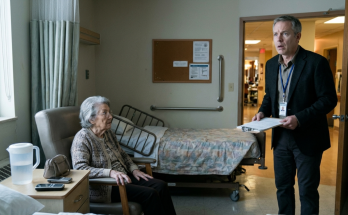
Justice for Margaret Dunmore
The months that followed were difficult.
The investigation uncovered additional evidence concerning the disputed power of attorney and the property transaction. Heather’s brother’s company had been aware that the authorization was questionable, and the authorities examined the role each person had played.
The legal process took time.
There were interviews, document reviews, and hearings. I answered every question truthfully and provided the records Eleanor had collected.
I refused to exaggerate anything.
I didn’t need to.
The facts were painful enough.
Eventually, the court determined that the transfer of my house could not stand because the purported authorization was invalid. The necessary steps were taken to restore the property’s title to me.
The authorities also pursued the allegations supported by the evidence. Scott and the other people involved faced legal consequences, although the exact outcomes differed according to each person’s conduct and the applicable law.
I did not celebrate when I heard the news.
I simply sat at Eleanor’s kitchen table and cried.
My house was coming back to me.
Not because I had defeated my son.
But because I had finally been given the chance to reclaim the life he had tried to take away.
When I returned to the house, the roses beside the front walkway had grown wild.
The kitchen curtains were gone. Several pieces of furniture had been moved, and the walls needed repainting.
But the wooden bench remained beneath the old maple tree.
I walked into the front bedroom where Frank had spent his final winter.
For a moment, I could almost hear his voice.
Maggie, put the kettle on. I’ll be right there.
I sat on the edge of the bed and held his photograph.
“We’re home, Frank,” I whispered.
“We’re home.”
I hired someone to repair the garden gate. I replaced the curtains and planted fresh roses beside the kitchen window.
I didn’t try to recreate everything exactly as it had been.
Life had changed.
So had I.
But the house was mine again, and every room reminded me that my life had value beyond what anyone else believed I could contribute.
A few weeks later, Dr. Reyes visited.
She brought a small bouquet of yellow roses.
“I thought these might look nice in your kitchen,” she said.
I smiled.
“They certainly will.”
She sat with me at the table, and we drank tea.
Before leaving, she handed me a letter from the Willow Creek board.
They had begun reviewing their admission procedures and had strengthened safeguards to ensure that residents’ wishes were independently considered. They were also developing additional staff training around consent, decision-making, and suspected financial exploitation.
I read the letter carefully.
Then I looked at Dr. Reyes.
“Good,” I said. “Make sure it stays that way.”
She smiled.
“We intend to.”
After she left, I placed Frank’s photograph beside the window and returned to my garden.
For the first time in months, I felt completely at peace.
An Unexpected Visit
Nearly a year passed before Scott came to see me again.
He arrived alone, carrying a small box.
I opened the door and found him standing on the porch, looking older than I remembered.
He had lost weight. His hair was untidy, and the confidence that once made him believe he could manage everyone else’s life had disappeared.
“Hello, Mom.”
“Hello, Scott.”
He held out the box.
“I brought something for you.”
Inside was Frank’s old kitchen clock.
I recognized it immediately. It had hung above the refrigerator for decades before disappearing during the sale.
“I thought you’d want it back,” he said.
I touched the wooden frame.
“Thank you.”
He looked toward the garden.
“The roses look beautiful.”
“They do.”
We stood quietly for a moment.
Then he said, “I’ve been going to counseling. I’ve also been working to repay the money connected to what happened. It’s going to take a long time.”
I listened without interrupting.
“I can’t undo what I did,” he continued. “I know saying sorry doesn’t fix anything. But I want you to know that I’m not blaming Heather or the business anymore. I made my own decisions.”
That was the first thing he had said that sounded like genuine accountability.
I opened the door wider.
“Would you like some tea?”
His eyes filled with tears.
“Yes, please.”
We sat at the same kitchen table where I had helped him with homework as a child.
He told me about his life, his work, and the difficulties he was facing. I listened, but I didn’t offer money or promise to solve his problems.
For once, I allowed him to be responsible for himself.
When he finished, he looked at me.
“Do you think you could ever trust me again?”
I considered the question.
“Perhaps,” I said. “But trust is not something you receive because you ask for it. It’s something you build through your actions, over time.”
He nodded.
“I understand.”
“I hope you do.”
Before he left, he stood beside the kitchen door and looked at the small mark on the wall where Frank had measured his height every birthday.
“Do you remember when Dad used to mark my height?”
“Of course.”
“He always said I was going to be taller than him.”
I smiled sadly.
“He was wrong about that.”
Scott laughed softly.
For a brief moment, I saw the little boy who used to run through this house in muddy shoes.
But I also saw the man who had betrayed me.
Both were real.
And I finally understood that loving someone meant accepting the truth about them, not choosing only the memories that made loving them easier.
When Scott left, I didn’t feel the need to chase after him.
I returned to my garden.
If he wanted to rebuild our relationship, he would have to keep showing up.
Not because he needed something.
Not because he was afraid.
But because he genuinely wanted to be my son.
The Promise Beneath the Roses
On the second anniversary of my return home, I invited several friends from Willow Creek to visit.
Dr. Reyes came, along with Gloria, the nurse who had first held my hand when I learned the truth.
We sat beneath the maple tree, sharing sandwiches and lemonade while the afternoon sunlight fell across the garden.
Gloria looked at the house and shook her head.
“I still remember the day you arrived with that little suitcase.”
“So do I,” I replied.
“I thought you were going to be one of those residents who never received visitors.”
I looked toward the front door.
“I almost believed that myself.”
Dr. Reyes reached across the table and squeezed my hand.
“You taught us something important, Margaret.”
I shook my head.
“No. Frank taught us something important. I simply had to remind everyone of it.”
I glanced at the bronze-colored replica of the plaque that Dr. Reyes had given me. It sat on a small table near the garden door.
The words were simple.
Every person deserves dignity, independence, and a place to call home.
I had once believed those words were a beautiful sentiment.
Now I knew they were a promise that required people to act.
That evening, after my friends had left, I sat alone beneath the maple tree.
The kitchen clock ticked softly inside the house.
I thought about Scott.
I still loved him. I probably always would.
But I no longer measured my worth by whether he called, visited, or needed me.
I had spent much of my life believing that being a good mother meant making sacrifices without complaint.
Now I understood that being a good mother also meant teaching a child that love did not excuse cruelty, that family did not erase boundaries, and that an apology was only the beginning of making things right.
I looked toward the roses Frank had planted.
They had survived storms, neglect, and years when I had been too tired to care for them properly.
They were not perfect.
Some branches were crooked. A few petals had fallen to the ground.
But they were still growing.
And so was I.
I rose slowly, brushed the dirt from my hands, and walked back into my house.
The door closed behind me.
Not as a barrier.
Not as a prison.
But as the door of a home that belonged to me.
And for the first time in a very long time, I wasn’t waiting for anyone to come back and give me permission to live my life.
I was already living it.
The End.
My Son Abandoned Me in a Nursing Home—Then the Director Read My Name and Discovered Who I Really Was
Part 2 of 2