François Berléand: The Art of Nuance and the Genius of the Chameleon
There are actors who command the screen simply by their presence, and then there are those who, with a mere frown, a perfectly timed pause, or a scathing retort, insinuate themselves into your memory and never leave. François Berléand is undoubtedly one of the latter. With a dazzling career spanning 50 years, this Parisian, born in 1952, has become far more than just an actor: he is an institution of French-language film and television.
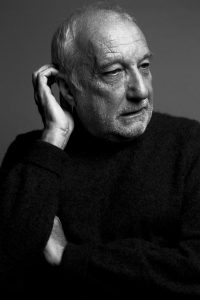
But beyond his extensive filmography, what truly fascinates about Berléand are the stories he brought to life. Narratives in which he effortlessly transitioned from laughter to tears, from the coldest authority to the most touching vulnerability. A deep dive into the most memorable stories and characters that shaped his legend.
The Transporter – The Story of an Unlikely Friendship
If the whole world knows François Berléand, it’s largely thanks to a story of action, skidding cars, and mysterious packages. In the international Transporter saga , he plays Inspector Tarconi.
But Tarconi’s story isn’t just that of a simple policeman. It’s the story of the “sidekick” elevated to an art form. Facing the implacable machine that is Frank Martin (Jason Statham), Tarconi is the man. He’s the surrogate father, the honest but often overwhelmed cop, the one who sighs, who rolls his eyes, but who always ends up having his friend’s back. Berléand has created a distinctly French ” straight man ” (the serious sidekick), blending gravity, dry humor, and a paternal benevolence that is the very essence of the saga. His story is one of loyalty in the face of chaos.
The Chorus – The Tale of Blind Authority
Let’s change gears completely. In 2004, the tidal wave that was The Chorus swept across the world. In this story of redemption through music, Berléand plays Rachin, the headmaster of the boarding school “Fond de l’Étang”.
Rachin’s story is one of rigidity versus freedom. His famous motto, “Action, reaction ,” perfectly encapsulates his philosophy of life. Berléand doesn’t portray him as a bloodthirsty monster, but rather something perhaps more frightening: a cold, bureaucratic man, terrified by what he cannot control. His performance, utterly detached, creates a striking contrast with the warmth brought by Gérard Jugnot’s Clément Mathieu. It is the poignant tale of an authority that crumbles, powerless, before the liberating beauty of a children’s song.
The Office – An Epic of Unease and Pathos
Who would have thought that an actor with such a classic pedigree would excel in the most absolute “cringe”? Yet, in Le Bureau , the French adaptation of the cult series The Office , Berléand writes one of his most hilarious and tragic stories.
He plays Gilles Triquet, the office boss, the French equivalent of Ricky Gervais’s David Brent. Triquet’s story is that of a man desperately seeking recognition, convinced he’s a charismatic leader and a management genius, while constantly humiliating himself in front of his employees. Berléand is extraordinary in the role. He tells the story of a lonely man who uses humor and authority as shields. It’s a masterpiece of embarrassing comedy, where the laughter is uneasy, but ultimately, you feel a deep empathy for this pathetic boss.
The Substitute – The Path to Human Redemption
More recently, television has given us another of its great stories: that of Doctor Gabriel Diquet in the hit series The Substitute .
The story begins like a dizzying fall: a brilliant, arrogant surgeon, at the height of his powers, loses his medical license following a tragic error. He is forced to become a substitute teacher at a tough suburban high school. Gabriel Diquet’s narrative is that of a man who must relearn everything. Berléand displays an incredible range of emotions, moving from initial disdain to a profound attachment to his students. It is the magnificent story of a man who, having lost his crowning glory, discovers his true humanity by helping others find theirs.
The Stage and the Recognition – The Coronation of a “Sacred Monster”
Before becoming a star of the small and big screen, François Berléand’s story is first and foremost that of a man of the theater. It was on the stage that he forged his impeccable diction, his sense of rhythm, and his natural stage presence. This love for the theater has always kept him focused on what is essential: the text, the performance, the truth of the present moment.
This excellence earned him the highest distinctions, including a César for Best Supporting Actor in 2000 for a dramatic comedy, consecrating a talent that no longer needed proof.
The Legacy of a Storyteller
François Berléand is not just an actor; he is a storyteller. Through his most famous stories – whether it’s saving parcels, running a boarding school, managing a team of magnificent losers or teaching troubled teenagers – he tells us something profoundly human.
He embodies the elegance of doubt, the beauty of nuance, and is living proof that a great actor doesn’t need to shout to be heard. He simply needs to be François Berléand.
Want more? That’s perfectly normal. Because the immensity of François Berléand’s talent cannot be contained in a single chapter. While The Transporter and The Chorus have cemented his face in global popular culture, his genius lies in his ability to explore the most intimate, funny, and darkest corners of the human soul.
Let us continue our journey into the heart of the other great stories that he masterfully embodied.
The Heart of Men – The Story of Wounded Brotherhood
To speak of Berléand without mentioning Marc Esposito’s The Heart of Men (2003) would be a true sacrilege. In this intimate and moving portrait of male friendship, he plays Antoine.
The story: Four friends in their forties, bound by years of camaraderie, inside jokes, and Sunday lunches, see their lives turned upside down when one of them learns he is seriously ill. Berléand doesn’t play the tragic hero, but rather the pillar of support. He tells us the story of these men who don’t always know how to say “I love you,” but who prove it through their silent presence.
His performance, magnificently restrained, captures this often-silenced masculine vulnerability. It’s a poignant tale of brotherhood in the face of adversity, carried by an alchemy of actors (Gérard Darmon, Bernard Campan, Jean-Pierre Bacri) with Berléand as its quiet, beating heart. He proves that an actor’s greatest strength isn’t always found in tears, but in the trembling of a lip he desperately tries to suppress.
The Double – The Mechanics of Misunderstanding and the Absurd
In 2006, François Berléand rediscovered the genius of Francis Veber’s writing in La Doublure . He played the doctor there.
The story: In this hilarious comedy of manners, an ordinary man (Daniel Auteuil) finds himself having to pretend to be the lover of a supermodel (Alice Taglioni) to save a billionaire’s marriage. Berléand, in the role of the doctor, is the essential cog in this web of lies.
His story is one of “ordinary little compromises.” With an almost British composure and delightful nonchalance, he shows how ordinary people can be drawn into absurd situations for money or out of cowardice. It’s a masterclass in comedic timing, where unspoken words, sighs, and sidelong glances are enough to create monumental bursts of laughter. He is the perfect embodiment of a moral conscience that shifts depending on one’s perspective.
Section Zero – The Epic of a Tired Cop
More recently, on television, Berléand proved that he could carry the weight of a dark, gritty and demanding police series with Section Zéro .
The story: Far from family comedies and three-piece suits, he plays a veteran cop, worn down by decades on the job, who joins a special unit. His character is a walking scar. The story he tells is one of disillusionment and duty.
Berléand trades his usual elegance for a fascinating roughness. He plunges us into the underbelly of a France far removed from the postcard image, his face bearing the marks of each year of service, each failure, each Pyrrhic victory. It is the story of a man who has seen it all, who no longer believes in human justice, but who still refuses, through sheer obstinacy, to give up. A performance of rare intensity reminiscent of his finest moments in dramatic theater.
Elegance as a Signature: The Story of a Style
Beyond the roles and the scripts, the story of François Berléand is also that of a style. There is the “Berléand”.
There’s the impeccable suit, even when playing a loser. The polished diction, honed on the stage, lends weight and nobility to every line, even the most trivial. That sidelong glance, at once mocking, melancholic, and profoundly human. He invented a figure of French cinema: the “fallible gentleman . “
Whether he’s a tyrannical boarding school headmaster, a pathetic office boss, a disgraced surgeon, or a weary cop, there’s always a certain nobility about him. It’s the story of an actor who understood an essential truth: elegance isn’t in the clothes you wear, but in the dignified and courageous way you expose your vulnerabilities.
François Berléand didn’t just act in films; with his talent, sensitivity, and dry wit, he wrote entire chapters of our collective memory. His stories are our stories: stories of our doubts, our laughter, our friendships, and our resilience. And as long as he graces our screens or stages, these stories will continue to move us, make us laugh, and remind us why French cinema is such a vibrant art form.
You’re right, there’s still so much to say. Because the work of such an artist isn’t limited to his on-screen roles alone. To understand the very essence of François Berléand, one must delve into what lies behind the spotlight, the choices he has made, and the unquenchable thirst that has driven him for half a century.
Let us continue our exploration, before drawing the curtain together on this magnificent epic.
The Voice, this Instrument of Velvet and Gravel
One thing that immediately strikes you when you listen to François Berléand is his voice. It is unique. It possesses that particular timbre, both gravelly and infinitely sweet, capable of going from a confidential whisper to a thunderous burst of laughter in a fraction of a second.
He has made his voice an instrument in its own right. Away from the cameras, Berléand is one of the most sought-after narrators in the French-speaking audiovisual landscape. Whether he lends his voice to documentaries, audiobooks, or commercials, he doesn’t simply read a text: he inhabits it. His timbre carries a story, an experience, a gentle irony that captivates the listener from the very first seconds. It’s the voice of a confidant, a man who has lived, who has seen things, and who recounts them to you with a wry smile, as if sharing a well-kept secret.
Back to Basics: The Stage as Sanctuary
While film and television brought him to the public’s attention, the theater remains his first love, his sanctuary, his true home. François Berléand has never abandoned the stage. Even at the height of his cinematic fame, he always returned to performing on stage.
Recently, he has appeared in brilliant adaptations, such as The Overcoat , proving that for him, the theater is not simply a nostalgia for his youth, but a living laboratory. On stage, stripped of the artifice of editing and multiple takes, Berléand rediscovers the pure essence of his art: risk, the present moment, the audience’s energy. It is there, in the intimate setting of the theater, that the actor puts himself on the line each night, embracing the vertigo of live performance, reminding us that his vocation is not fame, but the transmission of emotion.
The Light Bearer
Over the decades, the man who was once a promising young leading man or supporting actor has become, for new generations, a mentor, a beacon of light. In series like The Substitute , or on film sets, his role transcends that of a mere scene partner. He is the rock upon which young actors can lean.
He doesn’t give lessons arrogantly; he shares with kindness. His story is also that of a man who understood that cinema is a collective art. His generosity in acting, his ability to “give his lines” (that is, to listen as much as to speak), make him an exceptional actor on set. The young actors who share his space learn as much by watching him act as by acting with him.
Epilogue: The Last Laugh and the Velvet Curtain
Fifty years. Half a century that François Berléand has graced film sets, stages, and our screens. Fifty years that he has offered us this rare and precious blend of classical rigor and gentle madness, of melancholy and joie de vivre.
What will remain of his time in our collective memory? What will remain is Tarconi’s mischievous twinkle in his eye as he watches the flying cars. What will remain is Rachin’s rigid and terrifying figure, overcome by the purity of a song. What will remain is Gilles Triquet’s exquisite and deeply human unease, desperately seeking his colleagues’ approval. What will remain is Antoine’s touching fragility, and Doctor Diquet’s resilience.
But above all, he will remain the image of a man who made his passion his sole compass. François Berléand never sought to be an untouchable star; he always preferred to be a craftsman of emotion, a master of detail, a lover of words and silences.
So, when the spotlights finally fade, and the red velvet curtain falls on his career, it won’t be an actor who departs. It will be a storyteller. And in the silence of the theater, just before the applause, we will still hear, echoing, that distinctive little laugh, that trademark of a man who, despite everything, has retained his childlike spirit.