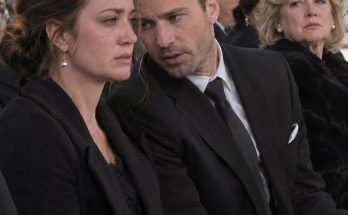
By the time Julian returned home, I had stopped thinking of his recovery as something I needed to manage.
That hadn't been easy.
I was a surgeon.
I was accustomed to checking progress.
Reviewing complications.
Asking whether a patient was following instructions.
But Julian was no longer under my care.
His treatment had been handled by another attending surgeon.
His rehabilitation had continued.
And eventually, he had recovered enough to leave that part of his medical journey behind.
I was glad.
I meant that.
Even after everything he had done, I didn't want my brother to spend the rest of his life suffering from his injuries.
But I also didn't want to confuse his physical recovery with our relationship.
Those were different matters.
I had been the surgeon who saved his life.
I wasn't obligated to become the person who made him feel forgiven.
That distinction had taken me months to accept.
At first, I felt guilty whenever I thought about keeping my distance.
I remembered Julian as a boy.
My older brother.
The person I had once looked up to.
I remembered the way he used to speak to me before resentment became part of our relationship.
I remembered trusting him.
Then I remembered the letters.
More than twenty.
The ones he had taken before our parents could read them.
I remembered his admission that he had expected me to stop trying.
Those memories didn't disappear simply because I remembered happier ones.
I had to let both exist.
That was the hardest part.
I couldn't pretend Julian had always been cruel.
He hadn't.
I also couldn't pretend the cruelty had been accidental.
It hadn't.
He had made choices.
Repeatedly.
For years.
And I had lived with their consequences.
One morning, I was reviewing my schedule when I thought about the trust money.
Margaret and the estate's legal representatives were still working through the recovery process.
The investigation had established that funds had been transferred without the required authorization.
Julian had admitted using the money.
Some had gone toward business expenses.
Some toward personal spending.
Some into investments that had lost value.
The full financial consequences required proper accounting and recovery procedures.
I understood that.
But part of me still wanted a simple answer.
How much could be returned?
How much was gone?
How long would the process take?
Those questions had practical importance.
I had student loans.
Clara and I had made financial decisions based on the belief that no such trust existed.
Grandfather had intended the money to support my education.
I didn't want his wishes ignored simply because the person responsible was my brother.
But I also didn't want the recovery process to consume my life.
I had already given this family conflict too many years.
I wasn't going to let the financial consequences take every remaining peaceful moment.
I reviewed the information Margaret had provided.
Then I put it away.
The professionals handling the matter had their responsibilities.
I had mine.
That afternoon, I returned to the operating room.
I worked with residents.
I focused on the decisions in front of me.
When I finished, I felt the familiar exhaustion that followed a demanding day.
It was physical.
Honest.
I knew why I was tired.
I had spent hours doing work I believed mattered.
That was different from the exhaustion I felt after speaking with my family.
Those conversations left me questioning things I couldn't change.
The medical work asked me to act on what was in front of me.
I found comfort in that.
When I came home, Clara was waiting.
She asked whether I wanted dinner immediately.
I told her I needed a few minutes.
I sat at the table and drank water.
Then I told her I had been thinking about the trust.
She listened.
I explained that I was struggling with how to feel about the money.
I wanted it recovered.
I believed it should be recovered.
But I didn't want every conversation about Julian to become a discussion of repayment.
Clara nodded.
“You don't have to make the money decide how you feel about him.”
I looked at her.
That was exactly what I had been trying to explain.
I didn't want Julian to believe he could buy forgiveness.
I didn't want my parents to believe a private financial arrangement would restore the family.
And I didn't want myself to believe that receiving the money would make the pain disappear.
The trust had mattered.
It still mattered.
But the five years mattered too.
The missed graduation.
The wedding.
Sarah.
The countless ordinary moments when I had wondered whether my parents remembered me.
Those things couldn't be added to an account balance.
They couldn't be repaid with interest.
They were gone.
I had to learn how to live with that loss.
I looked at Clara.
“I think Dad wanted the legal process stopped because he thought it would make everything easier.”
She nodded.
“Easier for whom?”
I sat quietly.
That was the question.
At Margaret's office, my father had asked whether we could settle everything privately.
He had said we were family.
He had sounded uncomfortable with the idea of lawyers examining Julian's actions.
I wondered whether he understood how that request felt to me.
For five years, he had been willing to believe his son had abandoned medical school.
He had been willing to treat me as irresponsible.
But when evidence showed Julian had taken money from a trust, he wanted everyone to avoid a formal dispute.
I didn't know whether he intended to protect Julian.
Perhaps he was simply frightened of what the investigation might reveal.
I couldn't know exactly what he was thinking.
But I knew what he had asked.
And I knew why I had refused.
The trust money wasn't just a private misunderstanding.
Grandfather had left legal instructions.
Julian had violated them.
The estate had a responsibility to pursue the matter properly.
I wasn't going to interfere.
Even if my father disliked the consequences.
Clara asked whether I regretted anything I had said at the meeting.
I thought about it.
I remembered looking at my father.
I remembered telling him that he hadn't been concerned about family when he refused to read my letters.
I remembered my mother crying.
I remembered asking Margaret to continue the process.
“No,” I said.
Then I reconsidered.
“I wish none of it had been necessary.”
Clara took my hand.
That was the truth.
I didn't enjoy making my parents uncomfortable.
I didn't feel pleased when Julian admitted what he had done.
I didn't want a family meeting in a law office.
I had wanted something ordinary.
A father who believed me.
A mother who listened.
A brother who didn't see my success as a threat.
I had wanted Grandfather to live long enough to see me become a doctor.
I had wanted Sarah to survive.
Those were the things I had wished for.
Not an inheritance dispute.
Not a confession beside a hospital bed.
Not five years of silence.
But wanting a different past couldn't change the one I had.
I had to deal with the facts as they were.
The following days were quiet.
I continued attending work.
Clara and I continued our routines.
The investigation continued through the proper channels.
My mother had already apologized during our phone call.
I hadn't promised forgiveness.
And I hadn't arranged a visit.
I was still thinking about what contact might look like in the future.
I didn't want to rush.
For years, I had wanted my parents to call.
Now I was learning that answering a call didn't require me to restore the whole relationship.
I could listen.
I could acknowledge an apology.
I could explain why I was hurt.
And I could still need distance afterward.
That was new for me.
I had grown up believing family arguments needed to end with someone giving in.
Someone apologizing.
Someone agreeing to move on.
But what happened with Julian wasn't an ordinary argument.
It was years of deliberate deception.
And what happened with my parents wasn't a simple misunderstanding.
They had refused to hear me when I tried to explain.
Repairing those relationships would require more than one emotional conversation.
I knew that.
I hoped they would eventually understand it too.
One evening, I found myself thinking about Grandfather's letter again.
I went to the place where I kept it.
The envelope was still carefully folded.
I took it out.
My name was written in his familiar handwriting.
I sat down.
Then I read the letter slowly.
He had written about medicine.
About responsibility.
About the danger of trying to save everyone.
I remembered the first time I read those words in Julian's hospital room.
I had been exhausted.
Angry.
Confused.
I had just learned that Grandfather had left a trust I knew nothing about.
And that Julian had taken the money.
Then I opened the letter.
And found something more important than an explanation of the inheritance.
Grandfather had understood how easily I could confuse helping people with proving I deserved their love.
He had warned me against it.
I wished I had received the letter when he intended.
Perhaps it would have helped during the years after Sarah died.
Perhaps I would have spent less time blaming myself.
Perhaps I would have stopped sending messages sooner.
I didn't know.
But I had it now.
And I was trying to live according to what he had written.
I folded the paper carefully.
Then I thought about Julian.
He had kept that letter in his apartment.
He had given it to me after the accident.
I didn't know whether guilt had finally overcome him.
Or whether facing death had changed the way he saw what he'd done.
Perhaps both.
I didn't need to decide.
The important thing was that the letter had reached me.
It couldn't replace Grandfather.
But it reminded me of the kind of man he had been.
Someone who cared more about character than achievement.
Someone who understood compassion.
Someone who had wanted to protect me without controlling my life.
I put the letter away.
Then I returned to Clara.
She looked up from her book.
“Thinking about your grandfather?”
I nodded.
She smiled.
“I wish I'd met him.”
I sat beside her.
“So do I.”
We were quiet for a while.
Then I told her about the porch.
How Grandfather had listened when I explained Sarah's illness.
How he had reassured me that taking time away from medical school wasn't something to be ashamed of.
Clara listened.
She knew the story.
I had told it before.
But she never made me feel as though I was repeating myself.
I realized how much that mattered.
For years, I had been afraid of being dismissed.
Of having my words treated as excuses.
With Clara, I could talk about difficult memories without defending the fact that they hurt.
She didn't need to solve them.
She simply made room for them.
I rested my head against the back of the couch.
I thought about the difference between being loved and being believed.
My parents had told me they loved me.
My mother had said it again during our recent call.
I believed she felt love.
But for years, that love hadn't included listening to me.
It hadn't included giving me the benefit of the doubt.
It hadn't included checking whether Julian's accusations were true.
I wanted a different kind of relationship now.
One where my words mattered.
One where disagreement didn't become rejection.
One where family wasn't used as a reason to avoid accountability.
I didn't know whether my parents could offer that.
I didn't know whether Julian could ever become someone I trusted again.
Those questions remained open.
But they no longer frightened me the way they once had.
I had survived five years without their approval.
I had completed medical school.
I had finished residency.
I had become a trauma surgeon.
I had married Clara.
I had built a life that was meaningful even when my parents refused to recognize it.
Their acceptance would be welcome if it came with honesty.
But it was no longer necessary for me to feel that my life had value.
I looked at Clara.
She was turning a page.
I smiled.
For a moment, I felt peaceful.
Not because everything was resolved.
Because I was no longer trying to force a resolution.
Julian had survived.
The legal process was continuing.
My mother had begun acknowledging her mistakes.
And I was learning to let those developments happen without making them the center of my existence.
The family I remembered might never return.
I was beginning to accept that.
But the life I had built was still here.
And I intended to protect it.
Click here to continue reading: PART 12: I Had Spent Years Trying to Prove I Was Still Worthy of My Parents’ Love, Until I Finally Understood What My Grandfather Had Known
I Spent Five Years Believing My Parents Had Abandoned Me, Until One Night at the Hospital Forced Us Into the Same Room
Part 11 of 15