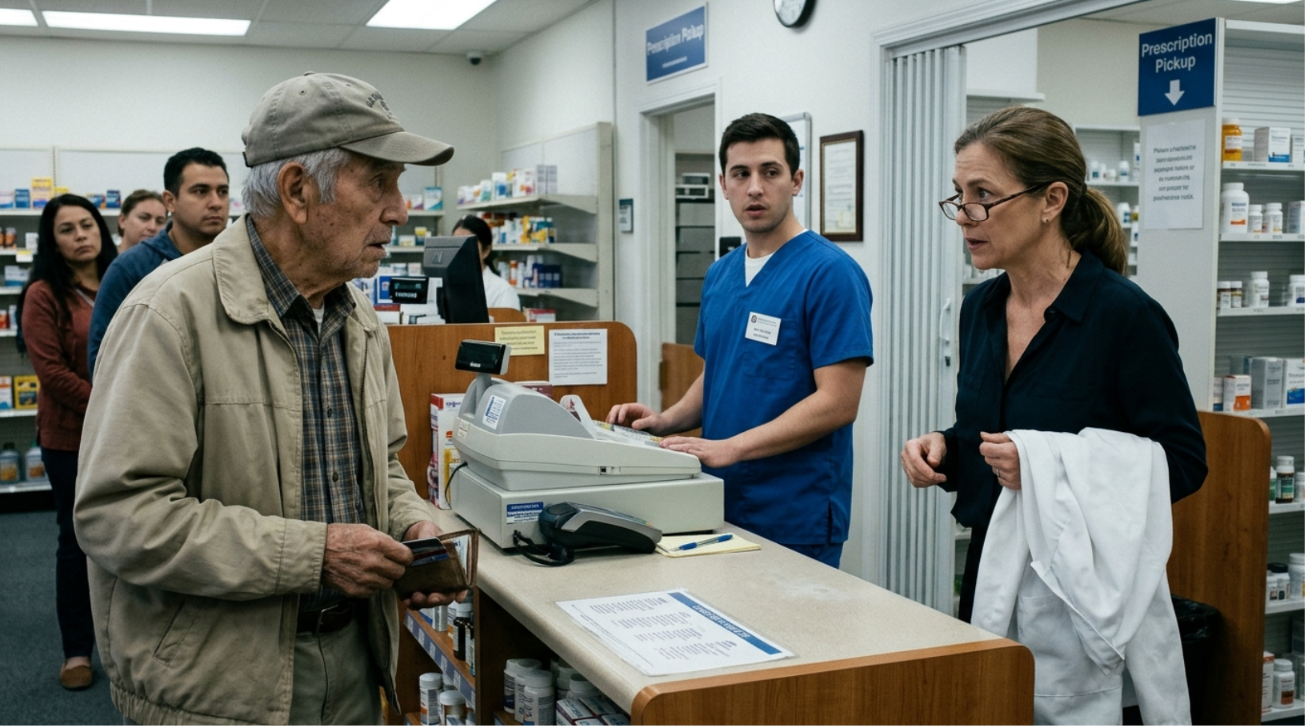
She turned toward the young technician, who was still standing behind the register.
“Did you hear what I said?”
The young man looked uncomfortable.
“Ma’am, I was just following store policy.”
Denise’s expression hardened.
“Store policy doesn’t require you to humiliate an elderly patient. Store policy doesn’t tell you to make jokes about someone’s medical condition. And store policy certainly doesn’t give you permission to treat a human being like he’s worthless because he is eleven dollars short.”
The technician opened his mouth.
“Ma’am, I didn’t know who he was.”
Denise stared at him.
“That’s exactly the problem.”
She pointed toward my father.
“You shouldn’t need to know someone’s history before you treat them with dignity.”
Nobody moved.
One woman waiting in line quietly nodded.
Another customer lowered her phone.
Denise continued.
“Give me your name badge.”
The young man hesitated.
“You’re seriously firing me over this?”
“I’m removing you from the counter immediately. Management will handle the formal employment process according to company policy. But you will not serve another patient here today.”
He slowly unclipped his badge.
He placed it on the counter.
For a moment, I thought he might apologize.
Instead, he muttered something under his breath and walked toward the employee room.
Denise watched him disappear.
Then she turned back to Dad.
“I’m sorry,” she whispered.
Dad shook his head.
“You don’t have to apologize for him.”
“Yes, I do. I work here. I am responsible for making sure people are treated properly.”
She looked at the insulin prescription in her hand.
“Now, let’s take care of this.”
I stepped forward.
“Thank you. I told him I would pay the eleven dollars.”
Denise looked at me.
“Put your wallet away.”
“But—”
“Please. Just give me a moment.”
She walked toward the pharmacy computer and began checking something.
After a few seconds, she picked up the phone and called someone.
“Hi, this is Denise at the pharmacy on Riverside Avenue. I need to speak with the district patient-care coordinator.”
She paused.
“Yes. I have an elderly patient who has been denied his essential medication because he cannot cover the full copay today. I need to review the available assistance options immediately.”
She listened.
Then she said something that made me look at her differently.
“No, I don’t want him sent away to come back tomorrow. He needs his medication today.”
She ended the call.
Then she looked at my father.
“Mr. Alvarez, I need to ask you something. Have you missed any insulin doses since your supply ran out?”
Dad looked down.
“I’ve been trying to manage.”
My stomach tightened.
“What’s that supposed to mean, Dad?”
He didn’t look at me.
“I had a little left in the refrigerator. I’ve been using less than usual.”
I felt my blood turn cold.
“Dad, you’ve been reducing your insulin?”
He shrugged.
“I only had to make it until Thursday.”
“That’s dangerous!”
“I know, son.”
His voice was so quiet that it hurt more than if he had shouted.
“I didn’t want to bother you.”
I stared at him.
He had raised me, worked every day, paid every bill, and made sure I never went without food.
And now, at eighty-four years old, he was quietly reducing his medication because he didn’t want to ask his own child for help.
I turned away because I didn’t want him to see my eyes filling with tears.
Denise heard everything.
She came around the counter and gently touched his arm.
“Mr. Alvarez, can I tell you something?”
Dad nodded.
“You saved my life when I was eleven. But you didn’t just save me that day. You gave my mother back her daughter. You gave my brothers their sister. You gave my family another thirty-five years together.”
She swallowed hard.
“And today, you are standing in front of me, apologizing because you don’t have enough money for medicine that keeps you alive.”
Dad lowered his head.
Denise’s voice cracked.
“That isn’t right.”
She walked to the office and returned with a small chair.
“Please sit down. You’re not going anywhere until we get this sorted out.”
Dad sat.
I remained standing beside him.
A few minutes later, Denise returned with a printed document.
“I’ve spoken with the appropriate support department. We can arrange an emergency prescription assistance option, subject to the necessary eligibility checks. We can also help you speak with your prescriber about a longer-term affordability plan.”
Dad looked at the paper.
“Does that mean I can get my insulin?”
“Yes, sir. We’re going to work through the process right now.”
She then checked the prescription details with the pharmacist on duty and made sure the correct medication and dosage were available.
I finally let out a breath I hadn’t realized I’d been holding.
But then something unexpected happened.
Denise sat down across from my father.
“There’s something else I want to ask you.”
Dad looked up.
“What is it?”
“Do you remember the day after the flood?”
Dad frowned.
“The day after?”
“Yes. July 1991. The hospital.”
He thought for a moment.
“I remember the hospital. I stayed until I knew the children were safe.”
Denise nodded.
“You stayed for hours. You spoke to my mother. You even gave her your jacket because she was shaking.”
Dad smiled slightly.
“Your mother was very frightened.”
“She was terrified. She thought she had lost me.”
Denise wiped her eyes.
“But there’s something you never knew.”
Dad leaned forward.
“What?”
Denise took a deep breath.
“When you left the hospital, my mother wanted to find you. She wanted to thank you properly. She asked the hospital staff for your name and contact information.”
Dad nodded.
“I remember giving them my name.”
“She found your bus depot. She called several times. But you had already returned to work, and the people she spoke with couldn’t give her your personal information.”
Dad looked surprised.
“I never heard about that.”
“She wrote you letters, too.”
“Letters?”
Denise nodded.
“Three of them. She sent them to the bus company, hoping someone would pass them along. But none ever reached you.”
Dad stared at her.
“That’s a shame.”
“It gets worse.”
Denise reached into a drawer beneath the counter and pulled out a small, old photograph.
It showed a woman standing beside a young girl in a hospital bed.
The girl had a bandage around her forehead.
Denise handed it to Dad.
“That’s my mother and me, two days after the accident.”
Dad held the photograph carefully.
He looked at the little girl.
Then he looked at the woman beside her.
“I remember your face now,” he whispered.
Denise smiled.
“My mother kept that picture beside her bed until she passed away six years ago.”
Dad’s expression changed.
“I’m sorry for your loss.”
“Thank you.”
She paused.
“Before she died, she told me something I have never forgotten.”
“What was that?”
Denise looked directly into his eyes.
“She said, ‘If you ever meet the man who pulled you out of that water, don’t just thank him. Find a way to make sure he never feels alone.’”
Dad looked down at the photograph.
For the first time, I saw tears falling freely from his eyes.
He didn’t wipe them away.
He simply held that photograph between both hands.
After a while, Denise stood up.
“Would you mind if I made a phone call?”
Dad nodded.
She walked into her office.
I thought she was calling the district manager again.
But when she came back, she was holding her phone.
“Mr. Alvarez, I just spoke with someone who has been looking for you for a very long time.”
Dad frowned.
“Who?”
“Her name is Michael Turner.”
Dad’s eyebrows lifted.
“Michael?”
“Yes. He was one of the passengers on your bus that night.”
Dad stared at her.
“Michael Turner? The little boy with the blue jacket?”
Denise nodded.
“He is alive. He’s living here in the city. And when I told him I had found you, he asked if he could come.”
Dad looked genuinely shocked.
“That boy must be nearly fifty now.”
“He’s fifty-one.”
Dad laughed softly.
“Goodness.”
Denise smiled.
“He said he would be here in twenty minutes.”
I looked at my father.
For thirty-five years, he had carried the memory of that night without ever knowing what happened to the people he rescued.
He had never asked for recognition.
He had never told stories about being a hero.
In fact, I had only heard about the flood a handful of times when I was growing up.
To Dad, it was simply something that happened during his job.
He had always said the same thing.
“I was the driver. Those people were on my bus. I couldn’t leave them there.”
Twenty minutes later, the pharmacy doors opened.
A tall man in a dark blue jacket hurried inside.
He looked around the room until his eyes landed on my father.
Then he stopped.
“Mr. Alvarez?”
Dad stood up slowly.
“Michael?”
The man walked toward him.
For a moment, neither said anything.
Then Michael wrapped his arms around my father.
He hugged him so tightly that Dad almost lost his balance.
“Sir,” Michael whispered. “I’ve been trying to find you for years.”
Dad patted his back.
“Look at you. You’re a big man now.”
Michael laughed, but his eyes were wet.
“Because you got me home.”
He stepped back and looked at Dad.
“I was nine years old that night. I remember being scared. I remember my mother screaming. I remember the water coming through the windows.”
He paused.
“And I remember you coming back for us.”
Dad shook his head.
“I was just doing what I had to do.”
“No, sir. You did more than that.”
Michael reached into his jacket and took out a small envelope.
“I brought something.”
He handed it to Dad.
Inside was an old photograph.
It showed the number 14 bus parked near the hospital after the flood. Several passengers were standing beside it, wrapped in blankets.
On the back, someone had written:
To the man who refused to leave us behind. July 1991.
Dad stared at it.
Michael explained that his mother had kept the photograph all these years. After she passed away, he found it among her belongings.
“I tried contacting the bus company,” he said. “But nobody knew where you had gone. Eventually, I gave up.”
He shook his head.
“Then Denise called me today.”
Dad looked at Denise.
She was standing near the pharmacy counter, crying quietly.
For a moment, the three of them stood together.
Three people connected by one terrible night in July 1991.
A night that had changed their lives forever.
But the most surprising part of that afternoon was still waiting.
Michael looked at my father and said, “Sir, there’s something I want to tell you.”
Dad raised his eyebrows.
“What is it?”
Michael glanced at Denise.
Then he looked back at Dad.
“Do you remember the woman sitting in the front seat of the bus that night? The one who was pregnant?”
Dad thought carefully.
“Yes. She was one of the first passengers I helped get out.”
Michael nodded.
“That baby survived.”
Dad’s eyes widened.
“Really?”
“Yes. And he’s my son.”
Dad put a hand over his mouth.
Michael continued.
“He was born three weeks after the flood. I named him Raymond.”
Dad looked completely overwhelmed.
“Raymond?”
“After you.”
There was silence.
Michael’s voice became quieter.
“He’s thirty-four now. He has two children of his own. And every year on the anniversary of that flood, I tell him about the bus driver who saved his father and gave him a chance to grow up.”
Dad slowly sat down.
He looked at the photograph again.
Then he whispered something I will remember for the rest of my life.
“I didn’t know.”
Michael placed a hand on his shoulder.
“You weren’t supposed to know, sir. You never asked for anything.”
Dad looked up.
“I wish I had known you were all right.”
Michael smiled.
“We are. And today, we finally got to tell you.”
I thought that would be the emotional ending to the afternoon.
But Denise had another surprise.
She returned from her office carrying a folder.
“Mr. Alvarez, I know this may sound strange, but I want to ask you something.”
Dad looked at her.
“Go ahead.”
“I’ve spent the last fifteen years working in pharmacy. I’ve helped thousands of patients get their prescriptions. I’ve seen people struggle with insurance, medical bills, and the cost of staying alive.”
She placed the folder on the counter.
“Today reminded me why I chose this profession.”
Dad said nothing.
Denise continued.
“I want to start something in your name. A small emergency assistance fund for elderly patients who cannot afford their essential medications.”
Dad immediately shook his head.
“No, no. Don’t put my name on anything.”
Denise smiled.
“I knew you would say that.”
“I didn’t save you so people would remember me.”
“I know.”
She opened the folder.
“That’s why I want to call it the River Route Patient Assistance Fund. It won’t be about honoring one person. It will be about helping people who need help before they run out of time.”
Dad looked at the folder for a long moment.
Then he nodded.
“That sounds like a good thing.”
Denise smiled.
“And I want you to be our first guest when we launch it.”
Dad laughed.
“Me? I don’t know anything about pharmacies.”
“You know something more important than pharmacy.”
She looked at him.
“You know what it means to show up for someone when they’re frightened and helpless.”
Dad lowered his eyes.
He didn’t know what to say.
And neither did I.
That afternoon, my father finally received his insulin after the pharmacist confirmed the prescription and arranged the appropriate assistance.
Before we left, Denise walked us to the door.
She hugged Dad.
Then she whispered something in his ear.
I couldn’t hear every word, but I heard the last sentence.
“You gave me my life back. Let me help you protect yours.”
Dad held her hand.
“Thank you, Denise.”
She shook her head.
“No, Mr. Alvarez. Thank you for coming back into the water.”
We walked outside.
The sun was beginning to set.
Dad carried his medication carefully in a small pharmacy bag.
I walked beside him, feeling ashamed that I hadn’t realized how much he had been struggling.
When we reached the car, I opened the passenger door.
He stopped before getting in.
“Son?”
“Yes, Dad?”
He looked at me.
“Don’t tell anyone about today.”
I frowned.
“Why not?”
“Because I don’t want people thinking I went there to get special treatment.”
I shook my head.
“Nobody thinks that.”
He smiled.
“Good.”
Then he added something that made me stop.
“Just remember, son. People shouldn’t have to save someone’s life before they deserve to be treated kindly.”
I looked at him.
And suddenly, I understood something I had never fully understood before.
My father had spent forty years driving a bus.
He had carried thousands of strangers through the city.
Some were going to work.
Some were going to school.
Some were going to hospitals.
Some were going home to families who were waiting for them.
He never knew most of their names.
He never knew what happened after they stepped off his bus.
But somewhere along the way, he had changed lives.
And he had done it without expecting anything in return.
That night, after we got home, I sat beside him at the kitchen table.
I helped him organize his medication and checked the dates on his prescriptions.
Then I opened my banking app.
“Dad, I’m setting up a small monthly transfer to your account.”
He immediately frowned.
“Don’t do that.”
“I’m not asking.”
“I have my pension.”
“I know. And I respect that. But you’re not going to reduce your medication because you’re worried about money again.”
He stared at me.
I reached across the table and held his hand.
“You spent your whole life taking care of people. Let me take care of you sometimes.”
He didn’t answer immediately.
Then he squeezed my hand.
“All right, son.”
It was the first time I could remember him accepting help without trying to argue.
Three days later, Denise called.
The pharmacy had completed its internal review of the incident. The company had also been informed of the technician’s conduct, and the appropriate disciplinary process was underway.
But Denise wasn’t calling to talk about him.
She was calling to invite Dad to a small meeting.
The pharmacy had agreed to review its procedures for patients experiencing financial hardship, including better staff training and clearer information about available assistance programs.
Dad listened quietly.
Then he asked one question.
“Will it help the next old man who comes in eleven dollars short?”
Denise answered immediately.
“That’s exactly why we’re doing it.”
Dad smiled.
“Then I’ll come.”
And for the first time in a long while, my father seemed excited about something.
He wasn’t excited about being recognized.
He wasn’t excited about meeting people who owed him gratitude.
He was excited because someone had listened.
Someone had taken a painful moment and decided to make something better out of it.
I thought about that young technician.
He had looked at an elderly man with a declined card and seen nothing but an inconvenience.
Denise had looked at the same man and remembered a life that had been given another chance.
The difference between those two people wasn’t their age, their job title, or the money in their pockets.
It was what they chose to see when they looked at another human being.
And I would never forget what my father told me as we drove home that day:
“Son, kindness should never depend on whether someone can repay you.”
But what happened next was something none of us expected.
A week later, Denise called again.
This time, she wasn’t alone.
She said that someone from the old number 14 bus route had contacted her after hearing about the reunion.
It was another passenger from that night.
And she had something important to tell Raymond Alvarez.
Something about the flood, the rescue, and a promise his father had made thirty-five years earlier.
Denise said the woman wanted to meet him in person.
Dad went quiet.
Then he asked one question.
“What’s her name?”
Denise answered.
“Her name is Eleanor Brooks. And Mr. Alvarez… she says she’s been keeping something for you since July 1991.”
Dad slowly put down his coffee cup.
For the first time in thirty-five years, he looked genuinely afraid of what someone might tell him about that night.
“Tell her,” he whispered, “I’ll be there.”
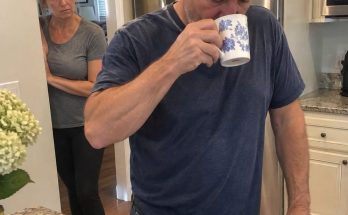
For the rest of that morning, my father barely touched his coffee.
He sat at the kitchen table, staring at the old photograph Michael Turner had given him.
I had never seen him so distracted.
My father was usually a man of routine. He woke up at 5:30 every morning, made his coffee, checked his blood sugar, and walked around the neighborhood. He read the newspaper, watered his plants, and watched the evening news.
He didn’t like surprises.
But this was different.
Thirty-five years earlier, he had driven through a terrible flood, rescued nine passengers, and returned to his ordinary life without expecting anything in return.
Now, one by one, those passengers were coming back into his life.
And there was apparently one more person who had been waiting to see him.
“Dad, are you worried?” I finally asked.
He looked up.
“No.”
“Then why have you barely said anything?”
He smiled faintly.
“I’m thinking about that night.”
“What about it?”
He looked through the kitchen window.
“I remember the rain. I remember the water. I remember people screaming. But I don’t remember everything clearly anymore.”
He paused.
“Sometimes I wonder whether I did enough.”
I couldn’t believe what I was hearing.
“Enough? Dad, you saved nine people.”
He shook his head.
“I know what happened afterward. But at the time, I didn’t know if everyone made it.”
I sat beside him.
“You did everything you could.”
He didn’t answer.
Then he looked at the photograph again.
“I hope that little girl grew up happy.”
I smiled.
“Denise is a pharmacist now. She has a good life.”
He nodded.
“That’s good.”
I reached across the table.
“And Michael is doing well, too. He has a family.”
Dad smiled.
“Then maybe that night wasn’t such a bad memory after all.”
But I knew something was still bothering him.
He was waiting to hear what Eleanor Brooks had kept for him.
And I was beginning to wonder whether that old promise would change everything we thought we knew about the flood.
The following Saturday, we drove to a small community center near the old river district.
Denise had arranged the meeting.
Michael Turner was already there when we arrived.
He greeted Dad with a hug.
“Good to see you again, Mr. Alvarez.”
“Good to see you, Michael.”
Denise came out of a side room carrying a folder.
“She’s here.”
A few seconds later, an elderly woman walked slowly through the doorway.
She was perhaps seventy-five years old. Her silver hair was neatly combed, and she carried a brown leather handbag.
She looked around the room.
Then her eyes settled on my father.
She stopped.
“Raymond?”
Dad stood up.
“Yes, ma’am.”
The woman covered her mouth.
“Oh, my goodness.”
She walked toward him, her eyes already filling with tears.
“After all these years.”
Dad studied her face.
Then he smiled.
“Eleanor?”
She nodded.
“You remember me?”
“I remember a woman who sat near the front of my bus. You were wearing a yellow raincoat.”
Eleanor laughed.
“I can’t believe you remember that.”
Dad pulled out a chair for her.
“Please sit down.”
She sat across from him.
For a few seconds, she simply looked at his face.
Then she reached into her handbag and removed a small envelope.
It was old.
The edges were worn, and the paper had turned slightly yellow.
“I’ve carried this with me for thirty-five years,” she said.
Dad looked at it.
“What is it?”
“A letter.”
“From whom?”
“From my husband.”
Dad became still.
Eleanor took a breath.
“My husband was Daniel Brooks. He was also on your bus that night.”
Dad remembered.
Daniel had been sitting toward the back with a little girl.
He had helped other passengers move toward the emergency exit.
But when the bus stalled, the current separated them.
“Is Daniel all right?” Dad asked.
Eleanor lowered her eyes.
“He passed away twelve years ago.”
“I’m sorry.”
“Thank you.”
She placed the envelope on the table.
“Before he died, he asked me to give this to you if I ever found you.”
Dad looked confused.
“Why me?”
Eleanor opened the envelope carefully.
Inside was a handwritten letter.
She unfolded it and began reading.
“To the man who drove the number 14 bus,
I don’t know if you will ever read these words. I don’t even know if you remember me.
My name is Daniel Brooks.
On July 18, 1991, I was sitting near the back of your bus with my daughter, Emma.
When the water entered the bus, I tried to reach her, but the current pushed me against the seats.
I thought I was going to die.
I thought my little girl was going to die.
Then I saw you.
You came back into the water when everyone else was telling you to get out.
You pulled people toward the emergency exit.
You carried my daughter outside.
I remember seeing you disappear beneath the water.
For a moment, I thought I had watched you die.
But you came back.
You came back again and again.
When you finally brought Emma to the roof of that bus, she wasn’t breathing.
I remember you putting your hands on her chest.
I remember you refusing to stop.
And I remember the sound of her crying when she finally started breathing again.
I have spent the rest of my life trying to become the kind of father my daughter deserves.
But I want you to know something.
I never forgot that night.
You didn’t just save my daughter.
You saved me from spending the rest of my life wondering why I couldn’t protect her.
If I ever meet you again, I want to shake your hand.
I want to tell you that Emma is alive.
She is thirty-five years old now.
She is married.
She has two beautiful children.
And she knows the name Raymond Alvarez.
Thank you for giving us a future.
Daniel Brooks.”
Eleanor stopped reading.
The room was silent.
Dad lowered his head.
His hands were trembling.
“Emma?” he whispered.
Eleanor nodded.
“She’s here.”
Dad looked up.
“What?”
Eleanor turned toward the doorway.
A woman stepped into the room.
She was in her thirties, wearing a simple blue dress.
Behind her were two young children.
She walked toward my father.
“Mr. Alvarez?”
Dad stood up.
“Yes?”
She smiled through her tears.
“I’m Emma Brooks.”
Dad looked at her.
Then he looked at the two children standing beside her.
He couldn’t speak.
Emma took his hands.
“My father told me about you every year. When I was little, he said a man had carried me through a flood and refused to let me die.”
She looked at her children.
“These are my children. Daniel and Lily.”
The little boy stepped forward.
“My grandpa said you were a hero.”
Dad immediately shook his head.
“No, young man. I was just a bus driver.”
The boy frowned.
“Then why did Grandpa say you were a hero?”
Dad smiled.
“Because your grandfather was a very kind man.”
Emma laughed through her tears.
Then she hugged him.
And my father, who had spent most of his life keeping his emotions to himself, finally broke down.
He cried.
Not loudly.
Not dramatically.
He simply held Emma and cried like a man who had been carrying something heavy for thirty-five years and had finally been allowed to put it down.
After the meeting, we all went to lunch together.
For the first time, I saw my father surrounded by people who knew a part of his life I had never fully understood.
They talked about the flood.
They talked about the hospital.
They talked about their families and the years that followed.
Michael told us how his mother had kept the newspaper clipping about the rescue.
Emma showed Dad pictures of her wedding.
Denise shared stories about her mother.
And Eleanor told us something that made the entire table laugh.
Apparently, after the rescue, Dad had refused to accept a reward offered by a local businessman who owned one of the buses involved in the emergency.
“He told him he didn’t want money,” Eleanor said. “He only wanted to know that everyone was safe.”
Dad shrugged.
“I had a job to do.”
Michael laughed.
“Mr. Alvarez, you really haven’t changed.”
Dad smiled.
But I noticed something.
Every time someone thanked him, he tried to redirect the conversation.
He asked about their children.
He asked about their jobs.
He asked whether their parents were still alive.
He wanted to know whether they were happy.
He seemed more interested in the lives they had built than in the part he had played in saving them.
And that was when I realized something.
My father had never measured his life by what he had received.
He measured it by whether the people around him were doing all right.
Over the next few weeks, something beautiful began happening.
Denise officially launched the River Route Patient Assistance Fund.
She worked with the pharmacy’s management team and local community organizations to establish a process for helping eligible patients who struggled to afford essential medications.
The program included emergency referrals, information about prescription assistance, and support connecting older patients with appropriate healthcare resources.
They held the first small event at the community center.
Dad almost refused to attend.
“I don’t need to stand in front of people,” he told me.
I laughed.
“Nobody said you have to give a speech.”
“Then why do I have to wear a tie?”
“Because I bought you one.”
He shook his head.
But he came.
Denise stood at the front of the room.
Michael and Emma sat in the first row.
Eleanor brought photographs of the old number 14 bus.
Several elderly residents attended.
Some had difficulty paying for prescriptions.
Others came because they wanted to learn how to find assistance.
Denise began her speech.
“Today, we’re not celebrating one person’s heroism. We’re recognizing something much simpler.”
She looked toward Dad.
“Every person deserves dignity, especially when they are struggling.”
She explained what had happened at the pharmacy.
She did not mention the technician’s name.
She did not turn the event into an opportunity to shame anyone.
Instead, she explained how a patient could be left feeling helpless simply because nobody took the time to explain the available options.
Then she invited Dad to say a few words.
He slowly walked to the front.
He looked at the people sitting in the room.
Then he adjusted the microphone.
“I’m not very good at speeches,” he began.
Everyone smiled.
“I drove a bus for forty years. I met many people. Some were kind. Some were difficult. Some were having the worst day of their lives.”
He paused.
“But every morning, I opened the doors of that bus because people needed somewhere to go.”
He looked at Denise.
“Sometimes, we don’t know what someone is carrying inside. We don’t know whether they have money for food, whether they are worried about their children, or whether they are frightened about their health.”
His voice became softer.
“So if someone comes to you asking for help, please don’t make them feel ashamed.”
He looked around the room.
“One day, any of us could be the person standing on the other side of that counter.”
Nobody spoke.
Then the room filled with applause.
Dad returned to his seat, embarrassed.
I leaned toward him.
“That was a good speech.”
He whispered back.
“I told you I wasn’t good at speeches.”
I laughed.
And for the first time in a long while, I saw him looking genuinely happy.
But there was one more thing I needed to do.
A few days later, I returned to the pharmacy alone.
Denise was behind the counter.
When she saw me, she smiled.
“How’s your father?”
“He’s doing well. His medication is organized, and we’re making sure he doesn’t have to worry about running out again.”
“That’s wonderful.”
I hesitated.
Then I asked, “Can I tell you something?”
“Of course.”
“I was angry that day. Very angry. I wanted to scream at that technician.”
Denise nodded.
“I understand.”
“But I keep thinking about something you said. That people shouldn’t need to know someone’s history before treating them with dignity.”
She smiled.
“I meant every word.”
I looked toward the counter where my father had stood.
“Before that day, I thought I knew what kind of man my father was. I knew he was hardworking. I knew he was honest. I knew he loved his family.”
I paused.
“But I didn’t know how many lives he had touched.”
Denise looked down.
“Most people who do extraordinary things never realize how extraordinary they are.”
Then she said something I would never forget.
“Your father saved my life in 1991. But what he did that day at the pharmacy reminded me why I became a pharmacist.”
I looked at her.
“How?”
“Because I realized I never want another elderly patient to feel the way he felt when he was standing at that counter.”
She smiled.
“And I don’t want to forget the little girl I used to be.”
I shook her hand.
Then I thanked her.
Not for the insulin.
Not for the assistance.
But for remembering.
FINAL PART: THE LAST RIDE ON ROUTE 14
Six months passed.
My father’s health remained stable under his doctor’s care.
He continued his morning walks, watched his favorite television programs, and complained whenever I tried to buy him something expensive.
But something had changed.
He had begun receiving phone calls from people he hadn’t spoken to in decades.
Michael called every Sunday.
Denise visited whenever her schedule allowed.
Emma brought her children to see him.
Eleanor sent birthday cards.
And the little boy named Raymond, Michael’s son, came to visit one afternoon with his own family.
He shook my father’s hand.
“Thank you for giving my father a chance to become my father.”
Dad looked at him.
Then he smiled.
“Your father did a good job raising you.”
The young man laughed.
“I hope I can do half as well with my own children.”
Dad patted his shoulder.
“Just be there for them. That’s most of the job.”
Their conversation lasted nearly an hour.
I sat nearby, listening.
I realized that my father had gained something he never expected.
A family made up of people he had once carried through the streets of the city.
One afternoon, I received a phone call from the local transportation museum.
They were organizing a small event celebrating retired public transportation workers.
They had discovered an old photograph of the number 14 bus during the 1991 flood.
Someone had told them the story.
They wanted Dad to attend.
I asked him.
He immediately said no.
“I’m retired. I don’t need another ceremony.”
I tried again.
“They want to show the old bus.”
He looked up.
“The number 14?”
“Yes.”
He was quiet.
Then he smiled.
“All right. I’ll go.”
On the day of the event, I drove him to the museum.
When we arrived, he saw an old bus parked inside the exhibition hall.
It was a restored city bus with the number 14 displayed above the windshield.
Dad stopped walking.
For several seconds, he just stared at it.
“That’s the one,” he whispered.
A museum employee approached.
“Mr. Alvarez?”
Dad nodded.
“We’ve been waiting for you.”
The employee explained that they had recovered several old photographs, newspaper clippings, and route records.
They had also prepared a small display about the flood rescue.
Dad walked slowly toward the photographs.
There was an image of the bus stranded near the lower bridge.
Another showed emergency workers carrying passengers away.
And then he saw it.
A newspaper clipping.
The headline read:
BUS DRIVER RESCUES NINE PASSENGERS DURING DEVASTATING RIVER FLOOD.
Below the headline was a photograph of a much younger Raymond Alvarez.
He was standing beside the bus, wearing his old uniform.
Dad leaned closer.
“I was thinner back then.”
I laughed.
“Not that much thinner.”
He smiled.
Then he noticed something else.
Beneath the photograph was a small plaque.
It read:
Dedicated to the courage and compassion of Raymond Alvarez, whose actions on July 18, 1991, helped nine passengers return home safely.
Dad read it twice.
Then he turned to me.
“Who put this here?”
The museum employee answered.
“Your former passengers. They worked with us to make it happen.”
Dad looked toward the entrance.
Denise was standing there.
Michael was beside her.
Emma and her children were there, too.
Eleanor was sitting in the front row.
And behind them were several people Dad had not seen since his retirement.
Former coworkers.
Former passengers.
People who had heard about the rescue.
People who had simply wanted to say thank you.
Dad covered his mouth.
“What’s all this?”
Denise walked toward him.
“One last ride, Mr. Alvarez.”
She pointed toward the old bus.
“We thought you might want to sit in your old driver’s seat.”
Dad laughed softly.
“After all these years?”
“Especially after all these years.”
He slowly climbed the steps.
I followed behind him.
The bus smelled like old leather and polished metal.
Dad walked toward the driver’s seat and touched the steering wheel.
He sat down.
For a moment, he looked exactly like the man I remembered from my childhood.
A man who woke before sunrise.
A man who never missed work.
A man who believed that showing up was a responsibility, not an achievement.
He placed both hands on the steering wheel.
Then he looked through the windshield.
“Good morning, passengers,” he said quietly.
Everyone laughed.
But I saw tears in his eyes.
Denise climbed aboard.
“Mr. Alvarez?”
He turned.
“Yes?”
She held out a small framed photograph.
It was the picture of her as an eleven-year-old girl in the hospital.
On the bottom, she had written:
To the man who brought me home.
Dad took it carefully.
Then she handed him another photograph.
It showed Denise standing beside him at the pharmacy.
The date was printed beneath it.
He looked at the two pictures.
One from 1991.
One from 2026.
Thirty-five years apart.
Two different moments.
But the same two people.
Denise hugged him.
“Thank you for coming back for me.”
Dad shook his head.
“I would do it again.”
She smiled.
“I know.”
That evening, we returned home.
Dad was tired.
He took his medication, checked his blood sugar, and sat in his favorite chair.
I placed the framed photographs on the small table beside him.
He looked at them for a long time.
Then he asked me something.
“Son?”
“Yes, Dad?”
“Do you think I did a good job?”
I frowned.
“What do you mean?”
He gestured toward the photographs.
“All those years. Driving the bus. Raising you. Trying to do the right thing.”
I moved closer.
“Dad, you did more than a good job.”
He looked down.
“I wasn’t perfect.”
“Nobody is.”
“I made mistakes.”
“So did I.”
He smiled.
Then I took his hand.
“But you were there. You worked hard. You raised me. You taught me to respect people. And apparently, you gave a lot of other families more years together.”
He looked at me.
For a moment, neither of us spoke.
Then he said something that made my eyes fill with tears.
“I always thought my life was ordinary.”
I shook my head.
“No, Dad. Your life was important. You just never needed anyone to tell you.”
He squeezed my hand.
And we sat together quietly.
A year later, the River Route Patient Assistance Fund was helping more elderly patients in the community.
Denise continued leading the program.
The pharmacy introduced additional staff training focused on patient dignity, respectful communication, and assistance options for people facing financial difficulties.
The young technician who had humiliated my father eventually sent a written apology through the appropriate company channel.
He admitted that he had treated an elderly patient disrespectfully and had allowed his frustration to become cruelty.
Dad read the letter.
Then he folded it and placed it on the table.
“Do you forgive him?” I asked.
Dad thought for a moment.
“I don’t hate him.”
“That’s not what I asked.”
He smiled.
“I hope he learns something from it. But forgiveness doesn’t mean he gets to treat people that way again.”
I nodded.
Dad had always believed in giving people a chance to become better.
But he also believed that kindness needed boundaries.
On the anniversary of the flood, Denise organized a small gathering at the community center.
The people who had survived the 1991 accident attended.
Some brought their children.
Some brought grandchildren.
They shared photographs, memories, and stories about the lives they had built.
Dad sat in the middle of them.
He listened more than he spoke.
At one point, Emma’s little daughter climbed onto his lap.
She held up a drawing.
It showed a blue bus, a river, and a smiling man standing beside it.
Above the drawing, she had written:
MY GRANDPA’S HERO.
Dad laughed.
“Your grandpa is the hero, sweetheart.”
She shook her head.
“No. Mommy said you saved him.”
Dad looked at Emma.
She smiled.
Then Dad carefully folded the drawing and placed it inside his jacket pocket.
He kept it there for the rest of the afternoon.
When the gathering ended, Denise walked him toward the entrance.
“Mr. Alvarez, can I ask you something?”
“Of course.”
“Do you ever regret going back into that water?”
Dad looked toward the river in the distance.
He thought for a moment.
Then he answered.
“No.”
“Not even when you think about how dangerous it was?”
He smiled.
“I was afraid. I won’t pretend I wasn’t. But there were nine people on that bus. They had families. They had people waiting for them.”
He turned toward Denise.
“That little girl had a mother waiting for her.”
Denise’s eyes filled with tears.
Dad continued.
“I didn’t know what would happen to me. I only knew I couldn’t leave them behind.”
She hugged him.
Then she whispered:
“Neither will we.”
That night, I helped Dad into the car.
As we drove home, he watched the streetlights passing outside the window.
After a while, he spoke.
“You know, son, when I started driving that bus, I thought my job was simply to get people from one place to another.”
I listened.
“But after forty years, I learned something.”
“What?”
He smiled.
“Sometimes, you never know how important a simple ride can become.”
I looked at him.
He continued.
“Someone might be going to their first job. Someone might be visiting their sick mother. Someone might be going home to see their children. You never know what is waiting for them at the other end.”
He paused.
“And sometimes, all they need is someone to make sure they get there.”
I reached over and squeezed his shoulder.
“That’s what you did, Dad.”
He smiled.
Then he closed his eyes.
I drove the rest of the way in silence.
When we arrived home, I helped him out of the car.
He stopped at the front door and looked back at me.
“Thank you for taking care of me.”
I smiled.
“You don’t have to thank me.”
He shook his head.
“Yes, I do. A person should always thank someone who makes their journey easier.”
I hugged him.
And that was when I understood the real meaning of everything that had happened.
The pharmacy technician had looked at my father and seen an old man with eleven dollars missing.
Denise had looked at him and seen the man who had saved her life.
Michael had seen the man who gave his family another generation.
Emma had seen the reason her father lived long enough to raise her.
And I saw something I had somehow overlooked for years.
I saw my father.
Not just the quiet old man who drank coffee at the kitchen table.
Not just the retired bus driver who walked every morning.
Not just the diabetic patient who needed insulin.
I saw a man whose kindness had traveled much farther than any bus he had ever driven.
He never became famous.
He never received a medal from the government.
He never asked for a reward.
But thirty-five years after a terrible flood, people still remembered him.
Not because he was wealthy.
Not because he was powerful.
But because when nine people needed someone, he refused to leave them behind.
And now, when he needed someone, they came back for him.
My father spent forty years making sure strangers reached their destinations safely.
And when his own journey became difficult, the people he once carried made sure he didn’t have to travel alone.
That is the kind of legacy money cannot buy.
And I will never forget the lesson he taught me:
Never measure a person’s worth by what they can afford to pay. You never know what kind of life, love, sacrifice, or kindness that person has given to the world.
Sometimes, the person standing eleven dollars short at the pharmacy counter is the very same person who once gave an entire family the most valuable thing they could ever receive.
More time together.
I Thought Eleven Dollars Was Too Small an Amount to Hurt My Father Until I Saw What Happened at the Pharmacy Counter
I used to believe my father would tell me when he needed help.
I was wrong.
At eighty-four years old, Raymond Alvarez still had a way of making me feel like the child in the room.
He never complained about money.
He never asked me to buy his groceries.
And he certainly never told me when something frightened him.
That was why the eleven dollars bothered me so much.
Not because it was a large amount.
Because of what happened when he couldn’t pay it.
We were standing inside a pharmacy on Riverside Avenue when I realized how little I understood about my father’s life.
His insulin prescription was waiting at the counter.
His payment had not covered the entire copay.
Eleven dollars remained.
That was all.
I could have paid it without thinking twice.
But before I could settle the difference, a young pharmacy technician had already made my father feel small enough to wish he could disappear.
The technician had spoken about his medical condition in front of the other customers.
He had treated the shortage as something deserving ridicule.
And my father, who had spent forty years earning a living behind the wheel of a city bus, had stood there without defending himself.
That was the part I couldn’t forget.
He didn’t raise his voice.
He didn’t demand a manager.
He simply lowered his eyes.
I knew that expression.
It was the expression he wore whenever he decided his own troubles weren’t important enough to burden somebody else.
I moved closer to the register.
I told the technician I would cover the eleven dollars.
My father touched my arm.
“Son, it’s all right.”
It wasn’t all right.
I could hear the discomfort in his voice.
And I could see the way he held himself, shoulders slightly bent, as though he had done something improper by needing medication.
I wanted to argue with the young man.
I wanted to ask him how he would feel if somebody spoke to his grandfather that way.
But another voice reached us first.
A woman had come forward from the pharmacy area.
Her name was Denise.
She was the pharmacist, and there was something about the way she looked at my father that made me stop talking.
She wasn’t simply concerned about an upset customer.
She looked shaken.
Her attention moved from the prescription to my father’s face.
Then she turned toward the technician.
“Explain what happened here.”
The young man shifted his weight.
He said the payment hadn’t gone through for the full amount.
He said he had been doing his job.
Denise listened without interrupting.
Then she asked about the way he had spoken.
The technician looked toward the customers.
“I wasn’t trying to cause trouble.”
Denise’s expression didn’t change.
“You embarrassed a patient who came here for medicine.”
He tried to explain again.
There was a procedure.
There were rules.
He couldn’t release a prescription without resolving the payment.
Denise agreed that procedures mattered.
But she wasn’t discussing the payment anymore.
She was discussing the humiliation.
I remember how quietly she spoke at first.
That quietness made the entire pharmacy seem still.
“Following a rule doesn’t give you permission to mock someone.”
The technician folded his arms.
“I didn’t realize he was somebody important.”
Denise stared at him.
I saw her jaw tighten.
“That’s not what matters.”
He looked confused.
She glanced at my father.
Then she faced him again.
“You should have treated him respectfully without knowing a single thing about his past.”
Nobody spoke.
Even the customers waiting behind us seemed unwilling to move.
A woman near the end of the line nodded.
Another person lowered the phone she had been holding.
I looked at Dad.
His eyes remained fixed on the counter.
He hated attention.
I knew he would rather have left without the insulin than become the center of a public disagreement.
But Denise wasn’t finished.
She asked the technician to remove his identification badge.
He looked at her in disbelief.
“Are you taking my job away because of eleven dollars?”
Denise shook her head.
She explained that he was being taken off patient service immediately.
His employment situation would be reviewed through the company’s formal process.
Until then, he would not be working at that counter.
I watched his expression change.
First disbelief.
Then anger.
Then something that looked almost like embarrassment.
He slowly removed the badge from his shirt.
The little plastic rectangle struck the counter with a faint sound.
I remember that sound.
It seemed insignificant at the time.
Later, I would think about how differently people could respond to being embarrassed.
My father had apologized for needing help.
The technician had become angry when someone questioned his behavior.
He looked once more toward Denise.
For a moment, I thought he might turn to Dad.
I thought he might say he had been wrong.
Instead, he muttered something I couldn’t understand and walked into the staff area.
The door closed behind him.
Nobody applauded.
Nobody celebrated.
Denise didn’t look pleased.
She looked tired.
Then she turned toward my father.
“I’m very sorry this happened, Mr. Alvarez.”
Dad shook his head.
“You didn’t do it.”
She held his gaze.
“I know. But I have a responsibility to the people who come here.”
Dad tried to smile.
He was probably hoping the conversation would end.
I knew that smile, too.
It was the one he used when somebody offered him kindness he didn’t know how to accept.
Denise looked down at the prescription.
“Let’s find a way to get this taken care of.”
I reached for my wallet.
“I’ll pay the balance.”
She lifted one hand.
“Could you give me a few minutes first?”
I hesitated.
“It’s only eleven dollars.”
“I understand.”
She looked at my father.
“But I want to check something.”
There was no anger in her voice now.
She spoke carefully, as though she had already realized this situation involved more than a declined payment.
She returned to the pharmacy computer.
I watched her read the information on the screen.
She checked the prescription.
She typed something.
Then she picked up the telephone.
She introduced herself to someone in the company’s patient-care department.
I couldn’t hear the other side of the conversation.
But I heard enough.
She explained that an older patient couldn’t cover the complete copay for an essential medication.
She asked what immediate assistance options might be available.
Then she paused.
Whatever the person on the phone suggested, Denise didn’t seem satisfied.
“He needs to be helped today, not sent away until another day.”
She listened again.
I looked at my father.
He was standing near the counter with his hands folded.
His jacket was slightly loose around his shoulders.
I remembered him wearing heavy work jackets when I was young.
Back then, he always seemed strong enough to lift anything.
He could carry groceries in both arms.
He could repair something around the house after working all day.
He could come home exhausted and still ask whether I had finished my schoolwork.
Now he was eighty-four.
And I was beginning to understand that age had taken more from him than he wanted to admit.
Denise finished her call.
She returned to us.
Her expression was serious.
“Mr. Alvarez, I need to ask you about your insulin.”
Dad nodded.
“All right.”
“Have you been taking the amount your doctor prescribed?”
My father looked away.
It happened quickly.
But I saw it.
I turned toward him.
“Dad?”
He said nothing.
Denise waited.
Finally, he answered.
“I’ve been making what I had last.”
I felt something tighten inside my chest.
“What does that mean?”
He studied the floor.
“There was still a little in the refrigerator.”
“How much?”
He didn’t answer directly.
He explained that he had been using less than his usual amount.
He thought he could stretch the remaining supply until Thursday.
I stared at him.
For a moment, the noise of the pharmacy seemed to fade.
“You’ve been cutting back on your insulin?”
He nodded.
I tried to keep my voice steady.
“Without telling me?”
He rubbed one hand over the other.
“I thought I could manage for a few days.”
I had never felt so frightened by such a simple sentence.
My father had diabetes.
His insulin wasn’t something he could casually reduce because the household budget was tight.
A change in medication could have serious consequences.
And he knew that.
He wasn’t a careless man.
He was a man who had decided that asking his son for eleven dollars was somehow worse than taking a risk with his own health.
“Why didn’t you call me?”
He gave a small shrug.
“You have your own responsibilities.”
I wanted to tell him that nothing I was doing could be more important than his health.
I wanted to remind him that I was his son.
But he spoke again before I could answer.
“I didn’t want to become another problem for you.”
Another problem.
Looking back, those two words hurt me more than anything the technician had said.
My father had never been a problem.
He had spent his life making sure I had as few problems as possible.
When I was a child, he worked long hours driving city buses.
He woke before daylight.
Sometimes he came home after I had already eaten dinner.
I knew he was tired because he moved slowly when he removed his shoes.
But he never made me feel guilty about what it cost him to raise me.
He took care of the bills.
He made sure there was food.
He kept working.
And he taught me that a person’s value had nothing to do with the size of a paycheck.
Now I was standing beside him while he admitted he had been using less insulin than prescribed.
All because he was trying not to trouble me.
I turned my face away.
I didn’t want him to see me cry.
Denise had heard everything.
She stepped out from behind the counter.
Then she placed her hand gently against my father’s arm.
“Mr. Alvarez, may I tell you something?”
He looked at her.
“Of course.”
She swallowed.
I could see tears gathering in her eyes.
“You rescued me when I was a little girl.”
Dad’s expression changed.
He had been listening politely until that moment.
Now he seemed genuinely confused.
Denise continued.
“I was eleven. There was a flood. You were driving a bus.”
My father went completely still.
The words seemed to reach somewhere deep inside him.
“That was a long time ago.”
She nodded.
“Thirty-five years.”
He looked at her face more carefully.
I saw him searching his memory.
He had mentioned the flood when I was growing up.
Not often.
Never with much detail.
I knew there had been a bus.
I knew the river had risen.
I knew he had helped people get out.
But he had always dismissed the incident as something anybody responsible for those passengers would have done.
I had accepted that explanation.
I had never asked enough questions.
Denise wiped beneath one eye.
“You gave me a chance to grow up.”
Dad opened his mouth.
Nothing came out.
She looked at him with a mixture of gratitude and pain.
“My mother got to bring me home because you went back for me.”
The customers around us had fallen quiet again.
But this silence felt different.
Nobody was watching a dispute anymore.
They were watching two people recognize a connection that had been waiting thirty-five years to happen.
Dad finally spoke.
“You’re the girl from the river?”
Denise nodded.
“Yes, Mr. Alvarez.”
He stared at her.
Then his face softened.
“Well, look at you.”
She laughed through her tears.
He gave a small, almost embarrassed smile.
“You’re all grown up.”
I looked from one to the other.
My father had come to the pharmacy needing insulin.
He had been unable to pay eleven dollars.
He had been made to feel ashamed of himself.
And now the woman responsible for helping him had just told us that he had once saved her life.
I didn’t know what to say.
Denise looked at the prescription in her hand.
Then she looked at Dad again.
“You helped my family when we couldn’t help ourselves.”
He shook his head.
“That was different.”
“Was it?”
He didn’t answer.
She pulled a chair from the nearby office.
She placed it beside him.
“Please sit here while we work on your prescription.”
Dad hesitated.
“I don’t want to hold everybody up.”
“You’re not holding anyone up.”
He sat.
I stood beside him.
My wallet was still in my hand.
Eleven dollars.
I couldn’t stop thinking about it.
Eleven dollars had been enough to expose my father’s private struggle.
And eleven dollars had brought back a memory neither of us understood completely.
Denise returned to the computer to continue arranging assistance.
I watched her work.
Then I looked at my father.
He was staring at his hands.
I wondered what he remembered about that flood.
I wondered how frightened he had been.
Most of all, I wondered why he had never told me that the little girl he carried out of the water had survived.
Then I realized something.
He hadn’t known.
He had spent thirty-five years without knowing what became of her.
Now she was standing a few feet away.
Alive.
Working.
Helping people.
And she was trying to protect the same man who had once protected her.
For the first time that afternoon, I put my wallet away.
Not because I no longer wanted to help.
Because I understood that Denise was doing something my father had taught me to respect.
She was refusing to leave someone in trouble.
And I knew he would recognize that kind of kindness, even if he struggled to accept it for himself.
Click here to continue reading: PART 2: The Pharmacist Found a Way to Help My Father Get His Insulin, Then She Showed Him a Photograph He Had Never Seen
The Pharmacy Tech Humiliated My 84-Year-Old Father Over $11 for His Insulin—Then the Pharmacist Recognized the Man Who Saved Her Life 35 Years Ago
Part 1 of 15