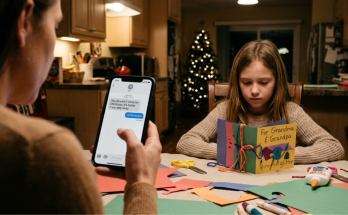
I stared at the first page of my banking history.
There were payments I barely remembered making.
Utility bills.
Insurance.
Money transferred directly to my parents.
Small expenses that had seemed harmless when they happened one at a time.
I had always checked my accounts on Sundays.
Usually, I wanted to make sure everything had cleared.
That night, I wanted to know something different.
How much of my money had been going toward my parents' lives?
I opened a spreadsheet.
At first, I listed the obvious expenses.
My father had needed help paying a utility bill.
I remembered that call.
He had sounded embarrassed.
I had told him not to worry.
Later, my mother needed dental treatment.
I paid.
Their refrigerator stopped working.
I helped replace it.
There had been a property tax bill.
Then an insurance renewal.
Then prescriptions.
Every expense had arrived with a reason.
Every reason had sounded reasonable.
I never asked for repayment.
I never even asked them to explain how they planned to manage the next expense.
I simply sent the money.
It felt easier than hearing them worry.
Then I found the phone payments.
Three lines.
My mother.
My father.
My sister.
My sister had been struggling after her divorce.
She had asked whether I could include her on my family phone plan for a while.
I agreed.
I didn't give it much thought.
A phone bill seemed small compared with everything she was dealing with.
But the payments had continued.
Month after month.
There were no conversations about when she would take over.
I was simply expected to keep paying.
I added those expenses to the spreadsheet.
Then I found the life insurance premium.
My father had taken out a modest policy years before.
At some point, he told me the annual payment had become difficult.
I had offered to cover it.
Another favor.
Another expense that became my responsibility without anyone discussing it again.
I sat back and rubbed my eyes.
I still hadn't reached the largest payments.
The mortgage.
My father had retired sooner than he planned.
My mother told me their savings were getting low.
They were worried about keeping up with the house payments.
I didn't want them to lose their home.
I knew what that house meant to them.
So I agreed to contribute part of the monthly mortgage payment.
Not all of it.
But enough to make a difference.
We called it temporary.
I remembered that word clearly.
Temporary.
Fourteen months had passed.
For fourteen months, money had left my account and gone toward a house I didn't own.
I had never demanded a written agreement.
I hadn't asked to be added to anything.
I believed I was helping my parents through a difficult period.
I began entering the transfers.
One month.
Another month.
Then another.
I compared the dates with the other expenses.
The totals kept growing.
I stopped typing for a moment.
I had been working hard to maintain financial stability for Emily and me after Daniel's death.
I had bills of my own.
A household to run.
A child to raise.
I had responsibilities that would not disappear if my parents needed more help.
Yet I had been treating their expenses as automatically more urgent than my own.
Nobody had made me sign up for those payments.
That was true.
I had chosen to help.
But I had also been given very little reason to question whether the help was still necessary or appreciated.
When I looked at the combined total, I felt almost foolish.
The number was far larger than I had expected.
I checked the formulas.
Then I checked the transfers again.
They were correct.
I had been carrying a substantial part of my parents' expenses for almost two years.
And the mortgage contributions alone had continued for more than a year.
I looked toward the hallway.
Emily was asleep upstairs.
Her little envelope of gold stars was beside her bed.
I thought about how carefully I had managed our spending.
I thought about the things I had told myself we didn't need.
Then I thought about the family celebrations where my daughter had been expected to step aside.
I opened our family group chat.
I wasn't looking for anything specific.
I wanted to understand whether I had missed something.
There were photographs from earlier Christmases.
My mother's grandchildren gathered around the tree.
My father sitting beside them while they opened presents.
My sister smiling in the background.
I scrolled slowly.
Emily appeared in some pictures.
But the more I looked, the more I noticed where she stood.
Usually near the edge.
Sometimes behind someone.
Sometimes apart from the others.
I found one photograph that made me stop.
Everyone was gathered near the Christmas tree.
My sister's children were close to my mother.
My father sat with the presents.
And Emily was alone on the stairs.
I remembered that afternoon.
She had been waiting for her grandmother to finish taking photographs with her cousins.
I had noticed her sitting there.
I had told her to wait a little longer.
I had promised Grandma would include her.
I looked at the photograph again.
I couldn't remember whether that picture had ever been taken.
What I remembered was asking Emily to be patient.
Again.
I had said it so many times.
Wait for your cousins.
Let Grandma finish.
Don't make a fuss.
Try to understand.
I had been so afraid of causing trouble that I trained my daughter to swallow disappointment.
And I had called it teaching her manners.
That was difficult to admit.
I closed the photographs.
Then I looked at the spreadsheet again.
There were two separate things on my screen.
The money I had given my family.
And the way my daughter had been treated.
I knew one did not automatically determine the other.
Helping my parents did not entitle Emily to special treatment.
But being their granddaughter should have meant she was welcome without conditions.
That was all I had ever wanted for her.
At 11:47 that night, my phone rang.
My mother.
I watched the screen light up.
I almost ignored it.
Then I answered.
"Hello, Mom."
She immediately demanded to know why I had taken the SUV.
She said my father was furious.
She said the police had come to their house and told them the ownership documents were in my name.
I listened without interrupting.
Then I asked whether she remembered that I had told her I needed the vehicle back.
She wanted to know when.
"The same day you told Emily not to come for Christmas."
She dismissed the connection.
According to her, the vehicle had nothing to do with the holiday.
I looked at the bank statement on my laptop.
"It has something to do with how you treat us, Mom."
She told me I was exaggerating.
I asked why she had sent such a message to a child.
My mother returned to the explanation about my sister's children.
They were having a difficult time.
They needed a peaceful holiday.
Apparently, my daughter being there made that harder.
I asked what Emily had done to deserve being excluded.
My mother said Emily didn't understand the circumstances.
"She's ten," I told her. "She understands when she's been told not to come."
My mother sighed.
It was the tired sigh she used when she thought I was being unreasonable.
She said my sister wanted one Christmas without arguments.
I asked whether that meant Emily was the argument.
Mom accused me of deliberately misunderstanding her.
But there was nothing complicated about what she had written.
I repeated the meaning of the message.
She had asked Emily to stay away.
My mother did not deny that.
She simply wanted me to stop discussing it.
Then she brought up Daniel.
She said I had become too focused on Emily after my husband died.
I stopped moving.
For a few seconds, I couldn't speak.
Daniel had loved our daughter more than anything.
After his death, I had tried to become strong enough for both of us.
There were mornings when getting Emily ready for school felt like climbing a mountain.
There were nights when she asked for her father and I could do nothing except hold her.
My parents knew that.
They had watched us grieve.
And now my mother was using that loss as a reason to criticize how I protected my child.
I felt something settle inside me.
I wasn't shaking.
I wasn't crying.
I simply knew the conversation was over.
"Don't bring Daniel into this again."
She started to answer.
I said good night.
Then I ended the call.
I stayed at the table for several minutes.
Normally, I would have called back.
I would have worried about upsetting her.
I might have apologized for my tone even if I still believed I was right.
That night, I didn't.
I closed the family photographs.
Then I opened the spreadsheet again.
The numbers were still there.
The payments were still there.
And the decision I needed to make was becoming clear.
The next morning, I started making calls.
First, I contacted the company that insured my SUV.
I explained that my parents were no longer authorized to drive it.
I asked for the driver information to be updated.
The representative confirmed the change.
I saved the confirmation.
Then I called the phone company.
I asked what needed to happen for my sister's line to become her own responsibility.
They explained the transfer process.
I arranged the necessary steps.
I wasn't trying to take her number away.
I wanted her to pay for the service she used.
After that, I contacted the bank about the automatic mortgage contributions.
I asked to stop future transfers from my account.
I checked the details carefully.
I made sure I was canceling only payments I had authorized from my own money.
I did not attempt to access my parents' accounts.
I did not interfere with their ownership of the house.
I was withdrawing help I had never promised to provide permanently.
Once the changes were made, I organized the confirmations.
I saved copies.
I wrote down the dates.
Then I sent my father a message.
I reminded him that the SUV was registered and insured in my name.
I told him it was no longer available for his use.
I explained that the police had already reviewed the ownership documents.
His response arrived almost immediately.
He said I didn't understand what I was doing.
He said my mother was crying.
I read the message.
I felt the familiar pull of guilt.
Then I remembered Emily sitting with the broken box.
I put the phone down.
For once, I allowed my parents to be unhappy with a decision I had made.
At noon, Stacy came over.
She had been my closest friend since college.
She also knew Daniel well.
When he died, she had been one of the people who helped me keep moving.
She arrived with coffee and pastries.
We sat in the kitchen.
Emily was in the living room coloring.
Stacy asked me to explain what had happened.
I told her about the Christmas message.
The SUV.
The police.
The telephone conversation with my mother.
Then I told her about the bank payments.
She listened quietly.
When I finished, she asked a simple question.
"Have you ever worked out how much you've paid for them?"
I turned my laptop toward her.
"I started last night."
She began reading.
At first, she said nothing.
Then she scrolled farther down.
She stopped.
"Barbara, is all of this yours?"
I nodded.
She pointed to the mortgage contributions.
Then the phone bills.
Then the insurance and utility payments.
"You're paying for all these things?"
"Some of them aren't every month."
She looked at me.
"That wasn't what I asked."
I lowered my eyes.
"Yes."
She studied the spreadsheet again.
Then she set her coffee down.
I could see she was trying to understand.
"Why have you kept doing this?"
I looked toward the living room.
Emily was bent over her coloring page.
I could see the top of her head above the arm of the couch.
"Because they're my family."
Stacy waited.
I added something else.
"I thought I was supposed to."
She took a breath.
"Helping someone is one thing. Carrying them while your own child is treated as though she doesn't matter is something else."
I didn't answer.
I knew she was right.
But hearing it spoken aloud made the truth harder to avoid.
Stacy reached across the table.
She rested her hand over mine.
She told me I didn't have to decide whether to forgive anyone that day.
I appreciated that.
Everyone else seemed to want an immediate answer.
An apology.
A return to normal.
Some promise that I would keep the peace.
Stacy wasn't asking for any of those things.
She wanted me to think about what I could reasonably give.
And what I had already given away.
After she left, I looked at the spreadsheet again.
I saved it under a simple name.
Family expenses.
I didn't know then how important those records would become.
I only knew I wanted the information in one place.
That afternoon, messages began arriving.
An aunt wanted to know why I had embarrassed my parents.
A cousin reminded me that Christmas was about forgiveness.
My sister accused me of using money to make everyone obey me.
I stared at her message.
She hadn't asked how Emily was doing.
She hadn't mentioned the broken gift.
She hadn't asked why our mother had contacted a ten-year-old child directly.
She talked about the SUV.
She talked about money.
She talked about how difficult I had made things for our parents.
Then she wrote that I had known they relied on the vehicle and couldn't afford to replace it.
I replied that they had borrowed my SUV.
They had never owned it.
My sister answered quickly.
She said I had become a different person since Daniel died.
I read that sentence twice.
My mother had said nearly the same thing.
Now my sister was saying it.
Soon, other relatives would repeat the idea.
As though the problem wasn't what had happened.
As though the real problem was that grief had made me stop agreeing with everyone.
I put my phone facedown on the counter.
Emily came into the kitchen.
She stood beside my chair.
"Mom, are we having Christmas here?"
I turned toward her.
"Yes."
"Only you and me?"
I thought about Stacy.
I thought about the people who had supported us after Daniel died.
I thought about how much effort I had spent trying to make my parents' house feel welcoming.
Then I smiled.
"We'll celebrate with people who are happy to have us."
Emily considered that.
Then she hurried upstairs.
A few minutes later, she returned with a drawing.
It showed a Christmas tree.
Underneath stood two figures.
One was tall.
One was small.
Above them, in careful letters, she had written OUR CHRISTMAS.
I took the paper from her.
"Can we put this on the fridge?" I asked.
She smiled.
"That's why I made it."
I attached it where we could both see it.
Then I stood back.
For the first time since my mother's message, I was looking forward to Christmas.
I thought we had made the hardest decision.
I thought the argument would fade once my parents accepted that the SUV and the payments were no longer available.
But three days later, on December 23, my father came to my house.
My mother was with him.
And my sister was waiting in her car.
They hadn't come to ask whether Emily was feeling better.
They had come because the bills were still due.
Click here to continue reading: PART 3: My Parents Came to My Door Demanding Their Financial Help Back, but the Paper My Sister Carried Revealed What They Really Expected
My Mom Told My 10-Year-Old Daughter to Stay Away From Christmas—So I Took Back My SUV and Stopped Paying Their Bills, Until Their Fake Financial Agreement Exposed Everything.
Part 2 of 15