The following month, Vanessa's wedding plans began falling apart.
I didn't hear about it from her.
I heard through relatives.
At first, someone mentioned that the ceremony might be postponed.
Then I learned that several arrangements had become difficult to maintain.
The venue expected payments.
The photographer had a booking to confirm.
The bridal boutique was involved in the ongoing review of estate-funded purchases.
And the money Vanessa had counted on was no longer available in the way she expected.
I had spent so much time worrying about Caleb that I almost didn't understand why people were telling me.
Then I remembered.
For years, whenever Vanessa had a problem, someone eventually contacted me.
Sometimes Patricia called.
Sometimes Robert.
Sometimes another relative who had heard only part of the story.
The message was usually the same.
Vanessa was upset.
I should help.
Someone needed to make things right.
And somehow, that someone was always me.
This time, I wasn't going to accept that role.
Caleb was home.
His strength was returning slowly.
We had medical instructions to follow.
There were appointments to attend.
Some days he felt better.
Other days he tired easily.
I was learning not to expect every day to be an improvement over the one before.
Recovery took time.
I reminded myself of that whenever he became frustrated.
He wanted to run around.
He wanted to play without being told to rest.
He wanted to do everything he had done before the hospital.
I wanted those things too.
But I also wanted him to heal properly.
So we followed the doctor's instructions.
We took things slowly.
And I tried to keep our home peaceful.
That was why I didn't respond when I heard the first rumors about Vanessa's wedding.
I wasn't responsible for her reservations.
I wasn't responsible for paying for the dress.
And I certainly wasn't responsible for replacing money the estate review had restricted.
A few days later, I learned more.
The bridal boutique had confirmed that money associated with the estate investigation had been used toward Vanessa's dress deposit.
The venue was unwilling to continue holding arrangements without the payments it required.
The photographer had canceled the booking.
Other plans were becoming uncertain.
Eventually, the wedding was postponed.
Then it was canceled.
I remember sitting at the kitchen table when I heard.
Caleb was nearby with his dinosaur toy.
He had been arranging his things on the floor.
I looked at him.
Then I looked back at my phone.
I didn't feel happy.
I didn't feel victorious.
I felt tired.
A wedding was supposed to be something joyful.
I had never wanted Vanessa to lose that.
I wanted her to get married if that was what she and her fiancé wanted.
I wanted her to have a good day.
I simply didn't believe my son's inheritance should be used to pay for it.
Those were two different things.
My family kept trying to make them sound identical.
According to them, refusing to provide the money meant I was against the wedding itself.
But I hadn't canceled the venue.
I hadn't canceled the photographer.
I hadn't told the bridal boutique what to do.
I had asked the bank to protect the estate and investigate transactions that appeared unauthorized.
The financial consequences were not mine to control.
That was a difficult distinction for me to accept.
For years, I had felt personally responsible whenever my mother or sister was unhappy.
If they cried, I tried to comfort them.
If they were angry, I tried to fix it.
If they blamed me, I looked for ways to prove I wasn't a bad person.
Now I was learning that someone could be disappointed with me without my having done something wrong.
It sounded simple.
It wasn't.
Vanessa made her feelings known publicly.
She wrote a long message about family betrayal.
She talked about jealousy.
She described a sister who had turned her back when help was needed.
She didn't explain the estate reserve account.
She didn't mention Caleb's trust.
She didn't discuss the questionable property transfer.
She made it sound as though I had suddenly decided to destroy her happiness.
Several relatives sent me screenshots.
I looked at them.
Then I put my phone down.
The first person who sent one asked whether I had seen what Vanessa was saying.
I replied that I had.
Another relative wanted to know my side.
I told them the estate was being handled through the proper legal process.
I didn't offer more.
Someone suggested I should explain everything publicly.
They thought I needed to defend myself.
I understood why.
Nobody likes being accused of something they haven't done.
And Vanessa knew exactly how to make herself sound mistreated.
She used the same story Patricia had used for years.
I had always been jealous.
I had never supported her.
I cared more about money than family.
I had become cruel.
I read those accusations and felt the familiar urge to explain.
I wanted to show everyone the bank's findings.
I wanted to tell them about the seventy-four thousand six hundred dollars.
I wanted to show the property transfer bearing a signature I hadn't written.
I wanted to tell them that Dad had created a trust for Caleb and that someone had tried to gain access to it.
Most of all, I wanted to tell them what had happened while my seven-year-old son was in intensive care.
But every time I began thinking about writing something, I looked at Caleb.
He was still recovering.
He didn't need his mother's life consumed by a public argument.
I didn't want strangers discussing his medical condition.
I didn't want his grandfather's private letter passed around.
I didn't want every painful detail of his hospital stay turned into proof that I was right.
The truth mattered.
But I didn't need to display all of it to people who were already choosing sides.
I decided not to respond publicly.
I didn't post Dad's letter.
I didn't share the account records.
I didn't upload the bank documents.
I didn't write a long message about my mother or sister.
I stayed quiet.
Not because I had nothing to say.
Because I had something more important to do.
I had a son who needed me.
One afternoon, Caleb asked whether we could sit outside.
The weather was pleasant.
I helped him get comfortable.
He brought his stuffed triceratops.
We sat together for a while.
He watched the yard.
Then he asked when he could play outside like before.
I told him we would follow what the doctor recommended.
He sighed.
"That's taking forever."
I smiled.
"I know it feels that way."
He looked down at his toy.
"At least we're home."
I felt my chest tighten.
"Yes, buddy."
He leaned against me.
I put my arm around him.
For a while, we didn't speak.
I listened to the ordinary sounds around us.
A car passing.
A door closing somewhere nearby.
The faint movement of leaves.
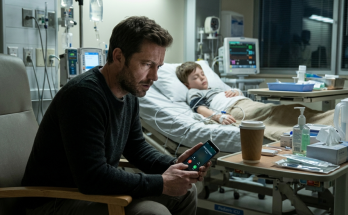
I thought about the hospital.
The long nights.
The white blanket.
The little monitor beside his bed.
And I felt grateful.
My sister's wedding plans were not the center of my life.
They never should have been.
Caleb's health mattered.
His education mattered.
His ability to grow up knowing he was loved mattered.
That was what Dad had understood.
He had left money for those things.
Not for expensive dresses.
Not for unnecessary arguments.
Not for adults who believed they deserved whatever they wanted.
Later that day, Patricia sent me a message.
She said she hoped I was satisfied.
According to her, Vanessa's wedding had been destroyed.
I read the words.
They were familiar.
Patricia had always made me responsible for Vanessa's disappointment.
When we were younger, if my sister didn't get something she wanted, my mother found a way to involve me.
If I had something nice, I was encouraged to share.
If Vanessa wanted something I couldn't provide, I was told I wasn't being generous enough.
I had grown up believing that my sister's happiness was partly my responsibility.
It took me years to see how unfair that was.
Now Patricia was using the same argument again.
Only the amounts were larger.
And the consequences were more serious.
I didn't answer immediately.
A second message came.
She said Dad would be devastated by what I had done to the family.
I looked at the phone.
Then I looked toward the shelf where his photograph stood.
Dad was smiling beside Caleb.
I thought about the letter he had left.
I thought about the bank instructions.
I thought about the lake house.
My father had not asked me to sacrifice my son to keep everyone pleased.
He had asked me to protect him.
I picked up my phone.
I wrote a short reply.
"Dad wanted Caleb's future kept safe. That's what I'm doing."
I sent it.
Then I put the phone down.
I didn't expect Patricia to understand.
I didn't expect her to apologize.
And I didn't intend to continue arguing.
For years, I had written long explanations whenever she accused me of being selfish.
I would remind her of the money I had already sent.
I would explain what I could afford.
I would apologize if my refusal sounded harsh.
And eventually, she would ask again.
Nothing ever changed.
This time, I had answered with one sentence.
There was nothing else I needed to add.
Patricia didn't reply.
Two days passed.
I kept caring for Caleb.
We followed his medication schedule.
We went over his schoolwork when he felt well enough.
We made sure he rested.
Sometimes he asked for pancakes in the middle of the week.
I told him Saturday pancakes were supposed to be special.
He argued that recovering from surgery should count as a special occasion.
I laughed.
Sometimes I made them anyway.
The chocolate chips were becoming a regular part of our kitchen supplies.
I didn't mind.
After everything we had been through, a few extra pancakes seemed like a small thing.
Then Patricia sent another message.
I was standing near the kitchen counter when it arrived.
This one sounded different.
There were no accusations.
No threats.
No mention of Vanessa's dress.
She said she missed me.
She asked whether we could begin again.
I stared at the screen.
For a moment, I felt the same hope I had felt many times before.
I wanted a mother.
Not just someone who shared my history.
I wanted the woman I remembered from childhood.
The woman who used to make sandwiches after school.
The woman who held my hand when I was little.
The woman who told me everything would be all right when I was frightened.
Those memories were real.
I wasn't going to pretend they weren't.
Patricia hadn't always been the woman who demanded money and blamed me when I refused.
There had been good moments.
There had been kindness.
There had been days when I felt loved.
That was part of why the situation hurt so much.
If she had always been cruel, perhaps walking away would have been easier.
But I knew another version of her.
And sometimes I still wanted that person back.
I read her message again.
She missed me.
She wanted to start over.
I wanted to believe her.
But I had learned something during Caleb's hospital stay.
Missing someone wasn't enough to make a relationship safe.
An apology wasn't the same as accountability.
And wanting to return to normal didn't mean the problems had been resolved.
The bank investigation was still underway.
The disputed estate transactions had not disappeared.
The lake house paperwork still mattered.
My mother had not explained what happened.
She had not acknowledged the pain she caused Caleb.
She had not taken responsibility for the demands she made while he was recovering.
I sat down.
I thought carefully about what I wanted to say.
For once, I didn't ask myself what words would make Patricia happy.
I asked what words would protect our home.
Then I began typing.
I told her that any relationship between us had to begin with honesty.
I told her I needed her to accept responsibility for what had happened.
I explained that Caleb's well-being was not negotiable.
And I made it clear that money would no longer be part of our relationship.
She would not be allowed to use my accounts.
She would not receive financial access because we were related.
And she would not be permitted to pressure me through my son.
I read the message.
It was longer than my previous reply.
But every sentence mattered.
I sent it.
Then I placed the phone on the table.
I waited for the familiar wave of guilt.
A part of it came.
I wondered whether I had sounded too cold.
I wondered whether I should have added that I loved her.
I wondered whether she would decide never to speak to me again.
Then I looked at the kitchen.
At the pancake pan drying beside the sink.
At Caleb's drawing on the table.
At the small things that made our house a home.
I didn't want to lose my mother.
But I wasn't willing to lose our peace to keep her.
I had finally said what needed to change.
The rest would depend on what Patricia chose to do.
And for once, I understood that her choice was not mine to make.
Click here to continue reading: PART 8: Six Months After Caleb Came Home, His Question About Grandpa Led Us Back to the Lake House My Mother Said Was Gone
My Mother Demanded $5,000 for My Sister’s Wedding Dress While My Son Was in ICU—So I Sent Her 50 Cents. Then the Bank Revealed What She Had Stolen From My Father’s Estate…
Part 7 of 16