The lake house stayed in my thoughts long after Caleb and I returned from our visit.
Sometimes I pictured the porch.
Sometimes the old mailbox.
Sometimes the path leading down toward the water.
I remembered Caleb standing there with his fishing rod.
He had looked so happy.
For years, I had thought that happiness was something we would never experience at Dad's old place again.
Patricia had told me the property was gone.
I had accepted her explanation.
But the bank records and estate documents revealed a different truth.
Dad had placed the property in a family trust.
He had intended Caleb and me to benefit from it.
And someone had submitted paperwork attempting to transfer ownership to Vanessa.
I still remembered the day Daniel showed me that document.
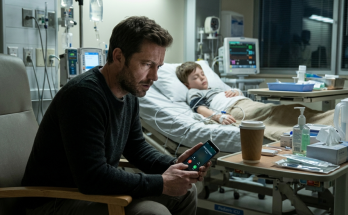
I had been sitting near the hospital.
I was exhausted.
I had barely slept.
Caleb was still recovering.
Daniel opened his folder.
Then he placed the photocopy in front of me.
Vanessa's name appeared as the intended recipient.
Near the bottom was a signature that looked like mine.
But I hadn't signed it.
I knew immediately.
The letters were close enough to resemble my handwriting.
Yet the details were wrong.
I had signed my name thousands of times.
I knew its shape.
I knew how the letters connected.
And I knew I had never agreed to give Vanessa the lake house.
When Daniel told me Patricia submitted the paperwork, I felt something inside me change.
It wasn't just anger.
It was the loss of an explanation I had used for years.
I had always told myself my mother simply favored Vanessa.
I believed she was unfair.
I believed she expected too much.
But I had excused those things as ordinary family problems.
The property transfer was different.
It involved legal documents.
An ownership claim.
A signature I hadn't written.
And property my father had specifically protected.
I couldn't explain that away as favoritism.
I couldn't call it a misunderstanding without ignoring what the records showed.
I had to accept that my mother had been involved in something far more serious than asking me for money.
That realization hurt.
Because it changed the way I remembered so many conversations.
When Patricia said the lake house had been sold, I believed her.
When she said Dad left everything to her, I believed her.
When she told me the estate was complicated and I shouldn't worry about it, I stepped away.
I thought I was respecting her.
Looking back, I had been surrendering information I had every reason to understand.
I didn't want to fight over Dad's belongings.
He had been gone four years.
I still missed him.
I wanted to remember his kindness.
I wanted to remember his voice.
I didn't want his death to become an argument about accounts and property.
That was why I stayed quiet.
But silence hadn't protected his memory.
It had only left me unaware of what he actually wanted.
Dad had taken the time to prepare those documents.
He had worked with Daniel.
He had arranged the trust.
He had restricted certain withdrawals.
He had written instructions for the bank.
And he had left letters for me.
Every one of those decisions showed care.
Not suspicion for its own sake.
Care.
He wanted to make sure Caleb would have something secure when he grew older.
He wanted to protect his grandson's education.
He wanted money available for medical needs.
And he wanted the lake house to remain a place where our family could make memories.
I thought about how much effort that must have taken while Dad was ill.
He had been tired.
His breathing had become difficult.
Even writing a letter took effort.
Yet he still made plans for us.
That was the kind of father he had been.
He couldn't solve every problem.
But he tried to leave things better for the people he loved.
I sat beside the photograph of him and Caleb.
I looked at Dad's smile.
Then I remembered Patricia telling me he would be ashamed.
She had said it during the argument about Vanessa's wedding dress.
At the time, those words cut deeply.
I had spent my entire life wanting Dad to be proud of me.
Even after he died, his opinion mattered.
Patricia knew that.
And she used it.
But she hadn't expected me to see his actual instructions.
She hadn't expected me to learn that he protected Caleb's inheritance.
She hadn't expected the bank to open the documents.
And she certainly hadn't expected me to read the letters he left.
Once I did, her accusations lost their power.
Dad hadn't wanted me to give Vanessa five thousand dollars while Caleb was in intensive care.
He hadn't wanted my mother accessing money intended for his grandson.
And he hadn't wanted me to believe that protecting my child was selfish.
The documents made that clear.
I no longer needed to argue about what he would have wanted.
He had written it down.
That mattered more than Patricia's opinion.
I thought about Vanessa.
She had eventually married in a smaller ceremony.
She found another dress.
One that cost much less than the original.
I wasn't invited.
I had accepted that.
But I still wondered how different things might have been if she had cared about Caleb.
If she had called while he was in the hospital.
If she had asked whether I needed help.
If she had visited instead of sending messages about her bridal appointment.
I didn't know whether our relationship would have changed completely.
There were already years of resentment between us.
But I knew her behavior during Caleb's illness had made the distance harder to ignore.
She had shown me what mattered most to her.
At least during that time.
Her dress.
Her wedding arrangements.
The money she expected.
And her anger when I refused.
I wasn't going to pretend she was incapable of kindness.
I had known her since childhood.
I remembered times when we laughed together.
I remembered ordinary moments when we got along.
But I couldn't build a relationship on childhood memories alone.
Adult relationships required respect.
And I hadn't received much of that from her.
I thought about the message she posted after the wedding plans collapsed.
She had described betrayal.
Jealousy.
A sister who had abandoned her.
I remembered reading the screenshots relatives sent me.
Part of me wanted to respond.
I wanted to explain how frightened I had been during Caleb's surgery.
I wanted to show the bank's findings.
I wanted people to understand why the money had been restricted.
But I didn't.
That decision had surprised some relatives.
They seemed to think staying quiet meant allowing Vanessa to control the story.
Maybe it did, in the minds of people who believed everything she said.
But I had learned I couldn't control everyone's opinion.
And I didn't need to.
The legal process had examined the relevant facts.
The property transfer had been invalidated.
The trust remained protected.
Patricia had acknowledged unauthorized withdrawals.
Those were the matters that affected Caleb's future.
A public argument wouldn't improve them.
It would only pull me back into the same cycle of accusations and explanations.
I didn't want that.
I wanted to live.
I wanted to help Caleb with school.
I wanted to make breakfast.
I wanted to visit the lake.
I wanted to spend time with my son without checking whether someone had posted another accusation.
Those were reasonable things to want.
For years, I hadn't believed I was allowed to choose them over family conflict.
Now I did.
Robert remained part of the painful history too.
I remembered the transfer connected to his account.
Eighteen thousand five hundred dollars.
I remembered Daniel explaining that correspondence appeared to connect the payment to the lake house paperwork.
I remembered asking Robert about it in the hospital corridor.
His expression changed.
Then Patricia said he had told her the matter was already handled.
That moment stayed with me.
Not because it proved every detail of what happened.
It didn't.
But because it showed how much information had been kept from me.
Robert had once lectured me about remembering where I came from.
He had accused me of failing my mother.
He had treated my questions as disrespectful.
Then his own name appeared in the estate records.
I didn't need to confront him again.
Daniel and the proper authorities had handled the relevant financial matters.
I didn't know every conversation Robert had with Patricia.
And I wasn't going to invent one.
But I knew I no longer trusted him to explain my father's wishes.
That trust was gone.
It was sad.
He was Dad's younger brother.
I had once looked at him as someone who might help keep Dad's memory alive.
Instead, he had become part of the dispute over the estate.
I couldn't change that.
I could only decide how much influence he would have over my life.
The answer was very little.
I looked toward Caleb's room.
He was doing well.
His eighth birthday had passed.
He had enjoyed the party.
He had laughed with his friends.
He had opened the card from one of the nurses who cared for him in intensive care.
Then he had asked whether Grandma didn't love him.
I thought about that question often.
I wished I could make the memory disappear.
I wished he could remember only the cake.
The balloons.
The dinosaur piñata.
But his question told me that the hospital experience had stayed with him.
He remembered who was there.
And who wasn't.
I had answered as carefully as I could.
I didn't want to tell him Patricia didn't love him.
I couldn't know everything she felt.
And I didn't want to burden him with adult judgments.
But I also couldn't lie.
She hadn't visited.
That was true.
Her absence had hurt him.
That was true too.
So I told him that other people's choices didn't determine his worth.
I hoped he would remember that.
Not just because of Patricia.
Because life would bring other disappointments.
Friends might fail him.
People might make promises they didn't keep.
Someone he trusted might hurt him.
I couldn't protect him from every painful experience.
But I could teach him that being mistreated didn't mean he deserved it.
I could teach him that saying no was allowed.
And I could show him through my own behavior.
That was the part I kept coming back to.
Children learn what relationships look like by watching the adults around them.
For years, I had shown Caleb a mother who answered every family demand.
A mother who became upset after calls with Patricia.
A mother who sometimes worried about money because she had given too much away.
I hadn't meant to teach him that.
But he had seen parts of it.
Now I wanted him to see something different.
A mother who could be kind without surrendering her judgment.
A mother who could accept an apology without pretending the harm had disappeared.
A mother who could protect her child without feeling ashamed.
I was still learning.
I didn't always feel confident.
Sometimes a message from Patricia still made my stomach tighten.
Sometimes I wondered whether relatives thought I was cruel.
Sometimes I remembered the good parts of my childhood and felt sad about how things had changed.
But those feelings no longer decided what I did.
I could feel guilty and still say no.
I could miss my mother and still keep boundaries.
I could remember Vanessa fondly and still refuse to pay for her choices.
That was progress.
Quiet progress.
The kind nobody outside our home would notice.
I thought about the fifty-cent transfer again.
It seemed almost childish now.
I had been so exhausted.
So angry.
So tired of hearing about the dress while Caleb was in intensive care.
I hadn't known what else to do.
So I sent fifty cents.
I wasn't proud of how angry I felt.
But I understood the woman I had been in that moment.
She was frightened.
She was overwhelmed.
She was trying to protect her son while her family demanded more from her.
I didn't blame her for reaching a limit.
I wished she had reached it sooner.
That was the truth.
I wished I had asked questions about Dad's estate after he died.
I wished I had learned about Caleb's trust earlier.
I wished I hadn't sent money every time Patricia claimed another emergency.
But I couldn't go backward.
I couldn't undo the years I spent trying to keep everyone happy.
I could only make different decisions now.
And I had.
The bank had preserved the records.
Daniel had reviewed the documents.
The attempted property transfer was invalidated.
The financial matters were being handled through the proper process.
Caleb's trust remained intact.
I looked at the photograph of Dad one more time.
For years, I thought he had left behind memories and little else.
Now I knew he had left us protection.
A place by the lake.
Money for Caleb's future.
Instructions that helped prevent unauthorized access.
And words that gave me the courage to stop allowing my own kindness to be used against me.
I missed him.
I probably always would.
But the more I thought about what he had done, the less helpless I felt.
He had prepared what he could.
I had carried out my responsibility.
And Caleb was growing stronger.
I could finally stop measuring the outcome by whether Patricia or Vanessa approved.
They might never approve.
That wasn't the point.
The point was that my son was safe.
The money was protected.
The lake house remained available for the memories Dad had imagined.
And I could look at myself without believing I had failed my family.
I had protected the person who needed me most.
That was enough.
Click here to continue reading: PART 16: My Mother Wanted Five Thousand Dollars for a Wedding Dress, but My Father Left Something Greater Than Money and Taught Me Who Truly Came First
My Mother Demanded $5,000 for My Sister’s Wedding Dress While My Son Was in ICU—So I Sent Her 50 Cents. Then the Bank Revealed What She Had Stolen From My Father’s Estate…
Part 15 of 16