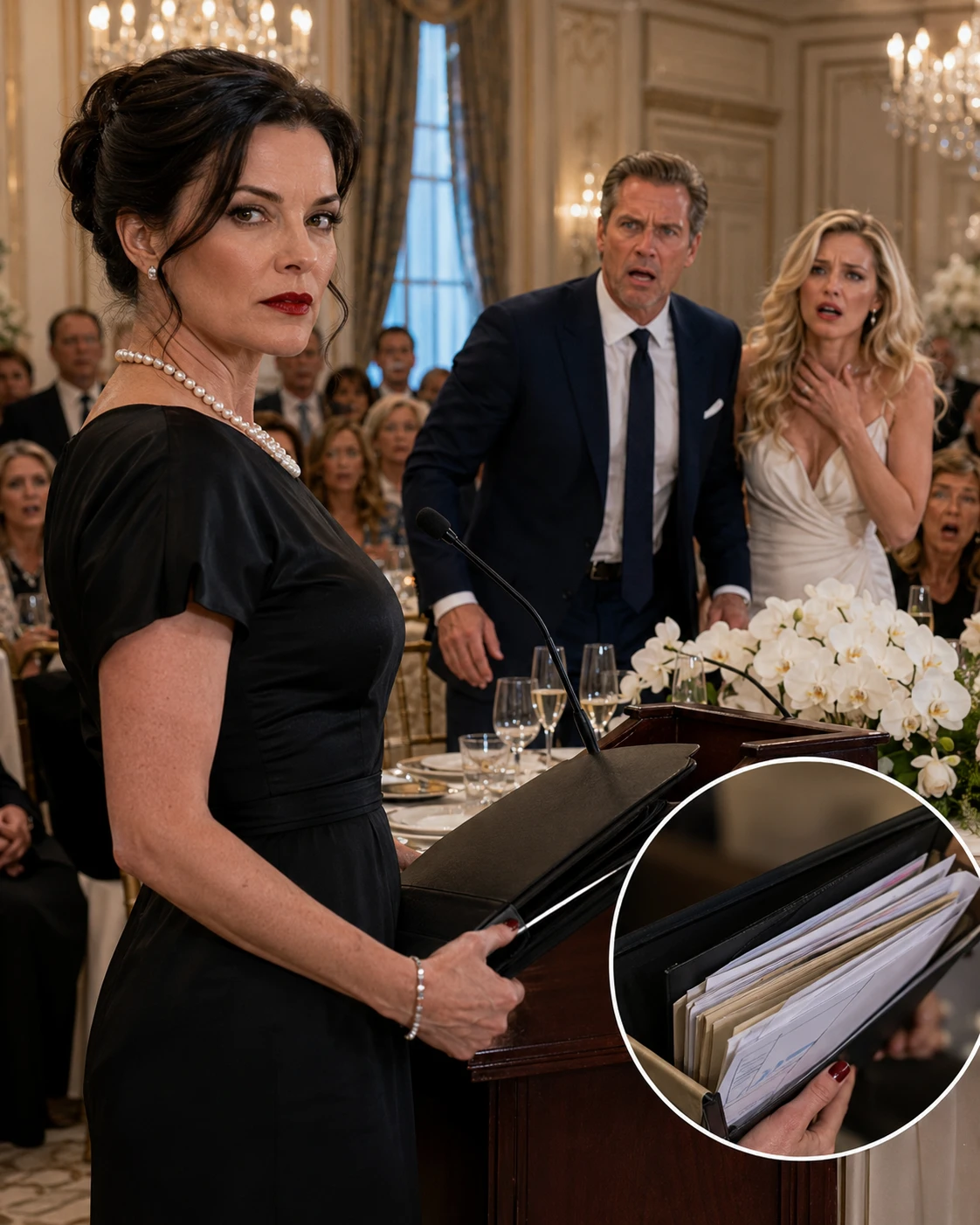
His mistress told the caterer she was the new Mrs. Monroe.
I heard it from the hallway of my own charity luncheon, standing behind a marble column at the Rosemont Hotel in Charleston with a silk clutch in one hand and my wedding ring cutting a pale circle into my finger.
“She doesn’t want lilies,” the woman said, her voice sweet enough to rot teeth. “They’re too funeral. Replace them with white orchids. And those place cards? Take out Vivienne Monroe. Put Celeste Hale. I’m sitting beside Grant.”
The caterer hesitated. “Mrs. Monroe approved the seating chart personally.”
Celeste laughed softly.
“She did. Before things changed.”
I should have stepped forward then.
I should have corrected her in front of the staff, watched her pretty face collapse, dragged my husband’s name through the polished floor until even the chandeliers looked ashamed.
But revenge, real revenge, is not loud.
It wears pearls.
It waits for witnesses.
So I stayed in the hallway of my own luncheon and listened while my husband’s mistress rearranged my flowers, my guests, my name, and my life.
Then I waited until every donor, every board member, every society columnist, and every camera arrived.
And when the ballroom was full, when Celeste was glowing in my seat like a woman who had already won, I walked to the podium.
I smiled.
And I destroyed them both.
Chapter 1 — The Woman in My Chair
The first thing people noticed about Celeste Hale was her beauty.
The second thing was that she knew they noticed.
She was thirty-one, perhaps thirty-two, with honey-blonde hair arranged in waves that looked careless but had probably required two hours and a stylist named Michel. Her dress was the kind of white that rich women wear when they want to look innocent and dangerous at the same time. Not bridal, exactly. But close enough to be cruel.
I had seen her before.
Not in my house, not at my dinner table, not in the obvious places a wife imagines betrayal will announce itself.
I had seen her reflected in Grant’s phone screen at midnight. In the sudden smile he tried to kill when he thought I was asleep. In the unfamiliar scent on his collar, something floral and expensive. In the way he started saying “we” and then correcting himself.
“We should go to Aspen— I mean, maybe I’ll go for a few days. Investors.”
“We love that place— I mean, you used to love that place.”
“We need to move quickly on this transfer— I mean, the foundation does.”
A marriage rarely dies all at once. It loses circulation first.
Tiny parts go numb.
A husband stops reaching for your hand in the car. He stops asking how your day was because he already knows you will say “busy” and he has stopped being curious about the woman carrying that busyness. He begins to look through you, not past you. Through you, as if you are glass and he is admiring the life he plans to have on the other side.
Grant Monroe had once looked at me like I was the room.
At forty-two, he still had the easy charm that made people forgive him before he apologized. Tall, silver at the temples, blue-eyed in the way that made investors trust him and waiters remember his drink. When we married, newspapers called us “Charleston’s golden couple.” He was the ambitious real estate heir with a famous last name. I was Vivienne Whitaker, the daughter of a private banking family that never needed to be famous because our money had already learned how to whisper.
Everyone assumed Grant gave me status.
That was the first mistake.
The second was that Grant assumed it too.
Our foundation luncheon was held every spring in the Grand Magnolia Ballroom at the Rosemont, under chandeliers shipped from Paris and ceilings painted with clouds so delicate they looked like promises. It raised money for women rebuilding their lives after financial abuse, domestic violence, and medical debt. I had founded it after my mother died, using part of the trust she left me. Grant liked to stand beside me in photographs and call it “our work.”
He did not like the boring parts.
The board meetings. The audits. The hospital visits. The mothers crying in parking lots because a $900 repair could decide whether they kept their jobs. The careful, unglamorous labor of keeping a promise after the applause ended.
Grant liked ribbon cuttings.
He liked gala lighting.
He liked being called generous.
So when I heard Celeste in the hallway claiming the role of hostess, I did not feel shock. I felt something colder.
Recognition.
She had not invented that confidence herself. Grant had given it to her. He had told her enough, promised enough, perhaps laughed enough at me behind closed doors that she felt entitled to walk into my event and redecorate my name off the table.
I watched through the open ballroom doors as the staff obeyed her.
A young assistant gathered the cream place cards printed in navy ink, each one folded by hand. Celeste tapped her manicured nail on the seating chart and pointed to Table One. She removed my name from the chair beside Grant and placed her own there.
Celeste Hale.
She looked at it with satisfaction, as if paper could make a woman legitimate.
My assistant, Nora, appeared beside me, breathless and furious. She was twenty-seven, sharp as lemon zest, and loyal in a way that made her dangerous to my enemies.
“Vivienne,” she whispered. “Please tell me you did not just hear that.”
“I heard it.”
“She changed your seat.”
“I saw.”
“She told Denise from catering that she was—”
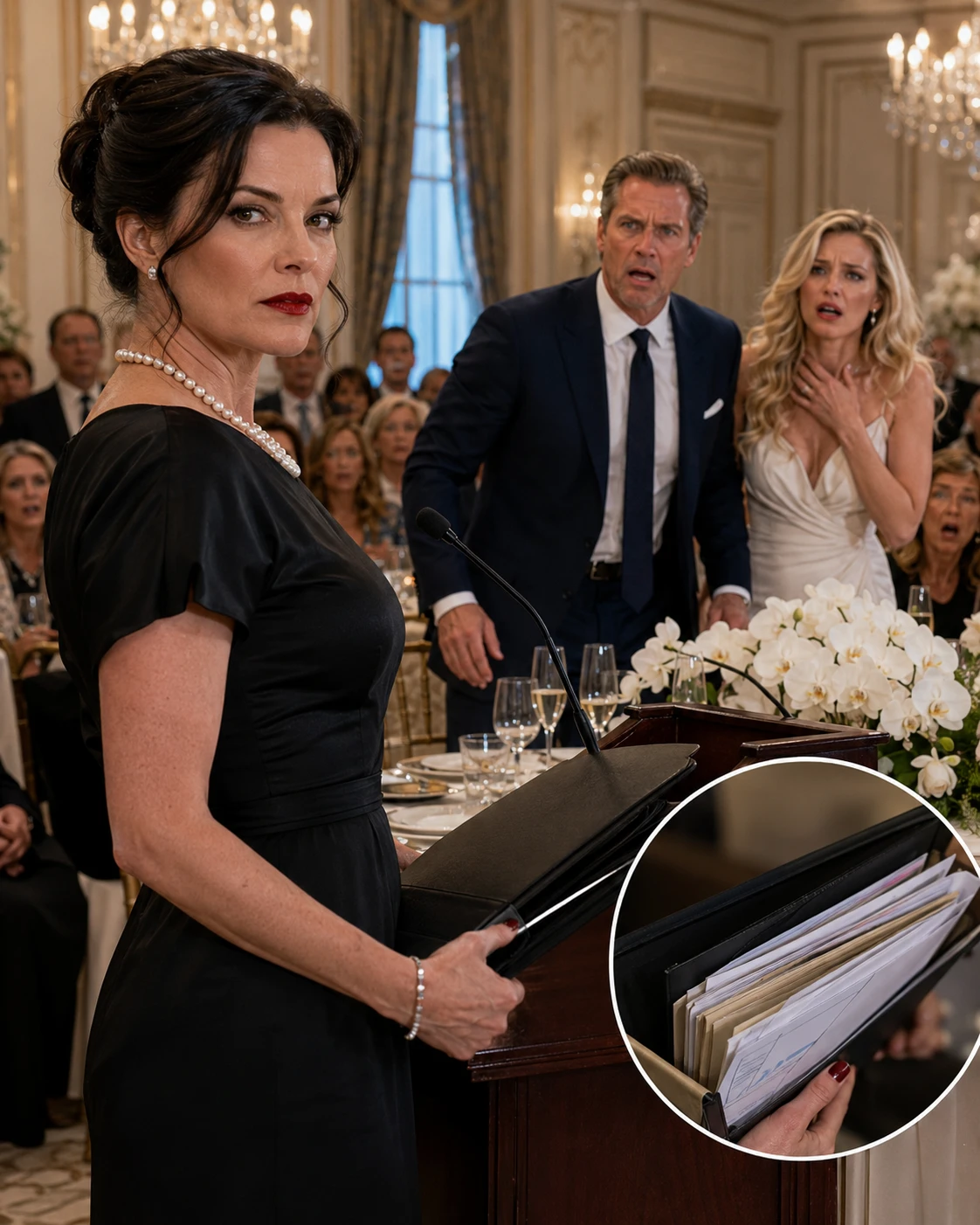
“The new Mrs. Monroe,” I finished.
Nora’s cheeks burned. “I can have security remove her.”
I looked at Celeste as she leaned toward the florist and murmured something that made the woman nod nervously.
“No.”
“No?”
“No,” I said. “Let her sit there.”
Nora stared at me like I had suggested we serve poison in the champagne.
I opened my clutch and took out a small envelope. Inside was a folded letter from Caldwell, Price & Keane, our foundation’s outside counsel. I had received the final version that morning.
Nora saw the letterhead. Her anger shifted into understanding.
“Today?” she asked.
“Today.”
Her mouth parted. “Vivienne.”
“I know.”
“Are you ready?”
I looked at my husband through the ballroom doors.
Grant had just entered wearing a navy suit and that perfect public smile. He saw Celeste before he saw me. His face changed. Not dramatically. Grant was too practiced for that. But enough. A warmth lit his eyes, quick and intimate, the kind of warmth a wife collects evidence from because it once belonged to her.
Celeste turned toward him, radiant.
He touched the small of her back.
There it was.
A tiny gesture.
A public confession.
I slid the attorney’s letter back into my clutch.
“Yes,” I said. “I’m ready.”
Chapter 2 — Pearls Don’t Rattle
Six weeks earlier, a woman named Margaret Bell had saved me from becoming a fool.
Margaret was seventy-three, had smoked for forty years and quit with such fury that she made everyone else’s addictions seem weak. She served as treasurer of the Monroe Foundation and had been my mother’s closest friend. Her husband had once said Margaret could read a balance sheet the way priests read souls.
She arrived at my house one rainy Tuesday holding a file folder and wearing a raincoat older than my marriage.
“Do you have coffee?” she asked.
“Of course.”
“Make it strong. I’m about to ruin your morning.”
We sat in the sunroom while rain stitched silver threads across the windows. Grant was in New York, or said he was. I remember that detail because at the exact moment Margaret opened the folder, my phone buzzed with a text from him.
Long day. Don’t wait up.
It was 10:12 in the morning.
Margaret placed three invoices on the table.
“Hale Strategic Outreach,” she said.
The name meant nothing to me then.
“Marketing consulting,” I read aloud. “Event development. Donor engagement.”
“Ghost work,” Margaret said.
I looked up.
“The addresses are mail drops,” she continued. “The reports are copied from free nonprofit templates online. The invoices are signed off by Grant.”
My stomach did not drop. It tightened. There is a difference. Dropping is surprise. Tightening is preparation.
“How much?”
Margaret’s eyes did not move from mine.
“Two hundred eighty-six thousand dollars over eleven months.”
Rain tapped the glass like nervous fingers.
“That can’t be right.”
“No,” Margaret said. “It can’t be legal.”
I spent the next four weeks learning how betrayal looks when it puts on a tie.
It looks like consulting fees. It looks like donor entertainment. It looks like “urgent reimbursements” and “discretionary development.” It looks like your husband using the foundation credit card for hotel suites in Miami during a week he told you he was touring affordable housing sites in Raleigh.
The first time I saw Celeste’s name attached to Hale Strategic Outreach, I sat very still.
Stillness is underestimated.
People think grief collapses you. Sometimes it sharpens every nerve until the world becomes glass.
I hired a forensic accountant from Atlanta, a woman named Priya Sethi who spoke softly and found bodies in spreadsheets. I met with attorneys. I requested bank records through official board channels. I asked Nora to pull vendor communications. I told no one except Margaret.
Especially not Grant.
When he came home, I poured his bourbon over a single cube of ice and asked about his trip.
“Productive,” he said, kissing my cheek.
I could smell Celeste’s perfume.
“Good.”
He loosened his tie. “We’re going to need to move some money before the luncheon.”
“Foundation money?”
“Temporary allocation.”
“For what?”
He smiled, patient, as if I were a child asking why the sky was blue. “Donor cultivation. It takes money to raise money, Viv.”
He called me Viv when he wanted me softened.
My mother called me Vivienne.
I took a sip of wine. “Run it through Margaret.”
His jaw flickered.
“Margaret’s old-school.”
“She’s treasurer.”
“She makes everything difficult.”
“Only the things that shouldn’t be easy.”
He looked at me then. Really looked. Perhaps he sensed the ground shifting under his polished shoes.
Then his phone lit up on the counter.
Celeste.
Only the name did not appear as Celeste. It appeared as C.H. Design.
He turned the screen facedown.
I smiled into my glass.
By then, I knew about the Miami suite. The Cartier bracelet. The $18,000 “leadership retreat” in Napa that had produced no leaders and no retreat. I knew about the wire transfers to Hale Strategic Outreach. I knew Grant had personally approved them, and I knew Celeste had opened the account three months after meeting him at a private dinner in Palm Beach.
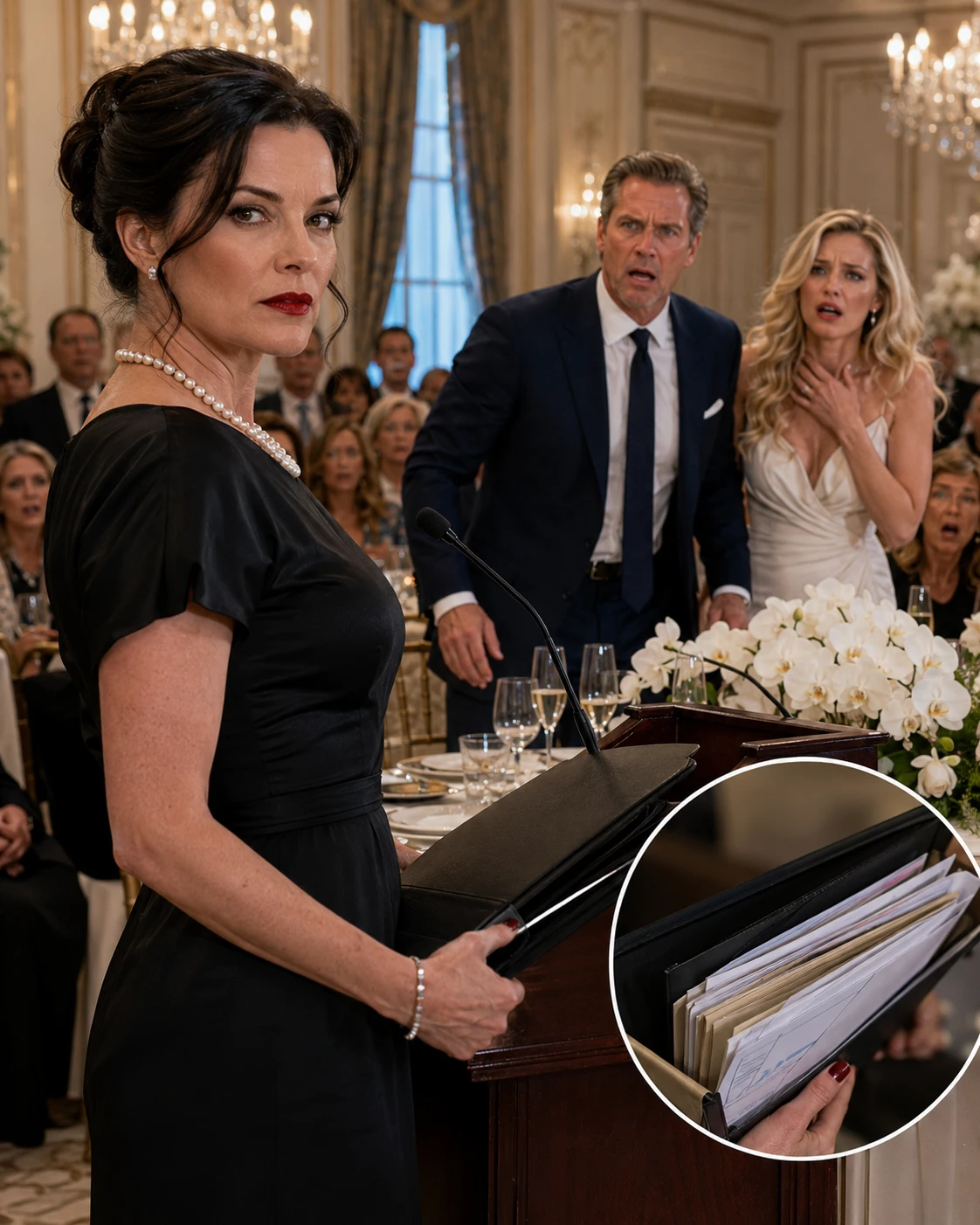
What I did not know yet was how far Grant intended to go.
That answer came two nights before the luncheon.
I was in the library, barefoot, reading through legal drafts while Grant took a call on the terrace. The doors were not fully closed.
“She’ll come around,” he said.
Silence.
“No, Celeste. Stop panicking.”
Silence.
“After Saturday, it’ll be obvious. People accept what they see.”
My hand froze on the page.
Grant lowered his voice, but not enough.
“You want to be Mrs. Monroe? Then act like it.”
The old me would have walked outside.
The old me would have demanded the truth, cried, fought, asked him when he stopped loving me, asked what she had that I didn’t, begged him to remember the vows we said under the live oaks at Middleton Place.
But the old me had died quietly over a stack of fraudulent invoices.
The woman left behind kept reading.
A line from the legal draft glowed under the lamp.
The Foundation shall immediately suspend and sever all financial relationships with any officer, advisor, vendor, or related party upon credible evidence of misuse, misrepresentation, fraud, or breach of fiduciary duty.
Grant thought Saturday would introduce Celeste to society.
He was right.
Just not the way he imagined.
Chapter 3 — The Luncheon of White Orchids
By noon on Saturday, the Grand Magnolia Ballroom looked like a dream designed by someone with no conscience.
Celeste’s white orchids had replaced my lilies. They arched over the tables like expensive bones. The linens were pearl gray. The silverware caught the chandelier light. Waiters moved through the room with trays of champagne, and Charleston’s most powerful women gathered in clusters, kissing cheeks and reading each other’s marriages in three-second glances.
Grant stood near Table One with Celeste beside him.
Not near him.
Beside him.
There is a geography to scandal. Every inch matters.
At first, people pretended not to notice. That is what polite society does with fresh blood on marble. It steps around it and asks for sparkling water.
Then they noticed the place cards.
Celeste Hale was seated where Mrs. Vivienne Monroe should have been.
The whispers started in the corners and moved through the room like smoke.
“Is that her?”
“Where is Vivienne?”
“Did Grant really bring her here?”
“At the foundation luncheon?”
“He wouldn’t.”
“He did.”
Celeste basked in it.
She held her champagne flute delicately and laughed at something Grant said. Her left hand, bare of any ring, still seemed to announce itself. She knew the performance mattered. She wanted people to see her in my chair. She wanted the humiliation to be public enough that I would have to accept the new arrangement privately.
That was her mistake.
Humiliation is only powerful when the humiliated person agrees to carry it.
I entered the ballroom at 12:17.
Not late.
Timed.
I wore black.
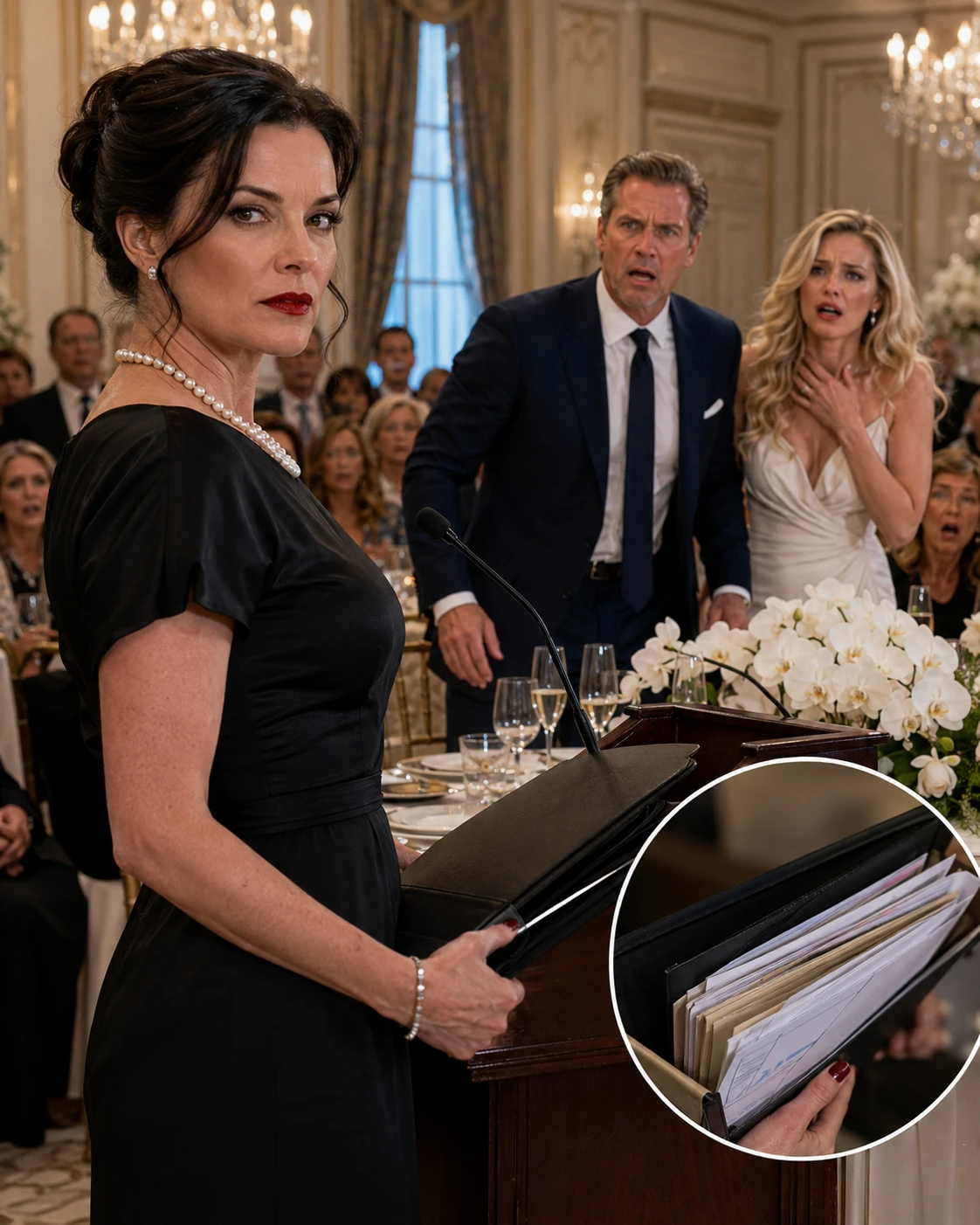
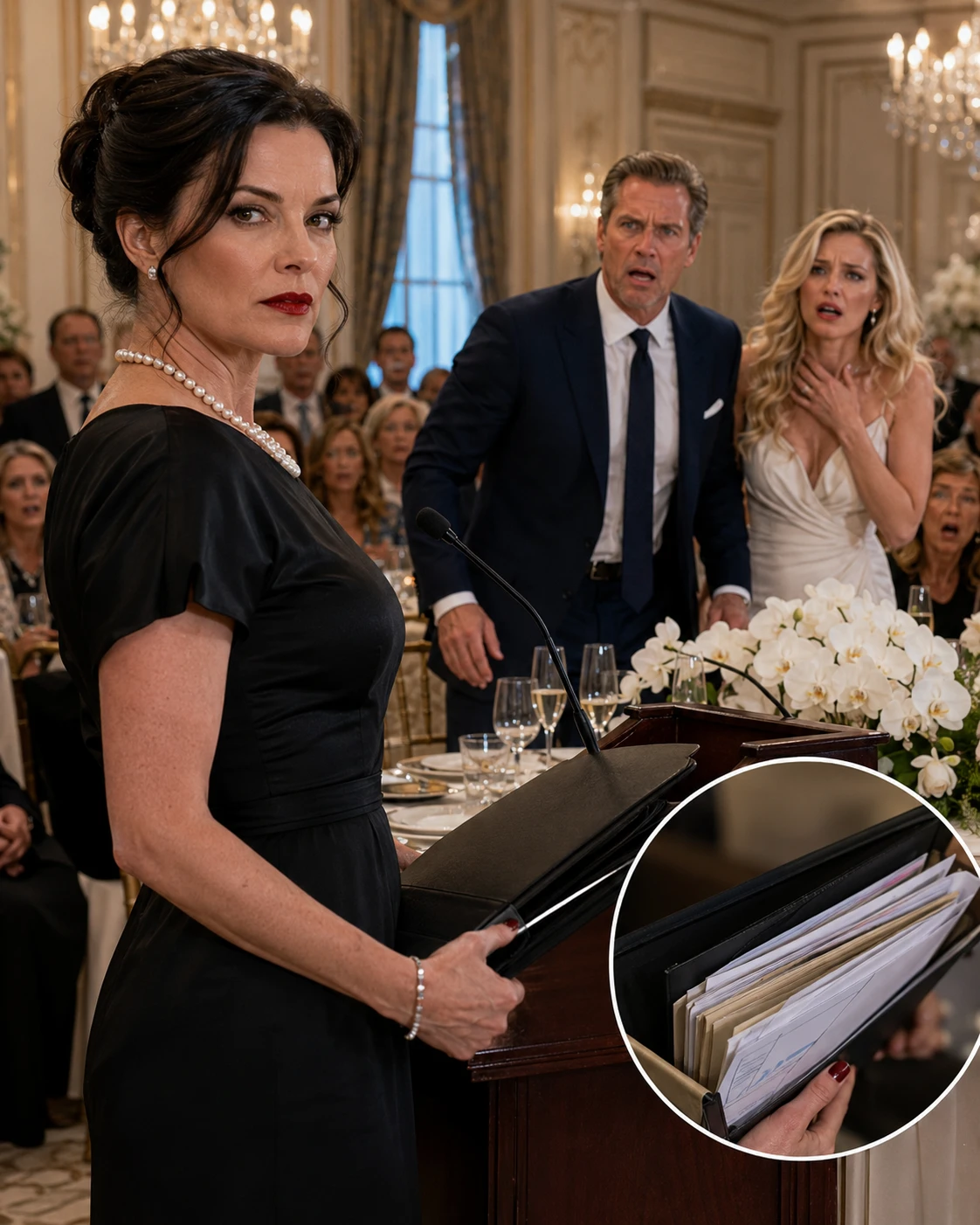
Not mourning black. Not angry black. Black silk, fitted at the waist, with my mother’s pearls and red lipstick the exact shade of a warning sign. The room’s conversation thinned as I walked in. One by one, faces turned. Some showed pity. Some showed appetite. A few, mostly women who had survived their own Grants, showed recognition.
I did not look at Celeste first.
That would have given her too much.
I greeted donors. I kissed Margaret’s cheek. I thanked the mayor’s wife for coming. I touched Nora’s elbow in passing, and she gave the smallest nod.
Everything was in place.
Grant saw me when I was ten feet away.
His smile faltered and rebuilt itself.
“Vivienne,” he said warmly, too loudly. “There you are.”
There you are.
As if I had misplaced myself.
Celeste turned with theatrical surprise.
“Oh,” she said. “Vivienne. I hope you don’t mind. We made a few little updates. The lilies were so heavy.”
I looked at the orchids.
“They are beautiful.”
Celeste’s smile sharpened.
“I thought so.”
Grant stepped toward me, lowering his voice. “Can we not do this here?”
I let my eyes move from him to Celeste’s place card.
“Do what?”
His face hardened under the smile.
“You know exactly what I mean.”
“No,” I said. “I don’t think I do.”
Celeste laughed softly. “This must be uncomfortable for you.”
There are sentences that reveal an entire soul.
I turned to her then.
She was lovely, yes. But up close, her confidence had seams. A flicker in the throat. A careful breath. She was not fearless. She was betting Grant’s lies would hold.
I almost felt sorry for her.
Almost.
“Celeste,” I said.
Her eyebrows lifted, pleased that I had used her name.
“You changed my place card.”
She tilted her head. “I was told arrangements had changed.”
“Were you?”
Grant stepped in. “Vivienne, enough.”
I looked at him.
For twelve years, I had protected him from consequences. From bad investments dressed up as bold risks. From rude comments at dinners. From his father’s contempt. From his own need to feel larger than every room he entered.
He mistook my protection for weakness because protection is quiet work.
So is loading a gun.
“Grant,” I said gently, “you’re right.”
His eyes narrowed.
“Enough.”
The bell chimed for lunch.
Nora moved to the podium and announced that guests should take their seats. The room arranged itself around the spectacle. Celeste sat beside Grant at Table One. My chair had been moved to the far end beside a regional bank president who looked like he wanted to crawl under the tablecloth.
I did not sit.
I waited while the first course was served. A chilled cucumber soup I had approved months earlier. Celeste had not changed that, apparently. Even ambition has limits when faced with a signed catering contract.
At 12:34, the ballroom lights dimmed.
The foundation logo appeared on the screens behind the stage.
THE MONROE FOUNDATION
Annual Women’s Recovery Luncheon
Applause rose, graceful and nervous.
Nora introduced me.
I walked to the podium as if nothing had happened.
The room stood.
That was not planned.
Not everyone stood, of course. Grant did not. Celeste remained seated too, looking annoyed, then uncertain as she realized the rest of Table One had risen around her.
Margaret stood slowly, leaning on her cane, her eyes bright as steel.
I placed my notes on the podium.
For a moment, I looked out at the room.
Two hundred donors. Twelve board members. Three reporters. One husband who thought I would beg in private. One mistress who thought a place card made her real.
I smiled.
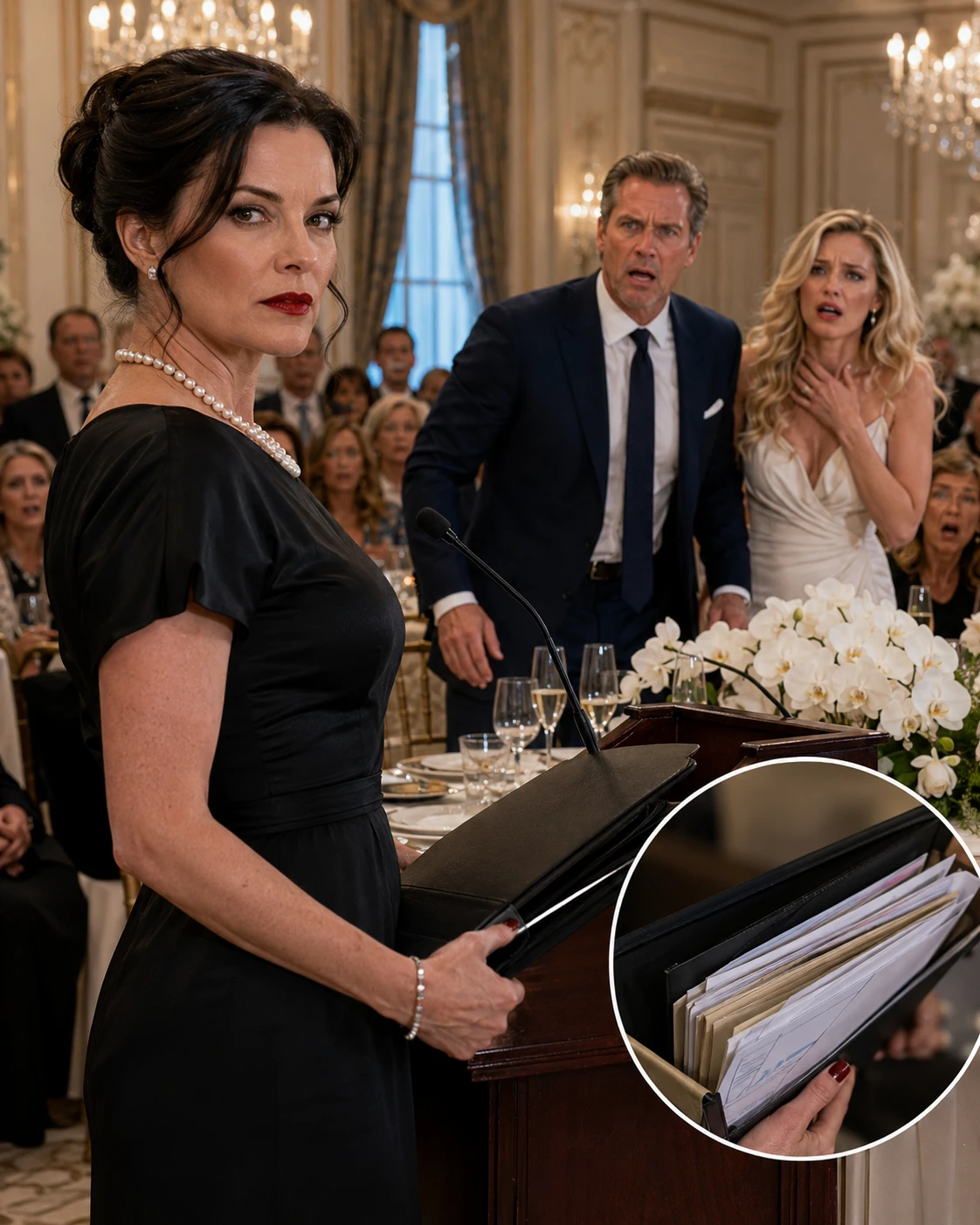
“Good afternoon,” I said. “Thank you for joining us for a cause that has always been deeply personal to me.”
The room settled.
“Our foundation exists because financial abuse is often invisible. It hides behind signatures, behind family names, behind smiling photographs, behind people who know exactly how to appear respectable while taking what was never theirs.”
Grant’s face changed.
Just slightly.
Celeste glanced at him.
I continued.
“This morning, after a six-week independent forensic review, the Monroe Foundation’s legal counsel delivered its final recommendation to the board.”
A murmur moved through the room.
I lifted the letter from my folder.
“As of 9:00 a.m. today, the foundation has formally severed all financial ties with Grant Monroe due to documented misuse of charitable funds, unauthorized vendor approvals, and related-party transactions connected to Hale Strategic Outreach.”
Celeste’s mouth opened.
Grant stood so quickly his chair scraped the floor.
“Vivienne.”
I did not look at him.
“Hale Strategic Outreach,” I continued, “is owned and operated by Ms. Celeste Hale, who, as several members of our staff can confirm, identified herself today as the new Mrs. Monroe while making unauthorized changes to foundation materials.”
The room inhaled.
Not gasped.
Inhaled.
A hundred rich women drawing breath at once is more frightening than thunder.
Celeste went white.
Grant’s voice cut across the room. “This is defamatory.”
I looked at him then.
“No, Grant. It is documented.”
Behind me, the screen changed.
Not to photographs. I was not cruel in messy ways.
To invoices.
Dates. Amounts. Approval signatures. Vendor records. Bank confirmations. A timeline prepared by counsel and sanitized for public disclosure.
The Cartier bracelet was not listed. Neither was the Miami suite. That was for court.
The audience only needed enough to understand.
“The full file has been referred to the South Carolina Attorney General’s Charities Division and our outside counsel has initiated civil action to recover all misdirected funds.”
Grant’s hand gripped the back of his chair.
Celeste whispered something I could not hear.
I turned one page.
“Additionally, Mr. Monroe has been removed from all advisory capacities. He is prohibited from representing the foundation, soliciting on its behalf, accessing its donor network, or using foundation events for personal or business purposes.”
A reporter in the back lifted her phone higher.
Grant noticed. His rage folded itself into panic.
“Vivienne,” he said, softer now. “Don’t do this.”
I almost laughed.
Don’t do this.
Not I’m sorry.
Not I betrayed you.
Not I stole from women rebuilding their lives.
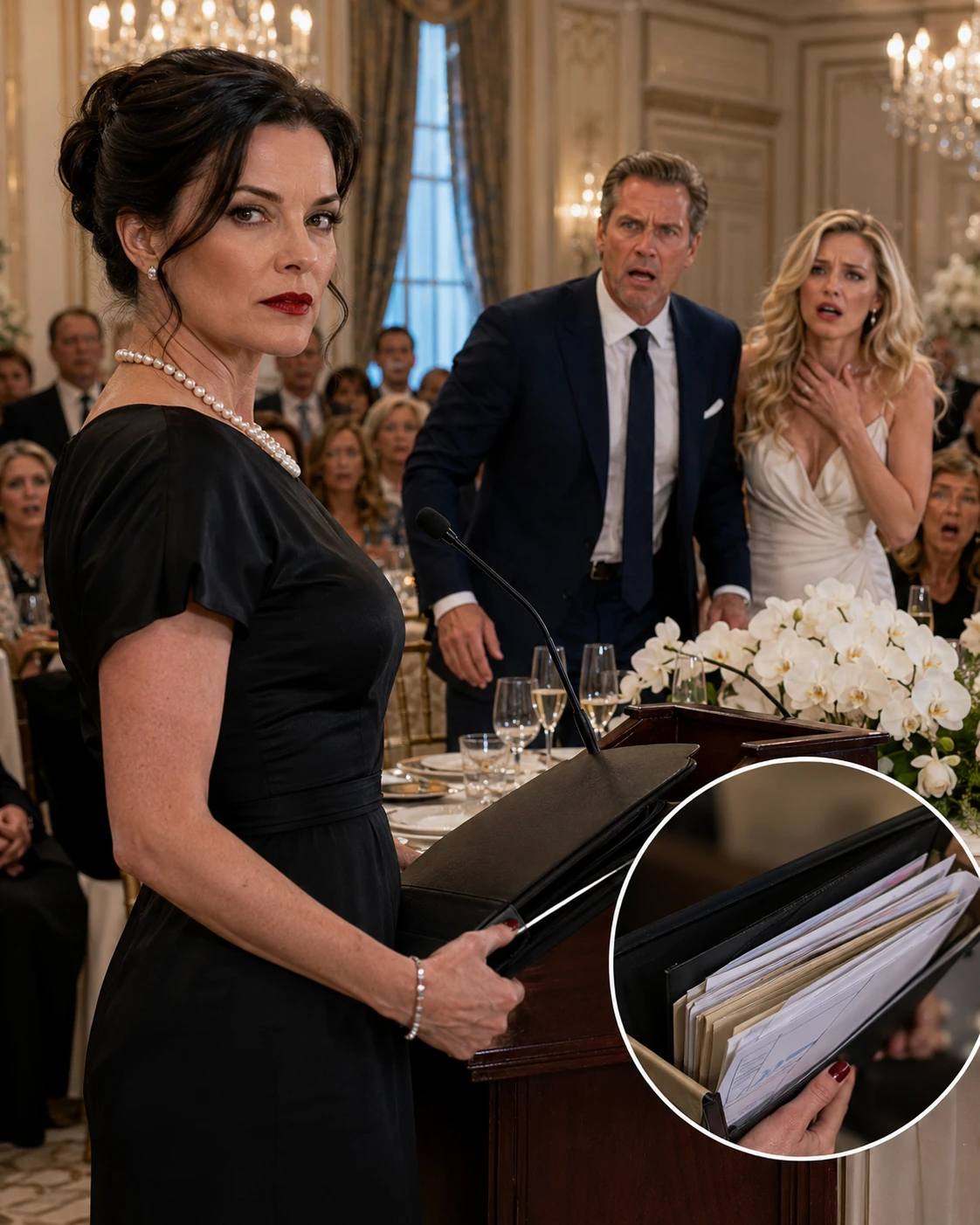
Don’t do this.
I leaned toward the microphone.
“Grant, I’m not doing anything. I’m simply allowing the truth to arrive dressed appropriately.”
Chapter 4 — The Documents Were Prettier Than the Orchids
Security did not drag Grant and Celeste out.
That would have been satisfying, but vulgar.
Instead, the Rosemont’s general manager approached them with the calm expression of a man trained to remove billionaires from bad situations without wrinkling their suits. Two board members followed. Margaret remained seated, watching as if attending a very slow opera.
Celeste tried to stand with dignity.
Her heel caught the table linen.
A champagne flute tipped, spilling gold across her white dress.
No one moved to help her.
That is the thing about stolen seats. They rarely come with loyal friends.
Grant leaned close to me as he passed the podium.
“You’ll regret this,” he whispered.
I looked at him with the public softness of a woman receiving condolences.
“I already did.”
He flinched because he understood.
I had regretted him in advance.
After they left, the ballroom did not erupt. People like that do not erupt in public. They murmur. They text. They pretend to be shocked while forwarding the story to everyone they know.
I finished the speech.
Not about Grant. Not about Celeste.
About the women the foundation served.
I spoke about a nurse in Savannah who used an emergency grant to leave a husband who had hidden her car keys for three years. I spoke about a mother in Columbia who rebuilt her credit after her ex opened five cards in her name. I spoke about a retired teacher in Beaufort who nearly lost her house because medical debt had become a trapdoor under her feet.
By the time dessert arrived, the room had remembered why it was there.
By the time coffee was poured, we had raised $1.8 million.
By sunset, the clip was everywhere.
Someone had recorded Celeste walking out with champagne on her white dress. Someone else had captured my line at the podium. By midnight, the headline had written itself across social media.
Mistress calls herself “new Mrs. Monroe” at charity luncheon. Wife exposes husband’s foundation fraud on stage.
The internet did what the internet does.
It judged without mercy and with excellent editing.
Clips appeared with slow zooms, violin music, captions in block letters.
SHE CHANGED THE SEATING CHART.
THE WIFE CHANGED THE LEGAL CHART.
Grant called thirty-seven times that night.
I did not answer.
Celeste sent one text from an unknown number.
You ruined my life.
I stared at it for a while.
Then I replied.
No. I documented it.
The next morning, Grant arrived at the house on Tradd Street with a key that no longer worked.
I watched him through the security camera from the kitchen, wearing a cashmere robe and drinking coffee from a blue mug my mother bought in Nantucket.
He pressed the code again.
Red light.
Again.
Red light.
Then he looked into the camera.
“Vivienne, open the door.”
I did not.
He called.
This time, I answered.
“This is my house,” he snapped.
“No.”
A pause.
“What?”
“It belongs to the Whitaker Residential Trust. It always has.”
“That’s ridiculous.”
“You signed the occupancy agreement when we married.”
“That was paperwork.”
“It often is.”
His face twisted. “You can’t lock me out of my own home.”
“It is not your home, Grant. It is a residence held in trust, and your right to occupy it ended this morning when counsel delivered notice of separation and breach.”
He stepped back from the door as if it had slapped him.
“You planned this.”
“I prepared for this.”
“There’s a difference?”
“Yes. Planning is what you did with Celeste. Preparation is what women do when men like you mistake access for ownership.”
His breathing changed.
“I want to talk.”
“No, you want to negotiate before your lawyer explains what you’ve lost.”
He laughed once, ugly and thin. “You think you can take everything?”
“No,” I said. “Grant, that’s what you never understood.”
I looked around the kitchen. The marble counters. The copper pans. The lemon tree in the courtyard. The portrait of my mother above the fireplace in the adjoining room.
“I don’t have to take everything.”
I let the silence open.
“Most of it was never yours.”
He stood there a long time after I hung up.
By Monday, the elegant part of his life began collapsing with bureaucratic precision.
His access to foundation donor lists was revoked. His advisory title disappeared from the website. The regional bank froze the line of credit he had secured using anticipated donor commitments he had no legal right to pledge. Three investors withdrew from his Savannah hotel project. One called me personally to apologize for having believed Grant’s version of anything.
Celeste tried to get ahead of the story.
She posted a statement on Instagram about “private pain,” “female cruelty,” and “misunderstood love.” It might have worked if she had not attached a photo of herself in a linen dress on a yacht Grant had rented using a foundation-adjacent vendor account.
The internet found the yacht within nine minutes.
Nora sent me screenshots.
I sent them to counsel.
Elegance is not silence.
Elegance is knowing which knife belongs in which drawer.
The divorce filing became public on Tuesday.
By Wednesday, Grant’s attorney requested mediation.
By Thursday, mine sent back a list of financial disclosures so specific it must have felt like being undressed by a surgeon.
By Friday, Celeste’s attorney called my attorney.
That was when I learned she was frightened.
Good.
Not because she had loved my husband. Love makes fools of people. I have sympathy for fools.
Celeste had not been a fool.
She had invoiced a charity that protected vulnerable women. She had accepted money meant for rent assistance, medical recovery, legal clinics, childcre vouchers, and emergency hotel rooms. She had worn the theft on her wrist and called it romance.
There are women who accidentally walk into another woman’s marriage.
And then there are women who change the place cards.
Celeste was the second kind.
Still, Grant remained convinced he had one card left.
He always believed in the dramatic final play.
That card appeared ten days later in a sealed settlement proposal.
He wanted half of the marital assets, continued residency in the Tradd Street house during proceedings, protection from public disparagement, and a private resolution of the foundation matter.
In exchange, he would “avoid escalation.”
I sat in my attorney’s office in downtown Charleston reading the proposal while rain softened the windows.
My attorney, Daniel Keane, watched me over his glasses.
“What do you think?” he asked.
I turned to the final page.
Grant’s signature was bold, impatient, familiar.
For years, that signature had appeared on birthday cards, anniversary notes, mortgage papers, donation letters, and apologies written too late.
Now it sat at the bottom of a threat.
I closed the folder.
“I think he still doesn’t know what my mother left me.”
Daniel’s smile was small.
“No,” he said. “I don’t believe he does.”
Chapter 5 — The Last Mrs. Monroe
The hearing was private, but Charleston has never needed open doors to smell smoke.
By the time we arrived at the courthouse, photographers waited on the sidewalk. Grant stepped out of a black SUV in a charcoal suit and no wedding ring. Celeste was not with him. That was wise, or cowardly, depending on the day.
I wore navy.
People expected black again. But black had been for the luncheon, for the death of illusion.
Navy was for business.
Inside, Grant avoided looking at me until we were seated across from each other. His lawyer, a polished man from Columbia, carried the exhausted expression of someone paid to defend a house already on fire.
Daniel placed three binders on the table.
Grant stared at them.
I could almost hear him thinking.
How much could there be?
Men like Grant believe evidence is a storm. Sudden. Emotional. Disorganized.
They forget women keep receipts in labeled folders.
The first hour was predictable.
His lawyer argued that the foundation issue should remain separate from the divorce. Daniel agreed in tone and destroyed the argument in substance. The misuse of charitable funds mattered because it revealed concealed transfers, marital dissipation, fraud, and breach of fiduciary duties tied to entities Grant had tried to use as personal leverage.
Then came the assets.
The Tradd Street house: held by the Whitaker Residential Trust.
The Kiawah beach property: purchased by my mother before the marriage, renovated with trust funds, never commingled.
The Nantucket cottage: inherited.
The investment portfolio Grant liked to call “ours”: primarily my premarital assets, protected by the prenuptial agreement he had signed eagerly because at twenty-nine he thought asking for a prenup made him look rich.
Grant shifted in his chair.
I remembered that day clearly.
He had laughed after signing.
“Just in case you become impossible,” he joked.
I kissed him then.
“You’ll survive me,” I said.
How young I was.
How wrong.
His attorney grew paler as Daniel moved through the documents. Grant’s real estate company, Monroe Development Group, was not protected. It was overleveraged, entangled in improper representations, and partially dependent on reputation-based investor confidence that had evaporated after the luncheon.
Grant leaned back, his mouth tight.
Then Daniel opened the third binder.
“This concerns VEM Holdings,” he said.
Grant frowned.
His lawyer whispered something.
I watched the moment confusion entered Grant’s face.
He had never heard of it.
That was the final twist.
Not the affair. Affairs are common.
Not the stolen funds. Greed is common too.
The real twist was that two years earlier, after Grant’s first failed resort project nearly bankrupted us in whispers, my mother’s trustee had advised me to protect the assets Grant kept circling. Quietly, through VEM Holdings, I purchased the distressed note on Monroe Development Group when Grant’s private lender decided to sell it at a discount.
Grant never knew because Grant did not read the dull documents once he believed he understood the glamorous ones.
VEM were my initials.
Vivienne Eleanor Monroe.
I owned the debt choking his company.
For two years, I had allowed him to make payments and keep control because he was my husband, and because mercy, at the time, still seemed like love.
Daniel slid the notice across the table.
“Due to default provisions triggered by fraud allegations, investor withdrawal, and misrepresentation of pledged charitable relationships, VEM Holdings is exercising its rights under the loan documents.”
Grant’s face emptied.
“What does that mean?”
Daniel’s voice remained pleasant.
“It means Mrs. Monroe now controls the note on Monroe Development Group.”
Grant looked at me.
For the first time since the luncheon, I saw him understand the shape of the room.
He had not betrayed a woman dependent on him.
He had betrayed the creditor.
The silence was astonishing.
Even his lawyer looked briefly at the ceiling.
Grant’s lips parted. “Vivienne.”
There it was again.
My name, used like a key.
But I had changed the locks.
“You can’t do this,” he said.
“I can.”
“You wouldn’t.”
“I did.”
“This is my father’s company.”
“It was your father’s company. Then it became your company. Then you borrowed against it, lied around it, and used a women’s charity as social collateral to impress investors. Now it is a liability with your name on the door and my lien on the bones.”
His eyes reddened, but whether from rage or grief I could not tell.
“You hate me that much?”
I considered the question.
It deserved honesty.
“No. I don’t hate you.”
Somehow, that hurt him more.
“I loved you enough to save you from yourself for twelve years. Then you mistook my love for permission. That isn’t hatred, Grant. That’s an ending.”
His lawyer requested a recess.
Grant stepped into the hallway.
I did not follow.
Through the frosted glass, I saw him bend over, hands on knees, a man finally introduced to consequence.
When mediation resumed, the tone had changed.
The threats disappeared.
So did the demands for my properties.
By the end of the day, Grant had agreed to vacate all trust residences, waive claims against protected assets, cooperate with the foundation’s recovery action, and provide full disclosure of transfers to Celeste Hale or her company.
In return, I agreed not to oppose a structured repayment schedule beyond what the law required.
Mercy again.
But this time, it had a contract.
The Celeste problem resolved itself with less beauty.
Her lawyer negotiated repayment on the invoices tied directly to her company. She sold the Cartier bracelet, the car Grant had helped lease, and eventually the small condo she had purchased in Mount Pleasant under her cousin’s name. The yacht photo remained online forever, of course. The internet is not merciful. It is a basement with excellent lighting.
Grant moved to Atlanta six months later.
He sent one letter before leaving.
I did not read it for three days.
When I finally opened it, the handwriting surprised me. Not because it was familiar, but because it was smaller than I remembered.
He wrote that he was sorry.
He wrote that he had confused admiration with love and access with worth. He wrote that Celeste had made him feel young, and that I had made him feel measured. He wrote that being measured had frightened him because deep down he always knew he did not add up.
That was the only line that made me cry.
Not because I forgave him.
Because I had spent years doing the math for both of us.
I folded the letter and placed it in a box with our wedding photograph, the old anniversary cards, and the dried magnolia bloom from my bouquet.
Then I closed the lid.
Conclusion — What Remained After the Applause
One year after the luncheon, we held the event again.
Not at the Rosemont.
I chose a restored brick building on King Street that had once been a textile warehouse and was now our first permanent women’s recovery center. No chandeliers from Paris. No orchids arranged like weapons. No ballroom mirrors reflecting people who cared more about being seen giving than about the giving itself.
There were long wooden tables, sunlight through tall windows, and children’s drawings taped to the walls of the new legal clinic.
We renamed the foundation that morning.
Not because Grant had ruined the old name.
Because I no longer wanted anything we built for women to sound like it belonged to a man who tried to sell it.
The Monroe Foundation became The Eleanor House, after my mother.
Margaret cried when the sign was unveiled, then threatened to deny it if anyone mentioned it later.
Nora became executive director. Priya joined the financial oversight board. We expanded into Georgia and North Carolina by winter. The emergency fund doubled. The legal clinic tripled its case capacity. Women who had once arrived with trembling hands returned months later as volunteers, mentors, advocates, proof.
That was the part the viral clips never showed.
The internet loved the humiliation, the mistress, the champagne spill, the cold line at the podium.
But the real victory was quieter.
It was a woman sleeping through the night because her rent was paid.
It was a mother getting her own bank account.
It was a survivor learning that a signature could trap her, yes, but another signature could free her.
It was me, standing in my mother’s sunlight, no longer Mrs. Grant Monroe in anyone’s imagination.
Just Vivienne.
At the end of the ceremony, a young woman approached me. She could not have been more than twenty-five. She held a little boy on her hip and a folder of legal documents against her chest.
“I saw the video,” she said.
I braced myself for the usual comment.
Something about the mistress.
Something about revenge.
Something about how calm I looked.
But she said, “I didn’t know money could be used to hurt someone until my husband took mine. Then I saw you say it out loud. I came here because of that.”
Her little boy rested his head on her shoulder.
For a second, I could not speak.
Then I took her hand.
“I’m glad you came.”
And I was.
That is what people misunderstand about revenge.
The best kind does not leave you standing alone in ashes.
The best kind clears the land.
It makes room for something honest to grow.
Later that afternoon, after everyone left, I walked through the center alone. The floors still smelled faintly of new wood. In the legal clinic, sunlight fell across a row of empty chairs waiting for women who had not yet learned they deserved help. In the financial classroom, fresh notebooks sat stacked beside pens. On the wall near the entrance, Nora had framed a photograph from the original luncheon.
Not the one of Celeste leaving.
Not the one of Grant standing in rage.
The photograph showed me at the podium, one hand resting on my notes, my face calm, the ballroom watching.
Below it, Nora had placed a small brass plaque.
It read:
She changed the place cards. I changed the foundation.