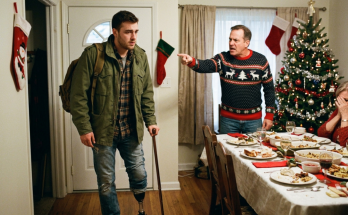
| WHOLE STORY
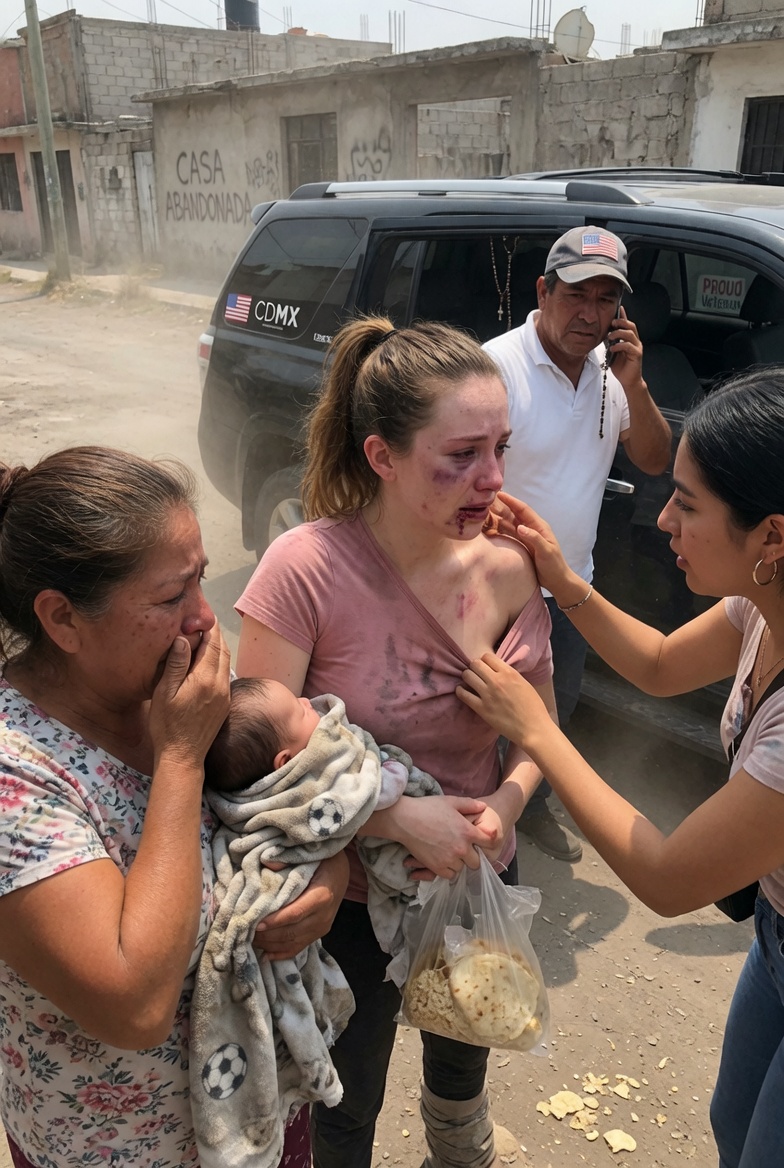
**— 1 —** *“Keep Isabela at home. I’ll take care of the rest.”* The words hung in the warm air of the car like a thunderclap waiting to strike. My father didn’t look at me when he hung up. He just put the car in gear and pulled away from the curb. The abandoned house shrunk in my side mirror. I watched it until it was nothing but a blur of rust and shattered windows. I didn’t feel relief. Not yet. I felt a hollow buzzing in my chest. The aftershock of an earthquake I hadn’t realized was still happening. My body was a knot of bruises and adrenaline, and the moment I stopped moving, it all threatened to swallow me whole. Mateo stirred in my arms. My mother leaned forward from the back seat and placed a hand on my shoulder. “Respira, hija,” she whispered. *Breathe, daughter.* So I breathed. The air smelled like old upholstery and my father’s cologne. Nothing like the abandoned house. Nothing like the rot and dust and cold concrete I had been breathing for days. I inhaled until my lungs burned. Camila was gripping my hand so hard I could feel her pulse racing through her fingertips. She didn’t speak either. She just held on, as if she was afraid I would dissolve if she let go. We drove through the streets of Ecatepec, past the narrow storefronts and the stray dogs sleeping in the shade. Past the market where I had begged for leftover rice. Past the corner where Tomás’s mother had grabbed me by the hair and thrown me out onto the pavement two days ago. The city looked different from inside my father’s car. It looked small. It looked like a place I was leaving behind. My father didn’t take the main highway. He took the old road, the one that wound through the hills toward Puebla. It was longer, but it passed through towns where he had worked as a young man. He didn’t say it, but I understood. He wanted to delay the moment we arrived home. He needed time to cool the fire inside him. My mother broke the silence first. “Isabela, when was the last time you ate?” I had to think. “Yesterday morning,” I said. “A tortilla. I shared it with Mateo.” She made a sound. A small, wounded sound, like an animal caught in a trap. “And when did you sleep?” “I don’t know. The baby wakes up a lot. And the floor is…” I stopped. The floor is cold. The floor is hard. The floor is covered in broken glass and rat droppings. I didn’t say it out loud. I didn’t have to. Camila finally spoke. Her voice was raw. “You don’t have to protect them anymore, Isa.” I looked down at my son. His tiny face was peaceful. He had no idea we had just escaped a war zone. He only knew my heartbeat. My warmth. The rhythm of my broken breathing. I pressed my lips to his forehead. “I know,” I whispered. But saying it and believing it were two different things. — **— 2 —** We reached my parents’ house in Puebla just after the sun dipped behind the mountains. The house was a modest two-story home with a wrought-iron gate and a small courtyard full of potted plants. My mother had planted bougainvillea along the wall. It bloomed fuchsia and orange, climbing toward the roof like it was trying to escape. I hadn’t seen it in two years. The last time I stood at this gate, I was leaving with Tomás. He had promised me a new life. He had promised me that his family would love me. I was eighteen. I was stupid. I was broken long before I even knew what breaking meant. My father killed the engine. The silence that followed was heavy. Nobody moved. Then my mother opened her door and got out. She walked around to my side and opened my door. She reached for Mateo. “Let me take him,” she said. “You need your arms.” I hesitated. I had held my son for so many days straight that letting go felt wrong. But my mother’s hands were steady. Strong. She cradled him against her chest and he didn’t even stir. I stepped out of the car. My ankle screamed. I had forgotten about the swelling. The pain shot up my leg and I stumbled, catching myself on the doorframe. Camila was at my side in an instant. “Easy. Easy. I’ve got you.” She wrapped an arm around my waist. I leaned on her. I hated that I needed help. I was a mother. I was supposed to be strong. But my body had given up pretending. We walked through the gate. The courtyard smelled like damp earth and jasmine. The same smell I had grown up with. The same smell I had forgotten. My father unlocked the front door and pushed it open. The living room was exactly as I remembered it. The same floral sofa. The same wooden crucifix above the doorway. The same ceramic vase on the shelf that I had made in elementary school. The same crack in the wall that my father had been meaning to fix for a decade. I stood in the entrance and I broke. Not a single sob. Not a dramatic collapse. Just tears. Silent, endless tears that rolled down my cheeks and dripped onto the tile floor. My mother was already crying too. She handed Mateo to my father and wrapped her arms around me. “My baby,” she whispered. “My baby girl. I’m so sorry. I’m so sorry we didn’t come sooner.” I shook my head. “You didn’t know.” “We should have known.” “I didn’t call. I didn’t tell you.” She pulled back and cupped my face in her hands. Her thumbs brushed away my tears. “You are not responsible for the evil they did to you. Do you hear me? You survived. You got out. That is all that matters.” My father stood behind her, holding Mateo. His face was stone, but his eyes were wet. “Sit down,” he said. “Let me look at your ankle.” I sat on the sofa. It was softer than anything I had felt in months. My father knelt in front of me and gently lifted my foot. He unwrapped the bandage I had made from a torn shirt. His jaw tightened. “It’s infected,” he said quietly. I looked down. The skin around my ankle was red and hot, streaked with angry lines. “I’ll get the medical kit,” my mother said. Camila disappeared into the kitchen and came back with a glass of water and a plate of bread. “Eat,” she said. “Don’t argue. Just eat.” I ate. I chewed slowly. The bread tasted like sawdust but I forced it down. My body needed fuel. My mother cleaned my wound with antiseptic. It burned. I bit my lip and didn’t make a sound. I had learned to be silent. I was unlearning it. — **— 3 —** I stayed awake for the next hour. Not because I wasn’t exhausted, but because I couldn’t trust the quiet. Every time the house creaked, I flinched. Every time a car passed outside, my heart slammed against my ribs. My mother noticed. She didn’t say anything. She just sat beside me on the sofa and held my hand. Mateo was asleep in a drawer lined with blankets. My mother had pulled it out of the dresser and placed it on the floor next to the sofa. It wasn’t a crib, but it was safe. He was safe. We were safe. But my brain hadn’t gotten the memo. My father was in the kitchen. I could hear him on the phone. His voice was low, controlled. He was talking to someone about something. I didn’t ask. Then I heard the front gate. Heavy footsteps. I braced myself. The door opened. Alejandro walked in. He was still wearing his work clothes. A white shirt with the sleeves rolled to his elbows. A loosened tie. His face was hard, but when his eyes found me, he softened. He crossed the room in three long strides and dropped to his knees in front of me. He didn’t speak. He just looked at my arms. The bruises. The scratches. The handprint. He reached out and gently lifted the collar of my dress. His hand trembled. He saw the purple and black marks that covered my back. “I’m going to kill him,” he said. His voice was calm. That’s what scared me. He wasn’t angry in the way people get angry. He was cold. Deliberate. The kind of cold that starts forest fires. “Alejandro,” I said. “Don’t.” “Don’t what? Don’t make him pay for what he did?” “Don’t ruin your life for him. He’s not worth it.” He looked at me. His eyes were red. “You are my sister. You are worth everything.” Camila was standing behind him. She put a hand on his shoulder. “We’re going to do this the right way. Legal. Clean. He’s going to lose everything, and he’s going to lose it in a way that leaves him no room to crawl back.” Alejandro nodded slowly. He took out his phone. It was nine o’clock at night. He didn’t care. He called his lawyer first. Then he called the police precinct in Ecatepec. Then he called a contact at the construction company where Tomás worked. Every call was the same. “My sister was assaulted by her husband and her mother-in-law. I have photographic evidence. I have medical proof. I have witnesses. I want charges filed tonight.” He didn’t raise his voice. He didn’t have to. By the time he hung up the last call, I understood something. My brother was not just a businessman. He was a storm. — **— 4 —** The knock came at eleven-fifteen. I was dozing on the sofa. Mateo was nursing, his tiny mouth working tirelessly. The knock made me jerk so hard I nearly dropped him. “Stay inside,” my father said. He walked to the door. Alejandro was already standing. He didn’t ask who it was. He already knew. My father opened the door. Tomás was standing on the sidewalk. Behind him was his father, Don Raul. Behind them, sitting in the passenger seat of the family car, was Doña Verónica. She was crying. I could hear her sobs through the open window. Tomás looked terrible. His shirt was untucked. His face was pale and sweaty. His eyes were wide and glassy. “I need to see Isabela,” he said. “No,” my father said. “Please. I need to explain.” “There is nothing to explain.” My mother held Mateo tighter. Camila stood in front of me, blocking me from view. But I didn’t want to be hidden. I stood up. My ankle screamed, but I ignored it. I walked to the door. Tomás’s eyes met mine. For a second, I saw something in them. Fear. Desperation. And for just a moment, I felt a flicker of the old pity I used to carry for him. Then I remembered. I remembered the slap. The hunger. The cold concrete floor. My son crying in the dark. His mother’s voice screaming that I was useless. The pity died. “What do you want, Tomás?” I asked. “I came to apologize. I came to fix this.” “You can’t fix this.” “My mother… she’s sick. She has problems. You know how she is.” “I know exactly how she is. And I know exactly how you are. You stood there and watched.” He looked down. “I know. I was a coward.” “You were worse than a coward. You were a participant.” Verónica got out of the car. She stumbled toward the gate, her face streaked with mascara. “Isabela! Perdóname! I didn’t mean for things to go this far!” I looked at her. This woman who had taken my phone. Who had stolen my money. Who had locked me out with a newborn baby while she slept in a warm bed. “You threw me out like garbage,” I said. “You starved my son. You hit me.” “I was angry! You were so difficult—” “I asked for milk for my baby. That made me difficult.” Alejandro stepped forward. “Get off this property. Now.” “We just want to talk!” Verónica begged. “You had months to talk. You had days to talk. You had the chance to be decent human beings and you chose violence and cruelty. There is nothing left to say.” Don Raul finally spoke. His voice was tired. Broken. “We lost the Monterrey deal.” “I know,” Alejandro said. “The whole company is going under.” “I know.” “Please. We can’t survive this.” Alejandro looked at him with absolute ice. “You should have thought of that before you let your wife beat my sister black and blue. The deal is dead. Your reputation is dead. And if you ever come near my family again, the only thing left will be the criminal charges.” Tomás fell to his knees. Right there on the sidewalk. “Isabela. Please. I’ll do anything. I’ll sign whatever you want. Just stop this.” I looked down at him. The man I had married. The man I had feared. He was nothing. A hollow shell. A coward on his knees. “Tomorrow morning,” I said. “I want my documents. My birth certificate. Mateo’s papers. My clothes. My phone. The money you took from me. Everything. You have until ten in the morning.” “I will. I swear I will.” “And you will sign whatever divorce papers my lawyer puts in front of you. You will give up any claim to Mateo. You will stay away from me forever.” He nodded frantically. “Yes. Anything.” I turned and walked back into the house. I didn’t look back. — **— 5 —** The next morning, a white van pulled up at 9:47. Tomás and his father carried the boxes themselves. They set them down on the sidewalk and stepped back. My father checked every item. My documents. My clothes. Mateo’s things. The small amount of cash I had hidden that they had found and taken. It was all there. Tomás didn’t look me in the eye. He just nodded and walked back to the van. Verónica was not with them. I never saw her again. — **— 6 —** The weeks that followed were a new kind of battle. The physical wounds healed. The bruises faded. The infection in my ankle cleared. I started gaining weight. I started sleeping through the night. But the war inside my head was just beginning. I would be in the kitchen, and a pan would drop, and I would hit the floor before I even knew what was happening. I would hear a raised voice outside and my heart would start pounding so hard I couldn’t breathe. I couldn’t stand with my back to a doorway. I couldn’t let Mateo out of my sight. My mother found me crying in the bathroom one night. I was sitting on the floor, clutching my knees, rocking back and forth. “I can’t stop seeing it,” I told her. “The room. The dark. The cold.” She sat down beside me. “I know. I can’t stop seeing it either.” “I’m sorry.” “Stop apologizing.” “I feel like I’m broken.” She took my hand. “You are not broken. You are cracked. And cracks let the light in.” I started therapy. Doctora Vargas had a small office with a window that faced a garden. I went every week. “Tell me about the first time he hurt you,” she said. “It was his mother. She didn’t like the way I held Mateo. She said I was clumsy.” “And where was Tomás?” “Watching TV.” “Did he defend you?” I thought about it. Really thought about it. “No,” I said. “He never did.” “So you were alone.” “Yes.” “You are not alone anymore.” I let those words sink in. I was not alone. I had a mother who held me. I had a father who stood guard at the gate. I had a sister who held my hand in the dark. I had a brother who was a storm. And I had a son who needed me to be whole. Slowly, I started to put myself back together. I got a job at my brother’s distribution center. I started with filing and answering phones. Within three months, I was managing accounts. My father bought a new rocking chair for the patio. I spent my afternoons there, Mateo on my chest, watching the sun go down. My mother taught me to cook again. I had forgotten how. Camila took me shopping. I bought new clothes. Bright colors. Things that felt like me. One night, I looked in the mirror and didn’t flinch. I saw a woman. A mother. A survivor. — **— 7 —** The day of the final court hearing was bright and clear. Tomás stood on the other side of the room. He looked different. Smaller. Older. The judge read the terms. Full custody to me. Supervised visitation for him, if he completed anger management. Full child support. A protective order that barred him from coming within five hundred feet of me or my family. He didn’t fight. He just nodded. When the gavel fell, I felt something lift off my shoulders. A weight I had been carrying for years. Mateo was two years old by then. He was running. He was talking. He was happy. He would never know the abandoned house. He would never know the hunger. I had given him a new life. And in doing so, I had given one to myself. — **— 8 —** A few weeks later, I was in the garden. Mateo was holding onto the rocking chair. “Mama,” he said. “Mira.” He let go. He took one step. Then another. He wobbled. Then he ran into my arms. I scooped him up and held him close. I could feel his heart beating against mine. My mother was standing in the doorway, her hand over her mouth. My father was laughing. Camila was clapping. And Alejandro walked through the gate just in time to see it. He set down his briefcase and walked over. He took Mateo from my arms. “Ay, mi niño grande,” he said, his voice thick with emotion. “Your first steps.” Mateo giggled. Alejandro looked at me over the top of my son’s head. “You did this,” he said. “You gave him this life.” I shook my head. “We did this. All of us.” He smiled. For the first time in a long time, the smile reached his eyes. We stood there in the garden, the sun setting behind us, the bougainvillea blooming against the wall. Mateo laughed. I closed my eyes. And for the first time in what felt like forever, I was not afraid. I was home. — **— 9 —** I used to think strength meant enduring. I thought love meant accepting the pain that came with it. I was wrong. Strength is leaving. Love is the arms that catch you when you fall. It is a mother who bathes your wounds without asking questions. It is a father who stands at the gate and does not move. It is a sister who holds your hand in the dark. It is a brother who burns down the world to keep you safe. I spent years believing I was worthless. It took my family moments to prove me wrong. I am not the woman who walked into that abandoned house. I am the woman who walked out. And now, when I look at my son, I don’t see a weak child. I see a boy who has a mother who will fight for him with everything she has. I see a boy who will never know the cold concrete floor. I see a boy who will grow up knowing he is loved. That is my victory. That is my peace. I am Isabela. I survived. And I am just getting started. TITLE: FACEBOOK CAPTION: I was heading to the only place I had left—an abandoned house behind the row of homes owned by my husband’s family. They had thrown me out again. Yesterday, my husband Tomás slapped me in front of his mother when I asked him for milk money. His mother, Doña Verónica, grabbed me by the hair and screamed, “If you want to raise that weak child, go and survive on your own!” She took my phone, locked the door, and left me in the street. So I hid in that abandoned house. No door. No windows. Just a cold concrete floor. I held Mateo all night, begging him to stay quiet. I was just meters from that rotten door when I heard screeching brakes. A black SUV. The door swung open. “Isabela!” I froze. My sister Camila jumped out first. Then my mother Rosa and my father Javier. They stared at me as if I were a ghost. My mother covered her mouth. “My God… my baby…” Camila touched my bruised cheek. “Who did this to you?” The lies were stuck in my throat. “I fell… I’m fine…” Mateo let out a weak cry. My mother scanned my body. The handprint on my arm. The split lip. The swollen ankle. She burst into tears. My father took the plastic bag from my hand. He opened it. Stale rice. Cheap milk. “Did you get this from the trash?” he asked, his voice dangerously low. I couldn’t meet his eyes. Camila looked at the abandoned house. “Don’t tell me you sleep there.” Everything shattered. I fell to my knees and confessed. The beatings. The hunger. The freezing nights while my mother-in-law slept in a warm bed just a few feet away. My father stood completely still. The silence was terrifying. My sister hugged me, but I flinched. She pulled my collar down and saw the purple bruises covering my back. “Damn them,” she whispered. My father didn’t yell. He just opened the car door. “Get in.” I shook my head. “If I leave, he will take Mateo.” My mother grabbed my arm. “You are never going back there.” “But I have nothing… no documents, no money…” My father looked me in the eyes. “You are my daughter. You will never lack a place to come back to. We are getting your things back. Tonight.” I sat in the car. My mother held Mateo. Camila held my hand. My father got in the driver’s seat. He didn’t start the engine. He took out his phone. He didn’t call the police. He called my brother, Alejandro. A single sentence, dry and direct: “Your sister is being abused. Come home right now.” Two seconds of silence on the other end. Then Alejandro’s voice came through the speaker, deep and terrifying: “Keep Isabela at home. I’ll take care of the rest.” **— 10 —** The first birthday came and went like a quiet miracle. Mateo turned one on a Saturday in late October. My mother baked a small cake, yellow with white frosting, the way she used to for us when we were children. She placed a single candle on top and stood back with her hands clasped. “Make a wish, mija,” she said to me. I looked at Mateo, sitting in his high chair with frosting smeared across his cheeks. He was laughing at Camila, who was making faces at him from across the table. My father was filming on his phone, his hands unsteady. Alejandro was leaning against the kitchen counter, arms crossed, watching with a softness in his eyes that he rarely let anyone see. I closed my eyes. *I wish this lasts.* I blew out the candle. Camila cheered. Mateo clapped his sticky hands. My father wiped his eyes and pretended it was the smoke. It was the first celebration I had been present for in years. Not just physically present. *Present.* I felt the warmth of the kitchen, the smell of vanilla and cinnamon, the weight of my son’s small hand grabbing my finger. I felt the laughter vibrating through the floor. I let myself feel it. And it didn’t hurt. That night, after everyone had gone to sleep, I sat on the edge of Mateo’s crib and watched him breathe. His chest rose and fell in the dim light from the hallway. His lips were slightly parted. His fingers were curled around the edge of a small stuffed rabbit that Camila had bought him. I touched his cheek. “I will never let anyone hurt you,” I whispered. He stirred, sighed, and settled deeper into sleep. I stayed there until my legs went numb. — **— 11 —** I started working at Alejandro’s distribution center full-time when Mateo turned fifteen months. It was a large warehouse on the outskirts of Puebla, filled with rows of pallets, forklifts, and the constant hum of conveyor belts. The office was a glass box in the front, overlooking the loading docks. My brother ran the place with an iron hand and a quiet voice. The workers respected him because he never asked them to do anything he wouldn’t do himself. I had seen him unload a truck at midnight when a driver was short-staffed. I had seen him sit with a mechanic and learn the repair work just so he could understand the delays. He expected the same from me. My first week, he handed me a stack of invoices and a calculator. “Organize these by date and vendor,” he said. “Then reconcile them against the delivery receipts.” I stared at the stack. It was three inches thick. “That’s… a lot.” “You can do it.” He walked away. I didn’t sleep that night. Not because I was afraid, but because I was determined. I wanted to prove to him, and to myself, that I could handle it. By Friday, I had everything balanced down to the last peso. Alejandro reviewed my work in silence. He flipped through the pages, checked a few numbers against the system, then looked up at me. “You missed a zero on line forty-two.” My heart dropped. He held up the paper. “But everything else is perfect. Good work.” It was the first time he had praised me since I was a child. I carried that feeling for days. — **— 12 —** Six months into the job, Alejandro promoted me to assistant manager. It came with a small office of my own, a window that looked out at the mountains, and a raise that made my mother cry. “My daughter,” she said, holding the letter. “Manager.” “Assistant manager,” I corrected. “Don’t ruin this for me.” Camila came over that night with a bottle of wine. We sat in the courtyard, watching the stars. “Look at you,” she said, raising her glass. “From abandoned house to corner office.” I laughed. “It’s a cubicle.” “It’s a cubicle with your name on it. That’s a win.” I swirled the wine in my glass. “Sometimes I still can’t believe it. Any of it.” “Believe it. You earned it.” “I didn’t do it alone.” She set her glass down and looked at me. “No. But you’re the one who walked out of that house. You’re the one who kept going. We just opened the door.” I reached over and took her hand. “Thank you for opening it.” She squeezed back. “Always.” — **— 13 —** Mateo started talking in full sentences just after his second birthday. “Mama, look,” he would say, pointing at a bird. “Bird. Flying.” “Mama, I hungry.” “Mama, where Tío Ale?” Alejandro had become his favorite person. Every evening, when my brother came home from work, Mateo would run to the gate and wait for him. Alejandro would scoop him up and throw him in the air, and my son’s laughter would echo through the whole neighborhood. One evening, I watched them from the kitchen window. Alejandro was holding Mateo on his shoulders, walking slowly around the courtyard, pointing at the flowers. “That one is red,” he said. “That one is yellow.” “Yellow,” Mateo repeated. “And that one over there? That one is bougainvillea. Your grandmother’s favorite.” “Boo-gain-vee-ya.” “Close enough.” I smiled. My mother came up behind me. “He’s good with him.” “He is.” “He never had children of his own. I think he sees Mateo as the son he never had.” “I think Mateo sees him as the father he should have had.” She was quiet for a moment. Then she said, “You’ve given him a family, Isabela. A real one.” I leaned my head against her shoulder. “We gave each other.” — **— 14 —** The nightmares stopped around the time Mateo turned three. I didn’t notice at first. I woke up one morning and realized I had slept through the night without waking in a cold sweat, without reaching for a weapon, without checking the locks three times. I lay in bed, staring at the ceiling. The morning light was soft through the curtains. I could hear birds outside. The smell of coffee drifting up from the kitchen. I closed my eyes and let myself feel safe. It was strange. It was wonderful. I got dressed and went downstairs. My father was sitting at the table, reading the newspaper. My mother was at the stove, stirring something that smelled like chorizo and eggs. “Good morning,” I said. They both looked up. “Good morning, mija,” my mother said. My father folded his paper. “You slept well?” “I did.” He nodded. “Good.” It was a small exchange. But it meant everything. I sat down at the table, and for the first time in years, I was hungry. — **— 15 —** Alejandro came home early one Friday with a folder in his hand. I was in the living room, helping Mateo with a puzzle. My mother was knitting in the corner. My father was out back, watering the plants. “I need to talk to you,” Alejandro said. His voice was serious. My stomach tightened. “What happened?” “Nothing bad. Sit down.” I sat. He sat across from me. “I was approached by a woman last week. She runs a shelter for women and children in Ecatepec.” I felt my chest tighten at the name of that city. “What about it?” “She heard about your story. She asked if you would be willing to speak at one of their events. Share your experience. Tell other women that there is a way out.” I stared at him. “I can’t,” I said. “You don’t have to decide now. Think about it.” “I can’t stand in front of people and talk about what happened.” “You don’t have to talk about the details. You can talk about the recovery. The hope.” I shook my head. “I’m not ready.” He nodded. “Okay.” He put the folder on the table. “The information is there if you change your mind.” I didn’t open it that night. But I couldn’t stop thinking about it. — **— 16 —** That night, I couldn’t sleep. I lay in bed, staring at the ceiling, the folder burning a hole in my mind from the kitchen table. What would I even say? *Hello, my name is Isabela. My husband beat me. His mother starved me. I slept on a concrete floor with my newborn son.* I couldn’t. I got up and walked to Mateo’s room. He was curled up in his bed, his stuffed rabbit tucked under his arm. The nightlight cast a soft glow on his face. I knelt beside his bed. “I’m sorry,” I whispered. “I’m sorry you were born into that. I’m sorry I couldn’t protect you sooner.” He didn’t wake. But I felt something release in my chest. I realized, kneeling there in the dark, that I had been carrying guilt for years. Guilt for not leaving sooner. Guilt for not being strong enough. Guilt for bringing my son into a world that hurt him. But he wasn’t hurt anymore. He was safe. He was loved. He was happy. And I had done that. I had walked out of that abandoned house. I had gotten in the car. I had let my family save me. *Maybe,* I thought, *that story could save someone else.* — **— 17 —** I called Alejandro the next morning. “I’ll do it,” I said. There was a pause. “Are you sure?” “No. But I’ll do it anyway.” He didn’t laugh. He understood. “I’ll set it up. You’ll be speaking to about thirty women. Small group. Informal. You can say as much or as little as you want.” “Okay.” “I’ll be there. And Camila, if you want.” “Okay.” I hung up and sat in the kitchen, staring at my hands.
|