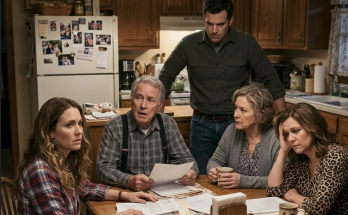
We did not try to cancel Lorraine’s appointment with Dr. Marissa Cole.
Mark wanted to.
At first he wanted to call the psychologist, explain everything and warn her that Lorraine was lying. I understood the impulse. For days we had been discovering pieces of a plan built in rooms where we were absent. The instinct to rush in and correct the record was almost unbearable.
But our attorney advised the opposite.
By then we had hired one.
Her name was Evelyn Shaw, a family-law attorney recommended by Ray. She was in her early fifties, spoke quietly and wasted no words. We showed her the photographs of the blue folder, the rental agreement information, the contractor papers, the furniture order and Lorraine’s messages.
Evelyn read everything twice.
Then she said, “Stop trying to understand her emotionally.”
Mark looked surprised.
“What?”
“You keep asking why your mother would do this. That question may matter later. Right now, focus on what she is doing.”
She tapped the folder.
“She is creating a record.”
Another tap.
“She is seeking professional validation.”
Another.
“She is arranging housing.”
Another.
“She has attempted access to medical information.”
Then she looked at me.
“And she is provoking conflict while telling other people you are unstable.”
Hearing it summarized that way made my skin crawl.
“What do we do?”
“Document. Restrict access. Correct false information with institutions that matter. Do not give her dramatic material.”
Mark looked toward the window.
“She has an appointment with a psychologist tomorrow.”
“Good.”
He stared at Evelyn.
“Good?”
“If Dr. Cole is ethical, your mother cannot walk in and obtain a diagnosis of Jennifer based on third-party gossip. Let Lorraine discover that.”
So we waited.
At eleven the next morning, Dr. Cole’s office called me.
I nearly dropped my phone.
The receptionist asked whether I was Jennifer Carter and whether I knew Lorraine Hale.
“Yes.”
“Dr. Cole would like to speak with you briefly, if you’re willing.”
I looked at Evelyn, who was sitting across from me.
She nodded.
Dr. Cole came on the line.
Her tone was careful.
“Mrs. Carter, I want to be very clear that I have not evaluated you, and I cannot offer any opinion about your mental health.”
“I understand.”
“A relative of yours attempted to schedule what she described as a family consultation concerning your wellbeing.”
My mouth went dry.
“Lorraine?”
“Yes.”
“She came to the appointment?”
“She did.”
“Was Mark listed?”
“Yes.”
Mark closed his eyes.
Dr. Cole continued. “Your husband was described as unable to speak freely in your presence.”
Mark leaned toward the phone.
“That is false.”
“I suspected he was listening.”
“He is.”
“Good.”
Her voice became firmer.
“I informed Mrs. Hale that I could not assess an absent adult, could not diagnose someone based on family allegations and would not participate in creating a clinical record about you without appropriate consent and direct evaluation.”
A breath left my body that I had not realized I was holding.
“What did she do?”
“She became upset.”
I could imagine it.
“She presented a large number of notes.”
“The blue folder.”
“She did not call it that. She claimed the notes documented progressive instability.”
“Did you keep them?”
“No.”
“Did she say why she needed your opinion?”
Another pause.
“She said a newborn would soon be entering what she believed was an unsafe environment.”
Mark stood so abruptly his chair scraped the floor.
Dr. Cole continued.
“She also mentioned pursuing emergency family-court intervention after the birth.”
The room blurred for half a second.
I pressed my free hand to my stomach.
The baby moved.
Not dramatically.
Just a small, ordinary movement beneath my palm.
That ordinary life grounded me more than anything else could have.
“Did she say she wanted custody?”
“She used the phrase temporary protective placement.”
Of course she did.
Lorraine always preferred words that disguised what she wanted.
“Thank you for telling me.”
“There’s one more thing.”
I waited.
“She attempted to show me what she described as medical evidence.”
“What evidence?”
“A photograph of a prescription bottle and copies of appointment information. None established what she claimed.”
My anger became cold again.
Before ending the call, Dr. Cole made one recommendation.
“Mrs. Carter, because you are approaching delivery, I would notify your medical team and hospital security in writing that this individual has no authority to receive information or remove your child.”
“We already did.”
“Good.”
That single word felt better than comfort.
By late afternoon, Lorraine knew the appointment had failed.
We knew because the messages began.
First to Mark.
You humiliated me.
Then:
That woman refused to listen because Jennifer has turned everyone against me.
Then:
When something happens to the baby, remember I tried.
Mark did not answer.
Lorraine called twelve times.
He let every call go to voicemail.
At seven that evening, the messages changed.
Your sister’s wedding is tomorrow. Do not destroy her day over this.
Mark stared at the screen.
“She thinks we’re the ones destroying things.”
I was folding Zoe’s dress on the bed.
“That’s useful for her.”
“What is?”
“If she defines every consequence as an attack, she never has to examine what caused it.”
He sat beside me.
For once, he did not say she meant well.
The wedding became the next problem.
Amber wanted us there.
She also wanted Lorraine there.
Not because she forgave her.
Because she had dreamed about this day for years, and the reality that her mother might turn it into a family battlefield was breaking her heart.
“I’m not asking you to pretend,” she told me over the phone. “I swear. I just want to get married without wondering whether she’s going to explode.”
I looked at Mark.
He shook his head.
Then Amber added, “I hired security.”
That made me blink.
“You what?”
“Two people from the venue company. Mom doesn’t know.”
“Amber…”
“I learned from you.”
Despite everything, I laughed.
So we agreed to attend under strict conditions.
Zoe would remain with us at all times.
Lorraine would never be alone with her.
We would not discuss the conflict at the wedding.
If Lorraine approached aggressively, we would leave.
The ceremony took place in a converted stone mill beside a river. Amber had chosen autumn-colored flowers and small lanterns along the aisle. For thirty minutes before the ceremony began, I almost remembered what normal family anticipation felt like.
Then Lorraine arrived.
She wore deep blue.
She kissed relatives.
She smiled.
She behaved as though none of the previous forty-eight hours had happened.
The performance was so complete that I understood how she had convinced people for years that I was overly sensitive.
From a distance, she looked generous.
Warm.
Competent.
She did not approach us before the ceremony.
That restraint made me more nervous than confrontation would have.
During the vows, Mark held my hand.
When Amber’s husband slipped the ring onto her finger, she cried and laughed at the same time. For that moment, even Lorraine seemed genuinely moved.
I wanted to believe the day might survive.
At the reception, it did for nearly an hour.
Then Aunt Carol approached me near the dessert table.
She looked uncomfortable.
“Jennifer, how are you feeling?”
“I’m fine.”
“Really?”
“Yes.”
Her eyes flicked toward my stomach.
“I heard you’ve been having a difficult pregnancy.”
There it was.
“Who told you?”
She did not answer.
She did not need to.
“What exactly did Lorraine say?”
Aunt Carol flushed.
“Just that you were struggling.”
“With what?”
“She didn’t give details.”
“She usually doesn’t.”
Carol shifted her plate.
“She said the family might need to rally around Mark after the baby arrives.”
I looked across the room.
Lorraine stood beside the bar speaking with two cousins.
Even from that distance, she looked serene.
I turned back to Carol.
“My pregnancy is medically normal.”
“Oh.”
“I’m tired sometimes. I’ve had nausea. Neither is a psychiatric crisis.”
Carol’s face went red.
“I didn’t say it was.”
“No. But someone wants you thinking it might be.”
She whispered, “I’m sorry.”
I believed her.
That was when I understood how Lorraine’s method worked.
She did not need to convince anyone of a specific accusation.
She only needed to distribute uncertainty.
Ten minutes later, another relative asked whether Mark was “holding up okay.”
Then someone else asked if I planned to “take a break from the children” after delivery.
By the third question, Mark noticed.
He walked straight to his mother.
I followed because I did not trust the conversation to remain quiet.
“What have you been telling people?” he asked.
Lorraine smiled at the cousin beside her.
“Excuse us.”
When the cousin left, her smile vanished.
“This is Amber’s wedding.”
“Then stop talking about my wife.”
“I haven’t.”
“People keep asking whether she’s mentally okay.”
“I cannot control gossip.”
“You started it.”
Her eyes narrowed.
“Lower your voice.”
“No.”
Several nearby guests turned.
Lorraine glanced around.
Then she did something I had not expected.
She began crying.
Not gradually.
Instantly.
Her shoulders trembled.
Her hand covered her mouth.
“My son hates me.”
Mark froze.
People began watching.
“I’ve done everything for him,” she said louder. “Everything. And now I’m treated like some kind of criminal because I’m worried about my grandchildren.”
I felt the old reflex rise in me.
Fix it.
Calm her.
Move the conversation somewhere private.
Protect the room from discomfort.
For thirteen years, that reflex had served her.
This time I stayed still.
Mark did too.
Lorraine looked around at the growing audience.
“She won’t even let me see my granddaughter.”
No one said anything.
Then a small voice spoke from beside me.
“You hit me.”
Zoe.
I had not realized Amber’s husband had brought her over from the dance floor.
The room went completely silent.
Lorraine stared at her.
Zoe touched her own cheek.
“You hit my face.”
I crouched immediately.
“You don’t have to talk, sweetheart.”
But Zoe looked at Lorraine.
“Mommy didn’t lie.”
Lorraine’s tears stopped.
Not slowly.
Stopped.
That was the moment several relatives understood.
I saw it happen in their faces.
Aunt Carol lowered her eyes.
One cousin stepped backward.
Amber crossed the room.
“Mom, go home.”
Lorraine turned toward her daughter.
“What?”
“It’s my wedding.”
“I know.”
“And I’m asking you to leave.”
The pain on Lorraine’s face looked real.
That made nothing easier.
“Amber…”
“Please.”
For several seconds I thought Lorraine might refuse.
Then one of the security staff appeared near the doorway.
She saw him.
Her expression hardened.
She picked up her handbag.
As she passed me, she leaned close enough that only I could hear.
“You think this makes you safe?”
I said nothing.
She whispered, “You still don’t know what Mark told me.”
Then she walked away.
My stomach dropped.
I turned toward my husband.
He had heard enough to know what she said.
His face gave him away before he spoke.
“What did you tell her?” I asked.
“Not here.”
“Mark.”
He looked toward Zoe.
“Please.”
The drive home was almost silent.
Zoe fell asleep in the back seat.
When we reached Willow Lane, Mark did not get out of the car.
Rain dotted the windshield.
Finally he said, “Last year, after we had that fight about having another baby, I went to Mom’s.”
I waited.
“I said things I shouldn’t have.”
“What things?”
“That I didn’t know if we were strong enough for another child.”
My throat tightened.
“What else?”
“That sometimes I felt like you shut down when you were overwhelmed.”
I stared at him.
“You told her I couldn’t handle another baby?”
“No. I told her I was scared.”
“Did you tell her I was unstable?”
“No.”
“Did you tell her you were afraid of me?”
“Never.”
“What did you say?”
He rubbed both hands over his face.
“I said I felt invisible sometimes.”
The words hurt because they were not Lorraine’s invention.
They were his.
“I said you were exhausted after Zoe was born. That we fought. That there were days neither of us knew what we were doing.”
“That describes almost every new parent.”
“I know.”
“Lorraine turned it into evidence.”
“I know.”
I looked away.
Then Mark said something that made me turn back.
“There’s more.”
“What?”
“She recorded me.”
The car seemed suddenly airless.
“How do you know?”
“She sent me part of it tonight.”
He handed me his phone.
An audio file sat beneath Lorraine’s last message.
The caption read:
You may want to remember what you said before you let her convince you that I invented everything.
I pressed play.
Mark’s voice filled the car.
Tired.
Angry.
A year younger.
“I don’t know what happens if we have another baby and she falls apart again.”
The recording ended.
Five seconds.
One sentence.
No context.
Exactly the kind of fragment Lorraine could use.
Then another message appeared.
There are more recordings.
Click here to continue reading: PART 8: The Secret Recordings Exposed Lorraine’s Final Leverage, and Mark Had to Decide Whether Protecting His Mother Would Cost Him His Family
My Mother-in-Law Slapped My Daughter and Planned to Take My Baby—But She Didn’t Know the House Was Mine
Part 7 of 15