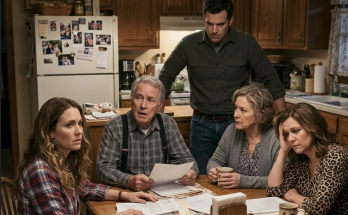
The forged signature ended whatever remained of Mark’s belief that his mother might somehow explain herself.
He did not pace.
He did not defend her.
He sat at the kitchen table staring at my name typed beneath words I had never approved and said, “She used your identity.”
I nodded.
The simplicity of his sentence matched the moment better than anger would have.
Lorraine had moved past interference.
Past manipulation.
Past gossip.
She had impersonated me.
Again.
Only this time she had signed my name.
Evelyn told us not to contact the care agency further without preserving everything.
The agency’s compliance officer called me the next morning.
She sounded horrified.
Their records showed the application had been started online from an email address containing my initials.
It was not mine.
The phone number on the application belonged to a prepaid mobile account.
The emergency contact was Lorraine.
The application requested a female psychiatric home-care worker beginning four days after my estimated due date.
Four days.
As if the future had already been scheduled.
“Was there a diagnosis attached?” I asked.
“No formal diagnosis.”
“What did the application say?”
The compliance officer hesitated.
“It stated that formal assessment was expected following delivery.”
“Expected by whom?”
“The form says family physician.”
Dr. Patel had never written anything of the kind.
Neither had any family physician.
The agency suspended the application and agreed to preserve server logs.
Ray referred the identity issue to investigators.
The clinic’s privacy investigation continued simultaneously.
Suddenly there were professionals everywhere.
Lawyers.
Compliance officers.
Hospital security.
Investigators.
Administrators.
For years Lorraine had controlled conflict by keeping it familial.
Private.
Messy.
Unrecorded.
Now every lie crossed into somebody else’s system.
Those systems kept logs.
Melissa Dane asked to speak with me through her own attorney.
Evelyn initially advised against it.
Then Melissa’s attorney offered a formal written statement instead.
We accepted.
It arrived late that afternoon.
Melissa had known Lorraine for twenty-two years.
They had worked together at St. Agnes until Lorraine retired.
They remained occasional friends.
When Lorraine discovered Melissa worked at Dr. Patel’s clinic, she began asking questions about me.
At first, Melissa claimed, the questions seemed harmless.
Was Jennifer attending appointments?
Was the pregnancy considered high risk?
Had the doctor mentioned induction?
Melissa said she refused to answer.
Then Lorraine told her I had become unstable.
That Mark was frightened.
That the family needed information to protect Zoe and the unborn baby.
Melissa still refused.
Until Lorraine offered something.
A job.
Mark read the statement aloud.
“She said she could get Melissa hired as office manager at a private practice?”
Evelyn nodded.
“Apparently Lorraine knows one of the owners.”
Melissa had recently been denied a promotion.
She was angry.
Lorraine knew.
She told Melissa that helping the family document my condition would prove she was trustworthy.
So Melissa opened my chart.
Once.
Then again.
Then eleven times.
She printed records.
She photographed my identification documents.
She gave Lorraine my insurance information.
She even answered questions about hospital registration.
In exchange, Lorraine promised to introduce her to the physician who owned the private practice.
The introduction never happened.
“What did Melissa think Lorraine would do with my license?” I asked.
Evelyn read further.
“She says Lorraine told her she needed it to arrange home health services in advance.”
“Under my name?”
“She claims she did not know Lorraine intended to sign anything.”
I did not know whether I believed that.
It no longer mattered emotionally.
The evidence would be handled by people whose job was to determine responsibility.
The part that mattered to me was one sentence near the end.
Lorraine told Melissa she needed everything completed before the baby arrived because after delivery “Jennifer would be too closely watched.”
I read that sentence three times.
Too closely watched.
Not too sick.
Not too tired.
Watched.
She knew scrutiny would increase after delivery.
Which meant her plan depended on groundwork laid beforehand.
Mark looked at Evelyn.
“What was supposed to happen?”
Evelyn shook her head.
“We know pieces, not the complete sequence.”
I counted them aloud.
“Rental house.”
“Yes.”
“Nursery.”
“Yes.”
“Home-care application.”
“Yes.”
“Guardianship petition.”
“Yes.”
“Medical records.”
“Yes.”
“Recordings making me sound unstable.”
“Yes.”
I looked at Mark.
“And the hospital calls.”
His face tightened.
“She wanted them to expect a problem.”
Exactly.
If the hospital already believed concern existed, any exhausted or emotional moment after childbirth might be interpreted through that lens.
A frightened mother asking where her baby was.
A woman crying from pain.
Someone angry because an unwanted visitor appeared.
Lorraine did not need me to become mentally ill.
She needed people ready to believe I had.
That afternoon, the temporary protective order was expanded.
The judge added prohibitions against impersonating me, contacting my healthcare providers, arranging services in my name or using third parties to obtain information.
The wording felt absurdly specific.
Because Lorraine had made specificity necessary.
She was formally served at three twenty.
At four eleven, Mark received a call from an unknown number.
He did not answer.
A voicemail appeared.
Lorraine’s voice.
The first direct contact after the expanded order.
“Mark, please. This has gone far enough. Melissa is blaming me because she got caught. Jennifer is destroying people’s lives. Call me before she ruins yours too.”
We saved it.
At five thirty another voicemail arrived.
“I’m your mother.”
Saved.
At six twelve:
“Remember who stayed with you when your father left.”
Saved.
At seven:
“You owe me one conversation.”
Saved.
Mark listened to that one twice.
Then deleted nothing.
He sent them to Evelyn.
“I used to think that sentence meant love,” he said.
“What sentence?”
“I’m your mother.”
I waited.
He looked toward the backyard where Zoe was drawing chalk circles on the patio.
“Now it sounds like a demand.”
His father had left when Mark was eleven.
Lorraine raised him and Amber alone.
That history was real.
So was the sacrifice.
I had never doubted it.
But somewhere along the way Lorraine had decided survival gave her permanent ownership over the children she raised.
Mark had spent his adulthood paying interest.
The following morning brought the first development I had not expected.
Patricia Lang called Evelyn.
Lorraine had fired her.
“She hired someone else?” I asked.
“Not yet.”
“Why fire Patricia?”
“Because Patricia told her the guardianship case was not supportable on the current facts.”
Mark nodded without surprise.
Of course.
Any professional who stopped validating Lorraine became part of the conspiracy.
Patricia also forwarded correspondence she was ethically allowed to release after Lorraine made certain allegations public in court filings.
One email stood out.
Lorraine had written:
I do not need permanent custody. I need enough time for Jennifer to be evaluated while the baby stabilizes with me.
Evelyn looked at me.
“That tells us something.”
“She wanted temporary custody.”
“Initially.”
Mark frowned.
“Why initially?”
“Temporary placements can create practical momentum. That doesn’t mean a court would grant permanent custody. But once a newborn is living somewhere else, people begin arguing about continuity.”
My stomach twisted.
Lorraine may not have needed to win forever on the first day.
Only long enough to become indispensable.
Another email read:
Zoe already understands Grandma’s house is safe.
I felt sick.
The conversations with my four-year-old had not been careless.
They were preparation.
Amber cried when she read it.
“I kept leaving Zoe with Mom.”
“So did I.”
“I should’ve seen it.”
“So should I.”
Neither sentence helped.
We stopped saying them.
Regret was beginning to become another way Lorraine occupied the room.
That evening, the investigator assigned to the fraud complaint called.
He had obtained information from the prepaid number used for the care application.
The number had been activated at a grocery-store kiosk.
Security footage showed Lorraine purchasing the card.
Not someone who looked like her.
Lorraine.
The same dark coat she wore the night she came to our house.
The investigator also traced the email address.
It had been created using the rental property’s Wi-Fi.
Mark lowered his head.
“Why would she do something that traceable?”
“Because she didn’t think anyone would investigate.”
That was my answer.
Family lies had trained her badly.
Inside a family, saying something confidently enough could become reality.
Digital systems were less forgiving.
The home-care application alone might have been explainable as misguided preparation.
The false identity made it fraud.
The copied license made it worse.
The clinic records connected Melissa.
The hospital recording connected Lorraine’s voice.
The investigator would not tell us whether charges were imminent.
Evelyn warned us not to expect dramatic arrests.
“Cases move slowly.”
I understood.
But the pressure around Lorraine was growing.
Then, unexpectedly, she disappeared.
Not literally.
Her house remained occupied.
Her car remained in the garage.
But for two days there were no calls.
No messages.
No third parties.
No social posts.
No new filings.
Nothing.
The silence made me more anxious than the harassment.
On the third morning, I woke before dawn with a hard tightening across my abdomen.
I stayed still.
Waited.
It eased.
Ten minutes later, another came.
Mark woke when I sat up.
“What’s wrong?”
“I don’t know.”
Another tightening.
Stronger.
He looked at the clock.
“Are those contractions?”
“I’m not sure.”
I was still weeks from my due date.
Not dangerously early.
But early enough that Dr. Patel wanted me evaluated.
We called.
She told us to come in.
The hospital bag was already in the car.
The same bag photographed by Lorraine’s investigator.
The irony barely registered.
Amber arrived to stay with Zoe.
Mark drove.
At the hospital, security had our names ready.
A guard escorted us to maternity triage.
No information was released by phone.
No visitors were permitted without our approval.
For once, the walls around us felt real.
The contractions continued.
Dr. Patel examined me.
“You’re not in active labor.”
Relief weakened my knees.
“But your cervix has changed slightly. I want to observe you.”
“How long?”
“Several hours.”
Mark sat beside me.
For nearly two hours, nothing happened.
The contractions slowed.
Then the nurse entered.
Her expression was strange.
“Mrs. Carter?”
“Yes?”
“There’s someone downstairs asking to see you.”
My body went rigid.
“Who?”
“She gave the name Susan Carter.”
Mark stood.
“My aunt is in Arizona.”
The nurse nodded.
“We know.”
Hospital security had detained the visitor after checking identification.
The woman was not Susan.
She was not Lorraine either.
She was the same young woman from our security camera.
The one who had left the psychiatric articles on our porch.
This time police were with her.
And according to the nurse, she was crying.
“She says Lorraine Hale paid her to come here.”
Click here to continue reading: PART 12: The Woman Lorraine Sent to the Hospital Finally Described the Plan, but Her Confession Revealed the Most Dangerous Step Had Not Happened Yet
My Mother-in-Law Slapped My Daughter and Planned to Take My Baby—But She Didn’t Know the House Was Mine
Part 11 of 15