After the last car disappeared down Wicket Point Road, I stood alone on my porch and looked at the empty lawn. Two hours earlier, twenty-nine influential guests had gathered there expecting to celebrate my son’s new beach house.
Now the only evidence of their visit was a folding chair leaning against the hedge.
I carried it beside the driveway and went inside.
On the mantel stood the photograph of my late husband, Nile, smiling in his paint-stained shirt. Behind him was the porch we’d spent six summers building together.
I touched the frame gently.
“I think you’d understand,” I whispered.
That afternoon, Cullen and Blythe moved into her parents’ basement. I learned later that Miles had also removed Cullen from his management position at the boat dealership.
The $45,000 advance hadn’t disappeared, either.
Miles required him to repay it from his commissions, beginning with monthly payments of $1,500.
For the first time in his adult life, my son faced a substantial financial obligation that I wasn’t going to settle for him.
Four days later, Anoria withdrew her sponsorship of Cullen and Blythe’s application to the Wicket Point Bathing Association. Without proof that they owned or occupied the property, their application could not proceed.
Laurelai also suffered consequences.
She lost the catering deposit, and news of the disastrous gathering spread through the social circles she’d worked so hard to impress.
Eventually, she stepped down from her club’s social committee.
I didn’t celebrate any of it.
I’d wanted my son to have a beautiful wedding, a loving marriage, and a secure future. What I hadn’t wanted was to be treated as an inconvenient obstacle standing between him and my possessions.
One chilly October evening, I sat beside the wood stove with the unsigned deed on my lap.
My attorney had confirmed that the document transferred nothing without the necessary execution and legal steps.
I removed Nile’s handwritten note and placed it safely in a small wooden box.
Then I fed the unsigned deed into the fire, one page at a time.
I watched the paper curl and disappear.
For months, I’d imagined handing Cullen those pages while he wore his wedding suit. I’d pictured him embracing me, thanking me, and remembering the summers he’d spent helping his father rebuild the cottage.
But that moment had never happened.
And I finally accepted that I couldn’t purchase the relationship I’d hoped to have with my son.
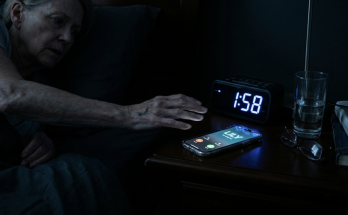
The next afternoon, my phone vibrated.
It was Cullen.
You weren’t invited to my wedding. I know how much that hurt you. I’m sorry, Mom.
I read the message several times.
There was no request for money.
No mention of the house.
No explanation about his father-in-law or his new debts.
Just an apology.
I didn’t respond immediately.
Instead, I walked outside and sat on the porch, listening to the bell buoy beyond the rocks.
Nile used to say that the buoy was the only neighbor who never lied about the weather.
I wished he were sitting beside me.
A few days later, Cullen sent another message.
Can we talk sometime? Just the two of us?
I thought about everything that had happened, including the wedding I’d missed and the painful confrontation on my lawn.
Then I answered.
Sunday at ten. Just us. No business discussions and no paperwork.
His reply came a minute later.
Okay, Mom. Thank you.
I didn’t know whether he would arrive with genuine regret or another explanation for why he’d done what he did.
But I was willing to listen.
That weekend, I planned to make lasagna, the dish Nile always requested on his birthday. I would set two places at the kitchen table and give Cullen the opportunity to speak honestly.
I wouldn’t offer him the beach house.
I wouldn’t pay his debts.
And I wouldn’t pretend that one apology erased years of entitlement.
Still, I hoped we might begin rebuilding something more valuable than an inheritance.
That evening, I took the old brass key from the hook beside the front door.
Nile had marked it with blue paint years earlier so I could always recognize the key to our cottage.
It no longer opened the locks I’d replaced.
I kept it anyway.
The house was still mine, and I intended to spend my remaining years enjoying the place we’d worked so hard to create.
When Sunday arrived, Cullen would have to knock.
I would open the door because I wanted to see my son, not because he was entitled to anything inside.
And perhaps, for the first time in years, we could sit together without either of us wondering what I was expected to give him next.
My son invited forty-six people to his wedding but excluded me because the guests were “people with status.” The next morning, he announced he and his bride were moving into my $1.94 million beach house. I drove there and found her robe in my bedroom, my belongings moved aside, and my late husband’s photograph facedown in a drawer. I changed the locks. Then my son texted that his father-in-law believed the ownership paperwork was finished.
Part 3 of 3