PART 4
At 7:03 that morning, I received a second message from the unknown number.
This time, there was a photograph attached.
It showed my son, Brian, standing outside a hotel entrance with his arm around a woman I had never seen before. Marissa was nowhere in the picture.
Beneath it were six words.
“Ask your son who he was protecting.”
I stared at the screen until it dimmed.
For a moment, I considered deleting the message. I had spent the entire night watching my grandchildren suffer, and the last thing I wanted was another mystery.
But then I remembered Lily’s frightened voice.
Grandpa, I think Daddy knew we were alone.
I saved the photograph and showed it to Officer Ramirez.
She studied it carefully.
“Do you recognize this hotel?”
“No.”
“Do you know the woman?”
“No.”
“Don’t contact the sender. We’ll document the message and see whether we can establish where the photograph came from.”
I agreed.
Then I asked, “Do you think my son is involved?”
She placed the phone on the table.
“I think we need evidence before answering that question.”
She was right.
I had spent too many years confusing love with the obligation to defend my family. I would not make that mistake again, even if the truth destroyed the picture of my son I had carried in my heart.
At 8:15 a.m., the hospital doctor came to tell me that Lily’s condition was improving, although she still needed monitoring. The medical team was continuing to investigate what she might have been given.
I thanked her, then went to find Mason.
He was sitting with a hospital social worker, drawing dinosaurs on a sheet of paper.
When he saw me, he immediately put down his pencil.
“Grandpa, did you find out who sent that message?”
I stopped.
“How do you know about the message?”
Mason looked frightened.
“I saw your phone light up when you were talking to the police.”
I sat beside him.
“No one knows who sent it yet. But the police are helping us.”
He nodded slowly.
Then he whispered, “I know the woman in the picture.”
My heart began pounding.
“You do?”
He nodded.
“Her name is Vanessa. She came to our house before.”
“Was she Mommy’s friend?”
“I don’t know. Mommy called her Aunt Vanessa, but she’s not really our aunt.”
I thought about the hotel reservation.
Two adults.
One room.
Marissa’s name.
And now a woman named Vanessa.
“What happened when she visited?”
Mason looked down at his drawing.
“She brought a big folder. Mommy and Daddy talked to her in the office. They told us to stay upstairs.”
“Did you hear what they were discussing?”
He hesitated.
“Not everything.”
“That’s okay. You don’t have to remember anything you aren’t sure about.”
He picked up his pencil again, but his fingers trembled.
“I heard Daddy say he didn’t want us to lose the house.”
I waited.
“And Mommy said there was another way.”
“What other way?”
Mason shook his head.
“I don’t know. Then Daddy said, ‘Not the children.’”
My stomach tightened.
“What did Mommy say?”
He looked directly at me.
“She said, ‘Then make sure they don’t talk.’”
For several seconds, I couldn’t speak.
I wanted to believe the words had been taken out of context. I wanted to believe they were discussing something completely unrelated to the terrible night we had just survived.
But the children had been left alone.
Lily had been found barely conscious.
Mason had been locked inside a closet.
And someone had sent me a threatening message after learning that I had rescued them.
I looked at Mason.
“Buddy, you did the right thing by telling me. The police will speak with you when you’re ready, and you can tell them what you remember. You don’t have to solve this by yourself.”
He nodded.
Then he asked, “Can we go to your house when Lily gets better?”
I wrapped my arm around him.
“If the people responsible for keeping you safe agree, my house will always be open to you.”
He leaned against me.
For the first time that morning, he smiled.
It was a small smile, and it disappeared quickly.
But it reminded me of the boy I had taken fishing last summer, the boy who had spent twenty minutes trying to convince me that the worm on his hook was actually a baby snake.
I promised myself that I would do everything within my power to help him become that boy again.
I just didn’t yet know how much more I would have to uncover.
The woman who knew too much
At 10:40 a.m., Officer Ramirez returned with another investigator.
They had contacted the hotel listed on the reservation and were checking its records through the appropriate channels.
They had also learned that the woman in the photograph was Vanessa Cole, a financial consultant who had worked with Brian and Marissa on several occasions.
That name meant nothing to me.
Until the investigator asked whether I knew about a property dispute involving my son.
I stared at him.
“What property dispute?”
He explained that they had discovered references to financial documents connected to Brian’s household. The police were not yet certain how those documents related to the children, but the information suggested there might be more to the situation than a disagreement between parents.
Then he asked me a question I never expected to hear.
“Mr. Hayes, did you ever give your son money to help him buy his house?”
“Yes.”
“How much?”
“About $180,000.”
“Was it a gift or a loan?”
I frowned.
“It was a gift. My wife and I had saved for years. When Brian and Marissa were struggling to find a suitable home after Mason was born, we helped them with the down payment.”
“Was there a written agreement?”
“No.”
“Did you ever discuss repayment?”
“No. It was for the children. I wanted them to have a stable home.”
The investigator made a note.
“Did you ever receive correspondence suggesting that your contribution gave you an ownership interest in the property?”
“No.”
“Did anyone ever ask you to sign documents related to that contribution?”
I thought for a moment.
Then I remembered something.
About six months earlier, Brian had visited me with a stack of papers. He told me that his accountant needed a few signatures to update some family records.
I had been busy repairing a leaking pipe in my kitchen. I told him I would look at the papers later.
He said it was routine.
I signed one document after he pointed to the signature line.
I hadn’t read every page.
The memory made my stomach sink.
“I signed something,” I admitted. “But I don’t remember exactly what it was.”
The investigator exchanged a glance with his colleague.
“Do you have a copy?”
“No.”
“Can you contact your son and ask him for one?”
I thought of the message telling me not to open the closet.
“No,” I said. “I’ll let you handle it.”
He nodded.
“That’s probably best for now.”
After they left, I sat alone in the waiting room and thought about that signature.
I had trusted Brian.
I had trusted him with my money, my home, and my grandchildren.
Had I also trusted him with something I didn’t understand?
I took out my phone and searched my email for messages from him about the paperwork.
There it was.
An email dated six months earlier.
Subject: Family documents — quick signature
The message was brief.
Dad, please sign the attached papers when you have a moment. It’s just an update to the records related to the house and the original down payment. Nothing changes for you or the kids. Thanks.
I opened the attachment.
The file was no longer available.
I read the email again.
Nothing changes for you or the kids.
I felt a chill.
I forwarded the message to Officer Ramirez and explained what I remembered.
Then I called my attorney.
I had not needed legal help in years, but I knew I needed someone who could examine the documents and explain whether my signature had been used for something I never intended.
I wasn’t interested in punishing my son over money.
I wanted to know whether someone had used my trust to put my grandchildren at risk.
And I was beginning to suspect that the answer would be much worse than I imagined.
Brian finally comes home
At 12:26 p.m., my son walked into the hospital.
He wore yesterday’s clothes, his hair was uncombed, and he looked as though he hadn’t slept.
The moment he saw me, he rushed forward.
“Dad, where are the children?”
I stood.
“Lily is receiving treatment. Mason is safe.”
“Can I see them?”
“That depends on what the medical team and the authorities say.”
He stared at me.
“Are you serious?”
“Completely.”
“I’m their father!”
“And I’m the man who found them alone in your house.”
His face flushed.
“You don’t know what happened.”
“Then tell me.”
He glanced toward the hallway.
“Not here.”
“Why not?”
“Because people are listening.”
I looked around the waiting room.
A nurse was walking past the reception desk. Two families were sitting near the windows. A security guard stood by the entrance.
Nobody appeared interested in our conversation.
“Brian,” I said quietly, “your daughter was lying on the floor when I found her. Your son was locked inside a closet. I found a note with your handwriting telling me not to believe them. I need an explanation that makes sense.”
He rubbed his face.
“Marissa and I have been having problems.”
“That explains nothing.”
“She said she was taking Mason away for his birthday. I thought they were both going.”
“Then why was Lily left behind?”
He looked away.
“She said Lily was sick.”
“And you believed her?”
“I was told that my sister-in-law would check on her.”
“Which sister-in-law?”
He hesitated.
“Marissa’s sister.”
“Did you speak to her?”
“No.”
“Did you confirm that Lily was staying with her?”
“No.”
I stared at him.
“So you left your eight-year-old daughter in an empty house without confirming that anyone would care for her?”
His eyes filled with frustration.
“I thought she would be fine!”
“She was not fine.”
He flinched.
For a moment, I saw the little boy I had raised, the child who used to cry whenever he accidentally hurt someone.
Then I remembered the note.
“Did you write this?”
I showed him the photograph of the note.
He stared at it.
“Yes.”
The admission landed between us like a stone.
“Why?”
He swallowed.
“Because Marissa told me Lily had been exaggerating about things lately. She said Lily had started making up stories to get attention.”
“And you believed her.”
“I didn’t know what else to think.”
“You could have asked Lily.”
He said nothing.
“You could have stayed home.”
Still nothing.
“You could have called me.”
He lowered his head.
“I know.”
I waited for him to explain why he had done it.
Instead, he whispered, “I made a mistake.”
I felt anger rise in my chest.
“A mistake is forgetting a birthday. A mistake is missing a school performance. Leaving your children alone without making sure they were safe is a decision.”
He looked up at me.
“Dad, please. I need you to understand something. Marissa has been threatening to leave me. She said she’d take the children and make sure I never saw them again.”
“So you did whatever she wanted?”
“I was trying to keep the family together.”
“By allowing your children to be frightened?”
His mouth opened, then closed.
I stepped closer.
“Brian, I love you. I will always love you. But I will not lie for you, and I will not help you hide what happened to those children.”
He looked at the floor.
Then he whispered, “There was another reason I couldn’t stay home.”
“What reason?”
He glanced toward the entrance.
“Vanessa.”
I remembered the photograph.
“What does Vanessa have to do with this?”
Brian’s face went pale.
“She was supposed to meet Marissa that night.”
“For what?”
“I don’t know exactly.”
“Brian.”
He shut his eyes.
“She told Marissa that if she could get the children out of the way for a few days, they could finish the paperwork without interference.”
“What paperwork?”
He didn’t answer.
I took a step toward him.
“What paperwork, Brian?”
He looked at me with an expression I had never seen before.
Shame.
“Dad, it’s about the house.”
I waited.
“And the money you gave us.”
My heart sank.
“What did you do?”
He swallowed.
“Marissa and Vanessa told me there was a way to refinance the house and use the equity to settle our debts. They said it would protect the children from losing their home.”
“What debts?”
“Business debts. Credit cards. Loans. Things got out of control.”
“How much?”
He stared at the floor.
“Almost half a million dollars.”
For a moment, I couldn’t hear anything except the sound of the hospital monitor in the next room.
Half a million dollars.
I had no idea my son was carrying that kind of debt.
“Why didn’t you tell me?”
“Because I was ashamed.”
“So you signed documents without telling me what they meant?”
His silence answered the question.
I sat down slowly.
“Did you use my signature?”
He looked as though he might be sick.
“I thought it was just an acknowledgment of the original contribution.”
“You thought?”
“Vanessa said it was standard.”
“Did you read it?”
He shook his head.
I looked at my son and realized that he had made the same mistake I had made for years.
He had trusted someone because it was easier than confronting the truth.
But his mistake had consequences far beyond money.
“Did you know Lily might be given medication?”
His head snapped up.
“No!”
“Did you know Mason would be locked in that closet?”
“No, Dad. I swear.”
“Then why did you write that note?”
He covered his face.
“Because Marissa told me Lily would be asleep, and she said if you came over, you’d panic and call the police. She told me to leave the note so you wouldn’t interfere.”
I stared at him.
“And you obeyed.”
He began to cry.
“I didn’t think she’d hurt them.”
I wanted to comfort him.
I wanted to tell him that everything could be fixed if he simply explained himself.
But then I remembered Lily asking whether she was in trouble for getting sick.
I remembered Mason apologizing for being locked in a closet.
And I understood that my son was not the person who needed comforting most.
“Brian,” I said quietly, “you need to tell the police everything you know.”
He nodded.
“I will.”
“And if you want any chance of rebuilding a relationship with your children, you need to stop protecting the people who put them in danger.”
He wiped his face.
“I understand.”
I wasn’t sure he did.
But for the first time, he appeared willing to stop pretending.
The evidence in the folder
That afternoon, Officer Ramirez returned with news.
The police had located Marissa and Vanessa at the hotel listed on the reservation. They had also secured documents that appeared relevant to the financial investigation.
Marissa was being questioned about the circumstances surrounding the children being left alone and Lily’s medical condition.
Vanessa was being questioned about the financial paperwork.
Neither woman had been convicted of anything, and the investigation was ongoing.
But the story was beginning to take shape.
The hotel reservation had not been a simple weekend getaway.
According to the information investigators were examining, Marissa had arranged to meet Vanessa to finalize financial documents connected to the house and the outstanding debts.
The children were supposed to remain out of the way.
What had happened to Lily, however, was still being investigated.
The police had not yet established exactly what medication she had received or who had administered it.
When I asked whether Marissa had admitted giving Lily anything, Officer Ramirez told me that investigators were still verifying the details.
Then she added something that made me sit up straight.
“They found a second document in the folder.”
“What document?”
“A copy of the paperwork you mentioned signing six months ago.”
My mouth went dry.
“What did it say?”
“Your attorney should review it before anyone draws conclusions. But it appears to concern your financial contribution to the property.”
I called my attorney immediately.
He arrived at the hospital later that afternoon and examined the document with me.
The pages were dense with legal language. Some sections referred to the original down payment. Others described a financial arrangement connected to the house.
My signature appeared near the bottom.
I felt sick.
“I never agreed to this.”
My attorney adjusted his glasses.
“Then we need to establish exactly what you were told, what you signed, and whether the document accurately reflects your intentions.”
“Can they use my money to cover their debts?”
“That depends on the actual agreements, the property’s ownership, and the applicable law. We need to examine the full record before reaching a conclusion.”
I looked at the signature again.
It was mine.
I had signed it willingly.
But I had done so because my son told me it was a routine update.
I had not understood that the document might have consequences for the house or the money I had contributed.
My attorney closed the folder.
“Don’t sign anything else. Don’t agree to any proposed settlement without independent advice. We’ll obtain the relevant records and determine what happened.”
I nodded.
Then I asked, “What about the children?”
He looked at me seriously.
“Their safety comes first. The authorities will need to determine the appropriate temporary arrangements. If you’re willing to care for them, we can make sure your willingness is documented and that you understand the process.”
“I am willing.”
“Then we’ll take the proper steps.”
I looked through the window toward the hospital room where Lily was resting.
“I don’t care about getting the money back if it means the children have to suffer.”
My attorney nodded.
“Protecting them and resolving the financial issues are separate matters. You don’t need to sacrifice one to address the other.”
For the first time since the previous night, I felt that someone had given me a plan instead of another frightening question.
I would cooperate with the investigation.
I would let the professionals establish what had happened.
And I would make sure that whatever financial mess Brian had created did not become another burden for his children to carry.
Lily tells the truth
By evening, Lily was feeling stronger.
The doctor explained that she would need continued monitoring and follow-up care, but she was responding to treatment.
When I entered her room, she was sitting up with a stuffed rabbit a nurse had given her.
Mason was beside her, holding a coloring book.
They looked like children again.
Not completely. The fear was still there, hiding behind their eyes.
But they were together.
I sat at the foot of the bed.
“Your brother tells me he’s going to become a dinosaur expert.”
Mason grinned.
“I’m already one.”
Lily gave a small laugh.
“Grandpa, he thinks every dinosaur is a T. rex.”
“That’s because T. rexes are the best,” Mason protested.
For a few minutes, we talked about dinosaurs, cartoons, and the breakfast place they wanted to visit when they were feeling better.
Then Lily became quiet.
“Grandpa?”
“Yes, sweetheart?”
“Are Mommy and Daddy angry with me?”
I took her hand.
“I can’t tell you what they’re feeling. But I can tell you this: you are not responsible for what happened.”
She looked down at her blanket.
“Mommy said I had to be a good girl and not tell anyone about the medicine.”
“Did she tell you why?”
“She said it would make me sleepy and everything would be easier.”
“Did you want to take it?”
Lily shook her head.
“I said I didn’t need it.”
I kept my voice gentle.
“What happened after that?”
“She said I was being difficult. Then she gave me something to drink.”
“Do you remember what it was?”
“Juice.”
“Did you see her put anything in it?”
Lily thought carefully.
“I saw her open a little bottle. She told me it was medicine.”
I didn’t interrupt.
“Then she said I should drink it because I was making everybody upset.”
Lily’s eyes filled with tears.
“I didn’t want to make anybody upset, Grandpa.”
I moved closer.
“Listen to me, Lily. You are never responsible for an adult’s decision to hurt you or frighten you. Never.”
She wiped her cheek.
“After I drank it, my head felt strange. I wanted to find Mason, but my legs wouldn’t work properly.”
My throat tightened.
“Where was Mason?”
“He was in the hallway. Mommy was angry because he wouldn’t give her something.”
“What was it?”
Lily shook her head.
“I don’t know. He was holding a little paper. Mommy told him to give it to her, but he ran away.”
I glanced at Mason.
He was staring at the floor.
“Was that the paper you gave me?” I asked gently.
He nodded.
“I found it on the kitchen table earlier. I thought it might help.”
Lily continued.
“Mommy told Mason to go into the closet. She said he had to stay there until he learned to listen.”
Mason began crying silently.
I reached for him with my free hand.
“You don’t have to keep talking if you’re uncomfortable,” I told him.
He shook his head.
“I want to tell the truth.”
He took a breath.
“Mommy said the paper belonged to Grandpa. She said if Grandpa found out about it, everybody would lose the house.”
I looked at him.
“Did you understand what was written on it?”
“No. But I knew Mommy was scared of it.”
Lily squeezed her brother’s hand.
“She told me not to tell you anything. She said you would believe her because she was an adult.”
I felt tears rise behind my eyes.
I thought about all the times I had told my grandchildren to respect adults.
I had meant that they should be polite, kind, and considerate.
I had never meant that they should surrender their own judgment when an adult frightened them.
I leaned forward.
“Lily, Mason, I want you to remember something for the rest of your lives. Being an adult doesn’t make someone right. And being a parent doesn’t give someone permission to frighten or hurt a child.”
Both children looked at me.
“If something makes you feel unsafe, you can tell someone. You can tell me, a teacher, a doctor, a police officer, or another trusted adult. You will not be in trouble for asking for help.”
Lily began to cry.
Not the frightened, silent crying I had heard in the hallway.
This time, she cried as though she had finally found a place where she no longer had to pretend everything was fine.
I held her carefully.
Mason leaned against my shoulder.
And for the first time, I realized that rescuing them from that house had been only the beginning.
They needed more than a safe place to sleep.
They needed to learn that they could tell the truth without losing the people they loved.
The day everything changed
Three days later, the authorities approved a temporary arrangement allowing the children to stay with me while the investigation continued.
Their belongings were collected with assistance from the appropriate officials.
I prepared the spare bedrooms in my house.
Mason chose the room with the dinosaur wallpaper I had bought years earlier.
Lily chose the room that had belonged to Carol’s sewing projects. I had converted it into a bright bedroom with pale curtains, bookshelves, and a small desk.
When the children walked inside, Lily stood in the doorway for a long time.
“Can we really stay here?”
I knelt beside her.
“Yes, sweetheart. For now, this is where you’ll be staying.”
“Even if Mommy gets angry?”
I swallowed.
“The adults will handle the difficult decisions. You don’t have to manage anyone’s anger.”
She nodded.
Then she ran into the room and hugged the pillow on her bed.
Mason rushed past her.
“Grandpa! Can we get a dog?”
I laughed despite everything.
“One major change at a time, buddy.”
“That’s what Dad always says when he doesn’t want to buy something.”
Lily giggled.
It was the first time I had heard her laugh freely since the night I found her.
That evening, I cooked their favorite dinner.
We ate at the kitchen table, just the three of us.
Mason told me about a dinosaur he wanted to research at the library. Lily asked whether we could plant flowers in the garden because Grandma Carol used to grow roses.
I agreed.
After dinner, we watched a movie together.
Neither child wanted to sleep alone, so I sat between their beds until they drifted off.
Before closing her eyes, Lily whispered, “Grandpa?”
“Yes?”
“Thank you for answering the phone.”
I felt my throat tighten.
“Always, sweetheart.”
“What if you hadn’t?”
I brushed the hair away from her forehead.
“But I did.”
She nodded, closed her eyes, and finally fell asleep.
I sat in the hallway for a long time after that.
The house was quiet.
But it was a different kind of quiet from the one I had found at Brian’s home.
There was no locked closet.
No frightening note.
No child whispering in fear.
There were only two children sleeping safely behind open doors.
And that was enough for that night.
The truth about Vanessa
Over the following weeks, the investigation uncovered more details about the financial arrangement.
Vanessa had been advising Brian and Marissa on their debts and their plans for the house. Investigators were examining whether the documents had been prepared or used improperly and whether either adult had misrepresented the nature of the arrangement.
My attorney discovered that the paperwork I had signed was more consequential than Brian had led me to believe.
However, the legal effect of the document remained disputed, and we would need formal review to determine what rights, if any, it created.
The investigation also revealed that the couple had accumulated substantial debts and had been arguing about how to handle them.
Brian had concealed the extent of the problem from me.
Marissa had apparently been working with Vanessa to complete a transaction while the household was in turmoil.
But the most important question remained unanswered:
Who had decided that the children should be left alone?
And who had given Lily the substance that made her so ill?
The police continued interviewing everyone involved and reviewing the medical findings.
Then, one afternoon, Officer Ramirez called me.
“We’ve received additional information,” she said. “We’d like to speak with you and your attorney.”
I met them the following morning.
They explained that a message recovered during the investigation suggested Marissa had arranged for the children to be left without adult supervision while she met Vanessa.
Other communications suggested Brian had known that the children would not be staying with Marissa’s sister, despite what he had told me during our phone call.
That information did not establish every detail of what happened, but it directly contradicted his earlier explanation.
I stared at the table.
“Did Brian know Lily was going to be given medication?”
“We’re still investigating that question,” Officer Ramirez replied.
“And Mason being locked in the closet?”
“We have evidence that needs further examination. We can’t discuss every detail of the investigation, but we are treating the children’s accounts seriously.”
I nodded.
Then I asked the question that had been sitting inside me for weeks.
“Why did someone threaten me?”
Officer Ramirez folded her hands.
“We’re investigating the sender’s identity. We don’t want to assume the message came from any particular person without evidence.”
I understood.
I also understood that I could no longer base my decisions on what I hoped my son had done.
I had to base them on what could be established.
When I left the meeting, I sat in my car and called Brian.
He answered quietly.
“Dad?”
“The police have new information.”
He didn’t respond.
“They know you were aware the children weren’t going to stay with Marissa’s sister.”
A long silence followed.
Then he whispered, “I didn’t think it would happen like that.”
I closed my eyes.
“What did you think would happen?”
“I thought Marissa would take them somewhere safe.”
“Then why did you tell me you were in Florida with them?”
“I panicked.”
“Why did you tell me not to call the police?”
He began crying.
“I was afraid of losing everything.”
I stared through the windshield at the hospital across the street.
“You were afraid of losing the house, the money, and your marriage. But did you ever stop to think about what your children might lose?”
He didn’t answer.
“Brian, they could have lost their lives.”
“I know.”
“No. I don’t think you do.”
He sobbed quietly.
For a moment, I wanted to end the call.
But I had one final question.
“Did you know your daughter was frightened of her own mother?”
His answer came after a long pause.
“Yes.”
The word was barely audible.
I gripped the steering wheel.
“How long?”
“Months.”
I felt the air leave my lungs.
Months.
My granddaughter had been afraid for months, and I hadn’t known.
“What did you do about it?”
“I told Marissa to stop.”
“And when she didn’t?”
“I thought it would get better.”
I closed my eyes.
There it was.
The truth I had feared.
My son had not necessarily planned everything that happened that night. The evidence would have to establish his exact role. But he had seen warning signs, and he had chosen to hope that the problem would disappear rather than confront it properly.
“Brian,” I said, “you may love your children. I believe you do. But love without action doesn’t protect anyone.”
“I know.”
“You need to tell the truth. All of it. You need to cooperate with the investigation, accept responsibility for your decisions, and let the professionals determine what happens next.”
“Will you ever forgive me?”
I looked at the house where my grandchildren were waiting for me.
“I don’t know.”
He went silent.
“But I hope one day you become someone your children can trust again. That has to begin with you telling the truth, even when it costs you something.”
I ended the call.
Then I sat there for a while, crying for the son I had raised and the father he had failed to be.
I loved him.
That had never changed.
But I could no longer allow that love to become an excuse for ignoring what he had done.
A father must choose
The next several months were difficult.
The investigation continued, and the authorities made decisions about the children’s care based on the available evidence and their safety needs.
My attorney helped me navigate the legal process, while the children began meeting with a counselor experienced in helping young people recover from frightening experiences.
At first, Mason barely spoke about what had happened.
He slept with his bedroom light on and checked the hallway closet before going to bed.
Lily became nervous whenever she heard a phone ring late at night.
Sometimes she woke crying because she had dreamed she was alone in the house again.
I learned not to rush them.
I learned that healing didn’t happen because an adult promised everything would be fine.
It happened slowly, through ordinary moments repeated until the children began to believe they were safe.
Breakfast every morning.
School every weekday.
Stories before bed.
A light left on when someone asked for one.
And whenever Lily called for me in the middle of the night, I answered.
Every single time.
Meanwhile, Brian began cooperating with the investigation.
He provided documents and messages that helped establish what he had known about the arrangements surrounding the children and the financial paperwork.
He also began attending supervised meetings with Mason and Lily when the professionals determined those meetings were appropriate.
The first meeting was painful.
Brian sat across from his children in a small room with a counselor present.
He looked thinner than I remembered. His hands shook as he placed a gift bag on the table.
“I brought you something,” he told Mason.
Mason didn’t touch it.
Lily sat close to her brother.
Brian swallowed.
“I know I made mistakes.”
The counselor gently reminded him to speak directly to the children rather than asking them to comfort him.
He nodded.
Then he looked at Lily.
“I should never have left you alone. I should have made sure you were safe. And I should never have asked Grandpa not to call for help.”
Lily stared at him.
“Why didn’t you come?”
Brian’s face crumpled.
“I thought I could fix everything later.”
“But I was scared.”
“I know.”
“No, Daddy. I was really scared.”
He lowered his head.
“I am sorry.”
Mason finally spoke.
“Were you going to let Mommy take us away?”
Brian took a shaky breath.
“I knew there were plans I didn’t understand completely, and I should have stopped everything until I knew you were safe. I didn’t do that. I was wrong.”
“Did you know about the closet?”
Brian looked at his son.
“I knew there were problems, but I didn’t know exactly what happened that night. I should have made sure you were safe instead of trusting someone else to handle everything.”
Mason didn’t answer.
Neither did Lily.
The meeting ended without a hug.
Brian walked out alone.
I found him sitting on a bench in the corridor.
He looked up when I approached.
“They hate me.”
I sat beside him.
“They’re frightened and hurt. They need time.”
“How long?”
“I can’t tell you.”
He wiped his face.
“Dad, I don’t know how to fix this.”
I looked at him.
“You can’t fix it by asking them to forgive you. You fix what you can by telling the truth, taking responsibility, and becoming someone they can safely know again.”
He nodded.
For the first time, he didn’t ask me to promise that everything would be okay.
He simply sat there and cried.
I put a hand on his shoulder.
Not because he had earned my forgiveness.
But because he was still my son, and I hoped he would finally learn that accepting responsibility was the beginning of becoming a better man.
The day Lily smiled again
Six months after that terrible night, I took the children to the park near my house.
The weather was warm, and the trees were covered in fresh green leaves.
Mason ran toward the playground with a football tucked under his arm.
Lily walked beside me, holding a small paper bag.
“What do you have there?” I asked.
She smiled.
“Something for Grandma.”
I stopped walking.
“For Grandma Carol?”
She nodded.
We had talked about Carol often since the children moved in with me. Lily remembered her grandmother’s garden, her soft voice, and the way she used to make pancakes shaped like hearts.
Inside the bag was a drawing.
It showed three people standing in a garden beneath a bright yellow sun.
One was a little girl with brown hair.
One was a boy holding a football.
The third was an older woman surrounded by flowers.
At the top, Lily had written:
Grandma, we’re safe now.
My eyes filled with tears.
“That’s beautiful, sweetheart.”
She looked up at me.
“Do you think Grandma can see us?”
I took her hand.
“I think she would be very happy to know you’re safe.”
Lily smiled.
Then she ran toward Mason.
I watched them chase each other across the grass, laughing and arguing about who was faster.
For a moment, I could almost hear Carol’s laughter beside me.
She had always believed that children needed more than food and shelter. They needed to know that someone would stand up for them when the world became frightening.
I wished she had been there.
I wished she could have seen the strength in our grandchildren.
But I also knew that we had a long way to go.
Healing would take time.
The legal process was still moving forward, and the children would continue receiving support.
Brian’s relationship with them remained uncertain.
Marissa’s role in what had happened was still being addressed through the appropriate proceedings.
There were no magical solutions.
No single apology could erase the night Lily had been left alone or the hours Mason had spent behind a locked door.
But there was something new in our lives.
Trust was beginning to grow again.
Not the blind trust that accepts every explanation simply because it comes from someone you love.
The kind of trust that grows when people tell the truth, respect boundaries, and show through their actions that they can be relied upon.
That was the kind of trust I wanted my grandchildren to learn.
And it was the kind I was determined to protect.
One final knock
A year after the night I received Lily’s phone call, I was sitting at my kitchen table when someone knocked on the front door.
I opened it.
Brian stood on the porch.
He held no expensive gifts, no flowers, and no envelope filled with explanations.
He held a small wooden box.
“Dad,” he said quietly.
I stepped aside and let him enter.
He sat at the kitchen table and placed the box between us.
“What is it?” I asked.
He opened the lid.
Inside was a collection of photographs.
There was one of Mason learning to ride a bicycle.
Another showed Lily wearing a paper crown at her fifth birthday party.
And at the bottom was a photograph of Carol holding both children when they were babies.
I stared at it for a long time.
“I found these while going through some things,” Brian said. “I thought you should have them.”
“Thank you.”
He lowered his eyes.
“I know I can’t ask you to trust me.”
I said nothing.
“I know I can’t ask the children to forget what happened. And I know that being their father doesn’t mean I automatically deserve another chance.”
For the first time in a long while, I believed he understood at least part of what he had done.
He continued.
“I’ve been working with my attorney and cooperating with the authorities. I’m getting help, and I’m trying to understand why I kept making excuses instead of confronting the problems in my marriage.”
He paused.
“I told myself I was protecting the family. But I was protecting the life I wanted people to believe I had.”
I looked at him.
“That is an important distinction.”
He nodded.
“I don’t expect the children to forgive me. I just want to keep showing up in the ways the counselor says are appropriate. If they decide they never want the relationship we had before, I’ll have to accept that.”
I studied my son.
He looked older.
Not because of gray hair or the lines around his eyes, but because he had finally begun to understand that some choices could not be undone.
“Brian,” I said, “I cannot promise you that things will return to the way they were.”
“I know.”
“But if you continue telling the truth, respecting the children’s boundaries, and accepting responsibility for your actions, you may have the opportunity to build something new.”
He nodded.
“That is all I can ask for.”
We sat together in silence.
Then he looked toward the hallway.
“Are they home?”
“Yes. Mason is doing homework, and Lily is in the garden.”
“May I say hello?”
I considered the question carefully.
The children’s counselor had approved limited contact under specific conditions, and Brian had followed those conditions consistently.
“Lily knows you’re coming,” I told him. “Mason knows too. They can decide whether they want to see you.”
Brian nodded.
“That seems fair.”
I called the children.
Mason came first, followed by Lily.
They stopped at the doorway when they saw their father.
Brian didn’t rush toward them.
He didn’t demand a hug.
He didn’t tell them he had suffered, that he had lost his family, or that they should forgive him because he was their father.
He simply said, “Hi, guys.”
Mason looked at him for a long moment.
Then he asked, “Did you bring the dinosaur book you promised?”
Brian’s eyes filled with tears.
“Yes,” he said. “I brought it.”
Mason glanced at Lily.
She nodded slightly.
He walked to the table and sat down.
Lily followed, leaving a little space between herself and her father.
It wasn’t a perfect reunion.
It wasn’t a magical ending.
It was a beginning.
And for that day, a beginning was enough.
The promise I made to Carol
That evening, after Brian had left and the children were asleep, I sat in the garden with Carol’s photograph in my hands.
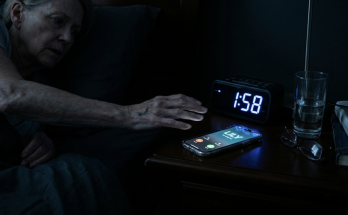
I thought about the phone call at 1:58 a.m.
The trembling voice.
The empty driveway.
The orange prescription bottle.
The note on the counter.
And the closet door that had nearly stayed closed.
I thought about how easily I could have dismissed the call as a child’s nightmare. How easily I could have trusted my son’s explanation and driven home without asking another question.
If I had done that, I might never have learned the truth.
I might never have discovered how frightened my grandchildren had been.
I might never have understood how much they needed someone to listen.
I looked toward the house.
A small light glowed beneath Lily’s bedroom door.
She had asked to leave it on that night.
I smiled.
Then I whispered to Carol, “I got there in time.”
The words were simple, but they carried a year’s worth of fear, grief, and gratitude.
I couldn’t change what had happened.
I couldn’t erase the choices my son had made or the pain my grandchildren had endured.
But I could make sure that the rest of their lives were not defined by that terrible night.
I could give them a home where they were heard.
I could teach them that love never requires silence in the face of danger.
And I could remind them, every day, that they were worth protecting.
My phone rested on the table beside me.
The same phone that had rung in the darkness at 1:58 a.m.
I looked at it and thought of Lily’s whisper.
Grandpa, I feel so hot.
Then I thought of the final words she had spoken before falling asleep that first night.
Thank you for answering the phone.
I wiped my eyes.
There are moments in life when we discover who we really are.
Sometimes it happens in a hospital.
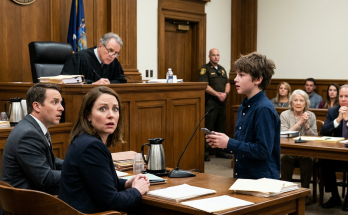
Sometimes it happens in a courtroom.
And sometimes it happens in the middle of the night, when a frightened child calls for help and we must decide whether we are willing to believe them.
I had answered the phone.
I had opened the door.
And when the truth became painful, I had chosen not to close my eyes again.
That was the promise I had made to Carol long before she died: that I would always protect the people who needed me, even when doing so required me to face truths I would rather never know.
I intended to keep that promise for the rest of my life.
Inside the house, Mason laughed in his sleep.
A moment later, Lily’s door opened.
“Grandpa?”
I turned toward the doorway.
“Yes, sweetheart?”
She walked over in her pajamas and climbed onto the chair beside me.
“I had a bad dream.”
I opened my arms.
She settled against me.
“Do you want to tell me about it?”
She shook her head.
“Not tonight.”
“That’s okay.”
She rested her head on my shoulder.
We sat beneath the quiet sky, listening to the wind move through the garden.
After a while, she whispered, “Grandpa, if I call you in the middle of the night again, will you answer?”
I kissed the top of her head.
“Every time, sweetheart.”
She closed her eyes.
And this time, when the house grew quiet, it was the peaceful kind of quiet that every child deserves.
Because the greatest thing I ever gave my grandchildren was not money, a house, or protection from every hardship in the world.
It was the knowledge that when they were frightened, when they were hurting, and when someone told them nobody would believe them, there would always be someone who would listen.
And sometimes, that is where a family begins to heal.
THE END
My 8-Year-Old Granddaughter Called Me at 1:58 A.M., Burning With Fever—When I Broke Into My Son’s House, I Found Her
Part 2 of 2