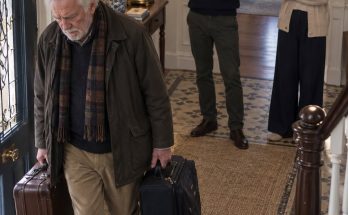
Several months passed after Preston came to Pine Ridge.
I didn't see him during that time.
I heard small pieces of news through Dad.
Some of them were encouraging.
Others were reminders that repairing the damage would take longer than admitting it existed.
The matter involving Grandpa's emergency account continued through the repayment process.
The twenty-eight thousand dollars hadn't simply disappeared from everyone's memory because Preston apologized.
There were records.
There were withdrawals.
There were obligations.
And there was a fund Grandpa had established for a purpose that had nothing to do with Preston's renovation campaign.
Martin Reeves had made that clear.
My father had been entrusted with administrative responsibilities.
He wasn't free to treat the money as his own.
The funds needed to be restored.
I kept copies of the relevant documents in my blue folder.
The folder had become heavier than I expected.
There were the original property records.
The mortgage paperwork.
The correspondence with Oak and Haven.
And the documents connected to the account review.
Sometimes I looked at it sitting on my desk and felt exhausted.
I hadn't wanted any of this.
I had bought a house.
I had repaired it.
I had tried to live quietly.
Somehow, that had led to weeks of family pressure and a dispute involving money I had never asked to control.
I used to believe that being responsible would keep me away from problems like these.
Now I understood that other people's choices could still affect me.
Responsibility didn't guarantee peace.
Sometimes it meant knowing when to defend it.
The repayment arrangement was established after the records were reviewed.
Dad worked with the attorney to address the unauthorized withdrawals.
Preston was expected to take responsibility for the funds he had used.
The outstanding amount began to be restored gradually.
It wasn't an instant solution.
Nobody wrote one check and erased the entire problem.
There were financial obligations to settle.
There were explanations that needed to be documented.
And there were uncomfortable conversations my family could no longer avoid.
I was relieved that the matter was being handled.
But I didn't feel triumphant.
That money had been Grandpa's attempt to protect us.
He had wanted the family to have help available during genuine emergencies.
Instead, part of the fund had been used to support a business arrangement that depended on taking my home.
The thought still troubled me.
I remembered Grandpa sitting at the kitchen table.
He was careful with money.
Not because he was unwilling to help people.
Because he understood what saving required.
He knew that a family emergency could arrive without warning.
Someone could become ill.
Someone could face a serious difficulty.
A person who had been managing well could suddenly need assistance.
He wanted the account available for those moments.
I doubted he ever imagined it being used to pay for promotional photography and furniture arrangements.
But he had understood Preston's habits.
That was why his instructions had been so specific.
I looked at the photograph Martin had given me.
Grandpa sat beside my twelve-year-old self on the porch.
We were smiling.
The picture reminded me that he had tried to protect something larger than money.
He wanted the family to remain capable of helping one another.
But he didn't want that help to become an excuse for irresponsibility.
That distinction had taken me years to understand.
One afternoon, Dad called.
I recognized his number immediately.
For a moment, I considered letting it ring.
Our conversations had become uncomfortable since the family vote.
I knew he regretted what happened.
But regret didn't automatically make it easy to speak with him.
I answered.
"Hello, Dad."
His voice sounded tired.
"Silus. Do you have a minute?"
I told him I did.
He asked about Pine Ridge.
I said the house was fine.
He asked whether the repairs I had planned were going well.
I answered briefly.
Then the conversation became quiet.
I could tell he wanted to say something else.
I waited.
He finally mentioned the emergency account.
He explained that the repayment arrangement was moving forward.
The money was being restored according to the agreed plan.
I thanked him for telling me.
He seemed surprised by my calm response.
Perhaps he expected anger.
I had been angry.
I still felt hurt when I remembered the family meeting.
But I didn't see any reason to turn every conversation into another argument.
The repayment process was doing what it was supposed to do.
I wanted it completed properly.
Dad cleared his throat.
"Silus, there's something I've been meaning to say."
I looked toward the kitchen doorway.
Grandpa's pencil marks were visible from where I stood.
"I'm listening."
Dad took a breath.
"I should have believed you."
I closed my eyes briefly.
He continued.
"When Preston said the property arrangements were settled, I should have asked you."
I didn't interrupt.
"I knew you bought the house. I knew what you spent on it."
His voice became quieter.
"And I still let myself believe his version."
I looked down.
Those words mattered.
Not because I needed Dad to suffer.
Because he was finally acknowledging a choice that had hurt me.
For years, I had wondered whether my father understood how often he expected me to compensate for Preston's failures.
Whenever my brother struggled, Dad looked for ways to help.
I had never objected to that.
But I had wanted him to see that helping Preston should not require ignoring my rights.
Dad kept speaking.
He admitted that he had been disappointed in Preston for a long time.
Each failed business plan had left him more worried.
Each financial problem made him wonder what would happen next.
He wanted his son to become stable.
He wanted to believe the next opportunity would succeed.
So when Preston presented the Oak and Haven arrangement as a promising business project, Dad allowed himself to hope.
I listened carefully.
The explanation sounded familiar.
Mom had said much the same thing.
But hearing it from Dad was different.
He had always seemed more reserved.
He didn't usually admit how much Preston's difficulties affected him.
Now he was saying those worries had influenced his judgment.
He had wanted so badly for Preston to succeed that he overlooked what the plan required from me.
I leaned against the kitchen counter.
"And you thought giving him my house was the answer?"
Dad didn't respond immediately.
Then he said, "At the time, I convinced myself it was temporary."
I looked at the doorway.
"Temporary for whom?"
He sighed.
"I know."
I waited.
He continued.
"I kept thinking you could manage the inconvenience. You've always been able to take care of yourself."
I shook my head.
He couldn't see it.
But I needed a moment before speaking.
That sentence contained so much of what had gone wrong.
Because I had handled my responsibilities, everyone believed I could handle more.
Because I didn't ask for help often, they assumed I didn't need consideration.
Because I was financially stable, they treated my home as something less important than Preston's ambitions.
I spoke quietly.
"Being able to manage doesn't mean I should have to give things up."
Dad answered immediately.
"You're right."
I hadn't expected that.
For years, conversations like this usually became arguments about duty.
About family.
About supporting a struggling brother.
This time, Dad didn't argue.
He admitted the truth.
He had mistaken my independence for an unlimited ability to sacrifice.
I looked down at the counter.
For a moment, I remembered the original vote.
Six people.
One decision.
My entire family acting as though the result gave them authority over Pine Ridge.
I could still picture Dad sitting with his arms folded.
I had looked toward him, expecting him to object.
He hadn't.
That memory was difficult to release.
I told him so.
"Dad, I thought you would stand up for me."
He went quiet.
I continued.
"When everyone started talking about transferring the house, I kept waiting for you to say it wasn't theirs to decide."
I paused.
"You knew what I'd done to buy it."
Dad's voice became rough.
"I did."
"You knew how much I owed."
"Yes."
"And you still voted against me."
He didn't defend himself.
After a moment, he spoke.
"It was one of the worst decisions I've made as your father."
I felt my throat tighten.
I hadn't expected him to say it so plainly.
I sat down at the kitchen table.
There was a long silence.
Then Dad apologized.
He didn't try to blame Aunt Darlene.
He didn't say Preston had forced him.
He didn't suggest that my reaction had made matters worse.
He accepted that he had chosen to support a proposal he knew would harm me.
And that he should have stopped it.
I listened.
Then I thanked him for saying it.
I didn't tell him everything was fine.
It wasn't.
I didn't pretend the relationship had returned to what it had been.
Trust takes time to rebuild.
I had learned that from Grandpa.
He trusted me because he had watched my actions over years.
Not because I had made one impressive promise.
I needed to apply that same standard now.
Dad seemed to understand.
He didn't ask me to forget the vote.
He didn't ask when Preston could visit Pine Ridge.
He didn't ask me to help with the remaining financial obligations.
For once, the conversation was about acknowledging what happened.
Not transferring responsibility back to me.
After we ended the call, I remained seated.
The kitchen was quiet.
I looked at the old doorway.
Grandpa had made those marks over eighteen years.
The first when I was three.
The final one when I was twenty-one.
He had watched me grow.
And I wondered whether Dad was finally beginning to see me as an adult whose decisions deserved respect.
I hoped so.
But I wasn't going to judge the entire relationship by one conversation.
I wanted to see what happened next.
Over the following weeks, Mom began contacting me more carefully.
Before visiting, she called.
She asked whether I was free.
She didn't assume she could arrive whenever she wanted.
It was a small change.
I knew that.
But it meant something.
For years, I had treated family access as automatic.
If someone wanted to discuss a problem, I made time.
If someone needed help, I adjusted my plans.
Now Mom was asking instead of assuming.
I appreciated it.
At first, her visits were a little uncomfortable.
We talked about ordinary things.
The house.
Meals.
How she was feeling.
Sometimes there were pauses when neither of us knew what to say.
The old ease wasn't entirely there.
I missed it.
But I didn't try to manufacture it.
I wanted us to become comfortable again through honesty.
Not through pretending we had never hurt each other.
One afternoon, Mom stood near the kitchen doorway.
She looked at the pencil marks.
I watched her expression.
For a moment, she seemed lost in memory.
"Your grandfather loved doing that."
I nodded.
"He did."
She smiled sadly.
"I remember how excited you used to get when you were little."
I looked at the marks.
"I always wanted the line to be higher."
Mom laughed softly.
"He knew."
I smiled.
That was one of the first comfortable moments we'd shared since the vote.
Nothing dramatic happened.
We didn't discuss Preston.
We didn't review the bank statements.
We simply remembered Grandpa.
And for a few minutes, the kitchen felt like a family kitchen again.
Not a place where I needed to defend ownership.
Aunt Darlene eventually sent me a message too.
It was long.
I read it slowly.
She admitted that she had believed Preston's explanation of the property arrangement.
She had assumed I was refusing to help because I didn't understand how serious his situation was.
She also acknowledged that she had treated a family discussion as though it gave everyone authority over a decision that legally belonged to me.
I read that part twice.
It was the heart of the problem.
Aunt Darlene had helped turn a suggestion into a vote.
She had spoken confidently about what should happen to Pine Ridge.
She had encouraged others to see my refusal as selfish.
Now she was admitting that the vote had never given them any right to take the property.
I appreciated her apology.
I replied politely.
I told her I was glad she understood why the situation had hurt me.
But I didn't promise that our relationship would immediately return to normal.
I wasn't angry every day anymore.
That was a relief.
Still, I remembered how easily she had accepted Preston's claims.
I needed time.
I had begun to understand that forgiveness and trust were separate things.
I could stop wishing someone harm without immediately allowing them the same access to my life.
I could appreciate an apology without pretending the behavior had been harmless.
And I could love my family while maintaining boundaries they disliked.
Those were lessons I should have learned sooner.
But I was learning them now.
Meanwhile, I heard occasional news about Preston.
Dad told me he was trying to find steady work.
For once, the conversations weren't about launching another luxury business.
There were no announcements about an enormous investment.
No claims about a sponsorship that would change everything.
He was looking for a regular job.
I found myself hoping he would get one.
Not because I wanted him to suffer through ordinary work.
I had spent years doing ordinary work myself.
I knew the dignity of earning a paycheck.
I knew how much stability could come from keeping a schedule and meeting obligations.
I wanted Preston to discover that.
I wanted him to have a life that didn't depend on convincing strangers he was already wealthy.
A few weeks later, Dad called with an update.
Preston had found a position with a local construction supplier.
I sat quietly while Dad explained.
It wasn't glamorous.
It didn't come with luxury photographs or promotional events.
It was steady work with regular hours.
Preston would earn his pay through the job and continue addressing what he owed.
I looked toward the old kitchen doorway.
For a moment, I pictured my brother handling ordinary responsibilities instead of announcing another business venture.
I hoped the change would last.
Dad sounded cautiously relieved.
I understood why.
Preston had made promises before.
This time, I wanted to see what he did after the excitement of starting something new had worn off.
I thanked Dad for the update.
Then I went back to my own work.
I didn't call Preston.
I didn't interfere.
I didn't offer to manage his finances.
I had already explained what kind of help I was willing to provide.
He needed to do the rest himself.
A few months earlier, I might have felt guilty for staying out of it.
Now I understood that giving him room to take responsibility was part of respecting him as an adult.
He didn't need another person solving every problem.
He needed the chance to prove he could keep his commitments.
That evening, I sat at my kitchen table.
The house was quiet.
The blue folder was closed.
Grandpa's photograph rested safely with his letter.
I thought about how far things had changed since the family vote.
The ownership dispute was settled.
The sponsorship had ended.
The emergency money was being restored.
My parents had apologized.
Aunt Darlene had acknowledged her mistake.
And Preston had finally begun working a regular job.
None of that erased what happened.
But it meant we were no longer standing in exactly the same place.
I looked around Pine Ridge.
For the first time in months, I wasn't waiting for another demand.
I wasn't expecting a truck.
I wasn't worried about someone claiming the house had been transferred.
I could simply live there.
That feeling was quiet.
Ordinary.
And more valuable than I had realized.
Click here to continue reading: PART 11: After Months of Family Conflict, I Returned to Grandpa’s Pencil Marks and Decided to Protect the One Thing Preston Had Nearly Destroyed
Six Members of My Family Decided My Brother Deserved My House More Than I Did, Until I Placed One Document on the Table
Part 10 of 15