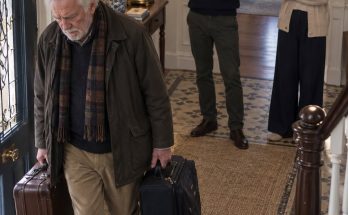
A few days after dinner with Preston, I came home to Pine Ridge at the end of an ordinary workday.
Nothing remarkable had happened.
There had been no family argument.
No unexpected call from an attorney.
No message demanding that I reconsider my decisions.
I was tired, but it was the familiar tiredness that came from completing a day's work.
Not the exhaustion of defending myself.
I parked in the driveway and looked at the house.
For a moment, I remained seated in my car.
I thought about how different that driveway had looked during the dispute.
I could still remember the moving truck.
The people who had arrived believing they were authorized to take away my belongings.
The locksmith Preston had arranged.
And the fear I felt when I realized my own brother had prepared to enter my home without permission.
I remembered standing there, trying to understand how the situation had become so serious.
It had begun with a family vote.
Six to one.
Six relatives had decided Preston should receive Pine Ridge.
I had been the only person who disagreed.
The result was absurd.
I knew that now.
A family vote couldn't transfer ownership of a house.
It couldn't erase a deed.
It couldn't remove my mortgage obligations.
And it couldn't give Preston rights I had never granted him.
But at the time, the vote had hurt.
It had made me question whether anyone in my family respected what I had worked for.
I had spent four years restoring Pine Ridge.
I had accepted a substantial loan to purchase Grandpa's estate.
I had paid the mortgage.
I had covered the taxes.
I had worked on the floors, fireplace, steps, and heating system.
I had spent evenings repairing things when I would rather have been resting.
None of that had happened by accident.
I hadn't been handed a finished home.
I had built a life there through years of decisions and effort.
Yet six people had sat around a table and treated that life as something they could give to Preston.
I remembered the way they spoke about him.
He needed help.
He deserved another chance.
He was finally going to succeed.
And because I was supposedly stronger, I was expected to make the sacrifice.
At first, I had tried to explain myself.
I talked about the money.
The work.
The mortgage.
The memories.
But the more I explained, the more frustrated I became.
I didn't understand why I needed permission to keep what I already owned.
That was when I began gathering documents.
The blue folder.
The deed.
The purchase agreement.
The mortgage records.
The instructions Preston had sent to Oak and Haven.
Those papers had changed the conversation.
They showed that my brother wasn't simply asking for somewhere to live.
He had already planned to remove my furniture.
Replace the locks.
And present Pine Ridge as a property he controlled.
He had promised the company access for a promotional campaign.
He had represented himself as the owner.
And he had arranged a renovation that included destroying the kitchen doorway Grandpa used to measure my height.
I looked toward the house.
That doorway was still there.
I smiled faintly.
It had survived everything.
I stepped out of the car.
The evening air was calm.
I walked up the porch steps and unlocked the front door.
Inside, the rooms were quiet.
I placed my keys on the kitchen counter.
The familiar sound made me smile.
There was something comforting about returning home and knowing exactly where everything belonged.
I looked around.
The furniture Preston had wanted removed was still there.
The floors remained as I had refinished them.
The fireplace stood where Grandpa had once watched me work.
And the old kitchen doorway was protected by the frame I had made.
I walked toward it.
Then I stopped.
For a long moment, I looked at the pencil marks.
I remembered being three years old.
Grandpa asking me to stand still.
His pencil making the first little line.
I remembered the years that followed.
Five.
Seven.
Ten.
Eighteen.
Then twenty-one.
The final mark.
Grandpa had been too weak to stand comfortably.
But he had insisted on making that last line.
His hand had rested on my shoulder.
His writing had become less steady.
Yet he still smiled when he finished.
I touched the mark gently.
For years, I had thought the doorway was precious because it reminded me of growing up.
Now I understood something else.
It reminded me that Grandpa had watched me become the person I was.
He had seen my mistakes.
My efforts.
My ordinary struggles.
He had watched me learn to take responsibility.
And he had trusted me.
Not because I was better than Preston.
Not because I had more money.
Because I tried to keep my promises.
I thought about his letter.
The old envelope with my name written across it.
Dad had hidden it for years, believing he could manage the family disputes privately.
But when he finally opened it, Grandpa's words forced everyone to confront something they had ignored.
He had known Preston struggled with responsibility.
He had known my brother often wanted the results of other people's work.
He had known our family was inclined to rescue him.
And he had warned against allowing those habits to harm me.
Grandpa had also left instructions about the emergency account.
Money meant to protect the family in serious circumstances.
Not money for business ventures.
Not money for promotional campaigns.
Not money to support a false image of success.
Preston had used twenty-eight thousand dollars from that account.
The withdrawals had been unauthorized under Grandpa's instructions.
The money had gone toward his planned renovation and related business expenses.
When the truth came out, my father had to face the responsibility he had accepted as administrator.
The records were reviewed.
A repayment arrangement was established.
And the outstanding amount was eventually restored.
I remembered Preston's message telling me the final payment had been made.
That had mattered.
Not because it erased the past.
Because it showed he had finally completed a responsibility he couldn't avoid.
The sponsorship had collapsed.
Oak and Haven had clarified that no authorized transfer of Pine Ridge had occurred.
Preston's public claims had been questioned.
His carefully maintained image of success had fallen apart.
For a while, I had worried he would never recover from that embarrassment.
But he had found regular work.
He had started earning a steady paycheck.
He had repaid what he owed.
And he had begun saving money.
It wasn't the life he had once shown strangers in his videos.
There were no grand announcements.
No expensive renovation campaign.
No promises about becoming wealthy overnight.
But it was real.
I thought about our dinner together.
We had met away from Pine Ridge.
That boundary had been important to me.
I wasn't ready to invite him back into the house he had tried to take.
I didn't know when I would be.
Maybe that would change someday.
Maybe it wouldn't.
I no longer felt obligated to decide immediately.
At the restaurant, Preston had admitted something I had needed to hear.
He had been jealous.
He saw my home, my job, and the stability I had built.
He believed those things came easily to me.
He wanted other people to think he had achieved the same success.
But he hadn't wanted to do the work required to earn it.
That had been the heart of his resentment.
He was looking at the finished house.
Not the years behind it.
When he finally acknowledged that, something changed between us.
Not everything.
But enough.
He was no longer asking me to pretend that Pine Ridge had been handed to me.
He was admitting that I bought it.
That I worked for it.
And that he had no right to claim it.
I remembered the handshake beside my car.
It had felt awkward.
There was no dramatic reunion.
No promise that we would become close again overnight.
But it was honest.
And I had learned to value honesty more than impressive promises.
I moved my hand away from the doorway.
Then I walked into the living room.
The fireplace caught my attention.
I remembered the long hours I spent repairing it.
Grandpa had sometimes sat nearby.
He didn't offer grand speeches about hard work.
He simply watched.
Sometimes he asked questions.
Sometimes he gave advice.
Sometimes we sat quietly while I worked.
Those moments had shaped my life more than I realized.
I used to think that being a good person meant never disappointing anyone.
I thought if I helped enough, my family would always understand me.
I thought responsibility would eventually earn respect.
But during the family vote, I learned that people could become so accustomed to my help that they stopped considering what it cost me.
Mom had believed I could give up Pine Ridge because I was financially stable.
Dad had supported the proposal because he desperately wanted Preston to succeed.
Aunt Darlene had helped turn the idea into a family decision.
And Preston had encouraged all of them because he thought I would eventually surrender.
I had loved those people.
I still did.
But love hadn't made their decision fair.
That was the lesson I needed to remember.
I could love my parents without agreeing with them.
I could care about my brother without paying his debts.
I could appreciate Aunt Darlene's apology without pretending she had never pressured me.
And I could forgive someone without immediately trusting them again.
For a long time, I confused forgiveness with forgetting.
If someone apologized, I thought I was supposed to behave as though nothing had happened.
That made it difficult to protect myself.
I would accept an apology.
Then allow the same behavior.
Then feel guilty when I became hurt again.
Now I understood that forgiveness didn't require repeating the same arrangement.
It meant allowing myself to move forward without carrying hatred.
I could do that.
But I could also keep my boundaries.
I walked toward the front window.
Outside, the evening light stretched across the yard.
Pine Ridge looked peaceful.
I thought about the dinner I had shared with my parents.
Mom arrived with apple pie.
Dad brought sparkling cider.
They admired the protective frame around Grandpa's pencil marks.
We ate together.
There were awkward silences.
There were things none of us knew how to discuss.
But nobody talked about transferring my house.
Nobody suggested Preston should live there.
Nobody asked me to move into my parents' basement.
For once, we simply had dinner.
That ordinary evening had meant more to me than a dramatic apology.
It showed that something had actually changed.
Mom had begun calling before visiting.
Dad no longer assumed he could decide what happened to my property.
Both had acknowledged the harm caused by the vote.
Their actions were beginning to support their words.
I was grateful.
But I wasn't pretending everything was perfect.
There were still moments when old memories returned.
Sometimes Dad made an innocent comment about the house, and I felt myself become defensive.
Sometimes Mom asked about my plans, and I wondered whether another suggestion was coming.
Those reactions weren't pleasant.
I wished I could turn them off.
But they reminded me that rebuilding trust was a process.
I couldn't force it.
Neither could my parents.
They would have to continue respecting my choices.
And I would have to allow myself to recognize those changes when they happened.
I looked toward the kitchen.
The blue folder was still stored safely.
I hadn't thrown it away.
I didn't need to carry it everywhere anymore.
But I wanted to keep the documents.
The deed.
The mortgage paperwork.
The agreement Preston had signed.
The records concerning the unauthorized withdrawals.
Those papers represented an unpleasant chapter of my life.
Still, they also reminded me of something important.
Facts mattered.
When six people told me I was being selfish, the deed didn't change.
When Preston claimed the house belonged to him, the purchase records didn't change.
When my father believed a family arrangement had been completed, the legal ownership didn't change.
And when Preston made his public video, the truth remained the same.
I owned Pine Ridge.
I had purchased it.
I had worked for it.
No family vote could erase that.
I thought about how close I had come to doubting myself.
That was what frightened me most when I looked back.
Not the moving truck.
Not the locksmith.
Not even the renovation instructions.
It was the moment I sat in my parents' living room and wondered whether six people could all be wrong.
They could.
And they were.
A group of people agreeing on something didn't make it fair.
Being outnumbered didn't mean I had to surrender.
And keeping peace wasn't always the same as doing what was right.
Sometimes peace required saying no.
Sometimes it required leaving a room.
Sometimes it required refusing to accept responsibility for somebody else's choices.
I had learned that in the hardest way.
But I was grateful I had learned it before losing what mattered most.
I moved through the house slowly.
I checked the fireplace.
I looked at the floors.
I stopped near the front door.
Every room held memories of the work I had done.
Some were difficult.
I remembered being exhausted.
I remembered worrying about money.
I remembered nights when I wondered whether I had taken on too much.
But those memories didn't make me regret buying Pine Ridge.
They made the house more meaningful.
I had earned the right to be there.
Not through a family vote.
Through my own decisions.
I returned to the kitchen.
The last sunlight was touching the old doorway.
I stood in front of the protective frame.
For a moment, I imagined Grandpa standing beside me.
His pencil in his hand.
His familiar smile.
The quiet way he reminded me that I would have to make my own decisions someday.
I wished I could tell him everything.
About the family meeting.
About the letter.
About Martin Reeves.
About the money.
About Preston finally finding regular work.
About my parents beginning to understand.
I wished I could show him the frame I had built.
He would have examined the wood carefully.
He might have pointed out some small detail I could improve.
Then he would have smiled.
I could almost hear him.
I looked at the photograph of us on the porch.
Twelve-year-old me hadn't known how much responsibility adulthood would bring.
He hadn't known about mortgage payments.
Family disputes.
Or learning to say no to people he loved.
But Grandpa had known something about the person I might become.
He trusted me.
And that trust had helped me find my own.
I no longer needed my family to agree with every decision.
I no longer needed Preston to admire my house.
I no longer needed to prove that I deserved the life I built.
I simply needed to live it.
That was enough.
I thought about Preston one last time.
I hoped he continued working.
I hoped he kept saving.
I hoped he built a life he could be proud of without needing to pretend.
I wanted him to succeed.
But I wasn't going to measure my peace by whether he did.
His future belonged to him.
Mine belonged to me.
And perhaps that was what Grandpa had wanted us both to understand.
I turned toward the old doorway again.
There were so many lines on that piece of wood.
Each one marked a year.
Each one reminded me that growth happened gradually.
Not all at once.
Not because someone announced a new beginning.
But because time passed and a person kept moving forward.
I thought about that as I looked at Grandpa's final mark.
For years, I had believed growing older automatically made people wiser.
Now I knew better.
People had to choose to learn.
Preston had begun making that choice.
My parents had begun making it.
And so had I.
I had learned that being dependable didn't require being endlessly available.
That loyalty didn't mean surrendering what I owned.
That loving my family didn't mean allowing them to vote on my future.
And that protecting my peace wasn't selfish.
It was necessary.
I rested my fingers against the pencil line Grandpa had made when I was twenty-one.
The wood felt familiar beneath my hand.
I stood there quietly.
The house was still.
No arguments.
No demands.
No strangers waiting to change the locks.
Just the home I had spent four years restoring.
The home Grandpa had trusted me to care for.
The home six relatives had once tried to give away.
I smiled.
Then I spoke softly, as though Grandpa could still hear me.
"I'm still here, Grandpa."
I remained beside the doorway for another moment.
Then I stepped back.
The pencil marks were protected.
The house belonged to me.
The money Preston had misused had been repaid.
My parents had begun repairing their relationship with me.
And my brother was learning to build a life through his own work.
Nothing about the past had been erased.
There had been real consequences.
Trust had been damaged.
Family relationships had changed.
And the memory of that six-to-one vote would always remain with me.
But I didn't need revenge.
I didn't need anyone punished for the rest of their lives.
I didn't need a public victory.
I had kept what mattered.
My home.
My memories.
My independence.
And the ability to decide who I wanted to become.
I walked to the kitchen counter and picked up my keys.
Then I placed them back in their usual spot.
Such a small thing.
But after everything, that ordinary gesture meant more than I could explain.
I was home.
Not because six people had allowed it.
Not because Preston had changed his mind.
Not because my parents had finally apologized.
I was home because Pine Ridge was mine.
Because I had purchased it.
Because I had cared for it.
And because I had refused to surrender it when everyone expected me to.
The evening light slowly faded.
I turned on the kitchen lamp.
The old doorway remained visible.
Grandpa's final pencil mark rested safely inside the protective frame.
I looked at it once more.
Then I went about my evening.
No speeches.
No arguments.
No need to prove anything.
For the first time in a very long while, Pine Ridge felt entirely like home.
The End
Read more original stories on dramausa.
Six Members of My Family Decided My Brother Deserved My House More Than I Did, Until I Placed One Document on the Table
Part 15 of 15