I used to think a good father never stopped helping his children.
I was sixty-eight when I finally understood how much that belief had cost me.
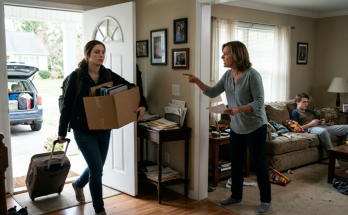
My daughter-in-law, Vanessa, had been using my money to prepare a Christmas celebration for thirty relatives.
And she had decided that her parents would sleep in my bedroom.
Not a guest room.
My bedroom.
The room my wife and I had shared for forty years.
The trouble came to a head four days before Christmas, when Vanessa called me from a store.
I was sitting in a café with a cup of coffee in front of me.
She didn't bother asking how I was.
“Henry, there's something wrong with the payment.”
I knew what she meant.
I had already contacted the bank.
“There isn't a problem with the bank,” I told her.
“Then why won't the card work?”
“Because I stopped allowing purchases on my account.”
For several seconds, she said nothing.
I could hear people talking around her and a cash register ringing somewhere nearby.
Then her voice became sharp.
“You blocked the card?”
“I ended your permission to use my money.”
She gave a little laugh.
The kind people make when they think someone is playing a cruel joke.
“Christmas is almost here.”
“I know what day it is.”
“Then you know I have things to buy.”
I looked down at my coffee.
The milk had formed a pale circle around the edge of the cup.
For once, I didn't feel obliged to solve the problem she had brought me.
“Those purchases will have to come from your own budget.”
She sounded offended.
“Colin and I live with you. We're not strangers.”
“No. You're my family.”
“Then why are you treating us like this?”
“Because being related doesn't mean you can spend someone else's savings without asking.”
She took a breath.
“Your son said you were going to cover the holiday.”
“Colin never obtained my agreement.”
“He told me you would.”
“That was his decision, not mine.”
The distinction seemed to irritate her more than anything else I had said.
“You're trying to embarrass me.”
I had heard that accusation before.
Whenever I questioned a purchase, I was making her uncomfortable.
Whenever I wanted privacy, I was being unfriendly.
Whenever I asked when she and Colin intended to become independent, I was putting pressure on them.
I had grown accustomed to apologizing for reasonable questions.
That afternoon, I didn't.
“I'm not responsible for keeping you from embarrassment, Vanessa.”
Her breathing changed.
“You're really going to leave me standing here?”
“You'll need to decide what you can pay for.”
I ended the call before she could begin another argument.
Then I sat without moving.
My hand was still resting on the phone.
Three years earlier, I would have called her back.
I would have offered another payment method.
I might even have apologized for upsetting her.
Instead, I slipped the phone into my coat pocket.
I finished the coffee.
I paid for it myself.
Then I stepped outside.
The December air stung my cheeks.
I remember that because it felt good.
I had spent so long feeling uncomfortable inside my own home that cold air on my face seemed almost pleasant.
My name is Henry.
For most of my working life, I had been a structural engineer.
My job had been to examine buildings, calculate what they could carry, and make sure small defects did not become serious failures.
I understood weight.
I understood pressure.
What I had not understood was how much of both I had allowed my family to place on me.
My wife, Diane, had understood it.
She had warned me more than once.
Whenever I agreed to take care of another problem that Colin could have handled himself, she would look at me over her reading glasses.
“Henry, you're not doing him a favor if he never has to learn.”
I would tell her that our son needed another chance.
She would put down her book.
“And when does he start using the chances you've already given him?”
I rarely had an answer.
Diane had never been an unkind mother.
She had loved Colin fiercely.
When he was sick, she stayed beside his bed.
When he was frightened, she listened.
When he made mistakes, she expected him to face them.
That last part was where we differed.
I wanted to remove obstacles.
She wanted him to learn how to get past them.
After Diane died, I began removing more obstacles than ever.
I told myself I was keeping the family close.
The truth was harder to admit.
I was lonely.
Our house in Ohio had once been filled with noise.
Diane singing in the kitchen.
Colin running down the stairs.
The telephone ringing during dinner.
Friends arriving with cakes and flowers.
After her death, the silence followed me from room to room.
When Colin and Vanessa needed somewhere to live, I welcomed them.
They said it would be temporary.
They needed time to save money and make plans.
I believed them.
For the first few months, I was glad to hear footsteps upstairs again.
I was glad when someone left a cup beside the sink.
I was even glad to see another car in the driveway.
Those ordinary things made the house feel less empty.
Then the expenses began.
At first, they were small.
A grocery bill here.
A utility payment there.
Something for the house that Colin insisted they needed.
I told myself it was easier to pay than to argue.
That sentence became a habit.
It was easier to pay.
Easier to agree.
Easier to let things go.
Looking back, those words embarrass me.
Because nothing was actually becoming easier.
I was simply postponing the argument.
By the third year, Colin and Vanessa were living in my house without paying rent.
I was covering much of the household spending.
I had also allowed access to money that should have remained under my control.
Meanwhile, they had bought an expensive SUV.
Colin wore a costly watch.
Vanessa planned gatherings as if money could always be found somewhere.
And somewhere usually meant me.
I had begun reviewing my financial records months before that Christmas.
What I found troubled me.
An emergency fund I had established for Colin when he turned eighteen had been used to help pay for the SUV.
I had believed that money was being preserved for genuine difficulty.
Instead, part of it had gone toward a vehicle they did not need.
I had replaced the missing funds with my own savings while I examined the records.
That was another decision I regretted.
Even when I discovered something wrong, my first instinct had been to repair the damage quietly.
The more I examined our arrangement, the worse it looked.
There were expenses I remembered approving.
There were others I could barely explain.
There were privileges I had granted years earlier and never properly reviewed.
And there was the simple fact that two working adults had begun treating my retirement savings like household income.
I spoke with Stanley, my attorney.
He listened while I explained what had been happening.
He didn't tell me to punish anyone.
He asked for documents.
Account information.
Property records.
Details of the living arrangements.
He advised me to separate what I knew from what I merely suspected.
I appreciated that.
After Diane died, people had often treated me as if grief had made me incapable of judging my own circumstances.
Stanley did not.
He asked clear questions and waited for answers.
We also discussed the house.
Selling it had been on my mind for some time.
The building was large.
The garden needed attention.
There were rooms I barely entered.
I no longer needed a place built around a family life that had changed.
But each time I considered selling, I remembered Diane.
I remembered her sitting beside the bay window.
I remembered her arranging books on the shelf.
I remembered the cream paint she had chosen for the hallway.
Forty years of marriage had settled into those rooms.
I had confused leaving them with leaving her.
Then came the Christmas dinner that changed something in me.
It was a Tuesday evening.
I had prepared roast chicken using Diane's recipe.
Her handwritten card was still in the kitchen, marked with little stains from years of use.
I had followed her instructions carefully.
Rosemary.
Lemon.
Potatoes in the roasting pan.
I wanted an ordinary meal.
Nothing more.
Vanessa began discussing Christmas as if she were announcing arrangements for an event everyone had already agreed to attend.
Her relatives were coming.
Thirty people.
The celebration would continue for several days.
There would be elaborate meals, decorations, and special purchases.
She spoke quickly, moving from one expense to another.
Colin barely looked up.
I tried to understand how a simple family holiday had become such a large affair.
Then she explained the sleeping arrangements.
Her parents would take the master suite.
My suite.
I remember setting down my fork.
I looked across the table at Colin.
He pushed a piece of carrot around his plate.
He didn't object.
Vanessa spoke about her mother's arthritis.
She explained that Margaret needed a comfortable bathroom.
She mentioned the things her mother liked to keep beside the bath.
As if all of that settled the matter.
I asked whether anyone had thought to discuss it with me.
Vanessa seemed surprised.
She had already made the plans.
Her relatives had already been told.
I was supposed to accept them.
What hurt most wasn't the request itself.
It was the certainty behind it.
She had assumed my bedroom was available because she wanted it.
She had assumed my money was available because she needed it.
And my own son had allowed her to believe both things.
I looked toward the empty chair where Diane once sat.
She would never have arranged for someone to take my place without asking.
She would never have expected me to feel grateful for being included in decisions about my own home.
I finished the meal quietly.
I don't remember tasting the potatoes.
That evening, I sat in my study and looked through the records I had gathered.
The house papers were there.
So were the financial statements.
And so was the correspondence Stanley had helped prepare concerning the future of the property.
The decision was no longer just an idea.
I had taken actual steps toward selling.
There was a contract and a timetable.
There were legal requirements to follow.
Colin and Vanessa would receive the notices required under the arrangements.
No one would be locked outside without warning.
I was not interested in doing something cruel.
I wanted to stop living as though my home belonged to whoever made the loudest demand.
The next day, I contacted the bank about Vanessa's spending privileges.
I also confirmed my travel plans.
I had booked a flight to Scottsdale, Arizona.
It would be my first Christmas away from the house since Diane's death.
I had worried that leaving would make me feel even more alone.
After that Tuesday dinner, I began to wonder whether being alone might be easier than being constantly used.
Then Vanessa's card was declined.
And she called me from the store.
That was how our argument began.
Not with shouting across a dinner table.
Not with a dramatic announcement.
With a payment that would no longer go through.
By the time I returned home from the café, I knew exactly what I was going to say.
I also knew I would have to say it without apologizing.
Vanessa was waiting in the kitchen.
Her hands were flat against the counter.
The shopping bags I had seen earlier were gone.
The Christmas music she had been playing for days had stopped.
Colin was sitting at the table with his computer.
He looked at the screen instead of looking at me.
I took off my coat.
Neither of them said hello.
Then Vanessa turned around.
“Henry, we're going to settle this.”
I put my coat on the hook.
“All right.”
She looked toward Colin.
He shifted in his chair.
I could see that they expected me to explain myself.
Perhaps they expected another apology.
I pulled out a chair.
“I'm listening.”
Colin closed one of the windows on his laptop.
He cleared his throat.
“Dad, I think everybody got the wrong idea about the holiday.”
I looked at him.
“Everybody?”
He glanced at Vanessa.
“We believed you were handling the costs.”
“Did I ever agree to pay for thirty visitors?”
His eyes moved down to the table.
“Not in those words.”
“Did either of you ask about the amount before ordering everything?”
“No.”
“Did you ask about my bedroom?”
He rubbed his forehead.
“Can we not make that the whole issue?”
I had spent years waiting for Colin to recognize the issue without having to spell it out.
That evening, I finally stopped waiting.
“Then tell me what you think the issue is.”
He said nothing.
Vanessa crossed her arms.
I looked from one to the other.
“You planned a holiday with my home, my savings, and my time. You didn't ask whether I agreed. Now you're angry because I won't pay.”
Colin looked uncomfortable.
Vanessa looked furious.
But neither of them could tell me I was wrong.
And I knew then that the conversation we had avoided for three years had finally begun.
Source: psndaily.xyz
Click here to continue reading: PART 2: My Son Wanted Me to Save Their Christmas Again, but He Never Expected Me to Make Decisions About the House Without Him
I Had Spent Three Years Paying for My Son’s Marriage Until One Christmas Demand Finally Made Me See What I Had Allowed
Part 1 of 15