Chloe is four years younger than me. Technically speaking, according to her birth certificate. Emotionally speaking, she has been permanently trapped at the age of six since the year 2003.
My parents did not raise my sister; they curated her existence. They treated her like a fragile, endangered species that required constant environmental temperature control.
When Chloe was eight years old, she demanded to quit her ballet academy because the instructor had the sheer audacity to place her in the second row for the spring recital. My mother did not tell her to practice harder. My mother marched into the studio, threatened to pull her funding, and demanded a stage position “more compatible with Chloe’s natural, luminous presence.”
When Chloe was twelve, my father left work in the middle of a vital client meeting and drove forty minutes back to her middle school because she had forgotten her specific, brand-name water bottle on the kitchen counter. There were perfectly functioning, sanitary water fountains in the building. He brought it to her anyway.
When she turned sixteen, she rear-ended a parked minivan and totaled my mother’s sedan because she was trying to film herself lip-syncing for social media. My father bought her a brand-new, upgraded vehicle the following week because, and I quote his exact words, “Her self-confidence is already so fragile from the trauma of the crash.”
Meanwhile, when I was sixteen, I found myself stranded at the high school after a debate tournament because my mother completely forgot to pick me up. When I finally found a payphone and called her, she sighed heavily into the receiver and said, “Bonnie, you need to learn to become more resourceful.”
I walked four miles home in a torrential downpour, carrying a massive, waterlogged papier-mâché replica of the United Nations building.
Chloe once called my father on his cell phone from her upstairs bedroom to ask him to bring her a phone charger from the living room. My father went. Not because she was injured, not because she was trapped under heavy furniture, but because she claimed the stairs made her shins ache. I watched my father ascend fourteen steps holding a white apple cord like a Sherpa transporting life-saving oxygen to a dying climber at Everest Base Camp.
This was the foundational reality of my childhood. Chloe expressed a desire, my parents scrambled to provide, Chloe cried, and the very fabric of our family’s civilization reorganized itself to soothe her.
Because I was the eldest daughter, the only expectation ever placed upon me was infinite elasticity. I was told, repeatedly and with varying degrees of guilt, that my defining personality trait had to be understanding.
Bonnie, you’re the older one. Bonnie, be the mature one. Bonnie, your sister is highly sensitive. Bonnie, she looks up to you.
She did not look up to me. She looked completely through me, focusing only on whatever resources I possessed that she currently desired.
If I saved up from my summer job and bought a leather jacket, Chloe immediately needed to borrow it for a party. If I bought expensive concert tickets, Chloe suddenly declared that band was her absolute favorite. If I invited my friends over for a movie night, Chloe would have a sudden, devastating emotional breakdown that required the exclusive use of the living room sofa. If I had a birthday cake, Chloe had to be allowed to blow out at least one of the candles because otherwise, she felt “violently excluded from the narrative of the celebration.”
During my eighteenth birthday dinner, Chloe locked herself in the restaurant bathroom and sobbed hysterically because my grandparents had gifted me a delicate gold necklace. My mother, desperate to stop a public scene, forced me to let Chloe wear it for the car ride home.
I did not see that necklace again for nine months. When I finally cornered my mother and demanded she retrieve it, my mother looked at me with deep disappointment. “Bonnie, why are you always so obsessively attached to material objects?”
“Because they possess a magical tendency to permanently disappear onto Chloe’s body!” I snapped.
My mother called me jealous.
That specific word followed me like a dark shadow for two decades. Jealous. I was jealous because Chloe was gifted a car while I purchased a monthly bus pass. I was jealous because my parents quietly paid her city rent while I juggled two separate waitressing jobs during college. I was jealous because when I graduated with honors with my degree in business, my mother literally walked out of the auditorium in the middle of the ceremony because Chloe was having an “emotional emergency.”
The emergency, I later discovered, was that a salon stylist had cut her curtain bangs half an inch too short.
I truly wish I was exaggerating for comedic effect. I possess a photograph from my graduation day. I am standing on the campus green in my cap and gown, holding my hard-earned diploma. In the background, my father is staring intently at his smartphone, and my mother is furiously whispering into hers: “No, sweetheart, put the scissors down. Do not try to fix it yourself. Mommy is getting in the car right now.”
That photograph deserves to be hung in the Smithsonian Museum under an exhibit titled: The Collapse of an Empire.
I learned incredibly early in life that I had two choices. I could either spend my finite time on earth begging my family for scraps of fairness and equity, or I could build a life made of such impenetrable steel that their dysfunction would simply bounce off my walls.
So, I chose to work.
I started at the bottom as an assistant in a bleak, fluorescent-lit conference center at age twenty-two. I clawed my way up to event coordination, then to venue management, and finally into full-scale, luxury corporate production. By the time I turned thirty-four, I was a powerhouse. I had single-handedly produced international product launches, black-tie charity galas, high-security medical conferences, and one deeply unfortunate cryptocurrency summit in Miami where three different men, all named Bryce, tried to aggressively explain the blockchain to me while I was trying to locate a missing catering truck.
I was formidable at my job.
But my family willfully refused to understand what I actually did for a living. To them, my career was just a cute little hobby involving clipboards. Chloe once introduced me to her fleeting boyfriend by saying, “This is Bonnie. She’s basically a professional microphone lady.”
I looked the boyfriend dead in the eye and replied, “Yes, and neurosurgeons are basically professional knife-wielders.” Chloe did not appreciate the comparison.
The terrible irony was that the more financially successful I became, the more my family’s relationship with me mutated. They didn’t grow to respect me emotionally, but they suddenly found me incredibly useful financially. When I transitioned from being the “jealous older sister” to the “wealthy, responsible adult,” I became the family’s personal, zero-interest ATM.
My mother called in tears needing $1,800 when the HVAC system broke in the dead of winter. I paid it without blinking. My father needed emergency dental work that his bargain-bin insurance refused to cover. I quietly transferred half the cost into his checking account.
Then the pandemic hit, and Chloe lost her part-time job at a boutique. I paid three months of her rent to keep her from being evicted. Then the three months stretched to five. Then eight. When she finally secured a new job working from home, my mother called me, her voice hushed and conspiratorial. “Bonnie, please don’t stop the financial assistance right away. She needs a buffer period to regain her emotional independence.”
Apparently, emotional independence required a heavily subsidized airlock.
I helped them because I had the liquidity, and because—and this is a humiliating truth to confess—some naive, broken part of my inner child believed that if I was useful enough, it would eventually morph into love and recognition.
It didn’t. My utility didn’t earn me a seat at the table; it just turned me into the table’s structural support.
By the time I met Daniel, I was blindly underwriting expenses that my family barely even registered as belonging to me. I paid my parents’ supplemental health insurance premiums. I paid my father’s exorbitant cell phone bill. I paid my mother’s auto insurance. I covered exactly fifty percent of Chloe’s monthly rent. I even paid for Chloe’s premium streaming subscriptions because one day I became morbidly curious if she was still capable of watching Love Is Blind with commercials.
When I politely texted Chloe to ask if she was still utilizing the $17.99 monthly Netflix account, she replied: “Wow. Why are you constantly auditing my happiness?”
I showed that text message to Daniel on our third date. He laughed so hard he nearly choked on his espresso.
I met Daniel during a corporate legal summit I was producing in Chicago. He was scheduled to moderate a panel titled Emerging Liabilities in Digital Commerce. The original moderator had suffered a ruptured appendix that morning. Daniel was pulled in as a frantic replacement. He cornered me backstage, looking at the massive run-of-show binder in my hands.
“Do you have any idea how disastrous this could be?” he asked, adjusting his tie nervously.
I didn’t even look up from my headset. “Sir, last month a motivational speaker accidentally set his own vision board on fire with a pyrotechnic malfunction, and I still got the attendees to the cocktail hour on time. You are going to be entirely fine.”
He stopped, looked at me properly for the first time, and smiled. Two days later, he asked me to dinner.
Daniel was an anchor of calm in the chaotic, screaming ocean of my existence. He never assumed access to my resources. He asked. That sounds like a painfully low bar, but when you are raised in an ecosystem where people treat your time, your bank account, and your very oxygen as public property, a man who asks permission feels like a revelation.
“Can I borrow your laptop charger? Would you like the last dumpling? Are you mentally free to talk about my brother visiting?”
Questions. Beautiful, respectful, civilized questions.
When he proposed two years later, he did it quietly, privately, standing in the middle of our kitchen on a Tuesday night. He did it that way because I had once drunkenly confessed to him that, having professionally orchestrated hundreds of massive, public proposal events, my own personal nightmare was finding a diamond ring in a dessert while a hired violinist squatted behind a potted ficus.
We chose to wed in June. By my brutal professional standards, it was an intimate affair. Ninety-nine carefully curated guests. An elegant, historic mansion venue. A lush garden ceremony followed by an indoor, candlelit dinner and dancing. No corporate clients to coddle. No massive LED walls displaying branding. No branded lanyards. And, most importantly, no surprises.
I typed that exact phrase in a bold, red font in my master email to every single vendor. NO SURPRISES.
Then, exactly six weeks before I was set to walk down the aisle, Chloe called to announce she was pregnant.
I was genuinely, profoundly happy for her. That is a crucial detail to remember. Whatever my complicated, agonizing history was with my sister, this baby was an innocent blank slate, and I knew she desperately wanted to be a mother. I drove to her apartment. I hugged her. I actually cried real tears of joy. Daniel bought Tyler a ridiculously expensive bottle of scotch to celebrate. We sent a massive, terrifyingly expensive floral arrangement.
For forty-eight blissful hours, we were a normal, functioning family.
Then, my phone rang. The caller ID flashed my mother’s name.
“Bonnie,” my mother began, her tone carrying that specific, breezy cadence she used when she was about to ask for something unreasonable. “I was just thinking…”
Those words had historically cost me more money and sanity than any other phrase in the English language. I closed my eyes and massaged my temples. “What were you thinking, Mom?”
“Well, since the absolute entirety of the extended family will already be flying into town and gathered in one room for your wedding…”
“No.”
“You don’t even know what I was going to suggest, sweetheart.”
“You want to do a gender reveal at my reception.”
Silence hung on the line. Then, defensively: “It would save everyone from having to book a completely separate trip later! It’s just practical!”
“No, Mom.”
“It could be a tiny moment!”
“No.”
“Just five minutes?”
“No.”
“Right after they cut the cake?”
“No. It is my wedding.”
My mother unleashed her weapon of mass destruction: The Sigh. It was a heavy, vibrating exhale of profound, martyr-like disappointment. It was the exact same sigh she deployed the time I refused to lend my car to Chloe after Chloe had returned it to me with the gas light blazing, the passenger side mirror entirely detached, and a stranger’s neon pink brassiere stuffed into the backseat.
“You are being incredibly territorial,” my mother snapped.
“Yes,” I replied evenly. “That is traditionally how people operate regarding the events they are personally financing for tens of thousands of dollars.”
She accused me of making my unborn niece or nephew feel deeply unwelcome in the family. I asked her if the fetus had explicitly complained to her about my catering menu. My mother slammed the phone down.
Three days later, Chloe called.
“I just think,” Chloe said, her voice dripping with psychoanalytic condescension, “that you are acting out because you are terrified that people will be paying attention to me instead of you.”
I was sitting on my living room floor, meticulously alphabetizing ninety-nine gold-foiled place cards. “Chloe, you are visibly pregnant. People are going to pay attention to you regardless. That’s fine. I just don’t want a circus act.”
“You know exactly what I mean, Bonnie.”
“I truly do not.”
“My pregnancy is a major, generational family milestone.”
“And my marriage is also a major family milestone.”
Chloe laughed. It wasn’t a mean laugh; it was worse. It was a dismissive, pitying chuckle. “A wedding is just one single day, Bonnie. A baby is literally forever.”
I stared at the glowing screen of my phone. “Well, that is just a beautiful sentiment. You should cross-stitch that onto a decorative pillow.”
She called me a selfish, bitter spinster and hung up.
My mother called thirty minutes later to berate me for making her pregnant daughter cry. My father called an hour after that, acting as the reluctant hostage negotiator. His primary argument was that “the colored smoke or the blue confetti only takes ten seconds to clear, Bonnie, just let her have it so we can have peace.”
“Dad,” I said, my voice dropping to a terrifyingly calm register. “If any colored smoke, powder, confetti, or celebratory shrapnel appears at my reception, I will personally drag whoever brought it by their hair out into the gravel parking lot.”
He told me I was acting hysterical.
I opened the family group chat and sent one final, definitive text message.
“There will be no gender reveal at the wedding. This boundary is completely non-negotiable. If you try it, you will be asked to leave by security.”
Chloe replied immediately with a single, passive-aggressive ‘thumbs up’ emoji.
That little digital icon should have chilled my blood. Because Chloe had never, not once in her twenty-six years of life, accepted a boundary. She didn’t fight them. She simply oozed around them like liquid, waiting until the person holding the line grew too exhausted to maintain it.
Cliffhanger: But what I didn’t know was that my family wasn’t just planning to steal my spotlight; they were actively plotting to steal my escape route.
Chapter 3: The Paper Trail of Betrayal
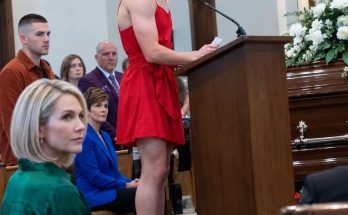
My sister staged a gender reveal at MY wedding—then announced, “And the honeymoon is ours! Mom already changed the names on the tickets.” Guests cheered. My husband squeezed my hand. I took the microphone: “Since we’re sharing announcements…” All 99 guests fell silent.
Part 2 of 7