Chapter 1: The Empty Cradle and the Ghost in the Bed
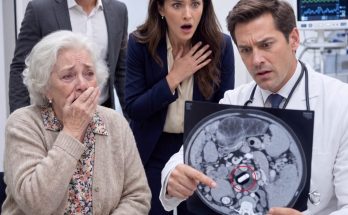
The ceiling tiles above my hospital bed were an unbroken expanse of clinical white, punctuated only by the rhythmic, mechanical hum of an intravenous infusion pump and the muted chirp of a heart monitor that insisted, against all reason, that I was still alive.Every shallow expansion of my ribcage pulled against the tearing ache in my lower abdomen. It was an interior wound, deep and raw, where surgical curettes had scraped away the tissue and the life of the daughter I had carried for twenty-eight weeks. In the dim corner of Recovery Room 304 at the St. Jude Women’s Pavilion, bathed in the pale amber wash of the streetlamps outside, sat a clear acrylic bassinet on wheels.
It was empty.
There was no soft swaddle of flannel inside. No tiny chest rising and falling beneath a knitted cap. No milk-warm sigh. There was only the sterile vinyl mattress, cold and reflective, mocking the emptiness in my arms. I pressed my left hand against my stomach, feeling the loose, bruised skin that had, until yesterday morning, sheltered the only future I cared about.
“Elena?”
The voice was hushed, rough around the edges with fatigue. Dr. Sarah Lin pushed through the heavy wooden door, her teal surgical scrubs rumpled, her stethoscope hanging loose around her neck. She had been my personal physician for six years, ever since I took Vance Global Capital public and the stress began eroding my lining. Tonight, her dark eyes carried a hollow, bruised quality. She looked less like an attending surgeon and more like someone who had spent the last eight hours wrestling with a ghost.
“Sarah,” I whispered. My throat tasted of copper, dried saliva, and the bitter chemical residue of general anesthesia. “Did the lab finish the pathology?”
Sarah didn’t answer right away. She walked to the edge of the bed, pulled a wheeled stool over, and sat down. Her fingers, still smelling faintly of surgical scrub soap, wrapped around my limp wrist.
“The placental abruption was catastrophic, Elena,” she said quietly. “We lost her before the first incision was made. And when the bleeding started in the recovery bay… we nearly lost you, too. Your blood pressure cratered to forty over twenty. We had to pump four units of packed red cells and two bags of plasma into you just to keep your kidneys functioning.”
I closed my eyes. Tears didn’t come. Grief of this magnitude does not manifest as wet cheeks; it settles into the marrow like river silt, heavy and suffocating.
“Where is Julian?” I asked, my voice barely audible over the hum of the IV. “Did he make it to the floor?”
Sarah’s grip on my wrist tightened, her knuckles blanching. Her jaw set into a rigid, furious line that I had never seen on her face during all the years she had monitored my fertility treatments.
“We called him, Elena. My chief resident called him. The charge nurse called him. The hospital switchboard dialed his direct cell twenty-two times between midnight and four in the morning.” Sarah looked down at the linoleum floor, her voice vibrating with suppressed anger. “Every call went straight to voicemail. At three a.m., when the crash team was running the rapid infuser into your jugular, we sent a security courier to your brownstone in Beacon Hill. The lights were out. The garage was empty.”
A chill, thin and razor-sharp, crawled up the nape of my neck. Julian had known. When the first blinding cramp had dropped me to my knees on the Italian marble of our kitchen yesterday afternoon, he had been standing there with an espresso cup in his hand. He had watched me double over, watched the stain bloom across the hem of my skirt, and sighed as if I had spilled red wine on an expensive rug.
“Don’t be dramatic, Elena,” he had said, checking his vintage Patek Philippe. “You’re thirty-two, not ninety. Take a cab to the pavilion. I have a venture dinner at the harbor club. Call me if the doctors actually say something urgent.”
I had dragged myself down the brownstone steps, hailed a yellow cab from the curb, and bled through the upholstery on the ride to the hospital.
I looked at the oak-veneered nightstand beside my bed. My leather tote bag sat slumped against the water pitcher, its structured calfskin gaping open.
“Sarah… my purse,” I muttered, my voice trembling with sudden, instinctive dread. “Hand me my purse.”
Sarah reached over, lifting the heavy bag onto the white hospital blanket.
My fingers, trembling so violently they could barely grip the zipper, tore through the inner compartments. My passport was there. My driver’s license was there. But the matte-black leather wallet—the one custom-made for my corporate treasury accounts—was open.
The slot that held my titanium American Express Centurion Black Card was completely empty.
That card was not tied to a domestic bank. It was the master purchasing instrument for Vance Global Capital, tied directly to our firm’s liquid operating reserve. It had an unlimited credit ceiling, pre-authorized for high-level international acquisitions, corporate charters, and emergency liquidation. It had my name stamped into the metal: ELENA VANCE, MANAGING PARTNER.
Julian was an authorized secondary signatory, a concession I had made eighteen months ago when I promoted him from an associate vice president to Executive Director of Investor Relations in a desperate attempt to patch his bruised ego. But the physical black card—the master card that bypassed all secondary fraud filters—lived in my private wallet.
He had not answered the hospital’s emergency calls. But he had found the time to walk into the recovery ward while I was being prepped for surgery, slip his fingers into my bag, and pull the card from its leather sleeve.
Before the horror could fully register in my mind, the screen of my personal smartphone, resting against the plastic water cup, lit up with a brilliant, blinding blue light.
It was an incoming media message from Julian.
Beneath the image was a text message. I reached out, my thumbnail splitting against the glass as I tapped the preview.
The screen bloomed with color. And the text beneath the photograph turned every remaining drop of warmth in my veins to solid ice.
Chapter 2: The Text That Burned the Soul
I woke up alone after losing our baby. My husband ignored every desperate call and used my black card to fly my sister and parents to a luxury resort in Maui. “If you can’t give me a baby, I’ll find a second wife,” he texted. Four days later, as he raised a toast to his “new wife,” the resort manager cut the music and presented a $50,000 bill. His card was declined. Suddenly, everyone was calling me, begging me to settle the disaster. But I hung up.
Part 1 of 6