
She walked into the conference room like a threat in designer heels, her blonde hair polished to television-anchor perfection, her diamonds catching the fluorescent light as if the law itself had invited her to sparkle. My husband looked pleased—almost proud—until my attorney lifted her eyes from the stack of exhibits and asked, calmly, “For the record, who invited a potential witness into this deposition?”
Savannah Cole’s smile disappeared.
Grant Parker’s hand froze around his coffee.
And I sat there in my navy suit, my wedding ring already in a velvet pouch inside my purse, watching the first crack split through the marble face of the life they had built on my humiliation.
Every message, every payment, every hotel stay connected to her had already been entered into the case file.
She had come to intimidate me.
She did not know she had just given my attorney permission to say her name on the record.
## Chapter 1 — The Chair She Thought Was Hers
The deposition was held on the thirty-fourth floor of a glass building in downtown Chicago, in a conference room so cold and expensive it seemed designed to make human emotion feel inappropriate.
The table was black walnut. The chairs were cream leather. Beyond the windows, Lake Michigan shone like a polished blade beneath the January sun.
I arrived nine minutes early.
That was something my mother had taught me before she died. Never arrive too early, because people will think you are afraid. Never arrive late, because people will know you are unprepared. Nine minutes, she used to say, was elegance.
So I arrived nine minutes early wearing a navy Carolina Herrera suit, pearl earrings, and no visible rage.
My attorney, Margaret Hayes, known to everyone except judges as Margo, was already there. She was sixty-two, silver-haired, terrifyingly gentle, and famous in three states for turning wealthy men’s lies into very expensive lessons.
She did not greet me with comfort.
She greeted me with a folder.
“Today,” she said, “we let him believe he is still managing the room.”
I nodded.
That was the kind of sentence that had carried me through the last eleven months.
Grant arrived five minutes later in a charcoal Brioni suit and the exact expression he wore when photographers were nearby. He had always been handsome in a way that seemed manufactured for charity galas and magazine profiles: square jaw, blue eyes, silver at the temples just early enough to look distinguished. He was the kind of man strangers trusted with their retirement funds and wives trusted with their futures.
I had trusted him with both.
Behind him came his attorney, a polished man named Richard Bell who smelled like cedar and courtroom arrogance. Richard gave me a sympathetic nod, the sort men give women they expect to lose quietly.
I did not return it.
The court reporter adjusted her machine. The videographer checked the frame. Margo opened her pen.
Then the door opened again.
Savannah Cole stepped inside.
For one full second, no one moved.
She was wearing cream. Not white, exactly. Cream. Softer. More expensive. The color of apology without the inconvenience of actually being sorry. Her heels clicked against the floor with deliberate confidence. A camel coat hung from her shoulders. A diamond tennis bracelet flashed at her wrist.
I recognized the bracelet.
I had seen the charge three months earlier on a corporate account Grant swore was used only for client gifts.
Savannah looked directly at me and smiled.
It was not the smile of a woman in love.
It was the smile of a woman who believed the house had already been transferred into her name.
Grant’s mouth curved, just slightly. He looked relieved to see her, as if I were the storm and she had arrived carrying sunlight.
She crossed the room and moved toward the empty chair beside him.
My chair.
Not because I wanted it. I was seated across the table, beside Margo.
But because the chair beside Grant was meant for counsel, not comfort. Meant for legal strategy, not perfume.
Savannah placed one manicured hand on the back of it.
Margo did not raise her voice.
She did not even look angry.
She simply lifted her eyes and said, “Before Ms. Cole sits down, I’d like to ask who invited a potential witness to this deposition.”
The room changed.
Not loudly. Not dramatically.
But the air tightened.
Savannah’s fingers slipped from the chair. Grant blinked. Richard Bell cleared his throat.
“Ms. Cole is here as moral support,” Richard said.
Margo smiled as though he had handed her a gift wrapped in incompetence.
“For whom?”
Richard’s jaw flexed.
“For Mr. Parker.”
“Excellent,” Margo said. “Then let the record reflect that Savannah Cole, currently identified in Exhibit 12 through Exhibit 39 as the recipient of multiple transfers, travel accommodations, and communications relevant to the marital estate and related corporate claims, has appeared voluntarily at Mr. Parker’s deposition.”
Savannah’s face went still.
Grant leaned toward Richard. “Can she stay?”
Margo turned a page.
“That depends,” she said. “Does she intend to testify today, or is she here to influence testimony?”
The videographer’s red light blinked.
The court reporter typed every word.
And for the first time in almost a year, Grant looked at me not with irritation, not with pity, not with that exhausted disappointment he had used to make me feel small.
He looked at me with suspicion.
Good, I thought.
Suspicion was the first doorway to fear.
Savannah stepped backward.
“I didn’t realize,” she said softly.
Of course she didn’t.
Women like Savannah rarely realize. They are told they are special so often they mistake access for power. She had been invited to private suites, private dinners, private flights. She had been photographed from careful angles at art openings and beach clubs. She had been given passwords, keys, and the illusion of importance.
But no one had explained discovery to her.
No one had told her that romance leaves receipts.
And no one had warned her that I had spent eleven months becoming fluent in evidence.
## Chapter 2 — The Night I Became Invisible
Before the deposition, before the attorneys, before Savannah learned that a smile could be subpoenaed, there was the gala.
The Parker Foundation Winter Benefit was held every December at the Drake Hotel, beneath chandeliers that made everyone look richer and kinder than they were.
That year, I wore a white satin dress.
I remember that because Savannah spilled red wine on it.
Not accidentally.
Not obviously.
Just perfectly enough that half the ballroom saw the stain spread across my waist like a wound.
Grant had brought her as his “brand consultant.”
That was the phrase he used when donors asked why a twenty-eight-year-old woman from Nashville with no foundation experience was standing beside him in a gold dress, laughing at jokes before the punchline and touching his sleeve like punctuation.
“She’s helping us modernize our outreach,” Grant told everyone.
Our outreach.
I had built that foundation from a tax idea and a folding table.
When Grant’s father died, Parker Blackwood Hospitality was a regional hotel company with debt, bad carpeting, and a reputation for underpaying contractors. I was the one who redesigned the flagship properties. I was the one who charmed donors, negotiated city partnerships, and turned the foundation into something mothers applied to for housing grants when their lives collapsed.
But that night, under the chandeliers, I became the wife in the background.
At dinner, Grant stood at the podium and thanked “the incredible women who support great men.”
People laughed politely.
Then he looked past me, straight at Savannah.
She lifted her champagne.
That was the moment the room began to disappear around me.
Not because I was weak.
Because humiliation has a strange architecture. At first, it traps you inside your own skin. You feel every eye. Every whisper. Every pitying glance from women who know exactly what is happening and are relieved it is not happening to them.
Savannah approached me after the speech.
“You look beautiful, Evelyn,” she said.
She called me Evelyn as if we were close.
I looked at her face. Porcelain skin. Expensive lashes. Lips curved like a dare.
“Thank you,” I said.
Then she leaned in and lowered her voice.
“You must be exhausted.”
It was such a small sentence. Barely cruel enough to count.
But I understood the language.
She was not asking if I was tired.
She was telling me I looked replaceable.
Grant appeared at her side with two drinks. He handed one to Savannah. Not me.
Then came the wine.
A waiter passed behind us. Savannah turned. Her glass tilted. Red spread across my white satin dress.
Her mouth opened in a performance of shock.
“Oh my God,” she said. “I am so sorry.”
Grant looked at the stain, then at me.
For one foolish second, I thought he might protect me.
Instead, he sighed.
“Evelyn,” he said quietly, “don’t make a scene.”
There are sentences that end marriages before the paperwork begins.
That was mine.
I went to the restroom and stood in front of the mirror while two women whispered near the sinks. One of them said, “Poor thing.” The other said, “She had to know.”
I did know.
Not everything, not yet.
But I knew enough.
I knew about the late-night calls he took from the terrace. I knew about the Chicago hotel charges during weeks he claimed to be in Denver. I knew about the perfume on his scarf, the new passcode on his phone, the way he began saying “my team” instead of “we.”
What I did not know that night was the scale.
I did not know he had paid Savannah’s rent through a consulting invoice.
I did not know he had purchased her a condo in Miami through a limited liability company registered in Delaware.
I did not know he had moved money out of accounts connected to both our marriage and the foundation.
I did not know he had already drafted a separation agreement offering me the lake house, a monthly allowance, and silence.
But I knew this: if I cried in that restroom, I would be giving them the story they wanted.
So I took off my stained dress.
I called the concierge.
Twenty-seven minutes later, a black velvet gown arrived from a boutique on Oak Street, charged to the same card Grant used for Savannah’s bracelet.
I changed.
I pinned my hair up.
I returned to the ballroom.
And when Savannah saw me, her smile faltered.
Not much.
Just enough.
Grant was speaking to a group of donors. I walked to his side, placed my hand lightly on his arm, and stood there for the photographs.
In every picture from that night, I look serene.
That is what people never understand about the beginning of revenge.
It does not always look like rage.
Sometimes it looks like posture.
## Chapter 3 — The Quiet Woman With the Keys
I did not confront Grant after the gala.
Confrontation is useful only when the other person still respects the truth.
Grant had stopped respecting anything he could not control.
So I became quiet.
At first, he mistook it for defeat.
That was his second mistake.
His first was Savannah.
I moved into the east bedroom of our Lincoln Park home and told him I needed space. He agreed too quickly. He began spending more nights “at the office.” He stopped hiding his phone. Men like Grant become careless when they believe a woman’s sadness has made her stupid.
I hired Margo Hayes three days before Christmas.
Her office was above a bookstore in Evanston, which made her seem less dangerous than she was. She listened without interrupting as I described the gala, the charges, the hotel stays, the consulting invoices.
When I finished, she said, “Do you want revenge or freedom?”
I said, “I want both, but I want freedom first.”
Margo nodded.
“Good. Revenge makes people sloppy. Freedom makes them precise.”
For the next eleven months, I became precise.
I requested copies of financial statements under the pretense of preparing foundation reports. I downloaded old emails from accounts Grant forgot I still had access to. I photographed gift receipts. I saved dinner reservations, wire confirmations, flight itineraries, and invoices from a shell company called Sable Creative Strategy.
Savannah’s company.
It had no employees. No office. No published clients.
But it had received $412,000 from Parker Blackwood Hospitality in fourteen months.
For “brand development.”
The brand, apparently, was adultery.
Margo assembled a forensic accounting team led by a woman named Priya Shah, who could look at a spreadsheet the way a surgeon looks at an X-ray. Priya found patterns in the payments. Hotel stays in Aspen. A suite at the Baccarat in New York. Jewelry in Beverly Hills. A Miami closing statement buried in a PDF mislabeled “vendor renewal.”
Then she found something worse.
Grant had not merely been spending marital funds.
He had been moving foundation money through temporary accounts, replacing it just before quarterly reviews, and using the float to cover private expenses. Not enough at first to trigger alarms. Just enough to reveal a man who believed timing was the same as innocence.
Margo called it “financial misconduct.”
Priya called it “reckless and documented.”
I called it the end.
But the most important discovery was not in Grant’s accounts.
It was in mine.
Years before I married him, my grandmother, Caroline St. Claire, had left me an inheritance in a private trust. Grant knew about it in the vague way husbands know about things they consider irrelevant. He assumed it was sentimental money, old Southern family stock, a few sleepy properties in Charleston, maybe enough to keep me comfortable if I ever became inconvenient.
He did not know my grandmother had been sharper than any man in a room.
Caroline St. Claire had invested early in boutique hospitality, regional banks, and commercial real estate. Quietly. Patiently. Through layers of trusts with names that sounded like vacation homes: Blue Harbor, Lantern Key, Marigold Lane.
One of those trusts owned a minority stake in the original land beneath three Parker Blackwood hotels.
Another held a callable note on a development Grant had personally guaranteed.
Another had purchased distressed debt from a bank after Grant overleveraged the Nashville expansion he claimed was “fully capitalized.”
My grandmother had not liked Grant.
I discovered this in a letter sealed inside the trust documents.
My darling Evelyn,
Charm is not character. A man who needs applause will eventually sell the furniture to buy a spotlight. Keep your own keys.
I read that sentence twelve times.
Then I gave Margo the letter.
She smiled for the first time since I had met her.
“Your grandmother,” she said, “may have just handed us the knife.”
The note mattered.
Grant had borrowed against assets he did not fully own. He had used marital property, corporate projections, and personal guarantees to secure expansion money. He had failed to disclose several transfers. Under the terms of the callable note, material financial misrepresentation allowed the holder to demand immediate payment or take controlling remedies.
The holder was Blue Harbor Trust.
My trust.
My keys.
For months, we did nothing visible.
Grant filed first.
That surprised our friends, which was exactly why he did it.
He wanted the headline before the truth.
“After much reflection,” his statement read, “Grant Parker has initiated a private separation from his wife, Evelyn Parker. The couple asks for respect during this difficult transition.”
Private.
That was the word men use when they have already chosen the public version.
Within hours, Savannah posted a photograph on Instagram from a hotel balcony in Santa Barbara. No face. Just her hand around a coffee cup, her bracelet visible, the ocean blurred behind her.
The caption read: Some seasons begin softly.
I did not respond.
Not online.
Not to friends.
Not when Grant’s sister called and said, “Couldn’t you have tried harder?”
Not when a society columnist described me as “reclusive.”
Not when Savannah appeared at a foundation luncheon wearing a blush dress I had once complimented in a store window.
I stayed silent because silence made them brave.
And bravery made them careless.
By October, Savannah was forwarding emails to herself. Grant was texting instructions instead of calling. Richard Bell was pressuring Margo for a settlement, confident we wanted privacy more than justice.
Then Grant’s team scheduled the deposition.
They expected tears.
They expected anger.
They expected a tired wife who would accept money to disappear.
Instead, I arrived nine minutes early with my grandmother’s letter in my purse and a velvet pouch where my wedding ring used to be.
## Chapter 4 — Exhibit 40 Wore Cream
After Savannah tried to sit beside Grant, the deposition became something else entirely.
Richard Bell requested a break.
Margo refused unless the videographer remained in the room.
Grant whispered to Savannah near the door. I could not hear the words, but I could see his face shifting between irritation and alarm. Savannah’s arms crossed over her cream dress. She looked younger suddenly. Not innocent. Just unprepared.
Margo spoke to the court reporter.
“Please mark Ms. Cole’s appearance and attempted participation as Exhibit 40.”
Richard snapped, “That is unnecessary.”
Margo turned to him with devastating patience.
“Then you should have advised your client not to bring his girlfriend to a deposition involving alleged dissipation of marital assets connected to said girlfriend.”
The word girlfriend landed like glass on marble.
Grant’s face reddened.
Savannah looked at me.
There was no smile now.
Only the beginning of understanding.
She left the room for fourteen minutes. When she returned, she did not sit. She stood behind Richard, clutching her phone like a flotation device.
Margo began.
She asked Grant simple questions first.
His name. His address. His role at Parker Blackwood Hospitality. His income. His assets. His understanding of the prenuptial agreement.
Grant answered smoothly.
He had always been good at beginnings.
Then Margo opened Exhibit 12.
“Mr. Parker, do you recognize this charge?”
Richard leaned forward.
Grant glanced at the page. “It appears to be a hotel charge.”
“At the Peninsula Chicago?”
“Yes.”
“Presidential suite?”
“I’d have to check.”
“Please do.”
He read.
His jaw tightened.
Margo continued. “Were you staying there with your wife on March 18 of last year?”
“No.”
“Were you staying there alone?”
“I don’t recall.”
Margo slid another page forward.
“Would this refresh your recollection?”
It was a text message.
Grant to Savannah: Suite is under P.B. account. Use the side entrance. Champagne is already there.
Savannah made a small sound.
Not loud.
But the court reporter looked up.
Margo did not.
“Mr. Parker, did you send that message?”
Grant’s attorney objected to form.
Grant answered, “It appears so.”
That phrase became his favorite hiding place.
It appears so.
As if his life had happened near him but not by him.
Margo moved through the exhibits with surgical calm.
A $9,800 bracelet.
A $16,400 first-class flight.
A $22,000 invoice to Sable Creative Strategy.
A $3.2 million Miami condominium transferred through an LLC called Shoreline 713.
Savannah’s breathing grew shallow behind him.
Grant stopped looking at her.
Then Margo reached the hotel stays.
Aspen.
New York.
Santa Barbara.
Nashville.
Miami.
Each one tied to a date Grant had told me he was meeting investors, visiting properties, attending board retreats.
Each one connected to Savannah by messages, spa appointments, dinner receipts, or security footage.
Margo did not need to shout.
The documents did that for her.
At 2:17 p.m., Richard requested another break.
This time, Margo agreed.
Grant stood so quickly his chair struck the wall. He walked to the window and stared out at the lake. Savannah followed him, but he turned away from her.
That was when I understood something important.
He had never loved Savannah enough to protect her.
He had loved how she made him feel when he was betraying me.
There is a difference.
During the break, Savannah approached me.
Margo shifted slightly, but I shook my head.
Savannah stopped at the corner of the table. Up close, her makeup was flawless except around the eyes.
“You must be enjoying this,” she whispered.
I looked at her for a long moment.
Then I said, “No.”
She laughed softly, bitterly. “Please.”
“I am not enjoying it,” I said. “I am documenting it.”
Her lips parted.
Margo’s pen paused over her notes.
Savannah lowered her voice further. “He told me you didn’t care. He said your marriage was over. He said you stayed for the money.”
There it was.
The oldest script in America.
The wife is cold. The wife is greedy. The wife does not understand him. The wife is already gone.
I almost felt sorry for her.
Almost.
“Savannah,” I said, “he told me your company was a vendor.”
Color moved up her neck.
That was the first time she looked ashamed.
Not of sleeping with my husband.
Of being fooled in the same language he had used on me.
The break ended.
Savannah did not approach me again.
At 3:04 p.m., Margo introduced Exhibit 51.
It was an email.
From Savannah to Grant.
Subject line: After she signs.
The room went so still I could hear the building’s ventilation hum.
Grant’s attorney objected before Margo finished the question.
Margo waited.
Then she read one sentence aloud.
Not the whole email. Just enough.
“Once Evelyn signs the settlement, we can move the Miami property out of Shoreline and into my name before the foundation audit.”
Richard stood.
“Do not answer.”
Margo looked at the videographer.
“Let the record reflect counsel has instructed the witness not to answer regarding a written communication from Ms. Cole concerning transfer of property and the foundation audit.”
Grant’s face had gone gray.
Savannah whispered, “Grant.”
He did not look at her.
The beautiful woman in cream had finally become inconvenient.
Margo closed the folder.
“Mr. Parker,” she said, “did you tell Ms. Cole that Mrs. Parker had already agreed to a settlement?”
No answer.
“Did you discuss moving assets after Mrs. Parker signed?”
No answer.
“Did you use foundation timing to conceal personal expenditures?”
Richard said, “We are done for today.”
Margo nodded.
“Actually, we are not.”
She reached into her bag and removed one final document.
The paper looked ordinary.
One page. Cream-colored. Older than the rest.
Grant noticed it before Richard did.
His eyes narrowed.
Margo placed it on the table.
“Mr. Parker, do you recognize the Blue Harbor callable note?”
For the first time all day, he looked at me.
Not at Margo.
At me.
And I saw the moment he realized that my silence had not been emptiness.
It had been a locked room.
He swallowed.
“What is this?”
Margo’s voice remained soft.
“It is a debt instrument personally guaranteed by you and triggered by material financial misrepresentation, undisclosed transfers, and misuse of related assets. It is currently held by Blue Harbor Trust.”
Richard took the document.
His confidence drained as he read.
Grant said, “That note was held by First Atlantic.”
“It was,” Margo said. “Until it was acquired.”
“By whom?”
Margo looked at me.
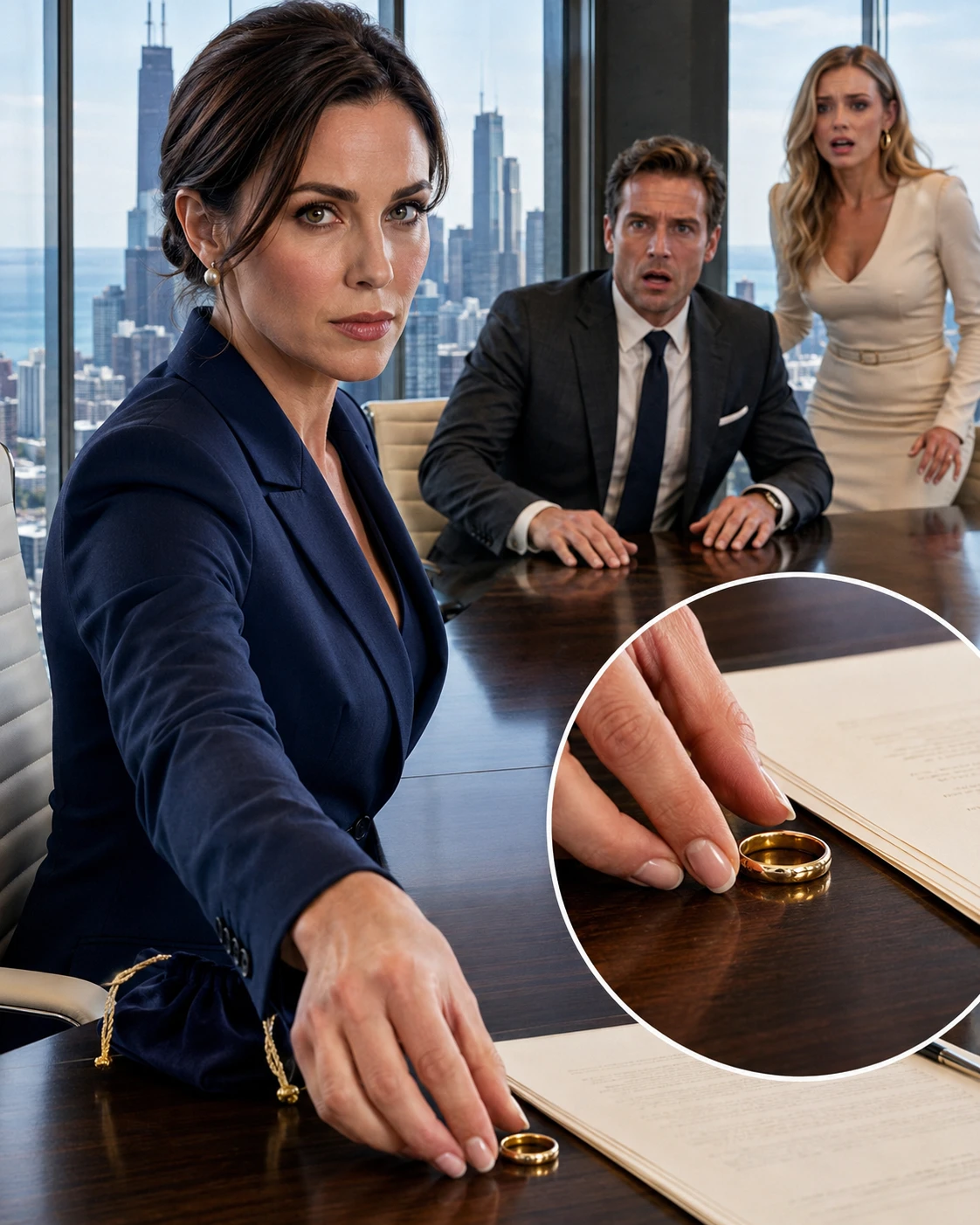
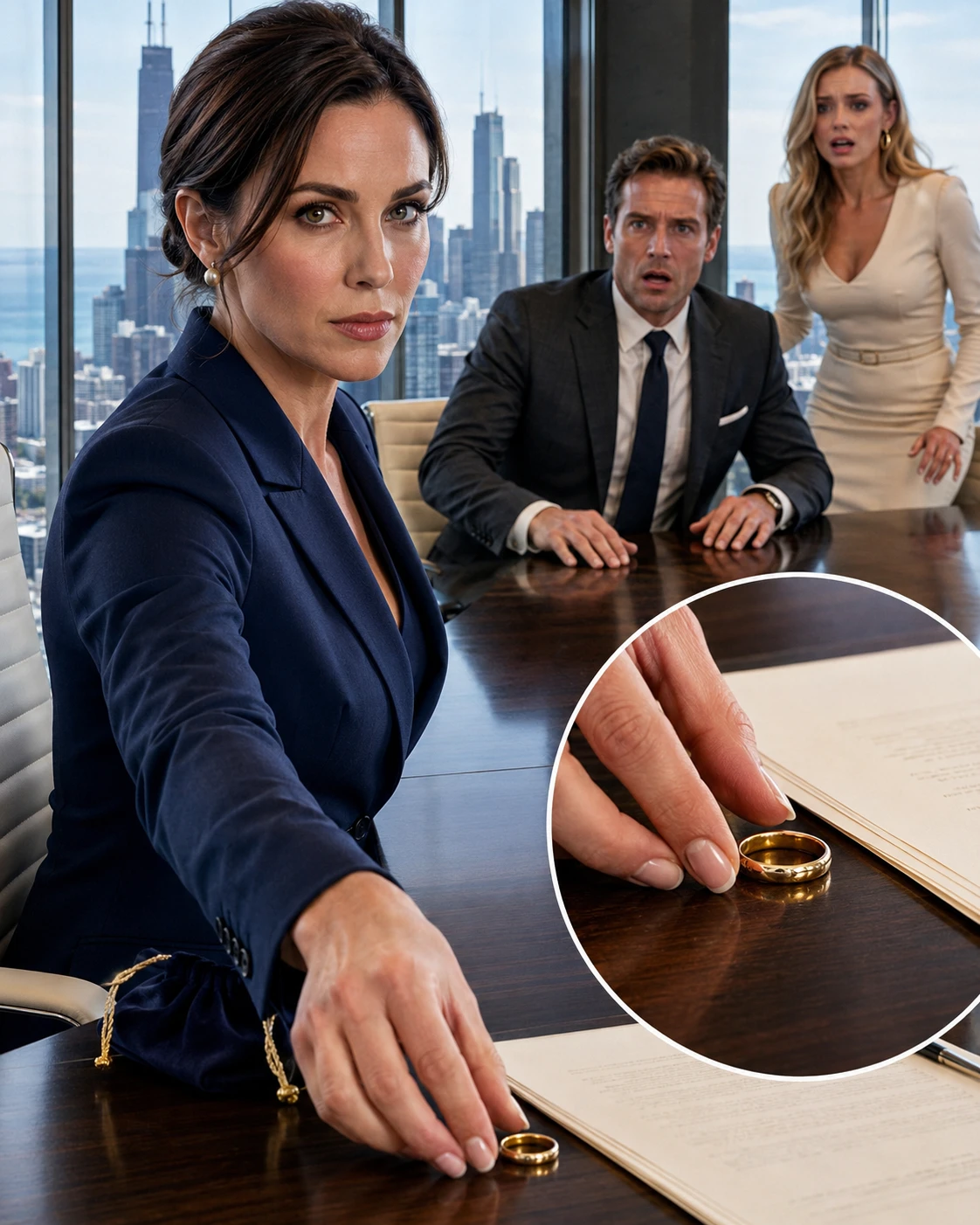
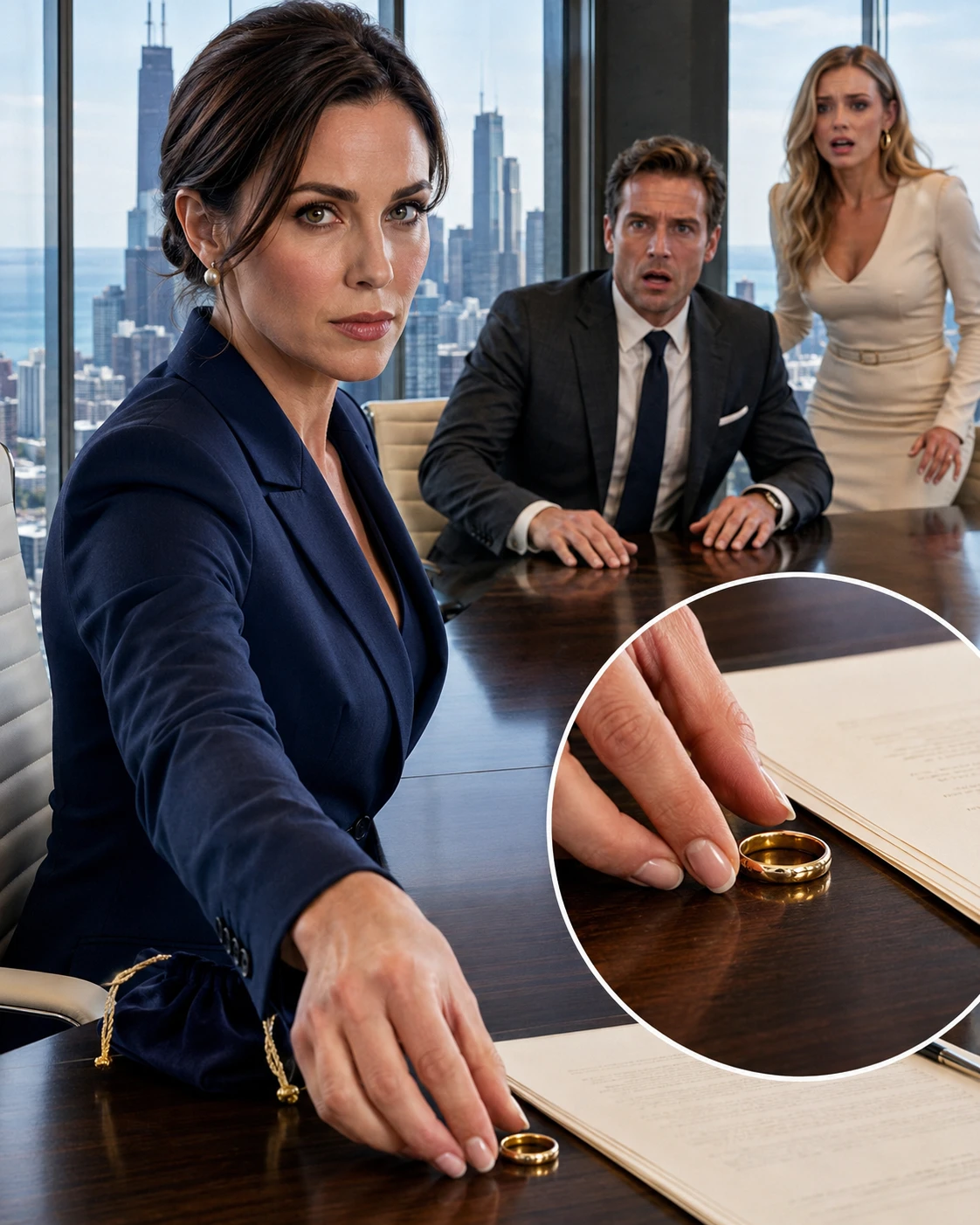
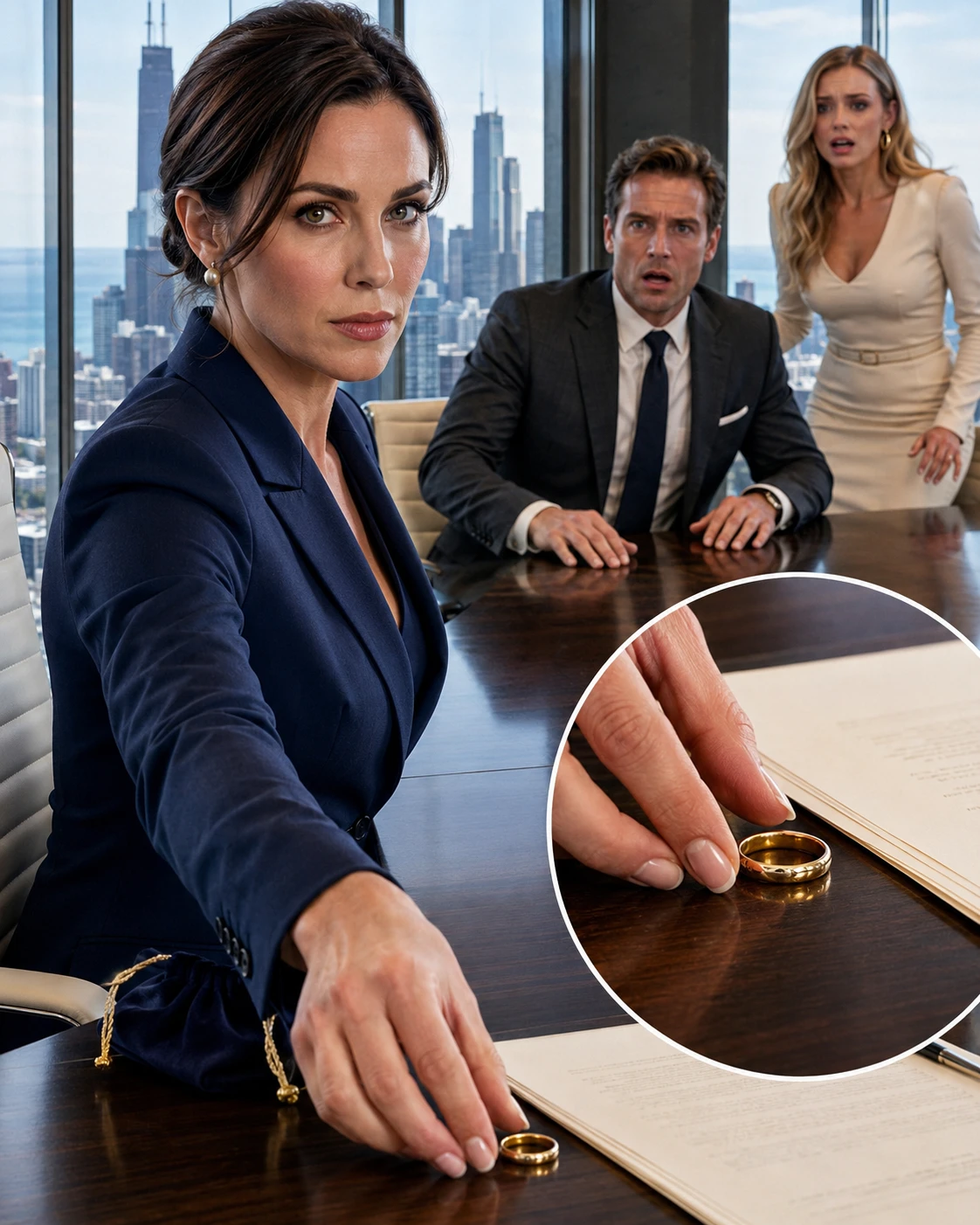
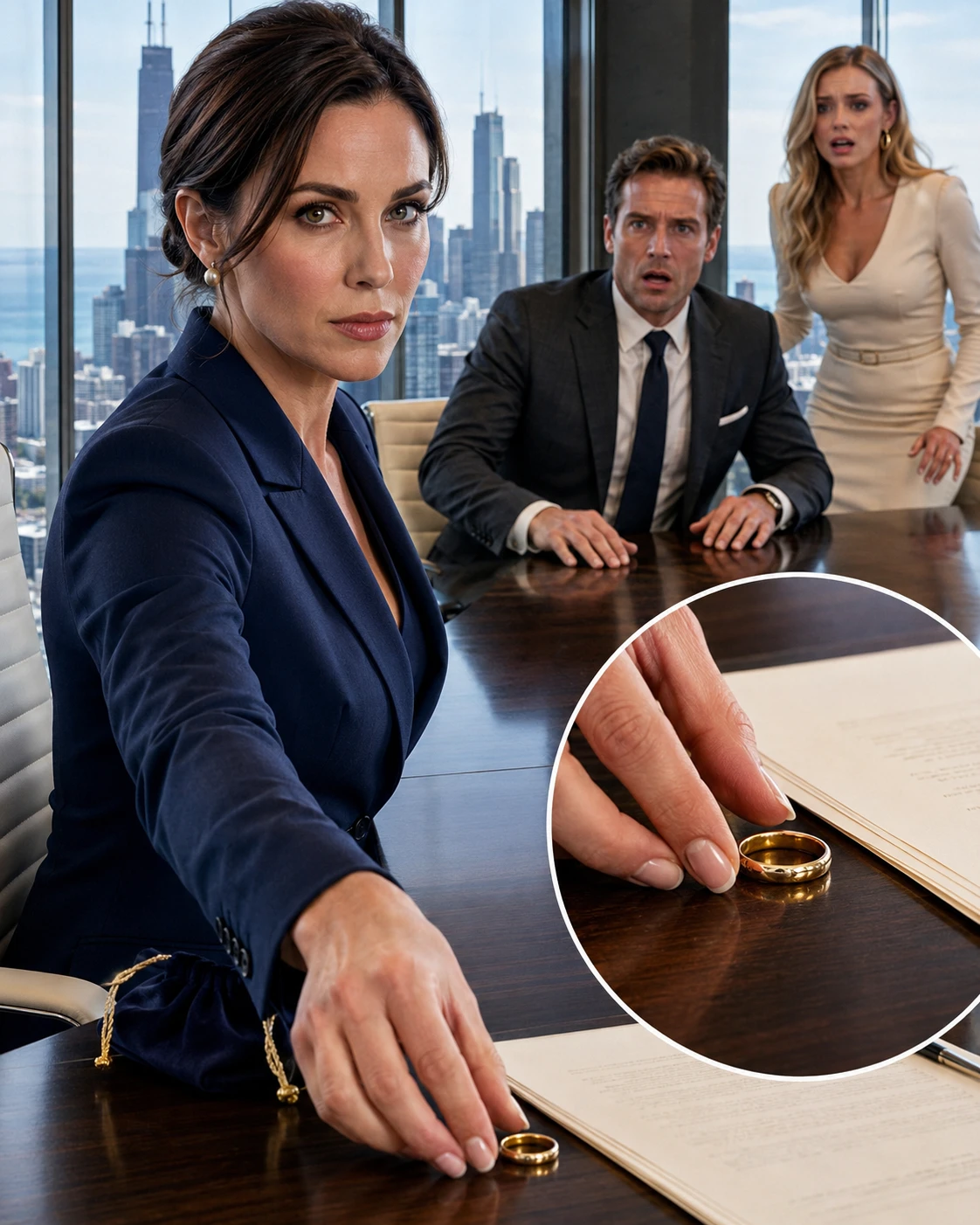
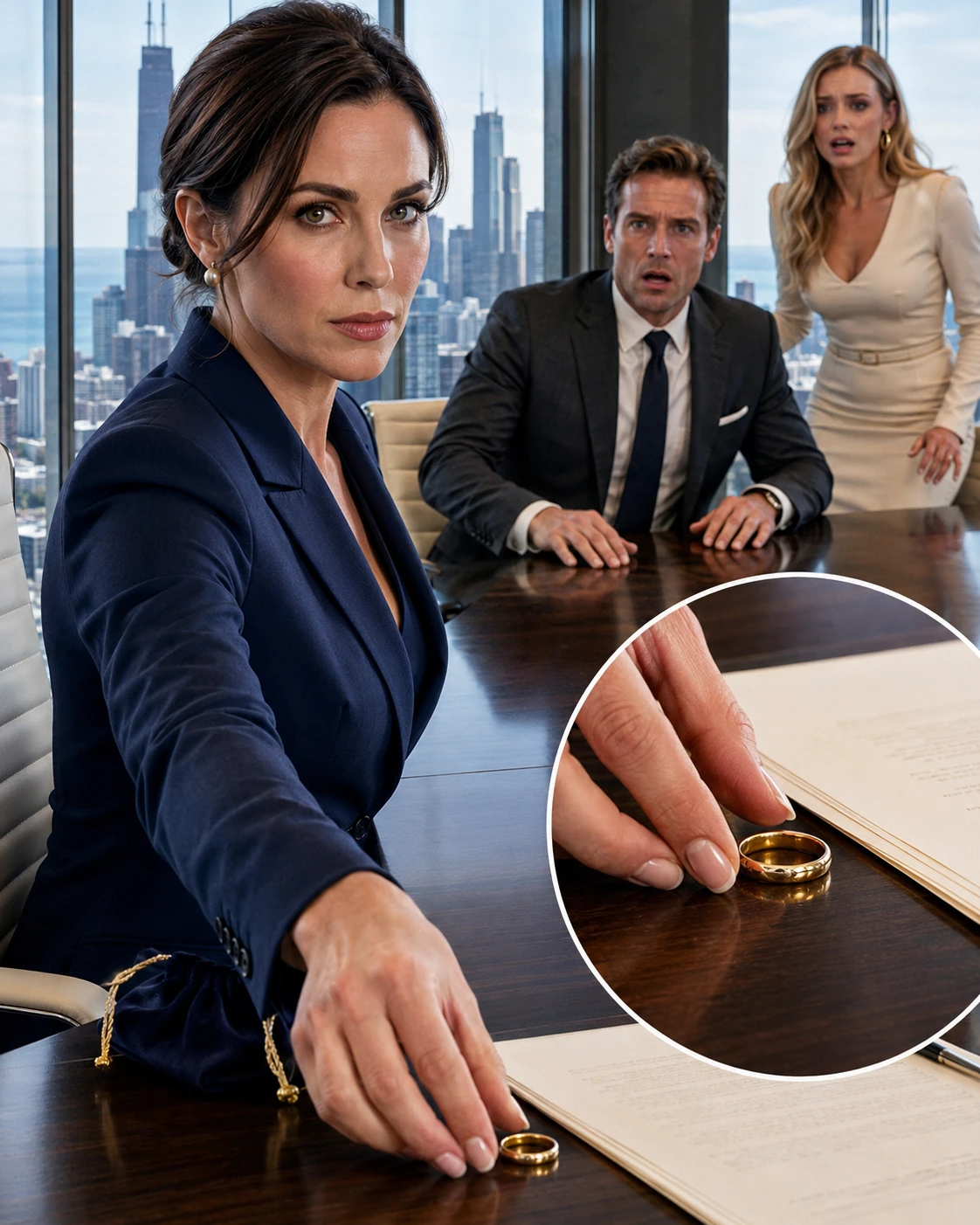
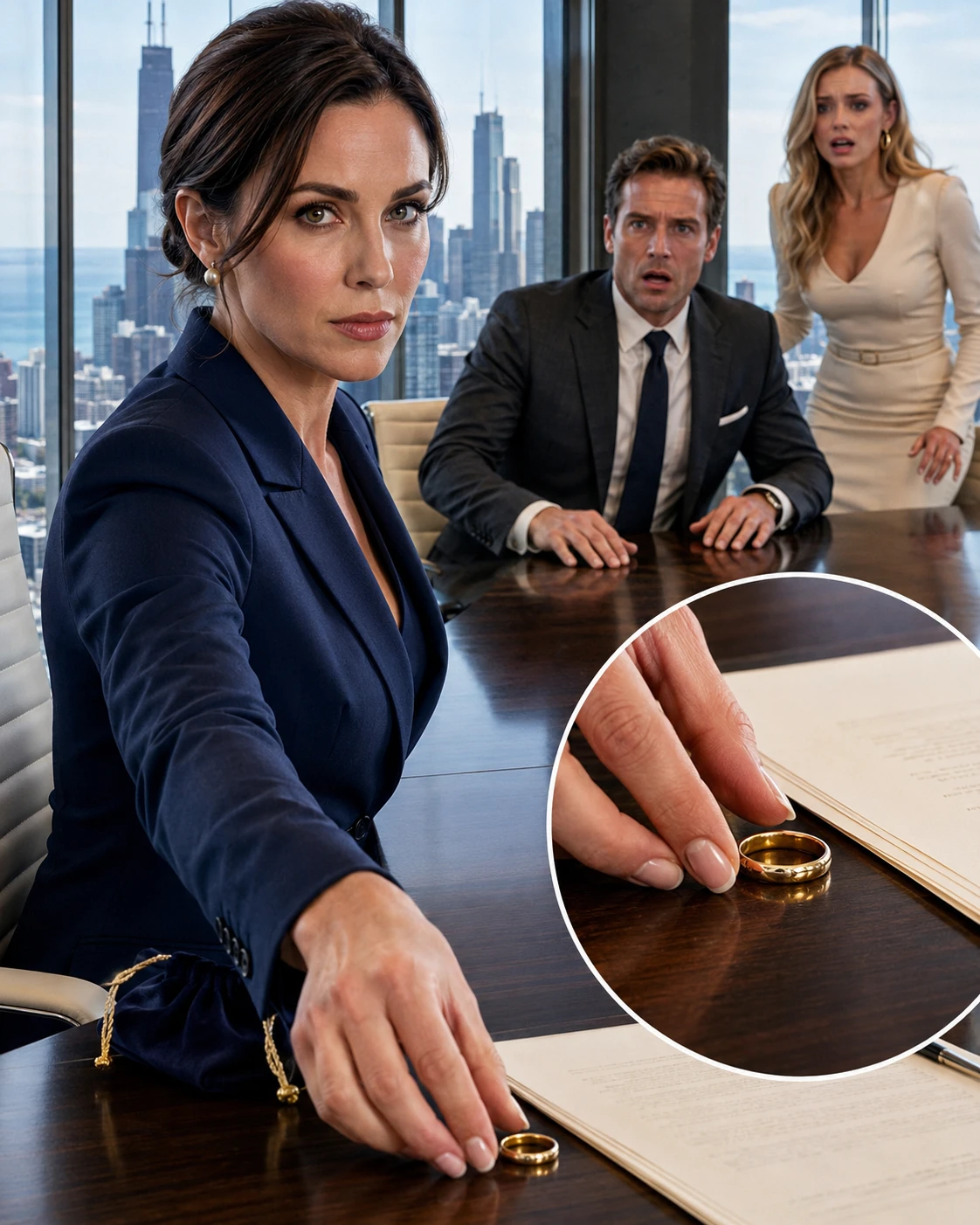
I opened my purse, removed my wedding ring from the velvet pouch, and placed it on the table.
Not dramatically.
Gently.
Like returning a borrowed key.
“By me,” I said.
Grant stared.
Savannah stepped backward as though the floor had shifted.
Margo continued. “Mrs. Parker is the controlling beneficiary of Blue Harbor Trust. The trust has issued notice. Payment is due within thirty days, unless my client elects to exercise remedies.”
Grant’s voice cracked. “You can’t do that.”
I looked at the man who had humiliated me beneath chandeliers, moved money through shadows, bought another woman diamonds, and expected me to accept a lake house and silence.
“I already did,” I said.
The deposition ended at 3:31 p.m.
Savannah left first.
No clicking heels this time.
Just soft, hurried steps toward the elevator.
Grant remained seated, staring at the ring on the table as if it had become a weapon.
In a way, it had.
Not because it symbolized our marriage.
Because it proved I no longer needed the illusion.
## Chapter 5 — The Final Room Had No Windows
Three weeks later, Grant Parker walked into a courtroom expecting a negotiation.
That had always been his weakness. He mistook every room for a room he could manage.
The hearing took place in Cook County, in a courtroom with old wood benches and none of the flattering lighting Grant preferred. He arrived with Richard Bell and two associates carrying banker boxes. He looked thinner. Not ruined yet, but aware of weather.
Savannah was not with him.
By then, she had her own attorney.
That was how quickly romance becomes paperwork when money starts asking questions.
The judge granted a temporary freeze on disputed assets pending further review. Parker Blackwood’s board opened an internal investigation. The foundation suspended Grant’s access to its accounts. The Miami property transfer was blocked. Sable Creative Strategy received subpoenas. Savannah’s bracelet, condo documents, travel reimbursements, and consulting invoices were all listed in discovery.
The society pages changed their tone.
First, they called it a “contentious divorce.”
Then a “complex financial dispute.”
Then, after someone leaked that a mistress had appeared at the deposition and been entered into the record, the internet gave it a simpler name:
The Cream Dress Deposition.
I did not leak it.
I did not have to.
Men like Grant spend years building rooms full of people who smile at power. The moment power cracks, those same people become historians.
Everyone suddenly remembered something.
A dinner where Savannah wore a ring.
A fundraiser where Grant corrected me in public.
A hotel employee who saw them arrive separately.
A board member who questioned an invoice and was told to “let finance handle it.”
Stories came from everywhere.
Not because people were good.
Because people prefer truth after it becomes safe.
In December, exactly one year after the gala, Parker Blackwood called an emergency board meeting at its headquarters in Nashville.
The building stood on Korean Veterans Boulevard, all glass and limestone, with a lobby full of orchids I had chosen.
I had not been inside for months.
When I entered, the receptionist looked at me like she wanted to applaud but had been trained not to move.
Margo walked beside me. Priya followed with a laptop bag. My hair was pinned low. My suit was winter white.
Not bridal white.
War white.
Grant was already in the boardroom.
So were eight directors, two outside attorneys, and the interim foundation chair.
Savannah’s attorney attended by video.
Savannah herself did not.
That almost disappointed me.
But only almost.
The board chair, Franklin Ames, was an old friend of Grant’s father. He had once told me I had “a lovely eye for curtains” after I presented a forty-million-dollar renovation plan that saved the company from default.
Now he could not quite meet my eyes.
“Evelyn,” he said, “thank you for coming.”
I sat.
Margo opened her folder.
The meeting began with corporate language. Asset integrity. Fiduciary exposure. Reputational harm. Debt restructuring. Cooperation with ongoing proceedings.
Men have always invented beautiful phrases for consequences.
Grant tried to speak early.
Franklin stopped him.
That alone was worth the flight.
Then the outside attorney summarized the findings.
Improper transfers.
Undisclosed related-party payments.
Personal expenditures misclassified as consulting fees.
Potential misuse of foundation-adjacent accounts.
Material misrepresentation under financing agreements.
Grant stared at the table.
I knew that stare.
It was the same one he used when servers brought the wrong wine. The offended stillness of a man who believed consequences were administrative errors.
Then Margo stood.
“My client has no desire to destroy Parker Blackwood,” she said. “She helped build it.”
Grant laughed once, bitterly.
Margo did not look at him.
“She does, however, intend to protect the assets, the foundation beneficiaries, and the employees whose livelihoods should not be endangered by Mr. Parker’s private misconduct.”
Franklin folded his hands.
“What is Mrs. Parker proposing?”
That was when the final twist entered the room.
It did not wear cream.
It wore my grandmother’s signature.
Margo distributed the packets.
Blue Harbor Trust had acquired not only the callable note Grant knew about, but a secondary debt position tied to the Nashville expansion. That debt, combined with Grant’s personal guarantee and the triggered remedies, gave the trust leverage over his voting shares if he defaulted.
And he had defaulted.
Not publicly.
Not dramatically.
But legally.
The board members read in silence.
Grant grabbed the packet and flipped pages too quickly.
“No,” he said.
Margo continued.
“My client is prepared to assume the debt, stabilize the company, and place her voting control into a temporary governance structure approved by the board. In exchange, Mr. Parker will resign as CEO, cooperate with all asset recovery, and waive claims to Mrs. Parker’s separate trust property.”
Richard Bell whispered urgently to Grant.
Grant shoved his chair back.
“This is theft.”
I finally looked at him.
“No,” I said. “This is math.”
His face twisted. “You planned this.”
I thought of the gala. The wine. The whispered “You must be exhausted.” The photographers. The hotel suites. The emails. The settlement he thought I would sign.
“No,” I said. “You planned this. I kept the receipts.”
The room held its breath.
Then Franklin Ames, who had once complimented my curtains, asked for a vote.
Grant tried to stop it.
He could not.
The board accepted the restructuring plan pending final court approval. Grant resigned before lunch. By evening, the press release described his departure as a transition “in the best interest of the company and its stakeholders.”
Private language again.
But this time, it did not belong to him.
Savannah settled separately.
She returned the bracelet. The Miami condo was unwound. Sable Creative Strategy dissolved before Valentine’s Day. Rumor said she moved to Scottsdale and started posting about healing, boundaries, and feminine energy.
I wished her no harm.
That surprised people.
They expected me to hate her forever.
But hate is expensive, and I had already paid enough.
Savannah had been cruel, yes. Vain, yes. Willing, yes.
But Grant had been the architect.
She was just the chandelier he hung over the crime scene.
My divorce finalized in March.
The settlement was not loud. The important ones rarely are.
I kept my trust. I kept my grandmother’s properties. I kept my place on the foundation board. I kept the east bedroom for exactly two more months, then sold the Lincoln Park house to a young family with twins who drew flowers in sidewalk chalk during the inspection.
Grant kept enough to live beautifully in a smaller version of his life.
That was Margo’s phrase.
A smaller version of his life.
It sounded merciful until you understood Grant.
For a man addicted to rooms turning when he entered, smaller was a sentence.
## Conclusion — The House With Morning Light
In late spring, I flew to Charleston alone.
My grandmother’s old house stood south of Broad, painted pale blue, with black shutters and a porch that smelled like rain on warm wood. I had avoided it for years because grief lived there. After my mother died, then my grandmother, the house felt too full of women I missed.
But when I opened the front door that morning, grief did not rush at me.
Light did.
Soft, gold, generous light spilled across the hallway and touched the old heart pine floors. Dust moved in the air like tiny, forgiven things.
I walked through every room.
The parlor where my grandmother taught me chess.
The kitchen where my mother burned biscuits and laughed until she cried.
The upstairs bedroom where I once hid from thunderstorms under a quilt stitched by women who had survived harder things than betrayal.
On the desk in the library sat a framed photograph I had forgotten existed.
I was twenty-six in it, laughing at something outside the frame. My grandmother stood beside me, elegant as a blade in pearls, her hand resting lightly on my shoulder.
Behind the frame was another note.
Of course there was.
Caroline St. Claire had believed in paper.
My darling Evelyn,
One day, you may confuse being chosen with being safe. They are not the same thing. Build a life with doors you can open yourself. Love deeply, but keep a room that belongs only to you.
I sat down and cried then.
Not the sharp, humiliating tears I had refused to shed at the gala.
Not the angry tears I had swallowed while reading hotel receipts.
These were different.
Clean.
Almost kind.
For the first time in a year, I was not crying because someone had taken something from me.
I was crying because I had come back to myself and found that I was still there.
That summer, I turned the Charleston house into a retreat for women rebuilding after financial abuse, divorce, widowhood, and quiet forms of devastation no one applauds them for surviving. The foundation funded legal clinics. Priya taught workshops on money. Margo came twice and terrified everyone lovingly.
At the first dinner, twelve women sat on the porch beneath strings of warm lights. There was shrimp and grits, sweet tea, peach cobbler, and laughter that grew braver as the night softened.
One woman, recently divorced from a surgeon who had hidden accounts for years, asked me how I survived the public humiliation.
I thought about the cream dress.
The deposition.
The ring on the table.
The boardroom in Nashville.
Grant’s face when he realized the quiet woman still had keys.
Then I looked at the women around me, each carrying a private history, each more powerful than she knew.
“I stopped trying to prove I was hurt,” I said. “I started proving what he did.”
The porch went quiet.
Then Margo lifted her glass.
“To evidence,” she said.
Everyone laughed.
I laughed too.
And it felt strange at first, the sound of my own happiness. Like a song heard through a wall. Then closer. Then mine.
People still ask whether revenge healed me.
It did not.
Revenge was only the door.
Justice was the lock turning.
Freedom was what waited on the other side.
I no longer wear my wedding ring. I keep it in the velvet pouch, not because I miss Grant, but because it reminds me of the day I placed it on a conference table and chose myself in front of everyone who thought I would break.
Sometimes, when the lake is silver in Chicago or the Charleston air smells like jasmine, I think about Savannah walking into that deposition like victory had already been assigned a chair.
She wanted to sit beside him.
She wanted me to see her there.
She wanted to prove she had taken my place.
Instead, she took her own.
In the transcript.
In the exhibits.
In the permanent record.
She came to intimidate me. She left listed as evidence.