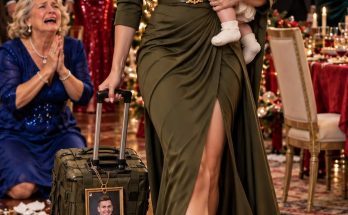
His mistress tried to replace my photo on his campaign website.
Not in a whisper. Not in some private folder buried beneath donor spreadsheets and polling memos. She did it in public, under the clean blue banner that had carried my husband’s name for six years, beside the phrase he had polished like silver until it shone brighter than his vows:
GRANT WHITAKER FOR U.S. SENATE
FAMILY VALUES. HONEST LEADERSHIP. TEXAS FIRST.
For six years, the photograph had been mine.
Me in a cream silk dress on the courthouse steps in Austin, one hand tucked into the crook of Grant’s arm, the other resting over my stomach because our daughter, Lila, had been kicking hard enough that morning to make me laugh between takes. Grant’s smile had been the smile that won rooms. Mine had been softer. Pregnant, proud, and foolish enough to believe that standing beside a man meant he could not step over you.
Then, on a Tuesday morning in October, I opened his campaign website while drinking black coffee at our kitchen island and found another woman smiling in my place.
Her name was Madison Vale.
Twenty-nine. Blonde in the expensive way. A campaign communications director with a voice like champagne bubbles and eyes that could turn wide and wet whenever a camera came too close. She wore a red dress I recognized because the charge for it had appeared, three months earlier, on a card Grant swore belonged to “campaign wardrobe.”
Her hand was on my husband’s chest.
My husband, Senatorial Candidate Grant Whitaker, stood beside her as if she were the woman who had helped build his life, polish his speeches, host his donors, bury his scandals, and teach his little girl how to wave from parade floats without getting scared by the noise.
Below the photo, the website still said family values.
I stared at the screen for a full minute.
Then my phone rang.
Grant’s name appeared.
I answered on speaker and took one calm sip of coffee.
“Eleanor,” he said, using my full name, which meant he had either done something terrible or was about to ask me to pretend he had not. “Before you react, I want you to understand the strategy.”
“The strategy,” I repeated.
His breath crackled through the phone. Behind him, I heard the low murmur of a campaign office, someone laughing, a printer spitting out paper.
“Voters deserve honesty,” he said.
I looked at Madison’s smile on my screen.
And then I smiled too.
“You’re right,” I said. “They do.”
Chapter 1: The Photograph They Thought Would Break Me
There is an art to public humiliation.
People think it is loud. They imagine screaming, shattered glass, women running barefoot into rain. But the worst humiliations arrive beautifully packaged. They wear good lighting. They come with copy approved by consultants and a caption designed to make betrayal look like evolution.
Grant’s campaign had always been built around me.
Not because I wanted it. God, no. I had grown up in Savannah, Georgia, in a house where women learned to keep their faces pleasant even while counting the exits. My mother was a judge, my father a banker with hands too clean to be innocent. I knew the difference between image and truth before I knew how to spell either.
But when I married Grant Whitaker, he was not yet a politician.
He was a tall man in a charcoal suit with a crooked smile and a hunger so bright it almost looked like hope. We met at a fundraiser in Dallas for legal aid. I was twenty-eight, already a partner-track attorney at a white-shoe firm, and he was a county prosecutor who spoke about justice with enough conviction to make rich people feel generous.
He told me I was the most elegant woman in the room.
I told him elegance was usually just exhaustion with posture.
He laughed like I had given him a gift.
For a while, I believed that was love.
Our marriage became his origin story. The Southern wife with old money restraint. The little girl with ribbons in her hair. The restored white house in Highland Park where donors drank bourbon beneath magnolia arrangements and told Grant he had the look of a governor, maybe more.
I wrote the first draft of his stump speech on the back of a hotel notepad in Fort Worth. I was the one who cut the line about “real Americans” because I said it sounded cheap. I was the one who told him to talk about his mother’s grocery store job, not his father’s oil connections. I was the one who reminded him, again and again, that voters could smell greed, but they often mistook ambition for courage if you dressed it right.
He rose fast.
District attorney. State attorney general. Then the Senate race.
The campaign slogan had been mine too.
FAMILY VALUES. HONEST LEADERSHIP. TEXAS FIRST.
I had chosen it during a thunderstorm in June after Grant threw three consultant decks across the den and said every slogan made him sound like a refrigerator salesman. I had stood at the window, watching rain silver the lawn, and said, “Then tell people what they already want to believe about you.”
He had kissed me behind the ear.
“My brilliant girl,” he murmured.
Men like Grant always call you brilliant until your brilliance becomes inconvenient.
The morning Madison replaced my photo, I did not cry.
I zoomed in.
It was a new image, professionally taken. Grant wore his navy suit and American flag pin. Madison’s red dress was fitted enough to suggest modern confidence, modest enough for suburban churches. The background was blurred, but not fully. I recognized the brass lamp. The carved walnut desk. The painting of a bluebonnet field.
It was taken in Suite 614 at the Ashton Monroe Hotel in Houston.
I knew because I owned the Ashton Monroe.
Not directly. That would have been too easy. My grandmother, Beatrice Halloway, had taught me never to own anything in a way that made men comfortable threatening it. The hotel was held through a private family trust, under a holding company, beneath another company named after my daughter’s middle name. On paper, I was not a hotel owner. On paper, I was merely a wife.
Grant had forgotten that paper was where I did my best work.
The first call after his came from my mother.
“Do not respond emotionally,” she said.
“Good morning to you too.”
“I saw the website.”
“Of course you did.”
“I’m in chambers. The clerk is pretending not to watch me watch you be replaced by a girl with teeth like a toothpaste commercial.”
“Madison has excellent veneers.”
“Eleanor.”
“I’m not emotional.”
“That is what worries me.”
I turned my laptop slightly, watching Madison’s smile glow on the screen. “Do you remember when Daddy tried to sell the lake house without telling you?”
My mother paused.
Then, softly, she said, “I remember teaching him what community property meant.”
“And how did that work out for him?”
“He moved into a condo with beige carpet and developed acid reflux.”
“Exactly.”
“Grant is not your father.”
“No,” I said. “Grant is running for Senate.”
My mother exhaled, and in that breath I heard her understand. A private man can survive private sins. A public man has to survive headlines.
Grant came home at 11:47 that night.
I know the exact time because I was sitting at the dining table with a glass of water, a legal pad, and the old Cartier watch he bought me after his first statewide win. The house was quiet. Lila slept upstairs with her night-light on, a tiny moon projecting stars across her ceiling.
Grant stepped inside with his tie loosened and his expression rehearsed.
“Eleanor.”
I looked up. “Grant.”
He glanced at the legal pad. “What is that?”
“A grocery list.”
His mouth tightened. “Don’t do this.”
“Do what?”
“Act like you’re above feeling something.”
“I feel many things. I’m simply not auditioning them for you.”
He walked to the sideboard and poured bourbon into a crystal glass. His hand shook just enough for the bottle to clink against the rim.
“Madison and I are together,” he said.
I nodded once, as if he had informed me of a weather pattern.
“It started after Amarillo,” he added.
“No, it didn’t.”
He froze.
“It started in San Antonio,” I said. “At the donors’ retreat. March seventeenth. You booked two rooms at the St. Anthony and used one.”
The silence changed shape.
Grant turned slowly. “You’ve been spying on me?”
“I’ve been married to you.”
“That’s not an answer.”
“No. It’s a credential.”
His jaw worked. He looked older under the dining room chandelier, the charm stripped thin by fear. For the first time in years, I could see the boy inside him, the one who wanted applause more than love and had mistaken the first for the second.
“The campaign needs a clean transition,” he said. “Madison is part of my life now. People will respect honesty.”
“People respect receipts.”
His eyes narrowed. “What is that supposed to mean?”
“It means I agree with you. Voters deserve honesty.”
He took a step toward me. “Eleanor, listen carefully. If you try to make this ugly, you will hurt Lila.”
There it was.
The threat men save for when affection stops working.
I stood, slowly, smoothing the front of my ivory blouse. “Do not use our daughter as a leash.”
“I’m trying to protect her.”
“You are trying to protect a Senate seat.”
“I am trying to protect this family’s future.”
“No,” I said. “You uploaded another woman over my face and called it family values. You don’t get to use the word family tonight.”
His face flushed. “You think you built this campaign?”
I smiled gently.
That frightened him more than anger would have.
“I know what I built.”
Chapter 2: The Woman Who Kept the Receipts
My grandmother believed every woman should have three things: a private bank account, a good black dress, and proof.
“Men confess with their spending,” she told me when I was sixteen, sitting beside me on the porch of her house outside Savannah while cicadas screamed in the heat. “They can lie with their mouths all day, baby. But money writes diaries.”
Beatrice Halloway was born into old wealth and married into new cruelty. By thirty-five, she had learned how to smile across dining tables while moving assets across state lines. By sixty, she owned half a block in Charleston, two hotels in Texas, and enough secrets to make powerful men call her ma’am even after she died.
She left me the trusts.
She left me the lawyers.
Most importantly, she left me the habit of paying attention.
Grant never knew how much I knew because I never needed him to know.
When campaign funds paid for “consulting retreats” that matched hotel bookings in cities where Madison’s calendar had suspicious gaps, I saved the statements.
When Madison’s apartment in Austin received a sudden “security upgrade” paid through a vendor connected to Grant’s PAC, I saved the invoice.
When the campaign reimbursed Grant for meals at restaurants where donor meetings never occurred, I saved the receipts, then requested security logs from managers who still sent Christmas cards to the Halloway Trust.
When Madison began wearing jewelry too expensive for her salary, I did not ask where it came from. I called a jeweler in Houston whose family owed my grandmother a favor and asked whether a sapphire bracelet had been purchased under the name G. Whitaker or through the campaign card ending in 4429.
People talk about revenge as if it begins with rage.
Mine began with folders.
By Wednesday morning, the day after the website changed, I had seven banker boxes in my home office and a secure drive inside the hollowed spine of a first edition of The Age of Innocence. Edith Wharton would have understood.
At 9:00 a.m., my attorney arrived.
Vivian Cho was five feet two inches of controlled devastation. She wore gray cashmere, carried a burgundy briefcase, and had once made a billionaire cry during mediation without raising her voice.
She stepped into my office, saw the boxes, and said, “I brought coffee. Apparently, you brought war.”
I handed her a folder labeled AMARILLO THROUGH HOUSTON.
She opened it and skimmed.
Her eyebrows lifted.
“This is not adultery,” she said.
“No.”
“This is campaign finance fraud.”
“Possibly.”
“This is misuse of donor funds.”
“Likely.”
“This is an ethics complaint with teeth.”
“Signed and notarized.”
She looked up. “You already signed it?”
I slid a second folder across the desk.
Vivian opened it.
Inside were copies of financial disclosures Grant had filed with the state, statements from campaign accounts, hotel invoices, concierge notes, a timeline of the affair cross-referenced with campaign travel, and affidavits from two former staffers who had come to me months earlier with shaking hands and nondisclosure agreements they thought made them powerless.
They were not powerless.
They were simply waiting for someone richer than Grant to tell them the truth.
Vivian closed the folder with care. “Eleanor.”
“Yes?”
“You could end his campaign.”
“I know.”
“You could trigger investigations.”
“I know.”
“You could destroy him.”
I looked through the office window at the lawn, where Lila’s pink bicycle lay on its side in the grass, one glittering handlebar catching sunlight.
“No,” I said. “He did that part himself.”
At noon, my phone began vibrating with messages.
Friends first.
Then donors’ wives.
Then people who had not spoken to me in years but suddenly wanted to “check in.” Public scandal has a way of making vultures sound like nurses.
By two o’clock, Madison posted a photo on Instagram.
She stood on a balcony in downtown Austin wearing white linen and delicate gold hoops. The caption read:
Honesty is never something to fear. Grateful for a life lived in truth.
I almost admired the audacity.
Almost.
Vivian, sitting across from me at the desk, looked at the post and said, “She thinks she won.”
I closed Instagram. “People who think they’ve won often stop checking the exits.”
That evening, Grant held a private donor call.
I was not invited.
I listened anyway.
Not illegally. Not through hacked wires or spy fantasies. The host code had not changed in four years because Grant’s campaign manager believed convenience was the same thing as efficiency.
Forty-three donors joined.
Grant sounded warm, humbled, statesmanlike.
“I know this transition has caused conversation,” he said. “But I believe voters deserve transparency, and I won’t apologize for living honestly.”
A man from Midland asked whether there would be divorce drama.
Grant gave a soft laugh. “Eleanor is a wonderful mother. We’re handling everything with grace.”
Grace.
That word landed like a glove slapped across my face.
Then Madison spoke.
“We’re focused on the people of Texas,” she said. “Not distractions.”
Distractions.
I looked across the hall where Lila’s school art hung framed in white wood. A family portrait in crayon. Grant with yellow hair, me in a purple dress, Lila between us, all of us beneath a huge red heart.
Distractions.
I stopped listening after that.
Not because it hurt.
Because I had what I needed.
At 8:15 p.m., I forwarded the call transcript to Vivian.
At 8:17 p.m., I sent a separate email to the former staffers.
Subject line: It’s time.
By midnight, the signed ethics complaint was ready.
By dawn, three journalists had received encrypted packets.
By breakfast, Grant was still asleep in the guest room, believing silence meant surrender.
I made pancakes for Lila.
She came downstairs in dinosaur pajamas and asked why Daddy’s picture was on television.
I turned off the kitchen screen before the morning hosts could say Madison’s name.
“Daddy has a big job,” I said carefully. “Sometimes big jobs come with big questions.”
“Are you mad at him?”
I set a pancake on her plate, shaped like a lopsided heart.
“I’m sad,” I said. “And I’m strong. People can be both.”
She considered this with the seriousness only six-year-olds possess.
Then she poured too much syrup and said, “I’m strong too.”
I kissed the top of her head.
“Yes, you are.”
Chapter 3: The Ballroom With No Mercy
The Women for Whitaker Gala was supposed to save him.
It had been planned for months, a glittering event at the Ashton Monroe Hotel in Houston, where the chandeliers were imported from Vienna and the marble floors reflected every ambition that crossed them. Two hundred donors. Three television crews. A string quartet. Ice sculptures. Red roses. American flags arranged with almost religious precision.
The theme, chosen before Madison got greedy, was Legacy and Leadership.
Irony can be so generous.
Grant wanted me there.
Of course he did.
A humiliated wife who refuses to appear becomes a problem. A humiliated wife who appears in diamonds becomes a prop. He called me the afternoon of the gala, his voice smooth with practiced regret.
“Eleanor, I think it would be good for Lila if we show unity.”
“Lila is going to a sleepover.”
“Then for the campaign.”
“At least you’re honest in private.”
He sighed. “People are watching.”
“I know.”
“Will you come?”
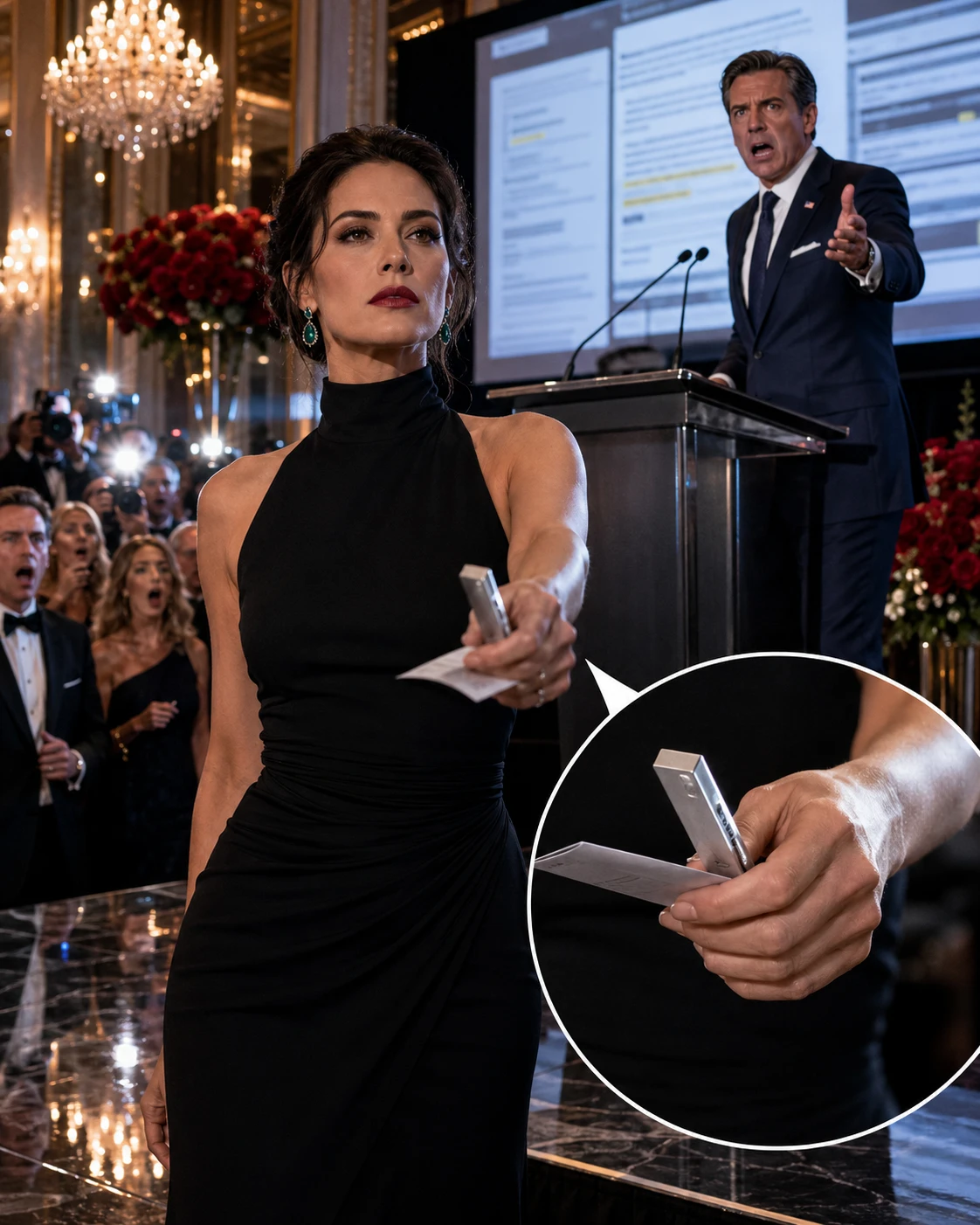
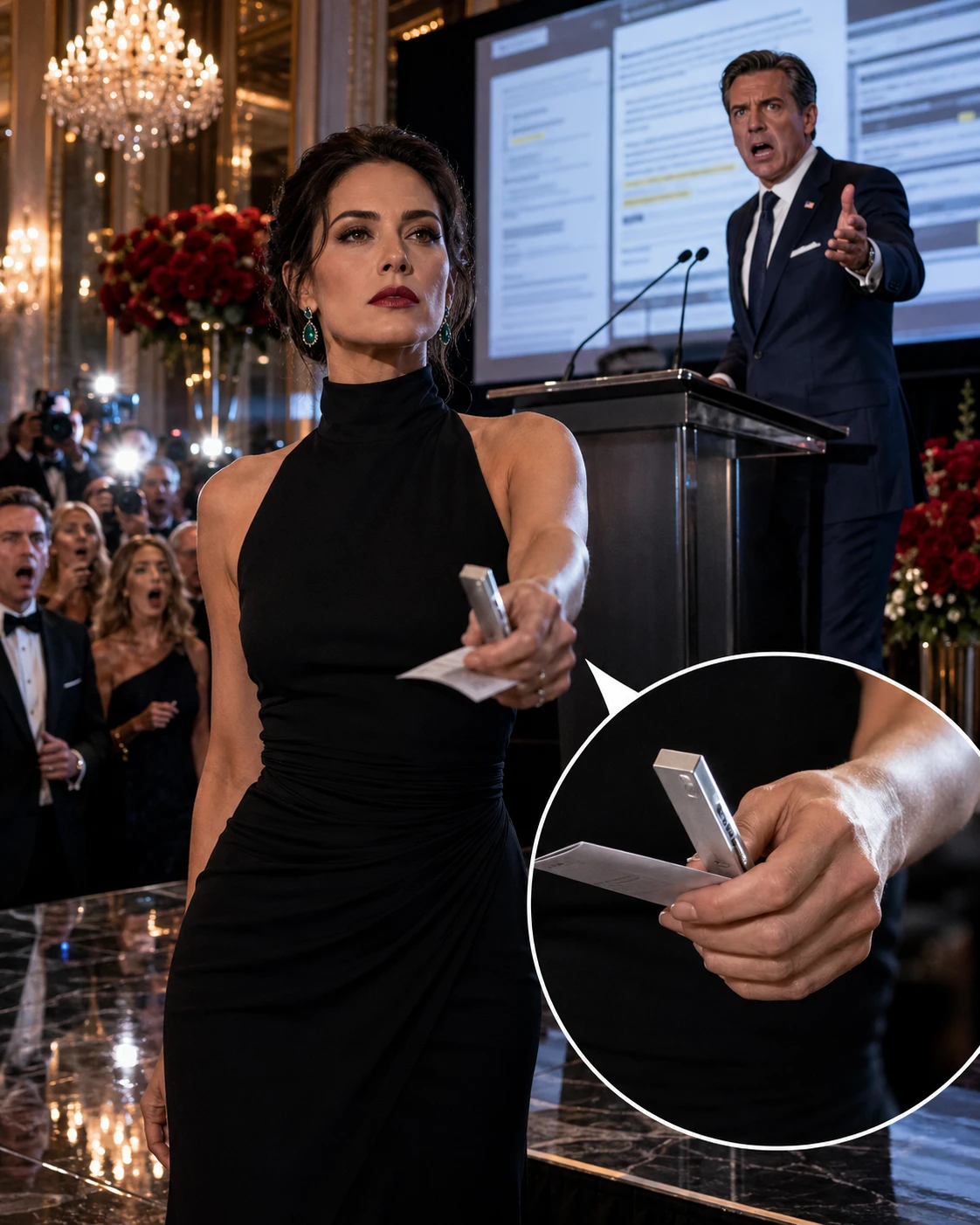
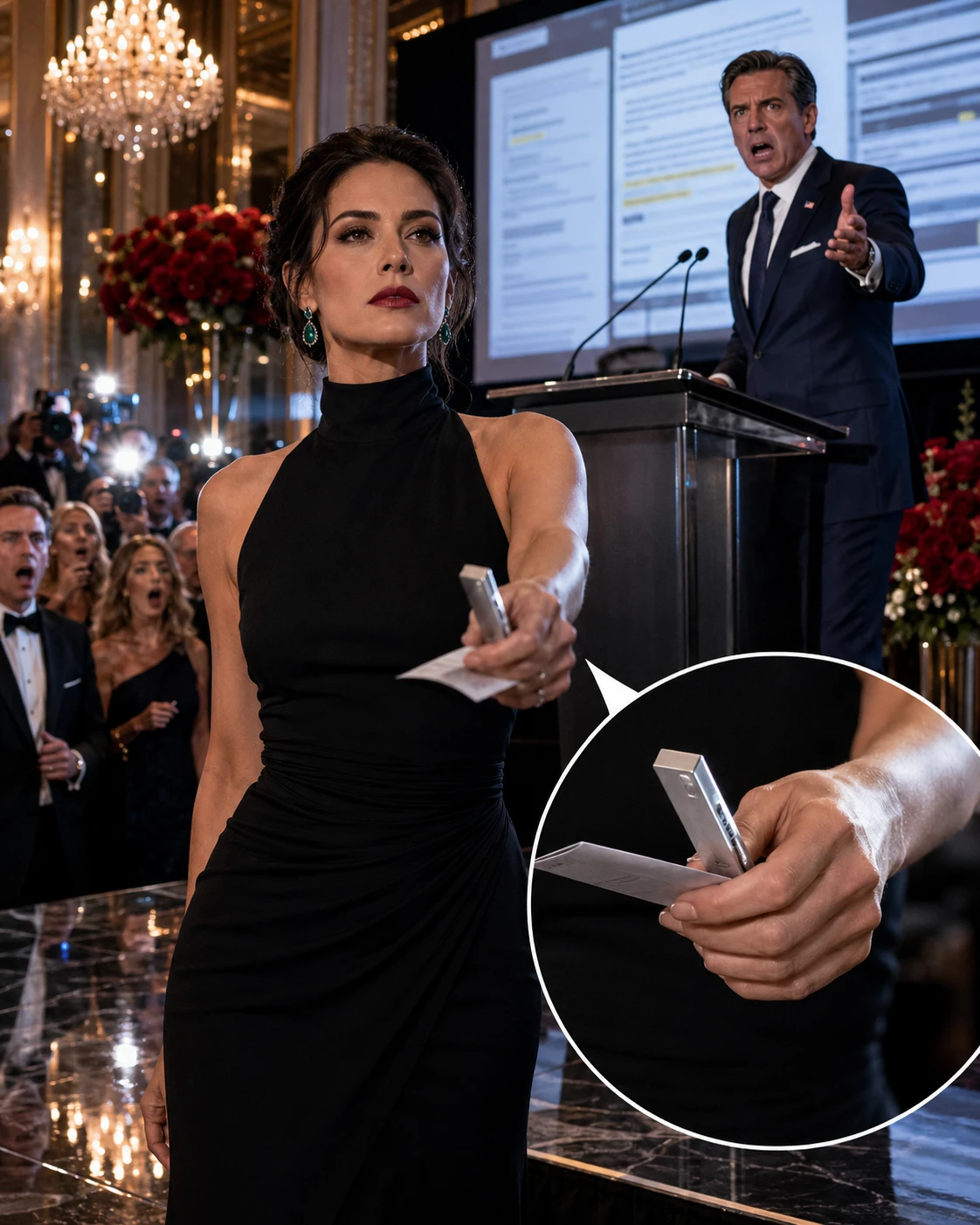
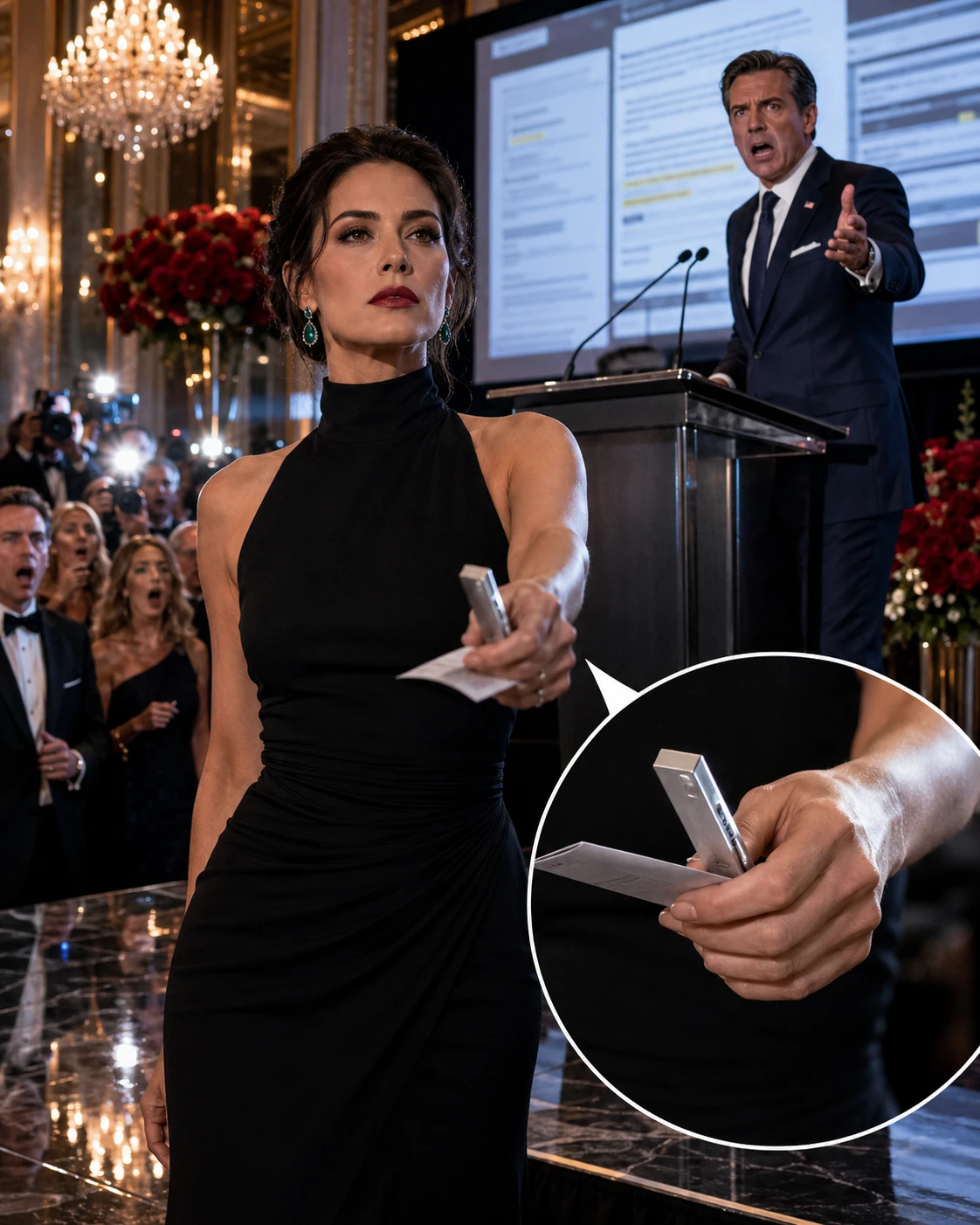
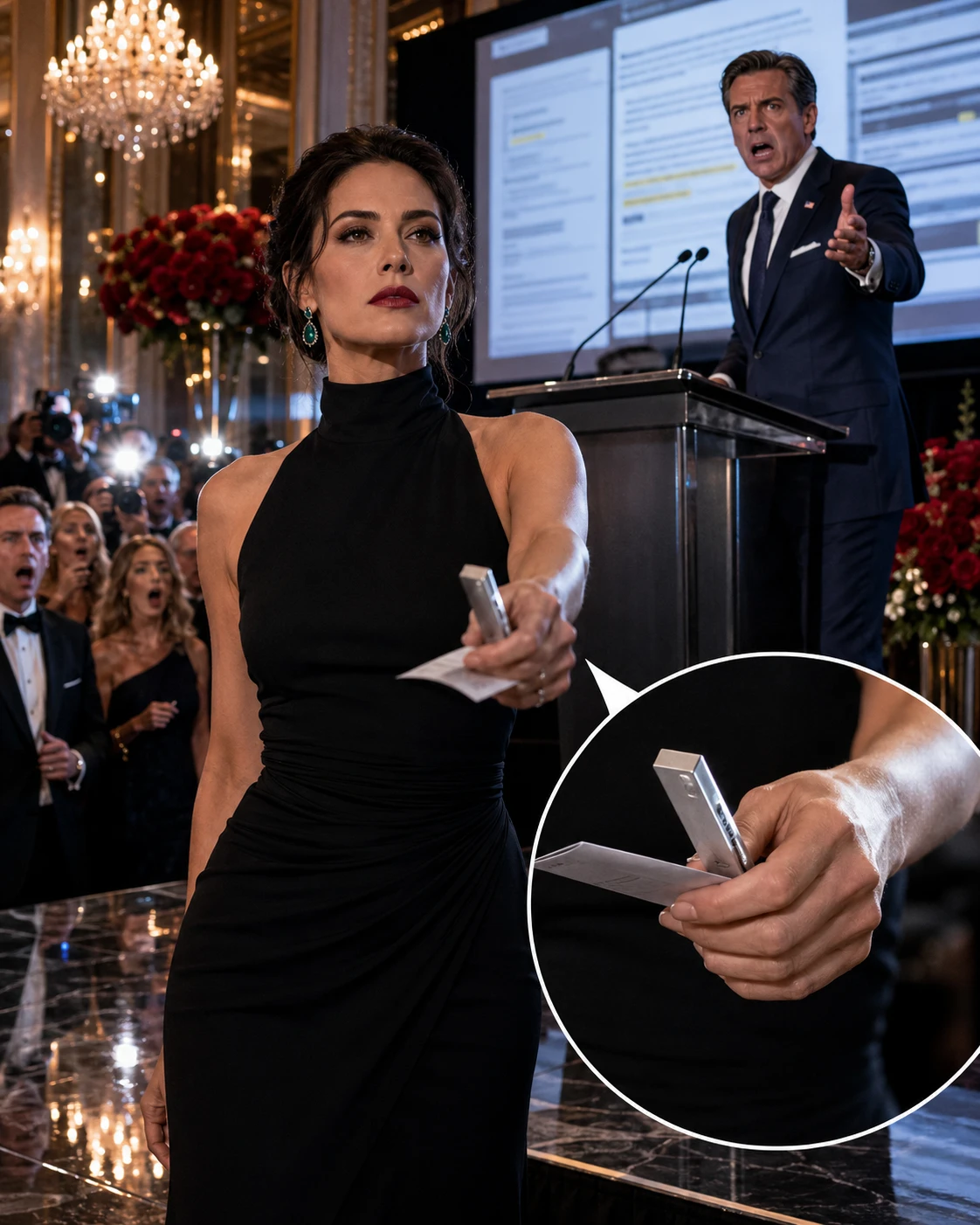
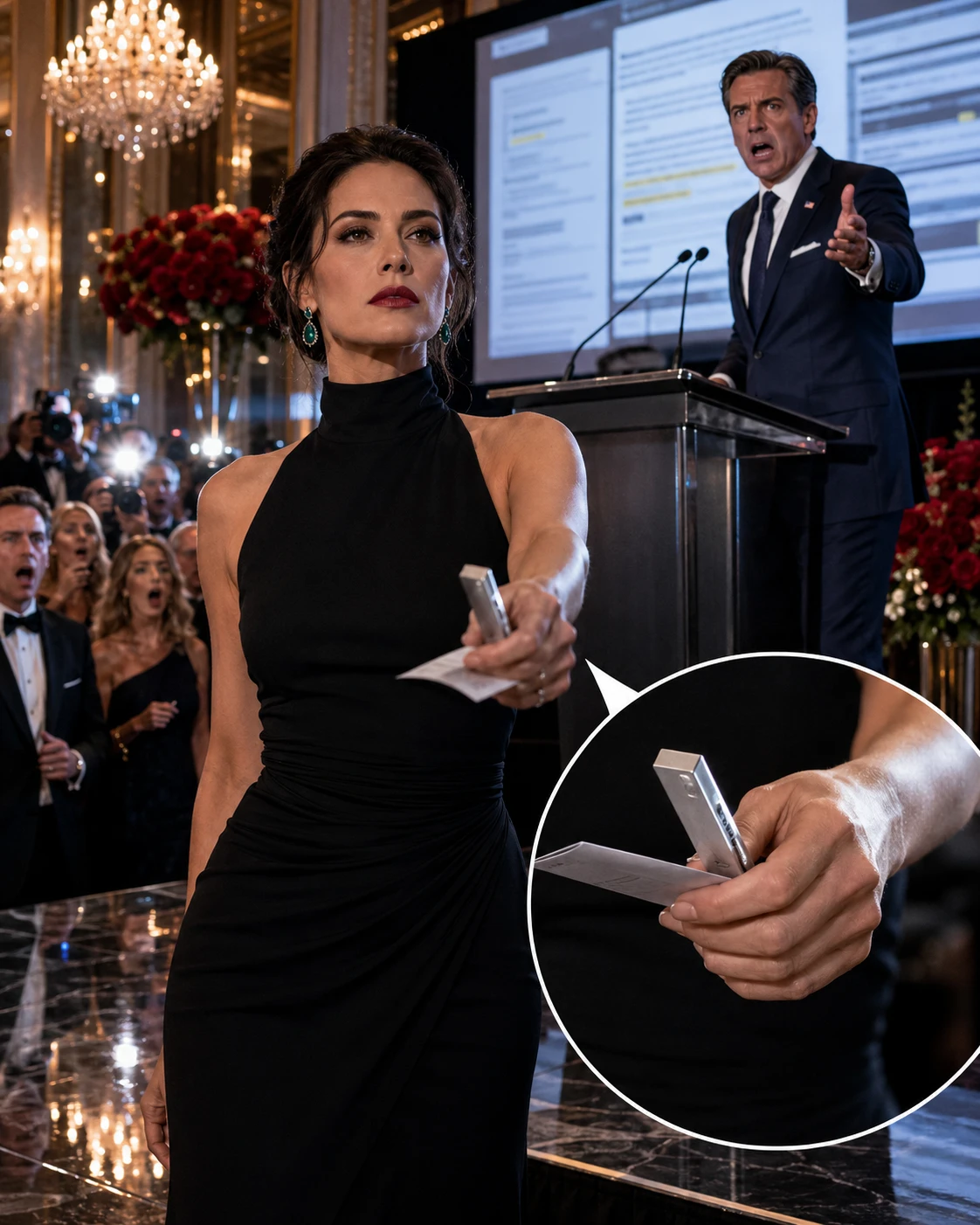
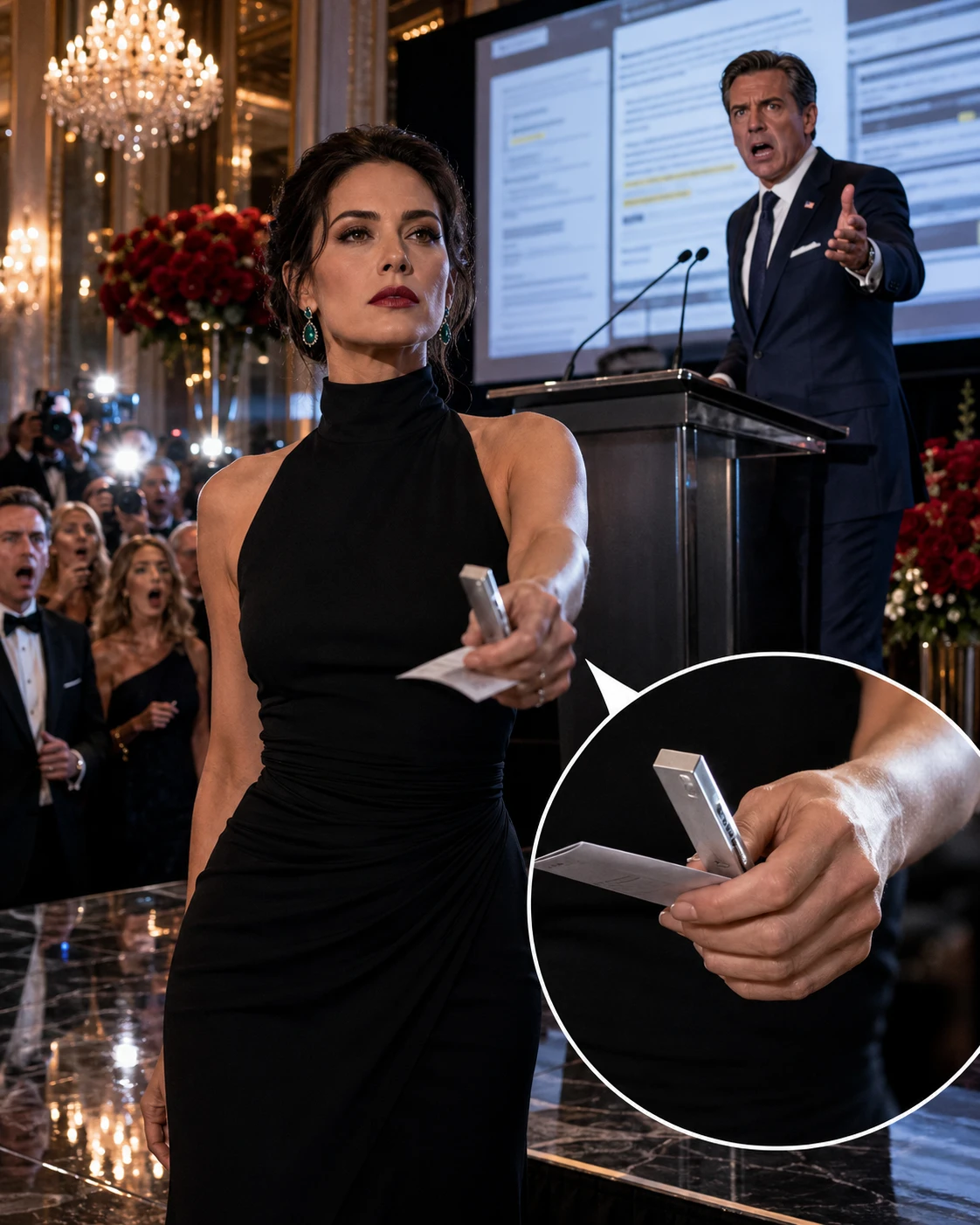
I looked at the black dress laid across my bed. It was not the good black dress my grandmother had recommended. It was better. Sleeveless, high-necked, tailored so sharply it looked less sewn than carved. Beside it lay emerald earrings from my mother and a slim silver flash drive from Vivian.
“Yes,” I said. “I’ll come.”
He exhaled in relief.
Poor Grant.
He had always mistaken my presence for permission.
When I arrived at the Ashton Monroe, every camera turned.
I stepped out of a black car beneath the hotel awning as rain misted the sidewalk and the city lights blurred gold in the wet street. My hair was swept back. My lipstick was dark. My left hand was bare.
No wedding ring.
That detail made the first photographer gasp.
Inside, the ballroom glowed like a jewel box. Women in satin lifted champagne flutes and pretended not to stare. Men in tuxedos turned their bodies toward me the way plants turn toward weather. Conversations faltered, then resumed at a higher pitch.
Grant saw me from across the room.
For one second, his face softened with relief.
Then he saw my hand.
His smile flickered.
Madison stood beside him in pale blue silk, a calculated choice. Innocent. Ethereal. Not a mistress, the dress insisted. A fresh beginning.
She came toward me first.
That was her mistake.
“Eleanor,” she said, offering both hands as if we were old sorority sisters meeting at brunch. “Thank you for being here. It means so much to Grant.”
I looked at her hands until she lowered them.
“Madison.”
Her smile tightened. “I hope we can handle this with dignity.”
“Dignity is not a group project.”
A woman nearby choked on champagne.
Grant appeared at Madison’s side. “Eleanor.”
I turned to him.
Up close, he looked tired. There were shadows beneath his eyes and powder along his jaw where makeup had failed to hide stress. He leaned in as if to kiss my cheek. I stepped back just enough that the cameras caught it.
His smile froze.
“Thank you for coming,” he said through his teeth.
“I wouldn’t miss it.”
The program began at seven.
Grant took the stage beneath an enormous screen displaying a slideshow of his public life. Courthouses. Churches. Veterans’ halls. Me, occasionally, because his team had not yet scrubbed every trace. Lila waving a flag. Madison laughing beside volunteers.
Grant spoke about service.
He spoke about sacrifice.
He spoke about truth with such emotion that a woman at Table Twelve dabbed her eyes.
I sat at the front table, spine straight, hands folded in my lap, and watched him perform the man I had helped invent.
Then he made his second mistake.
He invited Madison onstage.
“My life has changed,” he said, voice trembling just enough to suggest bravery. “And change is never easy. But honesty requires courage. Madison has stood beside me with grace, compassion, and a belief in the future we’re building.”
Applause fluttered uncertainly.
Madison walked up the steps.
The photographers surged.
She stood beside him beneath the words FAMILY VALUES, smiling like a woman already measuring curtains for a Senate office.
And then the ballroom screens went black.
For half a second, everyone assumed it was a technical glitch.
Then the first document appeared.
A hotel invoice.
Suite 614. Ashton Monroe Hotel. Three nights. Paid by Whitaker for Senate.
The room gasped.
Grant turned toward the screen.
Madison’s smile collapsed.
The next slide appeared.
A timeline.
March 17: San Antonio donor retreat. Staff lodging records show Madison Vale moved from Room 312 to Room 809 at 11:42 p.m.
April 9: Campaign card used at Maison Clair for dinner for two. No donor event scheduled.
May 23: Reimbursement submitted for “policy meeting.” Security footage confirms Grant Whitaker and Madison Vale entered the Fairmont Dallas at 10:16 p.m.
June 14: Sapphire bracelet purchased at Bellamy Jewelers. Payment routed through consulting vendor.
August 2: Suite 614 photographed for campaign website replacement image.
October 3: Eleanor Whitaker removed from campaign website.
A murmur became a roar.
Grant lunged toward the podium microphone. “Cut the screens.”
No one moved.
Because the audiovisual team worked for the hotel.
And the hotel, quietly and completely, worked for me.
The third slide appeared.
Signed Ethics Complaint
Filed with the Senate Select Committee on Ethics
Filed with the Federal Election Commission
Filed with the Texas Ethics Commission
Vivian’s work was beautiful. Clean headings. Numbered exhibits. No melodrama. Just facts arranged so tightly they could strangle.
Madison stepped back, shaking her head. “This is illegal.”
I stood.
The room turned toward me.
“No,” I said, my voice carrying without a microphone because my mother had trained me to speak in courtrooms before I ever entered one. “What’s illegal is using campaign funds for personal travel, personal gifts, private lodging, and romantic entertainment while soliciting donations under a platform of moral leadership.”
Grant stared at me with naked hatred.
There was the real man.
Not the husband.
Not the candidate.
The creature underneath, furious that the mirror had stopped flattering him.
“You did this?” he said.
I walked toward the stage. Every camera followed.
“No, Grant. You did this. I organized it.”
A sound moved through the ballroom, part shock, part delight. People love justice most when it arrives well-dressed.
Grant gripped the podium. “This is a marital dispute.”
Vivian stood from a side table.
“Actually,” she said, “it’s a documented ethics matter. Mrs. Whitaker is a cooperating witness. So are two former campaign employees. All relevant agencies received complete copies ninety minutes ago.”
A donor near the front said, “Ninety minutes?”
Vivian smiled. “We wanted everyone here to hear it from the candidate first. He was, after all, speaking on honesty.”
Madison began crying.
Not quietly. Not beautifully. She cried the way women cry when they realize tears are the last currency they have and inflation has arrived.
Grant reached for her.
That was his third mistake.
The cameras captured it: his hand leaving the podium, crossing the space toward Madison, choosing her while the wife he had publicly erased stood ten feet away with his ruin in her purse.
By morning, that image would be everywhere.
By midnight, it already was.
Chapter 4: Honest Branding, Honest Blood
The first headline dropped at 9:03 p.m.
FAMILY VALUES CANDIDATE ACCUSED OF USING CAMPAIGN FUNDS FOR AFFAIR.
The second came two minutes later.
WHITAKER ETHICS COMPLAINT DETAILS HOTEL STAYS, GIFTS, AND WEBSITE PHOTO SCANDAL.
By ten, cable news had split-screened Grant’s campaign portrait with the Suite 614 invoice.
By eleven, Madison had turned off her Instagram comments.
By midnight, someone on TikTok had paired footage of my bare left hand with dramatic piano music, and the caption read:
The mistress wanted the public image. The wife gave the public truth.
I did not post it.
I did watch it once.
Then I went upstairs, washed off my makeup, and sat on the edge of Lila’s bed until my breathing slowed.
She was asleep on her side, one hand under her cheek, curls stuck to her forehead. Her world was still small enough to fit inside a night-light. I wanted to keep it that way as long as possible.
The next morning, Grant was gone.
Not dead. Not missing. Merely absent in the way cowards become when consequences acquire witnesses.
His campaign released a statement at 6:00 a.m.
Grant Whitaker denies any misuse of funds and remains committed to transparency, accountability, and the people of Texas.
At 6:12 a.m., three staffers resigned.
At 6:40, his campaign treasurer retained independent counsel.
At 7:05, Vivian texted me a single sentence:
He’s bleeding donors.
I was making Lila toast.
“Mommy,” she said, watching me butter the bread. “Are people mad at Daddy?”
I turned from the counter. “Some people are asking Daddy to explain his choices.”
“Did he make bad choices?”
“Yes.”
“Do you make bad choices?”
“Yes.”
She frowned. “Then why is everyone yelling at him?”
“Because some bad choices hurt other people. And when you hurt people, you have to tell the truth and try to fix it.”
Lila thought about this.
“Is Daddy trying?”
I kissed her forehead.
“Not yet.”
The divorce filing went in that afternoon.
Petition for dissolution. Emergency motion regarding marital assets. Temporary custody schedule. Preservation order preventing destruction of records, devices, communications, and financial documents.
Grant called me twenty-seven times.
I answered none.
Madison called once.
I answered.
For curiosity.
Her voice was thin and wet. “You ruined my life.”
I was in my closet, placing Grant’s cufflinks into a velvet box. “No, Madison. You confused access with ownership.”
“You don’t understand what he told me.”
“I understand exactly what he told you.”
“He said the marriage was over.”
“Men who want sympathy often declare things dead before they stop feeding them.”
“He said you were cold.”
I looked at the rows of suits I had helped him choose. The navy one for veterans. The gray one for business leaders. The rolled-sleeve shirts for rural events, each pressed to look effortless.
“I am cold,” I said. “That is why I don’t burn down the wrong house.”
She was quiet.
Then she whispered, “He said you never loved him.”
That one landed differently.
Not because it was true.
Because once, it had been violently false.
I had loved Grant with the full bright stupidity of a woman who believed partnership meant building the same future. I had loved him through campaigns, miscarriages, his father’s funeral, my grandmother’s decline, Lila’s fever at eighteen months, the night he lost his first race and sobbed into my lap like a boy. I had loved him when love was labor and labor was invisible.
But there comes a moment when love stops being a garden and becomes evidence of trespass.
“I loved him,” I said. “That was his advantage.”
Madison began crying again.
I ended the call.
By Friday, Grant’s campaign was collapsing.
The polls fell first. Then endorsements. Then donors. His largest PAC issued a statement about “serious concerns.” A pastor who had once called Grant “the moral future of Texas” suddenly discovered the importance of due process. A women’s leadership group removed his photo from their website with more speed than Madison had removed mine.
But Grant was not finished.
Men like him do not surrender because truth arrives. They negotiate with it. They smear it. They dress it in bitterness and ask the public whether a wronged woman can be trusted to count.
On Saturday morning, he went on national television.
I watched from Vivian’s conference room with a cup of coffee cooling in my hand.
Grant sat across from a sympathetic anchor in a navy suit and pale tie, his wedding ring still on his finger. That irritated me more than it should have.
“My wife is in pain,” he said, looking directly into the camera. “And I respect that. But this is a politically motivated attack fueled by personal heartbreak.”
Vivian muttered, “Oh, I hope he keeps talking.”
The anchor leaned in. “Are you saying the documents are false?”
“I’m saying they’re misleading.”
“Did campaign funds pay for hotel stays involving Madison Vale?”
Grant lowered his eyes, a gesture so practiced I could see the rehearsal. “Campaign travel is complicated.”
Vivian laughed.
I did not.
Grant continued. “Eleanor comes from significant wealth. She has powerful connections. I believe she is using those connections to punish me for moving on.”
There it was again.
Not a wife.
Not a partner.
A spoiled rich woman with a bruised ego.
A familiar costume. America has closets full of them.
Then he made his final mistake.
He looked into the camera and said, “If Eleanor truly believes in transparency, she should disclose her own financial interests in this matter.”
Vivian went still.
I set down my coffee.
She turned to me slowly. “He has no idea, does he?”
“No.”
“About the hotel?”
“No.”
“The trust?”
“No.”
“The licensing agreement?”
I smiled.
Vivian’s answering smile was almost affectionate.
“Well,” she said. “That changes the menu.”
Chapter 5: The Asset He Never Saw Coming
The Ashton Monroe Hotel had secrets in its walls.
Not dark ones. Not criminal ones. Just the quiet, polished secrets of wealth: private entrances for famous guests, secure elevators for politicians, old service corridors converted into archive storage, a basement wine room where half of Houston had made promises they later regretted.
My grandmother bought the property in 1998 when it was bankrupt, then restored it so beautifully that people forgot it had ever been desperate. She used to walk through the lobby with a cane and a smile, correcting flower arrangements and terrifying managers.
“A hotel,” she told me once, “is a stage where everyone thinks they are the lead.”
Suite 614 had always been one of her favorites.
She liked the light.
Grant liked the privacy.
I liked the cameras.
Not in bedrooms. Not in bathrooms. Not anywhere indecent or illegal. My grandmother was careful, not depraved. But the Ashton Monroe maintained strict security logs in hallways, elevators, entrances, garages, and service areas. Every luxury hotel does. Rich people demand discretion, then sue when discretion prevents proof.
The night Grant challenged me on national television, Vivian and I prepared the second release.
Not everything.
Never everything.
Good revenge is like good perfume. Too much and everyone leaves the room.
We released ownership documents showing that the Ashton Monroe was controlled by the Halloway-Larkin Trust, of which I was trustee. We released vendor contracts proving the campaign had negotiated discounted political event rates without disclosing that Grant’s wife controlled the property. We released invoices showing that the same campaign later used donor funds for personal stays in Suite 614.
Then came the licensing agreement.
Grant’s campaign had used the original courthouse photograph of us for six years. The image had been taken by a photographer I hired and paid before Grant ever had a campaign account large enough to cover lunch. The usage rights belonged to my private company.
When Madison replaced my photograph, she did not merely humiliate me.
She triggered a contractual audit.
And during that audit, we discovered the final thread.
The campaign website had not been updated by a staffer following official approval.
It had been changed from Madison’s personal laptop at 1:13 a.m., from inside Suite 614, using Grant’s administrator credentials.
The metadata told a tidy story.
The replacement image had been titled:
FirstLady_Final.jpg
Vivian stared at the file name for a long moment.
Then she looked at me.
“Do you want this public?”
I thought of Madison’s hand on his chest.
I thought of Grant telling me voters deserved honesty.
I thought of Lila’s crayon heart.
“Yes,” I said. “But not first.”
“Then when?”
“At the press conference.”
Grant announced his withdrawal from the race Monday morning.
Not resignation from public life. Men like him always leave doors cracked. He called it “suspending the campaign to focus on family, faith, and the truth.” The statement mentioned me twice. It mentioned accountability zero times.
By noon, his lawyers requested settlement talks.
By three, Vivian and I arrived at a private conference room on the forty-second floor of a Dallas office tower. The room had glass walls, gray carpet, and a view of the city sharp enough to cut skin.
Grant was already there.
So were his attorney, his campaign treasurer, and Madison.
I paused when I saw her.
Madison wore black. Her eyes were swollen. Her hair was pulled back. Without the campaign lighting and the silk dresses, she looked very young.
For a brief second, I felt sorry for her.
Then she looked at me with hatred instead of shame, and the feeling passed.
Grant stood. “Eleanor.”
“Sit down, Grant.”
He sat.
Vivian placed a folder on the table.
Grant’s attorney, a heavyset man named Paul Renner, cleared his throat. “We’re here to discuss a dignified resolution.”
“Dignity keeps being invited very late,” I said.
Paul ignored that. “Mr. Whitaker is prepared to offer a generous settlement.”
Vivian opened her pen. “Mrs. Whitaker is prepared to accept full marital asset disclosure, primary physical custody with structured visitation, immediate reimbursement of improperly used campaign funds, written non-disparagement, and cooperation with all ethics inquiries.”
Grant laughed once. “You’re insane.”
I looked at him. “No. I’m finished.”
His eyes flashed. “You think because you have money, you can take my daughter?”
“Our daughter,” I said. “And I am not taking her. I am protecting her from becoming a prop in your redemption tour.”
Madison’s mouth tightened.
Paul slid a document across the table. “This is our proposed statement. Both parties express mutual respect, acknowledge private pain, and request privacy.”
Vivian read it.
Then she placed it back down.
“No.”
Paul frowned. “No?”
“No.”
Grant leaned forward. “What do you want, Eleanor? Public begging? Blood?”
I met his eyes.
“I wanted a husband who understood that my silence was loyalty, not weakness. That option expired.”
For the first time all week, he looked wounded.
Not because he missed me.
Because he recognized the sound of a door locking.
Vivian slid our folder forward. “Before this meeting continues, you should understand the remaining disclosure risk.”
Paul opened the folder.
His face changed.
Grant noticed. “What?”
Paul read silently.
Madison went pale.
“What is it?” Grant snapped.
Vivian answered. “A website audit. Administrator access logs. Metadata. Hotel security confirmation placing Ms. Vale in Suite 614 at the time the campaign website was altered. The file name is especially unfortunate.”
Grant’s eyes moved to Madison.
She shook her head. “I didn’t think—”
“No,” I said. “You didn’t.”
Grant turned back to me. “You’re threatening us with a file name?”
“No. I’m explaining the difference between a love affair and a conspiracy to misrepresent campaign branding while misusing protected digital assets, donor resources, and marital likeness rights.”
Paul closed his eyes briefly.
He understood.
Grant did not.
That was often the problem.
I leaned forward. “You went on television and invited me to disclose my financial interests. So I will. At four o’clock, I’m giving a press conference from the Ashton Monroe lobby.”
Madison whispered, “Why?”
I looked at her.
“Because you wanted the public image.”
Then I turned to Grant.
“And he wanted honest branding.”
The press conference was standing room only.
The Ashton Monroe lobby had never looked more beautiful. White orchids. Black marble. Brass fixtures glowing beneath soft light. Reporters crowded behind velvet ropes. Cameras lined the back wall. Outside, rain tapped gently against the windows, as if even the weather had dressed for drama.
I stepped to the microphone at exactly four.
Vivian stood to my left.
My mother stood in the back, arms crossed, proud in the terrifying way only a judge can be proud.
I wore winter white.
Not mourning.
Not rage.
A clean page.
The room quieted.
“My name is Eleanor Halloway Whitaker,” I began. “For six years, my image was used to help promote a campaign built on family values and honest leadership. Last week, that image was removed and replaced with another woman’s photograph beside my husband, Grant Whitaker.”
Flashbulbs sparked.
“I was told voters deserved honesty. I agreed.”
A ripple moved through the room.
“So today, I am providing a clear timeline, supporting documentation, and relevant disclosures concerning the use of campaign funds, vendor payments, hotel stays, digital access, and public representations made by the Whitaker campaign.”
I did not call Madison a mistress.
I did not call Grant a liar.
The documents did that.
I explained the trust. The hotel. The invoices. The audit. The filings. I used words like evidence, disclosure, compliance, cooperation. Elegant words. Deadly words. Words that wore gloves while opening graves.
Then came the question everyone wanted to ask.
A reporter from Dallas stood. “Mrs. Whitaker, critics say this is revenge. How do you respond?”
I looked directly into the cameras.
“Revenge is when you hurt someone because they hurt you. Accountability is when you stop someone from using power, money, and public trust to hide what they chose. I did not create these records. I preserved them.”
Another reporter shouted, “Do you still love him?”
The room went still.
That question was not professional, but it was human.
And perhaps that is why I answered.
“I loved the man I believed he wanted to become,” I said. “I am grieving him. But I will not protect the man he chose to be at the expense of my daughter, my name, or the voters he asked to trust him.”
For the first time in days, my voice nearly broke.
I let it.
Strength is not the absence of fracture. Sometimes strength is allowing people to see the crack and still watching you stand.
After the press conference, Grant’s last major donor withdrew.
By evening, the FEC confirmed receipt of the complaint.
By the next week, Madison had resigned from the campaign and hired her own attorney.
By the end of the month, Grant’s suspended campaign became a dead campaign. His smiling billboards disappeared from highways. His commercials vanished. The website stayed up for a while, hollow and awkward, until someone finally took it down.
But the internet kept its own monuments.
The clip of me saying, “I preserved them,” reached millions.
The photograph of Madison and Grant beneath FAMILY VALUES became a meme.
The file name FirstLady_Final.jpg became a punchline on late-night television.
And the line that followed me everywhere, embroidered onto sweatshirts and printed under reaction videos, was not one I had planned.
The mistress wanted the public image. The wife gave the public truth.
Conclusion: A House With the Lights Still On
Divorce is not an explosion.
It is a long hallway.
Some days you walk it with your head high. Some days you sit on the floor halfway through and wonder how many versions of yourself you will have to bury before morning.
Grant moved into a condo near downtown Austin with glass walls and no soul. He saw Lila twice a week at first, supervised not because I wanted cruelty, but because he kept trying to talk to her about “what Mommy did.” The judge corrected that quickly.
My mother attended the hearing in a navy suit and did not smile once.
Afterward, she took me to lunch and ordered champagne.
“It’s noon,” I said.
“You are divorced from a man who thought metadata was a brand of bottled water,” she replied. “We celebrate.”
I laughed for the first time in weeks.
It startled me.
Healing often does.
Lila adjusted in the way children do when adults stop lying and start becoming safe. She asked hard questions. I answered only what belonged to her. Not the ugly details. Not the hotel rooms or invoices or Madison’s red dress. Just the truth in a shape small enough for her hands.
“Daddy hurt Mommy.”
“Yes.”
“Do you hate him?”
“No.”
“Why?”
“Because hate is heavy, and I have to carry you.”
She liked that answer.
So did I.
In December, I took her to Savannah.
We stayed in my grandmother’s old house, where the porch still smelled faintly of lemon oil and rain. Lila ran through the garden chasing butterflies while I sat beneath the magnolia tree with a cup of tea, watching sunlight move over the lawn.
For months, people asked whether I would run for office.
I said no every time.
Not because I lacked ambition.
Because I had finally learned the difference between power and performance.
Power was not a podium. It was not a husband’s last name or a campaign website or a room full of donors waiting to be charmed. Power was knowing what you owned. Knowing what you signed. Knowing when silence was strategy and when truth needed a microphone.
Power was making pancakes after betrayal.
Power was teaching your daughter that sadness and strength could sit at the same breakfast table.
Power was keeping the house with the lights still on.
On New Year’s Eve, Vivian came over with Thai takeout, my mother brought a bottle of champagne older than some campaign staffers, and Lila insisted we all wear paper crowns from a party store. At midnight, fireworks cracked over Dallas, bright and brief as scandal.
Lila climbed into my lap, sleepy and warm.
“Mommy,” she murmured, “are we okay now?”
I looked around the room.
At Vivian barefoot on my sofa, arguing with my mother about constitutional law. At the half-eaten noodles on the coffee table. At the Christmas tree still glowing in the corner because Lila had begged to keep it up. At the empty space where Grant’s portrait used to hang.
Empty space can be terrifying.
It can also be an invitation.
“Yes,” I whispered into my daughter’s hair. “We’re okay.”
The next morning, I opened my laptop for the first time in days.
Not to check headlines.
Not to watch clips.
Not to count how many strangers had turned my pain into content.
I opened it because the Halloway Trust had a board meeting, the Ashton Monroe needed a new general manager, and my daughter wanted a spring break trip somewhere with dolphins.
Life, inconvenient and beautiful, had continued.
Before closing the computer, I saw one last article.
A columnist had written that Grant Whitaker’s downfall was caused by a wife’s revenge.
I smiled.
They still did not understand.
I did not destroy my husband because he loved someone else.
I destroyed the lie he tried to sell with my face on it.
He wanted honest branding. I gave him honest headlines.