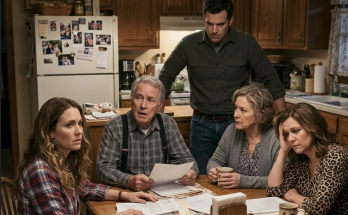
Dr. Patel’s last sentence stayed in the kitchen long after she stopped speaking.
The caller had told hospital registration that the mother might not be available at discharge.
I pressed the phone closer to my ear. “What exactly does that mean?”
“I don’t know,” Dr. Patel said. “The registrar became concerned because the caller asked whether another relative could complete newborn discharge paperwork if you were sedated, hospitalized elsewhere, or otherwise unable to participate.”
Mark pushed his chair back from the table.
“Did they say I authorized it?”
Dr. Patel heard him through the speaker.
“Yes.”
Mark’s face went blank.
I asked, “What exactly did the caller say about my husband?”
“That he had already discussed the arrangement with family.”
“He has not.”
“I understand.”
Dr. Patel paused before continuing. “Jennifer, I want you to hear this from me clearly. No one is taking your baby out of the hospital because a relative calls and says she has permission. There are procedures. Identification. Medical clearance. Your consent unless extraordinary circumstances exist.”
I knew she meant to reassure me.
Instead, the word extraordinary lodged in my mind.
Lorraine had spent weeks trying to manufacture extraordinary circumstances.
Evelyn reached for a legal pad.
“Ask whether the hospital records calls.”
I did.
Dr. Patel said some registration and security lines were recorded. She could not promise the specific call had been captured, but she would request preservation immediately.
“Also,” Evelyn said, “ask them not to contact Lorraine.”
I repeated the instruction.
Dr. Patel agreed.
When the call ended, nobody spoke for several seconds.
Mark finally said, “How does she know the induction date?”
“We don’t have one,” I answered.
His eyes lifted.
That was the strange part.
We had discussed the possibility of induction with Dr. Patel, but no date had been scheduled. Lorraine did not merely know information.
She was fishing for information she did not have.
Evelyn underlined something on her pad.
“That matters.”
“Why?”
“Because it shows she is still gathering facts rather than acting from legitimate authority.”
She looked at me.
“From now on, assume any call may be recorded, any message may become evidence, and any person asking unusual questions may be connected to her.”
The advice sounded extreme.
Three days earlier I would have thought it paranoid.
Now it sounded practical.
Evelyn filed for an emergency protective order that afternoon.
Not a custody order.
Not yet.
A civil order restricting Lorraine from contacting me directly, entering my property, approaching Zoe’s school, accessing medical facilities for the purpose of interfering with my care, or attempting to obtain confidential information about me or the baby.
The judge would review the request the following morning.
Until then, we waited.
Waiting proved harder than action.
I washed dishes that were already clean. Mark replaced the temporary lock on the garage door. Zoe sat at the table drawing a family of rabbits in a house with a fence around it.
She colored the grandmother rabbit outside the fence.
I noticed.
I did not ask why.
At six that evening, Amber arrived carrying the wedding gifts she had been too exhausted to open.
She looked different from the bride I had watched the day before. The makeup was gone. Her hair was tied into a careless knot. Marriage had lasted less than twenty-four hours, and already her mother had become the central problem of the first morning.
“I canceled brunch,” she said.
“What brunch?”
“Mom planned a family brunch for today.”
Mark looked at her. “She went?”
“She hosted it.”
“After being removed from your wedding?”
Amber gave him a tired smile.
“She told everyone she left because she had a migraine.”
Of course she had.
“Did anyone believe her?” I asked.
“Some people.”
That answer no longer surprised me.
Lorraine did not require universal belief.
She only needed enough uncertainty to survive another day.
Amber placed her phone on the table.
“I recorded Aunt Carol.”
Mark frowned.
“Why?”
“Because Carol called me after brunch. Mom told people Jennifer threatened her at the wedding.”
I almost laughed.
“What kind of threat?”
“She said you told her she would never see the children again unless she signed over money.”
The claim was so bizarre that for a moment I could not respond.
Mark did.
“She’s getting desperate.”
Evelyn had warned us desperation could make Lorraine more dangerous, not less.
Amber opened the recording.
Aunt Carol’s voice filled the kitchen.
“She said Jennifer has been controlling the money for years. She said Mark doesn’t even have access to his own accounts.”
Mark looked toward me.
He did have access.
Too much access, apparently, considering Lorraine had been using the household card.
Carol continued.
“She also said Jennifer bought the house with Mark’s money and hid the deed.”
Amber’s voice on the recording asked, “Did Mom show you proof?”
“No.”
“Did you ask?”
A long pause.
“No.”
Amber stopped the audio.
“That part matters,” I said.
“What?”
“She’s making claims she can’t support.”
Mark looked unconvinced.
“She can still make them.”
“Yes.”
“And people can still believe them.”
He was right.
Evidence did not stop gossip.
But gossip was not a court order.
That distinction became the thing I held onto.
At eight thirty, Dr. Patel called again.
Hospital security had found the recording.
My stomach tightened.
“Can we hear it?”
“Not directly yet. The hospital’s legal department has to approve release.”
“Did security listen?”
“Yes.”
“And?”
“The caller identified herself as Susan Carter.”
Mark stared at the phone.
“Susan Carter is my aunt.”
I turned toward him.
“Your father’s sister?”
“Yes.”
“She lives in Arizona.”
“And she has never met Jennifer,” Mark added.
Dr. Patel continued.
“The caller claimed to be the baby’s paternal aunt and said you had asked her to coordinate discharge if Jennifer became incapacitated.”
My skin went cold.
“Was it Lorraine’s voice?”
“Security believes it was a woman. They are not making an identification from voice alone.”
Mark stood.
“I can.”
Evelyn raised one hand.
“Not yet.”
He looked at her.
“She impersonated my aunt.”
“Maybe. We need the recording.”
Amber whispered, “Mom knows Aunt Susan’s full name.”
Everyone looked at her.
“She mailed invitations to her.”
Mark swore under his breath.
Another piece.
Always another piece.
Dr. Patel told us the hospital had flagged my account for attempted social engineering. Any changes to visitors, contact numbers, discharge plans or newborn access now required in-person verification with identification.
For the first time, Lorraine’s interference had created a security response larger than anything she could control.
That should have comforted me.
Instead, I wondered what she would do once ordinary methods stopped working.
The answer came before midnight.
Our doorbell camera detected movement.
Mark and I both woke to the alert.
A figure stood near the mailbox.
Not Lorraine.
A young woman.
She wore jeans, a dark jacket and carried a padded envelope.
Mark watched from the upstairs window while I opened the camera application.
The woman walked to the porch.
She did not knock.
She placed the envelope on the mat and left.
Ray arrived twenty minutes later.
He wore gloves when he opened it.
Inside were photocopies of medical articles about postpartum psychosis.
A printed checklist of warning signs.
Several paragraphs had been highlighted.
Insomnia.
Agitation.
Irritability.
Suspicion.
Emotional volatility.
Across the top page, someone had written:
Please get help before someone gets hurt.
No signature.
Ray photographed everything.
“Could be Lorraine,” Mark said.
“Could be someone she sent,” Ray answered.
I looked at the highlights.
Suspicion.
Of course.
If I believed Lorraine was plotting against me, that could be labeled paranoia.
If I became angry about it, agitation.
If I stopped sleeping because strangers appeared at my house, insomnia.
She had created a trap in which reacting to harassment could be described as proof the harassment was justified.
Evelyn understood immediately when we called.
“Do not contact her.”
“I wasn’t planning to.”
“Good. Because this is useful.”
“Useful?”
“Someone left psychiatric material at the home of a pregnant woman after repeated unauthorized attempts to gather her medical information. That is not neutral concern.”
The next morning, the judge granted the temporary protective order.
It was limited.
Lorraine could contest it at a hearing in ten days.
But for those ten days, she was ordered to stay away from me, Zoe, our property and my medical facilities.
The order also prohibited indirect contact through third parties.
Mark read that line twice.
“She can’t send anyone?”
“Not to communicate with Jennifer,” Evelyn said.
“What happens if she does?”
“We document it.”
A process server delivered the order before noon.
Lorraine did not respond.
At least not to us.
Instead, at two fourteen, Aunt Carol posted something on social media.
She did not name me.
She did not name Lorraine.
But everyone in the family knew.
Families should not use courts to punish grandmothers who only want to protect their grandchildren.
Within an hour there were seventeen comments.
Some supportive.
Some confused.
Some asking what happened.
Amber called Carol and demanded she remove it.
Carol refused.
Mark wanted to reply.
I stopped him.
“No.”
“She’s making us look terrible.”
“She’s making herself part of the record.”
That sentence sounded like Evelyn.
I was learning.
By evening, Carol removed the post anyway.
Not because we persuaded her.
Because someone else had replied.
Denise.
The clinic receptionist.
She wrote only one sentence:
I personally witnessed the grandmother strike the four-year-old child in the face.
The comments stopped.
Carol deleted the post.
Mark stared at his screen.
“One witness.”
“What?”
“One person who saw it herself did more than twenty family arguments.”
I nodded.
Facts.
Again.
Facts.
That evening, we received the hospital audio through Evelyn.
We sat together in her office.
She pressed play.
A woman’s voice said, “Yes, this is Susan Carter.”
Mark’s hand closed around mine.
I knew the voice too.
Lorraine had altered her tone slightly, making it softer and slower.
But it was her.
There was no doubt in the room.
The registrar asked for identification information.
Lorraine gave Mark’s birth date correctly.
She gave my date of birth correctly.
She named Dr. Patel.
Then she said something none of us had heard before.
“Mark is afraid Jennifer may refuse discharge instructions if she becomes confused.”
My throat tightened.
The registrar asked, “Has there been a psychiatric diagnosis?”
Lorraine hesitated.
Then said, “Not officially.”
Not officially.
As if one were expected.
The registrar asked whether Mark could call personally.
Lorraine replied, “He can’t speak freely right now.”
Mark lowered his head.
The same lie she had told Dr. Cole.
The recording continued.
Lorraine asked whether a baby could be discharged to a relative if the mother became “unavailable.”
The registrar asked why the mother might be unavailable.
Lorraine answered:
“There may be an emergency petition by then.”
Evelyn paused the recording.
No one moved.
“She planned to file before delivery,” I said.
“Possibly.”
“No.” I looked at the draft guardianship petition. “She planned to create an emergency, then file.”
Mark stared at the wall.
Evelyn resumed the audio.
The registrar asked who was preparing the petition.
Lorraine said:
“My attorney already has everything.”
Then she named someone.
Not Daniel Mercer.
A woman.
Patricia Lang.
Evelyn stopped the recording so quickly her chair rolled backward.
“You know her?” I asked.
“Yes.”
“What kind of lawyer is she?”
“Family law.”
My stomach tightened.
“Good?”
Evelyn chose her words carefully.
“Experienced.”
Mark leaned forward.
“Would she file something like this?”
“If she believed the facts supported it.”
“Lorraine lies.”
“I know.”
Evelyn reached for her phone.
“Do not assume Ms. Lang knows that.”
She called the office.
The receptionist confirmed Patricia Lang represented Lorraine Hale.
Evelyn asked to speak with her immediately.
She was transferred.
We heard only Evelyn’s side.
“This is Evelyn Shaw. I represent Jennifer Carter.”
Pause.
“Yes.”
Longer pause.
“I believe your client may have provided materially false information in preparation for emergency guardianship proceedings.”
Evelyn listened.
Then her expression changed.
“When?”
Another pause.
Her eyes met mine.
“Understood.”
She ended the call.
My hands felt numb.
“What?”
“Lorraine already filed.”
Mark stood.
“For custody?”
Evelyn shook her head.
“Not yet.”
I waited.
“She filed a request for emergency preservation of evidence and a preliminary petition concerning the unborn child.”
“That’s possible?”
“It can be attempted. Whether the court entertains it is another matter.”
“What did she claim?”
Evelyn looked at me.
“That you are planning to disappear before delivery.”
For several seconds I genuinely did not understand the sentence.
“Disappear where?”
“She claims you told relatives you intended to leave the state with Zoe and conceal the birth.”
Mark laughed once in disbelief.
“We haven’t gone anywhere.”
Evelyn’s face remained serious.
“There’s more.”
“What?”
“She attached photographs.”
My stomach dropped.
“Of what?”
“You packing bags.”
I stared at her.
Then I remembered.
The overnight suitcase I had prepared for the hospital.
The bag sitting beside the stairs for nearly a week.
Someone had photographed me putting it into the car yesterday morning.
From across the street.
Click here to continue reading: PART 10: The Photograph From Across the Street Proved Lorraine Was Watching Us, but the Court Hearing Exposed an Even More Dangerous Fabrication
My Mother-in-Law Slapped My Daughter and Planned to Take My Baby—But She Didn’t Know the House Was Mine
Part 9 of 15